Umamahesvaram inscription of Mada Nayaka (1377)
A Telugu and Sanskrit inscription of early 1377 at Umamahesvaram, the northern gateway of Srisailam. It records the stone pavilion built for the god Mahesvara by the Recherla chief Mada (Madhava) Nayaka of Devarakonda. It gives a long family tree of his family and ends with a circular verse diagram.
What it is
The inscription stands at Umamahesvaram, a hill shrine near Achampet.12 P. Sreenivasachar described the shrine as well known as the northern gateway of Srisailam.12 The inscription, in Telugu and Sanskrit, records the building of a pavilion (mantapa) for the god Mahesvara by Madhava-nayaka of the Recherla family.12 Madhava-nayaka is better known as Mada Nayaka of Devarakonda.12
Its verses give a long family tree.23 Sreenivasachar printed photographs of all four faces of the stone in his Corpus of 1956.23 See the Recherla Velamas.
Date
The Corpus gives the date as Saka 1298 (Saka is an Indian way of counting years), the year Nala, in the month Phalguna, that is, early 1377.1 The state’s catalogue of 1964, as quoted in Epigraphia Telanganica, gives the year as 1376.456 The volume of 2003, also quoted there, gives 1377.456 Alladi Jagannatha Sastri also dated the temple to 1376.456
Contents
The Telugu preamble is printed in the 1910 chronicle of the Velugoti family.72 It praises Madhavendra, son of Dachaya-Singa-bhupati and of Singamamba, as the moon of the ocean of the Recherla family.72 It says that he sat on his throne at Madhavapura, the town named after him in the country south of Devanaga (Devarakonda).72
Seated there, he had the pavilion of the god Mahesvara at the northern gate of Sriparvata (Srisailam) built handsomely of great blocks of stone.72 He asked Mayi-bhattopadhyaya to compose the inscription.72 Mayi-bhattopadhyaya was a master of grammar, syntax and logic (pada-vakya-pramanajna).72
According to Sreenivasachar’s summary, the Sanskrit verses describe the Recherla family as belonging to the fourth caste.2 They name the early heroes Vennaya and Dacaya, and Dacaya was famed for defeating the armies of a Bhillama.2 Then come Singa and his two sons, Madhava-nayaka and Anavota-nayaka.2 Madhava’s titles include gaja-dal-arati (enemy of elephant troops), Khadga-Narayana, Samara-Satyaki, Raya-Gopala and Somakula-Parasurama.2
Jagannatha Sastri relied on the record for the wars of Mada’s grandfather Yerra-Dacha.8 He printed it as an appendix to his family history.8
The record also names Madhava’s minister, Peddana, and his family.2 The readings of this passage differ.24 Sreenivasachar’s summary says that Peddana had a son, Potaraju Gaurana.2 It says that the author of the Telugu Harischandra and Navanatha-charitra was Peddana’s father.2
The catalogue of 1964, as quoted in Epigraphia Telanganica, makes Peddanna the father of Potaraju, and Potaraju the father of the poet Gaurana.45 It also notes a chakra-bandha, a verse arranged in a wheel, at the end of the inscription.45 The volume of 2003 adds that Potaraju, son of Peddiraju, engraved the stone.45 The wheel can be seen on the fourth face in the Corpus plates.9
Footnotes
-
P. Sreenivasachar (ed.), A Corpus of Inscriptions in the Telingana Districts of Andhra Pradesh, Part III (1956), p. 72, No. Mn. 35 (archive.org (opens in a new tab)). Paraphrased. ↩ ↩2 ↩3 ↩4 ↩5
-
Sreenivasachar (ed.), Corpus, Part III (1956), p. 73, No. Mn. 35 (archive.org (opens in a new tab)). Paraphrased. ↩ ↩2 ↩3 ↩4 ↩5 ↩6 ↩7 ↩8 ↩9 ↩10 ↩11 ↩12 ↩13 ↩14 ↩15 ↩16 ↩17 ↩18 ↩19 ↩20
-
Sreenivasachar (ed.), Corpus, Part III (1956), plate 21, faces I and II (archive.org (opens in a new tab)). ↩ ↩2
-
Gajjala Vasanta Lakshmi (ed.), Epigraphia Telanganica, vol. 4 (2023), pp. 21–22, No. 9 (catalogue of 1964). Cite-only; paraphrased. ↩ ↩2 ↩3 ↩4 ↩5 ↩6 ↩7
-
Epigraphia Telanganica, vol. 4 (2023), p. 22, No. 9 (Inscriptions of Andhra Pradesh, Mahabubnagar District, 2003). Cite-only; paraphrased. ↩ ↩2 ↩3 ↩4 ↩5 ↩6
-
Jagannatha Sastri, Family History of Venkatagiri Rajas (1922), p. 24 (archive.org (opens in a new tab)). ↩ ↩2 ↩3
-
Vellala Sadasiva Sastri, Velugotivari Vamsacaritramu (1910), appendix, p. 31, inscription No. 10 (archive.org (opens in a new tab)). Telugu; paraphrased. ↩ ↩2 ↩3 ↩4 ↩5 ↩6
-
Alladi Jagannatha Sastri, A Family History of Venkatagiri Rajas (1922), p. 16 (archive.org (opens in a new tab)). ↩ ↩2
-
Sreenivasachar (ed.), Corpus, Part III (1956), plate 22, faces III and IV (archive.org (opens in a new tab)). ↩
Photos
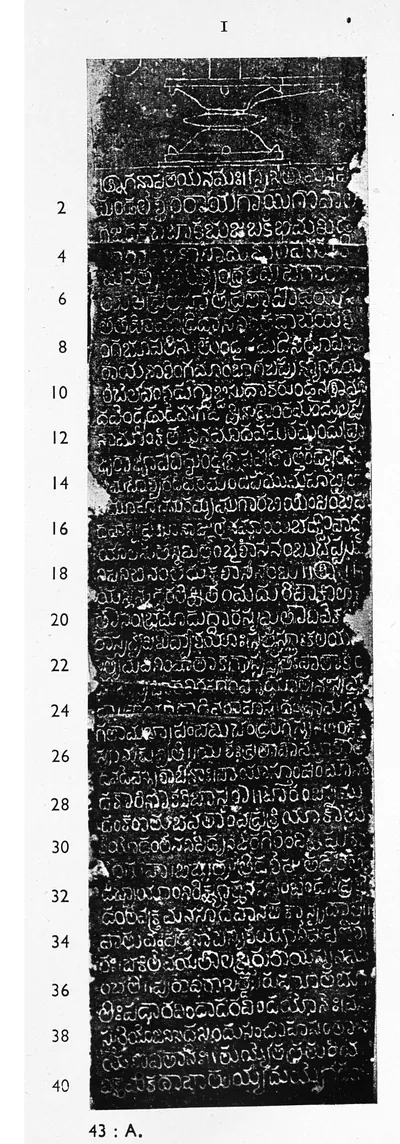 "Umamahesvaram inscription of Recerla Madhava-naya", face I (Corpus of Inscriptions in the Telingana Districts, Part III, plate 21, panel 43 : A)Inscription rubbing · 1956
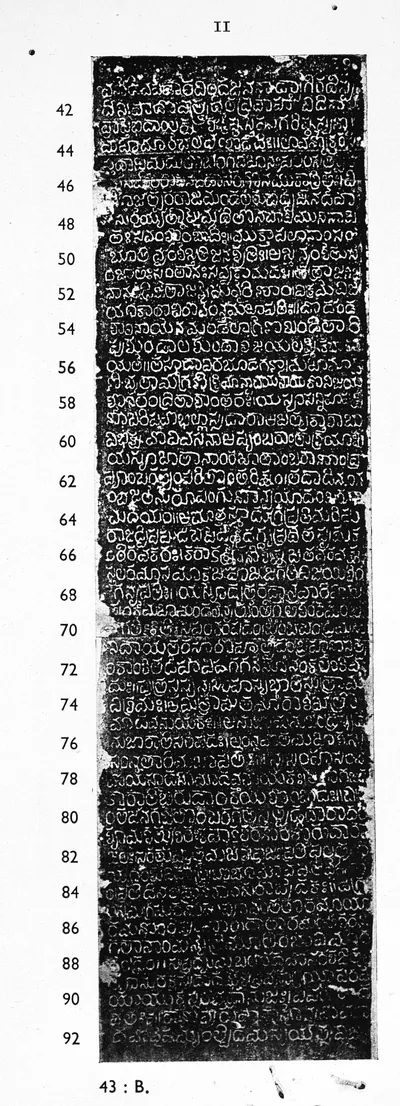 "Umamahesvaram inscription of Recerla Madhava-naya", face II (Corpus of Inscriptions in the Telingana Districts, Part III, plate 21, panel 43 : B)Inscription rubbing · 1956
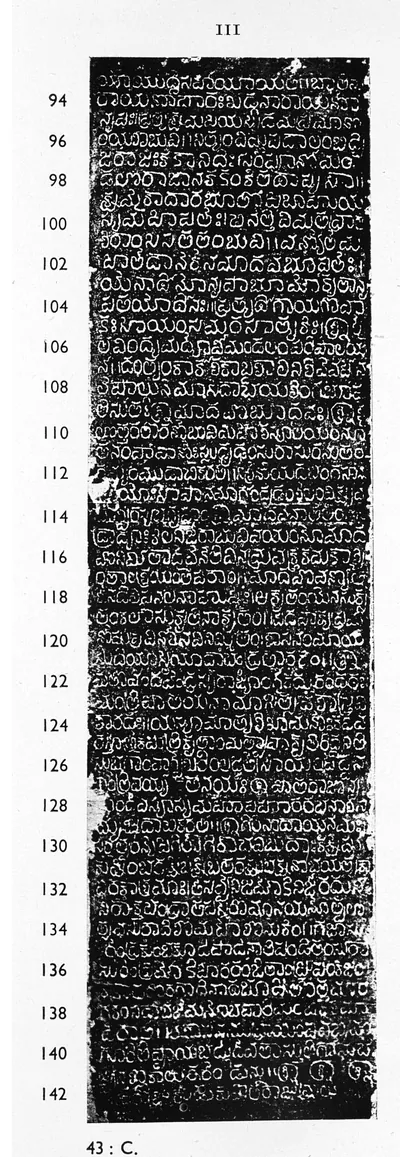 "Umamahesvaram inscription of Recerla Madhava-naya", face III (Corpus of Inscriptions in the Telingana Districts, Part III, plate 22, panel 43 : C)Inscription rubbing · 1956
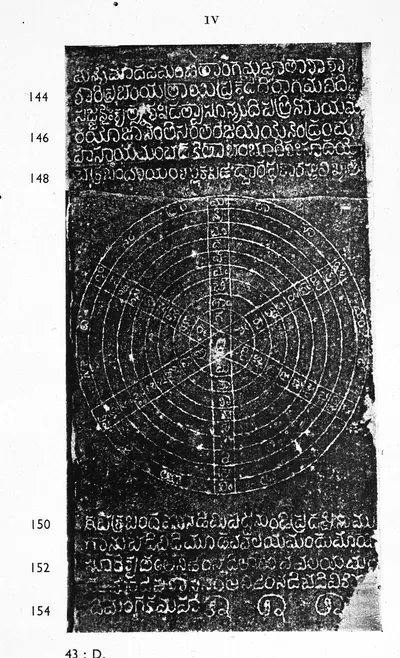 "Umamahesvaram inscription of Recerla Madhava-naya", face IV (Corpus of Inscriptions in the Telingana Districts, Part III, plate 22, panel 43 : D)Inscription rubbing · 1956
References
Notes (0)
Sources (4)
Spotted an error on this page? Tell us
Last updated: