Mada Nayaka (Recherla)
Recherla Velama chief (r. c. 1361–1384), younger son of Singama Nayaka and brother of Anapota. He ruled from Devarakonda and is counted as the founder of the Devarakonda branch. His inscription of 1377 records a pavilion he built at Umamahesvaram, the northern gateway of Srisailam. His son Venna governed Kandikonda.
Mada-nayaka, also called Madhava-nayaka, was the younger son of Singama Nayaka of the Recherla family and the brother of Anapota Nayaka. The Inavolu inscription of 1369 says the two brothers ruled the kingdom together.1 He held the southern half of their territory from Devarakonda.2 Epigraphia Telanganica calls him the real founder of the Devarakonda branch of the family.2 See the Recherla Velamas.
Family
The Rasarnavasudhakara describes Madhava-nayaka as the younger of Singa’s two sons, a lord whose valour was known to the ends of the earth.3 It says that his many sons, headed by Vedagiri, continued the family (our paraphrase of verse 16).3
The Kandikonda inscription of 1375 calls its donor, Venna, the son of Madhava and Tippamba.4 By his father’s order Venna went from Devagiri (Devarakonda), where he had been living, to rule Skandadri (Kandikonda).4 See Peda Vedagiri and the Kandikonda inscription of Venna.
Epigraphia Telanganica summarises a broken inscription of 1367 at Domalapalli in the Nalgonda district.5 It names Madanedu, son of Dachaya-Singa of the Recherla family.5 It records the installation of the god Chennakesava, with gifts made by a Machamba, probably his queen.5
Devarakonda
The family chronicle says that after the victories of 1361 Anapota made Mada ruler of Devarakonda.6 Alladi Jagannatha Sastri’s family history of 1922 says that Mada had a separate seat at Devarakonda.78 It was improved and fortified in his time, with Madhavapuram at the foot of the hill.78
His inscription at Umamahesvaram, in the text printed in the 1910 chronicle, introduces him as Madhavendra.9 It seats him on his throne at Madhavapura, the town named after him in the country south of Devanaga, the god’s hill (Devarakonda).9 Epigraphia Telanganica likewise says that he made Madhavapuram, to the south of Devarakonda, his capital.10
Umamahesvaram and Srisailam
Umamahesvaram, a shrine on a hill near Achampet in the Mahbubnagar district, was known as the northern gateway of Srisailam. A Telugu and Sanskrit inscription there records that Madhava built a pavilion (mantapa) for the god Mahesvara.1112 He built it in Saka 1298 (Saka is an Indian way of counting years), the year Nala, in the month Phalguna (early 1377).1112
The inscription gives the family’s genealogy from the early heroes Vennaya and Dacaya, and Dacaya is remembered for defeating the armies of a Bhillama.12 It lists Madhava’s titles, among them gaja-dal-arati, Khadga-Narayana, Samara-Satyaki, Raya-Gopala and Somakula-Parasurama.12 See the Umamahesvaram inscription of Mada Nayaka.
An undated Telugu inscription is on a slab by the steps at Jatararevu, the ferry over the Krishna on the pilgrims’ road to Srisailam. It records that Madanayaka of the Recherla family built a flight of steps down to the river, for the merit of himself and his parents. It was published in 1974 and is summarised in Epigraphia Telanganica.131415 It gives him titles that recall victories over Mummadi, the Pandyas and the princes of the lunar race.131415
Epigraphia Telanganica notes that the Rasarnavasudhakara credits the steps near Srisailam to Anapota instead.10 It suggests that either both brothers built steps, or the poet gave his father the credit for a work of the brothers’ joint reign.10
Wars
According to Epigraphia Telanganica, which follows the family chronicle, Mada and his cousin Naganayaka defeated the Reddi king Anapota of Kondavidu at Dhanyakataka before 1364. Later the Reddi Anavema extended his power to Vadapalli on the northern bank of the Krishna. In this account, Mada drove him back and made the Krishna the southern frontier of the Velama kingdom. The chronicle also credits him with a victory over a Muslim commander it calls Jangli Khan.210
Jagannatha Sastri says that he defeated Anapotha Reddi, a relation of Anavema Reddi, near Dannala.8 For his wars, Epigraphia Telanganica says, he bore the titles Samara-Satyaki and Pratyarthi-gayagovala.10 Its list of rulers ends his reign, like his brother’s, in 1384.16
His officers
The Umamahesvaram inscription was composed by Mayi-bhattopadhyaya, who bore the title pada-vakya-pramanajna. P. Sreenivasachar’s summary of 1956 says that Madhava’s minister Peddana had a son Potaraju Gaurana.12 It says the author of the Telugu Harischandra and Navanatha-charitra was Peddana’s father.12
The catalogue of 1964, as quoted in Epigraphia Telanganica, reads the relationship differently.17 In it the minister Peddanna had a son Potaraju, whose son Gaurana was the poet.17
Footnotes
-
P. Sreenivasachar (ed.), A Corpus of Inscriptions in the Telingana Districts of Andhra Pradesh, Part III (1956), p. 119, No. Wg. 1 (archive.org (opens in a new tab)). Paraphrased. ↩
-
Epigraphia Telanganica, vol. 4 (2023), p. 26, No. 10. Cite-only; paraphrased. ↩ ↩2 ↩3
-
Singabhupala, The Rasarnavasudhakara, ed. T. Ganapati Sastri (Trivandrum Sanskrit Series No. L, 1916), p. 3, verses 15–16 (archive.org (opens in a new tab)). Paraphrase ours. ↩ ↩2
-
Sreenivasachar (ed.), Corpus, Part III (1956), p. 5, No. Km. 3 (archive.org (opens in a new tab)). Paraphrased. ↩ ↩2
-
Epigraphia Telanganica, vol. 4 (2023), p. 18, No. 4. Cite-only; paraphrased. ↩ ↩2 ↩3
-
Vellala Sadasiva Sastri, Velugotivari Vamsacaritramu (1910), pp. 32–33 (archive.org (opens in a new tab)). Telugu; paraphrased. ↩
-
Alladi Jagannatha Sastri, A Family History of Venkatagiri Rajas (1922), pp. 20–21 (archive.org (opens in a new tab)). ↩ ↩2
-
Jagannatha Sastri, Family History of Venkatagiri Rajas (1922), p. 24 (archive.org (opens in a new tab)). ↩ ↩2 ↩3
-
Sadasiva Sastri, Velugotivari Vamsacaritramu (1910), appendix, p. 31, inscription No. 10 (archive.org (opens in a new tab)). Telugu and Sanskrit; paraphrased. ↩ ↩2
-
Epigraphia Telanganica, vol. 4 (2023), pp. 27–28, No. 10. Cite-only; paraphrased. ↩ ↩2 ↩3 ↩4 ↩5
-
Sreenivasachar (ed.), Corpus, Part III (1956), p. 72, No. Mn. 35 (archive.org (opens in a new tab)). Paraphrased. ↩ ↩2
-
Sreenivasachar (ed.), Corpus, Part III (1956), p. 73, No. Mn. 35 (archive.org (opens in a new tab)). Paraphrased. ↩ ↩2 ↩3 ↩4 ↩5 ↩6
-
Epigraphia Telanganica, vol. 4 (2023), pp. 22–23, No. 10. Cite-only; paraphrased. ↩ ↩2
-
Epigraphia Telanganica, vol. 4 (2023), pp. 23–24, No. 10. Cite-only; paraphrased. ↩ ↩2
-
Epigraphia Telanganica, vol. 4 (2023), p. 25, No. 10. Cite-only; paraphrased. ↩ ↩2
-
Gajjala Vasanta Lakshmi (ed.), Epigraphia Telanganica, vol. 4 (2023), p. 11, list of rulers. Cite-only; paraphrased. ↩
-
Epigraphia Telanganica, vol. 4 (2023), pp. 21–22, No. 9. Cite-only; paraphrased. ↩ ↩2
Photos
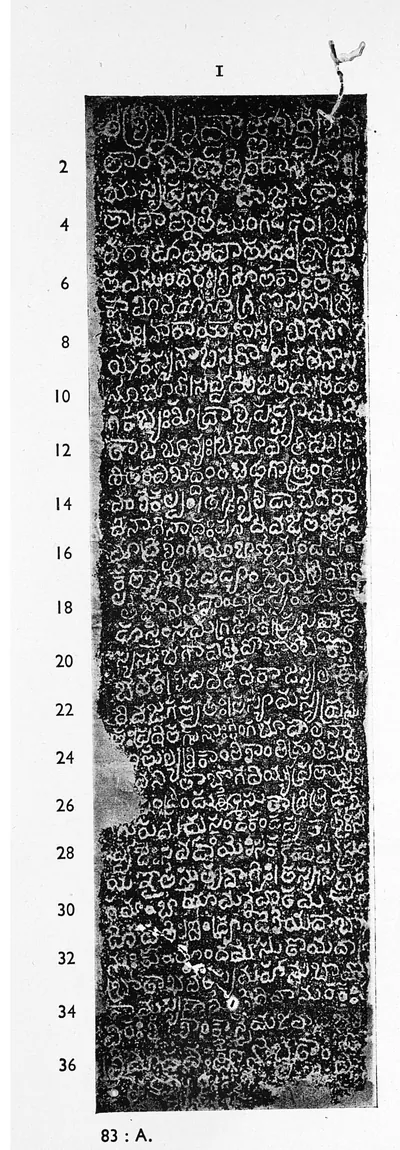 "Kandikonda inscription of Recerla Vennama-naya", face I (A Corpus of Inscriptions in the Telingana Districts, Part III, plate 6, panel 83 : A)Inscription rubbing · 1956
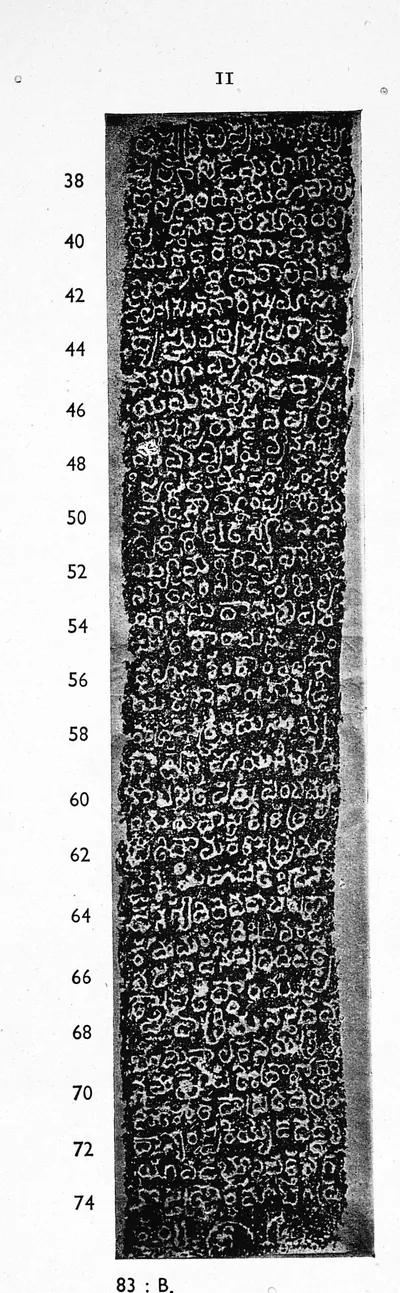 "Kandikonda inscription of Recerla Vennama-naya", face II (Corpus of Inscriptions in the Telingana Districts, Part III, plate 6, panel 83 : B)Inscription rubbing · 1956
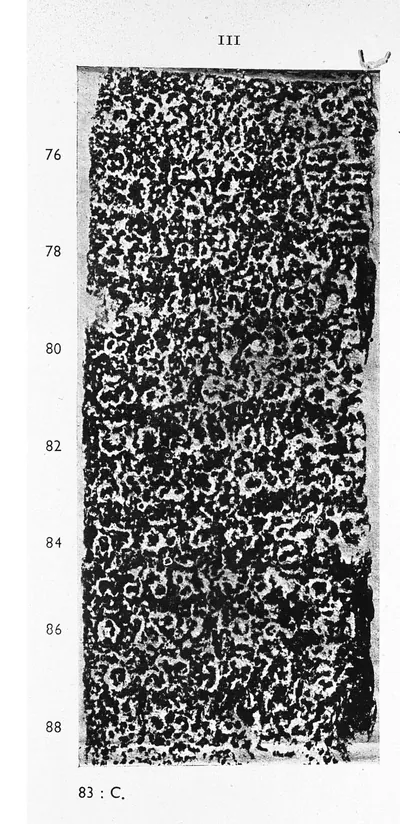 "Kandikonda inscription of Recerla Vennama-naya", face III (Corpus of Inscriptions in the Telingana Districts, Part III, plate 7, panel 83 : C)Inscription rubbing · 1956
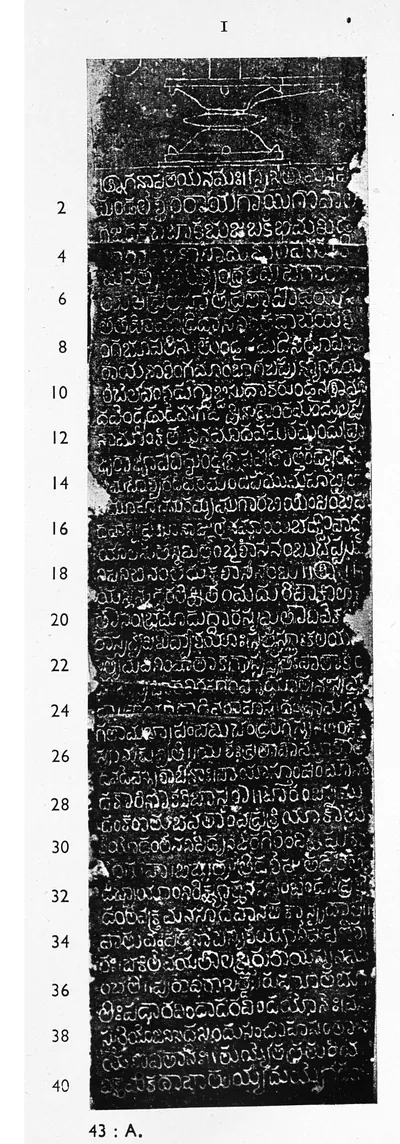 "Umamahesvaram inscription of Recerla Madhava-naya", face I (Corpus of Inscriptions in the Telingana Districts, Part III, plate 21, panel 43 : A)Inscription rubbing · 1956
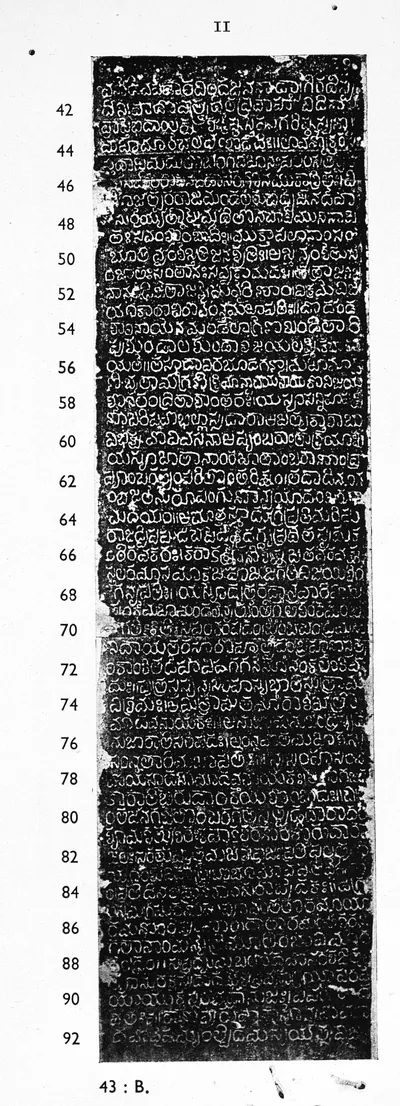 "Umamahesvaram inscription of Recerla Madhava-naya", face II (Corpus of Inscriptions in the Telingana Districts, Part III, plate 21, panel 43 : B)Inscription rubbing · 1956
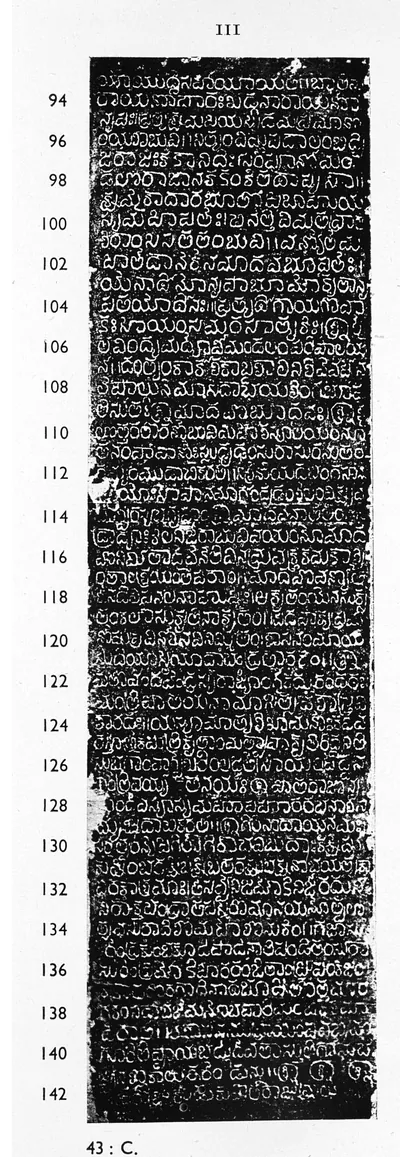 "Umamahesvaram inscription of Recerla Madhava-naya", face III (Corpus of Inscriptions in the Telingana Districts, Part III, plate 22, panel 43 : C)Inscription rubbing · 1956
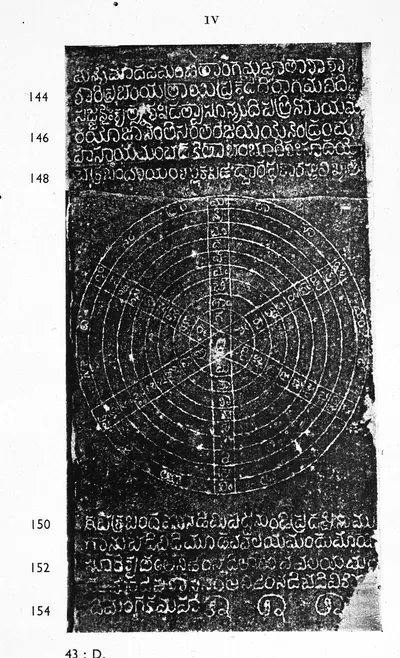 "Umamahesvaram inscription of Recerla Madhava-naya", face IV (Corpus of Inscriptions in the Telingana Districts, Part III, plate 22, panel 43 : D)Inscription rubbing · 1956
Related
Dynasties
References
Notes (0)
Sources (6)
Spotted an error on this page? Tell us
Last updated: