Alampur temples (Nava Brahma temples)
Group of early stone temples inside the old fort of Alampur on the Tungabhadra, in today's Telangana, known as the Nava Brahma or Navalingesvara temples. Inscriptions on them name queens and kings of the Chalukyas of Badami. They name a queen of Vikramaditya I (655–680), a queen of Vinayaditya, and Vijayaditya, under whom an enclosure was built in 704 and 713. The Nizam's Archaeological Department surveyed them in 1926-27 and compared their curved towers with the Papanatha temple at Pattadakal.
The temples inside the old fort of Alampur, on the Tungabhadra, are a group of early stone temples.123 Their own inscriptions tie them to the Chalukyas of Badami in the second half of the 7th century and the early 8th.123 The archaeologists who first described them did not date them.45
The survey of 1926-27
The Archaeological Department of the Nizam’s Dominions surveyed the temples in 1926-27.4 Its report says that “the place abounds in Hindu antiquities and it is still an important centre of Hindu religion”.4 The principal temple, “a cluster of shrines”, stands in the fort and “bears a striking resemblance to the Papanatha temple at Pattadakal”.4 The towers have a curved outline and are decorated with a network of miniature pillars, niches, windows and amalakas (ribbed stone discs).4
Inside, the report found the plans and carving closer to the rock-cut temples of Western India than to anything in Orissa.46 Most temples have a central nave (main hall) leading to the shrine, with an aisle on either side.46 A passage runs round the square shrine for circumambulation (walking round it in worship).46 Windows are fitted with stone screens “of exquisite designs”.46
The temples one by one
The report describes the temples one by one.7895 Two old temples, by then out of worship, stood beside the graveyard near the shrine of the saint Shah Ali.7895 They were associated with the names of Tarika Brahma and Solka Brahma.7895
The principal temple, then dedicated to Bhima Shankara, was still in use.7895 Its carving was hidden under coats of whitewash, and smaller shrines blocked the view of it.7895 Beyond it were the Kumara Brahma, Arka Brahma and Vira Brahma temples.7895
Among the carvings it singled out are these:695
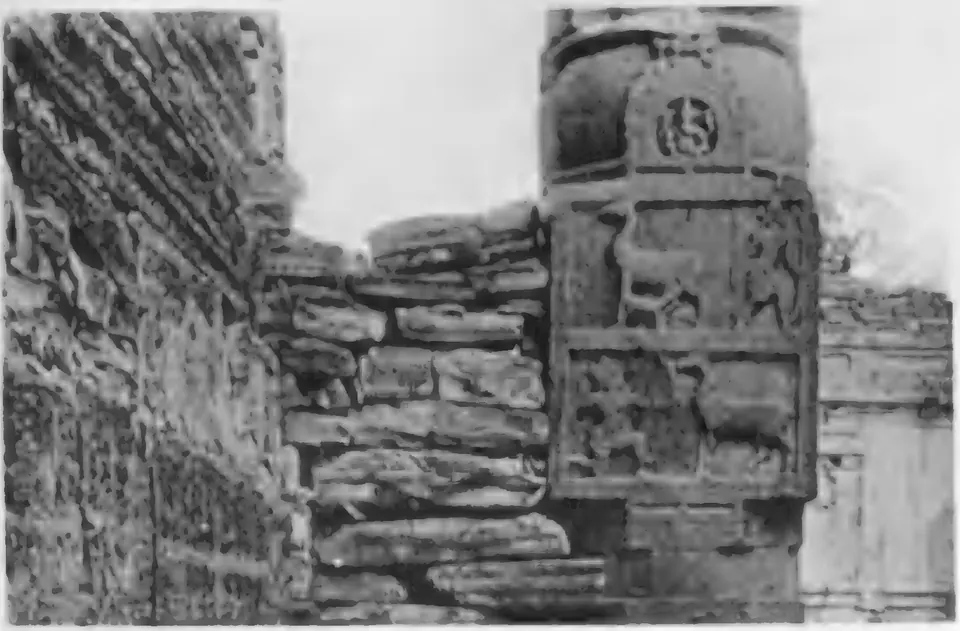
- a deer hunt on the posts of the old gateway695
- the Seven Mothers (saptamatas) on a frieze in the Kumara Brahma temple695
- elephants and a female chauri-bearer (fly-whisk bearer) on the walls of the Vira Brahma temple695
Rubbings were taken of the inscriptions near the portico of the principal temple, in the hope that they would “throw light on the exact date of the buildings”.8 That year Sultan Ali Faruqi of the department made three large architectural drawings of the temples.10
The style
The report summed up their style:
The form of their towers shows distinct influence of the North while the inner plan is characteristic of the rock-cut temples of Western India. The shrines, although situated on the border of the Dravidian country, have little in common with the architecture of the place; on the other hand their sculptures and decoration are often reminiscent of the classical grace of the Gupta art.5
A second group, associated with the name of Papanatha, stands in a grove about a mile south of the town.511 The report judged its architecture “poor”, showing “Dravidian influence”.511
The inscriptions
Later epigraphists read the temples’ inscriptions. The Epigraphia Telanganica (2023) collects them:
- A pillar in the hall in front of the central shrine of the Arka Brahma temple records two things: the queen of Anivarita Vikramaditya installed a linga (stone emblem of Shiva) in a temple of Mahadeva, and gave land.12 Its editors, M. D. Sampath and V. S. Subrahmanyam, identified the king as Vikramaditya I from the letters.12 They called the record the earliest known date for the group of temples called Navalingesvara.12 They thought the Arka Brahma temple was probably the Mahadeva temple it names.12
- A Kannada inscription above a door guardian in the Svarga Brahma temple says that Lokaditya-Ela-Arasa built the temple in honour of the queen of Vinayaditya.12
- A charter of Vijayaditya of 704 states that an enclosure was set up at the request of the Chalukya king and dedicated to Isanacharya.13
- G. S. Gai edited a slab in the fort wall near the river steps.14315 It has two versions of one text, in Telugu-Kannada and in Siddhamatrika (early Nagari) letters.14315 It is dated in Vijayaditya’s 18th year, 713, and records that Isanacharya built an enclosure at the king’s command.14315 Gai observed that the fort itself encloses the Navalingesvara temples, “the most important” of which is the Bala Brahma shrine.14315 He also noted that the Nagari version carried the use of that script in the south back by at least forty years.14315
- A pillar in the Bala Brahma temple describes Vinayaditya’s victory over “the Lord of Uttarapatha” (the north).15
An inscription of 1076 belongs to the reign of the Kalyani Chalukya king Somesvara II.16 It calls the god Brahmesvara of Alampur the ornament of the western entrance of Sriparvata (Srisailam).16
Other views of the date
Before the inscriptions were read, opinions differed widely. The Kurnool district manual of 1886 repeated a tradition that the temple at Alampur was built “in the time of the Chalukyas (the 11th century)”.17 A government list of protected monuments of Hyderabad State was published in 1953, and described the old Hindu temple at Alampur as of the 13th to 16th centuries.18 It also repeated the comparisons of the 1926-27 report.18
Footnotes
-
Gajjala Vasanta Lakshmi (ed.), Epigraphia Telanganica I: Pre-Kakatiya Telangana (2023), p. 39, summarising Indian Archaeology 1976-77, p. 57, and M. D. Sampath and V. S. Subrahmanyam in Epigraphia Indica XL. Cite-only; paraphrased. ↩ ↩2 ↩3 ↩4 ↩5 ↩6
-
Epigraphia Telanganica I (2023), p. 40. Cite-only; paraphrased. ↩ ↩2 ↩3 ↩4 ↩5 ↩6
-
Epigraphia Telanganica I (2023), p. 48, reprinting Gai. Cite-only; paraphrased except for the short phrase quoted. ↩ ↩2 ↩3 ↩4 ↩5 ↩6 ↩7
-
Annual Report of the Archaeological Department of H.E.H. the Nizam’s Dominions, 1926-27 (1929), p. 7 (archive.org (opens in a new tab)). ↩ ↩2 ↩3 ↩4 ↩5 ↩6 ↩7 ↩8 ↩9
-
Nizam’s Archaeological Report 1926-27 (1929), p. 12 (archive.org (opens in a new tab)). ↩ ↩2 ↩3 ↩4 ↩5 ↩6 ↩7 ↩8 ↩9 ↩10 ↩11 ↩12 ↩13 ↩14
-
Nizam’s Archaeological Report 1926-27 (1929), p. 8 (archive.org (opens in a new tab)). ↩ ↩2 ↩3 ↩4 ↩5 ↩6 ↩7 ↩8
-
Nizam’s Archaeological Report 1926-27 (1929), p. 9 (archive.org (opens in a new tab)). ↩ ↩2 ↩3 ↩4 ↩5 ↩6
-
Nizam’s Archaeological Report 1926-27 (1929), p. 10 (archive.org (opens in a new tab)). ↩ ↩2 ↩3 ↩4 ↩5 ↩6 ↩7
-
Nizam’s Archaeological Report 1926-27 (1929), p. 11 (archive.org (opens in a new tab)). ↩ ↩2 ↩3 ↩4 ↩5 ↩6 ↩7 ↩8 ↩9 ↩10
-
Nizam’s Archaeological Report 1926-27 (1929), p. 17 (archive.org (opens in a new tab)). ↩
-
Nizam’s Archaeological Report 1926-27 (1929), p. 13 (archive.org (opens in a new tab)). ↩ ↩2
-
Epigraphia Telanganica I (2023), p. 44, summarising the Annual Report on Indian Epigraphy for 1959-60, p. 60. Cite-only; paraphrased. ↩
-
Kannada Inscriptions of Andhra Pradesh (1961), p. 38, No. 107 (archive.org (opens in a new tab)). Paraphrased. ↩
-
Epigraphia Telanganica I (2023), p. 47, reprinting G. S. Gai, “Alampur Inscription of Chalukya Vijayaditya, Saka 635 and 636”, Epigraphia Indica XXXV, pp. 121–124. Cite-only; paraphrased. ↩ ↩2 ↩3 ↩4 ↩5
-
Epigraphia Telanganica I (2023), p. 49, summarising the Annual Report on Indian Epigraphy and Inscriptions of Andhra Pradesh, Mahabubnagar District I (2003), pp. 15–16. Cite-only; paraphrased except for the short phrase quoted. ↩ ↩2 ↩3 ↩4 ↩5 ↩6
-
Kannada Inscriptions of Andhra Pradesh (Andhra Pradesh Government Archaeological Series 3, 1961), p. 32, No. 80 (archive.org (opens in a new tab)). Paraphrased. ↩ ↩2
-
Narahari Gopalakristnamah Chetty, A Manual of the Kurnool District (1886), p. 1 (archive.org (opens in a new tab)). ↩
-
Antiquarian Remains in Hyderabad State (Archaeological Department, Hyderabad, 1953), p. 34, Mahbubnagar district, No. 40 (archive.org (opens in a new tab)). Paraphrased. ↩ ↩2
Photos
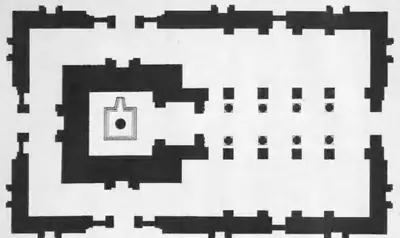 "(a) Plan of the Arka Brahma Temple. Scale: 9 ft. to 1 in." (Annual Report of the Archaeological Department of H.E.H. the Nizam's Dominions 1926-27, Plate IV (a) (PDF p. 61))Plan · 1929
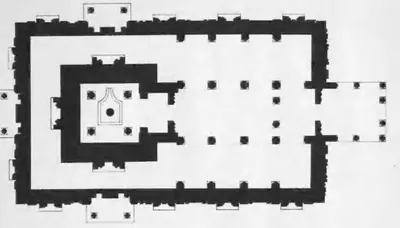 "(a) Plan of the Sulka Brahma Temple: 'Alampur. Scale: 12 ft. to 1 in." (Annual Report of the Archaeological Department of H.E.H. the Nizam's Dominions 1926-27, Plate III (a) (PDF p. 59))Plan · 1929
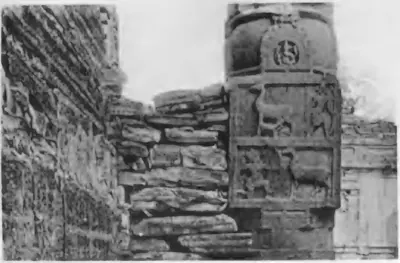 "(a) Story of the Deer: Gateway of the Temples: 'Alampur." (Annual Report of the Archaeological Department of H.E.H. the Nizam's Dominions 1926-27, Plate XI (a) (PDF p. 89))Historic photograph · 1929
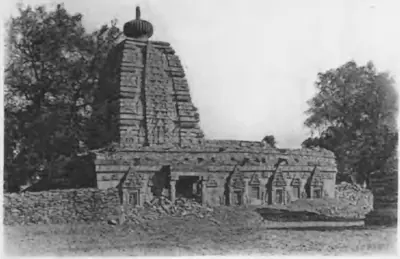 "(a) Temple No. 1: 'Alampur (Raichur)." (Annual Report of the Archaeological Department of H.E.H. the Nizam's Dominions 1926-27, Plate X (a) (PDF p. 85))Historic photograph · 1929
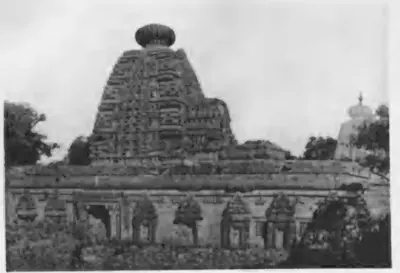 "(a) Temple No. 4: 'Alampur: General View." (Annual Report of the Archaeological Department of H.E.H. the Nizam's Dominions 1926-27, Plate XIII (a) (PDF p. 97))Historic photograph · 1929
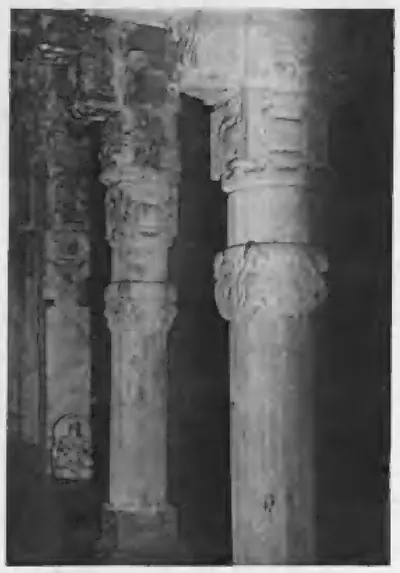 "(a) Temple No. 4: 'Alampur: Pillars." (Annual Report of the Archaeological Department of H.E.H. the Nizam's Dominions 1926-27, Plate XII (a) (PDF p. 93))Historic photograph · 1929
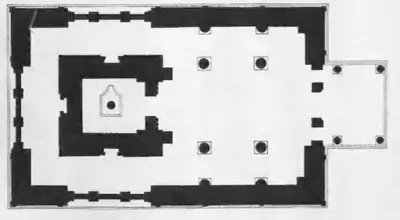 "(b) Plan of the Kumar Brahma Temple: 'Alampur. Scale: 9 ft. to 1 in." (Annual Report of the Archaeological Department of H.E.H. the Nizam's Dominions 1926-27, Plate III (b) (PDF p. 59))Plan · 1929
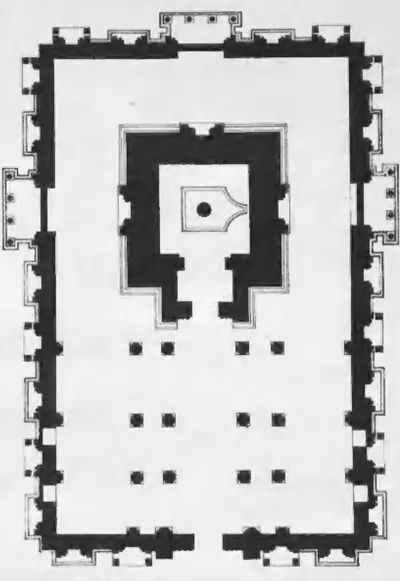 "(b) Plan of the Taraka Brahma Temple: 'Alampur. Scale: 12 ft. to 1 in." (Annual Report of the Archaeological Department of H.E.H. the Nizam's Dominions 1926-27, Plate II (b) (PDF p. 57))Plan · 1929
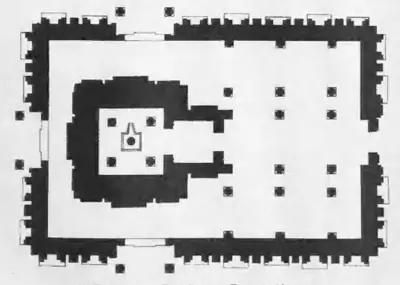 "(b) Plan of the Vira Brahma Temple: 'Alampur. Scale: 15 ft. to 1 in." (Annual Report of the Archaeological Department of H.E.H. the Nizam's Dominions 1926-27, Plate IV (b) (PDF p. 61))Plan · 1929
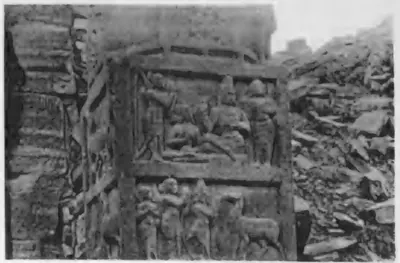 "(b) Story of the Deer: Another Episode." (Annual Report of the Archaeological Department of H.E.H. the Nizam's Dominions 1926-27, Plate XI (b) (PDF p. 89))Historic photograph · 1929
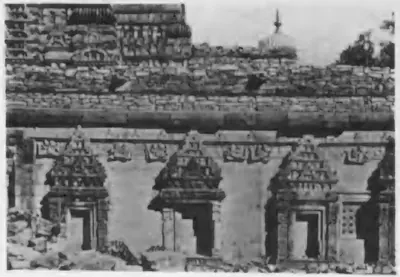 "(b) Temple No. 4: Carving." (Annual Report of the Archaeological Department of H.E.H. the Nizam's Dominions 1926-27, Plate XIII (b) (PDF p. 97))Historic photograph · 1929
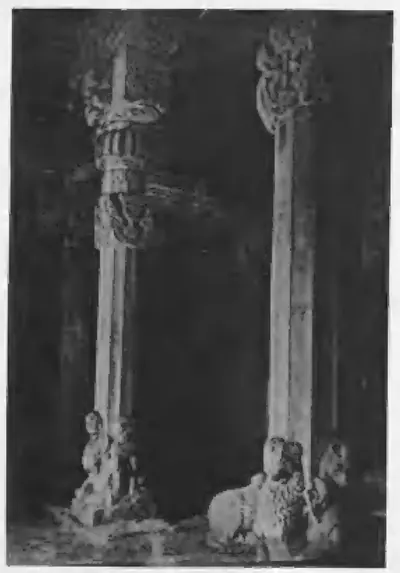 "(b) Temple No. 6: 'Alampur: Pillars." (Annual Report of the Archaeological Department of H.E.H. the Nizam's Dominions 1926-27, Plate XII (b) (PDF p. 93))Historic photograph · 1929
Show all (19)
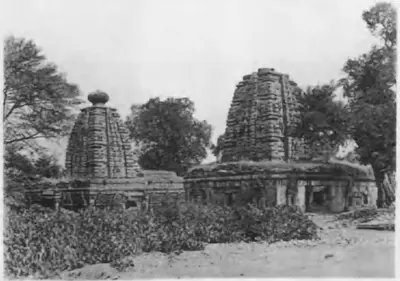 "(b) Temples Nos. 6 and 7: 'Alampur (Raichur)." (Annual Report of the Archaeological Department of H.E.H. the Nizam's Dominions 1926-27, Plate X (b) (PDF p. 85))Historic photograph · 1929
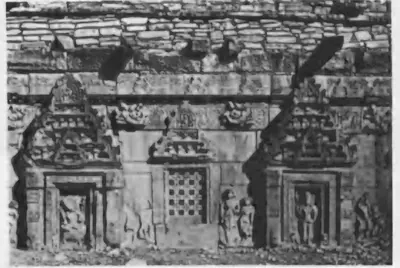 "(c) Temple No. 2: 'Alampur: Carving." (Annual Report of the Archaeological Department of H.E.H. the Nizam's Dominions 1926-27, Plate XIII (c) (PDF p. 97))Historic photograph · 1929
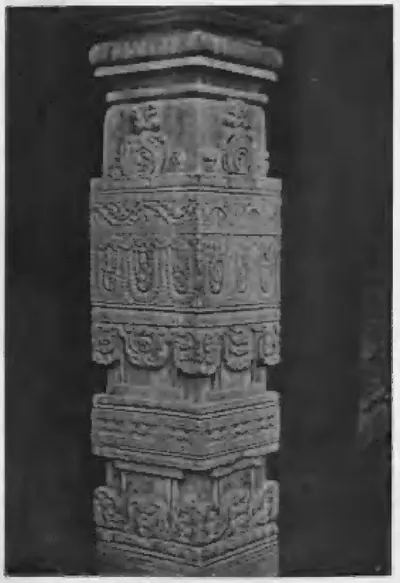 "(c) Temple No. 6: Another Pillar." (Annual Report of the Archaeological Department of H.E.H. the Nizam's Dominions 1926-27, Plate XII (c) (PDF p. 93))Historic photograph · 1929
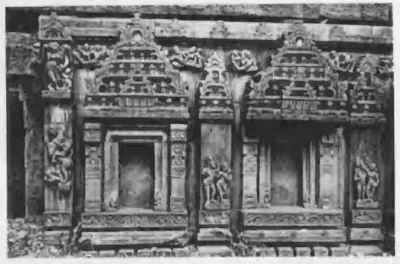 "(c) Temple No. 7: 'Alampur: Carving." (Annual Report of the Archaeological Department of H.E.H. the Nizam's Dominions 1926-27, Plate XI (c) (PDF p. 89))Historic photograph · 1929
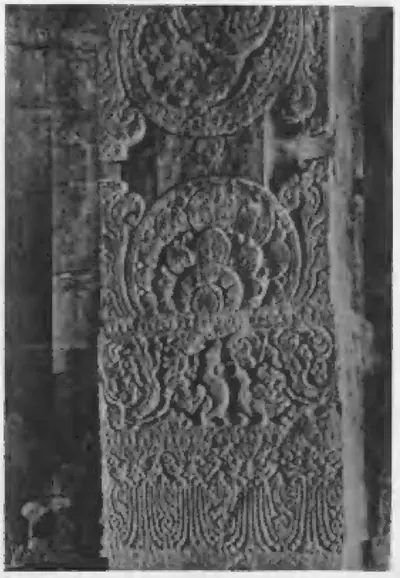 "(d) Dharmasala: 'Alampur: Pillar." (Annual Report of the Archaeological Department of H.E.H. the Nizam's Dominions 1926-27, Plate XII (d) (PDF p. 93))Historic photograph · 1929
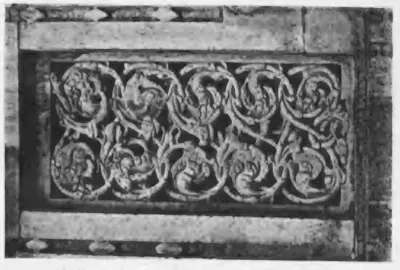 "(d) Dharmasala: 'Alampur: Window Grill." (Annual Report of the Archaeological Department of H.E.H. the Nizam's Dominions 1926-27, Plate XI (d) (PDF p. 89))Historic photograph · 1929
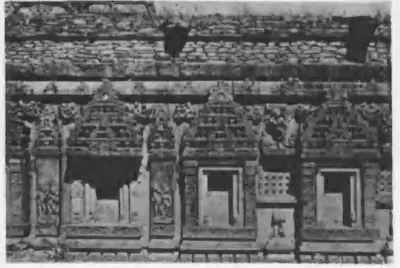 "(d) Temple No. 7: 'Alampur: Carving." (Annual Report of the Archaeological Department of H.E.H. the Nizam's Dominions 1926-27, Plate XIII (d) (PDF p. 97))Historic photograph · 1929
References
Notes (0)
Sources (5)
Spotted an error on this page? Tell us
Last updated: