Alampur
Town on the west bank of the Tungabhadra near its meeting with the Krishna, now in Telangana. It was formerly the head of a taluk of the Raichur and then the Mahbubnagar district of Hyderabad State. Its fort holds the Nava Brahma temples, whose inscriptions name kings and queens of the Chalukyas of Badami. Copper-plate grants of Vikramaditya I and Vinayaditya were found in the taluk. Inscriptions call the place Hatampura, and its god Brahmesvara the guardian of the western gate of Srisailam.
Alampur stands on the western bank of the Tungabhadra.1 In 1926-27 it was the headquarters of a taluk of the Raichur district of Hyderabad State.1 It was reached from the railway station of Alampur Road, six miles away.1
The Imperial Gazetteer of 1909 places the meeting of the Tungabhadra and the Krishna in the Alampur taluk.23 It lists Alampur among the old forts of the Raichur district.23 D. C. Sircar, writing in the late 1950s, noted that the Alampur taluk had passed from the Raichur district to the Mahbubnagar district.4 The Kurnool manual of 1886 put Alampur about eight miles north-east of Kurnool.5
Names and the Srisailam gateway
The Kannada inscriptions of Alampur call the place Hatampura and Anampur, as well as Alampur.67 An inscription of 1101 speaks of the god Brahmesvara of Hatampura.67 The editor of the collection took it to confirm “the identity of Hatampura with Alampur”.67 An inscription of 1076 describes Brahmesvara of Alampur as adorning the western entrance of Sriparvata (Srisailam).8
The Chalukya town
The temples in the fort, the Nava Brahma temples, carry inscriptions of the Chalukyas of Badami from the reigns of Vikramaditya I, Vinayaditya and Vijayaditya.9106 Grants of the same kings were found nearby. The Amudalapadu plates of Vikramaditya I, dated 660, came from a village in the Alampur taluk.4 So did the Pallepadu plates of Vinayaditya of 682.4
The Kurnool manual repeats a story about the founding of Kurnool.5 By this story, the town grew up where the carters who hauled stone for the temple at Alampur greased their wheels, “in the time of the Chalukyas (the 11th century)”.5
Under the Chalukyas of Kalyani
About twenty Kannada inscriptions at Alampur belong to the reigns of the Western Chalukyas of Kalyani:
- Somesvara I (1051, 1057, 1060 and 1067)
- Somesvara II (1073 and 1076)
- Vikramaditya VI (from 1078 to 1107)11126
Most record gifts to the god Brahmesvara, made through the head (mahasthanadhipati) of his religious foundation.11126 The givers were the king’s feudatories and queens of Vikramaditya VI.11126 The feudatories included the Choda chiefs Chiddana and Irugana, and the Vaidumba chief Malla-Maharaja, who governed the Ayaje three-hundred district.11126 See the Alampur inscription of 1073.
Footnotes
-
Annual Report of the Archaeological Department of H.E.H. the Nizam’s Dominions, 1926-27 (1929), p. 7 and note 3 (archive.org (opens in a new tab)). ↩ ↩2 ↩3
-
Imperial Gazetteer of India, Provincial Series: Hyderabad State (1909), p. 271 (archive.org (opens in a new tab)). ↩ ↩2
-
Imperial Gazetteer of India: Hyderabad State (1909), p. 272 (archive.org (opens in a new tab)). ↩ ↩2
-
D. C. Sircar, “Amudalapadu Plates of Vikramaditya I, Year 5”, Epigraphia Indica XXXII (1959), p. 175 and note 1 (archive.org (opens in a new tab)). Paraphrased. ↩ ↩2 ↩3
-
Narahari Gopalakristnamah Chetty, A Manual of the Kurnool District (1886), p. 1 (archive.org (opens in a new tab)). ↩ ↩2 ↩3
-
Kannada Inscriptions of Andhra Pradesh (1961), p. 38, Nos. 107–108 (archive.org (opens in a new tab)). Paraphrased, except for the short phrase quoted. ↩ ↩2 ↩3 ↩4 ↩5 ↩6 ↩7 ↩8
-
Kannada Inscriptions of Andhra Pradesh (1961), p. 39, No. 110 (archive.org (opens in a new tab)). Paraphrased. ↩ ↩2 ↩3
-
Kannada Inscriptions of Andhra Pradesh (Andhra Pradesh Government Archaeological Series 3, 1961), p. 32, No. 80 (archive.org (opens in a new tab)). Paraphrased. ↩
-
Gajjala Vasanta Lakshmi (ed.), Epigraphia Telanganica I: Pre-Kakatiya Telangana (2023), p. 39. Cite-only; paraphrased. ↩
-
Epigraphia Telanganica I (2023), p. 44. Cite-only; paraphrased. ↩
-
Kannada Inscriptions of Andhra Pradesh (1961), pp. 32–34, Nos. 80–88 (archive.org (opens in a new tab)). Paraphrased. ↩ ↩2 ↩3 ↩4
-
Kannada Inscriptions of Andhra Pradesh (1961), p. 35, Nos. 91–95 (archive.org (opens in a new tab)). Paraphrased. ↩ ↩2 ↩3 ↩4
Photos
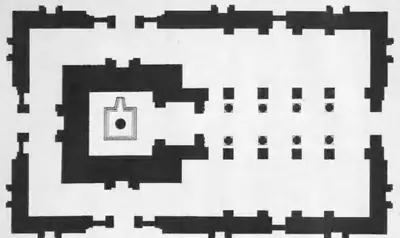 "(a) Plan of the Arka Brahma Temple. Scale: 9 ft. to 1 in." (Annual Report of the Archaeological Department of H.E.H. the Nizam's Dominions 1926-27, Plate IV (a) (PDF p. 61))Plan · 1929
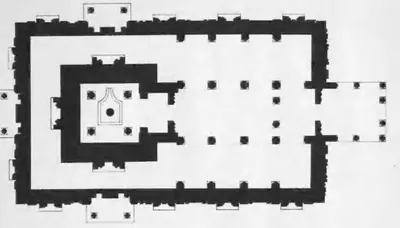 "(a) Plan of the Sulka Brahma Temple: 'Alampur. Scale: 12 ft. to 1 in." (Annual Report of the Archaeological Department of H.E.H. the Nizam's Dominions 1926-27, Plate III (a) (PDF p. 59))Plan · 1929
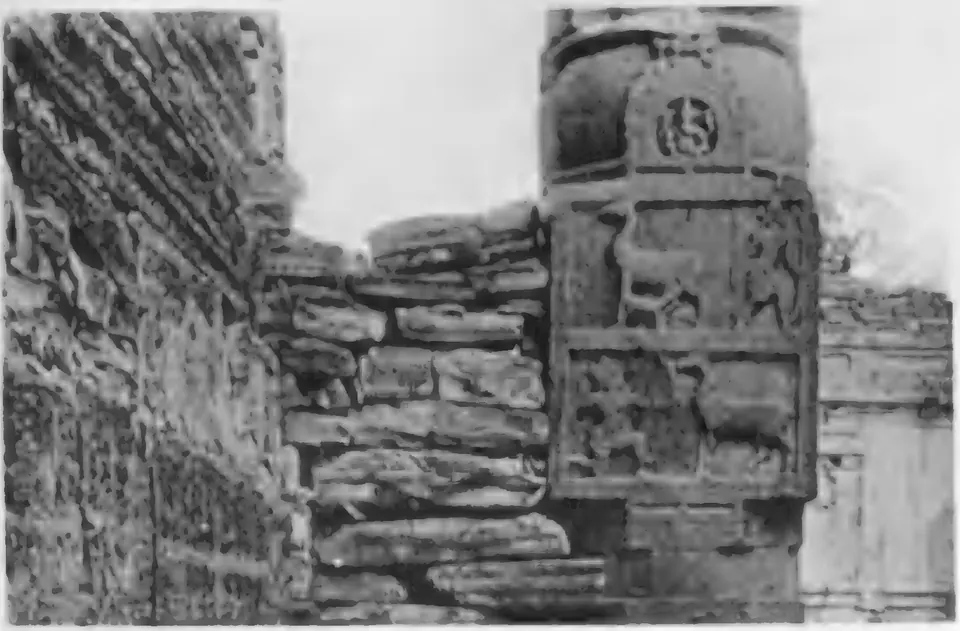
 "(a) Story of the Deer: Gateway of the Temples: 'Alampur." (Annual Report of the Archaeological Department of H.E.H. the Nizam's Dominions 1926-27, Plate XI (a) (PDF p. 89))Historic photograph · 1929
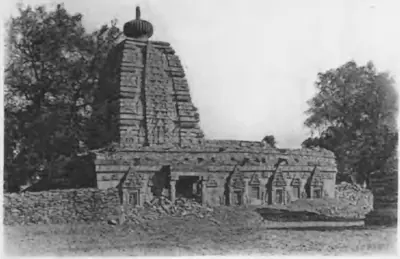 "(a) Temple No. 1: 'Alampur (Raichur)." (Annual Report of the Archaeological Department of H.E.H. the Nizam's Dominions 1926-27, Plate X (a) (PDF p. 85))Historic photograph · 1929
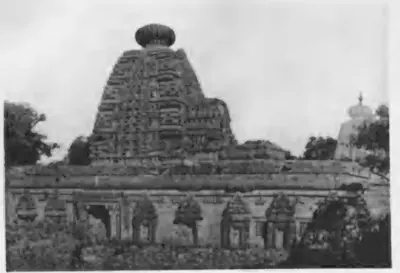 "(a) Temple No. 4: 'Alampur: General View." (Annual Report of the Archaeological Department of H.E.H. the Nizam's Dominions 1926-27, Plate XIII (a) (PDF p. 97))Historic photograph · 1929
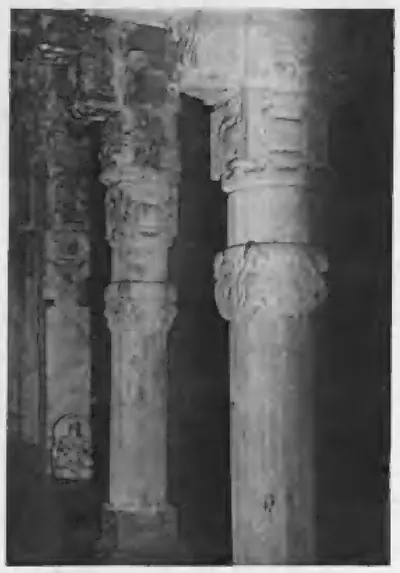 "(a) Temple No. 4: 'Alampur: Pillars." (Annual Report of the Archaeological Department of H.E.H. the Nizam's Dominions 1926-27, Plate XII (a) (PDF p. 93))Historic photograph · 1929
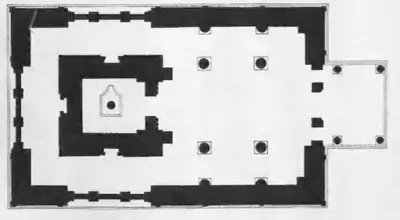 "(b) Plan of the Kumar Brahma Temple: 'Alampur. Scale: 9 ft. to 1 in." (Annual Report of the Archaeological Department of H.E.H. the Nizam's Dominions 1926-27, Plate III (b) (PDF p. 59))Plan · 1929
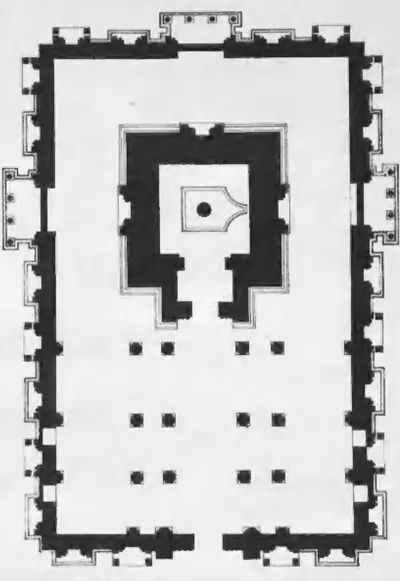 "(b) Plan of the Taraka Brahma Temple: 'Alampur. Scale: 12 ft. to 1 in." (Annual Report of the Archaeological Department of H.E.H. the Nizam's Dominions 1926-27, Plate II (b) (PDF p. 57))Plan · 1929
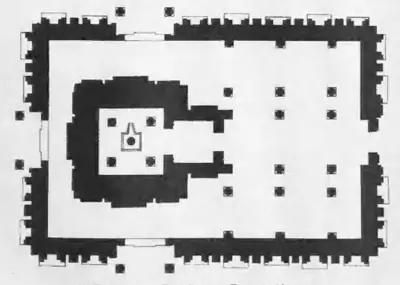 "(b) Plan of the Vira Brahma Temple: 'Alampur. Scale: 15 ft. to 1 in." (Annual Report of the Archaeological Department of H.E.H. the Nizam's Dominions 1926-27, Plate IV (b) (PDF p. 61))Plan · 1929
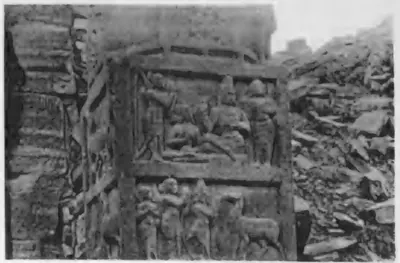 "(b) Story of the Deer: Another Episode." (Annual Report of the Archaeological Department of H.E.H. the Nizam's Dominions 1926-27, Plate XI (b) (PDF p. 89))Historic photograph · 1929
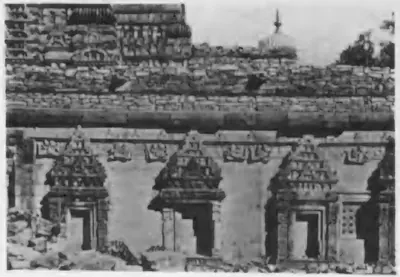 "(b) Temple No. 4: Carving." (Annual Report of the Archaeological Department of H.E.H. the Nizam's Dominions 1926-27, Plate XIII (b) (PDF p. 97))Historic photograph · 1929
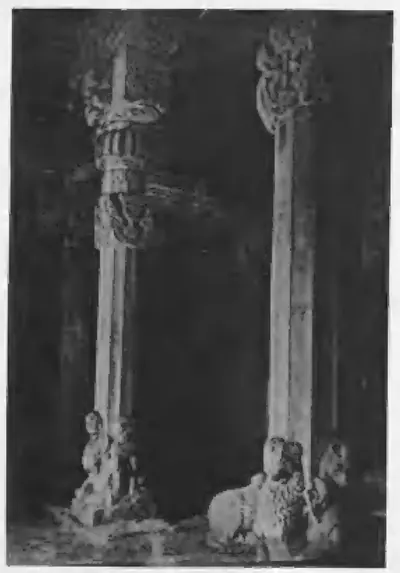 "(b) Temple No. 6: 'Alampur: Pillars." (Annual Report of the Archaeological Department of H.E.H. the Nizam's Dominions 1926-27, Plate XII (b) (PDF p. 93))Historic photograph · 1929
Show all (27)
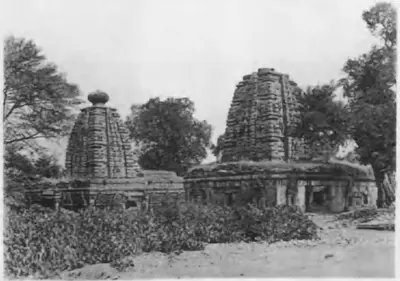 "(b) Temples Nos. 6 and 7: 'Alampur (Raichur)." (Annual Report of the Archaeological Department of H.E.H. the Nizam's Dominions 1926-27, Plate X (b) (PDF p. 85))Historic photograph · 1929
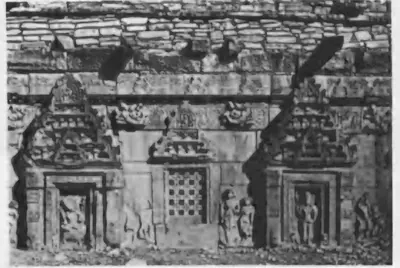 "(c) Temple No. 2: 'Alampur: Carving." (Annual Report of the Archaeological Department of H.E.H. the Nizam's Dominions 1926-27, Plate XIII (c) (PDF p. 97))Historic photograph · 1929
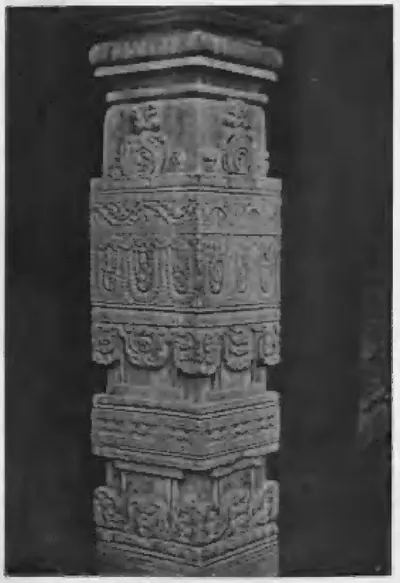 "(c) Temple No. 6: Another Pillar." (Annual Report of the Archaeological Department of H.E.H. the Nizam's Dominions 1926-27, Plate XII (c) (PDF p. 93))Historic photograph · 1929
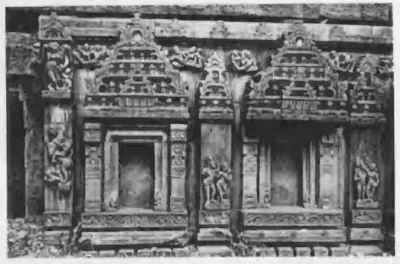 "(c) Temple No. 7: 'Alampur: Carving." (Annual Report of the Archaeological Department of H.E.H. the Nizam's Dominions 1926-27, Plate XI (c) (PDF p. 89))Historic photograph · 1929
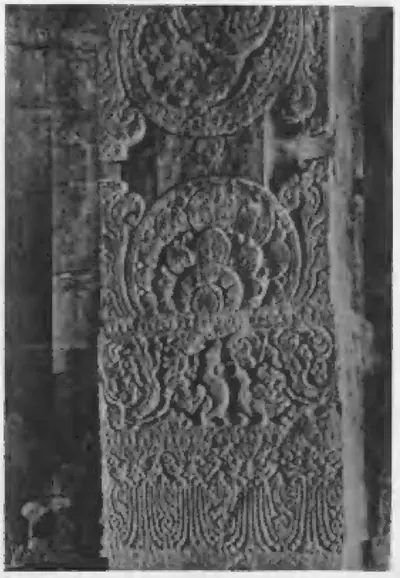 "(d) Dharmasala: 'Alampur: Pillar." (Annual Report of the Archaeological Department of H.E.H. the Nizam's Dominions 1926-27, Plate XII (d) (PDF p. 93))Historic photograph · 1929
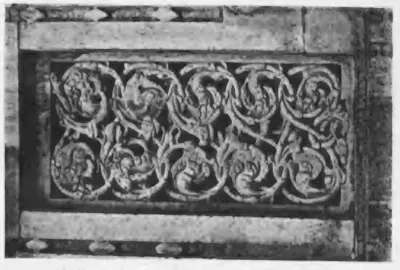 "(d) Dharmasala: 'Alampur: Window Grill." (Annual Report of the Archaeological Department of H.E.H. the Nizam's Dominions 1926-27, Plate XI (d) (PDF p. 89))Historic photograph · 1929
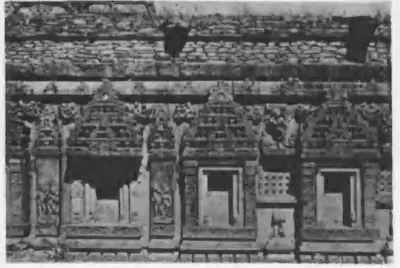 "(d) Temple No. 7: 'Alampur: Carving." (Annual Report of the Archaeological Department of H.E.H. the Nizam's Dominions 1926-27, Plate XIII (d) (PDF p. 97))Historic photograph · 1929
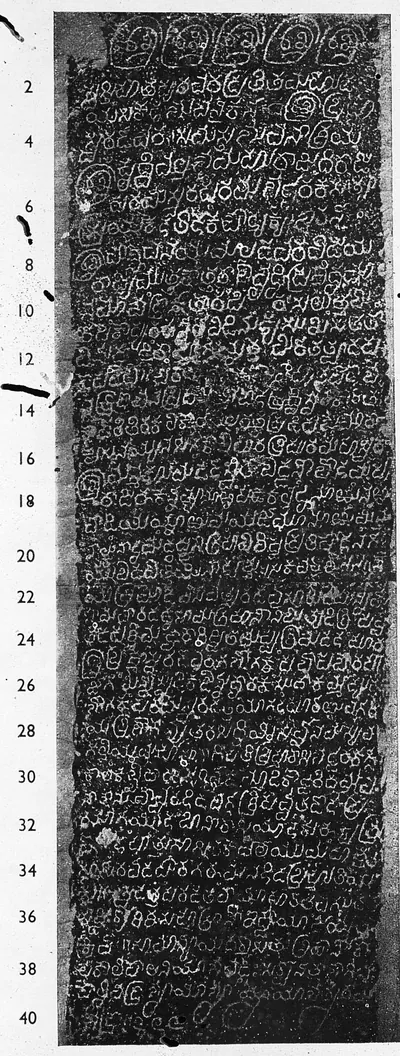 "Alampur inscription of Bhuvanaikamalla" (A Corpus of Inscriptions in the Telingana Districts, Part III, Plate 34, left (PDF p. 224))Inscription rubbing · 1956
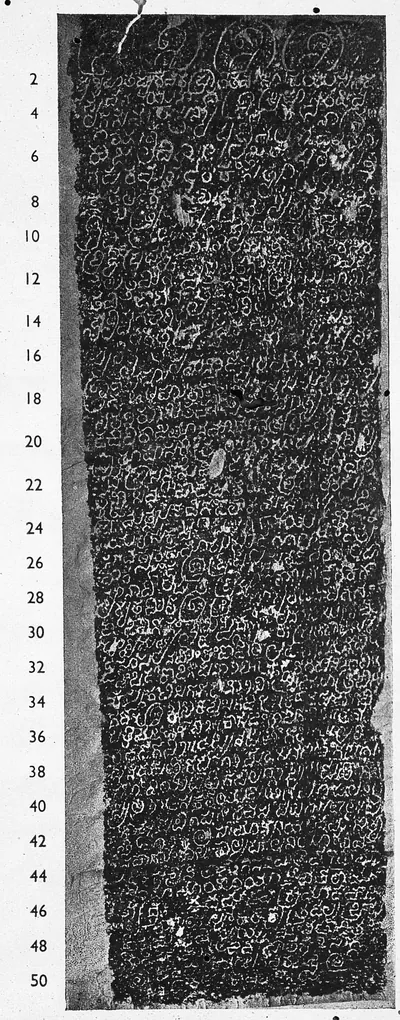 "Alampur inscription of Trailokyamalla" (A Corpus of Inscriptions in the Telingana Districts, Part III, Plate 34, right (PDF p. 224))Inscription rubbing · 1956
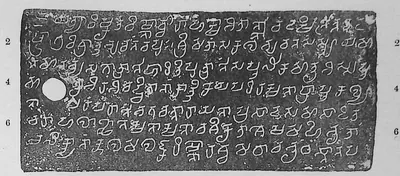 "Amudalapadu Plates of Vikramaditya I, Year 5", plate i (Epigraphia Indica XXXII, plate between pp. 182 and 183 (PDF p. 265))Inscription rubbing · 1959
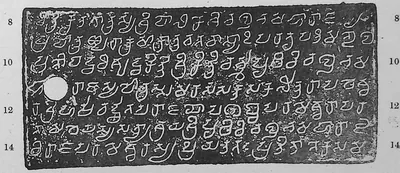 "Amudalapadu Plates of Vikramaditya I, Year 5", plate ii a (Epigraphia Indica XXXII, plate between pp. 182 and 183 (PDF p. 265))Inscription rubbing · 1959
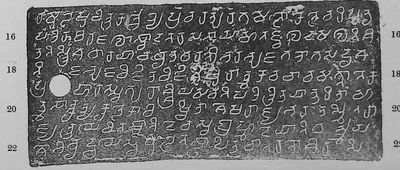 "Amudalapadu Plates of Vikramaditya I, Year 5", plate ii b (Epigraphia Indica XXXII, plate between pp. 182 and 183 (PDF p. 265))Inscription rubbing · 1959
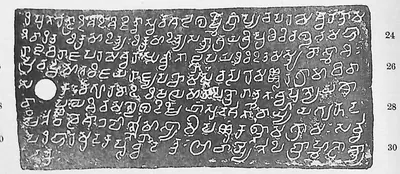 "Amudalapadu Plates of Vikramaditya I, Year 5", plate iii a (Epigraphia Indica XXXII, plate between pp. 182 and 183 (PDF p. 266))Inscription rubbing · 1959
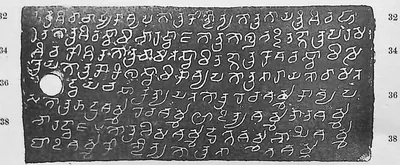 "Amudalapadu Plates of Vikramaditya I, Year 5", plate iii b (Epigraphia Indica XXXII, plate between pp. 182 and 183 (PDF p. 266))Inscription rubbing · 1959
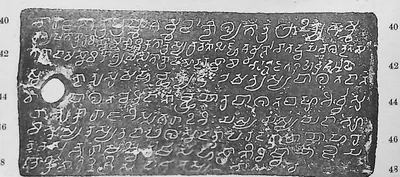 "Amudalapadu Plates of Vikramaditya I, Year 5", plate iv (Epigraphia Indica XXXII, plate between pp. 182 and 183 (PDF p. 266))Inscription rubbing · 1959
Related
People
Vikramaditya I (Chalukya of Badami)
c. 655–680 CE
Chalukya king of Badami (about 655–680), a son of Pulakesin II. He restored the kingdom after the Pallavas took Badami, fought three Pallava kings and took Kanchi. His copper-plate grants come from the Telugu country: Amudalapadu and Gadwal in today's Telangana, the Kurnool district, Talamanchi near Nellore, and Hyderabad. His Amudalapadu plates of 660 record his initiation into the Shaiva faith. A queen of his installed a linga at Alampur.
Govinda III (Rashtrakuta)
c. 793–814 CE
Rashtrakuta king (about 793–814), son of Dhruva, under whom the dynasty's power reached from the Vindhyas to the Tungabhadra. His Radhanpur plates of 808 say that the lord of Vengi, the Eastern Chalukya Vijayaditya II, came at his command and built an enclosure for him like a servant. An undated inscription at Kuruvagattu in the Mahbubnagar district names him as the friend of a Chalukya prince. A shrine of the Sun at Alampur was built for the prosperity of a king Prabhutavarsha who may be Govinda III.
Somesvara I
c. 1042–1068 CE
Western Chalukya king, called Trailokyamalla and Ahavamalla, who reigned from about 1042 to 1068 and made Kalyana (Kalyani) his capital. Records of his reign are found at Alampur, Bodhan and Kolanupaka in Telangana, and the early Kakatiya chiefs Beta I and Prola I served him. His wars with the Cholas reached the Vengi country. Chola inscriptions claim that his army sent to Vengi was destroyed and his sons beaten at Kudalasangamam. He drowned himself in the Tungabhadra in 1068.
Vikramaditya VI
c. 1076–1126 CE
Western Chalukya king of Kalyani, called Tribhuvanamalla. He deposed his brother Somesvara II in 1076 and reigned for fifty years, to 1126. He replaced the Saka era with his own Chalukya-Vikrama era, in which most Telangana records of the time are dated. As a prince he fought the Cholas and their Eastern Chalukya allies for Vengi. Late in his reign, after the Chola viceroy left in 1118, he was recognised as king in Vengi and the coastal Telugu country. His feudatories in Telangana included the Kakatiyas Beta II and Prola II and the Choda chiefs of Kandur.
Suravaram Pratapa Reddy
1896–1953 CE
Telugu writer, editor and public worker of Hyderabad State, from Alampur taluk of Mahbubnagar district (1896–1953). He founded and edited the Golkonda Patrika from 1925 to 1949, presided over the first Andhra Conference at Jogipet in 1930, and wrote a social history of the Telugu people that won the Sahitya Akademi award.
Monuments
Inscriptions
References
Notes (0)
Sources (6)
Spotted an error on this page? Tell us
Last updated: