Golingesvara and the temples of Biccavolu
Six small stone temples of Shiva at Biccavolu in the Godavari delta. The Golingesvara, Rajarajesvara and Chandrasekhara temples stand in a compound in the village, and three more stand in the fields outside. M. Rama Rao (1964) placed them in the reign of Gunaga Vijayaditya III. His reasons were that an inscription calls the Golingesvara god Bijayesvara, and that one doorway shows the river goddesses Ganga and Yamuna.
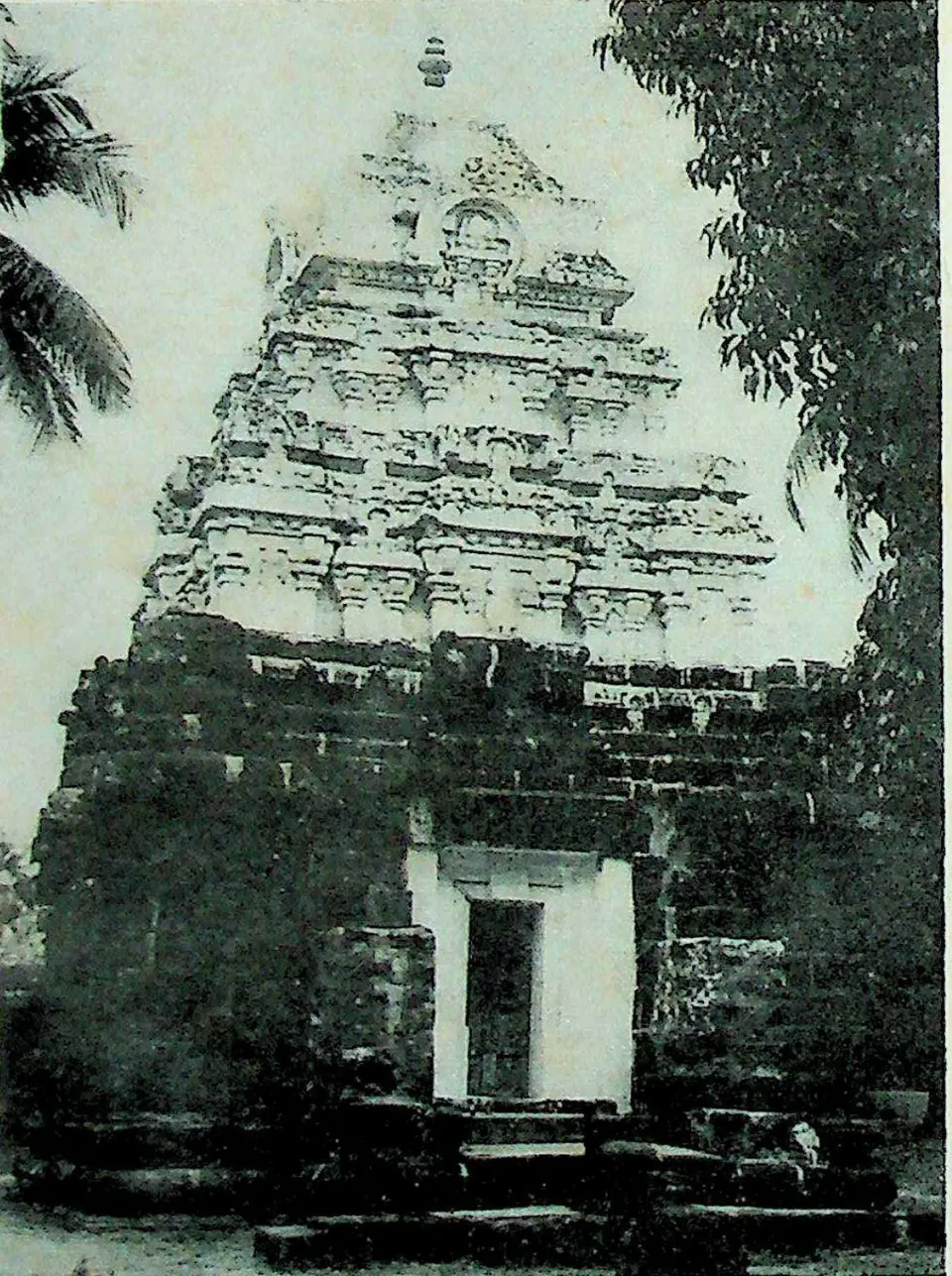
Biccavolu has six early stone temples of Shiva.123 Three stand in a walled compound in the middle of the village and face east.123 They are the Rajarajesvara temple to the south, the Golingesvara temple in the centre and the Chandrasekhara temple to the north.123 The other three stand outside the village, one on the road to Vilapalli and two in the fields near the high school.123
M. Rama Rao described them in detail.4 He surveyed the Eastern Chalukya temples of the Godavari and Guntur districts in 1956–58 and published his account in 1964.4
The case for Gunaga Vijayaditya III
Rama Rao’s dating rests on two pieces of evidence.1 First, he cited two inscriptions of the reign of a king Sarvalokasraya Vishnuvardhana, copied in 1929–30 (Nos. 12 and 13 of that year’s collection).1 One of them, in the present Golingesvara temple, calls the shrine that of “Bijayisvara mahadeva” and mentions a Padmasiva-pandita.1 Rama Rao took Bijaya to be a name of the Eastern Chalukya king Gunaga Vijayaditya III.1 He concluded that the linga (stone emblem of Shiva) had been named after him.1
Second, the door-jambs of one of the temples outside the village carry figures of the river goddesses Ganga and Yamuna.1 A Telugu journal had published a grant from Satuluru.1 It says that Vijayaditya kept Ganga and Yamuna near the gate of his palace.1 From these two points Rama Rao held that these two temples belonged to that king’s time.1 He placed the other four, which are similar in architecture, in the same period.1
In his introduction he states the conclusion more broadly.56 There he says that Gunaga Vijayaditya built one temple of the central group.56 On grounds of style, he says, all six “ought to be assigned” to his reign.56
Where the sources disagree
Other sources point in different directions. Rama Rao derived the village’s name from the title Birudanka-Bhima, which he gave to Gunaga Vijayaditya.1 F. Kielhorn’s list of 1903 and the epigraphical report for 1930–31 give that title to the later king Vimaladitya, crowned in 1011.789 See Biccavolu.
Sewell recorded only one dated inscription at Biccavolu, in 1882.10 It is a grant of 1123 “in the twenty-fifth year of the reign of Vijaya Raja”, on a slab at the door of the Govindesvarasvami shrine.10 The Godavari gazetteer of 1907 knew only that the village “is said to contain extensive ruins and some deserted temples”.11
The Golingesvara temple
The Golingesvara is the largest of the central group and, in Rama Rao’s words, the richest in sculpture.122 It has these parts:122
- a sanctum122
- a narrow vestibule122
- a pillared front hall (mukhamantapa) with perforated stone screens in its side walls122
- a hall added in modern times122
Each side wall of the sanctum has five projections with niches, separated by empty recesses.122 A frieze of dwarfs (bhutamala) runs above the pilaster capitals, with a wide cornice above it.122 The tower is a square Nagara sikhara (tower top) crowned by a double lotus and a finial.122
The niches hold many of the best sculptures of the group:122
- on the south wall, Shiva, a seated deity, Indra with his elephant Airavata, Agni with his ram, and a four-armed Vishnu1213
- on the west wall, Ekapada-murti, a goddess beneath serpent hoods, Kumara feeding his peacock, a serpent goddess (nagini) and a three-headed Brahma1213
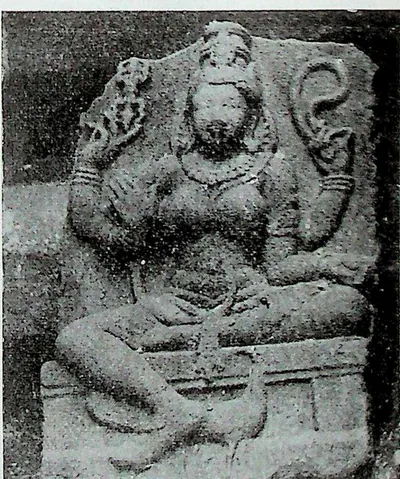
- on the north wall, Bhikshatana-murti, a buffalo-faced deity, a six-armed Mahishasuramardini, a six-armed Chamunda above a corpse eaten by a dog and a jackal, and another goddess121314
- on the front wall, Ardhanarishvara and the sun-god Surya standing in his chariot, which his charioteer Matali drives121514
The other temples
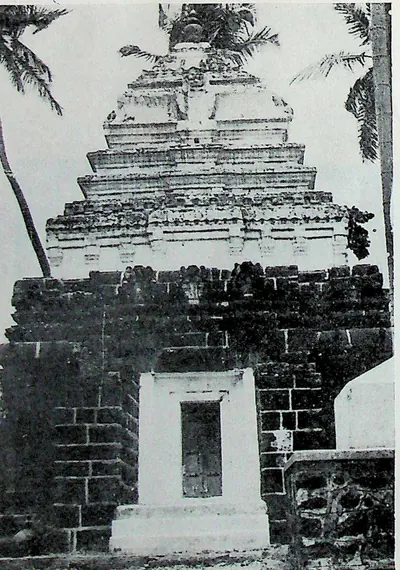
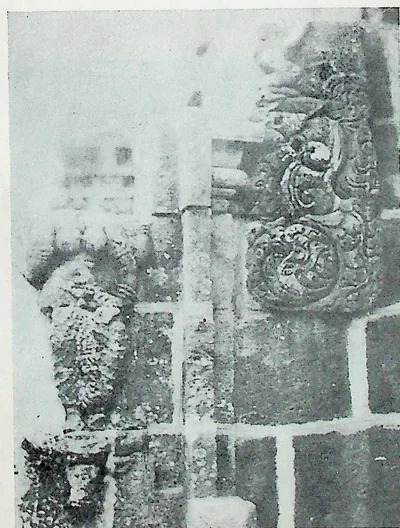
The Rajarajesvara temple is a simple sanctum with a two-storeyed tower and an open porch.11215 Its niches hold Ganapati, Kumara fondling a cock, and Kubera riding on a man.11215 The small Chandrasekhara temple has niches framed by makara arches (arches with sea-monster ends).2 Its tower is decorated with couples (mithunas) and a row of geese.2
Of the three temples outside the village, the one on the Vilapalli road was in ruins, its sikhara fallen.2314 Its niches hold a Nataraja, a Surya and a Mahishasuramardini.2314 The temple west of the high school lies half buried in a mound.31514 It has the Ganga and Yamuna figures at the base of its door-jambs, with Brahma, Surya and Vishnu in its wall niches.31514
Footnotes
-
Rama Rao, Eastern Calukyan Temples (1964), p. 3 (archive.org (opens in a new tab)). ↩ ↩2 ↩3 ↩4 ↩5 ↩6 ↩7 ↩8 ↩9 ↩10 ↩11 ↩12 ↩13 ↩14 ↩15 ↩16 ↩17
-
Rama Rao, Eastern Calukyan Temples (1964), p. 5 (archive.org (opens in a new tab)). ↩ ↩2 ↩3 ↩4 ↩5 ↩6 ↩7 ↩8 ↩9 ↩10 ↩11 ↩12 ↩13 ↩14 ↩15 ↩16 ↩17 ↩18
-
Rama Rao, Eastern Calukyan Temples (1964), p. 6 (archive.org (opens in a new tab)). ↩ ↩2 ↩3 ↩4 ↩5 ↩6 ↩7 ↩8
-
M. Rama Rao, Eastern Calukyan Temples of Andhra Desa (1964), preface (unnumbered) (archive.org (opens in a new tab)). ↩ ↩2
-
Rama Rao, Eastern Calukyan Temples (1964), p. 1 (archive.org (opens in a new tab)). ↩ ↩2 ↩3
-
Rama Rao, Eastern Calukyan Temples (1964), p. 2 (archive.org (opens in a new tab)). ↩ ↩2 ↩3
-
F. Kielhorn, “A List of the Inscriptions of Southern India”, appendix to Epigraphia Indica VII (1902–03), p. 96, No. 568 (archive.org (opens in a new tab)). ↩
-
Kielhorn, “List of the Inscriptions of Southern India” (1903), p. 97 (archive.org (opens in a new tab)). ↩
-
Annual Report on South-Indian Epigraphy for the Year ending 31st March 1931 (1932), p. 42 (archive.org (opens in a new tab)). ↩
-
Robert Sewell, Lists of the Antiquarian Remains in the Presidency of Madras, Vol. I (1882), p. 25, s.v. Bikkavōlu (archive.org (opens in a new tab)). ↩ ↩2
-
F. R. Hemingway, Madras District Gazetteers: Godavari (1907), p. 249 (archive.org (opens in a new tab)). ↩
-
Rama Rao, Eastern Calukyan Temples (1964), p. 4 (archive.org (opens in a new tab)). ↩ ↩2 ↩3 ↩4 ↩5 ↩6 ↩7 ↩8 ↩9 ↩10 ↩11 ↩12 ↩13 ↩14 ↩15 ↩16
-
Rama Rao, Eastern Calukyan Temples (1964), p. 8 (archive.org (opens in a new tab)). ↩ ↩2 ↩3
-
Rama Rao, Eastern Calukyan Temples (1964), p. 9 (archive.org (opens in a new tab)). ↩ ↩2 ↩3 ↩4 ↩5 ↩6
-
Rama Rao, Eastern Calukyan Temples (1964), p. 7 (archive.org (opens in a new tab)). ↩ ↩2 ↩3 ↩4 ↩5
Photos
 "1. Candraśēkhara Temple - Bikkavōlu" (M. Rama Rao, Eastern Calukyan Temples of Andhra Desa, 1964, Fig. 1 (PDF p. 59))Historic photograph · 1964
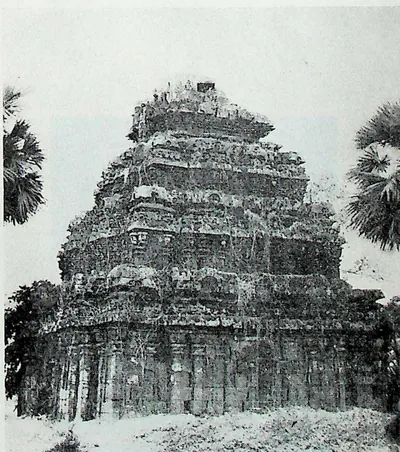 "10. Temple to the West of the High School - Bikkavōlu" (M. Rama Rao, Eastern Calukyan Temples of Andhra Desa, 1964, Fig. 10 (PDF p. 67))Historic photograph · 1964
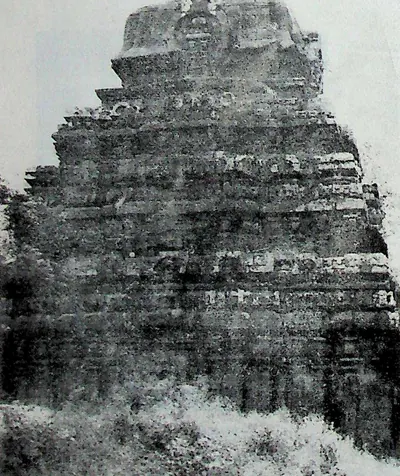 "11. Temple to the West of the High School - Bikkavōlu" (M. Rama Rao, Eastern Calukyan Temples of Andhra Desa, 1964, Fig. 11 (PDF p. 69))Historic photograph · 1964
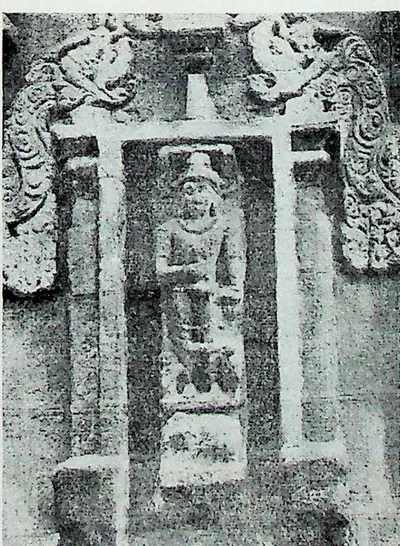 "12. Indra - Bikkavōlu" (M. Rama Rao, Eastern Calukyan Temples of Andhra Desa, 1964, Fig. 12 (PDF p. 69))Historic photograph · 1964
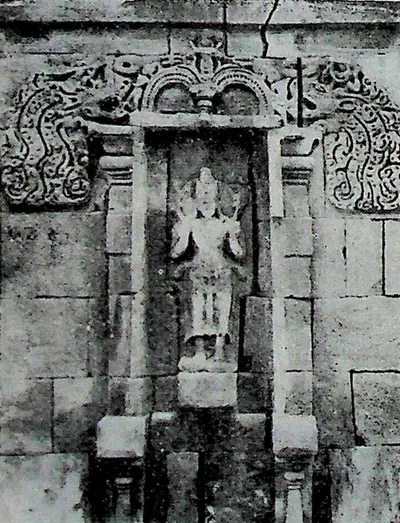 "13. Sūrya - Bikkavōlu" (M. Rama Rao, Eastern Calukyan Temples of Andhra Desa, 1964, Fig. 13 (PDF p. 71))Historic photograph · 1964
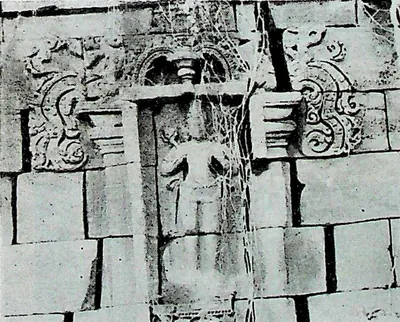 "14. Sūrya - Bikkavōlu" (M. Rama Rao, Eastern Calukyan Temples of Andhra Desa, 1964, Fig. 14 (PDF p. 71))Historic photograph · 1964
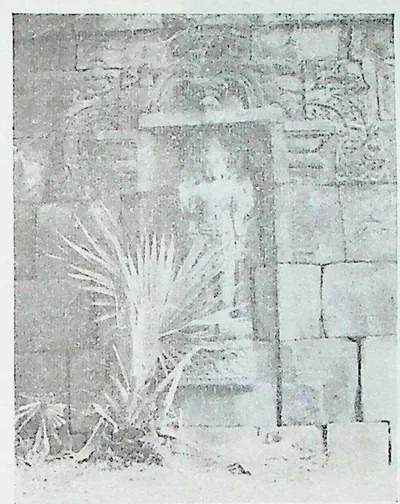 "15. Viṣṇu - Bikkavōlu" (M. Rama Rao, Eastern Calukyan Temples of Andhra Desa, 1964, Fig. 15 (PDF p. 73))Historic photograph · 1964
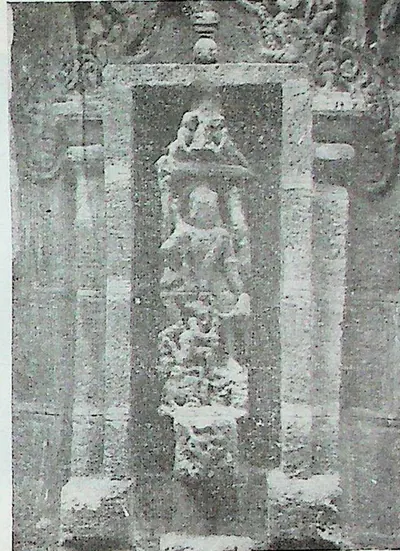 "16. Bikkavōlu - Mahiṣamardani" (M. Rama Rao, Eastern Calukyan Temples of Andhra Desa, 1964, Fig. 16 (PDF p. 73))Historic photograph · 1964
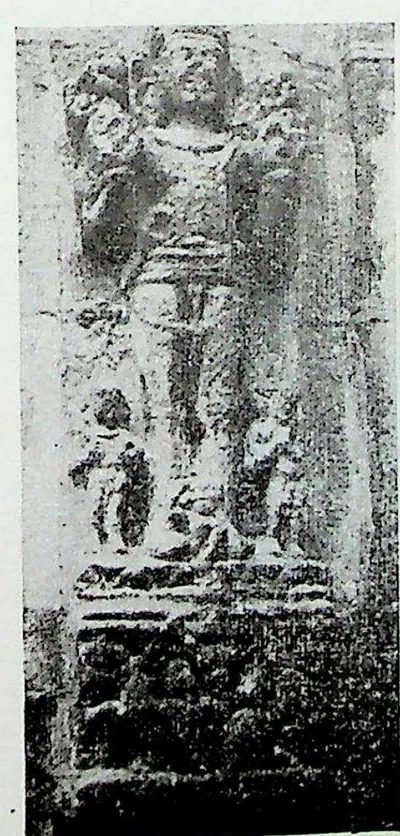 "17. Sūrya - Bikkavōlu" (M. Rama Rao, Eastern Calukyan Temples of Andhra Desa, 1964, Fig. 17 (PDF p. 73))Historic photograph · 1964
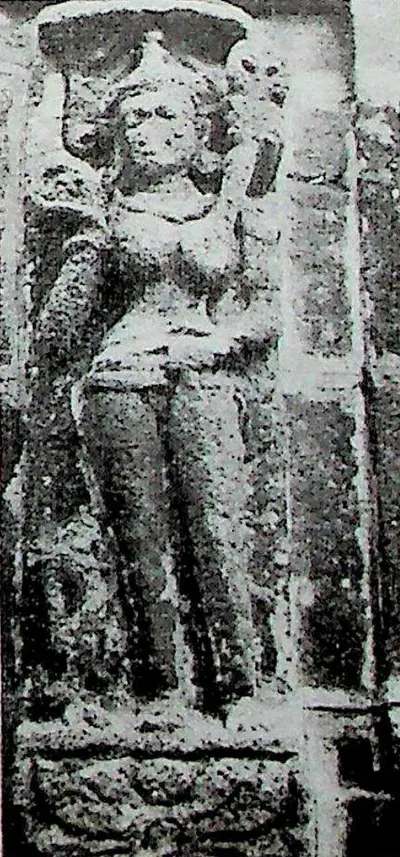 "18. Female Deity - Bikkavōlu" (M. Rama Rao, Eastern Calukyan Temples of Andhra Desa, 1964, Fig. 18 (PDF p. 73))Historic photograph · 1964
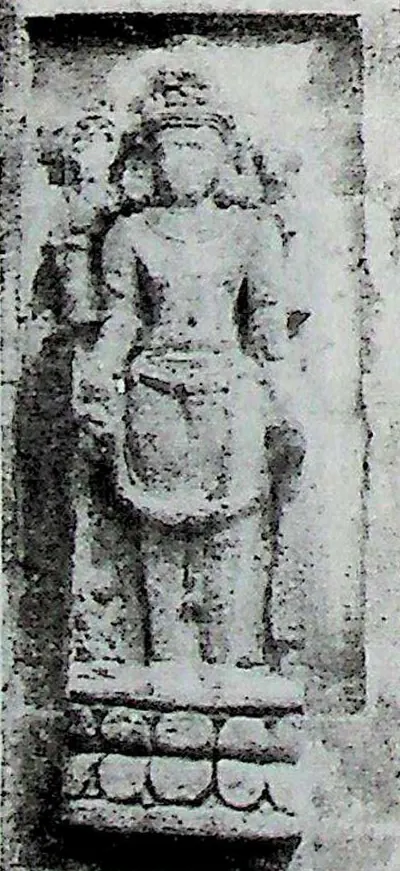 "19. Viṣṇu - Bikkavōlu" (M. Rama Rao, Eastern Calukyan Temples of Andhra Desa, 1964, Fig. 19 (PDF p. 75))Historic photograph · 1964
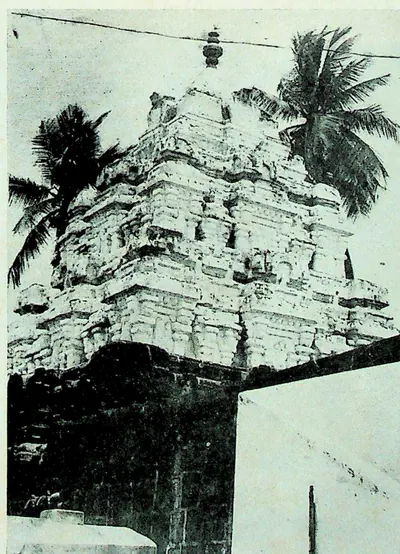 "2. Gōlingēśvara Temple - Bikkavōlu" (M. Rama Rao, Eastern Calukyan Temples of Andhra Desa, 1964, Fig. 2 (PDF p. 59))Historic photograph · 1964
Show all (21)
 "20. Kaumārī - Bikkavōlu" (M. Rama Rao, Eastern Calukyan Temples of Andhra Desa, 1964, Fig. 20 (PDF p. 75))Historic photograph · 1964
 "21. Bovine Deity - Bikkavōlu" (M. Rama Rao, Eastern Calukyan Temples of Andhra Desa, 1964, Fig. 21 (PDF p. 77))Historic photograph · 1964
 "3. Rājarājēśvara Temple - Bikkavōlu" (M. Rama Rao, Eastern Calukyan Temples of Andhra Desa, 1964, Fig. 3 (PDF p. 61))Historic photograph · 1964
 "4. Wall Projection - Candraśēkhara Temple - Bikkavōlu" (M. Rama Rao, Eastern Calukyan Temples of Andhra Desa, 1964, Fig. 4 (PDF p. 61))Historic photograph · 1964
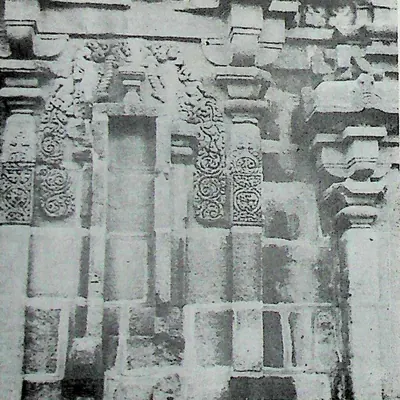 "5. Back Wall - Candraśēkhara Temple - Bikkavōlu" (M. Rama Rao, Eastern Calukyan Temples of Andhra Desa, 1964, Fig. 5 (PDF p. 63))Historic photograph · 1964
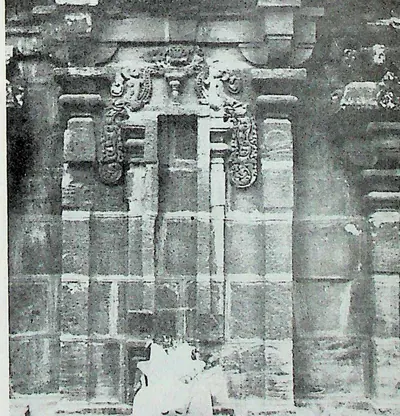 "6. Left Wall - Candraśēkhara Temple - Bikkavōlu" (M. Rama Rao, Eastern Calukyan Temples of Andhra Desa, 1964, Fig. 6 (PDF p. 63))Historic photograph · 1964
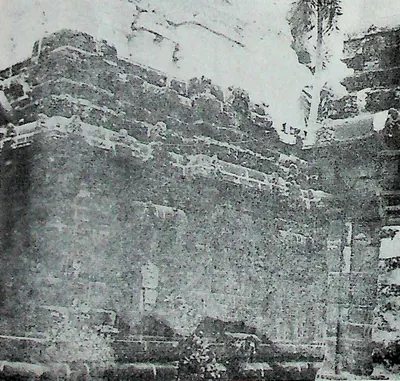 "7. Left Wall - Gōlingēśvara Temple - Bikkavōlu" (M. Rama Rao, Eastern Calukyan Temples of Andhra Desa, 1964, Fig. 7 (PDF p. 65))Historic photograph · 1964
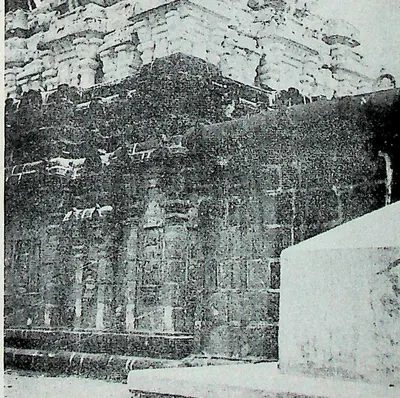 "8. Right Wall - Gōlingēśvara Temple - Bikkavōlu" (M. Rama Rao, Eastern Calukyan Temples of Andhra Desa, 1964, Fig. 8 (PDF p. 65))Historic photograph · 1964
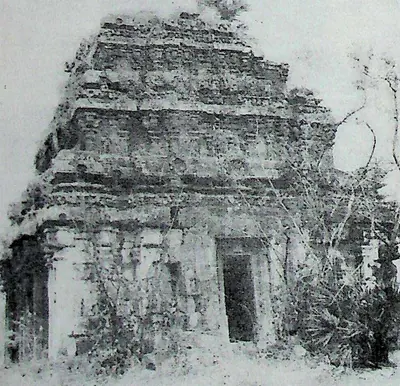 "9. Temple on the Vūlapalli Road - Bikkavōlu" (M. Rama Rao, Eastern Calukyan Temples of Andhra Desa, 1964, Fig. 9 (PDF p. 67))Historic photograph · 1964
References
Notes (0)
Sources (5)
Spotted an error on this page? Tell us
Last updated: