Temples of Nagunur
Ruined temples at Nagunur, six miles north-east of Karimnagar. The chief one is a large triple-shrined Shiva temple of red stone and granite. Nagunur was the seat of Gangadhara, a minister of the Kakatiya king Rudradeva. According to P. V. Parabrahma Sastry, Gangadhara built Shiva temples there. An inscribed pillar said to come from Nagunur is dated 13 January 1171, in Rudradeva's time.
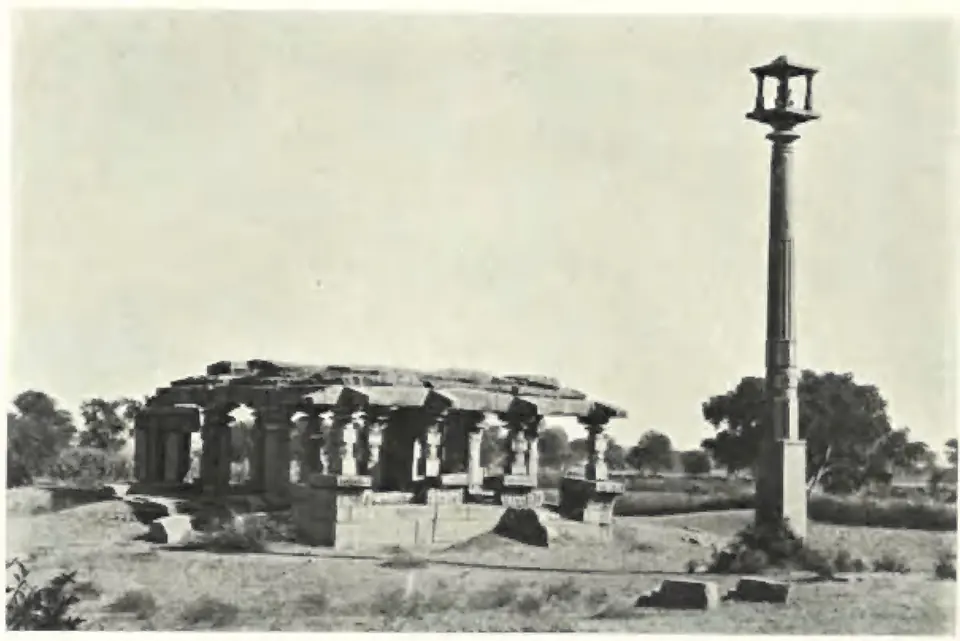
Nagunur, or Nagnur, is a village about six miles north-east of Karimnagar. The assistant director of the Hyderabad Archaeological Department surveyed it in 1927–28.1 He judged from the many temple remains there that it had once been a place of some importance.1
The great Shiva temple
The principal monument is a large Shiva temple.1 Like the great temple at Hanamkonda it has three shrines.1 Its plan is star-shaped, in what the report called the Chalukyan style of the Deccan.1 The entrance is on the north, and each of the other three sides projects to hold an ante-chamber and a shrine with a linga (stone emblem of Shiva).1 The temple measures 100 feet each way and stands on a platform 4 ft 6 in high.1
The outer walls are of red stone, apparently from a nearby quarry.1 The interior walls, beams, ceilings, pillars, door frames and floor are of grey granite.1 There are no towers over the shrines, only huge blocks of red stone.1 The writer thought the temple may never have been finished.1
Pillars and carving
Sixteen carved pillars carry the hall, four of them marking out a central mandapa (pillared hall).12 The door frames of the ante-chambers and shrines are carved with four-armed door-keepers and women bearing fly-whisks.12 One of these women carries a child on her hip.12 The beams over the central pillars carry panels of dancers and drummers.12
The report found that the carving of the pillars and the pierced door screens “compare favourably with those in the Uparpalli temple”.2 The western shrine had sunk on its faulty foundations, and the department considered the building too damaged for conservation.2
Other remains
In front of the great temple are the remains of two smaller ones, with a broken Nandi.2 North-east of it is a ruined hall with four polished black pillars, apparently rebuilt from parts of another temple.2 South of it stands a monolithic (one-piece) pillar about thirty-five feet high, crowned by a seated Garuda under a small canopy.2 This led the writer to infer a temple of Vishnu there, and two more such pillars stand to the east.2
Another ruined temple stands on rising ground on the way from Karimnagar.23 Carved slabs and pillars lie about the village and fields.23
The inscribed pillars
Two inscribed pillars in the compound of the First Taluqdar’s bungalow at Karimnagar were said to have been brought from Nagunur.3 The larger names the Kakatiya king Rudradeva, styled mahamandalesvara (great feudal lord).3 It is dated Saka 1092 (Saka is an Indian way of counting years), Vikriti, which the report converted to Wednesday, 13 January 1171.3
Date and builder
P. V. Parabrahma Sastry, writing in 1978, describes Nagunur as the capital of Gangadhara, a minister of Rudradeva.45 After the wars against Polavasa and Nagunur, the king made Gangadhara governor of the Sabbi country.45 According to Sastry, Gangadhara built Shiva temples at Nagunur.45 He also built a temple of Prasannakesava with a tank at Anumakonda.45
See the Karimnagar inscription of Gangadhara and the Hanamkonda inscription of Gangadhara for Gangadhara’s own records. Sastry lists the Nagunur temples among the best-known temples of the Kakatiya period.6
S. Gopalakrishna Murthy, writing in 1964, named different builders for the triple-shrined temple.7 In his account a father and son, Mallisetti and Vennisetti, installed in it the gods Harisvara, Ganapesvara and Sakalesvara.7 He added that, according to Gangadhara’s Karimnagar inscription, twenty-four forms of Vishnu were carved in the Vishnu temple at Nagunur, though they could no longer be seen.7
A slip in the report
The 1927–28 report is not consistent about the king.83 Elsewhere in the same volume it says that the inscription of 1171 names the Kakatiya king “Paratap Rudra”.8 Its own detailed account reads the name as Rudradeva.3 The report does not connect the temple with any of the inscriptions.3
Footnotes
-
Annual Report of the Archaeological Department of H.E.H. the Nizam’s Dominions, 1337 F. (1927–28) (1929), p. 6 (account by the Assistant Director) (archive.org (opens in a new tab)). ↩ ↩2 ↩3 ↩4 ↩5 ↩6 ↩7 ↩8 ↩9 ↩10 ↩11 ↩12 ↩13 ↩14 ↩15
-
Annual Report … 1927–28 (1929), p. 7 and Plates IX–X (archive.org (opens in a new tab)). ↩ ↩2 ↩3 ↩4 ↩5 ↩6 ↩7 ↩8 ↩9 ↩10 ↩11 ↩12
-
Annual Report … 1927–28 (1929), p. 8 (archive.org (opens in a new tab)). ↩ ↩2 ↩3 ↩4 ↩5 ↩6 ↩7 ↩8
-
P. V. Parabrahma Sastry, The Kakatiyas of Warangal (1978), p. 102 (archive.org (opens in a new tab)). Cite-only; paraphrased. ↩ ↩2 ↩3 ↩4
-
Parabrahma Sastry, The Kakatiyas of Warangal (1978), p. 167 (archive.org (opens in a new tab)). Cite-only; paraphrased. ↩ ↩2 ↩3 ↩4
-
Parabrahma Sastry, The Kakatiyas of Warangal (1978), p. 282 (archive.org (opens in a new tab)). Cite-only; paraphrased. ↩
-
S. Gopalakrishna Murthy, The Sculpture of the Kakatiyas (Andhra Pradesh Government Archaeological Series 34, n.d.; preface dated 1964), p. 28 and fig. 29 (archive.org (opens in a new tab)). Public domain in India; paraphrased. ↩ ↩2 ↩3
-
Annual Report … 1927–28 (1929), p. 14 (archive.org (opens in a new tab)). ↩ ↩2
Photos
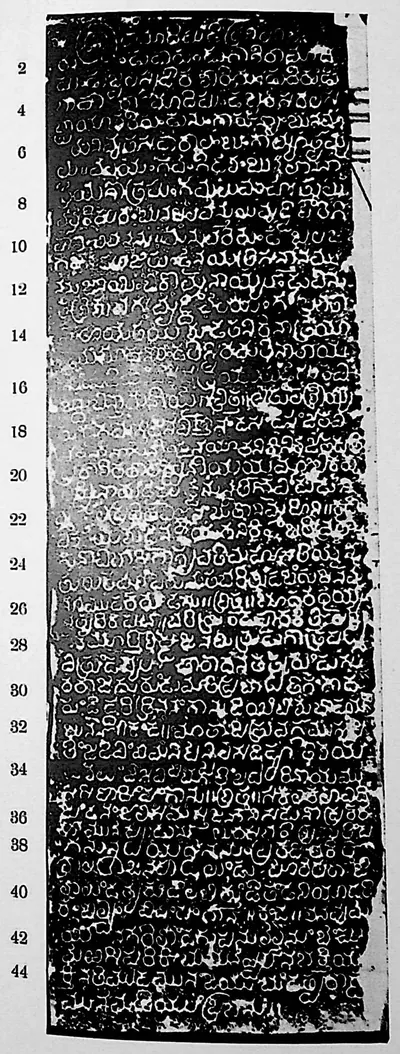 "Karimnagar inscription of Gaṅgādhara", face I (Sreenivasachar, Corpus of Inscriptions in the Telingana Districts II, Plate 53 (PDF p. 326))Inscription rubbing · 1940
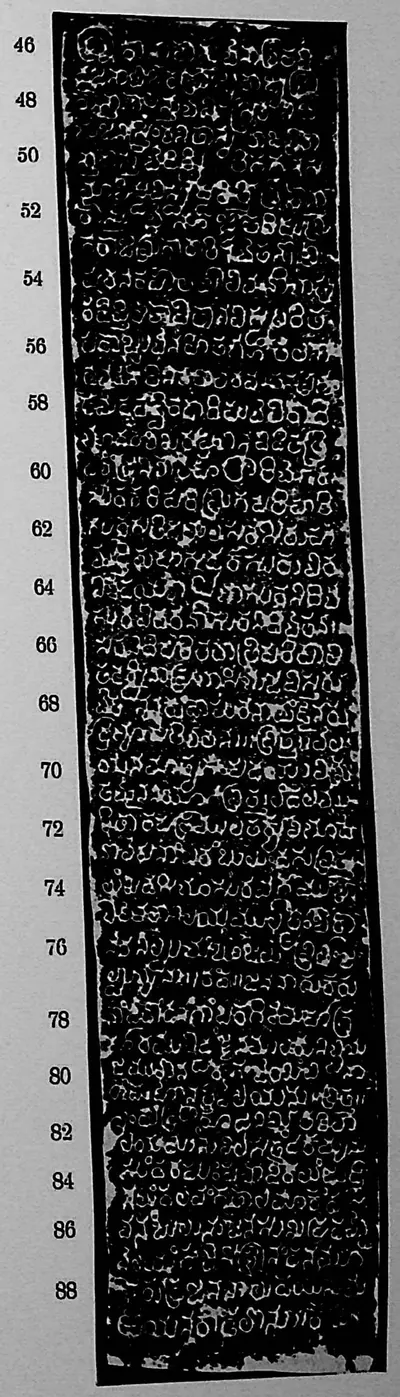 "Karimnagar inscription of Gaṅgādhara", face II (Sreenivasachar, Corpus of Inscriptions in the Telingana Districts II, Plate 53 (PDF p. 326))Inscription rubbing · 1940
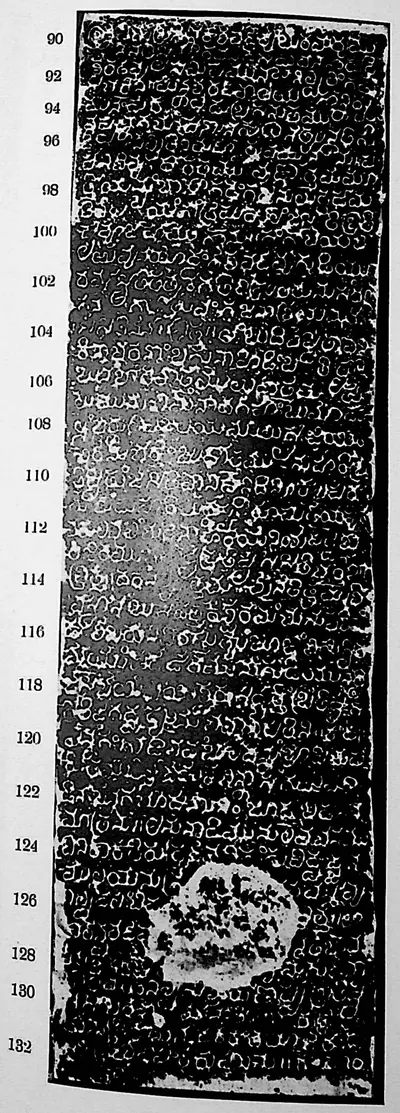 "Karimnagar inscription of Gaṅgādhara", face III (Sreenivasachar, Corpus of Inscriptions in the Telingana Districts II, Plate 54 (PDF p. 328))Inscription rubbing · 1940
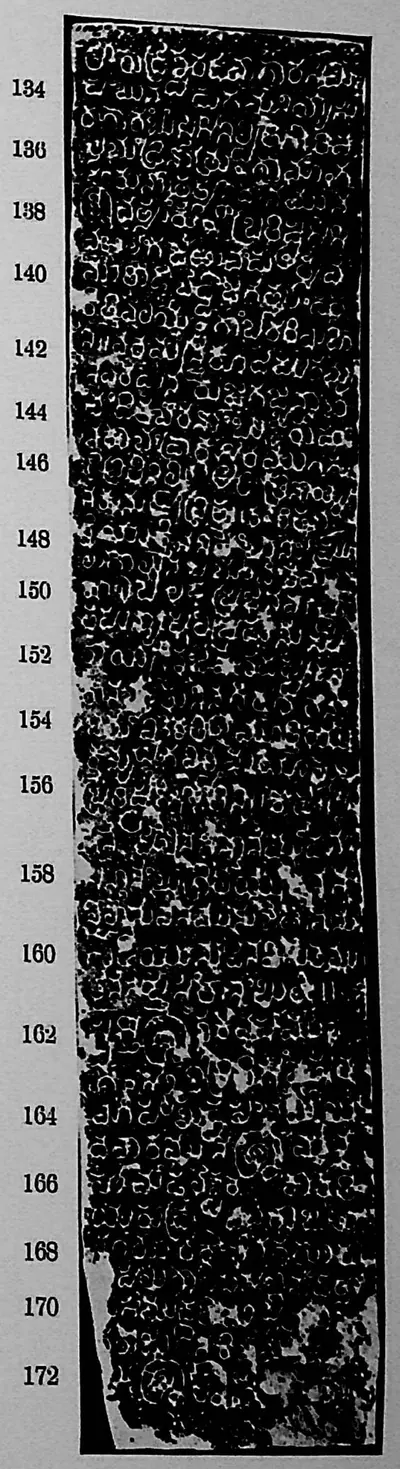 "Karimnagar inscription of Gaṅgādhara", face IV (Sreenivasachar, Corpus of Inscriptions in the Telingana Districts II, Plate 54 (PDF p. 328))Inscription rubbing · 1940
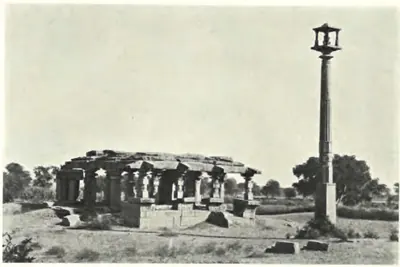 "Ruined Vishnu Temple at Nagnur: Karimnagar District" (Hyderabad Arch. Report 1927-28, Pl. IX (a) (PDF p. 133))Historic photograph · 1929
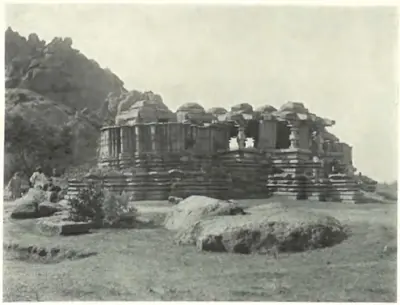 "Siva Temple at Nagnur: Karimnagar District" (Hyderabad Arch. Report 1927-28, Pl. IX (b) (PDF p. 133))Historic photograph · 1929
References
Notes (0)
Sources (3)
Spotted an error on this page? Tell us
Last updated: