Hanamkonda inscription of Gangadhara
A broken, undated Sanskrit verse inscription from Hanamkonda. It records that Gangadhara, minister of the Kakatiya Rudradeva, built a temple of Prasanna-Keshava, tanks and shrines. It also describes the wars of Prola II and Rudradeva against Medaraja of Polavasa and other chiefs.
The stone
When it was published in 1956, this inscription was in the public library at Hanamkonda.1 The bottom of the stone has broken off, so the last lines of each face are lost.1 It is in Sanskrit verse.1 It records that Gangadhara, a minister of the Kakatiya king Rudradeva, built a temple to Vishnu as Prasanna-Keshava.1 It also gives an account of the wars of his masters.1
A smaller fragment is kept in the same library.2 To its editor, P. Sreenivasachar, it seemed to belong to the same record or to a companion of it.2 Both are printed with photographs in the 1956 Corpus.23
Gangadhara
The record says that Gangadhara belonged to the Atreya gotra (clan).1 His ancestors came from the agrahara (Brahman village) of Vellaki in the Vengi country.1 The record names Kommaraju and Narayana in the family, and Turukamamba as Narayana’s wife.1 The passage that should name Gangadhara’s parents is damaged.1 Sreenivasachar supposed that it made him the son of Narayana and Turukamamba, as his Karimnagar inscription does.1
In P. V. Parabrahma Sastry’s account, the Karimnagar record says that Prola II first put Gangadhara in charge of the capital, Anumakonda. Rudradeva later made him governor of the Sabbi-nadu with the insignia of a subordinate ruler.45
His works
Besides the temple of Prasanna-Keshava, Gangadhara is said to have given away a village called Rudrapura to Brahmans.1 He also built a tank and set up images of Vishnu, Surya and Shiva.1 On the tank bund and on the top of the hill he set up Shiva lingas (stone emblems), Parvati and Ganesha.1 He made further gifts for worship and built four more tanks.1
Parabrahma Sastry cited the inscription for Gangadhara’s repairs to the Jain temple on the Padmakshi hill (see the Padmakshi temple inscription).6 He identified Gangadhara’s large tank with the one near the present Hanamkonda bus stand. He reported that the remains of the Prasanna-Keshava temple had recently been dug up on the tank bund near the new bus depot.78
The wars
Sreenivasachar summarised the wars on the main stone.1 According to him, Medaraju fled to the hills, fearing that Rudradeva would burn his capital.1 Rudradeva then burned the enemy’s city and defeated Medaraju, capturing two of his elephants.1 Medaraju was forced, against his will, to give his daughter to Rudradeva in marriage.1 Rudradeva also burned a city that the editor read, with a query, as Polasa.1
The same summary says that Gangadhara took a title from Medaraju.1 It also says that he captured the ruler of Chakrakuta together with his elephant.1
Sreenivasachar could make out only part of the fragment.2 As he read it, Prola placed Gokarna’s son on his throne, and conquered Polavasa and Medaraju’s kingdom.2 Gangadhara used wealth taken from Medaraju to set up Prasanna-Keshava.2 Sreenivasachar noted that these details are uncertain.2
Parabrahma Sastry used these fragments for the early wars of the Kakatiyas.910 He identified Medaraja as the chief of Polavasa, now Polas in the old Jagtial taluk, whose family held lands reaching from Polavasa to Narasampet. He took the record’s description of the sack of Polavasa to confirm that it was Medaraja’s capital.910
Parabrahma Sastry identified Gokarna’s son as Chododaya (Udaya), son of Gokarna Choda.1112 He connected the record with the Thousand Pillar inscription’s statement that Prola gave the kingdom back to Udaya.1112 Where Sreenivasachar’s summary has a title taken from Medaraju, Parabrahma Sastry read a passage in which Prola put to flight Eda, chief of Manyaka, in the presence of the Chalukya king Jagadekamalla. He concluded that Jagadekamalla came to Telangana in person to bring rebellious subordinates to order.1314 In this view Prola fought on the king’s side.1314
Footnotes
-
P. Sreenivasachar (ed.), A Corpus of Inscriptions in the Telingana Districts of Andhra Pradesh, Part III (1956), p. 124, No. Wg. 2 (archive.org (opens in a new tab)). Paraphrased. ↩ ↩2 ↩3 ↩4 ↩5 ↩6 ↩7 ↩8 ↩9 ↩10 ↩11 ↩12 ↩13 ↩14 ↩15 ↩16 ↩17 ↩18 ↩19 ↩20 ↩21
-
Sreenivasachar, Corpus, Part III (1956), p. 128, No. Wg. 3 (archive.org (opens in a new tab)). Paraphrased. ↩ ↩2 ↩3 ↩4 ↩5 ↩6 ↩7
-
Sreenivasachar, Corpus, Part III (1956), list of plates, p. iii, plates 2–5 (archive.org (opens in a new tab)). ↩
-
Parabrahma Sastry, The Kakatiyas of Warangal (1978), p. 101. ↩
-
Parabrahma Sastry, The Kakatiyas of Warangal (1978), p. 102. ↩
-
Parabrahma Sastry, The Kakatiyas of Warangal (1978), p. 273. ↩
-
Parabrahma Sastry, The Kakatiyas of Warangal (1978), p. 204. ↩
-
Parabrahma Sastry, The Kakatiyas of Warangal (1978), p. 279. ↩
-
P. V. Parabrahma Sastry, The Kakatiyas of Warangal (1978), p. 58. ↩ ↩2
-
Parabrahma Sastry, The Kakatiyas of Warangal (1978), p. 62. ↩ ↩2
-
Parabrahma Sastry, The Kakatiyas of Warangal (1978), p. 77. ↩ ↩2
-
Parabrahma Sastry, The Kakatiyas of Warangal (1978), p. 80. ↩ ↩2
-
Parabrahma Sastry, The Kakatiyas of Warangal (1978), p. 85. ↩ ↩2
-
Parabrahma Sastry, The Kakatiyas of Warangal (1978), p. 86. ↩ ↩2
Photos
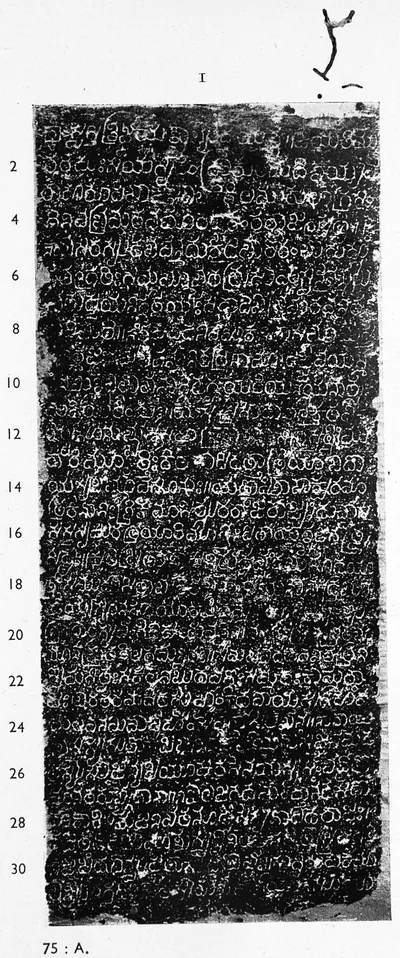 "Hanamakoṇḍa inscription of Gaṅgādhara", face I (Sreenivasachar, Corpus of Inscriptions in the Telingana Districts III, Plate 4 (PDF p. 194))Inscription rubbing · 1956
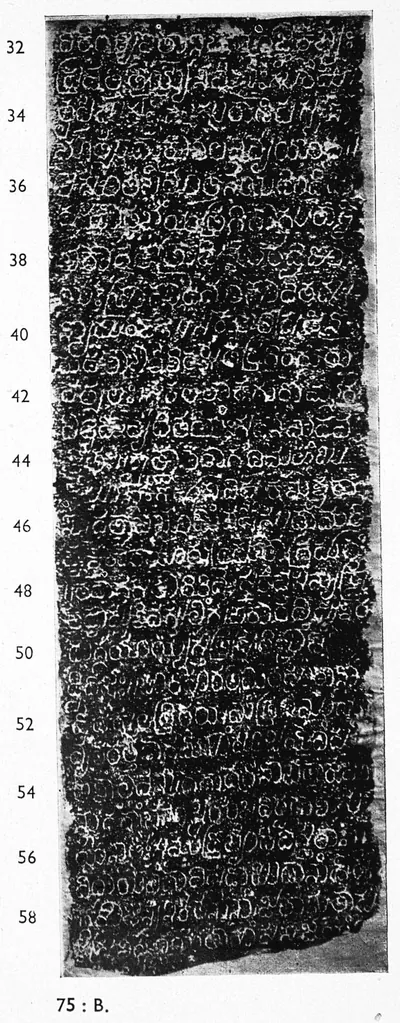 "Hanamakoṇḍa inscription of Gaṅgādhara", face II (Sreenivasachar, Corpus of Inscriptions in the Telingana Districts III, Plate 4 (PDF p. 194))Inscription rubbing · 1956
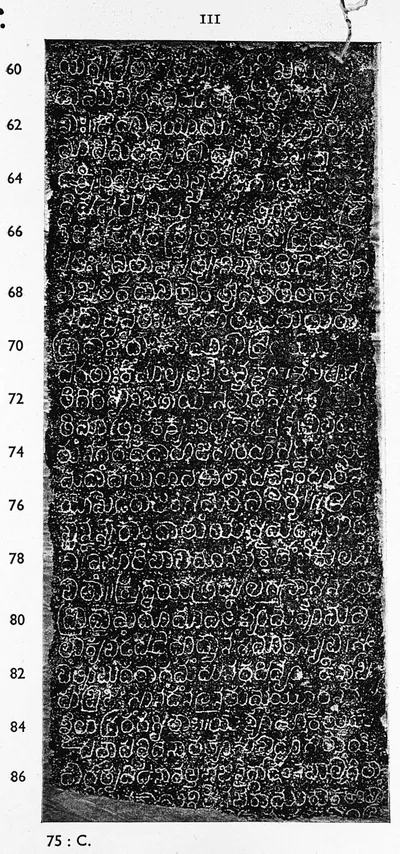 "Hanamakoṇḍa inscription of Gaṅgādhara", face III (Sreenivasachar, Corpus of Inscriptions in the Telingana Districts III, Plate 5 (PDF p. 195))Inscription rubbing · 1956
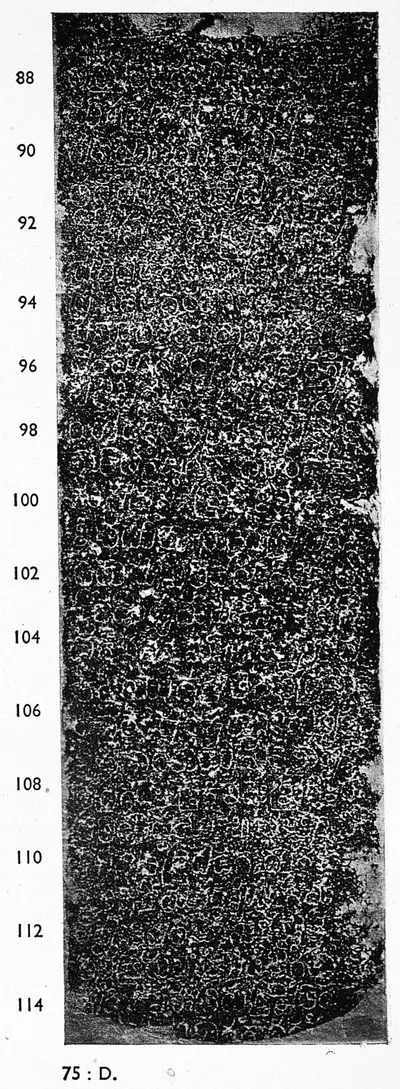 "Hanamakoṇḍa inscription of Gaṅgādhara", face IV (Sreenivasachar, Corpus of Inscriptions in the Telingana Districts III, Plate 5 (PDF p. 195))Inscription rubbing · 1956
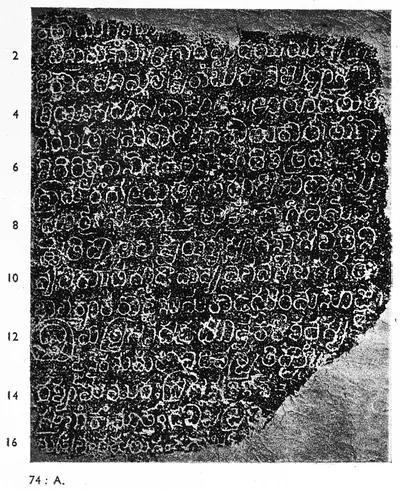 "Hanumakoṇḍa inscription of Gaṃgādhara", face I (Sreenivasachar, Corpus of Inscriptions in the Telingana Districts III, Plate 2 (PDF p. 192))Inscription rubbing · 1956
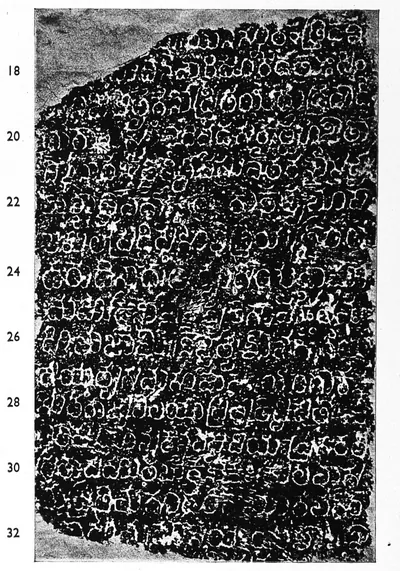 "Hanumakoṇḍa inscription of Gaṃgādhara", face II (Sreenivasachar, Corpus of Inscriptions in the Telingana Districts III, Plate 2 (PDF p. 192))Inscription rubbing · 1956
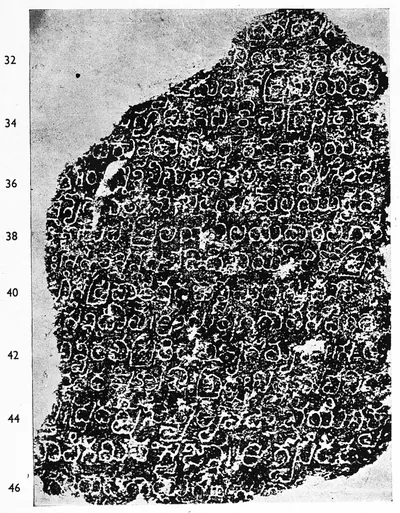 "Hanumakoṇḍa inscription of Gaṃgādhara", face III (Sreenivasachar, Corpus of Inscriptions in the Telingana Districts III, Plate 3 (PDF p. 193))Inscription rubbing · 1956
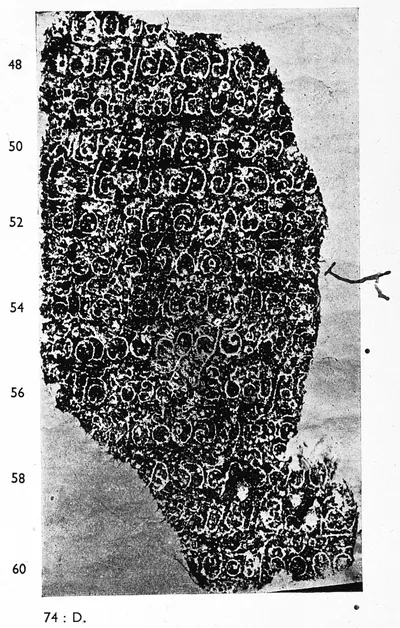 "Hanumakoṇḍa inscription of Gaṃgādhara", face IV (Sreenivasachar, Corpus of Inscriptions in the Telingana Districts III, Plate 3 (PDF p. 193))Inscription rubbing · 1956
References
Notes (0)
Sources (2)
Spotted an error on this page? Tell us
Last updated: