Rudradeva
Kakatiya ruler (c. 1158–1195) who defeated the rival chiefs of Telangana. He proclaimed his family's independence in the Thousand Pillar Temple inscription of 1163, and began the fortified capital at Orugallu (Warangal).
Family and coming to the throne
Rudradeva, often called Rudra I, was the son of the Kakatiya chief Prola II and his queen Muppama.12 His younger brother Mahadeva succeeded him.2 Prola II was a loyal subordinate of the Western Chalukya kings of Kalyana.3 He was killed in battle against chiefs of the coastal Andhra country.3
P. V. Parabrahma Sastry dates Rudradeva’s succession to before 1158.4 That is the date of an inscription at Draksharama in which his minister Inangala Brammireddi calls him simply Rudradeva of Anumakonda.4 Robert Sewell, who calls him Pratapa Rudra I, took 19 January 1163 as the day of his coronation.5
Rise to sovereignty
Most of what is known of Rudradeva’s early wars comes from his own inscription of 1163 at the Thousand Pillar Temple in Hanamkonda.6 It credits him with three early victories:6
- breaking the power of Domma, a chief strong in cavalry6
- humbling Mailigideva6
- taking the wealth of Polavasa6
After the death of Tailapa, a king named Bhima seized power.67 Rudradeva took Bhima’s city of Vardhamanapura and drove him into the forest with his family.67 He burned the city of Chododaya and built a new city around a great lake.67 In J. F. Fleet’s translation, the poet called Bhima “the vilest of kings, a very beast of a man”.7
Fleet read this Tailapa as the Western Chalukya king Taila III.8 He treated Rudradeva as in practice an independent king, though Rudradeva still used the feudatory title mahamandaleshvara (great lord of a province).8
Parabrahma Sastry used inscriptions found in Telangana after 1964 to offer a different account.910 He argued that between about 1157 and 1162 Rudradeva defeated the local chiefs of Telangana.910 These were the Choda chiefs Bhima and Udaya of Kanduru, Domma of Nagunuru near Karimnagar, and Meda of Polavasa.910 Mailigi was probably a Kalachuri prince sent by Bijjala, who had seized the Chalukya throne.910
Parabrahma Sastry also cited an inscription of Bijjala dated 1161 that names a king of Andhra, probably Rudradeva, as his enemy.11 On this reading the Kakatiyas did not revolt against their Chalukya overlords. Rudradeva waited, and declared sovereignty (full independence) in 1163 only when no Chalukya claimant came forward. Even then he kept modest titles.12
He married the daughter of the defeated chief Udayachoda and let Udaya keep his lands.13 E. Hultzsch had earlier suggested that the “Padma” named in the 1163 poem was a Choda princess whom Rudradeva married for political reasons.14
Later reign
According to Parabrahma Sastry, Rudradeva turned to the coast after the death of the Velanati chief Rajendra Choda II in 1181.15 He answered an appeal from the Palnadu chief Nalagama and defeated the Kota chief Dodda Bhima.15 He took Dharanikota and restored Bhima’s son Kota II as a subordinate.15 An inscription at Tripurantakam records his gift of a village to the god there in 1185.15
He also drove the Mudigonda Chalukya chiefs out of their lands for a time.16 Parabrahma Sastry rejected the view, based on Yadava sources, that a Yadava king killed Rudradeva. In his 1975 thesis he had taken the opposite view.17 There he wrote that Rudradeva seems to have lost his life in an invasion of Yadava land about 1195.17 He added that the Yadava king Jaitugi at least certainly routed him.17
Rudradeva’s last known date is 26 April 1195, in an inscription at Bekkallu.18 Recherla Rudra’s inscription of 1213 says that when “king Rudra” died, his defeated enemies rose up together.19
Generals and officers
Parabrahma Sastry stresses the part played in Rudradeva’s wars by generals of the Cheraku, Malyala and Recherla families.20 Kata of the Cheraku family and his brothers helped him take the Kandurunadu country from the Choda chiefs Bhima and Udaya, and received the Cheraku-70 district. Malyala Kata took part in the conquest of the Kota kingdom.21
Late in his reign Rudradeva sent the Recherla general Rudra against the Bottu chiefs of Koravi, who were driven from their lands.22 According to the Shaiva work Sivayogasara, two officers of the Induluri family served him.21 One was governor of Orugallu and the other chief accountant.21
Builder and patron
Parabrahma Sastry credits Rudradeva with founding a new fort at Orugallu, near Anumakonda, to meet the needs of an independent kingdom.20 An inscription of 1231 at Ganapesvaram says that Rudra settled the people of conquered towns at Orungallu.14 He built new settlements with Rudreshvara temples on their sites.14
At Anumakonda he consecrated the triple shrine now called the Thousand Pillar Temple.623 It had images of Rudreshvara (named after himself), Vasudeva and Surya.623 His minister Gangadhara governed Sabbinadu and built temples and a tank at Anumakonda. Gangadhara also set up an image of the Buddha, whom he regarded as an incarnation of Vishnu.2425
Rudradeva’s title daya-gaja-kesari appeared on his coins.26
A Telugu work on statecraft, the Nitisara, is said to be by Rudradeva.2728 It survives only in quotations in a later collection of verses.2728 Some scholars give it to Prataparudra instead.2728
Rudradeva had no children, and his brother Mahadeva succeeded him.229 An inscription at Upparapalli calls Mahadeva’s son Ganapati the son of Rudra, probably by adoption.30
Footnotes
-
J. F. Fleet, Sanskrit and Old-Canarese Inscriptions, No. CXVIII, Indian Antiquary XI (1882), p. 17 (archive.org (opens in a new tab)). ↩
-
E. Hultzsch, Ganapesvaram Inscription of the Time of Ganapati, Epigraphia Indica III (1894–95), p. 83 (archive.org (opens in a new tab)). ↩ ↩2 ↩3
-
P. V. Parabrahma Sastry, The Kakatiyas of Warangal (1978), p. 87. ↩ ↩2
-
Parabrahma Sastry, The Kakatiyas of Warangal (1978), p. 88. ↩ ↩2
-
Robert Sewell, The Historical Inscriptions of Southern India (1932), pp. 113–114 (archive.org (opens in a new tab)). ↩
-
Fleet, Sanskrit and Old-Canarese Inscriptions, No. CXVIII (1882), pp. 17–18 (archive.org (opens in a new tab)). ↩ ↩2 ↩3 ↩4 ↩5 ↩6 ↩7 ↩8 ↩9 ↩10
-
Fleet, Sanskrit and Old-Canarese Inscriptions, No. CXVIII (1882), p. 18 (archive.org (opens in a new tab)). ↩ ↩2 ↩3 ↩4
-
Fleet, Sanskrit and Old-Canarese Inscriptions, No. CXVIII (1882), p. 10 (archive.org (opens in a new tab)). ↩ ↩2
-
Parabrahma Sastry, The Kakatiyas of Warangal (1978), pp. 88–91. ↩ ↩2 ↩3 ↩4
-
Parabrahma Sastry, The Kakatiyas of Warangal (1978), pp. 92–94. ↩ ↩2 ↩3 ↩4
-
Parabrahma Sastry, The Kakatiyas of Warangal (1978), pp. 94–95. ↩
-
Parabrahma Sastry, The Kakatiyas of Warangal (1978), pp. 96–97. ↩
-
Parabrahma Sastry, The Kakatiyas of Warangal (1978), p. 95. ↩
-
Hultzsch, Ganapesvaram Inscription (1894–95), p. 83 (archive.org (opens in a new tab)). ↩ ↩2 ↩3
-
Parabrahma Sastry, The Kakatiyas of Warangal (1978), p. 98. ↩ ↩2 ↩3 ↩4
-
Parabrahma Sastry, The Kakatiyas of Warangal (1978), p. 99. ↩
-
P. V. Parabrahma Sastry, The Kakatiyas and Their Times (PhD thesis, Karnatak University, 1975), pp. 145–146. ↩ ↩2 ↩3
-
Parabrahma Sastry, The Kakatiyas of Warangal (1978), pp. 99–100. ↩
-
L. D. Barnett (ed.), Inscriptions at Palampet and Uparpalli (1919), p. 9, verse 21 (archive.org (opens in a new tab)). ↩
-
Parabrahma Sastry, The Kakatiyas of Warangal (1978), p. 101. ↩ ↩2
-
Parabrahma Sastry, The Kakatiyas of Warangal (1978), p. 102. ↩ ↩2 ↩3
-
Parabrahma Sastry, The Kakatiyas of Warangal (1978), p. 56. ↩
-
Fleet, Sanskrit and Old-Canarese Inscriptions, No. CXVIII (1882), pp. 9, 12 (archive.org (opens in a new tab)). ↩ ↩2
-
Parabrahma Sastry, The Kakatiyas of Warangal (1978), pp. 101–102. ↩
-
Parabrahma Sastry, The Kakatiyas of Warangal (1978), p. 271. ↩
-
Parabrahma Sastry, The Kakatiyas of Warangal (1978), p. 142. ↩
-
Parabrahma Sastry, The Kakatiyas of Warangal (1978), p. 10. ↩ ↩2 ↩3
-
Parabrahma Sastry, The Kakatiyas of Warangal (1978), p. 299. ↩ ↩2 ↩3
-
Parabrahma Sastry, The Kakatiyas of Warangal (1978), p. 103. ↩
-
Parabrahma Sastry, The Kakatiyas of Warangal (1978), p. 100. ↩
Photos
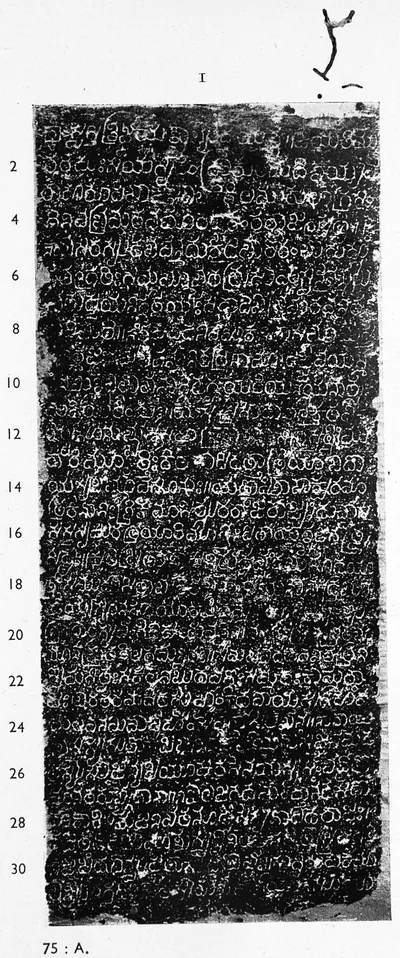 "Hanamakoṇḍa inscription of Gaṅgādhara", face I (Sreenivasachar, Corpus of Inscriptions in the Telingana Districts III, Plate 4 (PDF p. 194))Inscription rubbing · 1956
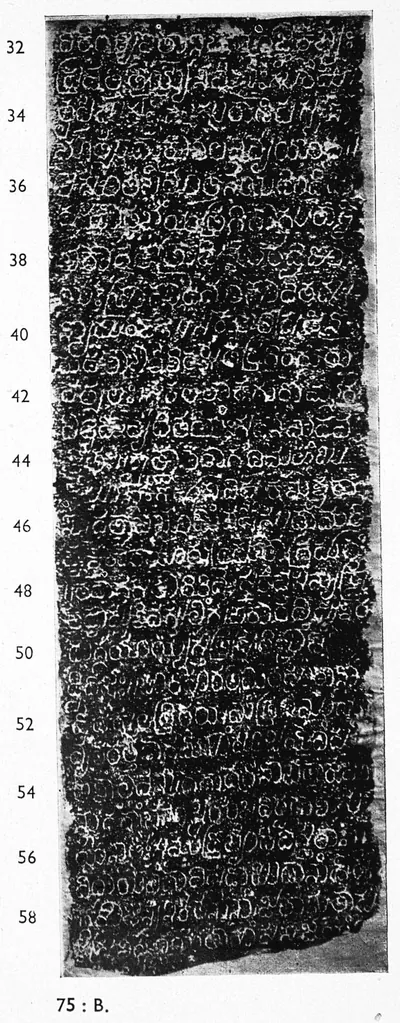 "Hanamakoṇḍa inscription of Gaṅgādhara", face II (Sreenivasachar, Corpus of Inscriptions in the Telingana Districts III, Plate 4 (PDF p. 194))Inscription rubbing · 1956
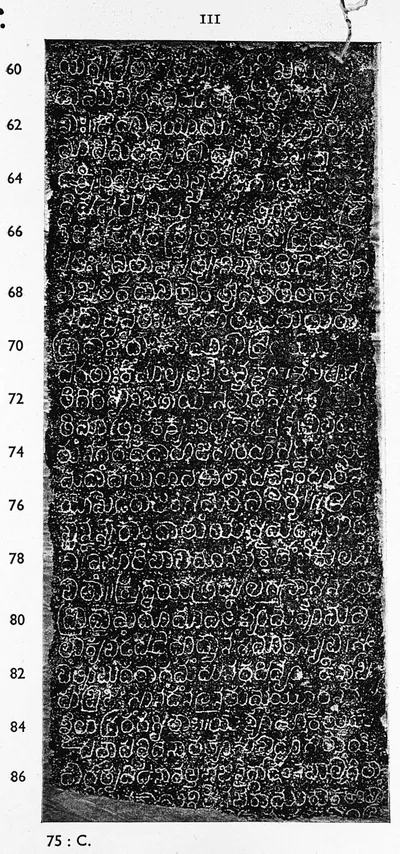 "Hanamakoṇḍa inscription of Gaṅgādhara", face III (Sreenivasachar, Corpus of Inscriptions in the Telingana Districts III, Plate 5 (PDF p. 195))Inscription rubbing · 1956
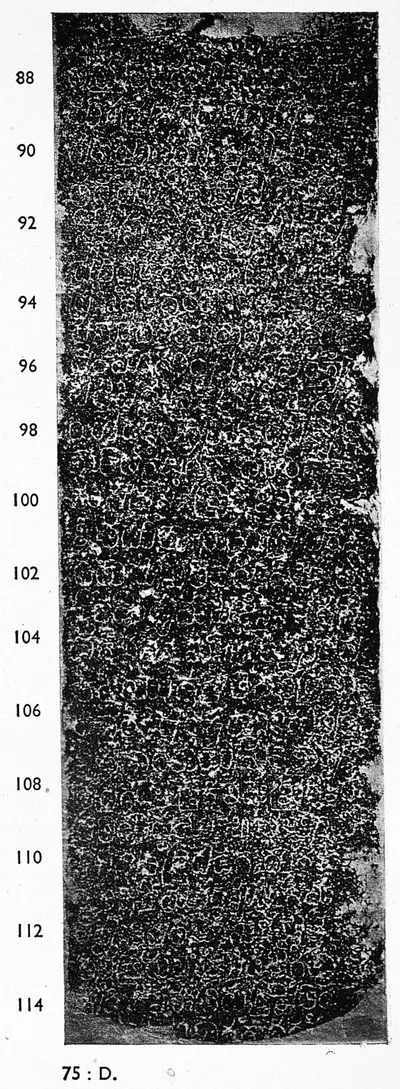 "Hanamakoṇḍa inscription of Gaṅgādhara", face IV (Sreenivasachar, Corpus of Inscriptions in the Telingana Districts III, Plate 5 (PDF p. 195))Inscription rubbing · 1956
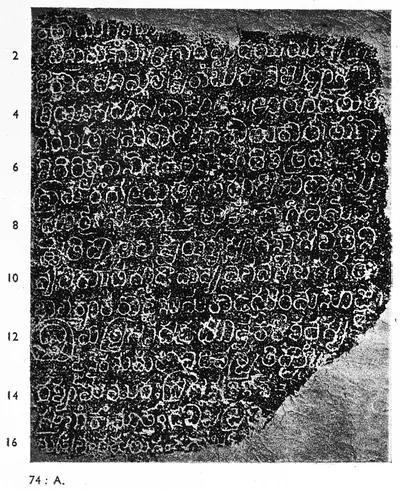 "Hanumakoṇḍa inscription of Gaṃgādhara", face I (Sreenivasachar, Corpus of Inscriptions in the Telingana Districts III, Plate 2 (PDF p. 192))Inscription rubbing · 1956
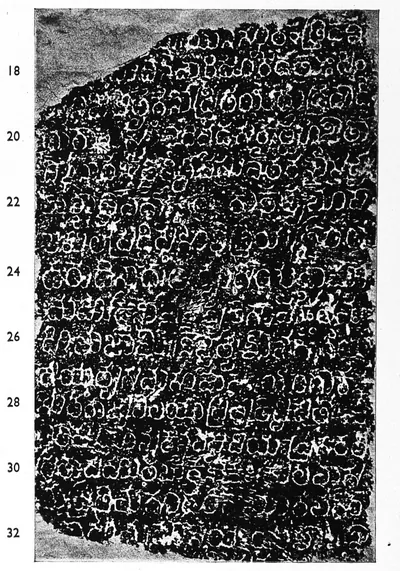 "Hanumakoṇḍa inscription of Gaṃgādhara", face II (Sreenivasachar, Corpus of Inscriptions in the Telingana Districts III, Plate 2 (PDF p. 192))Inscription rubbing · 1956
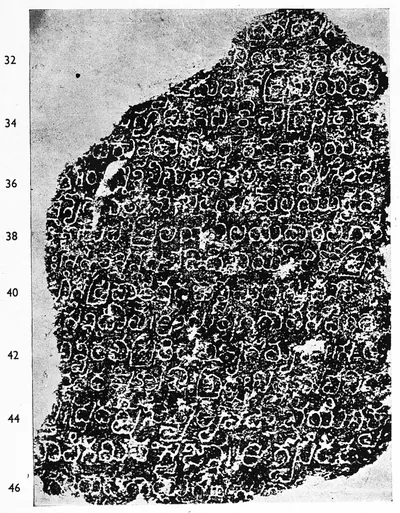 "Hanumakoṇḍa inscription of Gaṃgādhara", face III (Sreenivasachar, Corpus of Inscriptions in the Telingana Districts III, Plate 3 (PDF p. 193))Inscription rubbing · 1956
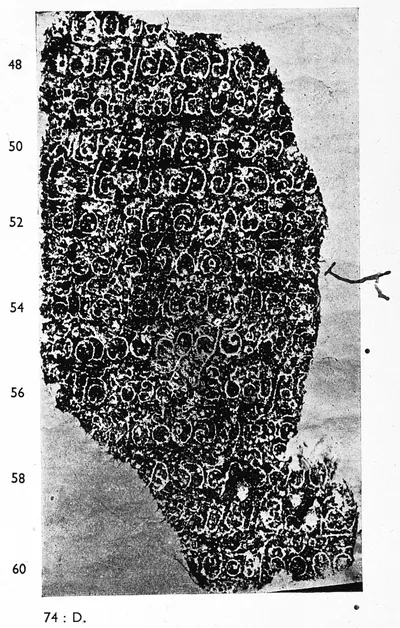 "Hanumakoṇḍa inscription of Gaṃgādhara", face IV (Sreenivasachar, Corpus of Inscriptions in the Telingana Districts III, Plate 3 (PDF p. 193))Inscription rubbing · 1956
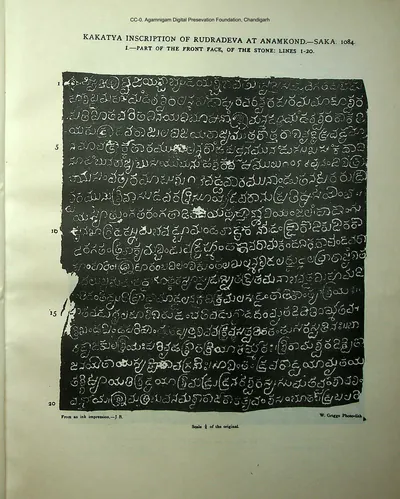 "Kakatya inscription of Rudradeva at Anamkond, Saka 1084. I: Part of the front face of the stone, lines 1-20" (Indian Antiquary XI, Plate I (PDF p. 26))Inscription rubbing · 1882
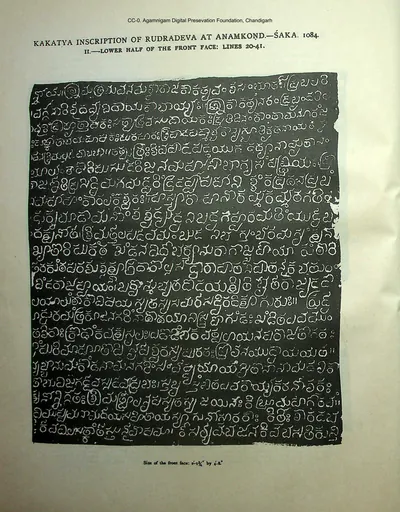 "Kakatya inscription of Rudradeva at Anamkond, Saka 1084. II: Lower half of the front face, lines 20-41" (Indian Antiquary XI, Plate II (PDF p. 27))Inscription rubbing · 1882
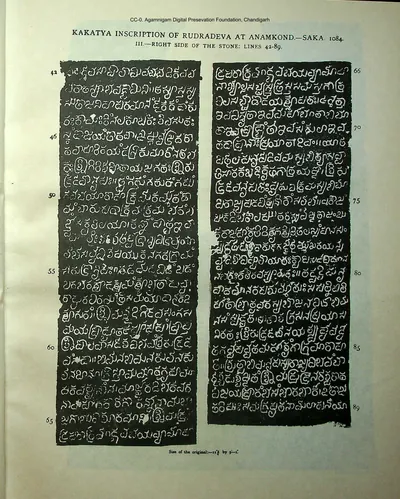 "Kakatya inscription of Rudradeva at Anamkond, Saka 1084. III: Right side of the stone, lines 42-89" (Indian Antiquary XI, Plate III (PDF p. 30))Inscription rubbing · 1882
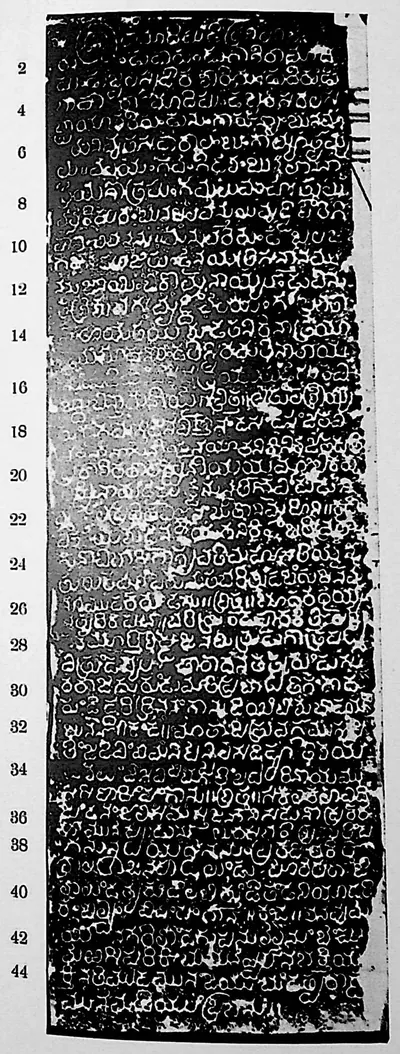 "Karimnagar inscription of Gaṅgādhara", face I (Sreenivasachar, Corpus of Inscriptions in the Telingana Districts II, Plate 53 (PDF p. 326))Inscription rubbing · 1940
Show all (19)
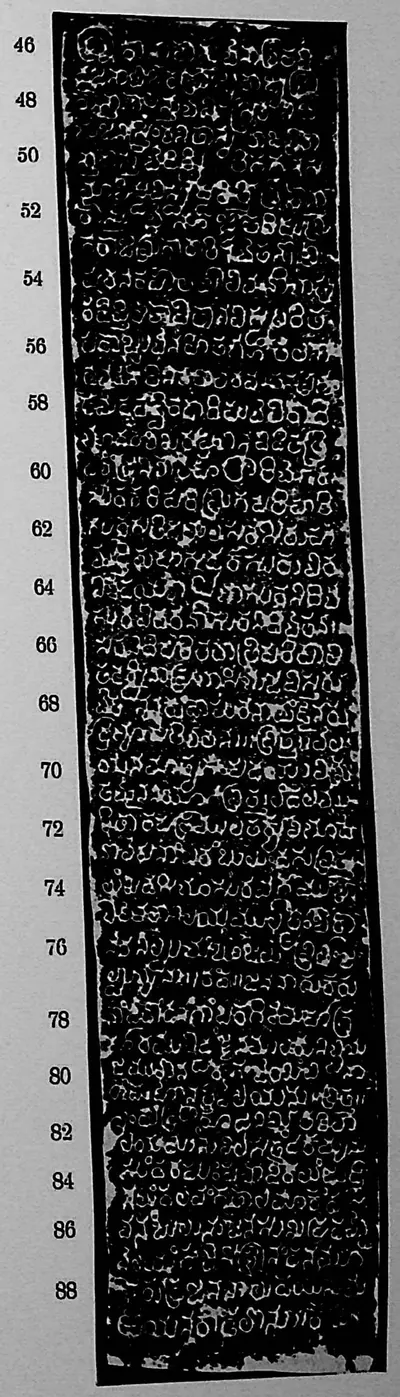 "Karimnagar inscription of Gaṅgādhara", face II (Sreenivasachar, Corpus of Inscriptions in the Telingana Districts II, Plate 53 (PDF p. 326))Inscription rubbing · 1940
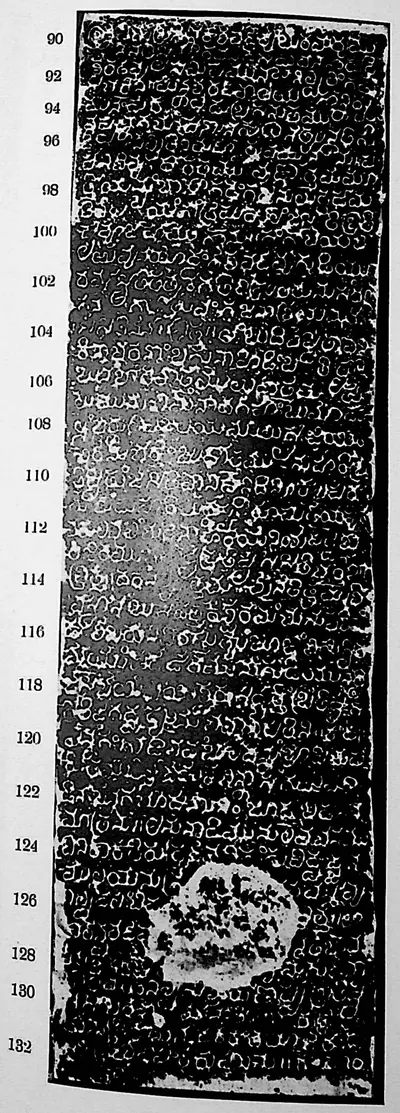 "Karimnagar inscription of Gaṅgādhara", face III (Sreenivasachar, Corpus of Inscriptions in the Telingana Districts II, Plate 54 (PDF p. 328))Inscription rubbing · 1940
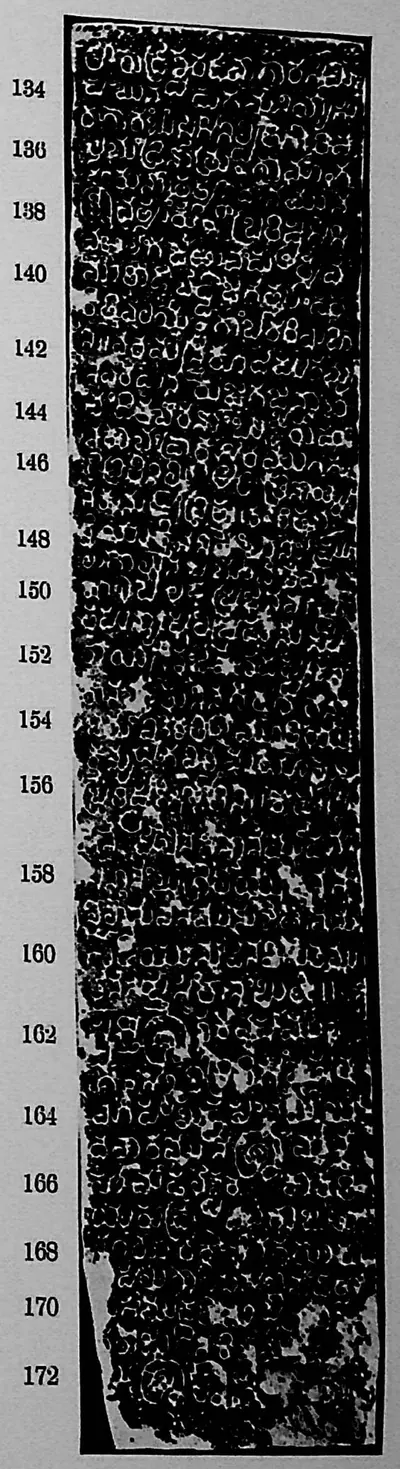 "Karimnagar inscription of Gaṅgādhara", face IV (Sreenivasachar, Corpus of Inscriptions in the Telingana Districts II, Plate 54 (PDF p. 328))Inscription rubbing · 1940
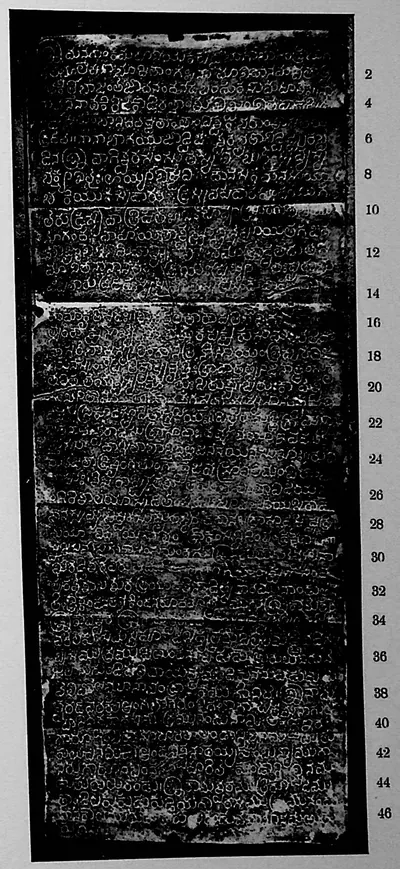 "Pillalamaṟṟi inscription of Nāmi-Reḍḍi (dated Saka 1117)" (Sreenivasachar, Corpus of Inscriptions in the Telingana Districts II, Plate 36 (PDF p. 292))Inscription rubbing · 1940
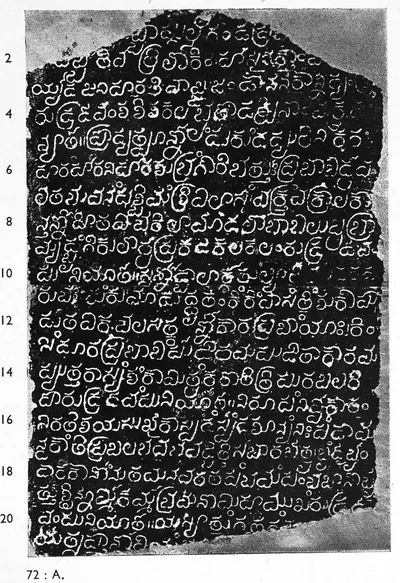 "Warangal inscription of Kakati Rudra-deva", face I (Sreenivasachar, Corpus of Inscriptions in the Telingana Districts III, Plate 1 (PDF p. 191))Inscription rubbing · 1956
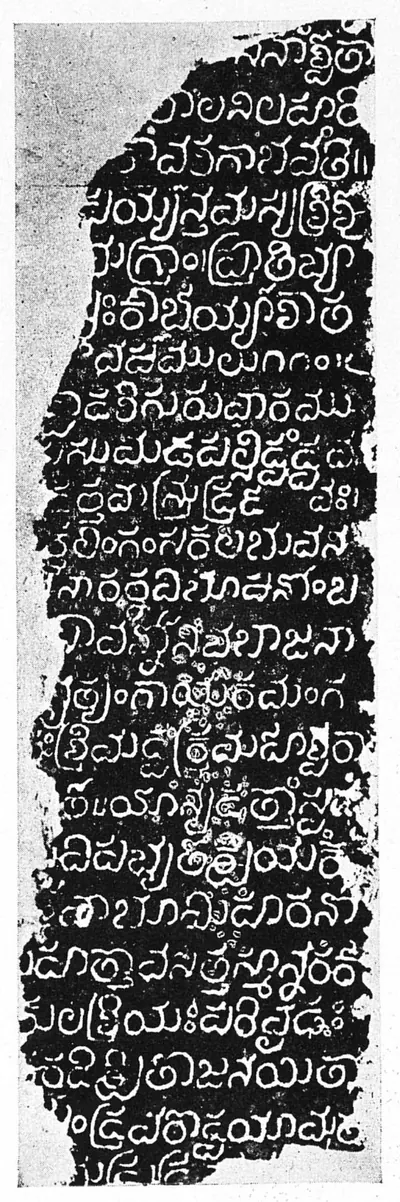 "Warangal inscription of Kakati Rudra-deva", face II (Sreenivasachar, Corpus of Inscriptions in the Telingana Districts III, Plate 1 (PDF p. 191))Inscription rubbing · 1956
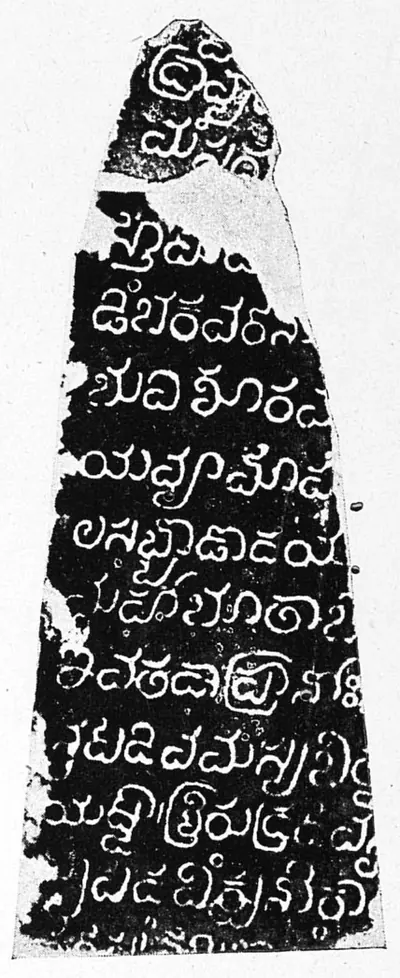 "Warangal inscription of Kakati Rudra-deva", face III (Sreenivasachar, Corpus of Inscriptions in the Telingana Districts III, Plate 1 (PDF p. 191))Inscription rubbing · 1956
Related
Dynasties
Kandur Chodas
c. 1060–1282 CE
Telugu Choda chiefs of the Kandurunadu country, in the present Mahbubnagar and Nalgonda districts of Telangana. They called themselves lords of Kodur, of the solar race and of the lineage of Karikala. Feudatories of the Western Chalukyas of Kalyani from about 1060, they governed the Kollipake province in 1088 and held Panugallu near Nalgonda. Their quarrels in the 1120s–1150s drew in the Kakatiyas Prola II and Rudradeva, who put Udaya Choda on the Panugallu throne, drove out his kinsman Bhima and annexed the country. The family lived on as Kakatiya subordinates, and its last known record is of 1282.

Kakatiyas
c. 1163–1323 CE
Dynasty of Anumakonda (Hanamkonda) and Orugallu (Warangal). The Kakatiyas were Rashtrakuta and then Western Chalukya feudatories from the tenth century. They declared their sovereignty under Rudradeva in 1163, and under Ganapatideva they ruled the Telugu country from Telangana to the coast. Rudramadevi reigned as king under the name Rudradeva, and her grandson Prataparudra fell to the Delhi Sultanate in the 1320s. Their rule rested on allied chiefs, nayaka commanders holding land for military service, and village assemblies. It is remembered for its tanks, its temples, the Motupalli sea-trade edict and its court literature.
References
Notes (0)
Sources (6)
Spotted an error on this page? Tell us
Last updated: