Kulottunga III (Chola)
Chola king (1178–1216), the last strong ruler of the dynasty. The Telugu Choda chiefs of Pottappi and Nellore, among them Nallasiddha, Tammusiddhi and Tikka, dated their records in his reign, and inscriptions of his years are found at Nellore, in the Gudur country and at Kalahasti, whose temple he renewed. The Cuddapah gazetteer credits him with restoring Chola power in the Paka-nadu in 1196, while the Kakatiyas took over the old Chola lands north of the Krishna.
Kulottunga III became Chola king in 1178.1 Robert Sewell gave him the years 1178 to 1216.1 In the Telugu country his reign matters for the southern districts, where the Telugu Choda chiefs still accepted the Chola king as their overlord.23 See the Cholas of Tanjore.
The Telugu Chodas of Pottappi and Nellore
E. Hultzsch (1899) called Kulottunga III the overlord of the Telugu Choda chief Tammusiddhi.2 He cited an inscription of the king in the Ranganayaka temple at Nellore, dated 1197, which mentions Pottappi-nadu.2 A. Butterworth and V. Venugopaul Chetty translated a Tamil record of that year in the same temple.4 In Saka 1119 (Saka is an Indian way of counting years) the people of several districts, among them Pottappi-nadu, met and gave land to the god.4
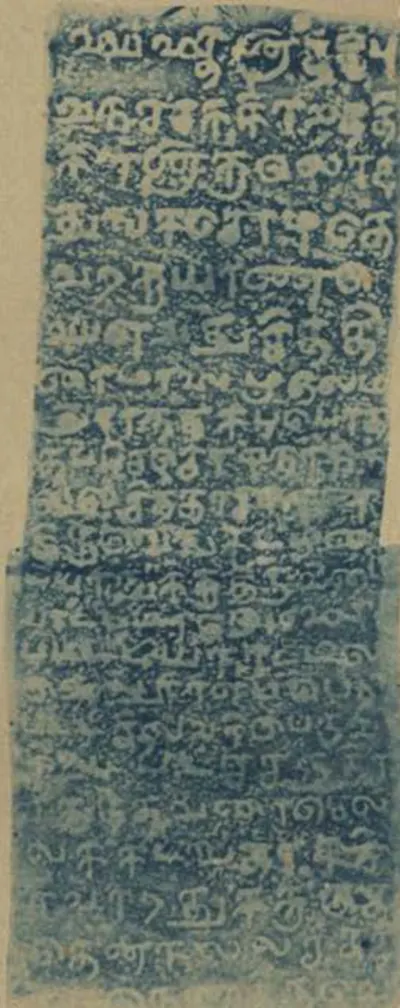
At Gunupadu, in the Gudur taluk, a Tamil record is dated in the 27th year of a Kulottungacholadeva.5 It says that Madurantaka-Pottapi-Chola Nallasiddharasa gave a village to “the God at Tiruvengadam”.5 The record does not number the king.5 Sewell found Nallasiddha active in the Kadapa (then Cuddapah) district in 1192, which suggests this Kulottunga was the third.3 See the Gunupadu inscription.
Sewell’s chronology traces the Telugu Chodas through the reign.3678
- In 1192 Nallasiddha claimed to have taken tribute from the Chola king at Kanchi.3
- In 1197 Kulottunga III was reigning in the Nellore district.6
- In 1207 Tammusiddhi was his vassal.7
- In 1209 Tikka I made a gift at Nandalur in the 31st year of his overlord Kulottunga III.8
The Cuddapah District Gazetteer (1915) read the claim to have “levied tribute from Kanchi” as part of a revolt of the northern provinces.9 It added that in 1196 Kulottunga III “regained Conjeeveram” and “entirely re-established the Chola power in the Paka-nadu”.9 S. Krishnaswami Aiyangar (1911) wrote that the king beat off an enemy at Kanchi “who may have been a Telugu Chola chief”.10 See the Telugu Chodas of Pottapi and Nellore.
Kalahasti
V. Rangacharya wrote that the temple at Kalahasti “was renovated by Kulottunga III”.11 Among its inscriptions is a record of his third year.11 It records a grant by a daughter of the Ganga king Siyaganga.11
The Kakatiya advance
North of the Krishna the coast was passing to the Kakatiyas.12 Sewell found the Kakatiya Ganapati reigning in the Kurnool and Guntur districts in 1209–11.12 He wrote that Ganapati had taken districts of the old Chola kingdom.12 In 1213 Ganapati gave Chebrolu to his general Jaya.13 See Ganapatideva.
Footnotes
-
Sewell and Aiyangar, Historical Inscriptions of Southern India (1932), p. 342 (archive.org (opens in a new tab)). Paraphrased. ↩ ↩2
-
E. Hultzsch, South-Indian Inscriptions, Vol. III, pt. I (1899), p. 33, note (archive.org (opens in a new tab)). ↩ ↩2 ↩3
-
Robert Sewell and S. Krishnaswami Aiyangar, The Historical Inscriptions of Southern India (1932), p. 125 (archive.org (opens in a new tab)). Paraphrased. ↩ ↩2 ↩3 ↩4
-
Butterworth and Venugopaul Chetty, Nellore District, Part II (1905), p. 824 (archive.org (opens in a new tab)). ↩ ↩2
-
A. Butterworth and V. Venugopaul Chetty, A Collection of the Inscriptions on Copper-Plates and Stones in the Nellore District, Part I (1905), p. 406, Gudur No. 34 (archive.org (opens in a new tab)). ↩ ↩2 ↩3
-
Sewell and Aiyangar, Historical Inscriptions of Southern India (1932), p. 126 (archive.org (opens in a new tab)). Paraphrased. ↩ ↩2
-
Sewell and Aiyangar, Historical Inscriptions of Southern India (1932), p. 127 (archive.org (opens in a new tab)). Paraphrased. ↩ ↩2
-
Sewell and Aiyangar, Historical Inscriptions of Southern India (1932), p. 130 (archive.org (opens in a new tab)). Paraphrased. ↩ ↩2
-
C. F. Brackenbury, Madras District Gazetteers: Cuddapah (1915), p. 32 (archive.org (opens in a new tab)). ↩ ↩2
-
S. Krishnaswami Aiyangar, Ancient India (1911), p. 154 (archive.org (opens in a new tab)). ↩
-
V. Rangacharya, A Topographical List of the Inscriptions of the Madras Presidency, Vol. I (1919), p. 480, Chittoor No. 64 (archive.org (opens in a new tab)). ↩ ↩2 ↩3
-
Sewell and Aiyangar, Historical Inscriptions of Southern India (1932), p. 131 (archive.org (opens in a new tab)). Paraphrased. ↩ ↩2 ↩3
-
Sewell and Aiyangar, Historical Inscriptions of Southern India (1932), p. 132 (archive.org (opens in a new tab)). Paraphrased. ↩
Photos
References
Notes (0)
Sources (7)
Spotted an error on this page? Tell us
Last updated: