Malyala Gunda
General (dandanatha) of the Malyala family under the Kakatiya rulers Ganapatideva and Rudramadevi, known from his inscriptions of 1259 and 1272 at Bothpur in the Mahbubnagar district. They are elaborate Sanskrit poems by the scholar Isvara-suri, and they state that the Kakatiyas were born in the fourth varna. He had died by 1276–77, when his widow Kuppamamba, daughter of Gona Buddhaya, built a temple for his merit.
Malyala Gunda was a general who served the Kakatiya rulers Ganapatideva and Rudramadevi.1 His inscriptions at Bothpur are elaborate Sanskrit poems.23 They state plainly that the Kakatiyas were born in the fourth varna (the fourth of the four classes).4
The Malyala family
The Malyala chiefs were among the leading generals of the Kakatiyas, and like them claimed descent from the legendary Durjaya. Kata of this family helped Rudradeva to take Dharanikota.5 His son Chaunda commanded the armies of Ganapatideva and took the island of Divi.5
Gunda belongs to a later generation.1 P. V. Parabrahma Sastry could not establish how he was related to Chaunda.1 Nor could he say why Gunda’s branch settled at Bothpur, far from the family’s old home at Kondaparti near Warangal.1
The Bothpur inscriptions
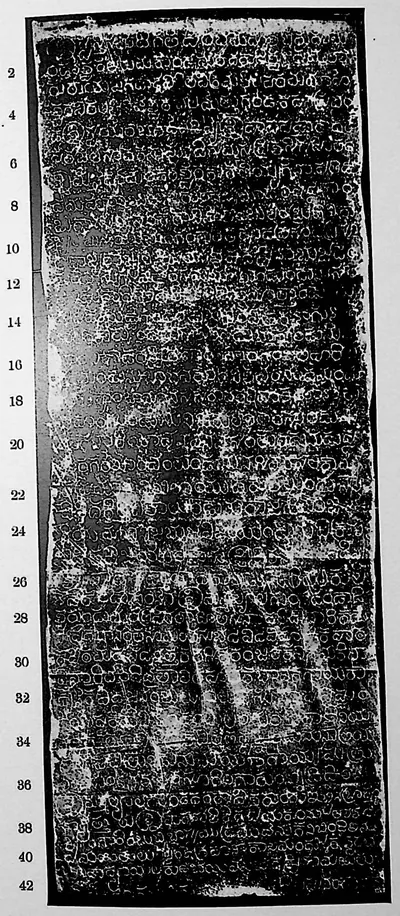
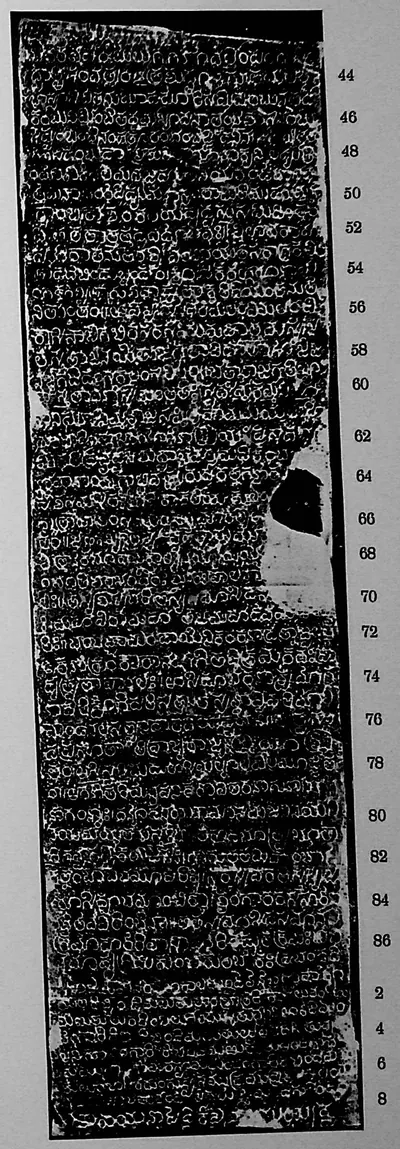
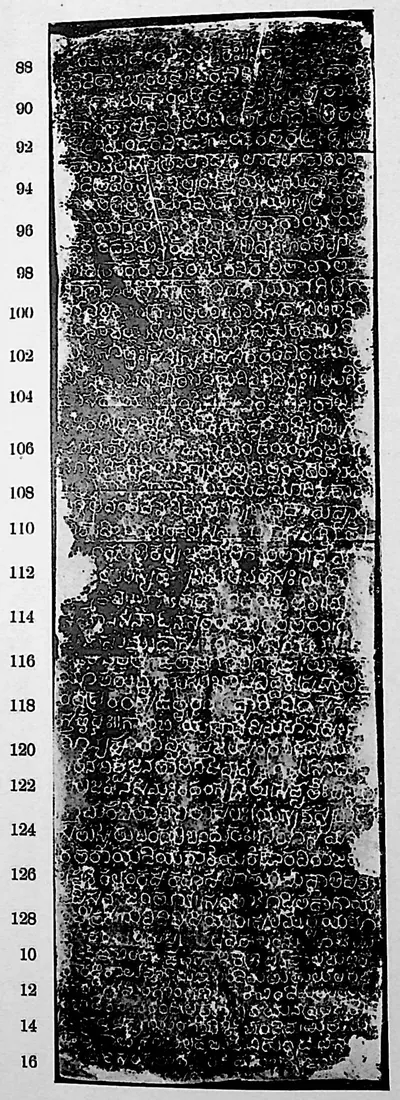
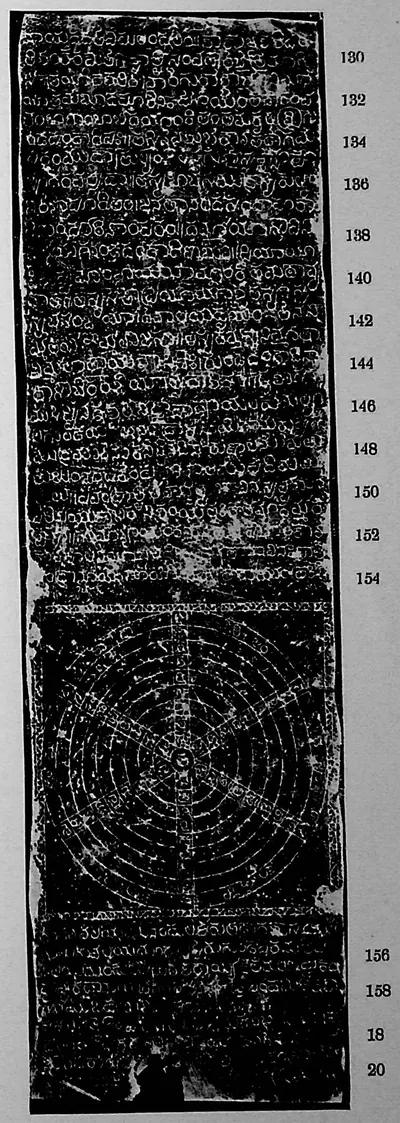
Gunda is known from inscriptions at Bothpur (Budapuri), in the Mahbubnagar district. They were published by P. Sreenivasachar in the Corpus of Inscriptions in the Telingana Districts. One, of Saka 1181 (1259; Saka is an Indian way of counting years), is dated in the reign of Ganapati. Another, of Saka 1194 (1272), is dated in the reign of Rudradeva, that is, Rudramadevi. In the second, the general Malyala Gunda built a tank near Budapuri, named after his master Ganapati.6
Gunda thus served both Ganapatideva and Rudramadevi.1 The records call him a general (dandadhisvara).7 Parabrahma Sastry describes him as a patron of learning.1 Scholars qualified as ghata-sasins, teachers in institutions of higher learning, appear among those who received gifts in his records.71
The inscriptions were composed by Isvara-suri, son of Mayurabhatta, a scholar of the Yajurveda and of Panini’s grammar. Sreenivasachar judged that he cared more to show off his learning than to move his readers.23 Some of his verses avoid whole classes of letters, and others hide their verbs or conceal one verse inside another.23 One is arranged as a wheel (chakra-bandha), in whose circles the names of the poet, the patron and the record can be read.23
Gunda’s inscriptions are also evidence for the caste of the Kakatiya kings. Parabrahma Sastry noted that his Bothpur and Vaddamanu inscriptions state plainly that the Kakatiyas were born in the fourth varna, the Shudra order.4 He preferred them to the panegyric (praise-filled) claims of solar descent in other records.4
Death
Gunda had died by Saka 1198 (1276–77). In that year his widow Kuppamamba built a temple at Bothpur and set up a linga (stone emblem of Shiva) named after him.7 With her sons Bachaya, Boppa and Ganapatideva and other relatives, she gave it land under tanks named after Bachaya, herself and Ganapati.7
The Sanskrit verses of her inscription describe her as the daughter of Buddhaya, the crest (ornament) of the Gona family.8 They list the vows and great gifts she performed.8 Parabrahma Sastry identified her father with Gona Budda Reddi, the author of the Ranganatha Ramayana.1
Footnotes
-
P. V. Parabrahma Sastry, The Kakatiyas of Warangal (1978), p. 151. ↩ ↩2 ↩3 ↩4 ↩5 ↩6 ↩7 ↩8
-
P. Sreenivasachar, A Corpus of Inscriptions in the Telingana Districts, Part I (1942), pp. 9–10 (archive.org (opens in a new tab)). ↩ ↩2 ↩3 ↩4
-
P. V. Parabrahma Sastry, The Kakatiyas of Warangal (1978), p. 293. ↩ ↩2 ↩3 ↩4
-
P. V. Parabrahma Sastry, The Kakatiyas of Warangal (1978), p. 29. ↩ ↩2 ↩3
-
P. V. Parabrahma Sastry, The Kakatiyas of Warangal (1978), pp. 149–150. ↩ ↩2
-
P. Sreenivasachar (ed.), A Corpus of Inscriptions in the Telingana Districts, Part II (1940), No. 51, translation, p. 149 (archive.org (opens in a new tab)). ↩
-
P. Sreenivasachar (ed.), A Corpus of Inscriptions in the Telingana Districts, Part II (1940), No. 50, translation, p. 141 (archive.org (opens in a new tab)). ↩ ↩2 ↩3 ↩4
-
P. Sreenivasachar (ed.), A Corpus of Inscriptions in the Telingana Districts, Part II (1940), No. 50, translation, p. 142 (archive.org (opens in a new tab)). ↩ ↩2
Photos
 "Bothpur inscription of Malyāla Guṇḍa (dated Saka 1181)", face I (Sreenivasachar, Corpus of Inscriptions in the Telingana Districts II, Plate 48 (PDF p. 316))Inscription rubbing · 1940
 "Bothpur inscription of Malyāla Guṇḍa (dated Saka 1181)", face II (Sreenivasachar, Corpus of Inscriptions in the Telingana Districts II, Plate 48 (PDF p. 316))Inscription rubbing · 1940
 "Bothpur inscription of Malyāla Guṇḍa (dated Saka 1181)", face III (Sreenivasachar, Corpus of Inscriptions in the Telingana Districts II, Plate 49 (PDF p. 318))Inscription rubbing · 1940
 "Bothpur inscription of Malyāla Guṇḍa (dated Saka 1181)", face IV (Sreenivasachar, Corpus of Inscriptions in the Telingana Districts II, Plate 49 (PDF p. 318))Inscription rubbing · 1940
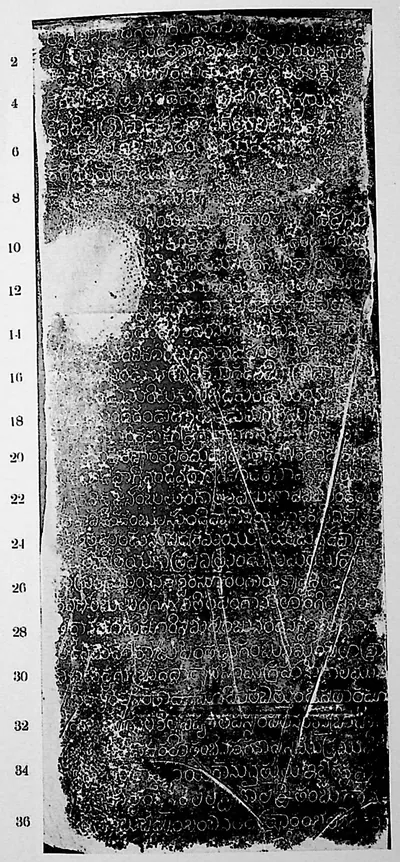 "Bothpur inscription of Malyāla Guṇḍa (dated Saka 1194)", face I (Sreenivasachar, Corpus of Inscriptions in the Telingana Districts II, Plate 46 (PDF p. 312))Inscription rubbing · 1940
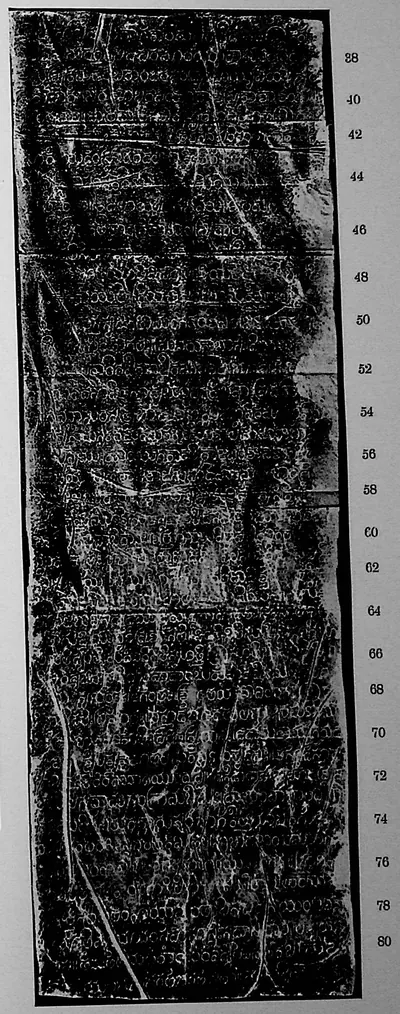 "Bothpur inscription of Malyāla Guṇḍa (dated Saka 1194)", face II (Sreenivasachar, Corpus of Inscriptions in the Telingana Districts II, Plate 46 (PDF p. 312))Inscription rubbing · 1940
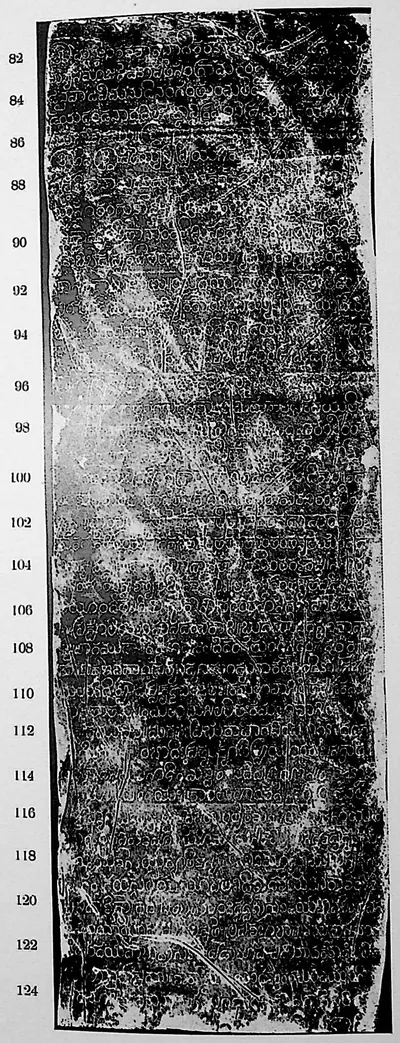 "Bothpur inscription of Malyāla Guṇḍa (dated Saka 1194)", face III (Sreenivasachar, Corpus of Inscriptions in the Telingana Districts II, Plate 47 (PDF p. 314))Inscription rubbing · 1940
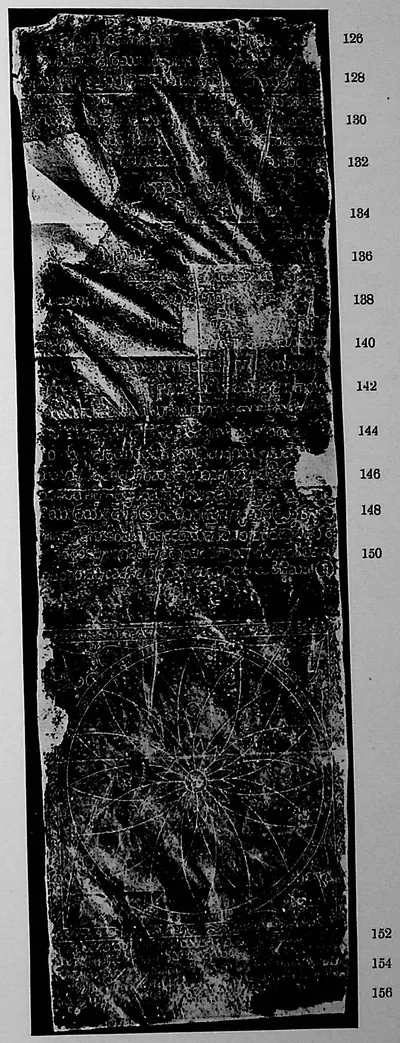 "Bothpur inscription of Malyāla Guṇḍa (dated Saka 1194)", face IV (Sreenivasachar, Corpus of Inscriptions in the Telingana Districts II, Plate 47 (PDF p. 314))Inscription rubbing · 1940
References
Notes (0)
Sources (3)
Spotted an error on this page? Tell us
Last updated: