Mir Alam (Mir Abul Qasim)
Diplomat, general and minister of the Nizams Nizam Ali Khan and Sikandar Jah. He came from a Sayyid family of Shushtar in Persia. He represented the Nizam at Calcutta in 1786–89 and with Lord Cornwallis in 1791, commanded the Nizam's army against Tipu Sultan in 1799, and was minister from 1804 until his death in 1808. He built the Mir Alam tank south-west of Hyderabad (1806) from his share of the Seringapatam prize money. He was the great-grandfather of Salar Jung I.
Mir Abul Qasim, known by his title Mir Alam, served the Asaf Jahi Nizam Nizam Ali Khan as envoy and general, and Sikandar Jah as minister.12 The Imperial Gazetteer says he “belonged to the Nuria Saiyids of Shustar in Persia”.3 His father, Saiyid Razzak, came to India as a young man, settled at Hyderabad and received jagirs (land grants) from Nizam Ali Khan.3
Envoy and general
According to the Imperial Gazetteer, in 1784 Mir Alam acted as go-between for the British envoy and the Hyderabad minister.1 Two years later he went to Calcutta as the Nizam’s representative.1 In 1791 he was sent to Lord Cornwallis to discuss peace with Tipu Sultan.1
The treaty collection of 1909 says the mission to Calcutta was to settle the arrears of the payment due to the Nizam for the Northern Circars.4 It “was productive in 1789” of a letter from Cornwallis explaining the treaty of 1768.4 This letter was declared as binding as a treaty.4 In the last war against Tipu, in 1799, Mir Alam commanded the Nizam’s troops.15
Mudiraj’s Pictorial Hyderabad (1929) reproduces a painting of Nizam Ali Khan’s court in which “the Prime Minister Mir Alam is seated opposite the Nizam”.6 Mudiraj also tells how Mir Alam helped the Resident Kirkpatrick win the Nizam’s leave to build the Residency.78 The Nizam took offence at the large site plan.78 Mir Alam advised showing him instead a plan “of the size of a postage stamp or visiting card”.78
Minister
After the battle of Kharda the minister Azim-ul-Umara was held at Poona as a hostage.2 Campbell says that Mir Alam acted as minister in that time.2 He was appointed minister himself in 1804, after Azim-ul-Umara’s death.2 Campbell calls him “of a most amiable disposition” and notes that “his friendship for the British was very marked”.2 Before his death he drew a pension of Rs 2,000 a month from the British Government.2
The treaty collection describes him as “the Nizam’s able minister and a sincere friend of the British Government”, and dates his death to 1808.91 His son-in-law Munir-ul-Mulk succeeded him.91 Two of his daughters married Munir-ul-Mulk in turn.310 Through the second, Campbell says, Mir Alam was the great-grandfather of Salar Jang I.310
The Mir Alam tank
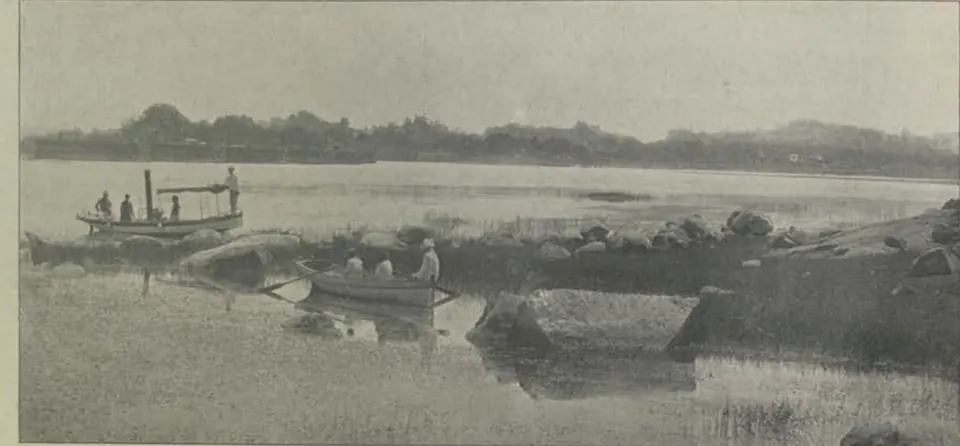
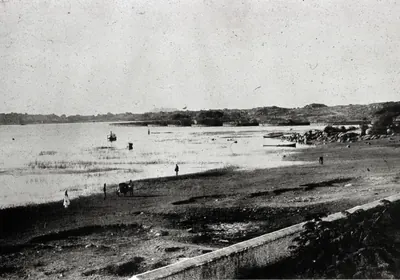
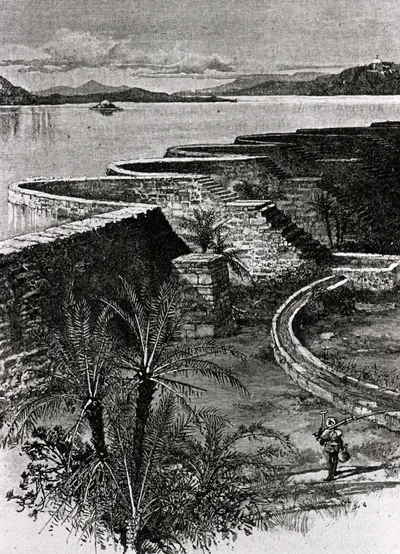
Mir Alam built the great tank south-west of Hyderabad that bears his name.11 According to the Imperial Gazetteer, its dam is 1,120 yards long and made of 21 semicircular retaining walls.11 It says the dam was “constructed by French engineers in the Nizam’s service”.11 Mir Alam paid for it, and for other buildings, “out of the prize-money which fell to his share after the fall of Seringapatam”.11 The dam alone cost eight lakhs.11
Bilgrami dates the work to AH 1221 (1806; AH is the Islamic way of counting years), in the reign of Sikandar Jah.125 He quotes the inscription on the reservoir stone.125 He says that two of Mir Alam’s grandsons supervised the work.125 See the Mir Alam tank and its inscription.
Footnotes
-
Imperial Gazetteer: Hyderabad (1909), p. 296 (archive.org (opens in a new tab)). ↩ ↩2 ↩3 ↩4 ↩5 ↩6 ↩7
-
Campbell, Glimpses of the Nizam’s Dominions (1898), p. 127 (archive.org (opens in a new tab)). ↩ ↩2 ↩3 ↩4 ↩5 ↩6
-
Imperial Gazetteer: Hyderabad (1909), p. 295 (archive.org (opens in a new tab)). ↩ ↩2 ↩3 ↩4
-
C. U. Aitchison, A Collection of Treaties, Engagements and Sanads, Vol. IX (1909), p. 3 (archive.org (opens in a new tab)). ↩ ↩2 ↩3
-
Bilgrami, Landmarks of the Deccan (1927), p. 107 (archive.org (opens in a new tab)). ↩ ↩2 ↩3 ↩4
-
K. Krishnaswamy Mudiraj, Pictorial Hyderabad, Vol. I (1929), colour plate after p. 60 (archive.org (opens in a new tab)). ↩
-
Mudiraj, Pictorial Hyderabad (1929), p. 115 (archive.org (opens in a new tab)). ↩ ↩2 ↩3
-
Mudiraj, Pictorial Hyderabad (1929), p. 116 (archive.org (opens in a new tab)). ↩ ↩2 ↩3
-
Aitchison, Treaties, Vol. IX (1909), p. 6 (archive.org (opens in a new tab)). ↩ ↩2
-
A. Claude Campbell, Glimpses of the Nizam’s Dominions (1898), p. 36 (archive.org (opens in a new tab)). ↩ ↩2
-
Imperial Gazetteer of India: Hyderabad State (1909), p. 118 (archive.org (opens in a new tab)). ↩ ↩2 ↩3 ↩4 ↩5
-
Syed Ali Asgar Bilgrami, Landmarks of the Deccan (1927), p. 106 (archive.org (opens in a new tab)). ↩ ↩2 ↩3
Photos
References
Notes (0)
Sources (5)
Spotted an error on this page? Tell us
Last updated: