Tipu Sultan
Son of Haidar Ali and ruler of Mysore from December 1782 until he was killed at the fall of Seringapatam on 4 May 1799. As a young commander he took Gurramkonda back from the Marathas in 1773–74. As Sultan he held Gooty, Gurramkonda, Cuddapah, Bellary and the Anantapur country. He gave Gooty and Gurramkonda the new names Faiz Hisar and Zafarabad and struck copper coins at both. He besieged Adoni in 1786 and seized the poligars of Rayadurg and Harpanahalli. By the treaty of 1792 he gave up Cuddapah, Gurramkonda, Bellary and Tadpatri to the Nizam. The rest of his Telugu districts went to the Nizam after his death and were ceded to the East India Company in 1800.
Tipu Sultan, the eldest son of Haidar Ali, ruled Mysore for sixteen years.12 His reign is the last chapter of Mysore rule in the Rayalaseema districts.12 He inherited Gooty, Gurramkonda, Kadapa (then Cuddapah) and Bellary from his father.12 He lost the northern and eastern districts to the Nizam by the treaty of 1792, and died defending Srirangapatna (then Seringapatam) in 1799.12 See Mysore under Haidar Ali and Tipu Sultan.
Family
Tipu’s mother came from a family with roots in the Kadapa country. Charles Philip Brown, in his notes to the memoir of Ram Chandra Rao of Punganur, calls Tipu’s mother Haidar’s second wife.3 He calls her “the daughter of Mir Moin ad Din late Commandant of Cuddapah: her brother was Mir Ali Raja”.3
Wilks names Tipu’s mother Seydanee Begum.45 He calls Tipu the nephew of Mir Sahib, Haidar’s brother-in-law and governor of Gurramkonda.45 In 1791 Tipu’s eldest son, Fateh Haidar, was “then about eighteen”.6 He was given command, in name only, of the cavalry sent to relieve Gurramkonda.6 See Mir Ali Raza Khan (Mir Sahib) and Qamar-ud-din Khan.
Commander for his father
The Marathas had taken Gurramkonda by siege in 1771 and kept it under the treaty of 1772. In September 1773 Haidar sent Tipu north to win back the places ceded to them.7 Wilks writes that “before his junction” with his father, “Tippoo had reduced Sera, Mudgery, Chenroydroog, Goorumconda, and their dependencies”.7 Wilks dates the whole campaign from September 1773 to February 1774.7 Gribble’s Cuddapah manual says Tipu “soon reduced, or bought over” these forts.8 See Gurramkonda.
Coming to the throne, and the treaty of Mangalore
Haidar died on 7 December 1782, in the middle of the Second Mysore War.19 Tipu joined the army on 28 December.19 The war ended with the treaty of Mangalore of 11 March 1784.1 It was based on the mutual restoration of conquests, with each side giving back what it had taken.1 One of its articles required the release of “Abdul Wahab Khan, taken at Chitoor, and his family”.10 See Abdul Wahab Khan.
The Telugu districts under Tipu
Mir Sahib’s son Qamar-ud-din held the Kadapa country for Tipu at first. In 1783 he defeated a claimant to the Nawabship of Cuddapah.1112 The claimant was supported by an English detachment that had taken Cumbum.1112 The Cumbum valley was then exchanged with the English for Chetpet on the Coromandel coast.1112
In 1785 Tipu had Qamar-ud-din arrested and “stripped of all his jageers and offices”.13 Gribble doubted that the disgrace was complete.14 He pointed out that Munro’s notes on the poligars (local chiefs) mention tributes fixed by Qamar-ud-din in 1791 and 1799.14
Tipu renamed many places. William Kirkpatrick translated his letters in 1811.15 He wrote that “to Chittledoorg he gave the name of Furrukh-yab Hisar; to Gooty, that of Fyze-Hisar”.15 Henderson, the expert on coins, adds that the name Zafarabad, “The City of Victory”, was moved from Mercara to Gurramkonda in December 1785.16
Tipu’s letters of these months show his officers at work in the Telugu districts.171819 His postmaster at Faiz Hisar reported a thousand peons, five hundred regular infantry and three hundred horse of the Nawab of Kurnool gathering at Nandyal.171819 They meant to recover land that Tipu had taken over.171819 In December 1785 Tipu answered: “If they should dare to take such a step, they shall see the fruits … of it”.171819 He also ordered the diwan (revenue minister) of Kadapa to collect the lead of a newly found mine “in the fort of Sidhoot”.171819
Tipu wrote to Runmust Khan, the Nawab of Kurnool, about eleven lakhs of rupees “to which I had a just claim”.20 He said he would let go four of them.20 See Kurnool and Siddhavatam.
In 1786 Tipu, at war with the Marathas and the Nizam, marched suddenly on Adoni, the Nizam’s fort south of the Tungabhadra.21 The fort held the family of the Nizam’s late brother Basalat Jang, under his son Mahabat Jung.21 Tipu’s assault was “repelled … at every point, with great slaughter”.22
But when the river began to rise, the allies withdrew the garrison and the women.2324 Tipu found the fort “in the exact state of a mansion ready furnished for the reception of a royal establishment”.24 He foresaw that he would have to give it back, so he moved the guns and stores to Gooty and Bellary and destroyed the walls.24
On his march to Adoni he camped at Lepakshi.25 A local manuscript says he gave the amildar (revenue officer) of the deserted village of Kodikonda cuts in land tax.25 It says that he also built a new suburb there, the “Sultan’s pettah”.25 Adoni was given back to the Nizam at the peace of February 1787.26 See Lepakshi.
On his way home from that war Tipu thanked the poligars of Rayadurg and Harpanahalli for their services.2728 Then he seized them in his camp, on the same day that two of his brigades overpowered their forts.2728 The chiefs were sent to Kabbaldurga.2728 The Bellary gazetteer calls these chiefs the “staunchest supporters of Tipu and his father”.2930 It calls the way he treated them “among the most indefensible of all his actions”.2930
The war of 1790–92 and the treaty
In the war of 1790–92 the Nizam’s army took Gandikota and besieged Gurramkonda from 15 September 1791. A British battery of guns breached the lower fort.3132633 After this Tipu sent Fateh Haidar with the cavalry, who surprised the besiegers and carried off their commander, Hafiz Farid-ud-din.3132633 Tipu’s officer Ali Raza had him put to death.3132633 Tipu, Wilks says, “had the grace to express a slight disapprobation” (disapproval) of the killing.3132633 Wilks adds that the death was “actually commanded by himself”.3132633
Gribble says the upper fort held out “until the treaty of 1792”.34 By that treaty, he says, “Tippoo ceded Gurramkonda, together with the whole of his Cuddapah possessions, to the Nizam”.34
By the treaty of Seringapatam of 18 March 1792 Tipu gave up half his dominions to the three allies.2 The schedule (list) of the Nizam’s share includes “Talook Kurpah, 61 Talooks”, Banganapalle and other districts.35 It also lists “In Gooty 4 Talooks”, namely “Tarputry”, “Tannorry”, “Velanoor” and “Singemmully”.35
The Anantapur gazetteer identifies the Anantapur part of this cession as the taluks of Tadpatri and Tadimarri.36 The Bellary gazetteer says Bellary fort passed to the Nizam in the same year.37 Henderson notes that after 1792 Tipu’s coins came only from the mints of Srirangapatna, Nagar and Gooty, “and from the last of these only in copper”.38 See Tadpatri and Bellary.
After the war Tipu disputed the tribute of Kurnool with the Nizam.3940 When the Nizam’s son Ali Jah rebelled in 1795, Tipu ordered troops to gather at Gooty “on the pretence of demanding tribute from Kurnool”.3940
Revenue and the poligars
Munro’s figures are quoted in the Anantapur gazetteer.41 They say that “The revenue continued to increase from 1779 to 1788.”41 Munro wrote that “Tipu Sultan raised it by the same means as his father”.41 He took back Inams (rent-free land grants), raised low rents and drove out the Poligars.41 The assessment of 1788 was 22,77,999 Kanthiraya pagodas, though about three lakhs were later let off.41
As the Cuddapah gazetteer quotes him, Munro also wrote that Tipu weakened his own government.42 Tipu did this by “parcelling out his country into a vast number of minute amildaris” (small revenue divisions).42 As a result, the runaway poligars of Gurramkonda were drawing contributions from their old villages without his knowledge.42 The Bellary gazetteer puts it more briefly: “Tipu’s weaker rule gave the poligars their opportunity and they returned to all their old power”.43
Tipu’s government could also be harsh to those who might rise against it. Soon after 1788, to prevent any rising, he hanged all the males of the Anantapur poligar’s family who were at Anantapur.4445 His amildar of Anantapur seized and hanged the poligar of Udiripikonda and his brother.4445
When he held the Anantapur country he forbade the sale of arrack and toddy (local liquors), “the consumption of alcohol being strictly forbidden by the Koran”.46 The gazetteer says that drinking went on in the villages all the same.46 At Penukonda the darga (shrine) of Babayya is said to have been built by Tipu.47 Both he and Haidar gave it endowments.47
Coins
Henderson says that Tipu’s coins were struck “from no fewer than twelve different mints”.48 Among them were “(3) Faiz Hisar (Gooty)” and “(10) Zafarabad (Gurramkonda)”.48 Gooty struck paisas, half-paisas and quarter-paisas.49 Henderson puts many errors on these coins down to the workmen who made the dies (stamps).49 These “Telugu or other South Indian workmen”, he says, had “an imperfect knowledge of the Hindustani letters”.49
The Gurramkonda mint issued a small series of copper coins before the town was lost in 1792.3816 A gold pagoda of Gooty is dated 1198.50 It is a copy of the Mughal-style pagoda that Haidar had struck there.50 Henderson thought it was “probably struck without Tipu’s knowledge”.50
1799
The fourth war with the Company and the Nizam ended on 4 May 1799.2 It ended “by the fall of Seringapatam and the death of Tipu, who fell bravely defending the fort”.2 By the partition treaty the Nizam received “the districts of Garamkonda, Guti, and others contiguous to Hyderabad”.51 Tipu’s family was removed to Vellore.51
The Nizam’s schedule begins with Gooty, “Fyse Hussur Kubal”.52 It goes on with Penukonda, Madakasira, Hande Anantapur, the rest of the Gurramkonda districts and the tribute of Kurnool.52 At Gooty a Brahmin convert seized the fort on hearing of Tipu’s death.53 He held out against Colonel Bowser until his own garrison handed him over on 3 August 1799.53 In 1800 the Nizam ceded all these districts to the Company.54 See Gooty.
Footnotes
-
Aitchison, Treaties, Vol. IX (1909), p. 181 (archive.org (opens in a new tab)). ↩ ↩2 ↩3 ↩4 ↩5 ↩6 ↩7 ↩8
-
Aitchison, Treaties, Vol. IX (1909), p. 182 (archive.org (opens in a new tab)). ↩ ↩2 ↩3 ↩4 ↩5 ↩6 ↩7
-
Ram Chandra Rao Punganuri, Memoirs of Hyder and Tippoo, tr. C. P. Brown (1849), p. 3, translator’s note 1 (archive.org (opens in a new tab)). ↩ ↩2
-
Wilks, Historical Sketches, Vol. II (1817), p. 198 and note (archive.org (opens in a new tab)). ↩ ↩2
-
Wilks, Historical Sketches, Vol. II (1817), p. 132 (archive.org (opens in a new tab)). ↩ ↩2
-
Wilks, Historical Sketches, Vol. III (1817), p. 206 (archive.org (opens in a new tab)). ↩ ↩2 ↩3 ↩4 ↩5 ↩6 ↩7
-
Wilks, Historical Sketches, Vol. II (1817), p. 159 (archive.org (opens in a new tab)). ↩ ↩2 ↩3
-
J. D. B. Gribble, A Manual of the District of Cuddapah (1875), p. 97 (archive.org (opens in a new tab)). ↩
-
Gribble, Cuddapah (1875), p. 99 (archive.org (opens in a new tab)). ↩ ↩2
-
Aitchison, Treaties, Vol. IX (1909), p. 208, treaty of Mangalore, Article 2 (archive.org (opens in a new tab)). ↩
-
Wilks, Historical Sketches, Vol. II (1817), p. 465 (archive.org (opens in a new tab)). ↩ ↩2 ↩3
-
Wilks, Historical Sketches, Vol. II (1817), p. 466 (archive.org (opens in a new tab)). ↩ ↩2 ↩3
-
Wilks, Historical Sketches, Vol. II (1817), p. 540 (archive.org (opens in a new tab)). ↩
-
Gribble, Cuddapah (1875), p. 100 and note (archive.org (opens in a new tab)). ↩ ↩2
-
William Kirkpatrick (tr.), Select Letters of Tippoo Sultan (1811), preface, p. xxx (archive.org (opens in a new tab)). ↩ ↩2
-
Henderson, Coins of Haidar Ali and Tipu Sultan (1921), p. 110 (archive.org (opens in a new tab)). ↩ ↩2
-
Kirkpatrick, Select Letters of Tippoo Sultan (1811), p. 226, Letter CXCII, dated 31 December [1785] (archive.org (opens in a new tab)). ↩ ↩2 ↩3 ↩4 ↩5
-
Kirkpatrick, Select Letters of Tippoo Sultan (1811), p. 227, Letter CXCV (archive.org (opens in a new tab)). ↩ ↩2 ↩3 ↩4 ↩5
-
Kirkpatrick, Select Letters of Tippoo Sultan (1811), p. 228 (archive.org (opens in a new tab)). ↩ ↩2 ↩3 ↩4 ↩5
-
Kirkpatrick, Select Letters of Tippoo Sultan (1811), p. 135, Letter CII (archive.org (opens in a new tab)). ↩ ↩2
-
Wilks, Historical Sketches, Vol. II (1817), p. 546 (archive.org (opens in a new tab)). ↩ ↩2
-
Wilks, Historical Sketches, Vol. II (1817), p. 547 (archive.org (opens in a new tab)). ↩
-
Wilks, Historical Sketches, Vol. II (1817), p. 548 (archive.org (opens in a new tab)). ↩
-
Wilks, Historical Sketches, Vol. II (1817), p. 549 (archive.org (opens in a new tab)). ↩ ↩2 ↩3
-
Francis, Anantapur Gazetteer (1905), p. 172 (archive.org (opens in a new tab)). ↩ ↩2 ↩3
-
Wilks, Historical Sketches, Vol. II (1817), p. 559 (archive.org (opens in a new tab)). ↩
-
Wilks, Historical Sketches, Vol. II (1817), p. 560 (archive.org (opens in a new tab)). ↩ ↩2 ↩3
-
Wilks, Historical Sketches, Vol. II (1817), p. 561 (archive.org (opens in a new tab)). ↩ ↩2 ↩3
-
W. Francis, Madras District Gazetteers: Bellary (1904), p. 45 (archive.org (opens in a new tab)). ↩ ↩2
-
Francis, Bellary (1904), p. 46 (archive.org (opens in a new tab)). ↩ ↩2
-
Mark Wilks, Historical Sketches of the South of India, Vol. III (1817), p. 175 (archive.org (opens in a new tab)). ↩ ↩2 ↩3 ↩4 ↩5
-
Wilks, Historical Sketches, Vol. III (1817), p. 205 (archive.org (opens in a new tab)). ↩ ↩2 ↩3 ↩4 ↩5
-
Wilks, Historical Sketches, Vol. III (1817), p. 207 (archive.org (opens in a new tab)). ↩ ↩2 ↩3 ↩4 ↩5
-
Gribble, Cuddapah (1875), p. 102 (archive.org (opens in a new tab)). ↩ ↩2
-
Aitchison, Treaties, Vol. IX (1909), p. 214, treaty of Seringapatam, districts ceded to the Nizam (archive.org (opens in a new tab)). ↩ ↩2
-
W. Francis, Madras District Gazetteers: Anantapur (1905), p. 23 (archive.org (opens in a new tab)). ↩
-
Francis, Bellary (1904), p. 218 (archive.org (opens in a new tab)). ↩
-
Henderson, Coins of Haidar Ali and Tipu Sultan (1921), p. 9 (archive.org (opens in a new tab)). ↩ ↩2
-
Wilks, Historical Sketches, Vol. III (1817), p. 315 (archive.org (opens in a new tab)). ↩ ↩2
-
Wilks, Historical Sketches, Vol. III (1817), p. 324 (archive.org (opens in a new tab)). ↩ ↩2
-
Francis, Anantapur Gazetteer (1905), p. 104, quoting Munro (archive.org (opens in a new tab)). ↩ ↩2 ↩3 ↩4 ↩5
-
C. F. Brackenbury, Madras District Gazetteers: Cuddapah, Vol. I (1915), p. 45, quoting Munro (archive.org (opens in a new tab)). ↩ ↩2 ↩3
-
Francis, Bellary (1904), p. 48 (archive.org (opens in a new tab)). ↩
-
Francis, Anantapur Gazetteer (1905), p. 146 (archive.org (opens in a new tab)). ↩ ↩2
-
Francis, Anantapur Gazetteer (1905), p. 166 (archive.org (opens in a new tab)). ↩ ↩2
-
Francis, Anantapur Gazetteer (1905), p. 129 (archive.org (opens in a new tab)). ↩ ↩2
-
Francis, Anantapur Gazetteer (1905), p. 193 (archive.org (opens in a new tab)). ↩ ↩2
-
J. R. Henderson, The Coins of Haidar Ali and Tipu Sultan (Madras Government Museum, 1921), p. 8 (archive.org (opens in a new tab)). ↩ ↩2
-
Henderson, Coins of Haidar Ali and Tipu Sultan (1921), p. 76 (archive.org (opens in a new tab)). ↩ ↩2 ↩3
-
Henderson, Coins of Haidar Ali and Tipu Sultan (1921), p. 77 (archive.org (opens in a new tab)). ↩ ↩2 ↩3
-
Aitchison, Treaties, Vol. IX (1909), p. 183 (archive.org (opens in a new tab)). ↩ ↩2
-
Aitchison, Treaties, Vol. IX (1909), p. 63, partition treaty of Mysore, Schedule B (archive.org (opens in a new tab)). ↩ ↩2
-
Francis, Anantapur Gazetteer (1905), p. 160 (archive.org (opens in a new tab)). ↩ ↩2
-
C. U. Aitchison, A Collection of Treaties, Engagements and Sanads, Vol. IX (4th ed., 1909), p. 5 (archive.org (opens in a new tab)). ↩
Photos
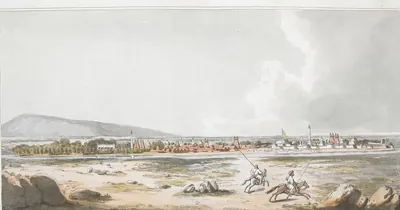 "A View of Seringapatam": etching published by Daniel Orme, London, 23 July 1792 (British Library, Maps K.Top.115.67.2)Drawing · 1792
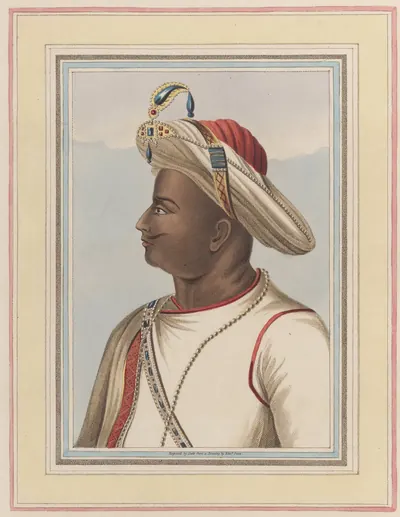 "Tippoo Sultan. From an original Picture in the possession of The Marquis Wellesley": engraving by Scott after Edward Orme, London, 1805 (University of Edinburgh)Other · 1805
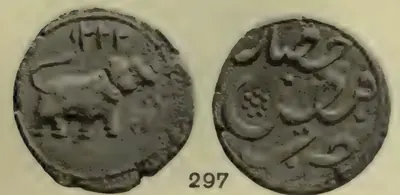 Copper paisa of Tipu Sultan from the Faiz Hisar (Gooty) mint, dated 1222 (Henderson 1921, pl. VI, No. 297)Coin · 1921
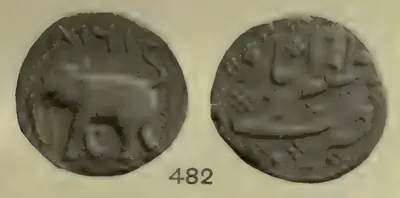 Copper paisa of Tipu Sultan from the Zafarabad (Gurramkonda) mint, dated 1218 (Henderson 1921, pl. IX, No. 482)Coin · 1921
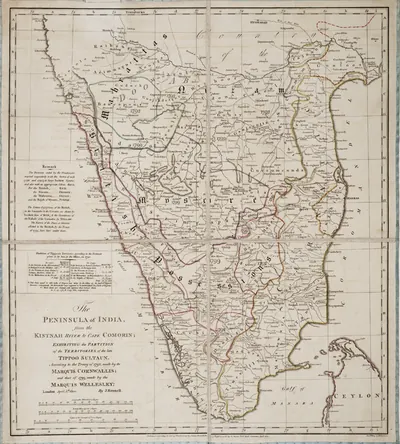 James Rennell, "The Peninsula of India ... exhibiting the partition of the territories of the late Tippoo Sultaun, according to the treaty of 1792 ... and that of 1799" (London, 1800), Royal Museums Greenwich K1047Map · 1800
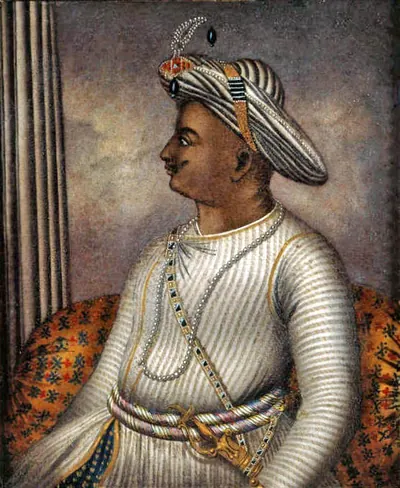 Tipu Sultan: Indian portrait, about 1792, once owned by Richard Wellesley, now in the British LibraryOther · c. 1792
Related
Dynasties
References
Notes (0)
Sources (10)
Spotted an error on this page? Tell us
Last updated: