Mir Alam Tank
Large tank south-west of the old city of Hyderabad, held back by a dam of 21 semicircular granite arches 1,120 yards long. The minister Mir Alam built it out of his share of the prize money from Seringapatam (1799). It was completed in AH 1221 (1806), in the reign of Sikandar Jah, at a cost of eight lakhs. The Imperial Gazetteer says French engineers in the Nizam's service built the dam. An inscription on a reservoir stone records the date. Until the Osman Sagar was built it was a main source of the city's water.
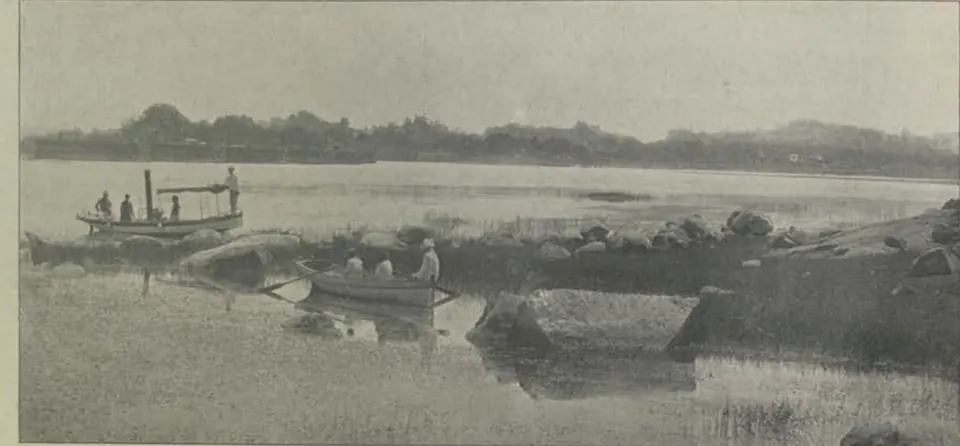
The Mir Alam tank lies to the south-west of the old city of Hyderabad.12 It is named after its builder, Mir Alam, minister of the Asaf Jahi Nizam Sikandar Jah.12
The dam
The Imperial Gazetteer of 1909 calls it “another magnificent sheet of water, 8 miles in circumference”.1 Its dam “consists of a series of 21 semicircular retaining walls with their convex side facing the water”.1 “Its total length is 1,120 yards, and it was constructed by French engineers in the Nizam’s service”.1
The gazetteer says Mir Alam built the tank, a baradari (pavilion) and other buildings “out of the prize-money which fell to his share after the fall of Seringapatam”.1 It adds that “the dam alone cost 8 lakhs”.1
Bilgrami’s account
Syed Ali Asgar Bilgrami wrote a survey of the city’s monuments in 1927.34 He describes the bund (dam) as “a unique piece of architecture” of 21 large granite arches with semicircular projections.34 He dates it to the reign of Sikandar Jah, AH 1221 (1806; AH is the Islamic way of counting years).34
According to Bilgrami, two grandsons of Mir Alam supervised the building.34 They were Saeed-ud-daula and Mir Muhammad Ali Khan, sons of Khalilullah Khan.34 He gives the cost of tank and bund together as Rs 8,00,000.34 He repeats that Mir Alam paid for it from his prize money.34 This was after Mir Alam had led the Nizam’s forces against Tipu Sultan in 1799.34
An inscription on a reservoir stone of black basalt gives the date.3 See the Mir Alam tank inscription.
Water for the city
Bilgrami says that after the tank was finished “the whole city of Hyderabad abounded in underground canals of running drinking water”.34 This eased the people’s sufferings from scarcity of water.34 By 1927, however, “owing to the construction of Osman Sagar the importance of this tank has been greatly reduced”.34 See Osman Sagar.
The gazetteer of 1909 says that the city and suburbs were then “amply supplied with water” from this tank and the Husain Sagar.1 The Mir Alam tank was still among the works maintained by the public works department of the state in 1912–13.5
Campbell (1898) describes a view over the city from the west.6 In it he mentions “the picturesque Mir Alum Tank” with the Falaknuma palace on a hill beyond it.6
Footnotes
-
Imperial Gazetteer of India: Hyderabad State (1909), p. 118 (archive.org (opens in a new tab)). ↩ ↩2 ↩3 ↩4 ↩5 ↩6 ↩7 ↩8
-
A. Claude Campbell, Glimpses of the Nizam’s Dominions (1898), p. 127 (archive.org (opens in a new tab)). ↩ ↩2
-
Syed Ali Asgar Bilgrami, Landmarks of the Deccan (1927), p. 106 (archive.org (opens in a new tab)). ↩ ↩2 ↩3 ↩4 ↩5 ↩6 ↩7 ↩8 ↩9 ↩10 ↩11 ↩12
-
Bilgrami, Landmarks of the Deccan (1927), p. 107 (archive.org (opens in a new tab)). ↩ ↩2 ↩3 ↩4 ↩5 ↩6 ↩7 ↩8 ↩9 ↩10 ↩11
-
Report on the Administration of H.H. the Nizam’s Dominions for 1322 Fasli (1912–13) (1915), p. 48 (archive.org (opens in a new tab)). ↩
-
Campbell, Glimpses of the Nizam’s Dominions (1898), p. 245 (archive.org (opens in a new tab)). ↩ ↩2
Photos
 Hyderabad: "Mir Alum Lake" (Campbell 1898, p. 228)Historic photograph · 1898
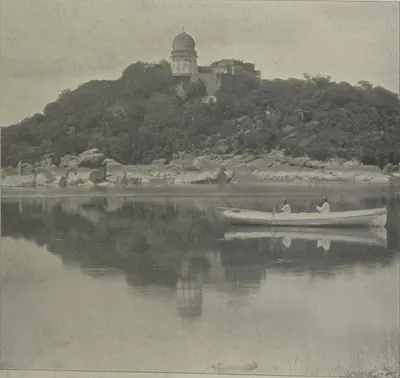 Hyderabad: "Tomb of Mahabub Ali, and Mir Alum Lake" (Campbell 1898, p. 228)Historic photograph · 1898
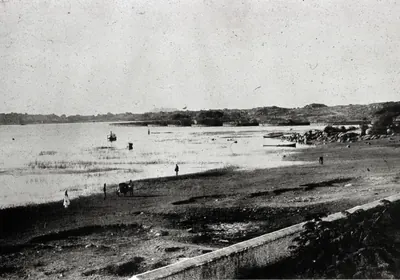 Mir Alam tank from its west bank, photograph by Lala Deen Dayal, 1880sHistoric photograph · 1880s
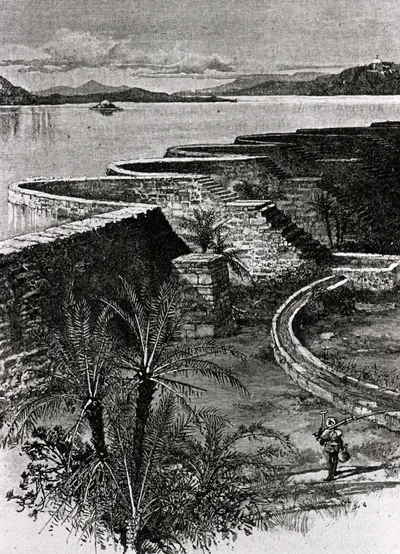 Mir Alam tank, drawing by J. F. Hurst, 1888Drawing · 1888
Related
Inscriptions
References
Notes (0)
Sources (4)
Spotted an error on this page? Tell us
Last updated: