Bhimavaram (West Godavari)
Town in the western Godavari delta, headquarters of the Bhimavaram taluk. The taluk takes in the old village of Gunupudi with its Somesvara temple. M. Rama Rao (1964) counted the temple as Somarama, one of the five Pancharama shrines, and attributed it to the Eastern Chalukya king Chalukya-Bhima I. Not to be confused with Chalukya-Bhimavaram near Samalkot.
Bhimavaram lies in the delta of the Godavari, west of the river. The Imperial Gazetteer of 1908 described the Bhimavaram taluk as an inland delta taluk of 325 square miles and 134 villages, with Bhimavaram as its headquarters.12 It listed the taluk under Krishna (then Kistna) district,12 but Sewell, in 1882, had listed it under Godavari.3
According to the gazetteer, rice was almost the taluk’s only crop, and coarse woollen blankets were woven at Undi, in its centre.12 It is now in West Godavari district.4 This town is distinct from the Bhimavaram near Samalkot, which its inscriptions call Chalukya-Bhimavaram; see Samalkot.5
Gunupudi and Somarama
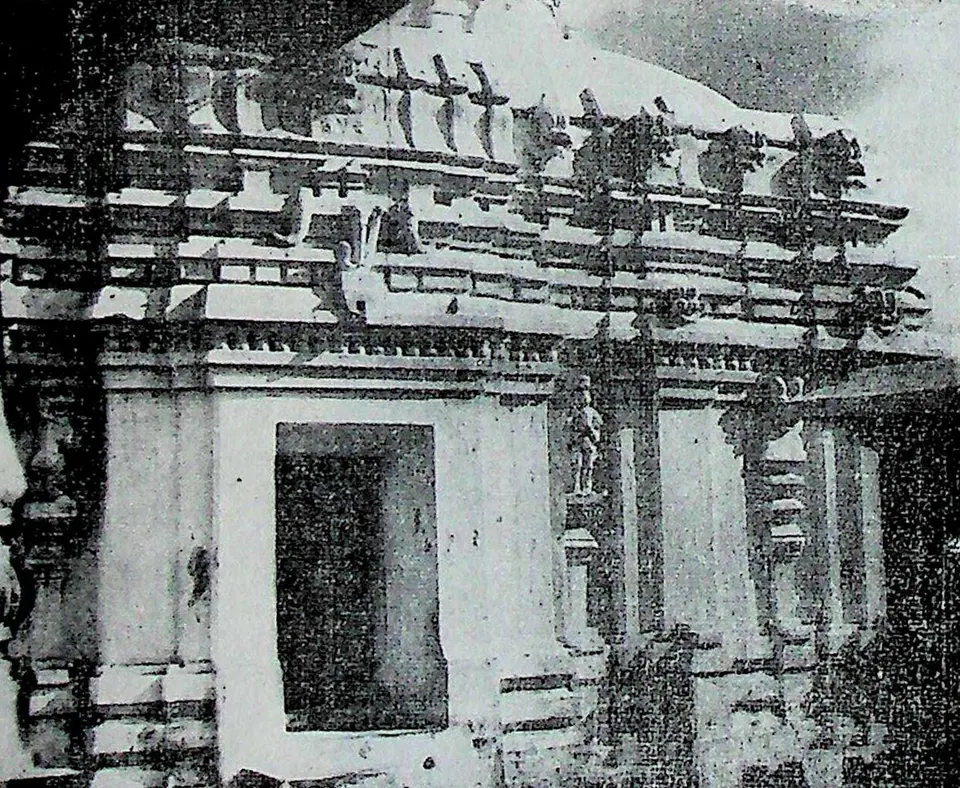
Robert Sewell’s list of 1882 entered Gunupudi, half a mile east of Bhimavaram.3 It recorded there “a very old temple of Somesvarasvami” of considerable size.3 Sewell wrote that the place was said to be the “Pancha Rama Kshetra” of the Bhima-khanda of the Skanda Purana.3
M. Rama Rao, writing in 1964, called the temple Somarama, one of the five Pancharama shrines.4 He placed it in Somaram, a part of Bhimavaram behind the railway station.4 In his summary of the legend he names the village as Gunupidi, on the bank of the Godavari.45 He attributed the shrine, with the other four, to the Eastern Chalukya king Chalukya-Bhima I.6 See Somesvara temple, Somarama.
Footnotes
-
Imperial Gazetteer of India: Madras, Vol. I (1908), p. 318, s.v. Bhimavaram Taluk (archive.org (opens in a new tab)). ↩ ↩2 ↩3
-
Imperial Gazetteer of India: Madras, Vol. I (1908), p. 319 (archive.org (opens in a new tab)). ↩ ↩2 ↩3
-
Robert Sewell, Lists of the Antiquarian Remains in the Presidency of Madras, Vol. I (1882), p. 39, Bhimavaram taluk, s.v. Gunupudi (archive.org (opens in a new tab)). ↩ ↩2 ↩3 ↩4
-
Rama Rao, Eastern Calukyan Temples (1964), p. 41 (archive.org (opens in a new tab)). ↩ ↩2 ↩3 ↩4
-
Rama Rao, Eastern Calukyan Temples (1964), p. 16 (archive.org (opens in a new tab)). ↩ ↩2
-
M. Rama Rao, Eastern Calukyan Temples of Andhra Desa (1964), preface (unnumbered) (archive.org (opens in a new tab)). ↩
Photos
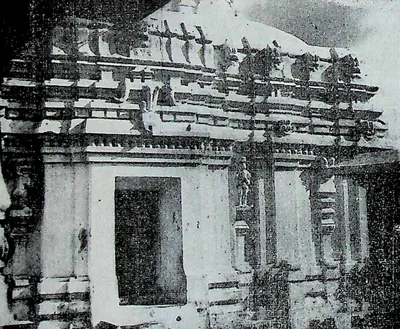 "38. South Wall - Sōmēśvara Temple - Sōmārāma" (M. Rama Rao, Eastern Calukyan Temples of Andhra Desa, 1964, Fig. 38 (PDF p. 107))Historic photograph · 1964
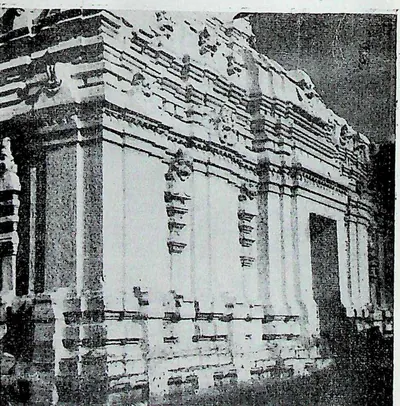 "39. East & North Wall - Sōmēśvara Temple - Sōmārāma" (M. Rama Rao, Eastern Calukyan Temples of Andhra Desa, 1964, Fig. 39 (PDF p. 109))Historic photograph · 1964
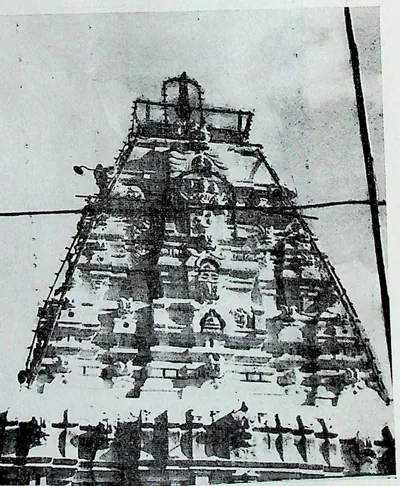 "40. Vimāna - Sōmēśwara Temple - Sōmārāma, Bhimavaram, W. G. Dt." (M. Rama Rao, Eastern Calukyan Temples of Andhra Desa, 1964, Fig. 40 (PDF p. 111))Historic photograph · 1964
Related
Monuments
References
Notes (0)
Sources (3)
Spotted an error on this page? Tell us
Last updated: