Chalukya-Bhima I
Eastern Chalukya king of Vengi (888–918 in Fleet's and Sewell's reckoning), nephew and successor of Gunaga Vijayaditya III. His records say he won back the Vengi country after the Rashtrakuta king Krishna II had overrun it. A young son of his fell in battle against the Rashtrakuta army. He built the Siva temple of Chalukya-Bhimesvara, which gave its name to Bhimavaram near Kakinada (then Cocanada).
Chalukya-Bhima I succeeded his uncle Gunaga Vijayaditya III on the throne of Vengi. J. F. Fleet dated his reign of thirty years 888–918, and Robert Sewell kept those dates.12 His reign began with the loss and recovery of the kingdom.3 After Vijayaditya III’s time the Rashtrakutas overran the Vengi country, and Bhima had to win it back.3
Family and names
Chalukya-Bhima I was the son of the crown prince (yuvaraja) Vikramaditya I, a younger brother of Gunaga Vijayaditya III.34 Vikramaditya never reigned, and Bhima succeeded his uncle directly.3 Bhima’s paternal uncle Yuddhamalla I was the founder of the junior line that later fought for the throne.3
Vijayaditya IV, called Kollabhiganda, was the eldest son of Chalukya-Bhima I and succeeded him.3 Vikramaditya II, who seized the throne briefly in 925–926, was another son of Chalukya-Bhima I.5 A third son, a prince of sixteen, fell in battle in his father’s lifetime (see below).6
The grants call him Bhima, Nripa-Bhima or, most often, Chalukya-Bhima.3 One gives him the surname Droharjuna.3 A grant edited by F. Kielhorn in 1899 gives him the second name Vishnuvardhana.7 Fleet thought that kings of the dynasty were given such second names when they were formally crowned, and kept their birth name beside it.8 J. Ramayya Pantulu knew another grant of his that calls him Bhima-Salki.9 Salki is a Telugu form of the name Chalukya.9
Sewell’s table of the dynasty numbers him Chalukya-Bhima II, and the later Rajabhima Chalukya-Bhima III.10 Fleet and E. Hultzsch called them Bhima I and Bhima II, and this site uses that numbering.14
The wars with the Rashtrakutas
The records of his successors say that the Rattas (the Rashtrakutas) had overrun the land of Vengi, and that Bhima had to win it back.3 One of them names his enemy as Krishnavallabha, that is, the Rashtrakuta Krishna II.3
Hultzsch at first translated the passage as a country “overrun by the army of the Ratta claimants”.4 In 1897 he corrected it to “overrun by the army of (Krishna II) the heir of the Ratta (Amoghavarsha I)”.11 In his account of the Rashtrakutas, Fleet set this admission beside the earlier Eastern Chalukya boasts of Vijayaditya III’s victories over Krishna II.12
A copper-plate grant of Bhima himself was found in the Collector’s office at Machilipatnam (then Masulipatam) and noticed in 1914.6 It describes the fighting.6 It says that he defeated the army of Krishnavallabha and his allies.6 It also says that “the vile kings of Karnata and Lata” fled before him “as darkness before light”.6
His son, a learned and handsome prince of sixteen, fought at Niravadyapura and Peruvangur-grama.6 At Peruvangur he killed the Vallabha king’s general Dandena-Gundaya from the back of his elephant, and then died.6 In his memory the king gave the village of Vedatuluru to forty-five Brahmans.6 The epigraphist identified the Vallabha king with Krishna II.613 He noted that neither battlefield could yet be identified.13
Sewell gives the same account and calls the prince’s allies the kings of Gujarat and Karnata.14 The Pithapuram inscription of 1202 credits Bhima with victory in 360 battles.11 Hultzsch took this to mean that he was at war for a whole year together.11
Bhima and his subordinate chiefs
The Chalukyas of Vemulavada were feudatories of the Rashtrakutas.1516 Their records claim that their king Baddega seized a king named Bhima in water “as if catching a crocodile”.1516 J. F. Fleet thought this Bhima might be Chalukya-Bhima I.16 N. Venkataramanayya placed the capture in the second Rashtrakuta invasion, from which Bhima soon escaped.1718
Venkataramanayya also read an undated inscription at Koravi.19 In his reading, Kusumayudha, a chief of the Chalukyas of Mudigonda, recovered his lands from Krishna II and helped crown Bhima.19
His general was Mahakala, the son of his foster-sister.3 Bhima’s grandson Amma I later rewarded Mahakala with the village of Drujjuru.320
Temple and charity
According to the Pithapuram inscription, Bhima founded a temple of Siva called Chalukya-Bhimesvara after his own name.11 Hultzsch identified it with the temple that still stood at Bhimavaram near Kakinada (then Cocanada), in the Godavari district.11 Inscriptions there call the town Chalukya-Bhimesvarapura, Chalukya-Bhimanagari and Chalukya-Bhimapura.11 Hultzsch concluded that the name Bhimavaram came from the temple.11
A grant of his great-grandson Amma II remembers him as a generous king.21 In Hultzsch’s translation, “that handsome Chalukya-Bhima enjoyed for thirty years the earth, protecting (it) like a mother (her child)”.21 The grant says that he gave people what they wished for.21 It names those who received his gifts:21
- “the distressed, helpless and sick”21
- “the best of twice-born” (Brahmans)21
- “beggars” and “ascetics”21
- “clever youths, dancers, excellent singers and poets, who had come from various countries”21
- “his relatives and … the blind”21
Grants
Only one inscription of Bhima I was known when Kielhorn edited the Bezvada plates in 1899. The plates were found in June 1897 in a rock-cut chamber at Vijayawada (then Bezwada).227 They record that at his coronation the king gave away a village for ever.227 They formally grant the village of Kukiparru, in the Uttarakanderuvadi district, to Potamayya.227 Potamayya was a Brahman trained in the krama style of reciting the Veda.227
The plates had been used before for another grant of the same king, which was cancelled.22 Their executor was Kadeyaraja, a grandson of Gunaga Vijayaditya III’s general Pandaranga.7 Kielhorn noted that this was then the earliest known record to give the full genealogy of the dynasty with the length of each reign.7 Hultzsch later took Kadeyaraja to be a spoken form of Katakaraja, the title of Pandaranga’s grandson Vijayaditya.23
Dates
Fleet’s chronology counts back from the coronation of Amma II in 945.1 It gives Bhima thirty years from July 888.1 Sewell recorded a copper-plate inscription that gives the date of Bhima’s coronation as 17 April 892.2 Its details did not work out satisfactorily, so he kept Fleet’s date of 888.2
B. V. Krishna Rao wrote about the same record in 1938.24 It gives the coronation as Monday, 17 April 892.24 He took it as proof that Bhima could not have come to the throne in 888.24 He held that Fleet’s whole arrangement of the earlier reigns therefore fell to the ground.24
The editor of Epigraphia Indica added another possibility.24 Bhima might have been crowned in 892 but counted his years of rule from an earlier accession.24 This custom was widely followed in South India.24
Footnotes
-
J. F. Fleet, “The Chronology of the Eastern Chalukya Kings”, Indian Antiquary XX (1891), p. 12, list of kings (archive.org (opens in a new tab)). ↩ ↩2 ↩3 ↩4
-
Sewell and Aiyangar, Historical Inscriptions of Southern India (1932), p. 40 (archive.org (opens in a new tab)). ↩ ↩2 ↩3
-
Fleet, “Chronology of the Eastern Chalukya Kings” (1891), p. 103 (archive.org (opens in a new tab)). ↩ ↩2 ↩3 ↩4 ↩5 ↩6 ↩7 ↩8 ↩9 ↩10 ↩11 ↩12
-
E. Hultzsch, South-Indian Inscriptions, Vol. I (1890), p. 38 (archive.org (opens in a new tab)). ↩ ↩2 ↩3
-
Fleet, “Chronology of the Eastern Chalukya Kings” (1891), p. 269 (archive.org (opens in a new tab)). ↩
-
Annual Report on Epigraphy, Madras, for 1913–14 (1914), Part II, paras. 5–6, p. 84 (archive.org (opens in a new tab)). ↩ ↩2 ↩3 ↩4 ↩5 ↩6 ↩7 ↩8 ↩9
-
Kielhorn, “Six Eastern Chalukya Copper-plate Inscriptions” (1899), p. 128 (archive.org (opens in a new tab)). ↩ ↩2 ↩3 ↩4 ↩5 ↩6 ↩7
-
Fleet, “Chronology of the Eastern Chalukya Kings” (1891), p. 95 and note 9 (archive.org (opens in a new tab)). ↩
-
J. Ramayya Pantulu, “The Bezwada Pillar Inscription of Yuddhamalla”, Epigraphia Indica XV (1919–20), p. 156 (archive.org (opens in a new tab)). ↩ ↩2
-
Sewell and Aiyangar, Historical Inscriptions of Southern India (1932), p. 337 (archive.org (opens in a new tab)). ↩
-
E. Hultzsch, “Pithapuram Pillar Inscription of Mallapadeva”, Epigraphia Indica IV (1897), p. 227 and note 8 (archive.org (opens in a new tab)). ↩ ↩2 ↩3 ↩4 ↩5 ↩6 ↩7
-
J. F. Fleet, “Dynasties of the Kanarese Districts”, Gazetteer of the Bombay Presidency, Vol. I, Part II (1896), p. 412 (archive.org (opens in a new tab)). ↩
-
Annual Report on Epigraphy, Madras, for 1913–14 (1914), Part II, para. 6, p. 85 (archive.org (opens in a new tab)). ↩ ↩2
-
Robert Sewell and S. Krishnaswami Aiyangar, The Historical Inscriptions of Southern India (1932), p. 39 (archive.org (opens in a new tab)). ↩
-
B. Lewis Rice (ed.), The Pampa Bharata or Vikramarjuna Vijaya of Pampa (1898), introduction, p. 2 (archive.org (opens in a new tab)). ↩ ↩2
-
J. F. Fleet, “Dynasties of the Kanarese Districts”, Gazetteer of the Bombay Presidency I, pt. II (1896), p. 381 (archive.org (opens in a new tab)). ↩ ↩2 ↩3
-
Venkataramanayya, Chalukyas of L(V)emulavada (1953), p. 23 (archive.org (opens in a new tab)). Paraphrased. ↩
-
Venkataramanayya, Chalukyas of L(V)emulavada (1953), p. 24 (archive.org (opens in a new tab)). Paraphrased. ↩
-
N. Venkataramanayya, The Chalukyas of L(V)emulavada (1953), p. 22 (archive.org (opens in a new tab)). Paraphrased. ↩ ↩2
-
Kielhorn, “Six Eastern Chalukya Copper-plate Inscriptions”, E, Masulipatam plates of Amma I (1899), p. 131 (archive.org (opens in a new tab)). ↩
-
Hultzsch, South-Indian Inscriptions, Vol. I (1890), No. 38, translation, p. 49 (archive.org (opens in a new tab)). ↩ ↩2 ↩3 ↩4 ↩5 ↩6 ↩7 ↩8 ↩9
-
F. Kielhorn, “Six Eastern Chalukya Copper-plate Inscriptions”, C, Bezvada plates of Chalukya-Bhima I, Epigraphia Indica V (1898–99), p. 127 (archive.org (opens in a new tab)). ↩ ↩2 ↩3 ↩4 ↩5
-
E. Hultzsch, “Maliyapundi Grant of Ammaraja II”, Epigraphia Indica IX (1907–08), p. 50 (archive.org (opens in a new tab)). ↩
-
B. V. Krishna Rao, “Masulipatam Plates of Ammaraja II”, Epigraphia Indica XXIV (1937–38), p. 210 and editor’s note (archive.org (opens in a new tab)). ↩ ↩2 ↩3 ↩4 ↩5 ↩6 ↩7
Photos
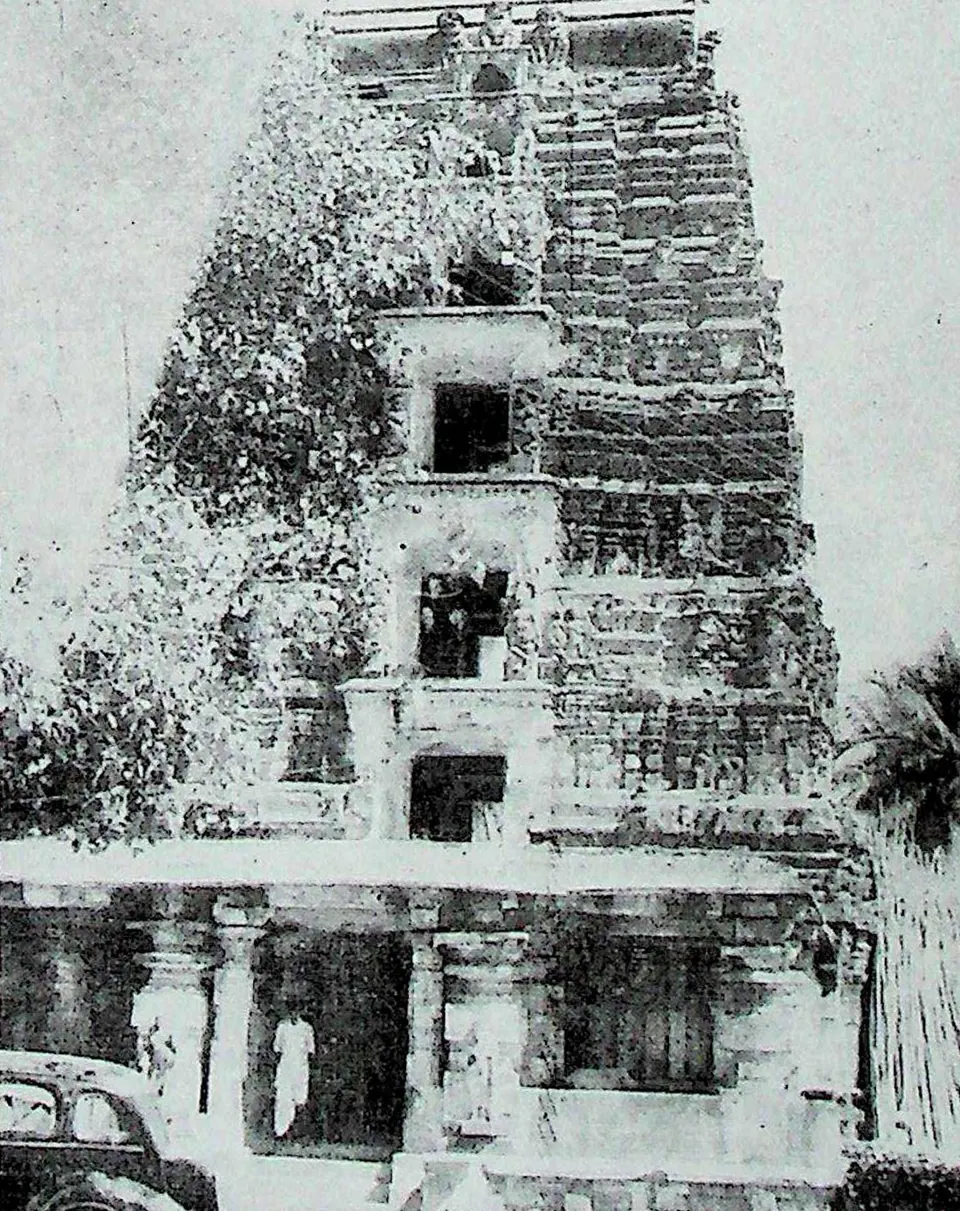
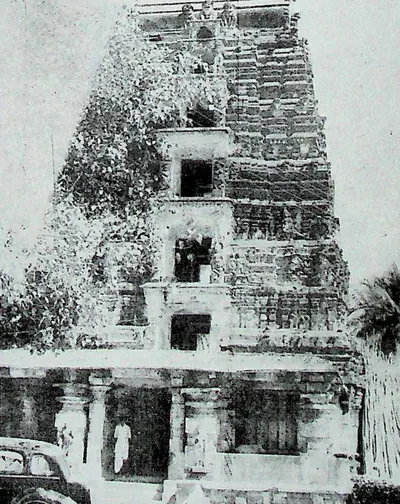 "22. West Gōpuram - Bhīmēśvara Temple - Drākshārāma" (M. Rama Rao, Eastern Calukyan Temples of Andhra Desa, 1964, Fig. 22 (PDF p. 77))Historic photograph · 1964
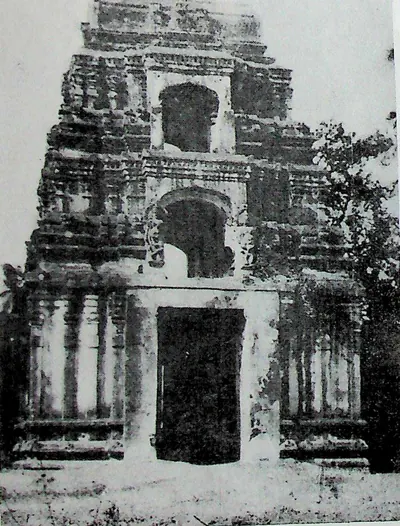 "23. North Gōpura - Bhīmēśvara Temple - Drākshārāma" (M. Rama Rao, Eastern Calukyan Temples of Andhra Desa, 1964, Fig. 23 (PDF p. 79))Historic photograph · 1964
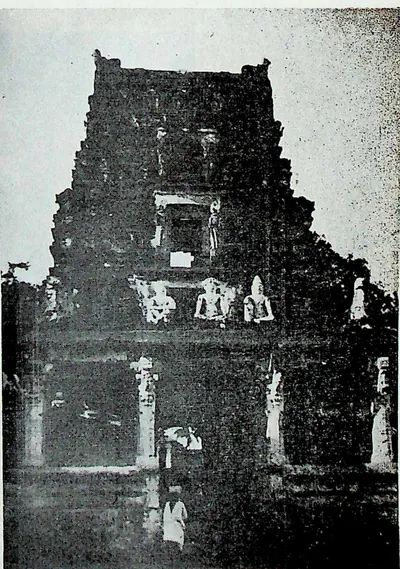 "24. South Gōpura - Bhīmēśvara Temple - Drākshārāma" (M. Rama Rao, Eastern Calukyan Temples of Andhra Desa, 1964, Fig. 24 (PDF p. 79))Historic photograph · 1964
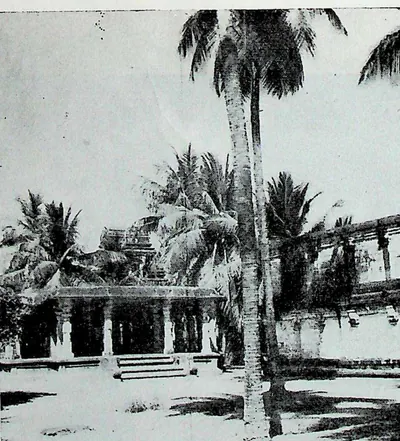 "25. Maṇṭapa in the North-east Corner of outer enclosure - Bhīmēśvara Temple, Drākshārāma" (M. Rama Rao, Eastern Calukyan Temples of Andhra Desa, 1964, Fig. 25 (PDF p. 81))Historic photograph · 1964
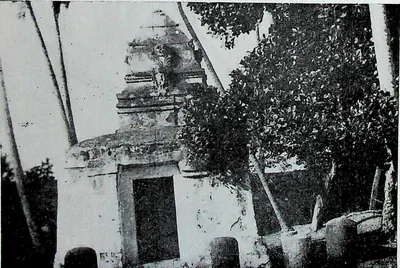 "26. Kālabhairava Shrine - Bhīmēśvara Temple, Drākshārāma" (M. Rama Rao, Eastern Calukyan Temples of Andhra Desa, 1964, Fig. 26 (PDF p. 83))Historic photograph · 1964
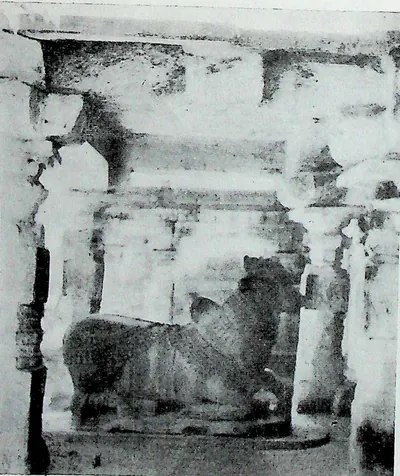 "27. Nandi Maṇṭapa - Bhīmēśvara Temple, Drākshārāma" (M. Rama Rao, Eastern Calukyan Temples of Andhra Desa, 1964, Fig. 27 (PDF p. 85))Historic photograph · 1964
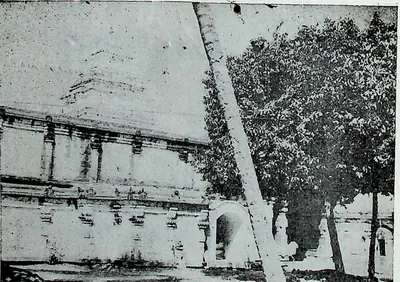 "28. Southern entrance to inner enclosure - Bhīmēśvara Temple - Drākshārāma" (M. Rama Rao, Eastern Calukyan Temples of Andhra Desa, 1964, Fig. 28 (PDF p. 87))Historic photograph · 1964
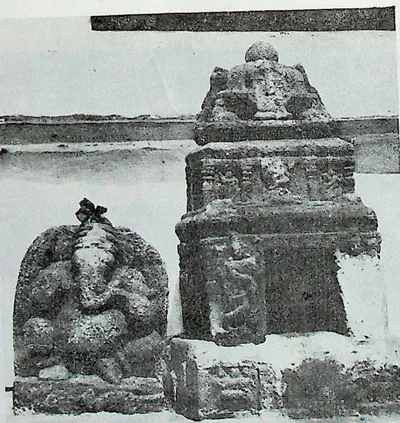 "29. Miniature Shrine - Bhīmēśvara Temple - Drākshārāma" (M. Rama Rao, Eastern Calukyan Temples of Andhra Desa, 1964, Fig. 29 (PDF p. 89))Historic photograph · 1964
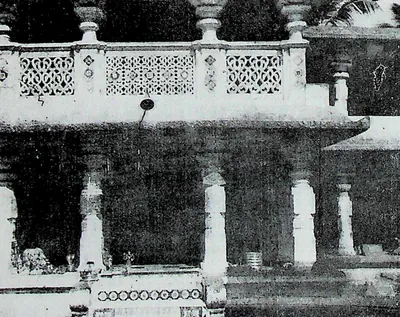 "30. Māṇikyāmba Shrine - Bhīmēśvara Temple, Drākshārāma" (M. Rama Rao, Eastern Calukyan Temples of Andhra Desa, 1964, Fig. 30 (PDF p. 91))Historic photograph · 1964
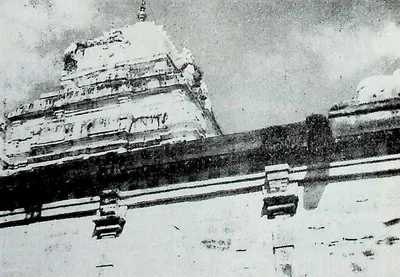 "31. Vimāna - Bhīmēśvara Temple - Drākshārāma" (M. Rama Rao, Eastern Calukyan Temples of Andhra Desa, 1964, Fig. 31 (PDF p. 93))Historic photograph · 1964
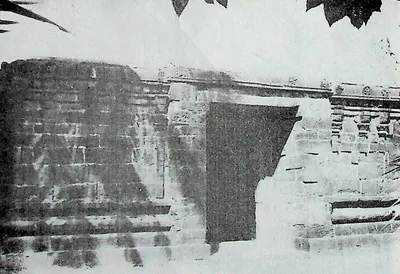 "32. Northern Entrance to Outer Enclosure - Ch. Bhīmavaram, E. G. Dt." (M. Rama Rao, Eastern Calukyan Temples of Andhra Desa, 1964, Fig. 32 (PDF p. 95))Historic photograph · 1964
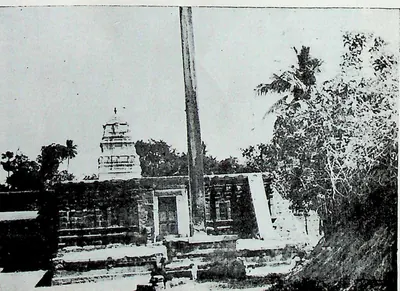 "33. Western Entrance to Outer Enclosure—Ch. Bhīmavaram, E. G. Dt." (M. Rama Rao, Eastern Calukyan Temples of Andhra Desa, 1964, Fig. 33 (PDF p. 97))Historic photograph · 1964
Show all (28)
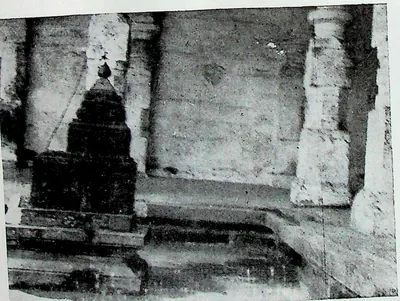 "34. Miniature Temple - Ch. Bhīmēśvaram, E. G. Dt." (M. Rama Rao, Eastern Calukyan Temples of Andhra Desa, 1964, Fig. 34 (PDF p. 99))Historic photograph · 1964
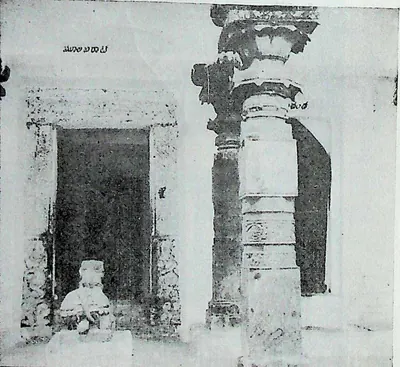 "35. Nandi Maṇṭapa - Ch Bhīmavaram, E. G. Dt." (M. Rama Rao, Eastern Calukyan Temples of Andhra Desa, 1964, Fig. 35 (PDF p. 101))Historic photograph · 1964
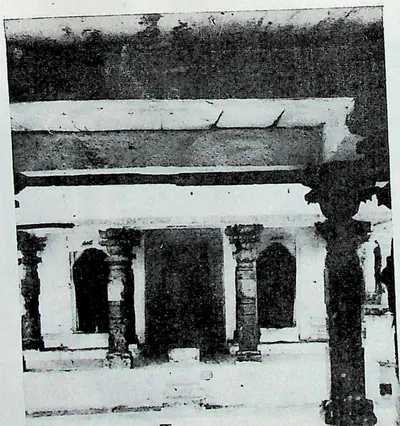 "36. Entrance to Groundfloor—Ch. Bhīmēśvara Temple—Ch. Bhīmavaram, E. G. Dt." (M. Rama Rao, Eastern Calukyan Temples of Andhra Desa, 1964, Fig. 36 (PDF p. 103))Historic photograph · 1964
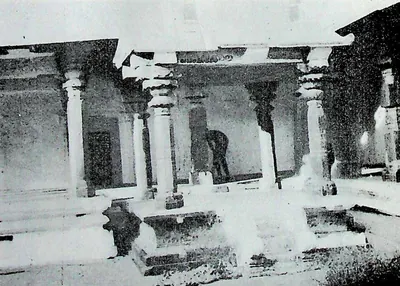 "37. Maṇṭapa in the North-east Corner—Ch. Bhīmavaram, E. G. Dt." (M. Rama Rao, Eastern Calukyan Temples of Andhra Desa, 1964, Fig. 37 (PDF p. 105))Historic photograph · 1964
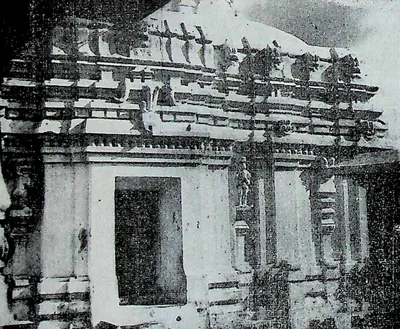 "38. South Wall - Sōmēśvara Temple - Sōmārāma" (M. Rama Rao, Eastern Calukyan Temples of Andhra Desa, 1964, Fig. 38 (PDF p. 107))Historic photograph · 1964
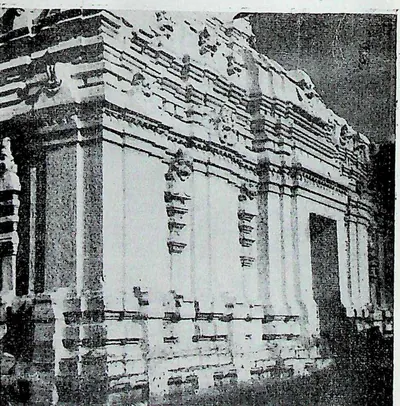 "39. East & North Wall - Sōmēśvara Temple - Sōmārāma" (M. Rama Rao, Eastern Calukyan Temples of Andhra Desa, 1964, Fig. 39 (PDF p. 109))Historic photograph · 1964
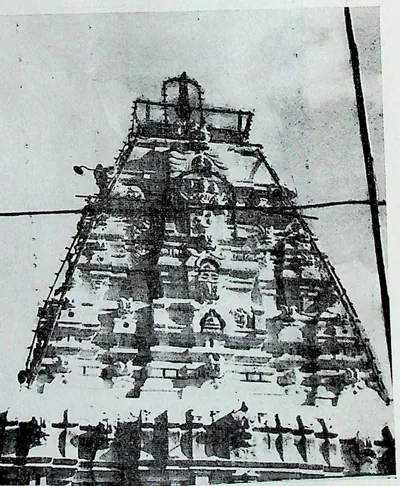 "40. Vimāna - Sōmēśwara Temple - Sōmārāma, Bhimavaram, W. G. Dt." (M. Rama Rao, Eastern Calukyan Temples of Andhra Desa, 1964, Fig. 40 (PDF p. 111))Historic photograph · 1964
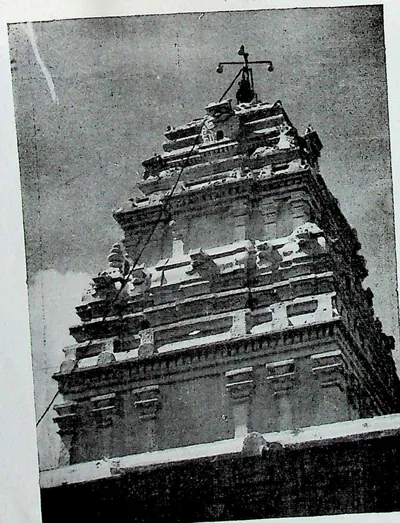 "41. Vimāna - Rāmalingēśwara Temple - Pālakol" (M. Rama Rao, Eastern Calukyan Temples of Andhra Desa, 1964, Fig. 41 (PDF p. 113))Historic photograph · 1964
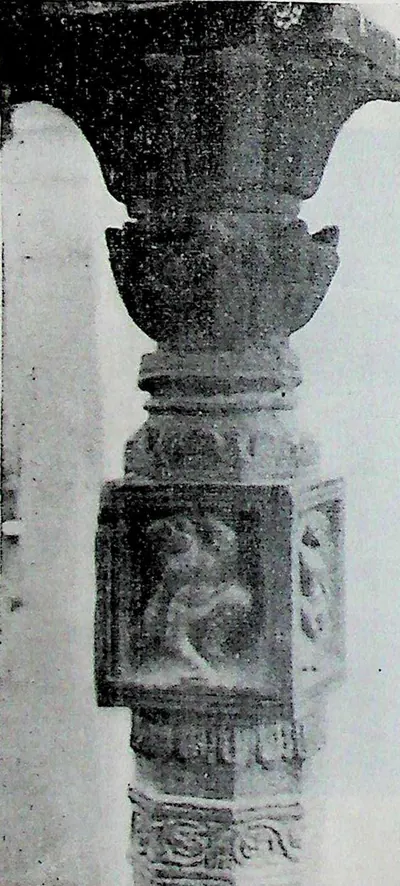 "42. Pillar with Sculpture - Pālakollu" (M. Rama Rao, Eastern Calukyan Temples of Andhra Desa, 1964, Fig. 42 (PDF p. 115))Historic photograph · 1964
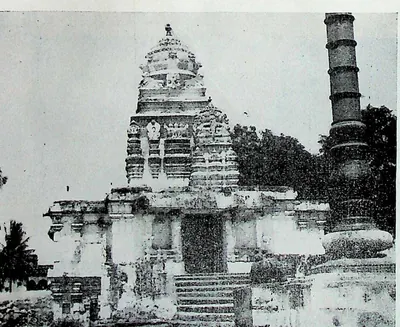 "47. Bhīmēśvara Temple - Chēbrōlu - Front view" (M. Rama Rao, Eastern Calukyan Temples of Andhra Desa, 1964, Fig. 47 (PDF p. 123))Historic photograph · 1964
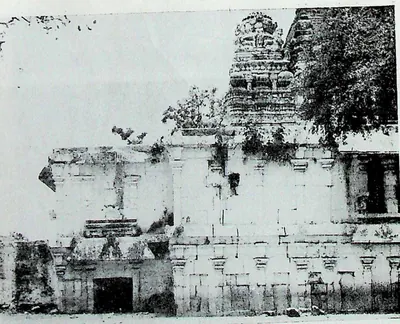 "48. Bhīmēśvara Temple - Chēbrōlu - North Side view" (M. Rama Rao, Eastern Calukyan Temples of Andhra Desa, 1964, Fig. 48 (PDF p. 125))Historic photograph · 1964
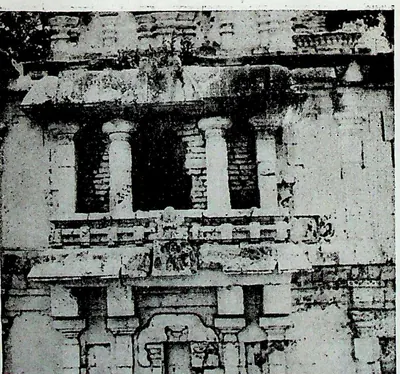 "49. Bhīmēśvara Temple - Chēbrōlu–Central Part of North Wall" (M. Rama Rao, Eastern Calukyan Temples of Andhra Desa, 1964, Fig. 49 (PDF p. 127))Historic photograph · 1964
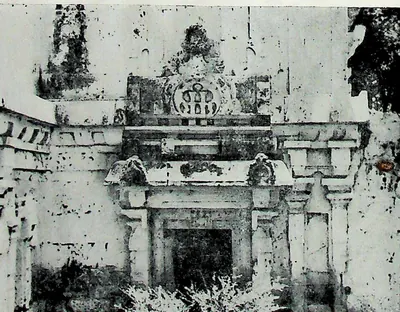 "50. Bhīmēśvara Temple - Chēbrōlu - Projection of South Wall" (M. Rama Rao, Eastern Calukyan Temples of Andhra Desa, 1964, Fig. 50 (PDF p. 129))Historic photograph · 1964
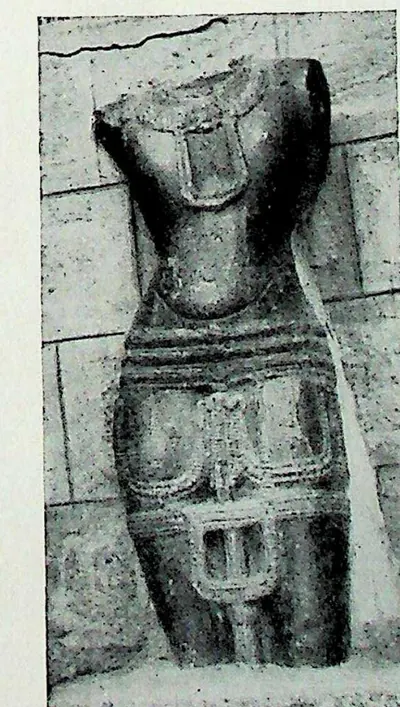 "51. Kumāra - Chēbrōlu" (M. Rama Rao, Eastern Calukyan Temples of Andhra Desa, 1964, Fig. 51 (PDF p. 129))Historic photograph · 1964
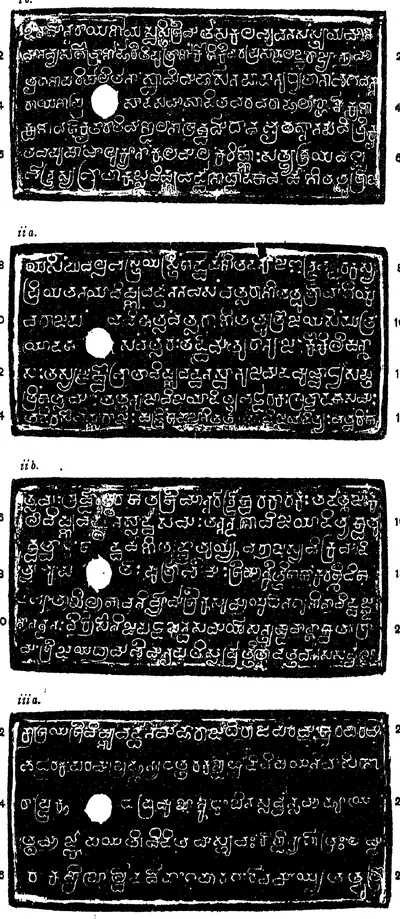 "Bezvada Plates of Bhima I.", plates i b, ii a, ii b and iii a (Epigraphia Indica V, plate between pp. 128 and 129 (PDF p. 178))Inscription rubbing · 1899
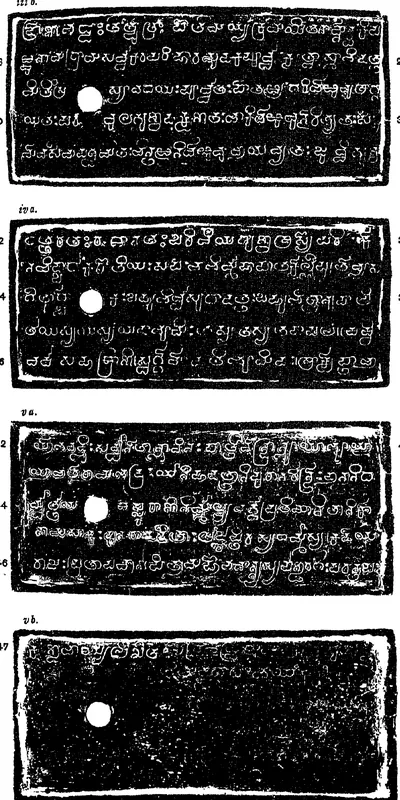 "Bezvada Plates of Bhima I.", plates iii b, iv a, v a and v b (Epigraphia Indica V, plate between pp. 128 and 129 (PDF p. 179))Inscription rubbing · 1899
Related
Dynasties

References
Notes (0)
Sources (12)
Spotted an error on this page? Tell us
Last updated: