How the missions came, 1700–1912
The Christian missions of the Telugu country, society by society and in time order: the French Jesuits of the 18th century, the London Missionary Society at Visakhapatnam (1805) and Kadapa (1822), the Godavari Delta Mission (1836), the American Baptists at Nellore (1840) and Ongole (1866), the Church Missionary Society at Machilipatnam (1841), the Lutherans at Guntur (1842) and Rajahmundry (1844), the SPG in Kadapa and Kurnool (1852), the Arcot Mission's Telugu stations (1859), the Canadian Baptists at Kakinada, the Wesleyans and American Baptists in Hyderabad State, and the Indian-run Dornakal mission (1904). It shows how often Indian Christians opened the way.
Download
This page tells how the Christian missions reached the Telugu country, one by one, from the 18th century to 1912.12 Catholic priests came first, and Protestant societies from Britain, America, Germany and Canada followed after 1805.34 It also shows how often an Indian Christian opened the way, and how the missions divided the land between them.52
About the sources. Most of what is known comes from the missions’ own histories, written to tell supporters at home about the work.6 They count their own converts and praise their own workers. Where possible this page checks them against district manuals and census reports. For why people joined the churches, see Why people converted; for the overview, see Christian missions.
Catholic missions before 1800
Christian teaching first reached the Krishna country through French Jesuits of the “Carnatic Mission”, who worked from Pondicherry after 1700.71 The Kistna manual of 1883 lists their churches: Punganur in 1701, then churches in the Bellary and Anantapur country.1 By 1733 they had sixteen stations. The most remote was Bukkapuram, in the Darsi taluk (sub-district) of Nellore.1
The first converts there included a family of Reddi farmers surnamed Tumma.1 Their head had been baptised by a Father Le Gac.1 Fleeing Maratha raids and a ruler’s demand for money, the family moved from Alumuru near Anantapur to Bukkapuram. They built a church there at their own cost.8
When the French took Guntur in 1752, Christians from Bukkapuram and from Bellary and Kurnool moved into the district.9 The manual’s author, Gordon Mackenzie, took this from the tradition of the Christians themselves.9 The French held Guntur until 1779, and the Jesuits gathered their people under the French flag.9 The 1891 Madras census writer, H. A. Stuart, repeated this account.10
The Catholic villages kept their castes. The Kammas of Ravipadu traced their church to Polavarapu Chinnayya, a convert who served as a revenue officer at Narasaraopet.9 In 1770 Basalat Jang gave the mission 714 acres at Mutnur near Guntur.7 Mackenzie noted that the Sudra Christians did not marry outside their caste and never ate beef.11
The mission then shrank. The Jesuits were suppressed in 1773, and few priests came during the French wars.1213 In 1817 the bishop had only five or six old missionaries and some Indian priests.14 In one Narasaraopet village, Reddis still had Christian names in 1883. They said their forefathers left the faith because they saw no priest “for many long years”.14
Catholic revival, 1832–1881
A French priest, Father Charbonneaux, helped the hungry in the Guntur famine of 1832.14 Fifty years later some villagers still paid for a Mass in memory of “the good priest who helped our fathers”.14 After that famine Christian farmers settled at Patibandla.14
In 1874 Bishop Stephen Fennelly of Madras asked the Mill Hill missionary college near London for priests. Four arrived in Guntur that year.15 Catholics in the Guntur district rose from 5,700 in 1872 to 10,693 in 1879.15 In villages such as Firangipuram, Patibandla, Rentachintala and Ravipadu many of the ryots (farmers) were Christian.15
Further north, French priests of the mission of St Francis of Sales worked from Yanam and Kakinada (then Cocanada).16 The Godavari gazetteer of 1907 said most of their 900 people were Tamils or Europeans, and that lack of money had held back work among Telugus.16
The London Missionary Society, 1805
The first settled Protestant mission to the Telugus began in 1805.3 Two men of the London Missionary Society (LMS), Cran and Desgranges, went to Visakhapatnam (then Vizagapatam).3 A Telugu Brahmin convert helped them translate the Gospels.17 Both men died within five years.174
Sherring’s history of 1884, drawing on an older history, names the Brahmin helper Anandarayer.1819 He says the missionaries went three times a week to the villages to read the Scriptures aloud, and found that in several villages few besides the Brahmins could read.18
Their successors finished a Telugu New Testament, and by 1836 the mission had a press, thirteen schools and the first Protestant chapel among the Telugus.1720 Still, the first converts came only in 1835.4 Hibbert-Ware, writing in 1912, used this to argue that missionary numbers alone did not bring converts.21
A second LMS station opened at Kadapa (then Cuddapah) in 1822.4 Here the Mala movement began. In 1851 twenty families from Paidala, forty miles away, asked for teaching, and forty people were baptised after eighteen months.4 By 1912 the LMS counted nearly 27,000 Telugu adherents, over 18,000 of them around Kadapa and Jammalamadugu.22
The memoir of Edward Porter, an LMS missionary, adds detail on these years. He reached Visakhapatnam in November 1835, and on 27 August 1837 baptised a Telugu Brahmin, Kamiah, and his wife.2324 In 1844 he moved to Kadapa.25 There the Mala movement spread from Paidala to Abdulapuram in 1852 and to villages near Nandyal in 1853.26
Indian workers carried much of this. The catechist Joseph Mason was ordained in 1864 as the first Indian pastor of the Kadapa church.27 When Porter left in 1868, the church’s address counted over 900 baptised Christians, besides 250 in the Nandyal mission.2829 See Edward Porter.
In 1837 two LMS men, John Smith and J. Howell, wrote an appeal on behalf of the Telugu people.30 Howell was then the only Protestant missionary for the million people of the Kadapa district.30 They wrote that Visakhapatnam and Kadapa were the only regular mission stations in the whole Telugu country.31 The CMS, the SPG, the Wesleyans and the Americans had no Telugu station at all.31
The two men thought the reason was that the first missionaries had begun among the Tamils, so later ones found Tamil easier to learn.3132 They asked for at least two missionaries each for Nellore, Guntur, Machilipatnam, Rajahmundry, Ganjam, Bellary and Hyderabad.33 Smith printed the appeal in a book in 1841.30
The Godavari Delta Mission, 1836
Two young tradesmen from Barnstaple in England, William Bowden and George Beer, came next.34 An independent Christian, A. N. Groves, had persuaded them to go to the Telugus.35 They reached Machilipatnam in 1836 and began their mission at Narsapur in 1837.35
They meant to support themselves by their trades, but this failed, and friends in England sent them money.34 They worked six years before their first convert.35 Mullens wrote in 1854 that Bowden had most success among the chuklas (shoe-makers).34 By 1886 the mission had about 1,000 Christians.35
Sherring (1884) described it as small and little known. In 1880, he wrote, it had six Indian preachers working full-time, and three hundred converts in fellowship, scattered through thirty villages.36
The American Baptists, 1840
Samuel S. Day of the American Baptist board reached Visakhapatnam in 1836. After Srikakulam and Madras, he moved to Nellore on 26 February 1840.203738 The government granted him eight acres for a mission compound.39 The first Telugu convert, Venkappah, was baptised in the Penna river on 27 September 1841.40
Growth was slow. When Day fell ill in 1846, he left the mission with two Eurasian helpers, and the work fell apart.41 The society’s meetings asked whether to close this “Lone Star” mission in 1848, 1853 and 1862.414243 Each time Lyman Jewett and his friends refused to give it up.4443
On 1 January 1854 Jewett, his wife and three Indian Christians prayed on a hill above Ongole.4445 In 1866 John E. Clough settled there.46 From Ongole the great Madiga movement began (see Mass movements). Ramapatnam became a station in 1870, with a seminary for preachers.4748
The Church Missionary Society, 1841
The Church Missionary Society (CMS), an Anglican society from England, began at Machilipatnam (then Masulipatam) in 1841.49 Some English officials there had offered to pay part of two missionaries’ salaries.34 Robert Noble and Henry Watson Fox were sent. Noble opened his school for high-caste boys in 1843.4950
The CMS opened Eluru (then Ellore) in 1854 and Vijayawada (then Bezwada) in 1858.51 Its village work grew from 1859, after the baptism of the Mala leader Pagolu Venkayya.5253 In 1912 Hibbert-Ware counted over 24,000 CMS Telugu Christians.54
Inland, the CMS mission at Dummagudem on the Godavari was started about 1860 at the urging of Sir Arthur Cotton and Major-General Haig, the engineers of the river works.5556 It was meant for the Koyas, but its church grew mainly among the Malas.5716
The Lutherans, 1842 and 1844
Father J. C. F. Heyer of the American Lutherans reached Guntur on 31 July 1842.58 Robert Noble advised the Collector, H. Stokes, to support him.58 In 1849 forty people were baptised in Palnadu, and Stokes gave the mission a house at Gurazala.58
A German society, the North German Mission Society, sent L. M. Valette to Rajahmundry in 1844.59 It could not pay for the work, and in 1851 handed it to the American Lutherans.60 By 1907 the Rajahmundry mission had about 250 congregations and nearly 12,000 baptised members.60 Kistna’s Lutheran converts, said the manual, were almost all Malas and Madigas.58
A German book of 1891, edited by the Philadelphia pastor F. Wischan, tells the Rajahmundry story in more detail.6162 It says the society’s man, Louis Meno Valett, left Hamburg in May 1843 and began work among the Telugus the next year.6364 Two more, C. W. Grönning and A. Heise, followed in 1846.62 Grönning later opened a station at Eluru, and a missionary named Long began work at Samalkot.65
In 1850, the book says, the German society wrote that after the hard years of 1848 and 1849 it could no longer pay.65 It handed the field to the American Lutherans on condition that the mission stay Lutheran.65 When American money ran short during the Civil War of 1861–65, Grönning asked Ludwig Harms of the Hermannsburg mission in Germany for help.66 Harms sent a missionary, Mylius, who worked for a time at Dowlaishwaram.66
Mylius would not join the American mission, so he moved south. By 1891, the book says, the Hermannsburg mission worked in and around Tirupati.66 In 1866 the American Lutherans split into two bodies. The new General Council took over Rajahmundry and the Godavari stations, and the General Synod kept Guntur and Palnadu.6667 The Godavari gazetteer dates this transfer of the Rajahmundry mission to 1870.60 An Indian pastor, T. Joseph, recalled that the Rajahmundry mission nearly passed to the CMS until Heyer came back in 1869 and kept it Lutheran.68
A survey of South India’s Protestant missions, written by J. P. Jones in 1900, says Mylius went from Rajahmundry to Nellore in 1866.69 It names him as the founder of the Hermannsburg Lutheran Mission.69 By 1900 that mission had ten stations in the Nellore, Kadapa and North Arcot districts, and 1,945 Christians.69 Another German Lutheran body, the Schleswig-Holstein mission, began work in the Visakhapatnam district in 1882.70 Sherring (1884) counted seven Hermannsburg stations in the south of the Nellore district, all opened since 1865, with nine German missionaries and not more than 400 Christians.71
The SPG in Kadapa and Kurnool, 1852
The Society for the Propagation of the Gospel (SPG), another Anglican society, began through Indian helpers. At Kadapa two Tamil brothers, Basil and Alfred Wood, kept a small Anglican congregation going.72 They twice walked 160 miles to Madras to ask for a clergyman.73
The first SPG baptisms took place at Kudravaram in July 1852, when thirty Malas were baptised.74 In December 1853 the Sudras of Vanipenta and Mutyalapad attacked the missionary, Uriah Davies, and drove him out.74 Mutyalapad became the mission’s centre in 1855, and Kalasapad, east of the Nallamala hills, soon after.7576
The Arcot Mission’s Telugu stations, 1859
The Arcot Mission of the Reformed Church in America worked mostly in Tamil. In 1859 it decided to work among the Telugus of the Palamaner taluk and the Punganur zamindari (estate).77 Jacob Chamberlain took charge at Palamaner in 1861.77 In 1863 he moved to Madanapalle, after the LMS withdrew from the southern part of Kadapa district.7778
The Canadian Baptists, Kakinada
The Canadian Baptist mission grew out of an Indian Christian’s work. Thomas Gabriel, born at Machilipatnam in 1837, was a clerk in the government telegraph office.5 He gave up his post in January 1869 to preach in the villages around the Kolleru lake.79
When his money ran out, Gabriel appealed to the Baptists of Ontario and Quebec through A. V. Timpany and John McLaurin.80 The Canadian board agreed, and McLaurin reached Kakinada on 12 March 1874.80 A seminary for teachers and preachers opened at Samalkot in 1882.56
Missions in Hyderabad State
In the Nizam’s state, the American Baptists opened Secunderabad in 1875.8182 They later added Hanamkonda, Mahbubnagar, Nalgonda, Suryapet, Jangaon and Gadwal.81 The American Methodist William Taylor preached at Secunderabad in 1874, and churches were organised.83
The Wesleyan Methodists came in 1880. They worked north and north-east of Hyderabad, at Medak, Karimnagar, Siddipet and other towns.81 In 1921 the census writer found the Wesleyans strongest in Karimnagar, Adilabad, Medak and Nizamabad, and the Baptists in Mahbubnagar and Nalgonda.84
Dornakal, an Indian mission, 1904
In July 1903 Anglican Christians of Tirunelveli (then Tinnevelly), in the Tamil south, founded the Indian Missionary Society.85 In 1904 they sent their first missionary to Dornakal, six hundred miles away, in the Nizam’s state.85 Hibbert-Ware called it a mission “organised and worked entirely by Indians”.2
By 1912 it had 240 baptised Christians and over 800 people under instruction.86 That year the Dornakal diocese was formed, and V. S. Azariah became the first Indian bishop of the Church of England.87
How the missions shared the land
The societies mostly kept to separate areas. Hibbert-Ware noted that all the Malas of one village joined one mission or the other, as a body.2 Where the SPG and American Baptists met, one village could have a Mala church of one and a Madiga church of the other.88
Boundaries could cause quarrels. In 1884 the Lutherans of the South Krishna district printed a protest against the American Baptists.89 They said the Baptists had respected the Lutheran field for 38 years but had moved their workers into it from 1880.90
Where the sources disagree
When did the Canadian Baptists begin? The Godavari gazetteer (1907) says Thomas Gabriel and John McLaurin started work at Kakinada in 1869.60 The Canadian Baptists’ own histories give two separate dates. John Craig’s sketch for the jubilee conference of 1886 says McLaurin reached Kakinada on 12 March 1874, and calls it the first station the Canadian Baptists held in the Telugu country.91 Before that, Craig wrote, Canadian Baptist missionaries had worked inside the American Baptist mission, A. V. Timpany from 1867 and McLaurin two years later.91
Craig’s history of 1908 dates “the opening of the Canadian Baptist Mission at Cocanada” to March 1874.92 It says Gabriel had left the telegraph service in January 1869 to preach, as part of the work that prepared the way.9293 Telugu Trophies (1924) gives the same two dates.7980 In these mission accounts, then, 1869 is when Gabriel began to preach full-time, and 1874 is when the mission itself opened.9280 Jones’s survey of 1900 also says the Ontario and Quebec mission was “organized in 1874”.69
Sherring’s history of 1884 gives a third version. It says Gabriel worked “six or seven years single-handed” at Kakinada and first sought help from the English Strict Baptists.94 When they declined, the Canadian Baptists took up the work, and their first missionary was sent in 1874.94
Was there a missionary at Nellore in 1840? Smith’s book of 1841 says there was “not a Protestant Missionary” anywhere in the Nellore district.95 Downie (1893) says Samuel Day of the American Baptists settled at Nellore on 26 February 1840.38
When did the German society give up Rajahmundry? The Godavari gazetteer (1907) says the society handed the work to the American Lutherans in 1851.60 Wischan’s book (1891) says the society’s decision came in 1850.65
How far did the Jesuit stations reach? The Kistna manual puts Bukkapuram in the Darsi taluk of Nellore, as the local Christians told its author. It notes that another Bukkapuram near Narasaraopet fits the Jesuit letters better.1
Footnotes
-
Mackenzie, Kistna District (1883), p. 276 (archive.org (opens in a new tab)). ↩ ↩2 ↩3 ↩4 ↩5 ↩6 ↩7
-
Hibbert-Ware, Christian Missions in the Telugu Country (1912), p. 196 (archive.org (opens in a new tab)). ↩ ↩2 ↩3 ↩4
-
Joseph Mullens, Missions in South India, Visited and Described (1854), p. 10 (archive.org (opens in a new tab)). ↩ ↩2 ↩3
-
Hibbert-Ware, Christian Missions in the Telugu Country (1912), p. 197 (archive.org (opens in a new tab)). ↩ ↩2 ↩3 ↩4 ↩5
-
John Craig and others (eds.), Telugu Trophies: The Jubilee Story of Some of the Principal Telugu Converts in the Canadian Baptist Mission (1924), p. 7, “Pastor Thomas Gabriel” (archive.org (opens in a new tab)). ↩ ↩2
-
David Downie, The Lone Star: The History of the Telugu Mission of the American Baptist Missionary Union (1893), p. 5, preface (archive.org (opens in a new tab)). ↩
-
Mackenzie, Kistna District (1883), pp. 275–276, 279 (archive.org (opens in a new tab)). ↩ ↩2
-
Mackenzie, Kistna District (1883), p. 277 (archive.org (opens in a new tab)). ↩
-
Mackenzie, Kistna District (1883), p. 278 (archive.org (opens in a new tab)). ↩ ↩2 ↩3 ↩4
-
H. A. Stuart, Census of India, 1891, Vol. XIII: Madras, Report (1893), p. 63 (archive.org (opens in a new tab)). ↩
-
Mackenzie, Kistna District (1883), p. 280 (archive.org (opens in a new tab)). ↩
-
Mackenzie, Kistna District (1883), p. 281 (archive.org (opens in a new tab)). ↩
-
Mackenzie, Kistna District (1883), p. 282 (archive.org (opens in a new tab)). ↩
-
Mackenzie, Kistna District (1883), p. 283 (archive.org (opens in a new tab)). ↩ ↩2 ↩3 ↩4 ↩5
-
Mackenzie, Kistna District (1883), p. 284 (archive.org (opens in a new tab)). ↩ ↩2 ↩3
-
Hemingway, Godavari (1907), p. 42 (archive.org (opens in a new tab)). ↩ ↩2 ↩3
-
Mullens, Missions in South India (1854), p. 11 (archive.org (opens in a new tab)). ↩ ↩2 ↩3
-
Sherring, Protestant Missions in India (1884), p. 419 (archive.org (opens in a new tab)). ↩ ↩2
-
Sherring, Protestant Missions in India (1884), p. 420 (archive.org (opens in a new tab)). ↩
-
Downie, The Lone Star (1893), p. 28 (archive.org (opens in a new tab)). ↩ ↩2
-
Hibbert-Ware, Christian Missions in the Telugu Country (1912), p. 211 (archive.org (opens in a new tab)). ↩
-
Hibbert-Ware, Christian Missions in the Telugu Country (1912), p. 198 (archive.org (opens in a new tab)). ↩
-
Martha Porter, his widow (compiler), Short Records of the Missionary Work of the Rev. Edward Porter of the London Missionary Society in Vizagapatam and Cuddapah, 1835–1868 (1885), p. 5 (HathiTrust (opens in a new tab)). ↩
-
Porter, Short Records (1885), p. 10 (HathiTrust (opens in a new tab)). ↩
-
Porter, Short Records (1885), p. 19 (HathiTrust (opens in a new tab)). ↩
-
Porter, Short Records (1885), p. 46 (HathiTrust (opens in a new tab)). ↩
-
Porter, Short Records (1885), p. 59 (HathiTrust (opens in a new tab)). ↩
-
Porter, Short Records (1885), p. 66 (HathiTrust (opens in a new tab)). ↩
-
Porter, Short Records (1885), p. 67 (HathiTrust (opens in a new tab)). ↩
-
Smith, Missionary’s Appeal (1841), p. 93 (HathiTrust (opens in a new tab)). ↩ ↩2 ↩3
-
Smith, Missionary’s Appeal (1841), p. 101 (HathiTrust (opens in a new tab)). ↩ ↩2 ↩3
-
Smith, Missionary’s Appeal (1841), p. 102 (HathiTrust (opens in a new tab)). ↩
-
Smith, Missionary’s Appeal (1841), p. 103 (HathiTrust (opens in a new tab)). ↩
-
Mullens, Missions in South India (1854), p. 12 (archive.org (opens in a new tab)). ↩ ↩2 ↩3 ↩4
-
E. M. Badley (ed.), Indian Missionary Directory and Memorial Volume (1886), p. 211, “The Godavery Delta Mission” (archive.org (opens in a new tab)). ↩ ↩2 ↩3 ↩4
-
Sherring, Protestant Missions in India (1884), p. 417 (archive.org (opens in a new tab)). ↩
-
Downie, The Lone Star (1893), p. 29 (archive.org (opens in a new tab)). ↩
-
Downie, The Lone Star (1893), p. 33 (archive.org (opens in a new tab)). ↩ ↩2
-
Downie, The Lone Star (1893), p. 34 (archive.org (opens in a new tab)). ↩
-
Downie, The Lone Star (1893), pp. 35–36 (archive.org (opens in a new tab)). ↩
-
Downie, The Lone Star (1893), p. 38 (archive.org (opens in a new tab)). ↩ ↩2
-
Downie, The Lone Star (1893), pp. 45–46 (archive.org (opens in a new tab)). ↩
-
Downie, The Lone Star (1893), p. 60 (archive.org (opens in a new tab)). ↩ ↩2
-
Downie, The Lone Star (1893), p. 48 (archive.org (opens in a new tab)). ↩ ↩2
-
Downie, The Lone Star (1893), p. 49 (archive.org (opens in a new tab)). ↩
-
Downie, The Lone Star (1893), p. 64 (archive.org (opens in a new tab)). ↩
-
Downie, The Lone Star (1893), p. 135 (archive.org (opens in a new tab)). ↩
-
Downie, The Lone Star (1893), pp. 136, 142–143 (archive.org (opens in a new tab)). ↩
-
Mackenzie, Kistna District (1883), p. 285 (archive.org (opens in a new tab)). ↩ ↩2
-
Hibbert-Ware, Christian Missions in the Telugu Country (1912), p. 185 (archive.org (opens in a new tab)). ↩
-
Hibbert-Ware, Christian Missions in the Telugu Country (1912), p. 186 (archive.org (opens in a new tab)). ↩
-
Hibbert-Ware, Christian Missions in the Telugu Country (1912), p. 187 (archive.org (opens in a new tab)). ↩
-
Hibbert-Ware, Christian Missions in the Telugu Country (1912), p. 190 (archive.org (opens in a new tab)). ↩
-
Hibbert-Ware, Christian Missions in the Telugu Country (1912), p. 195 (archive.org (opens in a new tab)). ↩
-
Hibbert-Ware, Christian Missions in the Telugu Country (1912), p. 191 (archive.org (opens in a new tab)). ↩
-
Hemingway, Godavari (1907), p. 41 (archive.org (opens in a new tab)). ↩ ↩2
-
Hibbert-Ware, Christian Missions in the Telugu Country (1912), p. 192 (archive.org (opens in a new tab)). ↩
-
Mackenzie, Kistna District (1883), p. 289 (archive.org (opens in a new tab)). ↩ ↩2 ↩3 ↩4
-
F. R. Hemingway, Madras District Gazetteers: Godavari, Vol. I (1907), p. 39 (archive.org (opens in a new tab)). ↩
-
Hemingway, Godavari (1907), p. 40 (archive.org (opens in a new tab)). ↩ ↩2 ↩3 ↩4 ↩5
-
F. Wischan (ed.), Wilhelm Grönning, Missionar im Telugu-Lande, in Indien (1891), p. 3 (HathiTrust (opens in a new tab)). In German; translated. ↩
-
Wischan, Wilhelm Grönning (1891), p. 29 (HathiTrust (opens in a new tab)). In German; translated. ↩ ↩2
-
Wischan, Wilhelm Grönning (1891), p. 26 (HathiTrust (opens in a new tab)). In German; translated. ↩
-
Wischan, Wilhelm Grönning (1891), p. 27 (HathiTrust (opens in a new tab)). In German; translated. ↩
-
Wischan, Wilhelm Grönning (1891), p. 31 (HathiTrust (opens in a new tab)). In German; translated. ↩ ↩2 ↩3 ↩4
-
Wischan, Wilhelm Grönning (1891), p. 32 (HathiTrust (opens in a new tab)). In German; translated. ↩ ↩2 ↩3 ↩4
-
Wischan, Wilhelm Grönning (1891), p. 33 (HathiTrust (opens in a new tab)). In German; translated. ↩
-
Wischan, Wilhelm Grönning (1891), p. 103 (HathiTrust (opens in a new tab)). In German; translated. ↩
-
J. P. Jones, Volume in Commemoration of the Opening of the 20th Century by South India Protestant Missions (1900), p. 30 (HathiTrust (opens in a new tab)). ↩ ↩2 ↩3 ↩4
-
Jones, South India Protestant Missions (1900), p. 32 (HathiTrust (opens in a new tab)). ↩
-
M. A. Sherring, The History of Protestant Missions in India, 1706–1881 (1884), p. 412 (archive.org (opens in a new tab)). ↩
-
G. Hibbert-Ware, Christian Missions in the Telugu Country (1912), p. 52 (archive.org (opens in a new tab)). ↩
-
Hibbert-Ware, Christian Missions in the Telugu Country (1912), p. 53 (archive.org (opens in a new tab)). ↩
-
Hibbert-Ware, Christian Missions in the Telugu Country (1912), p. 54 (archive.org (opens in a new tab)). ↩ ↩2
-
Hibbert-Ware, Christian Missions in the Telugu Country (1912), p. 55 (archive.org (opens in a new tab)). ↩
-
Hibbert-Ware, Christian Missions in the Telugu Country (1912), pp. 63–64 (archive.org (opens in a new tab)). ↩
-
Jacob Chamberlain, Sketch of the Arcot Mission (1902), p. 23 (archive.org (opens in a new tab)). ↩ ↩2 ↩3
-
Chamberlain, Sketch of the Arcot Mission (1902), p. 24 (archive.org (opens in a new tab)). ↩
-
Telugu Trophies (1924), p. 9 (archive.org (opens in a new tab)). ↩ ↩2
-
Telugu Trophies (1924), p. 10 (archive.org (opens in a new tab)). ↩ ↩2 ↩3 ↩4
-
Imperial Gazetteer of India: Hyderabad State (1909), p. 25 (archive.org (opens in a new tab)). ↩ ↩2 ↩3
-
Downie, The Lone Star (1893), p. 152 (archive.org (opens in a new tab)). ↩
-
J. E. Scott, The India Mission of the Methodist Episcopal Church (1906), p. 40 (archive.org (opens in a new tab)). ↩
-
Census of India, 1921, Vol. XXI: Hyderabad State, Part I, Report (1923), p. 92 (archive.org (opens in a new tab)). ↩
-
Hibbert-Ware, Christian Missions in the Telugu Country (1912), p. 205 (archive.org (opens in a new tab)). ↩ ↩2
-
Hibbert-Ware, Christian Missions in the Telugu Country (1912), p. 206 (archive.org (opens in a new tab)). ↩
-
Henry Whitehead, Indian Problems in Religion, Education, Politics (1924), p. 79 (archive.org (opens in a new tab)). ↩
-
Hibbert-Ware, Christian Missions in the Telugu Country (1912), p. 201 (archive.org (opens in a new tab)). ↩
-
A Protest and an Appeal by the American Evangelical Lutheran Mission of the South Krishna District (1884), p. 2 (archive.org (opens in a new tab)). ↩
-
A Protest and an Appeal (1884), pp. 3–4 (archive.org (opens in a new tab)). ↩
-
John Craig, “Historical Sketch of Canadian Baptist Missions”, in The “Lone Star” Jubilee: Papers and Discussions of the Conference held in Nellore, February 5–10, 1886 (1886), p. 52 (HathiTrust (opens in a new tab)). ↩ ↩2
-
John Craig, Forty Years among the Telugus (1908), p. 31 (archive.org (opens in a new tab)). ↩ ↩2 ↩3
-
Craig, Forty Years among the Telugus (1908), p. 32 (archive.org (opens in a new tab)). ↩
-
Sherring, Protestant Missions in India (1884), p. 418 (archive.org (opens in a new tab)). ↩ ↩2
-
John Smith, The Missionary’s Appeal to British Christians on behalf of Southern India (1841), p. 70 (HathiTrust (opens in a new tab)). ↩
Photos
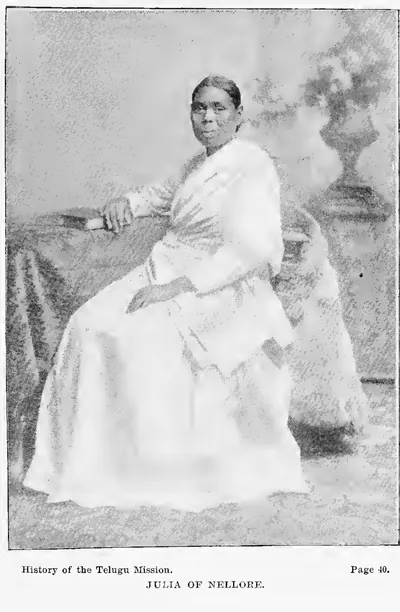 Julia of Nellore, one of the three Telugu Christians at the Ongole prayer meeting of 1 January 1854 (Downie, 1893)Book plate · 1893
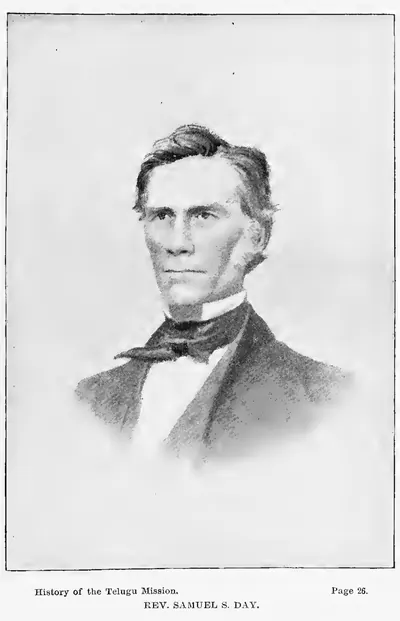 Samuel S. Day, who began the American Baptist mission to the Telugus (portrait in Downie, The Lone Star, 1893)Book plate · 1893
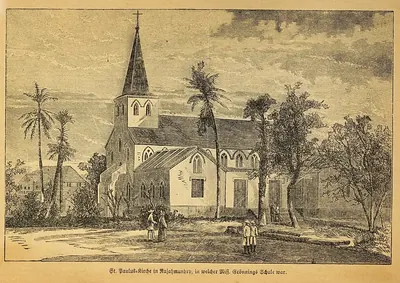 St Paul's church, Rajahmundry, where the Lutheran missionary Grönning's school met (engraving, 1891)Book plate · 1891
Related
People
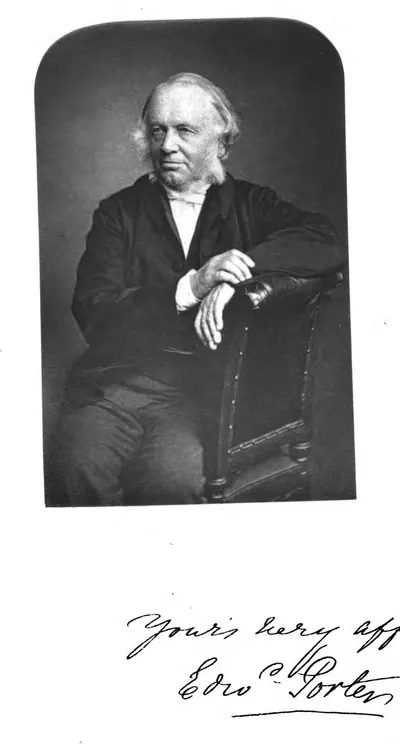
Edward Porter
1810–1882 CE
Edward Porter (1810–1882), an English missionary of the London Missionary Society, worked at Visakhapatnam from 1835 to 1844 and at Kadapa from 1844 to 1868. In his years at Kadapa the first Mala group movements began in the villages around, and the mission's out-stations grew from one to twelve.
Thomas Gabriel
1837–1875 CE
Thomas Gabriel (1837–1875), born Taleru Marayya at Machilipatnam, was a government telegraph clerk who gave up his post in 1869 to preach in the villages around the Kolleru lake. His appeal brought the Canadian Baptists to Kakinada in 1874, and most of their first converts came from his work.
Alfred Wood
before 1862 CE
Alfred Wood (died 1862), a Tamil-born Anglican catechist at Kadapa, kept a small Christian congregation going with his brother Basil, helped the Malas of Kudravaram in a court case and taught them, and so opened the way for the first SPG baptisms in the Telugu country in 1852.
Henry Watson Fox
before 1848 CE
Henry Watson Fox (died 1848) came to Machilipatnam with Robert Noble in 1841 to found the Church Missionary Society's Telugu mission. He preached in the town and began its tours to the village festivals. He went home in 1845 when his wife died, came back late in 1846, and left India for good early in 1848. He died in England on 14 October 1848. An address he gave at Rugby School led to a fund that supported a master at Noble's school.
J. C. F. Heyer
before 1873 CE
J. C. F. Heyer ('Father Heyer', died 1873) was the American Lutheran missionary who founded the Guntur mission in 1842. The Collector gave him a house and the town's English school; he opened Telugu schools, gave alms to the poor and preached. The Lutheran church he began grew to thousands of members in the Guntur and Palnadu villages.
John McLaurin
John McLaurin was a Canadian Baptist missionary who arrived in 1870 to work with the American Baptists at Ramapatnam and Ongole, and in 1874 became the first missionary of the Canadian Baptist mission at Kakinada, after Thomas Gabriel's appeal. Downie praised his gift for Telugu.
Lyman Jewett
Lyman Jewett was the American Baptist missionary who kept the Telugu mission alive when its society thought of closing it. He prayed with Indian Christians on the hill above Ongole on New Year's Day 1854, refused in 1862 to give up the mission, and in 1866 baptised Yerraguntla Periah, the first Madiga convert. He later worked on Telugu Bible revision at Madras.
Samuel S. Day
Samuel S. Day was the first missionary of the American Baptists to the Telugus. Appointed in 1835, he worked at Visakhapatnam, Srikakulam and Madras before settling at Nellore in 1840, where he baptised the first Telugu convert of the mission in 1841. Ill health forced him home in 1846 and finally in 1853.
William Bowden
before 1876 CE
William Bowden (died 1876), an English tradesman from Barnstaple, founded the independent Godavari Delta Mission at Narsapur with George Beer, arriving in 1836. He spoke Telugu fluently, worked among leather-working people, and preached to workers on the Godavari anicut. Yerraguntla Periah heard him at Palakollu before becoming the first Madiga convert at Ongole.
Themes
References
Notes (0)
Sources (21)
Spotted an error on this page? Tell us
Last updated: