Bitragunta grant of Sangama II (1356)
Five copper plates kept in the Collector's office at Nellore, edited by H. Krishna Sastri in 1895. They record a gift to Brahmans by Sangama II, son of Kampa, in Saka 1278 (1356). He gave the village of Bitragunta near Kavali, renamed Srikanthapura, and Simkesari near Pushpagiri in the Cuddapah country. The grant names all five sons of Sangama I, and it makes Kampa, not Bukka, the successor of Harihara I. Krishna Sastri concluded that Sangama II held parts of the Nellore and Cuddapah districts without accepting his uncle Bukka I as overlord.
By this copper-plate grant of Saka 1278 (1356; Saka is an Indian way of counting years), Sangama II, son of Kampa, gave the village of Bitragunta to Brahmans.1 The grant names the five sons of Sangama I, and it says that the first two, Harihara and Kampa, “ruled one after the other”.1 Krishna Sastri concluded from it that Sangama II held parts of the Nellore and Kadapa (then Cuddapah) districts while his uncle Bukka I reigned at Vijayanagara.2
The plates
H. Krishna Sastri edited the grant in the third volume of Epigraphia Indica.3 It had been noticed earlier by Robert Sewell.3 In Krishna Sastri’s words, “the original was lent by Dr. C. D. Macleane, Collector of Nellore, in whose office it is preserved, to Dr. Hultzsch”.3
The grant has five copper plates, each about 10 by 5½ inches.3 There is a hole at the top of each for a ring, but the ring is lost.3 Their order is marked by one to five notches in the left margin, and by Telugu numerals on the backs.3
The first side of the first plate has the sun at the top left corner and the moon at the top right.3 Below the moon is “the figure of a bull, tied by a rope to a tripod, which is surmounted by a trident”.3 Krishna Sastri noted that such symbols are “quite common in stone-inscriptions”, but “rather rare on copper-plates”.3 The language is Sanskrit verse, “written in faint, but boldly engraved Telugu characters”.3
The grant
The grant opens with a prayer to the Boar incarnation of Vishnu.1 It then introduces Sangama I “without any reference to his mythical descent from the Moon, as is done in other Vijayanagara grants”.1 It names his five sons: “Harihara, Kampa, Bukka, Marapa and Muddapa. Of these, the first two ruled one after the other.”1 Kampa’s son Sangama II is the donor.1
Sangama II gave the village of Bitragunta, or Bittarakunta, to twenty-eight Brahmans.1 He also gave another village, Simkesari.1 He did this at the suggestion of his preceptor (teacher), the Saiva philosopher Srikanthanatha.1 Bitragunta was renamed Srikanthapura after this teacher.1
The date is the new-moon day of the third month of Saka 1278 (1356), the cyclic year Durmukha.1 The text was written by Bhoganatha, “the court-jester of Samgama II”.1 At the end, the king wrote with his own hand the name Sri-Virupaksha, the god of the city of Vijayanagara.1 Krishna Sastri pointed out that this “explains the origin of the colophons” (closing signatures) of later Vijayanagara grants.1
The text says that the king made the grant at the demand of his preceptor.14 He also made it to win immortality for his father, on an anniversary.14 Krishna Sastri suggested that this may have been the first anniversary of Kampa’s death.14 If so, Kampa died and Sangama II succeeded in Saka 1277, “but this is only a conjecture which requires corroboration”.14
What it shows
Krishna Sastri valued the grant for two facts.4 The first was “the distinct mention of the five sons of Samgama I.”, since most family lists name only Harihara I and Bukka I.4 The second was the existence of a grandson, Sangama II.4
The second fact led him to an argument about the scholar Sayana.4 Sayana’s Madhaviya Dhatuvritti names him minister of “Samgamaraja, the son of Kamparaja”.4 Krishna Sastri argued that Sayana was the minister of Sangama II, not of Sangama I.4 Sangama I, in his words, “in the present state of our epigraphical knowledge, is nothing more than a name”.4 See Harihara I and Bukka I.
Following Sewell’s lists, he placed Bitragunta 7 miles south by west of Kavali in the Nellore district.2 The grant puts it three yojanas (an old measure of distance) north of the town of Vikramasimhapura.2 This town was in the district of Pakavishaya, on the shore of the eastern ocean.2
Simkesari lay in Mulikidesa, on the north bank of the Penner.2 It was north of the Saiva temple at Pushpagiri near Kadapa.2 Krishna Sastri was told of a village called Sunkesari close to Pushpagiri.2
His conclusion was this: “Samgama II. held portions of the present Nellore and Cuddapah districts, while his uncle Bukka I. was reigning at Vijayanagara.”2 He added that Sangama II “can scarcely have been dependent on Bukka I., as he would have otherwise referred to the latter as his overlord in his inscription.”2 See Kavali, Nellore and Udayagiri.
A second Nellore grant also names five sons of Sangama.56 This is the Kapalur plates, kept in the same Collector’s office, dated Saka 1258 and given to Harihara I.56 A. Butterworth and V. Venugopaul Chetty judged it a fake in 1905.56 Its Nandinagari letters were “quite modern and in certain letters it is very similar to Devanagari”.56 It lists the sons as Harihara, Bukka, Kampa, Mara and Muddana.56
Footnotes
-
Krishna Sastri, “Bitragunta Grant”, Epigraphia Indica III (1894–95), p. 22 (archive.org (opens in a new tab)). ↩ ↩2 ↩3 ↩4 ↩5 ↩6 ↩7 ↩8 ↩9 ↩10 ↩11 ↩12 ↩13 ↩14 ↩15 ↩16 ↩17 ↩18
-
Krishna Sastri, “Bitragunta Grant”, Epigraphia Indica III (1894–95), p. 24 (archive.org (opens in a new tab)). ↩ ↩2 ↩3 ↩4 ↩5 ↩6 ↩7 ↩8 ↩9
-
H. Krishna Sastri, “Bitragunta Grant of Samgama II.; Saka-Samvat 1278”, Epigraphia Indica III (1894–95), p. 21 (archive.org (opens in a new tab)). ↩ ↩2 ↩3 ↩4 ↩5 ↩6 ↩7 ↩8 ↩9 ↩10
-
Krishna Sastri, “Bitragunta Grant”, Epigraphia Indica III (1894–95), p. 23 (archive.org (opens in a new tab)). ↩ ↩2 ↩3 ↩4 ↩5 ↩6 ↩7 ↩8 ↩9 ↩10 ↩11
-
A. Butterworth and V. Venugopaul Chetty, A Collection of the Inscriptions on Copper-Plates and Stones in the Nellore District, Part I (1905), p. 109, Copper-plate No. 15 (archive.org (opens in a new tab)). ↩ ↩2 ↩3 ↩4 ↩5
-
Butterworth and Venugopaul Chetty, Nellore Inscriptions, Part I (1905), p. 110 (archive.org (opens in a new tab)). ↩ ↩2 ↩3 ↩4 ↩5
Photos
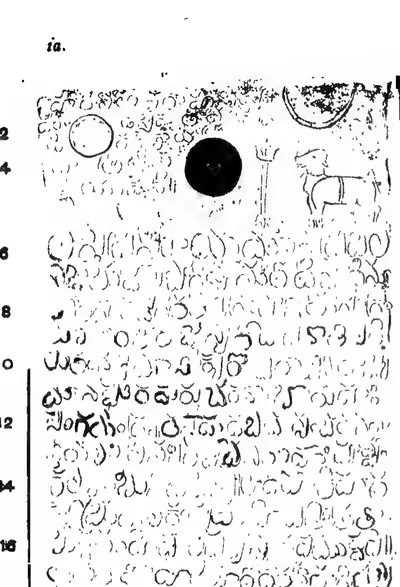 "Bitragunta Grant of Samgama II.—Saka-Samvat 1278", plate i a (Epigraphia Indica III, plate following p. 24 (PDF p. 50))Inscription rubbing · 1895
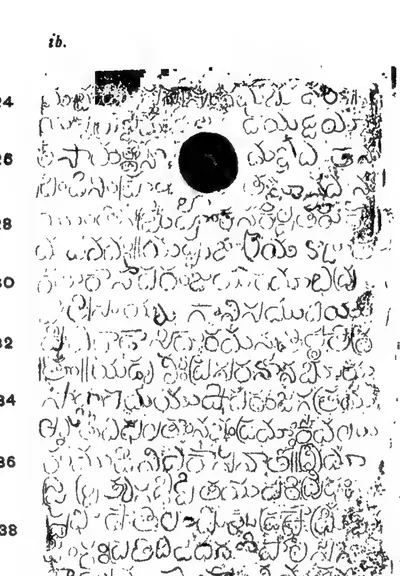 "Bitragunta Grant of Samgama II.—Saka-Samvat 1278", plate i b (Epigraphia Indica III, plate following p. 24 (PDF p. 50))Inscription rubbing · 1895
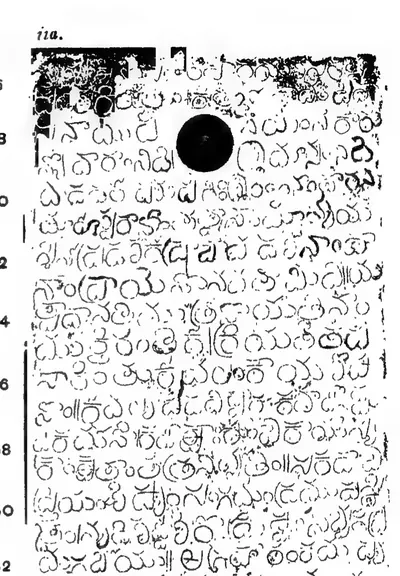 "Bitragunta Grant of Samgama II.—Saka-Samvat 1278", plate ii a (Epigraphia Indica III, plate following p. 24 (PDF p. 50))Inscription rubbing · 1895
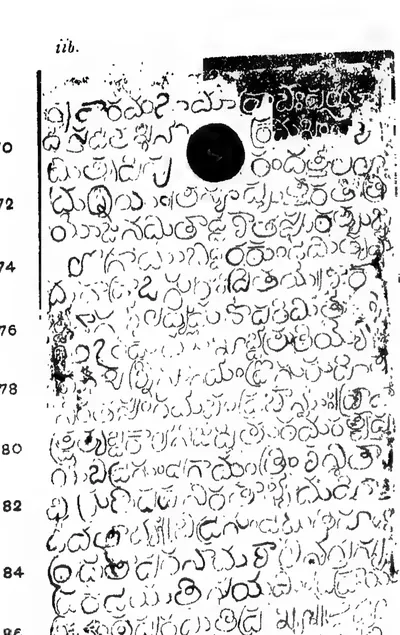 "Bitragunta Grant of Samgama II.—Saka-Samvat 1278", plate ii b (Epigraphia Indica III, plate following p. 24 (PDF p. 51))Inscription rubbing · 1895
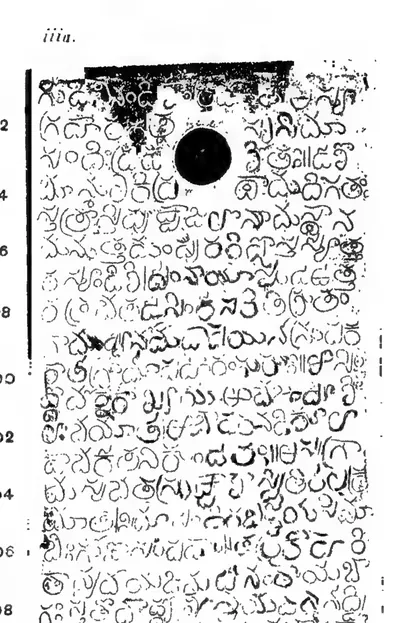 "Bitragunta Grant of Samgama II.—Saka-Samvat 1278", plate iii a (Epigraphia Indica III, plate following p. 24 (PDF p. 51))Inscription rubbing · 1895
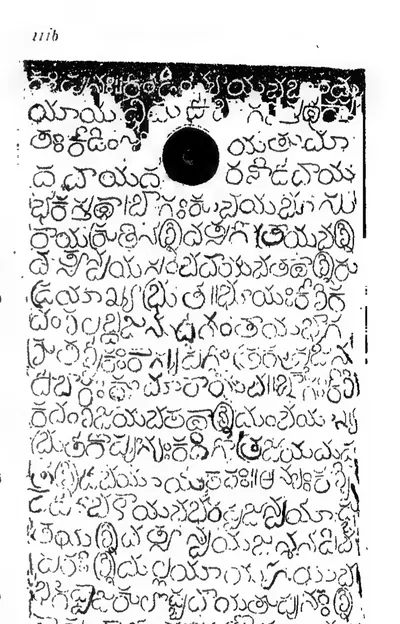 "Bitragunta Grant of Samgama II.—Saka-Samvat 1278", plate iii b (Epigraphia Indica III, plate following p. 24 (PDF p. 51))Inscription rubbing · 1895
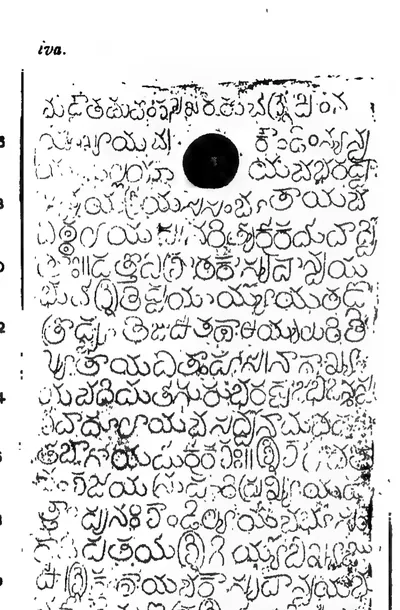 "Bitragunta Grant of Samgama II.—Saka-Samvat 1278", plate iv a (Epigraphia Indica III, plate following p. 24 (PDF p. 58))Inscription rubbing · 1895
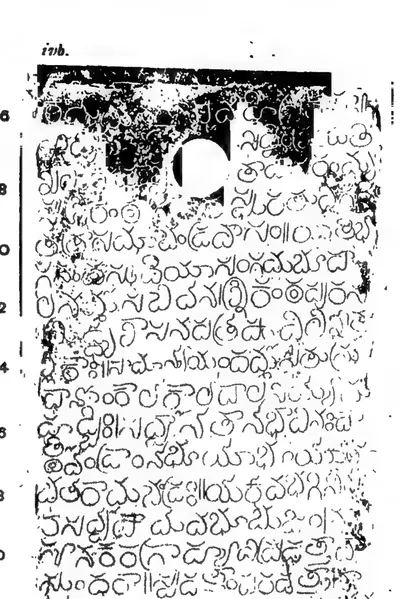 "Bitragunta Grant of Samgama II.—Saka-Samvat 1278", plate iv b (Epigraphia Indica III, plate following p. 24 (PDF p. 58))Inscription rubbing · 1895
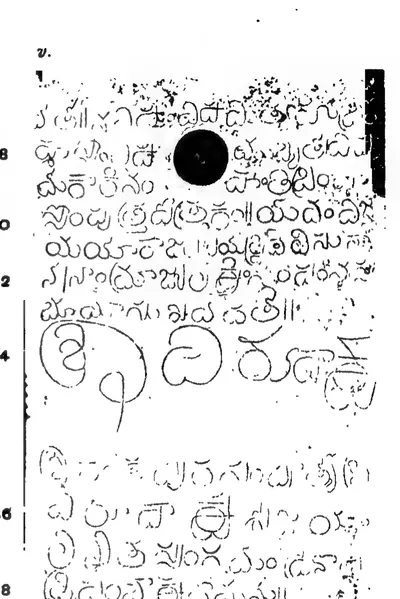 "Bitragunta Grant of Samgama II.—Saka-Samvat 1278", plate v (Epigraphia Indica III, plate following p. 24 (PDF p. 58))Inscription rubbing · 1895
References
Notes (0)
Sources (2)
Spotted an error on this page? Tell us
Last updated: