Vijayanagara Empire
The South Indian empire founded about 1336 by the brothers Harihara and Bukka on the Tungabhadra. The Sangama, Saluva, Tuluva and Aravidu dynasties ruled it in turn. It held Rayalaseema and the Nellore country from the fourteenth century. It fought the Reddis, the Velamas, the Bahmanis and the Gajapatis of Orissa for the Telugu coast, and under Krishnadeva Raya it took Udayagiri, Kondavidu and Kondapalli and marched to Simhachalam. Its court made Telugu a language of high poetry. After the defeat of 1565 its kings ruled from Penukonda and Chandragiri, until Golconda took the last of the Telugu districts in the 1640s.
Swipe sideways to see the whole chart; tap a bar for details.
Each bar is a ruling power in its region; time runs left to right. Dashed = approximate dates. Select a bar for details.
Show as a list
Kakatiyas 1163–1323 CE
- Telangana
- Chalukyas of Mudigonda (c. 890–1218 CE) · Kakatiyas (c. 1163–1323 CE)
- Coastal Andhra
- Eastern Gangas of Kalinga (c. 537–1434 CE) · Haihayas of Kona and Palnadu (c. 1073–1364 CE) · Kotas of Dharanikota (c. 1100–1276 CE) · Telugu Chodas of Pottapi and Nellore (c. 1106–1316 CE) · Cholas of Tanjore (c. 1135–1264 CE) · Kakatiyas (c. 1185–1323 CE) · Pandyas (c. 1260–1264 CE)
- Rayalaseema
- Cholas of Tanjore (c. 985–1268 CE) · Pandyas (1285–1293 CE) · Telugu Chodas of Pottapi and Nellore (c. 1120–1268 CE) · Hoysalas (c. 1178–1342 CE) · Kakatiyas (c. 1250–1323 CE)
Nayakas, Reddis & Bahmanis 1323–1518 CE
- Telangana
- Delhi Sultanate (Tughluqs) (c. 1323–1336 CE) · Bahmani Sultanate (c. 1347–1518 CE) · Musunuri Nayakas (c. 1336–1368 CE) · Gajapatis of Orissa (c. 1459–1461 CE) · Adil Shahis of Bijapur (c. 1489–1686 CE) · Recherla Velamas (Padmanayakas) (c. 1361–1475 CE) · Shitab Khan (Sitapati) of Warangal (c. 1504–1516 CE)
- Coastal Andhra
- Eastern Gangas of Kalinga (c. 537–1434 CE) · Gajapatis of Orissa (c. 1446–1571 CE) · Haihayas of Kona and Palnadu (c. 1073–1364 CE) · Reddis of Rajahmundry (c. 1386–1448 CE) · Bahmani Sultanate (c. 1471–1489 CE) · Delhi Sultanate (Tughluqs) (c. 1323–1326 CE) · Vijayanagara Empire (c. 1350–1579 CE) · Reddis of Kondaveedu (c. 1325–1424 CE) · Musunuri Nayakas (c. 1325–1346 CE)
- Rayalaseema
- Vijayanagara Empire (c. 1336–1646 CE) · Reddis of Kondaveedu (c. 1346–1386 CE) · Hoysalas (c. 1178–1342 CE)
Vijayanagara & the Qutb Shahis 1336–1687 CE
- Telangana
- Bahmani Sultanate (c. 1347–1518 CE) · Vijayanagara Empire (c. 1563–1565 CE) · Musunuri Nayakas (c. 1336–1368 CE) · Gajapatis of Orissa (c. 1459–1461 CE) · Adil Shahis of Bijapur (c. 1489–1686 CE) · Recherla Velamas (Padmanayakas) (c. 1361–1475 CE) · Qutb Shahis of Golconda (c. 1518–1687 CE) · Shitab Khan (Sitapati) of Warangal (c. 1504–1516 CE)
- Coastal Andhra
- Eastern Gangas of Kalinga (c. 537–1434 CE) · Gajapatis of Orissa (c. 1446–1571 CE) · Haihayas of Kona and Palnadu (c. 1073–1364 CE) · Reddis of Rajahmundry (c. 1386–1448 CE) · Bahmani Sultanate (c. 1471–1489 CE) · Qutb Shahis of Golconda (c. 1524–1687 CE) · Vijayanagara Empire (c. 1350–1579 CE) · Reddis of Kondaveedu (c. 1325–1424 CE) · Musunuri Nayakas (c. 1325–1346 CE)
- Rayalaseema
- Vijayanagara Empire (c. 1336–1646 CE) · Marathas (c. 1677–1687 CE) · Reddis of Kondaveedu (c. 1346–1386 CE) · Adil Shahis of Bijapur (c. 1568–1686 CE) · Hoysalas (c. 1178–1342 CE) · Qutb Shahis of Golconda (c. 1579–1687 CE) · Mughal Empire (c. 1686–1724 CE)
Mughals, Asaf Jahis & the British 1687–1948 CE
- Telangana
- Mughal Empire (1687–1724 CE) · Asaf Jahi Nizams of Hyderabad (1724–1948 CE)
- Coastal Andhra
- Mughal Empire (1687–1724 CE) · French East India Company (1750–1759 CE) · Nawabs of the Carnatic (Arcot) (c. 1710–1801 CE) · Asaf Jahi Nizams of Hyderabad (1724–1753 CE) · East India Company (1759–1858 CE)
- Rayalaseema
- Nawabs of Kurnool (c. 1690–1839 CE) · Nawabs of the Carnatic (Arcot) (c. 1710–1801 CE) · Nawabs of Cuddapah (c. 1714–1779 CE) · Mughal Empire (c. 1686–1724 CE) · Morari Rao Ghorpade of Gooty (c. 1741–1776 CE) · Banganapalle State (c. 1724–1948 CE) · Asaf Jahi Nizams of Hyderabad (c. 1724–1800 CE) · Marathas (c. 1743–1774 CE) · Mysore under Haidar Ali and Tipu Sultan (c. 1762–1799 CE)
Kingdoms and empires
Chalukyas of Mudigonda
Open page- Telangana: c. 890–1218 CE (c. 328 years)
Partial: Mudigonda (Khammam), the Manchikonda district and the Koravi (Kuravi) country, later the Visuru-nadu on the Godavari; feudatories of the Eastern Chalukyas, later of the Chalukyas of Kalyani. No record of the family is dated: start from Kusumayudha I's part in Chalukya-Bhima I's coronation (892), end from Parabrahma Sastry's identification of Kusumaditya and Nagati in a record of 1218. Driven out by the Kakatiyas (Recherla Rudra; Ganapatideva).
Rulers (13)
- Kokiraja (c. 865–890 CE)
- Kusumayudha I (c. 890–915 CE)
- Bijayita (c. 915–940 CE)
- Kusumayudha II (c. 940–965 CE)
- Vijayaditya (c. 965–990 CE)
- Kusumayudha III (c. 990–1015 CE)
… and 7 more
- Nijjiyaraja (c. 1015–1040 CE)
- Kusumayudha IV (Chalukya of Mudigonda) (c. 1040–1065 CE)
- Beta (c. 1065–1090 CE)
- Kusumayudha V (c. 1090–1110 CE)
- Bottu-Beta (c. 1110–1140 CE)
- Kusumaditya (Chalukya of Mudigonda) (c. 1140–1165 CE)
- Nagati (c. 1165–1196 CE)
Capitals
Inscriptions
Sources (4)
Sultanates
Delhi Sultanate (Tughluqs)
Open page- Telangana: c. 1323–1336 CE (c. 13 years)
Province of Tilang after Ulugh Khan (Muhammad bin Tughluq) took Warangal and renamed it Sultanpur (1321 by Barani's date for the campaign, 1323 in Haig and the editors of the Vilasa grant). Earlier Khalji campaigns (1303, 1309-10, 1318) ended in failure or tribute and are not drawn. Lost to a Hindu rising under Kanya Naik (Kapaya Nayaka) soon after the cholera of 1335 (Barani), about 1336-37 (modern historians) or in 1343-44 (Ferishta)
- Coastal Andhra: c. 1323–1326 CE (c. 3 years)
Brief hold on the Godavari delta and the coast: mosque at Rajahmundry built in 1324 by Ulugh Khan's servant Salar Ulwi; the coast retaken by Prolaya Nayaka and his allies between 1325 and 1326
Rulers
- Ala-ud-din Khalji (1296–1316 CE)
- Qutb-ud-din Mubarak Shah (1316–1320 CE)
- Ghiyas-ud-din Tughluq (1320–1325 CE)
- Muhammad bin Tughluq (1325–1351 CE)
Sources (7)
Sultanates
Bahmani Sultanate
Open page- Telangana: c. 1347–1518 CE (c. 171 years)
Western Telangana from 1347 (Kaulas taken or ceded; Bhongir taken late in Bahman Shah's reign, the province of Bidar reaching east to Bhongir); Golconda ceded under Muhammad Shah I (1362 Bilgrami; 1364-65 Haig, IG); Warangal taken in AH 828 (end of 1424 per Haig, 1422 per IG, 1425 per the Kistna Manual) and the rayas of Devarakonda and Rachakonda made tributary. Partial afterwards (Telugu chiefs regained districts under Ahmad I; Devarakonda relieved by Orissa 1459; Warangal held by the Gajapatis 1460 and by Shitab Khan from 1504). Governed for Mahmud Shah by Sultan Quli from 1495-96 until his independence (1512 per Haig; 1518 per Bilgrami, from the Golconda mosque inscription of AH 924)
- Coastal Andhra: c. 1471–1489 CE (c. 18 years)
Rajahmundry and Kondapalli (Ferishta) or Kondavidu (Haig, Burhan-i Ma'asir) taken by Malik Hasan Bahri in AH 876 (1471-72), on the invitation of a claimant to the Orissan throne (the Godavari gazetteer says Purushottama ceded the two districts); Muhammad Shah III at Rajahmundry for nearly three years after his Orissa campaign of 1478, and raided Masulipatam and Kanchi in 1481; Telingana split into the provinces of Rajahmundry and Warangal; Rajahmundry still Bahmani in 1486; the Godavari-Krishna country recovered by the Gajapati Purushottama by 1489
Rulers (18)
- Ala-ud-din Hasan Bahman Shah (1347–1358 CE)
- Muhammad Shah I (1358–1375 CE)
- Mujahid Shah (1375–1378 CE)
- Daud Shah (1378 CE)
- Muhammad Shah II (1378–1397 CE)
- Ghiyas-ud-din (1397 CE)
… and 12 more
- Shams-ud-din Daud (1397 CE)
- Firuz Shah (1397–1422 CE)
- Ahmad Shah I (1422–1435 CE)
- Ala-ud-din Ahmad Shah II (1435–1458 CE)
- Humayun Shah (1458–1461 CE)
- Nizam Shah (1461–1463 CE)
- Muhammad Shah III (1463–1482 CE)
- Mahmud Shah Bahmani (1482–1518 CE)
- Ahmad Shah (c. 1518–1521 CE)
- Ala-ud-din (c. 1521–1523 CE)
- Wali-ullah Shah (c. 1523–1525 CE)
- Kalim-ullah Shah (c. 1525–1527 CE)
Inscriptions
Sources (12)
Kingdoms and empires
Vijayanagara Empire
Open page- Rayalaseema: c. 1336–1646 CE (c. 310 years)
Founded c. 1335-36; Bukka I held Penukonda and Gooty (records of 1352 and a Gooty rock inscription) and his minister built the Bukkarayasamudram tank near Anantapur in 1364; Cuddapah in the 14th century; Kurnool wholly annexed under Krishnadeva Raya. After Talikota (1565) the kings ruled from Penukonda, which held out against Bijapur in 1577 and Golconda in 1589; the country north of Penukonda was lost after Sriranga I's capture (c. 1579-80); Venkatapati II moved to Chandragiri c. 1592; Golconda held the Cuddapah district and took Chandragiri (Chittoor) in 1646. Bijapur and Golconda took most of the region piecemeal after 1565
- Coastal Andhra: c. 1350–1579 CE (c. 229 years)
Vijayanagara officers kept Guntur (Kondavidu, Vinukonda, Bellamkonda) and the governor of Udayagiri kept Nellore after Talikota; Golconda took Kondavidu in April 1579 (Kistna Manual) or 1580 (a Guntur record of 1592 cited by Sewell), though Sewell thinks Guntur was already under Muslim rule by 1576 and the Nellore Manual says the Muslims held Nellore from 1565.
- Telangana: c. 1563–1565 CE (c. 2 years)
To end the confederate invasion of Golconda, Ibrahim Qutb Shah let Rama Raja keep the forts of Ghanpur and Panagal (Mahbubnagar) until Talikota; Ferishta places this after the Kalyani campaign of the early 1560s, the Kistna Manual dates it to 1557.
Rulers (24)
- Harihara I (Vijayanagara) (c. 1336–1355 CE)
- Bukka I (Vijayanagara) (1355–1377 CE)
- Harihara II (1377–1404 CE)
- Bukka II (1404–1406 CE)
- Deva Raya I (1406–1422 CE)
- Vijaya (Bukka III) (1422 CE)
… and 18 more
- Deva Raya II (Vijayanagara) (1422–1446 CE)
- Mallikarjuna (1446–1465 CE)
- Virupaksha (1465–1485 CE)
- Saluva Narasimha (1485–1492 CE)
- Immadi Narasimha (1492–1505 CE)
- Narasa Nayaka (c. 1505 CE)
- Vira Narasimha (1505–1509 CE)
- Krishnadeva Raya (1509–1529 CE)
- Achyuta Raya (1529–1542 CE)
- Venkata I (1542 CE)
- Sadasiva (c. 1542–1569 CE)
- Tirumala (Aravidu) (c. 1569–1572 CE)
- Sriranga I (1572–1586 CE)
- Venkatapati II (Vijayanagara) (1586–1614 CE)
- Sriranga II (1614 CE)
- Rama Deva (1614–1630 CE)
- Pedda Venkata (1630–1642 CE)
- Sriranga III (c. 1642–1670 CE)
Monuments (7)
- Penukonda fort and Gagan Mahal
- Kalahastisvara temple, Srikalahasti
- Virabhadra temple, Lepakshi
- Chandragiri fort and Raja Mahal
- Gooty fort
- Narasimha temples, Ahobilam
… and 1 more
Inscriptions (14)
- Penukonda fort inscription (1354)
- Gooty rock inscription of Bukka I
- Bitragunta grant of Sangama II (1356)
- Bukkarayasamudram tank inscription (1364)
- Tirumala inscriptions of Krishnadeva Raya and his queens (1513–1514)
- Amaravati inscription of Krishnadeva Raya (1515)
… and 8 more
- Mangalagiri and Kaza pillar inscriptions (1515–1518)
- Simhachalam inscriptions of Krishnadeva Raya (1516–1519)
- Srikalahasti inscription of Krishnadeva Raya (1516)
- Kondavidu pillar inscription of Nadindla Gopa (1520)
- Lepakshi temple inscriptions of Achyuta Raya's reign (1533–1538)
- Kanuma grant of Sadasiva (1548)
- Penukonda inscription of Channappa Nayudu (1577)
- Ahobilam inscription of Sriranga I (1584)
Sources (20)
Kingdoms and empires
Mughal Empire
Open page- Rayalaseema: c. 1686–1724 CE (c. 38 years)
Kurnool passed to the emperor with the Bijapur provinces in 1686 and was later the jagir of Daud Khan Panni and his brother; Adoni (renamed Imtiyazgarh, a Mughal mint) surrendered by Masaud Khan; the uplands of the Haidarabadi Karnatak (Cuddapah, Gandikota, Gooty, Sidhout) came with Golconda in 1687; Anantapur added to the subah of Bijapur; poligars largely independent (Cuddapah gazetteer); Francis dates the Nizam's independence to 1723
- Telangana: 1687–1724 CE (37 years)
Golconda taken on 21 September 1687 and the kingdom annexed as the subah of Haidarabad, governed from Hyderabad by subahdars (Mahabat Khan, Ruhullah Khan, Jan Sipar Khan, Rustam Dil Khan, Yusuf Khan, Mubariz Khan); Kam Bakhsh held Hyderabad as a rival emperor in 1708 until his defeat on 13 January 1709; Mubariz Khan was killed by Nizam-ul-Mulk at Shakar Kheda in October 1724
- Coastal Andhra: 1687–1724 CE (37 years)
Kondapalli gained by bribery in July 1687; Guntur (Murtazanagar), Kondapalli (Mustafanagar), Ellore, Rajahmundry and Chicacole formed the Northern Circars, with Masulipatam as their chief town and a Mughal mint; the Qutb Shahi assessment of 1635 was kept on Aurangzeb's records (Grant)
Rulers
- Shah Jahan (1628–1658 CE)
- Aurangzeb (Alamgir) (1658–1707 CE)
- Bahadur Shah (Shah Alam I) (1707–1712 CE)
- Jahandar Shah (1712–1713 CE)
- Farrukhsiyar (1713–1719 CE)
- Muhammad Shah (1719–1748 CE)
Inscriptions
Sources (14)
Kingdoms and empires
Kakatiyas
Open page- Telangana: c. 1052–1162 CE (c. 110 years)
Partial: feudatory chiefs of Anumakonda (Hanamkonda) under the Chalukyas of Kalyani. Prola I received the Anumakonda district as a permanent fief from Someshvara I (record of 1053); Prola II's last record as a subordinate is of 1149; Rudradeva subdued the other Telangana chiefs c. 1157–62 (Parabrahma Sastry). Earlier members served the Rashtrakutas (Mangallu grant, c. 956) according to Parabrahma Sastry, a link rejected by Venkataramanayya and Somasekhara Sarma (1960).
- Telangana: c. 1163–1323 CE (c. 160 years)
Sovereign from Rudradeva's Anumakonda inscription of January 1163; capital moved to Orugallu (Warangal) under Ganapatideva. Warangal taken by Ulugh Khan in 1323 (Parabrahma Sastry, after Isami); Barani and the Imperial Gazetteer give 1321.
- Coastal Andhra: c. 1185–1323 CE (c. 138 years)
Rudradeva subdued the Kotas of Dharanikota and the Kondapadumatis (Tripurantakam grant 1185); Ganapatideva annexed Divi (1203) and Velanadu (records from 1209; Jaya governor 1213) and held the coast from the Godavari to the Penna; Kakatiya records at Draksharama from 1212, but the Eastern Gangas held the region north of the Godavari c. 1230–33 and again c. 1262–78; the Telugu Chodas of Nellore were allies; Nellore was lost to the Pandyas c. 1263 and recovered under Prataparudra.
- Rayalaseema: c. 1250–1323 CE (c. 73 years)
Through the Kayastha chiefs (Gangaya Sahini, bahattara-niyogadhipati c. 1250, capital Valluru in Cuddapah); Ambadeva independent c. 1272–1291, until Prataparudra's armies retook Tripurantakam (between 13 June and 11 August 1291) and the Kayastha lands within about eight years.
Rulers (11)
Capitals
Monuments (16)
Inscriptions (36)
- Kazipet Dargah pillar inscription
- Matedu inscription of Vemabola Malle-nayaka
- Gudur pillar inscriptions of the Viriyala family
- Thousand Pillar Temple inscription of Rudradeva
- Karimnagar inscription of Gangadhara
- Warangal fort inscription of Rudradeva
… and 30 more
- Pillalamarri inscription of Recherla Nami-reddi
- Kondaparti inscription of Malyala Chaunda
- Inugurti pillar inscription of Natavadi Rudra
- Bayyaram tank inscription of Mailama
- Chebrolu inscription of Jaya
- Palampet pillar inscription of Recherla Rudra
- Ganapavaram inscription of Devapala
- Warangal toll inscription of Ganapatideva
- Ganapesvaram inscription of Jaya
- Upparapalli pillar inscription of Kataya
- Motupalli pillar inscription of Ganapatideva
- Pakhal lake inscription of Jagadala Mummadi
- Rayaparti fragment of Saka 1169
- Ekamranatha temple inscription of Ganapati
- Nayanapalle inscription of Ganapatideva
- Durgi inscription of Gangaya-sahini
- Sarngapuram plates of Sarngadhara
- Bothpur tank inscription of Malyala Gunda
- Garavapadu plates of Ganapatideva
- Malkapuram pillar inscription of Rudramadevi
- Kotagiri plates of Viryala Sura
- Kolanupaka inscription of Rudramadevi's reign
- Chandupatla inscription
- Panugallu inscription of Immadi Mallikarjuna-nayaka
- Tripurantakam inscription of Ambadeva
- Raichur fort inscription of Gona Vithala
- Mellacheruvu inscription of Prataparudra's reign
- Srirangam inscription of Prataparudra
- Dharmasagar inscription of the minister Malla
- Hanamkonda inscription of Gangadhara
Sources (7)
Kingdoms and empires
Musunuri Nayakas
Open page- Coastal Andhra: c. 1325–1346 CE (c. 21 years)
Prolaya Nayaka recovered the coast from Delhi in 1325-26 and ruled from Rekapalli on the Godavari (Vilasa grant, about 1330); latest dated Musunuri records on the coast are Kapaya's Guraja grant (February 1346) and his Ganapesvaram inscription (1346-47). Partial: the Reddis of Addanki and the Korukonda chiefs held parts of the coast as Kapaya's kinsmen and subordinates
- Telangana: c. 1336–1368 CE (c. 32 years)
Kapaya Nayaka took Warangal about 1336-37 (Ferishta: 1343-44) and ruled as "lord of the Andhra country" (Pillalamarri inscription, 1357); ceded Kaulas and then Golconda (1364-65) to the Bahmanis; overthrown by the Recherla chief Anapota about 1368 (Kapaya named in the Akkalapundi grant of 1368; Anapota ruling Orugallu in July 1369)
Rulers
Capitals
Inscriptions
Sources (9)
Kingdoms and empires
Gajapatis of Orissa
Open page- Coastal Andhra: c. 1446–1571 CE (c. 125 years)
Kapilendra (Kapilesvara, r. 1434-35 to 1469-70) took the Reddi kingdom of Rajahmundry between 1444 and 1448 and held Kondavidu by 1454 through his kinsman Ganadeva; the Bahmanis took Rajahmundry and Kondapalli or Kondavidu in 1470-71 and Purushottama had recovered the Godavari-Krishna country and the Ongole taluk by 1489; the country south of the Krishna passed to Saluva Narasimha after 1470 and, with Udayagiri, Kondavidu and Kondapalli, to Krishnadeva Raya in 1513-16; Golconda took the Godavari-Krishna doab from about 1522 and Rajahmundry in 1571-72. The northern coast (Srikurmam, Simhachalam) stayed Gajapati throughout.
- Telangana: c. 1459–1461 CE (c. 2 years)
Brief: Orissan troops relieved Devarakonda from the Bahmanis in 1459, and Kapilendra's son Hamvira and nephew Raghudeva took Warangal on 2 February 1460 (two gateway inscriptions); in 1461-62 the Orissan army and the zemindars of Telangana marched on Bidar. How long Warangal was held is not recorded
- Telangana: c. 1497–1516 CE (c. 19 years)
Partial: the uplands of Khammam and the Kondapalli-Nelakondapalli country, held by Prataparudra until Krishnadeva Raya's campaigns (Banerji; Nizam's Archaeological Department)
Rulers
- Kapilendra (Kapilesvara) (c. 1434–1470 CE)
- Purushottama (Gajapati) (c. 1470–1497 CE)
- Prataparudra (Gajapati) (c. 1497–1540 CE)
- Kalua Deva (c. 1540–1541 CE)
- Kakharua Deva (c. 1541 CE)
Inscriptions (8)
Sources (10)
Sultanates
Adil Shahis of Bijapur
Open page- Telangana: c. 1489–1686 CE (c. 197 years)
After the Bahmani break-up part of Mahbubnagar district went to Bijapur (the rest to Golconda) and stayed with it until Aurangzeb annexed Bijapur in 1686; the Raichur district article likewise passes Raichur (which then included the Alampur taluk and Gadwal) from the Bahmanis to the Adil Shahis.
- Rayalaseema: c. 1568–1686 CE (c. 118 years)
Partial, the western uplands only. Adoni taken by Ali Adil Shah's general Ankus Khan in 1568 after a failed siege in 1535-37; Penukonda besieged in the 1570s (dates disputed) and taken in 1652 (Mackenzie MS); Kurnool taken from Gopala Raja early in the 17th century and governed by Abdul Wahab (d. 1618) and later deputies, Siddi Jauhar holding it as his jagir about 1660; the Bellary and Anantapur uplands held through governors and tributary poligars; Bijapur's rights there passed to Shivaji in 1677-80 (Francis); Bijapur fell to Aurangzeb on 12 September 1686, but Siddi Masud held Adoni until 1688 (Sarkar) or 1687 (Bellary gazetteer)
Rulers (9)
Capitals
Monuments
Sources (11)
Kingdoms and empires
Asaf Jahi Nizams of Hyderabad
Open page- Telangana: 1724–1948 CE (224 years)
Asaf Jah, viceroy of the Deccan from 1713, independent after defeating Mubariz Khan at Shakar Kheda (11 October 1724 in Irvine; 1723 in Gribble); Telangana remained the Telugu heart of the Nizam's Dominions, with the samasthans of Gadwal, Wanaparthy, Jatprole, Amarchinta and Palvancha as tributary estates. Regular districts were formed in 1865-66 and the Telugu divisions surveyed and settled by 1905; the districts were redrawn in 1905 and an Executive Council governed from November 1919. The Standstill Agreement with India was signed on 29 November 1947. Indian troops entered the state on 13 September 1948 (the Police Action); the Nizam ordered a ceasefire on 17 September, and a military governor took charge on 18 September
- Coastal Andhra: 1724–1753 CE (29 years)
The Nizam's governor at Rajahmundry collected the tribute of the coastal zamindars; Masulipatam granted to the French by Muzaffar Jang in 1750 and the lands of Nizampatnam and Kondavid by Salabat Jang in 1751; the four Circars of Mustafanagar, Ellore, Rajahmundry and Chicacole assigned to the French on 4 December 1753 to pay Bussy's army
- Rayalaseema: c. 1724–1800 CE (c. 76 years)
Nominal over much of the region (Kurnool and Cuddapah Nawabs, Maratha tribute, Morari Rao at Gooty, Haidar Ali from 1761); the Nizam gained Tipu Sultan's districts by the treaties of 1792 and 1799 and ceded them to the Company by the treaty of 12 October 1800 to pay the subsidiary force (the Ceded Districts)
- Coastal Andhra: 1759–1788 CE (29 years)
Guntur (Murtazanagar) stayed with the Nizam's brother Basalat Jang after the French were driven out; it was excluded from the cessions of 1766 and 1768, rented by the Company in 1779 and restored, and handed over to the Company only in 1788; the Nizam's claims to the Circars' payments were bought out in 1823
Rulers (10)
Capitals
Monuments (11)
Inscriptions
Sources (16)
Kingdoms and empires
Recherla Velamas (Padmanayakas)
Open page- Telangana: c. 1361–1475 CE (c. 114 years)
Anapota at Rachakonda (Rajukonda) and Mada at Devarakonda after their victories of 1361 (family chronicle); Rachakonda fortified in August 1365; Warangal, Bhongir and Rachakonda ruled by July 1369 (Inavolu inscription). The rayas of Devarakonda and Rachakonda paid tribute to Ahmad Shah Bahmani after his capture of Warangal (end of 1424); Devarakonda routed a Bahmani army with Orissan help in 1459; last dated record of the Rachakonda line 1464. End about 1475 per the list of rulers in Epigraphia Telanganica; no source dates the annexation
Rulers (7)
- Singama Nayaka (Recherla) (c. 1336–1361 CE)
- Anapota Nayaka (Recherla) (c. 1361–1384 CE)
- Mada Nayaka (Recherla) (c. 1361–1384 CE)
- Singabhupala (Recherla) (c. 1384–1399 CE)
- Peda Vedagiri (Recherla) (c. 1384–1410 CE)
- Lingama Nayaka (Recherla) (c. 1427–1475 CE)
… and 1 more
- Singama Nayaka, 'Sarvajna' (Rachakonda) (c. 1430–1475 CE)
Capitals
Monuments
Inscriptions
Sources (7)
Sultanates
Qutb Shahis of Golconda
Open page- Telangana: c. 1518–1687 CE (c. 169 years)
Sultan Quli governed Telingana for the Bahmanis from 1493-95 and declared independence in 1512 (Ferishta, Haig, IG Hyderabad) or 1518 (Bilgrami, from the Golconda mosque inscription of AH 924); he took the forts of the Telugu chiefs, among them Rachakonda, Devarakonda and, from Shitab Khan, Warangal and Khammam (1519-1525 per Bilgrami). Tributary to the Mughals from 1635-36 (khutba and coins in Shah Jahan's name; two lakhs of huns a year). Hyderabad taken by the Mughals in 1656 and 1685; Golconda surrendered on 21 September 1687 (Old Style) and was annexed
- Coastal Andhra: c. 1524–1687 CE (c. 163 years)
Sultan Quli took Kondapalli and fixed the Godavari as his frontier with Orissa (Ellore ceded) some time before his 1530 campaign, and a 1524 record shows him granting villages near Kondapalli and Bezwada; the Godavari gazetteer and IG Madras date the Krishna-Godavari doab to c. 1540 or 'before 1543', and the IG Madras Kistna article to after 1565.
- Rayalaseema: c. 1579–1687 CE (c. 108 years)
Partial; the sources disagree on when Golconda's hold began. IG Madras says Kurnool and Cuddapah were overrun soon after 1565. The Kurnool Manual dates the campaigns that took Gurramkonda (1579) and Gandikota, Nandyal and Musalimadugu (c. 1590). The Cuddapah gazetteer says Golconda only turned to Cuddapah in the early 17th century and never really conquered it. Chandragiri fell to Golconda in 1646.
Rulers (8)
Capitals
Monuments (13)
Inscriptions (7)
- Epitaph of Sultan Quli, Golconda (1543)
- Makka Darwaza inscription, Golconda (1559)
- Jami Masjid inscription, Hyderabad
- Epitaph of Muhammad Quli Qutb Shah, Golconda (1612)
- Ma Saheba tank inscriptions (1625)
- Musa Burj inscription, Golconda fort (1666–67)
… and 1 more
Sources (23)
Kingdoms and empires
Shitab Khan (Sitapati) of Warangal
Open page- Telangana: c. 1504–1516 CE (c. 12 years)
Partial (Warangal, Khammam and other hill forts, with Bellamkonda south of the Krishna; probably Nalgonda). A former Bahmani officer, Shitab Khan or Sitapati, took Warangal fort from the Muslims on 21 January 1504 by his pillar inscription, and held it until Sultan Quli Qutb Shah defeated him and his Gajapati allies; the Kistna manual calls him apparently a vassal of Orissa. The end is uncertain: Sastri allows him six or seven years (to 1512), the Hyderabad archaeological report of 1925-26 dates the loss of Warangal to 1513-1516, the Kistna manual places the war after 1516, and Bilgrami gives 1519-1525
Rulers
Capitals
Monuments
Inscriptions
Sources (6)
Kingdoms and empires
Eastern Gangas of Kalinga
Open page- Coastal Andhra: c. 537–1434 CE (c. 897 years)
Partial: only the far north coast (the old Ganjam and Vizagapatam districts, now Srikakulam-Vizianagaram- Visakhapatnam), capital Kalinganagara (Mukhalingam). Earliest dated grant: Jirjingi, near Tekkali, Ganga year 39 (c. 537 on Mirashi's epoch of 498; Fleet put the early grants in the 7th century and Sewell used an epoch of 877-78; the Imperial Gazetteer, the 7th century). Later line in power from the end of the 9th century (Vizagapatam gazetteer): Vajrahasta III crowned 1038; Anantavarman Chodaganga 1078-1146, with records at Mukhalingam, Srikurmam, Simhachalam and Visakhapatnam. South of the Godavari only records and raids (Draksharama 1128-1274; Bendapudi). Ended 1434, when the minister Kapilesvara founded the Gajapati line
Rulers (15)
- Vajrahasta III (Eastern Ganga) (1038–1070 CE)
- Rajaraja I (Eastern Ganga) (1070–1078 CE)
- Anantavarman Chodaganga (c. 1078–1146 CE)
- Madhu-Kamarnava (c. 1146–1152 CE)
- Raghava (c. 1152–1166 CE)
- Rajaraja II (c. 1166–1192 CE)
… and 9 more
- Aniyanka-Bhima (c. 1192–1202 CE)
- Anangabhima III (c. 1219–1253 CE)
- Narasimha I (Eastern Ganga) (c. 1253–1256 CE)
- Bhanudeva I (c. 1256–1275 CE)
- Narasimha II (c. 1275–1306 CE)
- Bhanudeva II (c. 1306–1323 CE)
- Narasimha III (c. 1323–1346 CE)
- Bhanudeva III (c. 1346–1378 CE)
- Narasimha IV (c. 1378–1397 CE)
Capitals
Monuments
Inscriptions (8)
Sources (10)
Colonial powers
French East India Company
Open page- Coastal Andhra: 1750–1759 CE (9 years)
Partial at first (Masulipatam and the island of Divi, seized in July 1750 under Muzaffar Jang's grant; Nizampatnam, Narsapur and Kondavid added by Salabat Jang in 1751-52); from December 1753 the four Northern Circars of Mustafanagar (Kondapalli), Ellore, Rajahmundry and Chicacole, granted for the pay of Bussy's army and settled by Bussy in person from July 1754. Forde routed the French at Condore (Chandurti) on 9 December 1758 and stormed Masulipatam on 7-8 April 1759; by the treaty of May 1759 Salabat Jang ceded the Masulipatam country to the English and excluded the French from the Deccan
- Coastal Andhra: c. 1765–1793 CE (c. 28 years)
Partial (Yanam only): the French factory town on the Godavari, ceded to them in 1752, reoccupied after the peace of 1763 (the restored possessions 'were not occupied before 1765'); the French possessions were also in English hands in 1778-83
- Coastal Andhra: 1817–1954 CE (137 years)
Partial (Yanam only): occupied by the English from 1793 (except 1802-03) and handed back in 1817 under the treaties of 1814-15; about 2,258 acres. The Government of India took over the French Establishments, Yanam among them, from 1 November 1954 after the agreement with France of 21 October 1954
Rulers
- Joseph François Dupleix (1750–1754 CE)
- Charles de Bussy (1754–1758 CE)
- Marquis de Conflans (1758–1759 CE)
Capitals
Sources (10)
Kingdoms and empires
Haihayas of Kona and Palnadu
Open page- Coastal Andhra: c. 1073–1364 CE (c. 291 years)
Partial. Kona chiefs of Konamandala (the Godavari delta, Amalapuram taluk), with records at Draksharama and Palakol from Saka 995 (1073) to 1364–65, dependent on the Chola–Chalukya kings and the Velanati Chodas, later on the Kakatiyas; Haihaya chiefs of the Chagi family in the Palnadu (Macherla 1111, Gurazala 1129) as feudatories of the Chalukyas of Kalyani; the Palnadu war of the ballads is undated (proposals 1080–1386).
Rulers
- Rajendra Choda I of Kona (1128 CE)
- Mummadi-Bhima II and Satya I (1135 CE)
- Bhima III (c. 1153–1168 CE)
- Mallideva of Kona (c. 1155–1207 CE)
- Ganapatideva of Kona (c. 1262–1300 CE)
- Bhima-Vallabha (1318 CE)
Inscriptions
Sources (5)
Kingdoms and empires
Reddis of Rajahmundry
Open page- Coastal Andhra: c. 1386–1448 CE (c. 62 years)
Partial: the Godavari delta and the coast north to Simhachalam, capital Rajahmundry. Kataya Vema, minister of Kumaragiri, received "the eastern country" by 1386 (Ramayya; Sewell c. 1380); after his death (c. 1414-16) Allada Reddi, then Allada's sons Allaya Vema and Virabhadra (records 1423-1437, a record of 1444). Godavari gazetteer: family in the Draksharama inscriptions until 1447; a Gajapati record of 1448 at Penugonda marks the end (Somasekhara Sarma); Kapilesvara's minister ruling at Rajahmundry in 1458
Rulers
- Kataya Vema (c. 1386–1415 CE)
- Allada Reddi (c. 1416–1420 CE)
- Allaya Vema and Virabhadra (c. 1423–1448 CE)
Capitals
Inscriptions
Sources (6)
Kingdoms and empires
Nawabs of the Carnatic (Arcot)
Open page- Coastal Andhra: c. 1710–1801 CE (c. 91 years)
Partial (Nellore and Ongole, the Palnad, the jagir of Udayagiri and the tributary zamindaris of Venkatagiri and Kalahasti). Saadatullah Khan became Nawab of the Carnatic, the coast from Guntur to the Coleroon, in 1710 (Orme) or 1713 (Wilks), and his fauzdar governed Nellore; he granted the Udayagiri jagir in 1720. Under Muhammad Ali Walajah (1749-95) his brother Najib-ullah held Nellore, rebelled in 1757 and was dislodged by an English force in 1762. The revenues were assigned to the Company in 1781-85 and managed by it in 1790-92; by the treaty of 31 July 1801 Azim-ud-daula handed over the government of the Carnatic, and Nellore, Ongole and the Palnad became British
- Rayalaseema: c. 1710–1801 CE (c. 91 years)
Partial (Chittoor taluks). The Nawabs at Arcot, first as deputies under the Nizam, took tribute from the Chittoor and Chendragiri poligars and the Kalahasti and Karvetnagar zamindars; Muhammad Ali gave Chittoor and Chendragiri to his brother Abdul Wahab as a jagir, and the Carnatic was handed to the Company on 31 July 1801.
Rulers
- Saadatullah Khan (c. 1710–1732 CE)
- Dost Ali Khan (1732–1740 CE)
- Safdar Ali Khan (c. 1740–1742 CE)
- Anwar-ud-din Khan (1744–1749 CE)
- Muhammad Ali Khan Walajah (1749–1795 CE)
- Umdat-ul-Umara (1795–1801 CE)
Capitals
Sources (11)
Kingdoms and empires
Kotas of Dharanikota
Open page- Coastal Andhra: c. 1100–1276 CE (c. 176 years)
Partial (the Six-thousand country, Konnatavadi, south of the Krishna about Amaravati–Dharanikota and the Sattenapalle taluk). Line from Bhima I (c. 1100, Sewell); Keta II from about 1182; subdued by the Kakatiya Rudradeva about 1185 and thereafter Kakatiya subordinates and relatives by marriage (Ganapamba, widow of Kota Beta, ruled in the 1250s); last record of a Kota Rudra 1275–76.
Rulers
- Kota Keta II (c. 1182–1209 CE)
- Manma-Keta (Keta III) (c. 1234–1240 CE)
- Kota Beta (c. 1250–1251 CE)
- Ganapamba (c. 1251–1257 CE)
- Bhima IV (1265 CE)
Capitals
Inscriptions
Sources (5)
Colonial powers
East India Company
Open page- Coastal Andhra: 1759–1858 CE (99 years)
Partial at first: the Masulipatam and Nizampatam Circars ceded by Salabat Jang on 14 May 1759 after Forde's defeat of the French. The emperor Shah Alam granted the five Northern Circars on 12 August 1765; by the treaties of 12 November 1766 and 23 February 1768 the Nizam ceded Kondapalli, Ellore, Rajahmundry and Chicacole for a yearly payment (capitalised in 1823), Guntur following in September 1788. Governed through renters until 1769, Chiefs and Councils at Masulipatam and Vizagapatam until 1794, then Collectors; the zamindaris were permanently settled in 1802-03. Nellore, Ongole and the Palnad came with the Carnatic from the Nawab of Arcot on 31 July 1801. Transferred to the Crown in 1858
- Rayalaseema: 1792–1858 CE (66 years)
Partial at first: Kangundi came to the Company with the Baramahal in 1792, when it also began collecting the Kalahasti and Karvetnagar tribute for the Nawab; Punganur and Venkatagirikota (Palmaner) followed from Tipu's lands in 1799. On 12 October 1800 the Nizam ceded the territories he had gained from Mysore in 1792 and 1799, the Ceded Districts of Bellary (with Anantapur) and Cuddapah, with the tribute of the Nawab of Kurnool; Thomas Munro, Principal Collector 1800-1807, reduced the poligars and made the ryotwari settlement. The Nawab of Arcot's Chittoor and Chendragiri country came with the Carnatic in 1801, and the Kurnool Nawab's jagir was annexed in 1839. Transferred to the Crown in 1858
Rulers (23)
- George Pigot (1755–1763 CE)
- Robert Palk (1763–1767 CE)
- Charles Bourchier (1767–1770 CE)
- Josias Du Pré (1770–1773 CE)
- Alexander Wynch (1773–1775 CE)
- Lord Pigot (1775–1776 CE)
… and 17 more
- Sir Thomas Rumbold (1778–1780 CE)
- Lord Macartney (1781–1785 CE)
- Sir Archibald Campbell (1786–1789 CE)
- William Medows (1790–1792 CE)
- Sir Charles Oakeley (1792–1794 CE)
- Lord Hobart (1794–1798 CE)
- Lord Clive (Edward Clive) (1798–1803 CE)
- Lord William Bentinck (1803–1807 CE)
- Sir George Barlow (1807–1813 CE)
- Hugh Elliot (1814–1820 CE)
- Sir Thomas Munro (1820–1827 CE)
- Stephen Rumbold Lushington (1827–1832 CE)
- Sir Frederick Adam (1832–1837 CE)
- Lord Elphinstone (1837–1842 CE)
- Marquis of Tweeddale (1842–1848 CE)
- Sir Henry Pottinger (1848–1854 CE)
- Lord Harris (1854–1859 CE)
Capitals
Monuments
Sources (10)
Kingdoms and empires
Telugu Chodas of Pottapi and Nellore
Open page- Coastal Andhra: c. 1106–1316 CE (c. 210 years)
Konidena branch in the Guntur country from 1106 to about 1150; the main line at Nellore (Vikramasimhapura) from Tammusiddhi's anointment in 1205-06, under the Cholas and then the Kakatiyas, who restored Manumasiddhi II; held Kanchi under Tikka I (1209/1223-1248/1250) and Manmasiddhi III. Last date 1316 (Sewell); the Nellore gazetteer finds no Telugu Choda record in Nellore after 1305.
- Rayalaseema: c. 1120–1268 CE (c. 148 years)
Pottapinadu (Pullampet country of Cuddapah), seat of the Madhurantaka Pottapi-Cholas under the Chola emperors: Betta 1120-21, Vimaladitya c. 1125; Pottapi remained their seat until Tikka I moved to Nellore; Manumasiddhi II recorded at Pottapi 1258-59; the country passed to the Kayastha Ambadeva after 1268.
Rulers
- Tammusiddhi (c. 1205–1209 CE)
- Tikka I (Telugu Choda of Nellore) (c. 1209–1248 CE)
- Manumasiddhi II (c. 1248–1290 CE)
- Manmasiddhi III (c. 1290–1316 CE)
Capitals
Inscriptions
Sources (5)
Kingdoms and empires
Reddis of Kondaveedu
Open page- Coastal Andhra: c. 1325–1424 CE (c. 99 years)
Capital Addanki, then (from Anavema, after 1361) Kondavidu. Coast south of the Krishna and at times the Godavari delta (Anavema's grants at Vanapalli, Nadupuru, Palivela, Draksharama 1374-81). Start: Mallavaram record of 1325 (Somasekhara Sarma); the Kistna manual says 1328, the Godavari gazetteer has the earliest record in 1344. End disputed: Vijayanagara conquest by 1424 (Somasekhara Sarma), Racha Vema killed 1428 (Kistna manual), overthrown 1427 (Sewell 1884), a Gajapati conquest c. 1420 (village chronicles). From c. 1386 the Godavari country belonged to the separate Rajahmundry kingdom
- Rayalaseema: c. 1346–1386 CE (c. 40 years)
Partial: the Srisailam plateau and the Markapur taluk (records at Tripurantakam, 1346 and 1347; Anavema's Viramantapa at Srisailam, 1378); Prolaya Vema's steps at Srisailam and Ahobilam
Rulers
Capitals
Monuments
Inscriptions (8)
Sources (8)
Kingdoms and empires
Cholas of Tanjore
Open page- Rayalaseema: c. 985–1268 CE (c. 283 years)
Rajaraja I (from 982/985) claims Nulambapadi and had the Vaidumbas of Cuddapah as feudatories. Chola inscriptions in Kurnool are dated 1108 and 1123. The east of Cuddapah (Pottapi-nadu) stayed under Chola suzerainty through the Telugu Chodas until Rajendra III's death in 1268. IG Madras has Cuddapah Chola from the 11th to the 13th century.
- Coastal Andhra: c. 999–1135 CE (c. 136 years)
Overlords of the Eastern Chalukya kings from 999; Kulottunga I's sons ruled Vengi as viceroys 1077-1118; Vengi was lost to the Western Chalukyas after Vikrama-Chola left in 1118, and his records reappear at Chebrolu (1127) and Nidubrolu (1135). Nellore stayed under Chola suzerainty into the 13th century (IG Madras)
- Coastal Andhra: c. 1135–1264 CE (c. 129 years)
Partial (Nellore). After Vengi was lost, Nellore stayed under the Cholas until their 13th-century decline: Rajaraja III is recognised there in 1237 and Rajendra III in 1253, with the Telugu Choda chiefs ruling locally as their vassals. A Tamil record at Punjulurupadu, in the Gudur country, is still dated in the 20th year of Rajendra III, Saka 1185 (1263-64).
Rulers (14)
- Rajaraja I (Chola) (985–1016 CE)
- Rajendra I (Chola) (1012–1043 CE)
- Rajadhiraja I (Chola) (1018–1052 CE)
- Rajendradeva (1052–1063 CE)
- Virarajendra (Chola) (1063–1070 CE)
- Adhirajendra (1070 CE)
… and 8 more
- Kulottunga I (1070–1118 CE)
- Vikrama-Chola (1118–1133 CE)
- Kulottunga II (Chola) (1133–1146 CE)
- Rajaraja II (Chola) (1146–1163 CE)
- Rajadhiraja II (1163–1178 CE)
- Kulottunga III (Chola) (1178–1216 CE)
- Rajaraja III (1216–1246 CE)
- Rajendra III (Chola) (1246–1267 CE)
Capitals
Inscriptions (10)
Sources (9)
Kingdoms and empires
Pandyas
Open page- Coastal Andhra: c. 1260–1264 CE (c. 4 years)
Partial (Nellore). Jatavarman Sundara Pandya I beat the Telugus at Mudugur, drove them to the Krishna and was crowned at Nellore (Aiyangar, from his records); Sewell dates the march to 1260, Parabrahma Sastry the battle to 1263. Aiyangar says the conquest was not permanent and the Nellore gazetteer says Ganapati recovered Nellore almost at once, so the span is short. A later Jatavarman Sundara Pandya, crowned at Nellore after 1276 (Nellore gazetteer), endowed a hall in the Ranganayaka temple there; no source gives the length of this second hold, so it has no span.
- Rayalaseema: 1285–1293 CE (8 years)
Partial (Nandalur, east Cuddapah). Jatavarman Sundara Pandya II has dated records at Nandalur in 1285, 1286 and 1293, six in all from 1286-1293, as Pandya power spread north after the Chola collapse.
Rulers
- Jatavarman Sundara Pandya I (c. 1251–1268 CE)
- Maravarman Kulasekhara I (1268–1311 CE)
- Jatavarman Sundara Pandya (crowned at Nellore) (c. 1276–1293 CE)
Inscriptions
Sources (5)
Kingdoms and empires
Marathas
Open page- Rayalaseema: c. 1677–1687 CE (c. 10 years)
Partial (the Bellary and Anantapur uplands). Shivaji crossed the Krishna near Kurnool in March 1677, went to Srisailam and sent his army south through the Cuddapah country; Gribble says he took and garrisoned poligars' forts in the Cuddapah and Bellary districts. On his return he took Bellary fort after a 27-day siege (1677-78). In 1680 Bijapur formally ceded its rights over the country round Kopal and Bellary and the poligars paid him tribute (chauth), until Aurangzeb overthrew Maratha power in the district in 1687
- Rayalaseema: c. 1743–1774 CE (c. 31 years)
Partial. The Cuddapah gazetteer says the Nizam ceded Penukonda to the Marathas in 1743 (Grant Duff and the Anantapur gazetteer give Gooty and Penukonda to Morari Rao instead). After Balwant Rao killed the Nawab of Cuddapah near Cuddapah on 24 September 1757 the Marathas held Gurramkonda and Punganur (1755 in Gribble). Gurramkonda went to Haidar Ali through Mir Sahib in 1766-67, was retaken by Trimbak Rao after a two-month siege in 1771 and confirmed to the Marathas by the treaty of 1772, and was lost with Punganur, Sira and Madhugiri to Tipu and Haidar in 1773-74
Rulers
- Shivaji (1674–1680 CE)
- Sambhaji (1680–1689 CE)
- Rajaram (1689–1700 CE)
- Shahu (1708–1749 CE)
Sources (11)
Kingdoms and empires
Nawabs of Kurnool
Open page- Rayalaseema: c. 1690–1839 CE (c. 149 years)
Partial (Kurnool proper, the taluks of Ramallakota, Nandikotkur, Nandyal and Sirvel). The Mughals took Kurnool in 1686-88 and gave it as a jagir to the Pathan general Daud Khan Panni in the latter part of the seventeenth century (about 1698 in Burhanuddin); his kinsman Ibrahim Khan seized the fort in 1715, and his son Alif Khan acknowledged Asaf Jah in 1724. The French and Salabat Jang stormed Kurnool in March 1751 and held it for the Nizam until Ranmast (Munawwar) Khan recovered it in 1752. The Nawabs paid tribute to the Nizam and, from 1769, to Haidar Ali and Tipu Sultan; in 1800 the Nizam ceded the tribute to the Company, which fixed it in 1804 at a lakh and a quarter of Gadwal rupees, then a lakh. The last Nawab, Ghulam Rasul Khan, was deposed in 1839 and the jagir annexed
Rulers (8)
- Daud Khan Panni (c. 1690–1715 CE)
- Ibrahim Khan (1715–1724 CE)
- Alif Khan (1724–1733 CE)
- Himmat Bahadur Khan (Nawab of Kurnool) (1733–1751 CE)
- Ranmast Khan (Munawwar Khan, Nawab of Kurnool) (1752–1792 CE)
- Alif Khan II (Nawab of Kurnool) (1792–1815 CE)
… and 2 more
- Munawwar Khan II (1815–1823 CE)
- Ghulam Rasul Khan (Nawab of Kurnool) (1823–1839 CE)
Capitals
Sources (6)
Kingdoms and empires
Hoysalas
Open page- Rayalaseema: c. 1178–1342 CE (c. 164 years)
Partial (south and west Anantapur: Hemavati, Madakasira, Penukonda, Gooty claim; Rayachoti taluk in the later 13th century). A record at Parigi (Hindupur taluk) of Saka 1100 (1178) shows Ballala II ruling at Dorasamudra; he took Nolambavadi, and his inscription of 1205-06 is at Hemavati. A record at Kodigepalle of 1328 shows Ballala III's minister ruling at Penugonda. Ballala III's inscriptions in Anantapur district run from 1317 through 1320 and 1323 to 1340. He was killed fighting the Sultan of Madurai on 8 September 1342.
Rulers
- Ballala II (Hoysala) (1173–1220 CE)
- Narasimha II (1220–1235 CE)
- Somesvara (1233–1254 CE)
- Narasimha III (1254–1291 CE)
- Ballala III (Hoysala) (1291–1342 CE)
- Ballala IV (Virupaksha) (1342–1343 CE)
Capitals
Sources (6)
Kingdoms and empires
Nawabs of Cuddapah
Open page- Rayalaseema: c. 1714–1779 CE (c. 65 years)
Partial (the Cuddapah uplands, the circars of Sidhout, Gandikota, Gurramkonda and Cumbum, with the poligar of Punganur as tributary). Pathan (Miana) Nawabs under the Mughals and the Nizams; Abdul Nabi Khan, governor from 1714, was the first to assert real control and raided the Baramahal. After the Maratha general Balwant Rao killed the Nawab Abdul Majid Khan in 1757, Gurramkonda went to the Marathas. The last Nawab, Abdul Halim Khan (from 1761), surrendered to Haidar Ali at Sidhout on 27 May 1779 (Wilks; 1778 in Gribble's local chronology and Brown, 1780 in the Cuddapah gazetteer, 1777 in Kirmani)
Rulers
- Abdul Nabi Khan (Nawab of Cuddapah) (c. 1714–1732 CE)
- Abdul Majid Khan (c. 1732–1757 CE)
- Mohsin Khan (c. 1757–1761 CE)
- Abdul Halim Khan (Nawab of Cuddapah) (1761–1779 CE)
Capitals
Sources (7)
Kingdoms and empires
Morari Rao Ghorpade of Gooty
Open page- Rayalaseema: c. 1741–1776 CE (c. 35 years)
Partial (Gooty, Penukonda, Madakasira, Kodikonda and Tadpatri, with tribute from the Anantapur poligars). The Maratha Morari Rao Ghorpade made the Madakasira poligar pay tribute in 1741, was recognised as chief of Gooty by the first Nizam in 1743-44 and settled there about 1746 (permanent seat 1754). Haidar Ali took Penukonda, Madakasira and Kodikonda in 1762; Morari Rao recovered some forts after the Maratha peace of 1765. Gooty fell to Haidar early in April 1776 (Wilks; 1775 in the Anantapur gazetteer), and Morari Rao died a prisoner at Kabbaldurga
Rulers
Capitals
Sources (5)
Kingdoms and empires
Banganapalle State
Open page- Rayalaseema: c. 1724–1948 CE (c. 224 years)
Partial (a nawabi enclave of about 255 square miles round Banganapalle in the Kurnool district). Muhammad Beg Khan, Mughal killedar of Banganapalle from the late seventeenth century, became a petty Nawab when Asaf Jah made himself independent, and Asaf Jah confirmed the jagir. Tipu Sultan occupied it from 1783 until the family, with the Nizam's troops, won it back at Tammadapalle in 1790. In 1800 the Nizam transferred his control to the East India Company, which took no tribute; the Madras government managed the indebted jagir from 1825 (1832 in the Imperial Gazetteer) to 1848 and restored it by the sanad of 1849. The ruler became a hereditary Nawab in 1876; the Madras government took over the administration on 23 February 1948
Rulers (10)
- Muhammad Beg Khan (c. 1724–1758 CE)
- Muhammad Beg Khan Laug (regent) (c. 1758–1766 CE)
- Fazl Ali Khan (Gulli Nawab) (c. 1766–1782 CE)
- Husain Ali Khan (c. 1782–1783 CE)
- Ghulam Ali Khan (Mansur-ud-daula) of Banganapalle (c. 1790–1821 CE)
- Husain Ali Khan II (c. 1821–1848 CE)
… and 4 more
- Ghulam Muhammad Ali Khan of Banganapalle (1848–1868 CE)
- Fateh Ali Khan, Nawab of Banganapalle (1868–1905 CE)
- Ghulam Ali Khan III (1905–1922 CE)
- Fazl-i-Ali Khan (1922–1948 CE)
Capitals
Sources (5)
Kingdoms and empires
Mysore under Haidar Ali and Tipu Sultan
Open page- Rayalaseema: c. 1762–1799 CE (c. 37 years)
Partial (the Anantapur, Bellary and Cuddapah uplands). Haidar Ali, master of Mysore from 1761, took Penukonda, Madakasira and Kodikonda from Morari Rao of Gooty in 1762 (some went back to Morari Rao in 1764-66). Gurramkonda came to him through Mir Sahib in 1768, was lost to the Marathas in 1771 and recovered by Tipu in 1773-74. He took Bellary in 1775 and Gooty in April 1776 (1775 in the Anantapur gazetteer), and the Nawab of Cuddapah surrendered at Sidhout on 27 May 1779 (1780 in the Cuddapah gazetteer); the Nawab of Kurnool and the poligars of the Bellary and Anantapur country paid him tribute. By the treaty of 18 March 1792 Tipu ceded the Cuddapah taluks, Gurramkonda, Bellary and the Gooty taluks of Tadpatri and Tadimarri to the Nizam; Gooty, Penukonda, Madakasira, Anantapur and the rest of Gurramkonda went to the Nizam after Tipu's death in May 1799, and the Nizam ceded both gains to the Company in 1800
Rulers
Sources (7)
Reigns
Each bar is one ruler’s reign; time runs left to right. c. = approximate date.
- Harihara I (Vijayanagara)c. 1336–1355 CE · c. 19 yrs
- Bukka I (Vijayanagara)1355–1377 CE · 22 yrs
- Harihara II1377–1404 CE · 27 yrs
- Bukka II1404–1406 CE · 2 yrs
- Deva Raya I1406–1422 CE · 16 yrs
- Vijaya (Bukka III)1422 CE
- Deva Raya II (Vijayanagara)1422–1446 CE · 24 yrs
- Mallikarjuna1446–1465 CE · 19 yrs
- Virupaksha1465–1485 CE · 20 yrs
- Saluva Narasimha1485–1492 CE · 7 yrs
- Immadi Narasimha1492–1505 CE · 13 yrs
- Narasa Nayakac. 1505 CE
- Vira Narasimha1505–1509 CE · 4 yrs
- Krishnadeva Raya1509–1529 CE · 20 yrs
- Achyuta Raya1529–1542 CE · 13 yrs
- Venkata I1542 CE
- Sadasivac. 1542–1569 CE · c. 27 yrs
- Tirumala (Aravidu)c. 1569–1572 CE · c. 3 yrs
- Sriranga I1572–1586 CE · 14 yrs
- Venkatapati II (Vijayanagara)1586–1614 CE · 28 yrs
- Sriranga II1614 CE
- Rama Deva1614–1630 CE · 16 yrs
- Pedda Venkata1630–1642 CE · 12 yrs
- Sriranga IIIc. 1642–1670 CE · c. 28 yrs
Reign years after Sewell (1932) for the Sangama, Saluva and Tuluva kings and for the Aravidu kings after 1614, and after Heras (1927) for Sadasiva's end and the Aravidu kings to 1614. Sewell (1900) instead gives Harihara I 1336–1343 and Bukka I 1343–1379, and dates Saluva Narasimha's usurpation to about 1490; Sewell (1932) has Tirumala seize the throne about 1570 and die in 1578, and Sriranga I reign 1578–1586, where Heras has Tirumala crowned late in 1569 and dead early in 1572. S. Krishnaswami Aiyangar (1928) makes Narasa a regent who died in 1505 and his son Vira Narasimha the usurper. Sewell (1932) numbers the last Sangama king Virupaksha III and Venkatapati as Venkatapati I; Heras counts Achyuta's son as Venkata I, so Venkatapati is Venkata II. Aliya Rama Raya ruled in Sadasiva's name from 1542 to 1565 but never took the throne. Sriranga III's rule was nominal after Golconda took Chandragiri in 1646.
Family tree
The rulers and the relatives who explain the succession. Every line rests on a cited statement on a person page; the sources are listed below the tree. Select a card to open that page.
- parent and child
- marriage
- adoption
- the sources disagree (see below)
- order of succession
Generation 1
- SangamaFather of the five founding brothers
- MallambikaMother of Saluva NarasimhaWife of Gunda
- GundaFather of Saluva NarasimhaHusband of Mallambika
- Isvara NayakaGeneral of Saluva Narasimha
- Balla DeviWife of Aravidu Bukka
- Aravidu BukkaGeneral of Saluva NarasimhaHusband of Balla Devi
Generation 2
- 1Harihara Ic. 1336–1355 CESon of Sangama
- KampaSecond son of Sangama; held Udayagiri and NelloreSon of Sangama
- GauriQueen of Bukka IWife of Bukka I
- 2Bukka I1355–1377 CESon of SangamaHusband of GauriHusband of Depayi
- DepayiFavourite queen of Bukka I (Ganga Devi's poem)Wife of Bukka I
- Marapa, MuddapaThe two youngest sons of SangamaSons of Sangama
- 10Saluva Narasimha1485–1492 CESon of Gunda and Mallambika
- TippambaQueen of Narasa; mother of Vira NarasimhaWife of Narasa Nayaka
- 12Narasa Nayakac. 1505 CESon of Isvara NayakaHusband of TippambaHusband of Nagamba (Nagala Devi)Husband of Obamamba
- Nagamba (Nagala Devi)Queen of Narasa; mother of Krishnadeva RayaWife of Narasa Nayaka
- ObamambaQueen of Narasa; mother of AchyutaWife of Narasa Nayaka
- LakkamambaWife of Rama Raja
- Rama RajaTook Kurnool and AdoniSon of Aravidu Bukka and Balla DeviHusband of Lakkamamba
Generation 3
- Sangama IIDonor of the Nellore plates of 1356Son of Kampa
- 3Harihara II1377–1404 CESon of Bukka I and Gauri
- Kumara KampanaSon of Bukka I; conqueror of the sultanate of MaduraSon of Bukka I and Depayi
- Elder son of Saluva NarasimhaRaised to the throne and murdered (Nuniz)Son of Saluva Narasimha
- 11Immadi Narasimha1492–1505 CESon of Saluva Narasimha
- 13Vira Narasimha1505–1509 CESon of Narasa Nayaka and Tippamba
- RangaBrother of Achyuta; father of SadasivaSon of Narasa Nayaka and Obamamba
- Tirumala DeviQueen of Krishnadeva RayaWife of Krishnadeva Raya
- 14Krishnadeva Raya1509–1529 CEHusband of Tirumala DeviHusband of Chinna DeviHusband of Jaganmohini (Tukka)
- Chinna DeviQueen of Krishnadeva RayaWife of Krishnadeva Raya
- Jaganmohini (Tukka)Daughter of Prataparudra GajapatiWife of Krishnadeva Raya
- VaradambaQueen of Achyuta; sister of the Salakam TirumalasWife of Achyuta Raya
- 15Achyuta Raya1529–1542 CEHusband of Varadamba
- Timma, KondaGovernors of Owk and AdoniSons of Rama Raja and Lakkamamba
- TimmambaCalled Tirumalamba by Sewell (1932)Wife of Sriranga
- SrirangaFather of Rama Raya, Tirumala and VenkatadriSon of Rama Raja and LakkamambaHusband of Timmamba
Generation 4
- 5Deva Raya I1406–1422 CESon of Harihara II
- 17Sadasivac. 1542–1569 CESon of Ranga
- TirumalambaDaughter of Krishnadeva Raya; wife of Aliya Rama RayaDaughter of Krishnadeva RayaWife of Aliya Rama Raya
- TirumalaSon of Krishnadeva Raya; died young about 1525Son of Krishnadeva Raya
- Vengala (Vengalamba)Daughter of Krishnadeva Raya; wife of TirumalaDaughter of Krishnadeva Raya and Chinna DeviWife of Tirumala
- 16Venkata I1542 CESon of Achyuta Raya and Varadamba
- Kona, TimmaElder brothers of Rama RayaSons of Sriranga and Timmamba
- Aliya Rama RayaSon of Sriranga and TimmambaHusband of Tirumalamba
- 18Tirumalac. 1569–1572 CESon of Sriranga and TimmambaHusband of Vengala (Vengalamba)
- VenkatadriBrother and general of Rama RayaSon of Sriranga and Timmamba
Generation 5
- 6Vijaya (Bukka III)1422 CESon of Deva Raya I
- Krishnapa, Pedda TimmaSons of Rama Raya by TirumalambaSons of Aliya Rama Raya and Tirumalamba
- RaghunathaEldest son of TirumalaSon of Tirumala and Vengala (Vengalamba)
- 19Sriranga I1572–1586 CESon of Tirumala and Vengala (Vengalamba)
- RamaSon of Tirumala; viceroy at SeringapatamSon of Tirumala and Vengala (Vengalamba)
- 20Venkatapati II1586–1614 CESon of Tirumala and Vengala (Vengalamba)
Generation 6
- 7Deva Raya II1422–1446 CESon of Vijaya (Bukka III)
- TirumalaElder son of Rama; viceroy at SeringapatamSon of Rama
- 21Sriranga II1614 CESon of RamaSon of Venkatapati II
Generation 7
- 8Mallikarjuna1446–1465 CESon of Deva Raya II
- 9Virupaksha1465–1485 CE
- 22Rama Deva1614–1630 CESon of Sriranga II
Where the sources disagree
Who was Virupaksha's father?
Son of Deva Raya II, younger brother of Mallikarjuna (the Srisailam plates as read by Krishnaswami Aiyangar, 1919 and 1928)
- They make Virupaksha a son of Pratapadeva Raya and Siddhala Devi. →
- Krishnaswami Aiyangar, Sources of Vijayanagar History (1919), p. 68, extract 26, the Srisailam plates of Virupaksha (archive.org (opens in a new tab)).
Son of Mallikarjuna (Sewell 1900, after Epigraphia Indica III)
- Sewell's pedigree of 1900 makes Virupaksha II a son of Mallikarjuna. →
- Robert Sewell, A Forgotten Empire (Vijayanagar) (1900), p. 24, pedigree after Epigraphia Indica III (archive.org (opens in a new tab)).
Son of Pratapa Deva Raya, a younger brother of Deva Raya II (Sewell 1932)
- He made Pratapa Deva Raya a younger brother of Deva Raya II, and Virupaksha his son. →
- Sewell, Historical Inscriptions (1932), p. 400 (archive.org (opens in a new tab)).
Krishnadeva Raya's father
Son of Narasa and Nagamba, half-brother of Vira Narasimha (the Parijatapaharanamu, the Amuktamalyada, the Simhachalam inscription of 1516)
- They name his father as Narasa and his mother as Nagamba, or Nagamamba. →
- Krishnaswami Aiyangar, Sources of Vijayanagar History (1919), p. 106, extract 35, the Parijatapaharanamu of Nandi Timmana (archive.org (opens in a new tab)).
- Krishnaswami Aiyangar, Sources of Vijayanagar History (1919), pp. 109–110, extract 37, the Amuktamalyada (archive.org (opens in a new tab)).
- It records gifts made for the merit of the king's mother Nagadevamma and his father Narasaraya. →
- G. R. Subramiah Pantulu, "Discursive Remarks on the Augustan Age of Telugu Literature", Indian Antiquary XXVII (1898), p. 296 (archive.org (opens in a new tab)).
Son of a 'Vira Narasimha', with the elder brother passed over (the Rayavachakamu, the Krishnarayavijayam)
- They call his father Vira Narasimha and leave out the elder brother who ruled before him. →
- Krishnaswami Aiyangar, Sources of Vijayanagar History (1919), p. 111, extract 38, the Rayavachakamu (archive.org (opens in a new tab)).
- Krishnaswami Aiyangar, Sources of Vijayanagar History (1919), p. 129, extract 39, the Krishnarayavijayam of Kumara Dhurjati (archive.org (opens in a new tab)).
Achyuta Raya's parentage
Son of Narasa by Obamamba, half-brother of Krishnadeva Raya (the Achyutarayabhyudayam, the Varadambikaparinayam; Nuniz's 'brother')
- The Achyutarayabhyudayam of Rajanatha Dindima, written for his court, says that Narasa had three queens, Tippamba, Nagamamba and Obamamba, and that by Obamamba he had Achyuta. →
- Krishnaswami Aiyangar, Sources of Vijayanagar History (1919), p. 108, extract 36, the Achyutarayabhyudayam (archive.org (opens in a new tab)).
- Tirumalamba's Sanskrit Varadambikaparinayam calls Achyuta's mother Obamamba, daughter of Rachiraja. →
- Krishnaswami Aiyangar, Sources of Vijayanagar History (1919), p. 172, extract 54, the Varadambikaparinayam of Tirumalamba (archive.org (opens in a new tab)).
Son of Krishnadeva Raya (two inscriptions noted by Sewell), son of the second Narasimha (the Vasucharitramu), or a nephew (Couto)
- Nuniz calls him the late king's brother, and the genealogy of the inscriptions makes him a half-brother. →
- Robert Sewell, A Forgotten Empire (Vijayanagar) (1900), p. 165 and note (archive.org (opens in a new tab)).
- Sewell, A Forgotten Empire (1900), p. 180, pedigree (archive.org (opens in a new tab)).
- Sewell, A Forgotten Empire (1900), p. 181 (archive.org (opens in a new tab)).
Sources for every line of the tree
- Sangama → Harihara I, Kampa, Bukka I and Marapa, Muddapa (parent and child)
- According to the Nellore copper plates of 1356, Sangama, the father of Harihara I, had five sons. →
- Sewell, A Forgotten Empire (1900), p. 28 (archive.org (opens in a new tab)).
- Sewell took a family tree from the Epigraphia Indica, which names the other two Marapa and Muddapa. →
- Sewell, A Forgotten Empire (1900), p. 24, pedigree after Epigraphia Indica III (archive.org (opens in a new tab)).
- According to the Nellore plates of 1356, as Sewell reported them, Bukka was the third of the five sons of Sangama. →
- Sewell, A Forgotten Empire (1900), p. 28 (archive.org (opens in a new tab)).
- According to the Nellore copper plates of 1356, Sangama, the father of Harihara I, had five sons. →
- Kampa → Sangama II (parent and child)
- The same plates make Sangama II, who made the grant, a son of Kampa. →
- Sewell, A Forgotten Empire (1900), p. 28 (archive.org (opens in a new tab)).
- The same plates make Sangama II, who made the grant, a son of Kampa. →
- Bukka I · Gauri (marriage)
- Bukka I was succeeded by Harihara II, his son by his queen Gauri. →
- Sewell, A Forgotten Empire (1900), p. 48 (archive.org (opens in a new tab)).
- Bukka I was succeeded by Harihara II, his son by his queen Gauri. →
- Bukka I and Gauri → Harihara II (parent and child)
- Bukka I was succeeded by Harihara II, his son by his queen Gauri. →
- Sewell, A Forgotten Empire (1900), p. 48 (archive.org (opens in a new tab)).
- Bukka I was succeeded by Harihara II, his son by his queen Gauri. →
- Bukka I · Depayi (marriage)
- Ganga Devi, the wife of his son Kampana, names Depayi as Bukka's favourite queen in her Sanskrit poem. →
- Krishnaswami Aiyangar, Sources of Vijayanagar History (1919), p. 23, extract 1, the Kamparayacharitam of Ganga Devi (archive.org (opens in a new tab)).
- Ganga Devi, the wife of his son Kampana, names Depayi as Bukka's favourite queen in her Sanskrit poem. →
- Bukka I and Depayi → Kumara Kampana (parent and child)
- Ganga Devi, the wife of his son Kampana, names Depayi as Bukka's favourite queen in her Sanskrit poem. →
- Krishnaswami Aiyangar, Sources of Vijayanagar History (1919), p. 23, extract 1, the Kamparayacharitam of Ganga Devi (archive.org (opens in a new tab)).
- Ganga Devi, the wife of his son Kampana, names Depayi as Bukka's favourite queen in her Sanskrit poem. →
- Harihara II → Deva Raya I (parent and child)
- Deva Raya I was himself a son of Harihara II, the son of Bukka I, according to the same pedigree. →
- Robert Sewell, A Forgotten Empire (Vijayanagar) (1900), p. 24, pedigree after Epigraphia Indica III (archive.org (opens in a new tab)).
- Deva Raya I was himself a son of Harihara II, the son of Bukka I, according to the same pedigree. →
- Deva Raya I → Vijaya (Bukka III) (parent and child)
- According to it, Deva Raya II was the son of Vira Vijaya and Narayanambika, and a grandson of Deva Raya I and Hemambika. →
- Robert Sewell, A Forgotten Empire (Vijayanagar) (1900), p. 24, pedigree after Epigraphia Indica III (archive.org (opens in a new tab)).
- According to it, Deva Raya II was the son of Vira Vijaya and Narayanambika, and a grandson of Deva Raya I and Hemambika. →
- Vijaya (Bukka III) → Deva Raya II (parent and child)
- According to it, Deva Raya II was the son of Vira Vijaya and Narayanambika, and a grandson of Deva Raya I and Hemambika. →
- Robert Sewell, A Forgotten Empire (Vijayanagar) (1900), p. 24, pedigree after Epigraphia Indica III (archive.org (opens in a new tab)).
- According to it, Deva Raya II was the son of Vira Vijaya and Narayanambika, and a grandson of Deva Raya I and Hemambika. →
- Deva Raya II → Mallikarjuna (parent and child)
- His son Mallikarjuna succeeded him. →
- Krishnaswami Aiyangar, Sources of Vijayanagar History (1919), p. 65, extract 25, the Gangadasapratapavilasam (archive.org (opens in a new tab)).
- Sewell, Historical Inscriptions (1932), p. 400 (archive.org (opens in a new tab)).
- His son Mallikarjuna succeeded him. →
- Deva Raya II → Virupaksha (parent and child) · sources disagree
- They make Virupaksha a son of Pratapadeva Raya and Siddhala Devi. →
- Krishnaswami Aiyangar, Sources of Vijayanagar History (1919), p. 68, extract 26, the Srisailam plates of Virupaksha (archive.org (opens in a new tab)).
- They make Virupaksha a son of Pratapadeva Raya and Siddhala Devi. →
- Gunda · Mallambika (marriage)
- The same poem, as Krishnaswami Aiyangar summarised it, says that Saluva Mangi's son was Gautama. →
- Krishnaswami Aiyangar, Sources of Vijayanagar History (1919), p. 83, extract 29, the Ramabhyudaya (archive.org (opens in a new tab)).
- The same poem, as Krishnaswami Aiyangar summarised it, says that Saluva Mangi's son was Gautama. →
- Gunda and Mallambika → Saluva Narasimha (parent and child)
- The same poem, as Krishnaswami Aiyangar summarised it, says that Saluva Mangi's son was Gautama. →
- Krishnaswami Aiyangar, Sources of Vijayanagar History (1919), p. 83, extract 29, the Ramabhyudaya (archive.org (opens in a new tab)).
- The Saluvabhyudayam of his court poet Rajanatha Dindima gives the same descent. →
- Krishnaswami Aiyangar, Sources of Vijayanagar History (1919), p. 90, extract 33, the Saluvabhyudayam (archive.org (opens in a new tab)).
- The same poem, as Krishnaswami Aiyangar summarised it, says that Saluva Mangi's son was Gautama. →
- Saluva Narasimha → Elder son of Saluva Narasimha and Immadi Narasimha (parent and child)
- Nuniz says that at his death Narasimha left two sons in the charge of his minister Narasa Nayaka. →
- Nuniz, in Sewell, A Forgotten Empire (1900), p. 308 and note (archive.org (opens in a new tab)).
- Nuniz, in Sewell, A Forgotten Empire (1900), p. 309 (archive.org (opens in a new tab)).
- Sewell's later pedigree names this younger son Immadi Narasimha, or Tammaya. →
- Sewell, Historical Inscriptions (1932), p. 401 (archive.org (opens in a new tab)).
- Nuniz says that at his death Narasimha left two sons in the charge of his minister Narasa Nayaka. →
- Isvara Nayaka → Narasa Nayaka (parent and child)
- His generals included Isvara Nayaka. →
- Krishnaswami Aiyangar, Sources of Vijayanagar History (1919), introduction, p. 8 (archive.org (opens in a new tab)).
- Krishnaswami Aiyangar, Sources of Vijayanagar History (1919), p. 88, extract 32, the Varahapuranamu of Nandi Mallayya and Ghanta Singayya (archive.org (opens in a new tab)).
- His generals included Isvara Nayaka. →
- Narasa Nayaka · Tippamba (marriage)
- They name his father as Narasa and his mother as Nagamba, or Nagamamba. →
- Krishnaswami Aiyangar, Sources of Vijayanagar History (1919), p. 106, extract 35, the Parijatapaharanamu of Nandi Timmana (archive.org (opens in a new tab)).
- Krishnaswami Aiyangar, Sources of Vijayanagar History (1919), pp. 109–110, extract 37, the Amuktamalyada (archive.org (opens in a new tab)).
- They name his father as Narasa and his mother as Nagamba, or Nagamamba. →
- Narasa Nayaka · Nagamba (Nagala Devi) (marriage)
- They name his father as Narasa and his mother as Nagamba, or Nagamamba. →
- Krishnaswami Aiyangar, Sources of Vijayanagar History (1919), p. 106, extract 35, the Parijatapaharanamu of Nandi Timmana (archive.org (opens in a new tab)).
- Krishnaswami Aiyangar, Sources of Vijayanagar History (1919), pp. 109–110, extract 37, the Amuktamalyada (archive.org (opens in a new tab)).
- They name his father as Narasa and his mother as Nagamba, or Nagamamba. →
- Narasa Nayaka · Obamamba (marriage)
- The Achyutarayabhyudayam of Rajanatha Dindima, written for his court, says that Narasa had three queens, Tippamba, Nagamamba and Obamamba, and that by Obamamba he had Achyuta. →
- Krishnaswami Aiyangar, Sources of Vijayanagar History (1919), p. 108, extract 36, the Achyutarayabhyudayam (archive.org (opens in a new tab)).
- The Achyutarayabhyudayam of Rajanatha Dindima, written for his court, says that Narasa had three queens, Tippamba, Nagamamba and Obamamba, and that by Obamamba he had Achyuta. →
- Narasa Nayaka and Tippamba → Vira Narasimha (parent and child)
- They name his father as Narasa and his mother as Nagamba, or Nagamamba. →
- Krishnaswami Aiyangar, Sources of Vijayanagar History (1919), p. 106, extract 35, the Parijatapaharanamu of Nandi Timmana (archive.org (opens in a new tab)).
- Krishnaswami Aiyangar, Sources of Vijayanagar History (1919), pp. 109–110, extract 37, the Amuktamalyada (archive.org (opens in a new tab)).
- They name his father as Narasa and his mother as Nagamba, or Nagamamba. →
- Narasa Nayaka and Nagamba (Nagala Devi) → Krishnadeva Raya (parent and child) · sources disagree
- They name his father as Narasa and his mother as Nagamba, or Nagamamba. →
- Krishnaswami Aiyangar, Sources of Vijayanagar History (1919), p. 106, extract 35, the Parijatapaharanamu of Nandi Timmana (archive.org (opens in a new tab)).
- Krishnaswami Aiyangar, Sources of Vijayanagar History (1919), pp. 109–110, extract 37, the Amuktamalyada (archive.org (opens in a new tab)).
- It records gifts made for the merit of the king's mother Nagadevamma and his father Narasaraya. →
- G. R. Subramiah Pantulu, "Discursive Remarks on the Augustan Age of Telugu Literature", Indian Antiquary XXVII (1898), p. 296 (archive.org (opens in a new tab)).
- They name his father as Narasa and his mother as Nagamba, or Nagamamba. →
- Narasa Nayaka and Obamamba → Achyuta Raya (parent and child) · sources disagree
- The Achyutarayabhyudayam of Rajanatha Dindima, written for his court, says that Narasa had three queens, Tippamba, Nagamamba and Obamamba, and that by Obamamba he had Achyuta. →
- Krishnaswami Aiyangar, Sources of Vijayanagar History (1919), p. 108, extract 36, the Achyutarayabhyudayam (archive.org (opens in a new tab)).
- The Achyutarayabhyudayam of Rajanatha Dindima, written for his court, says that Narasa had three queens, Tippamba, Nagamamba and Obamamba, and that by Obamamba he had Achyuta. →
- Narasa Nayaka and Obamamba → Ranga (parent and child)
- Sewell's later pedigree gives Narasa and Obambika a second son, Ranga, whose son was Sadasiva. →
- Robert Sewell, ed. S. Krishnaswami Aiyangar, The Historical Inscriptions of Southern India (1932), p. 401 (archive.org (opens in a new tab)).
- Sewell's later pedigree gives Narasa and Obambika a second son, Ranga, whose son was Sadasiva. →
- Ranga → Sadasiva (parent and child)
- Sewell's later pedigree gives Narasa and Obambika a second son, Ranga, whose son was Sadasiva. →
- Robert Sewell, ed. S. Krishnaswami Aiyangar, The Historical Inscriptions of Southern India (1932), p. 401 (archive.org (opens in a new tab)).
- Krishnaswami Aiyangar wrote in 1928 that his son Venkata was placed on the throne and killed by the mad Tirumala. →
- S. Krishnaswami Aiyangar, "Hindu States in Southern India", in Wolseley Haig (ed.), The Cambridge History of India, Vol. III (1928), p. 498 (archive.org (opens in a new tab)).
- Sewell's later pedigree gives Narasa and Obambika a second son, Ranga, whose son was Sadasiva. →
- Achyuta Raya · Varadamba (marriage)
- Tirumalamba's Sanskrit Varadambikaparinayam calls Achyuta's mother Obamamba, daughter of Rachiraja. →
- Krishnaswami Aiyangar, Sources of Vijayanagar History (1919), p. 172, extract 54, the Varadambikaparinayam of Tirumalamba (archive.org (opens in a new tab)).
- Tirumalamba's Sanskrit Varadambikaparinayam calls Achyuta's mother Obamamba, daughter of Rachiraja. →
- Achyuta Raya and Varadamba → Venkata I (parent and child)
- Tirumalamba's Sanskrit Varadambikaparinayam calls Achyuta's mother Obamamba, daughter of Rachiraja. →
- Krishnaswami Aiyangar, Sources of Vijayanagar History (1919), p. 172, extract 54, the Varadambikaparinayam of Tirumalamba (archive.org (opens in a new tab)).
- The Achyutarayabhyudayam adds that at Achyuta's coronation Varadambika, "the daughter of Salaka Raju", was anointed queen. →
- Krishnaswami Aiyangar, Sources of Vijayanagar History (1919), p. 158, extract 53, the Achyutarayabhyudayam (archive.org (opens in a new tab)).
- Tirumalamba's Sanskrit Varadambikaparinayam calls Achyuta's mother Obamamba, daughter of Rachiraja. →
- Krishnadeva Raya · Tirumala Devi (marriage)
- The Rayavachakamu names his two queens as Tirumala Devi and Chinna Devi. →
- Krishnaswami Aiyangar, Sources of Vijayanagar History (1919), p. 117, the Rayavachakamu (archive.org (opens in a new tab)).
- The Rayavachakamu names his two queens as Tirumala Devi and Chinna Devi. →
- Krishnadeva Raya · Chinna Devi (marriage)
- The Rayavachakamu names his two queens as Tirumala Devi and Chinna Devi. →
- Krishnaswami Aiyangar, Sources of Vijayanagar History (1919), p. 117, the Rayavachakamu (archive.org (opens in a new tab)).
- The Rayavachakamu names his two queens as Tirumala Devi and Chinna Devi. →
- Krishnadeva Raya · Jaganmohini (Tukka) (marriage)
- Saluva Timma answered that he should give his daughter in marriage to Krishnaraya, and the marriage took place. →
- Nuniz, in Sewell, A Forgotten Empire (1900), p. 320 (archive.org (opens in a new tab)).
- Krishnaswami Aiyangar, Sources of Vijayanagar History (1919), p. 116, the Rayavachakamu (archive.org (opens in a new tab)).
- Saluva Timma answered that he should give his daughter in marriage to Krishnaraya, and the marriage took place. →
- Krishnadeva Raya → Tirumalamba and Tirumala (parent and child)
- Sewell's later family tree gives Krishnadeva Raya two daughters and a son. →
- Robert Sewell, ed. S. Krishnaswami Aiyangar, The Historical Inscriptions of Southern India (1932), p. 401 (archive.org (opens in a new tab)).
- Sewell, Historical Inscriptions (1932), p. 403, notes to the pedigrees (archive.org (opens in a new tab)).
- Sewell's later family tree gives Krishnadeva Raya two daughters and a son. →
- Krishnadeva Raya and Chinna Devi → Vengala (Vengalamba) (parent and child)
- Sewell's later family tree gives Krishnadeva Raya two daughters and a son. →
- Robert Sewell, ed. S. Krishnaswami Aiyangar, The Historical Inscriptions of Southern India (1932), p. 401 (archive.org (opens in a new tab)).
- Sewell, Historical Inscriptions (1932), p. 403, notes to the pedigrees (archive.org (opens in a new tab)).
- Sewell's later pedigree makes Vengala a daughter of Krishnadeva Raya. →
- Robert Sewell, ed. S. Krishnaswami Aiyangar, The Historical Inscriptions of Southern India (1932), p. 401 (archive.org (opens in a new tab)).
- Sewell's later family tree gives Krishnadeva Raya two daughters and a son. →
- Aravidu Bukka · Balla Devi (marriage)
- The Ramarajiyamu says that Aravidu Bukka had a son, Rama Raja, by his wife Balla Devi. →
- Krishnaswami Aiyangar, Sources of Vijayanagar History (1919), p. 102, extract 34, the Ramarajiyamu (archive.org (opens in a new tab)).
- The Ramarajiyamu says that Aravidu Bukka had a son, Rama Raja, by his wife Balla Devi. →
- Aravidu Bukka and Balla Devi → Rama Raja (parent and child)
- The Ramarajiyamu says that Aravidu Bukka had a son, Rama Raja, by his wife Balla Devi. →
- Krishnaswami Aiyangar, Sources of Vijayanagar History (1919), p. 102, extract 34, the Ramarajiyamu (archive.org (opens in a new tab)).
- The Ramarajiyamu says that Aravidu Bukka had a son, Rama Raja, by his wife Balla Devi. →
- Rama Raja · Lakkamamba (marriage)
- He married Lakkamamba and had three sons, Timma, Konda and Sriranga. →
- Krishnaswami Aiyangar, Sources of Vijayanagar History (1919), p. 103, the Ramarajiyamu (archive.org (opens in a new tab)).
- He married Lakkamamba and had three sons, Timma, Konda and Sriranga. →
- Rama Raja and Lakkamamba → Timma, Konda and Sriranga (parent and child)
- He married Lakkamamba and had three sons, Timma, Konda and Sriranga. →
- Krishnaswami Aiyangar, Sources of Vijayanagar History (1919), p. 103, the Ramarajiyamu (archive.org (opens in a new tab)).
- He married Lakkamamba and had three sons, Timma, Konda and Sriranga. →
- Sriranga · Timmamba (marriage)
- According to the Vasucharitramu, Sriranga and his wife Timmamba had five sons: Kona, Timma, Rama, Tirumala and Venkata. →
- Krishnaswami Aiyangar, Sources of Vijayanagar History (1919), p. 216, extract 66, the Vasucharitramu of Bhattu Murti (archive.org (opens in a new tab)).
- According to the Vasucharitramu, Sriranga and his wife Timmamba had five sons: Kona, Timma, Rama, Tirumala and Venkata. →
- Sriranga and Timmamba → Kona, Timma, Aliya Rama Raya, Tirumala and Venkatadri (parent and child)
- According to the Vasucharitramu, Sriranga and his wife Timmamba had five sons: Kona, Timma, Rama, Tirumala and Venkata. →
- Krishnaswami Aiyangar, Sources of Vijayanagar History (1919), p. 216, extract 66, the Vasucharitramu of Bhattu Murti (archive.org (opens in a new tab)).
- According to the Vasucharitramu, Tirumala was one of the five sons of Sriranga of the Aravidu family, among whom Rama Raya was the most famous. →
- Krishnaswami Aiyangar, Sources of Vijayanagar History (1919), pp. 216–217, extract 66, the Vasucharitramu of Bhattu Murti (archive.org (opens in a new tab)).
- According to the Vasucharitramu, Sriranga and his wife Timmamba had five sons: Kona, Timma, Rama, Tirumala and Venkata. →
- Aliya Rama Raya · Tirumalamba (marriage)
- The Ramarajiyamu says that Rama Raya married Tirumalamba, the daughter of the Emperor Krishna Raya. →
- Krishnaswami Aiyangar, Sources of Vijayanagar History (1919), p. 184, the Ramarajiyamu (archive.org (opens in a new tab)).
- The Ramarajiyamu also says that Aliya Rama Raya married Tirumalamba, "the daughter of the Emperor Krishna Raya". →
- Krishnaswami Aiyangar, Sources of Vijayanagar History (1919), p. 184, extract 57, the Ramarajiyamu (archive.org (opens in a new tab)).
- The Ramarajiyamu says that Rama Raya married Tirumalamba, the daughter of the Emperor Krishna Raya. →
- Aliya Rama Raya and Tirumalamba → Krishnapa, Pedda Timma (parent and child)
- The Ramarajiyamu says that Rama Raya married Tirumalamba, the daughter of the Emperor Krishna Raya. →
- Krishnaswami Aiyangar, Sources of Vijayanagar History (1919), p. 184, the Ramarajiyamu (archive.org (opens in a new tab)).
- The Ramarajiyamu says that Rama Raya married Tirumalamba, the daughter of the Emperor Krishna Raya. →
- Tirumala · Vengala (Vengalamba) (marriage)
- Tirumala married Vengalamba and had four sons, Raghunatha, Sriranga Raya, Rama and Venkata, the Vasucharitramu says. →
- Krishnaswami Aiyangar, Sources of Vijayanagar History (1919), pp. 216–217, extract 66, the Vasucharitramu of Bhattu Murti (archive.org (opens in a new tab)).
- Sewell's later pedigree makes Vengala a daughter of Krishnadeva Raya. →
- Robert Sewell, ed. S. Krishnaswami Aiyangar, The Historical Inscriptions of Southern India (1932), p. 401 (archive.org (opens in a new tab)).
- Tirumala married Vengalamba and had four sons, Raghunatha, Sriranga Raya, Rama and Venkata, the Vasucharitramu says. →
- Tirumala and Vengala (Vengalamba) → Raghunatha, Sriranga I, Rama and Venkatapati II (parent and child)
- Tirumala married Vengalamba and had four sons, Raghunatha, Sriranga Raya, Rama and Venkata, the Vasucharitramu says. →
- Krishnaswami Aiyangar, Sources of Vijayanagar History (1919), pp. 216–217, extract 66, the Vasucharitramu of Bhattu Murti (archive.org (opens in a new tab)).
- Venkatapati was the youngest of the four sons of Tirumala and Vengalamba named in the Vasucharitramu. →
- Krishnaswami Aiyangar, Sources of Vijayanagar History (1919), p. 216, extract 66, the Vasucharitramu (archive.org (opens in a new tab)).
- Krishnaswami Aiyangar, Sources of Vijayanagar History (1919), p. 217, the Vasucharitramu (archive.org (opens in a new tab)).
- Tirumala married Vengalamba and had four sons, Raghunatha, Sriranga Raya, Rama and Venkata, the Vasucharitramu says. →
- Rama → Tirumala and Sriranga II (parent and child)
- The Srutiranjani says that his brother Rama married Narasingama and had two sons, Tirumala and Sriranga. →
- Krishnaswami Aiyangar, Sources of Vijayanagar History (1919), p. 213, the Srutiranjani (archive.org (opens in a new tab)).
- The Srutiranjani says that his brother Rama married Narasingama and had two sons, Tirumala and Sriranga. →
- Venkatapati II → Sriranga II (adoption)
- The Ramarajiyamu gives Venkatapati four wives: Venkatamma, Obamma, Krishnamma and Kondamma. →
- Krishnaswami Aiyangar, Sources of Vijayanagar History (1919), p. 243, extract 79, the Ramarajiyamu (archive.org (opens in a new tab)).
- Krishnaswami Aiyangar, Sources of Vijayanagar History (1919), p. 244, the Ramarajiyamu (archive.org (opens in a new tab)).
- The Ramarajiyamu gives Venkatapati four wives: Venkatamma, Obamma, Krishnamma and Kondamma. →
- Sriranga II → Rama Deva (parent and child)
- The Ramarajiyamu says that Chikka Raya married Obamma and had a son, Rama Deva Raya, the prince rescued by Yachama Nayaka from the massacre of his family. →
- Krishnaswami Aiyangar, Sources of Vijayanagar History (1919), p. 244, the Ramarajiyamu (archive.org (opens in a new tab)).
- The Ramarajiyamu says that Chikka Raya married Obamma and had a son, Rama Deva Raya, the prince rescued by Yachama Nayaka from the massacre of his family. →
A line from one parent only means that the cited sources name no other parent.
The Vijayanagara empire was the great Hindu state of South India from the fourteenth century to the seventeenth.12 It was named after its capital, the “City of Victory” on the south bank of the Tungabhadra.12 The ruins of the city lie around the village of Hampi.12 The empire was founded about 1336 by two brothers, Harihara and Bukka.12
Four families ruled it in turn:345
- the Sangama dynasty of the founders
- the Saluva and Tuluva dynasties, both founded by generals who took the throne
- the Aravidu dynasty, which ruled from Penukonda and Chandragiri after the capital was sacked in 1565345
For the Telugu country the empire matters in four ways:678
- Its kings held the western Telugu districts, now Rayalaseema, and the Nellore country from the fourteenth century.678
- They fought the Reddis, the Velamas, the Bahmanis and the Gajapatis of Orissa for the coast.678
- Under Krishnadeva Raya they took the forts of the Krishna and Guntur country and marched to Simhachalam.678
- Their court was one of the great homes of Telugu poetry.678
This page tells the empire’s story as it bears on the Telugu country, and summarises the rest.678 The neighbours have their own pages: the Reddis of Kondavidu and Rajahmundry, the Recherla Velamas, the Bahmanis, the Gajapatis of Orissa and the Qutb Shahis of Golconda.
The sources
Robert Sewell first put the history together in 1900.91011 He worked from Hindu inscriptions, the Muslim histories, the Portuguese writers and two Portuguese chronicles found in Paris.91011 He translated these two chronicles and printed them at the end of his book.91011 One is the narrative of Domingos Paes, who saw Krishnadeva Raya about 1520.91011 The other is the chronicle of Fernao Nuniz, a horse-trader at the capital, written about 1536 or 1537 in the reign of Achyuta Raya.91011
Sewell admitted that the result might “seem disjointed, crude, and uninteresting”, and called it “only a first attempt”.9 In 1919 S. Krishnaswami Aiyangar published Sources of Vijayanagar History.1213 It gives extracts from Sanskrit and Telugu books, many from manuscripts, each with an English summary.1213 His student A. Rangaswami Sarasvati gathered them.1213 He wrote that Sewell’s book “suffered from the neglect of the evidence available in various forms in literature”.1213
The Persian historian Ferishta, who wrote about 1607, gives the side of the sultans.14 Sewell trusted Nuniz more on the Hindu kings.14 Nuniz wrote at the capital itself, from Hindu informants, within living memory of the events.14 This page follows these sources, and names the source of each disputed point.
Origins: Telugu or Kannada?
How the brothers came to power is one of the oldest arguments in South Indian history. Nuniz tells how Muhammad Tughluq took the fortress of Anegundi on the north bank of the Tungabhadra and killed its chief.1516 Later the Sultan restored the country to the Hindus under the chief’s former minister, “Deorao”, whom Sewell identified with Harihara I.1516 With the help of the sage Madhavacharya Vidyaranya, the new chief founded the city on the south bank.1516
Ibn Batuta describes the same war.1718 The Rai of “Kampila” sheltered the Sultan’s rebel nephew, burned his women and died fighting.1718 The Sultan made the Rai’s eleven captured sons Muslims.1718
Sewell also reported traditions that the brothers had served the king of Warangal:19202122
- One tradition makes them officers who fled when the Muslims destroyed Warangal in 1323.19202122
- A Sanskrit book shown to Francis Buchanan in 1801 calls them guards of the treasury of Pratapa Rudra.19202122
- Couto made the founder a shepherd.19202122
- Nikitin, in India in 1474, spoke of “the Hindoo Sultan Kadam”.19202122 Sewell took this to mean that Nikitin thought them members of the old royal house of the Kadambas of Banavasi.2122
Sewell’s own reconstruction made them two Kuruba brothers from the treasury of Warangal, who took service at Anegundi.22
N. Venkataramanayya put the case for a Telugu origin most strongly, in 1929.23 He rejected the view that the brothers had been Hoysala officers.23 He said that no inscription calls them dependants of Vira Ballala III.23
He relied on the contemporary historian Barani.24 Barani wrote that the man Muhammad Tughluq sent to govern Kampili was “one of the relations of Kanya Nayak”, the king of Warangal.24 From this Venkataramanayya concluded that Harihara and Bukka “were persons of Telugu extraction, probably related to the Kakatiya royal family of Warrangal”.24
In a note he added three points:24
- The only poet in a spoken language that Bukka is known to have patronised, Nachana Soma, was a Telugu poet.24
- Families of Telugu gowdas (village headmen) had settled in the Kannada country.24
- Bukka’s daughter-in-law Ganga Devi named Telugu poets of Warangal, among them Tikkana.24
He followed the Kannada poem Ballala Rayana Yuddha in making the brothers custodians of the treasury of Kampila Raya.2425 He followed the chronicle Raja Kala Nirnaya in having them taken prisoner to Delhi.2425 In this account they were sent back to rule as the Sultan’s deputies, perhaps after accepting Islam.2425
H. Heras made the opposite case, also in 1929.2627 He traced the Telugu theory back to Buchanan and to Mark Wilks.2627 Wilks had written that “in the centre of Canara, a Telinga court was supported by a Telinga army”.2627 Heras suspected that the theory had been made up to explain the Telugu language of the later, Aravidu, kings, “who certainly were of Telugu descent”.2627
There is one early grant in Telugu script, the Bitragunta plates of Bukka’s nephew Sangama II.2829 Heras explained it by the fact that it was made for the Telugu country.2829 He quoted T. A. Gopinatha Rao’s verdict that the Raja Kala Nirnaya “is not of any historical value”.2829 In his view the Hoysala king Vira Ballala III enthroned Harihara I at Vijayanagara as his mahamandalesvara (great lord) on the northern frontier.30
Heras pointed to Bukka’s inscriptions, which boast that “the Andhras ran into caves in the direction of Udayagiri”.3132 He also pointed to a further war of Harihara II’s general against the Andhras.3132 He argued that the Telugu country rebelled three times against the first kings.3132 That, he wrote, is “a thing which can hardly be believed if the family of Sangama is supposed to be a Telugu family”.3132
S. Krishnaswami Aiyangar likewise saw the five brothers as Hoysala wardens.336 In his words they held “this impenetrable wall of garrisons” against the Bahmanis.336 B. Suryanarain Row, writing in 1905, had thought the founders perhaps fugitives from the court of Pratapa Rudra.3435 But he found it “difficult to say” whether they came from Warangal or Dvarasamudra.3435
The Sangama kings and the Telugu country
The earliest dated inscription of Harihara I, of 1340, calls him only a mahamandalesvara, “great lord”.3637 The first king to take imperial titles was his nephew Harihara II.3637 According to S. Krishnaswami Aiyangar, the second brother, Kampa, held Nellore and Udayagiri.6 The third, Bukka, held Hampi and Dvarasamudra, with Penukonda as a second seat.6
A copper-plate grant of 1356 kept at Nellore records a gift by Kampa’s son Sangama II.3839 It says that Kampa had succeeded Harihara.3839 Sewell took it as evidence that Bukka’s succession was disputed.3839
Sayana’s grammar, the Madhaviya Dhatuvritti, is dedicated to the same Sangama.40 Krishnaswami Aiyangar noted that Sangama’s father had been “viceroy of Udayagiri Maharajya”.40 So Udayagiri in the Nellore country was the base of Vijayanagara in the eastern Telugu country from its first years.40 See Udayagiri and Nellore.
Bukka I (1355–1377 in Sewell’s later dating) made the kingdom an empire.4142 His son Kumara Kampana destroyed the Muslim sultanate of Madura.4142 The Bahmani sultan Muhammad Shah fought Bukka in the Raichur doab.4142 This was the land between the Krishna and the Tungabhadra, which the two powers disputed for two hundred years.4142
Telugu sources record his rule in the Ceded Districts.43 The annals of Hande Anantapuram say that in 1364 his minister Chikkappa Odeyar built the tank of Bukkarayasamudram, named after the king.43 He also built Anantasagaram, named after the queen.43
On the coast and in Telangana, Bukka’s neighbours were the Reddis of Kondavidu and the Musunuri and Recherla chiefs.4442 Sewell says that Bukka, “supported by his friend at Warangal”, demanded lands from the Bahmanis.4442 He says that the two sent a joint embassy to the Sultan of Delhi.4442 See Bukka I, Harihara I and the Musunuri Nayakas.
Under Harihara II and Deva Raya I the wars with the Bahmanis went on, and the Telugu chiefs took sides.4546 Firuz Shah was defeated at Pangal in 1419.4546 Ferishta says that the Vijayanagara king had obtained help “from the surrounding princes, even to the Raja of Telingana”.4546 But when Ahmad Shah attacked a little later, “the troops of Warangal deserted the Raya and withdrew”.4546 Ahmad Shah then took Warangal in 1424 or 1425.47 See the Recherla Velamas and Firuz Shah.
Vijayanagara’s hold on the southern coast grew under Deva Raya II.4849 The Telugu poet Vallabharaya, author of the Kridabhiramamu, was his governor of the fort of Vinukonda.4849 The poet’s ancestors had served Bukka I and Harihara II.4849 Krishnaswami Aiyangar called this “the first instance of a governorship in this particular frontier”.4849
Sewell’s list of inscriptions shows Deva Raya II recognised in many parts of the Telugu country:5051
- in the Nellore and Kadapa (then Cuddapah) districts
- in the Godavari district in 1425
- in the Anantapur and Kurnool districts
- at Draksharama and in the Guntur district in 14445051
The Reddi poet Srinatha visited his capital.52 There, the poet said, he was bathed in gold coins in the emperor’s Pearl Hall.52
The Gajapatis and the eastern frontier
From the 1430s the Gajapati kings of Orissa pressed down the coast.53 Krishnaswami Aiyangar wrote that Kapilendra took advantage of the Bahmani wars “to extend his territory gradually along the coast to the Godavari”.53 He “extended his raids as far south as Nellore and Udayagiri”.53
A Sanskrit drama, the Gangadasapratapavilasam, records what happened when Deva Raya II died.5455 The Bahmani sultan and the Gajapati besieged the capital together, and his son Mallikarjuna beat them off.5455
The Orissan advance went on.56 Krishnaswami Aiyangar wrote that by the time the Saluva chief Narasimha appears in the records, the Gajapati was “already in effective possession of the Nellore district”.56 The whole country between Kanchi and Rajahmundry was his.56 See the Gajapatis.
The recovery came from the Saluva family, whose home was around Chandragiri in the present Chittoor district.5557 Its ancestor Saluva Mangu had fought in Kumara Kampana’s southern campaign.5557 Saluva Narasimha built up his power in the eastern provinces while the court at Vijayanagara weakened.5557
The Bahmani sultan Muhammad Shah III came to Rajahmundry.5758 The Burhan-i Ma’asir says that he found beyond the river “the infidel Narasimha Raya with 700,000 cursed infantry”.5758 They were entrenched behind a wall “like the rampart of Alexander”.5758 Krishnaswami Aiyangar dated this to 1474–75 in 1919, and to about 1476 in 1928.5758
Ferishta calls Narasimha “a powerful raja, possessing the country between Carnatic and Telingana, extending along the sea-coast to Matchiliputtum”.59 The Bahmani side of these wars is told on the page of Muhammad Shah III.
Saluva Narasimha and the second dynasty
The Sangama line ended in murder and usurpation.60 The Vaishnava chronicle Prapannamritam is read with the Srisailam plates of 1465.60 According to these, Virupaksha took the throne by setting aside his nephews.60 He later massacred those who might claim it.60
Nuniz says that the last king of the line, whom he calls Padearao, gave himself up to his women.6162 A captain of Saluva Narasimha found the gates of the capital undefended, and the king fled.6162 In Nuniz’s words, “thenceforward this kingdom of Bisnaga was called the kingdom of Narsymga”.6162
Sewell’s later work dates the usurpation to between 1485 and 1486, and Narasimha’s reign to 1492 or 1493.34 Krishnaswami Aiyangar wrote that Narasimha recovered most of the revolted provinces.58 But he failed to take the Raichur doab, or “to recover Udayagiri, which remained in the possession of the raja of Orissa”.58 Nuniz names Raichur, Udayagiri and Kondavidu as the three forts still in revolt at his death.63
Narasimha left two young sons in the charge of his general Narasa Nayaka.636458 One son was murdered.636458 The other, Immadi Narasimha, was put on the throne, and Narasa ruled in his name.636458
The Tuluva family took the throne in 1505.465 Sewell held in 1932 that Narasa took it.4 Krishnaswami Aiyangar wrote in 1928 that it was his son Vira Narasimha.65
Nuniz says that before Vira Narasimha died in 1509, he ordered his minister Saluva Timma to blind his brother Krishnaraya.6667 He wanted his own young son to succeed.6667 The minister showed the dying king the eyes of a goat instead, and Krishnaraya became king.6667 See Saluva Timma.
Krishnadeva Raya and the eastern campaigns
Krishnadeva Raya (1509–1529) is remembered in the Telugu country above all other kings.6869 Paes, who saw him about 1520, called him “the most feared and perfect king that could possibly be”.6869
Nuniz says that the king found in the testament (will) of Saluva Narasimha the order to take the three revolted forts.70 He began with Udayagiri, of which Nuniz writes that “it belonged to the King of Orya”.70 Krishnaswami Aiyangar dated the siege of Udayagiri to 1512–13.7 The king brought back from it an image of Balakrishna.771 He built a temple for it in the capital, completed in 1514.771
Kondavidu fell in the first half of 1515.772 An inscription glorifying Saluva Timma, which Sewell knew through Luders, dates its capture to 23 June 1515.72 The Gajapati prince Virabhadra was taken there.772
The king then broke up his camp at Vijayawada (then Bezwada).772 He took Kondapalli, where he captured a queen and a son of the king of Orissa.772 Then he marched north-east as far as Simhachalam.772 See Udayagiri, Kondavidu, Kondapalli, Vijayawada and Simhachalam.
The war ended in a marriage.73 Krishnaswami Aiyangar wrote that the Gajapati gave the king a daughter and “accepted the Krishna as the boundary”.73 The land to the south was given as the princess’s dowry.73
The Rayavachakamu is a Telugu prose account of the reign.74 It says that the king planted a pillar of victory at Potnuru near Simhachalam.74 It says that the Gajapati gave him his daughter Jaganmohini and “ceded all the country to the south of the river Krishna”.74
Krishnadeva Raya’s own poem, the Amuktamalyada, lists the stages in its colophons (closing notes):75
- the capture of the Gajapati’s uncle at Udayagiri
- the capture of his son Virabhadra at Kondavidu
- the capture of Praharesvara and his treasure at Kondapalli
- the king’s worship at Simhachalam
- the pillar with an inscription at Potnuru75
See Potnuru, Prataparudra Gajapati and the Velicherla grant.
The Golconda history translated by Briggs tells a different story, which Sewell summarised.767778 In it Sultan Quli Qutb Shah fought Krishnaraya over Kondavidu and Bellamkonda.767778 He defeated “his general and son-in-law Seeva Ray”, and made the Hindus of Kondavidu submit and pay tribute.767778 Sewell noted that the narrative covers more than twenty years without dates.767778 He also noted that Nuniz says Kondavidu was taken from the king of Orissa.767778 See Sultan Quli.
Krishnadeva Raya then turned west.7379 In 1520 he defeated Ismail Adil Shah of Bijapur at Raichur, a battle Nuniz describes at length.7379 Sewell wrote that after this victory the king “grew to be haughty and insolent in his demands”.80 In his view this arrogance in his successors led, forty years later, to the downfall of the empire.80
Telugu at the court
The Amuktamalyada tells how Krishnadeva Raya, on his campaign against Kalinga, stayed at Vijayawada.8175 He went to Srikakulam to worship “God Andhramadhusudana (Andhra Vishnu)”.8175 During the Ekadasi fast the god appeared to him in a dream, and told him to write the story of Goda in Telugu.8175 The god’s verse, as printed in 1919, reads:82
తెలుఁగ దేలయన్న దేశంబు దెలుఁగేను దెలుఁగు వల్లభుండఁ దెలుఁగొకండ యెల్ల నృపులు గొలువ నెఱుఁగవే బాసాడి దేశభాషలందుఁ దెలుఁగు లెస్స.
In our translation: “If you ask why Telugu: this is a Telugu land, and I am the Telugu lord; Telugu is unique. Have you not seen it, speaking with all the kings who serve you? Among the languages of the lands, Telugu is the best.” Krishnaswami Aiyangar’s summary reads the verse as saying that Telugu was “the best of the Desabhashas and could alone be understood by all those assembled in his court”.75 Nuniz, describing the peoples of the kingdom, names the “Telumgalle”, the Telugus, as one of its classes.83
P. Chenchiah and Raja M. Bhujanga Rao wrote in 1928 that the reign of Krishnadeva Raya began “a new era of literary freedom” in Telugu.884 In it the prabandha or kavya replaced the translations of the earlier age.884 This was a descriptive poem built on a little-known Puranic episode.884
The king led it with the Amuktamalyada.8586 Tradition counts eight poets of his court as the Ashtadiggajas, the elephants of the eight quarters.8586 They are Allasani Peddana, Nandi Timmana, Ayyalaraju Ramabhadra, Dhurjati, Madayagari Mallana, Pingali Surana, Ramarajabhushana and Tenali Ramakrishna.8586 The same authors thought it “almost certain that the last three poets did not write in the reign of Krishnadevaraya”.85 G. R. Subramiah Pantulu had voiced the same doubt in 1898.86 See Allasani Peddana, Nandi Timmana and Tenali Ramakrishna.
The Rayavachakamu puts Peddana, Mukku Timmana and Madayagari Mallana with the king on his campaign against the sultans.87 Patronage went beyond the king.888990 Nadindla Gopa was the nephew of the minister Saluva Timma and governor of Kondavidu.888990 He wrote a Sanskrit commentary on the Prabodhachandrodaya and a Telugu Krishnarjunasamvadam.888990 Madayagari Mallana dedicated his Rajasekharacharitramu to Gopa’s brother Appa.888990
Much that is told of this court is legend.6591 Krishnaswami Aiyangar wrote that the stories of “Rayar and Appaji”, the king and his minister, resemble those told of Harun-ur-Rashid and of Vikramaditya.65 The tales of Tenali Ramakrishna as a court jester belong to the same stock.91 Heras, following Subramiah Pantulu, retold one of them in a footnote as “the following humorous anecdote”.92
Achyuta Raya
Achyuta Raya succeeded his half-brother in 1529 or 1530.939495 Nuniz says that Krishnadeva Raya had kept him in the fortress of Chandragiri.93 The Achyutarayabhyudayam says that he was crowned first at Tirupati and then at the capital.9495
At once the Adil Shah took Raichur and Mudkal.9697 Sewell says that Sultan Quli of Golconda attacked Kondavidu about this time.9697 Sultan Quli built a tower in the fort to mark its capture.9697
Nuniz wrote that Achyuta “gave himself over to vice and tyranny”.98 Ferishta says that the army of Bijapur entered the capital in 1535–36, at the invitation of one of the factions.99 On the other hand, the Sanskrit poem of his court credits him with a campaign in the far south and a victory at Raichur.100 Real power passed to his brothers-in-law, the two Salakam Tirumalas.101100
Rama Raya and the battle of 1565
After Achyuta’s death in 1542 the three Aravidu brothers, Rama Raya, Tirumala and Venkatadri, fought their way to power.102103 The Telugu Ramarajiyamu and the annals of Hande Anantapuram tell the story.102103 The brothers withdrew to Gooty and gathered forces from Adoni, Penukonda, Gandikota and Kurnool.102103 They killed the regent Salakam Timma, and placed Krishnadeva Raya’s nephew Sadasiva on the throne.102103
Aliya Rama Raya, the son-in-law of Krishnadeva Raya, then held the government with his brothers until 1565.14101 He kept Sadasiva virtually a prisoner.14101 He played the five sultans of the Deccan off against each other.14101 His titles, listed in the Ramarajiyamu, include ruler of Kondavidu and of Chandragiri, capturer of Kondapalli and protector of Warangal.104105
The sultans at last combined.106107 On 23 January 1565 the armies of Bijapur, Ahmadnagar, Golconda and Bidar defeated Rama Raya south of the Krishna.106107 He was captured and beheaded on the order of Husain Nizam Shah, and the Hindu army broke.106107
The battle is called after Talikota.108109 Sewell noted that it was fought many miles to the south of that town.108 Heras called it the battle of Raksas-Tagdi.109 Tirumala fled to Penukonda with the puppet king Sadasiva and the treasure.110111 For five months the victors destroyed the capital.110111 Sewell called the defeat “a cataclysm”.110
The Aravidu kings at Penukonda and Chandragiri
Tirumala made Penukonda in the present Anantapur district his capital.112113 The fort was repaired and enlarged under his orders.112113 Heras dated his coronation to late 1569, and his death to early 1572.114115116117118
Heras wrote that Tirumala divided the empire into three viceroyalties “on a racial basis”:114115116117118
- the Telugu viceroyalty in the north under his son Sriranga, with its capital first at Udayagiri and later at Penukonda
- the Kannada viceroyalty under Rama at Srirangapatna (then Seringapatam)
- the Tamil viceroyalty under Venkatapati at Chandragiri114115116117118
Sewell in 1932 has him seize the throne about 1570 and die in 1578.5
Golconda now took the Telugu coast.119120 Its general took Rajahmundry in 1571–72.119120 In 1579 the Qutb Shah, breaking his agreements, took Vinukonda and Kondavidu and occupied large tracts south of the Krishna.119120
An inscription of 1592 at Aminabad is known from the Mackenzie records.121122 It says that Ibrahim Qutb Shah marched against Vijayanagara in 1580 and drove out “Venkata Raju”.121122 He took Vinukonda, Bellamkonda, Tangeda and Kondavidu.121122
Sriranga I was defeated and captured.118123 Krishnaswami Aiyangar wrote that the Muslims then held the territory north of Penukonda.118123 Penukonda itself held out against Bijapur in 1577, and against Golconda in 1589.124125 In 1589, the Anantapur gazetteer says, the chief Jagadeva Raya of Channapatna drove off the besiegers.124125 See Kondavidu and Muhammad Quli Qutb Shah.
Venkatapati II (1586–1614) was the last strong king.126 A Jesuit letter of 1602 says that he was chosen “by the unanimous vote of all the classes”.126 The young sons of his brother Rama were set aside.126 He moved the capital back to Chandragiri about 1592, and in 1606 to Vellore.127128129
Heras wrote that Venkatapati II repulsed Muhammad Quli Qutb Shah from Penukonda and recovered much of the Telugu country.130131132 The Golconda chronicle in Briggs describes the same campaigns as Muslim victories.130131132 The Ramarajiyamu says that peace was made with the Krishna as the boundary.130131132
The end of the empire
Venkatapati II died at Chandragiri in 1614, at the age of sixty-seven.133134 In the account of the Jesuit Manuel Barradas, he had named his nephew Chikka Raya, Sriranga II, as his heir.133134
The chief Jagga Raya was the father of one of the dead king’s queens.135136 He raised her putative son (the boy said to be hers) against Sriranga, and massacred Sriranga and his family.135136 One boy, Rama, was smuggled out by the loyal Yachama Nayaka, ancestor of the Venkatagiri family.135136 With the help of Raghunatha Nayaka of Tanjore, Rama was placed on the throne after Jagga Raya fell in battle at Toppur.135136
Krishnaswami Aiyangar wrote that after this war the empire “did not return to its normal condition”.137138 By the time of the last kings, he wrote, “a considerable portion of what was Vijayanagar had passed into the hands of the Muhammadans”.137138
The last stages were fought out in the Telugu south.139140 Sewell’s list of inscriptions records these events:139140
- Abdullah Qutb Shah’s general took Udayagiri in 1642.
- Golconda ruled the Kadapa district by 1646.
- In that year its army took Chandragiri, the royal residence, and Sriranga III fled to the chief of Bednur.139140
The Anantapur gazetteer adds that for many years afterwards grants to temples were still made in the name of the fallen kings, as “merely polite fiction”.113 See the Qutb Shahis and Golconda.
Captains, nayakas and amaram lands
Nuniz describes how the kingdom was held.141 “The kingdom of Bisnaga is divided between more than two hundred captains”, he wrote.141 He added that “according to the lands and revenues that they have so the King settles for them the forces that they are compelled to keep up”.141 The king also settled “how much revenue they have to pay him”.141
He called these nobles “like renters who hold all the land from the King”.142 They paid half their revenue to the king, and kept the rest for their troops.142 He added that “the common people suffer much hardship, those who hold the lands being so tyrannical”.142
His list of captains gives the lands of Krishnadeva Raya’s last minister as Udayagiri, Kondavidu and Penukonda.143144 It adds two places that Sewell identified doubtfully with Kanigiri and Siddhavattam.143144 Nuniz says that “all these large cities” border “on the kingdom of Oria”.143144 Sewell summarised that each chief “was allowed entire independence in the territory allotted to him so long as he maintained the quota” of troops and paid his tribute.79
The Telugu sources call such military chiefs amaranayakas.145 The Rayavachakamu has Krishnadeva Raya consult “his Amaranayakam generals”.145 Among them was Pemmasani Ramalinga, whom Krishnaswami Aiyangar took for an ancestor of the Pemmasani governors of Kondavidu.145
The annals of Hande Anantapuram tell how Rama Raya rewarded Hande Hanumappa Nayudu, who had captured the Nizam Shah.146 He gave him Nandela, Bukkarayasamudram, Dharmavaram and “Kanicallu” in the east, and Bellary and Kurugodu in the west.146 Hanumappa governed them until 1583.146
Heras described the related palaiyams of the Madura country, “held in military tenure”.147 The title of their holder means “a holder of an armed camp”.147 After the empire fell, local chieftains called poligars held most of the Telugu interior under the sultans and the Marathas, “virtually in independent power”.124
What the foreign visitors saw
Several foreign visitors left descriptions.148149 The Italian Nicolo Conti, who came about 1420, said that the king was “more powerful than all the other kings of India”.148149
The Persian envoy Abdur Razzaq was at the capital in 1443.150151 He wrote that “the city of Bidjanagar is such that the pupil of the eye has never seen a place like it”.150151 He said the king’s dominion reached “from the frontier of Serendib to the extremities of the country of Kalbergah”.150151 The Russian Athanasius Nikitin called its king “the Hindu Sultan Kadam”.152
Paes in about 1520 and Nuniz in about 1536 described Krishnadeva Raya’s court, his festivals and his army.153 The Italian Cesare Federici came two years after the sack.153 He found the houses of the city standing “but emptie, and there is dwelling in them nothing, as is reported, but Tygres and other wild beasts”.153
Where the sources disagree
- Origins. Traditions reported by Sewell, Buchanan’s informant and Wilks make the brothers officers of the treasury of Warangal.2021 Venkataramanayya (1929) made them custodians of the treasury of Kampila, and men of Telugu descent related to the Kakatiyas.24 Heras (1929) and Krishnaswami Aiyangar (1921 and 1928) made them Hoysala officers enthroned by Ballala III.3033 Couto made the founder a shepherd, and Nikitin, as read by Sewell, connected them with the Kadambas.2021
- The first reigns. Harihara I to 1343 and Bukka I 1343–1379 (Sewell 1900).3739 Harihara I to about 1355 and Bukka I 1355–1377 (Sewell 1932).3 Kampa and Sangama II as kings after Harihara (the Nellore plates of 1356).39
- Virupaksha. Son of Mallikarjuna (Sewell’s pedigree of 1900).154 Son of Deva Raya II and younger brother of Mallikarjuna (the Srisailam plates as read by Krishnaswami Aiyangar in 1919, and his chapter of 1928).15558 Son of Pratapa Deva Raya, a younger brother of Deva Raya II (Sewell 1932).3
- The Tuluva usurpation. By Narasa in 1505 (Sewell 1932).4 By his son Vira Narasimha after Narasa died in 1505 (Krishnaswami Aiyangar 1928).65 Nuniz makes Narasa’s son “Busbalrao” the predecessor of Krishnaraya.66
- Kondavidu, 1515. Taken from Orissa (Nuniz, the inscriptions, the Amuktamalyada).7275 Fought over with Sultan Quli of Golconda (the Golconda history in Briggs).77
- Tirumala. Crowned late in 1569 and dead in 1572 (Heras).114117 King from about 1570 to 1578 (Sewell 1932).5 Murdered Sadasiva in 1568, “so it is said” (Sewell 1900).156
- Venkatapati II’s wars. Victories over Golconda, and the Krishna fixed as the boundary (Heras, the Ramarajiyamu).131132 Golconda victories (the Golconda chronicle).131132
- The battle of 1565. Talikota (the usual name); fought far south of Talikota (Sewell); Raksas-Tagdi (Heras).108109 Fought on 23 January (Sewell 1900) or 25 January 1565 (Sewell 1932).106157
Footnotes
-
Robert Sewell, A Forgotten Empire (Vijayanagar) (1900), p. 1 (archive.org (opens in a new tab)). ↩ ↩2 ↩3 ↩4
-
Sewell, A Forgotten Empire (1900), p. 2 (archive.org (opens in a new tab)). ↩ ↩2 ↩3 ↩4
-
Sewell, Historical Inscriptions (1932), p. 400, pedigree of the first dynasty (archive.org (opens in a new tab)). ↩ ↩2 ↩3 ↩4 ↩5
-
Sewell, Historical Inscriptions (1932), p. 401, pedigrees of the second and third dynasties (archive.org (opens in a new tab)). ↩ ↩2 ↩3 ↩4 ↩5 ↩6
-
Sewell, Historical Inscriptions (1932), p. 402, pedigree of the Aravidu dynasty (archive.org (opens in a new tab)). ↩ ↩2 ↩3 ↩4
-
S. Krishnaswami Aiyangar, “Hindu States in Southern India”, in Wolseley Haig (ed.), The Cambridge History of India, Vol. III (1928), p. 489 (archive.org (opens in a new tab)). ↩ ↩2 ↩3 ↩4 ↩5 ↩6 ↩7 ↩8 ↩9 ↩10
-
Krishnaswami Aiyangar, in Cambridge History of India, Vol. III (1928), p. 496 (archive.org (opens in a new tab)). ↩ ↩2 ↩3 ↩4 ↩5 ↩6 ↩7 ↩8 ↩9 ↩10 ↩11 ↩12 ↩13 ↩14
-
P. Chenchiah and Raja M. Bhujanga Rao, A History of Telugu Literature (1928), p. 69 (archive.org (opens in a new tab)). ↩ ↩2 ↩3 ↩4 ↩5 ↩6 ↩7 ↩8 ↩9
-
Sewell, A Forgotten Empire (1900), p. 3 (archive.org (opens in a new tab)). ↩ ↩2 ↩3 ↩4 ↩5 ↩6
-
Sewell, A Forgotten Empire (1900), preface, p. vi (archive.org (opens in a new tab)). ↩ ↩2 ↩3 ↩4 ↩5
-
Nuniz, in Sewell, A Forgotten Empire (1900), p. 361, Sewell’s note (archive.org (opens in a new tab)). ↩ ↩2 ↩3 ↩4 ↩5
-
S. Krishnaswami Aiyangar (ed.), Sources of Vijayanagar History (1919), preface, p. v (archive.org (opens in a new tab)). ↩ ↩2 ↩3 ↩4
-
Krishnaswami Aiyangar, Sources of Vijayanagar History (1919), introduction, p. 1 (archive.org (opens in a new tab)). ↩ ↩2 ↩3 ↩4
-
Sewell, A Forgotten Empire (1900), p. 110 (archive.org (opens in a new tab)). ↩ ↩2 ↩3 ↩4 ↩5 ↩6
-
Sewell, A Forgotten Empire (1900), p. 7 (archive.org (opens in a new tab)). ↩ ↩2 ↩3
-
Sewell, A Forgotten Empire (1900), p. 19 (archive.org (opens in a new tab)). ↩ ↩2 ↩3
-
Sewell, A Forgotten Empire (1900), p. 16 (archive.org (opens in a new tab)). ↩ ↩2 ↩3
-
Sewell, A Forgotten Empire (1900), p. 17 (archive.org (opens in a new tab)). ↩ ↩2 ↩3
-
Sewell, A Forgotten Empire (1900), p. 20 (archive.org (opens in a new tab)). ↩ ↩2 ↩3 ↩4 ↩5
-
Sewell, A Forgotten Empire (1900), p. 21 and note (archive.org (opens in a new tab)). ↩ ↩2 ↩3 ↩4 ↩5 ↩6 ↩7
-
Sewell, A Forgotten Empire (1900), p. 22 (archive.org (opens in a new tab)). ↩ ↩2 ↩3 ↩4 ↩5 ↩6 ↩7 ↩8
-
Sewell, A Forgotten Empire (1900), p. 23 (archive.org (opens in a new tab)). ↩ ↩2 ↩3 ↩4 ↩5 ↩6 ↩7
-
N. Venkataramanayya, Kampili and Vijayanagara (1929), p. 22 (archive.org (opens in a new tab)). ↩ ↩2 ↩3
-
Venkataramanayya, Kampili and Vijayanagara (1929), p. 26 and note (archive.org (opens in a new tab)). ↩ ↩2 ↩3 ↩4 ↩5 ↩6 ↩7 ↩8 ↩9 ↩10 ↩11
-
Venkataramanayya, Kampili and Vijayanagara (1929), p. 27 (archive.org (opens in a new tab)). ↩ ↩2 ↩3
-
H. Heras, Beginnings of Vijayanagara History (1929), p. 61 (archive.org (opens in a new tab)). ↩ ↩2 ↩3 ↩4
-
Heras, Beginnings of Vijayanagara History (1929), p. 62 (archive.org (opens in a new tab)). ↩ ↩2 ↩3 ↩4
-
Heras, Beginnings of Vijayanagara History (1929), pp. 63–64 (archive.org (opens in a new tab)). ↩ ↩2 ↩3
-
Heras, Beginnings of Vijayanagara History (1929), p. 64 (archive.org (opens in a new tab)). ↩ ↩2 ↩3
-
Heras, Beginnings of Vijayanagara History (1929), p. 67 (archive.org (opens in a new tab)). ↩ ↩2
-
Heras, Beginnings of Vijayanagara History (1929), pp. 118–119 (archive.org (opens in a new tab)). ↩ ↩2 ↩3 ↩4
-
Heras, Beginnings of Vijayanagara History (1929), pp. 120–121 (archive.org (opens in a new tab)). ↩ ↩2 ↩3 ↩4
-
S. Krishnaswami Aiyangar, South India and her Muhammadan Invaders (1921), pp. 181–182 (archive.org (opens in a new tab)). ↩ ↩2 ↩3
-
B. Suryanarain Row, A History of Vijayanagar: The Never to be Forgotten Empire (1905), p. 19 (archive.org (opens in a new tab)). ↩ ↩2
-
Suryanarain Row, A History of Vijayanagar (1905), p. 28 (archive.org (opens in a new tab)). ↩ ↩2
-
Sewell, A Forgotten Empire (1900), p. 25 (archive.org (opens in a new tab)). ↩ ↩2
-
Sewell, A Forgotten Empire (1900), pp. 26–27 (archive.org (opens in a new tab)). ↩ ↩2 ↩3
-
Sewell, A Forgotten Empire (1900), p. 27 (archive.org (opens in a new tab)). ↩ ↩2 ↩3
-
Sewell, A Forgotten Empire (1900), p. 28 (archive.org (opens in a new tab)). ↩ ↩2 ↩3 ↩4 ↩5
-
Krishnaswami Aiyangar, Sources of Vijayanagar History (1919), p. 47, extract 8, the Madhaviya Dhatuvritti (archive.org (opens in a new tab)). ↩ ↩2 ↩3
-
Krishnaswami Aiyangar, in Cambridge History of India, Vol. III (1928), p. 490 (archive.org (opens in a new tab)). ↩ ↩2 ↩3 ↩4
-
Sewell, A Forgotten Empire (1900), pp. 32–33 (archive.org (opens in a new tab)). ↩ ↩2 ↩3 ↩4 ↩5 ↩6 ↩7
-
Krishnaswami Aiyangar, Sources of Vijayanagar History (1919), p. 45, extract 7, the annals of Hande Anantapuram (archive.org (opens in a new tab)). ↩ ↩2 ↩3
-
Sewell, A Forgotten Empire (1900), pp. 30–31 (archive.org (opens in a new tab)). ↩ ↩2 ↩3
-
Sewell, A Forgotten Empire (1900), p. 63, quoting Ferishta (archive.org (opens in a new tab)). ↩ ↩2 ↩3 ↩4
-
Sewell, A Forgotten Empire (1900), p. 67 (archive.org (opens in a new tab)). ↩ ↩2 ↩3 ↩4
-
Sewell, A Forgotten Empire (1900), p. 71 (archive.org (opens in a new tab)). ↩
-
Krishnaswami Aiyangar, Sources of Vijayanagar History (1919), introduction, pp. 4–5 (archive.org (opens in a new tab)). ↩ ↩2 ↩3 ↩4
-
Krishnaswami Aiyangar, Sources of Vijayanagar History (1919), p. 56, extract 17, the Kridabhiramamu (archive.org (opens in a new tab)). ↩ ↩2 ↩3 ↩4
-
Robert Sewell, ed. S. Krishnaswami Aiyangar, The Historical Inscriptions of Southern India (1932), pp. 215–216 (archive.org (opens in a new tab)). ↩ ↩2
-
Sewell, Historical Inscriptions (1932), pp. 217–220 (archive.org (opens in a new tab)). ↩ ↩2
-
Krishnaswami Aiyangar, Sources of Vijayanagar History (1919), pp. 61–62, extract 20, verses attributed to Srinatha (archive.org (opens in a new tab)). ↩ ↩2
-
Krishnaswami Aiyangar, in Cambridge History of India, Vol. III (1928), p. 491 (archive.org (opens in a new tab)). ↩ ↩2 ↩3
-
Krishnaswami Aiyangar, Sources of Vijayanagar History (1919), p. 65, extract 25, the Gangadasapratapavilasam (archive.org (opens in a new tab)). ↩ ↩2
-
Krishnaswami Aiyangar, in Cambridge History of India, Vol. III (1928), p. 493 (archive.org (opens in a new tab)). ↩ ↩2 ↩3 ↩4 ↩5
-
Krishnaswami Aiyangar, Sources of Vijayanagar History (1919), introduction, p. 7 (archive.org (opens in a new tab)). ↩ ↩2 ↩3
-
Krishnaswami Aiyangar, Sources of Vijayanagar History (1919), introduction, p. 8, quoting the Burhan-i Ma’asir (archive.org (opens in a new tab)). ↩ ↩2 ↩3 ↩4 ↩5 ↩6 ↩7
-
Krishnaswami Aiyangar, in Cambridge History of India, Vol. III (1928), p. 494 (archive.org (opens in a new tab)). ↩ ↩2 ↩3 ↩4 ↩5 ↩6 ↩7 ↩8 ↩9 ↩10
-
Sewell, A Forgotten Empire (1900), p. 101, quoting Ferishta (archive.org (opens in a new tab)). ↩
-
Krishnaswami Aiyangar, Sources of Vijayanagar History (1919), introduction, p. 6 (archive.org (opens in a new tab)). ↩ ↩2 ↩3 ↩4
-
Fernao Nuniz, “Chronicle”, in Sewell, A Forgotten Empire (1900), p. 306 (archive.org (opens in a new tab)). ↩ ↩2 ↩3
-
Nuniz, in Sewell, A Forgotten Empire (1900), p. 307 (archive.org (opens in a new tab)). ↩ ↩2 ↩3
-
Nuniz, in Sewell, A Forgotten Empire (1900), p. 308 and note (archive.org (opens in a new tab)). ↩ ↩2 ↩3 ↩4
-
Nuniz, in Sewell, A Forgotten Empire (1900), p. 309 (archive.org (opens in a new tab)). ↩ ↩2 ↩3
-
Krishnaswami Aiyangar, in Cambridge History of India, Vol. III (1928), p. 495 (archive.org (opens in a new tab)). ↩ ↩2 ↩3 ↩4 ↩5
-
Nuniz, in Sewell, A Forgotten Empire (1900), p. 314 (archive.org (opens in a new tab)). ↩ ↩2 ↩3 ↩4
-
Nuniz, in Sewell, A Forgotten Empire (1900), p. 315 (archive.org (opens in a new tab)). ↩ ↩2 ↩3
-
Sewell, A Forgotten Empire (1900), p. 121 (archive.org (opens in a new tab)). ↩ ↩2
-
Domingos Paes, “Narrative”, in Sewell, A Forgotten Empire (1900), p. 247 (archive.org (opens in a new tab)). ↩ ↩2
-
Nuniz, in Sewell, A Forgotten Empire (1900), p. 316 (archive.org (opens in a new tab)). ↩ ↩2
-
Sewell, A Forgotten Empire (1900), p. 130 (archive.org (opens in a new tab)). ↩ ↩2
-
Sewell, A Forgotten Empire (1900), p. 131 and note (archive.org (opens in a new tab)). ↩ ↩2 ↩3 ↩4 ↩5 ↩6 ↩7
-
Krishnaswami Aiyangar, in Cambridge History of India, Vol. III (1928), p. 497 (archive.org (opens in a new tab)). ↩ ↩2 ↩3 ↩4 ↩5
-
Krishnaswami Aiyangar, Sources of Vijayanagar History (1919), p. 116, the Rayavachakamu (archive.org (opens in a new tab)). ↩ ↩2 ↩3
-
Krishnaswami Aiyangar, Sources of Vijayanagar History (1919), p. 133, the Amuktamalyada (archive.org (opens in a new tab)). ↩ ↩2 ↩3 ↩4 ↩5 ↩6 ↩7
-
Sewell, A Forgotten Empire (1900), p. 132 (archive.org (opens in a new tab)). ↩ ↩2 ↩3 ↩4 ↩5
-
Sewell, A Forgotten Empire (1900), p. 134 and notes (archive.org (opens in a new tab)). ↩ ↩2 ↩3 ↩4 ↩5 ↩6
-
Sewell, A Forgotten Empire (1900), p. 135 (archive.org (opens in a new tab)). ↩ ↩2 ↩3 ↩4 ↩5
-
Sewell, A Forgotten Empire (1900), p. 136 (archive.org (opens in a new tab)). ↩ ↩2 ↩3
-
Sewell, A Forgotten Empire (1900), p. 122 (archive.org (opens in a new tab)). ↩ ↩2
-
Krishnaswami Aiyangar, Sources of Vijayanagar History (1919), p. 132, extract 40, the Amuktamalyada (archive.org (opens in a new tab)). ↩ ↩2 ↩3
-
Krishnadeva Raya, Amuktamalyada, canto I, as printed in Krishnaswami Aiyangar, Sources of Vijayanagar History (1919), p. 135 (archive.org (opens in a new tab)). The English translation is ours. ↩
-
Nuniz, in Sewell, A Forgotten Empire (1900), p. 390 and note (archive.org (opens in a new tab)). ↩
-
Chenchiah and Bhujanga Rao, A History of Telugu Literature (1928), p. 70 (archive.org (opens in a new tab)). ↩ ↩2 ↩3
-
Chenchiah and Bhujanga Rao, A History of Telugu Literature (1928), p. 72 (archive.org (opens in a new tab)). ↩ ↩2 ↩3 ↩4
-
G. R. Subramiah Pantulu, “Discursive Remarks on the Augustan Age of Telugu Literature”, Indian Antiquary XXVII (1898), p. 299 (archive.org (opens in a new tab)). ↩ ↩2 ↩3 ↩4
-
Krishnaswami Aiyangar, Sources of Vijayanagar History (1919), p. 113, the Rayavachakamu (archive.org (opens in a new tab)). ↩
-
Krishnaswami Aiyangar, Sources of Vijayanagar History (1919), p. 144, extract 45, Nadindla Gopa’s commentary on the Prabodhachandrodaya (archive.org (opens in a new tab)). ↩ ↩2 ↩3 ↩4
-
Krishnaswami Aiyangar, Sources of Vijayanagar History (1919), p. 146, extract 46, the Rajasekharacharitramu of Madayagari Mallana (archive.org (opens in a new tab)). ↩ ↩2 ↩3 ↩4
-
Krishnaswami Aiyangar, Sources of Vijayanagar History (1919), p. 149, extract 47, the Krishnarjunasamvadam of Nadindla Gopa (archive.org (opens in a new tab)). ↩ ↩2 ↩3 ↩4
-
Chenchiah and Bhujanga Rao, A History of Telugu Literature (1928), p. 83 (archive.org (opens in a new tab)). ↩ ↩2
-
Heras, The Aravidu Dynasty, Vol. I (1927), p. 520 and note (archive.org (opens in a new tab)). ↩
-
Sewell, A Forgotten Empire (1900), p. 165 (archive.org (opens in a new tab)). ↩ ↩2
-
Krishnaswami Aiyangar, Sources of Vijayanagar History (1919), p. 158, extract 53, the Achyutarayabhyudayam (archive.org (opens in a new tab)). ↩ ↩2
-
Krishnaswami Aiyangar, Sources of Vijayanagar History (1919), introduction, pp. 11–12 (archive.org (opens in a new tab)). ↩ ↩2
-
Sewell, A Forgotten Empire (1900), p. 166 (archive.org (opens in a new tab)). ↩ ↩2 ↩3
-
Sewell, A Forgotten Empire (1900), p. 167 (archive.org (opens in a new tab)). ↩ ↩2 ↩3
-
Nuniz, in Sewell, A Forgotten Empire (1900), p. 367 (archive.org (opens in a new tab)). ↩
-
Sewell, A Forgotten Empire (1900), pp. 170–171, quoting Ferishta (archive.org (opens in a new tab)). ↩
-
Krishnaswami Aiyangar, Sources of Vijayanagar History (1919), introduction, p. 14 (archive.org (opens in a new tab)). ↩ ↩2
-
Krishnaswami Aiyangar, in Cambridge History of India, Vol. III (1928), p. 498 (archive.org (opens in a new tab)). ↩ ↩2 ↩3 ↩4
-
Krishnaswami Aiyangar, Sources of Vijayanagar History (1919), introduction, p. 16 (archive.org (opens in a new tab)). ↩ ↩2 ↩3 ↩4
-
Krishnaswami Aiyangar, Sources of Vijayanagar History (1919), p. 178, extract 56, the annals of Hande Anantapuram (archive.org (opens in a new tab)). ↩ ↩2 ↩3 ↩4
-
Krishnaswami Aiyangar, Sources of Vijayanagar History (1919), p. 182, extract 57, the Ramarajiyamu (archive.org (opens in a new tab)). ↩
-
Krishnaswami Aiyangar, Sources of Vijayanagar History (1919), p. 184, the Ramarajiyamu (archive.org (opens in a new tab)). ↩
-
Sewell, A Forgotten Empire (1900), p. 202 (archive.org (opens in a new tab)). ↩ ↩2 ↩3 ↩4
-
Sewell, A Forgotten Empire (1900), p. 205 (archive.org (opens in a new tab)). ↩ ↩2 ↩3
-
Sewell, A Forgotten Empire (1900), p. 199 and note (archive.org (opens in a new tab)). ↩ ↩2 ↩3
-
Heras, The Aravidu Dynasty, Vol. I (1927), p. 194, chapter IX (archive.org (opens in a new tab)). ↩ ↩2 ↩3
-
Sewell, A Forgotten Empire (1900), p. 206 (archive.org (opens in a new tab)). ↩ ↩2 ↩3
-
Sewell, A Forgotten Empire (1900), p. 207 (archive.org (opens in a new tab)). ↩ ↩2
-
W. Francis, Madras District Gazetteers: Anantapur (1905), p. 20 (archive.org (opens in a new tab)). ↩ ↩2
-
Francis, Anantapur (1905), p. 21 (archive.org (opens in a new tab)). ↩ ↩2 ↩3
-
Heras, The Aravidu Dynasty, Vol. I (1927), p. 250 (archive.org (opens in a new tab)). ↩ ↩2 ↩3 ↩4
-
Heras, The Aravidu Dynasty, Vol. I (1927), p. 254 (archive.org (opens in a new tab)). ↩ ↩2 ↩3
-
Heras, The Aravidu Dynasty, Vol. I (1927), p. 255 (archive.org (opens in a new tab)). ↩ ↩2 ↩3
-
Heras, The Aravidu Dynasty, Vol. I (1927), p. 260 (archive.org (opens in a new tab)). ↩ ↩2 ↩3 ↩4
-
Krishnaswami Aiyangar, Sources of Vijayanagar History (1919), introduction, p. 19 (archive.org (opens in a new tab)). ↩ ↩2 ↩3 ↩4 ↩5
-
Sewell, A Forgotten Empire (1900), p. 217 (archive.org (opens in a new tab)). ↩ ↩2 ↩3
-
Sewell, A Forgotten Empire (1900), p. 218 (archive.org (opens in a new tab)). ↩ ↩2 ↩3
-
Krishnaswami Aiyangar, Sources of Vijayanagar History (1919), p. 239, extract 77, the Aminabad inscription of Amin Mulk (archive.org (opens in a new tab)). ↩ ↩2 ↩3
-
Krishnaswami Aiyangar, Sources of Vijayanagar History (1919), p. 240 and note (archive.org (opens in a new tab)). ↩ ↩2 ↩3
-
Krishnaswami Aiyangar, Sources of Vijayanagar History (1919), p. 232, extract 73, the annals of Hande Anantapuram (archive.org (opens in a new tab)). ↩ ↩2
-
Francis, Anantapur (1905), p. 22 (archive.org (opens in a new tab)). ↩ ↩2 ↩3
-
Krishnaswami Aiyangar, Sources of Vijayanagar History (1919), p. 229, extract 71, the Satyaparinayam of Ekamranatha (archive.org (opens in a new tab)). ↩ ↩2
-
Heras, The Aravidu Dynasty, Vol. I (1927), p. 301, quoting a Jesuit letter of 1602 (archive.org (opens in a new tab)). ↩ ↩2 ↩3
-
Heras, The Aravidu Dynasty, Vol. I (1927), p. 310 (archive.org (opens in a new tab)). ↩
-
Heras, The Aravidu Dynasty, Vol. I (1927), p. 311 (archive.org (opens in a new tab)). ↩
-
Heras, The Aravidu Dynasty, Vol. I (1927), p. 320 (archive.org (opens in a new tab)). ↩
-
Heras, The Aravidu Dynasty, Vol. I (1927), p. 327 (archive.org (opens in a new tab)). ↩ ↩2 ↩3
-
Heras, The Aravidu Dynasty, Vol. I (1927), p. 328 (archive.org (opens in a new tab)). ↩ ↩2 ↩3 ↩4 ↩5
-
Heras, The Aravidu Dynasty, Vol. I (1927), p. 334 (archive.org (opens in a new tab)). ↩ ↩2 ↩3 ↩4 ↩5
-
Sewell, A Forgotten Empire (1900), p. 222, the letter of Manuel Barradas (archive.org (opens in a new tab)). ↩ ↩2
-
Barradas, in Sewell, A Forgotten Empire (1900), p. 224 (archive.org (opens in a new tab)). ↩ ↩2
-
Barradas, in Sewell, A Forgotten Empire (1900), p. 223 (archive.org (opens in a new tab)). ↩ ↩2 ↩3 ↩4
-
Krishnaswami Aiyangar, Sources of Vijayanagar History (1919), introduction, p. 20 (archive.org (opens in a new tab)). ↩ ↩2 ↩3 ↩4
-
Krishnaswami Aiyangar, Sources of Vijayanagar History (1919), introduction, p. 21 (archive.org (opens in a new tab)). ↩ ↩2
-
Krishnaswami Aiyangar, Sources of Vijayanagar History (1919), introduction, p. 22 (archive.org (opens in a new tab)). ↩ ↩2
-
Sewell, Historical Inscriptions (1932), p. 278 (archive.org (opens in a new tab)). ↩ ↩2 ↩3
-
Sewell, Historical Inscriptions (1932), p. 279 (archive.org (opens in a new tab)). ↩ ↩2 ↩3
-
Nuniz, in Sewell, A Forgotten Empire (1900), p. 389 (archive.org (opens in a new tab)). ↩ ↩2 ↩3 ↩4
-
Nuniz, in Sewell, A Forgotten Empire (1900), p. 373 (archive.org (opens in a new tab)). ↩ ↩2 ↩3
-
Nuniz, in Sewell, A Forgotten Empire (1900), p. 385 and notes (archive.org (opens in a new tab)). ↩ ↩2 ↩3
-
Nuniz, in Sewell, A Forgotten Empire (1900), p. 386 and notes (archive.org (opens in a new tab)). ↩ ↩2 ↩3
-
Krishnaswami Aiyangar, Sources of Vijayanagar History (1919), p. 112 and note, extract 38, the Rayavachakamu (archive.org (opens in a new tab)). ↩ ↩2 ↩3
-
Krishnaswami Aiyangar, Sources of Vijayanagar History (1919), p. 179, the annals of Hande Anantapuram (archive.org (opens in a new tab)). ↩ ↩2 ↩3
-
H. Heras, The Aravidu Dynasty of Vijayanagara, Vol. I (1927), p. 135 (archive.org (opens in a new tab)). ↩ ↩2
-
Sewell, A Forgotten Empire (1900), p. 81 (archive.org (opens in a new tab)). ↩ ↩2
-
Sewell, A Forgotten Empire (1900), p. 84, quoting Nicolo Conti (archive.org (opens in a new tab)). ↩ ↩2
-
Sewell, A Forgotten Empire (1900), p. 73 (archive.org (opens in a new tab)). ↩ ↩2 ↩3
-
Sewell, A Forgotten Empire (1900), p. 88, quoting Abdur Razzaq (archive.org (opens in a new tab)). ↩ ↩2 ↩3
-
Sewell, A Forgotten Empire (1900), p. 105, quoting Nikitin (archive.org (opens in a new tab)). ↩
-
Sewell, A Forgotten Empire (1900), p. 208, quoting Federici (archive.org (opens in a new tab)). ↩ ↩2 ↩3
-
Sewell, A Forgotten Empire (1900), p. 24, pedigree after Epigraphia Indica III (archive.org (opens in a new tab)). ↩
-
Krishnaswami Aiyangar, Sources of Vijayanagar History (1919), pp. 68–69, extract 26, the Srisailam plates of Virupaksha (archive.org (opens in a new tab)). ↩
-
Sewell, A Forgotten Empire (1900), pp. 212–213 (archive.org (opens in a new tab)). ↩
-
Sewell, Historical Inscriptions (1932), p. 403, notes to the pedigrees (archive.org (opens in a new tab)). ↩
Photos
 "A king, perhaps Tirumala", unlabelled stone image in the Tirumala temple (ASI Annual Report 1911-12, plate LXXVI, fig. 5 (PDF p. 354))Historic photograph · 1915
 "Achyuta Raya's Temple" (Longhurst, Hampi Ruins, 3rd ed. 1933, fig. 49, p. 106 (PDF p. 120))Historic photograph · 1933
 "Bitragunta Grant of Samgama II.—Saka-Samvat 1278", plate i a (Epigraphia Indica III, plate following p. 24 (PDF p. 50))Inscription rubbing · 1895
 "Bitragunta Grant of Samgama II.—Saka-Samvat 1278", plate i b (Epigraphia Indica III, plate following p. 24 (PDF p. 50))Inscription rubbing · 1895
 "Bitragunta Grant of Samgama II.—Saka-Samvat 1278", plate ii a (Epigraphia Indica III, plate following p. 24 (PDF p. 50))Inscription rubbing · 1895
 "Bitragunta Grant of Samgama II.—Saka-Samvat 1278", plate ii b (Epigraphia Indica III, plate following p. 24 (PDF p. 51))Inscription rubbing · 1895
 "Bitragunta Grant of Samgama II.—Saka-Samvat 1278", plate iii a (Epigraphia Indica III, plate following p. 24 (PDF p. 51))Inscription rubbing · 1895
 "Bitragunta Grant of Samgama II.—Saka-Samvat 1278", plate iii b (Epigraphia Indica III, plate following p. 24 (PDF p. 51))Inscription rubbing · 1895
 "Bitragunta Grant of Samgama II.—Saka-Samvat 1278", plate iv a (Epigraphia Indica III, plate following p. 24 (PDF p. 58))Inscription rubbing · 1895
 "Bitragunta Grant of Samgama II.—Saka-Samvat 1278", plate iv b (Epigraphia Indica III, plate following p. 24 (PDF p. 58))Inscription rubbing · 1895
 "Bitragunta Grant of Samgama II.—Saka-Samvat 1278", plate v (Epigraphia Indica III, plate following p. 24 (PDF p. 58))Inscription rubbing · 1895
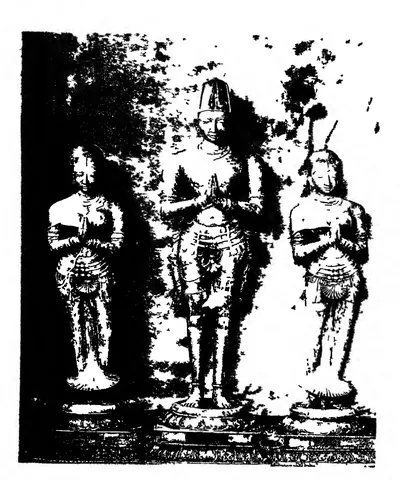 "Chinnadevi", "Krishnaraya-Maharaya" and "Tirumaladevi", copper statues in the Tirumala temple (ASI Annual Report 1911-12, plate LXXVI, figs. 1-3 (PDF p. 354))Historic photograph · 1915
Show all (60)
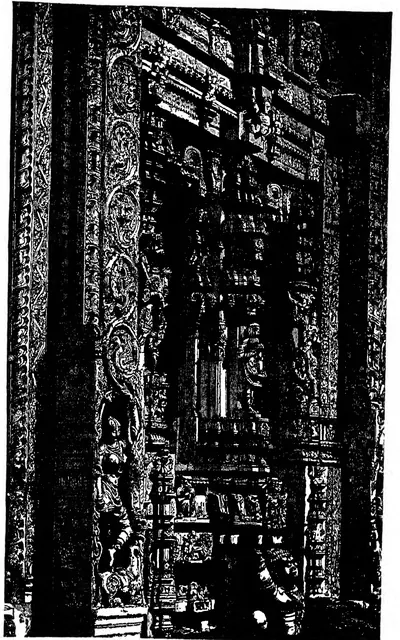 "Entrance through Gopuram at Tadpatri" (Fergusson, rev. 1910, Vol. I, woodcut 237, p. 405 (PDF p. 452))Drawing · 1910
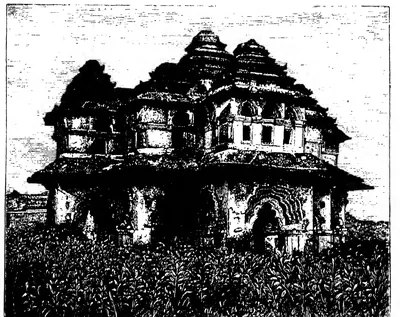 "Garden Pavilion at Vijayanagar" (Fergusson, rev. 1910, Vol. I, woodcut 243, p. 417 (PDF p. 464))Drawing · 1910
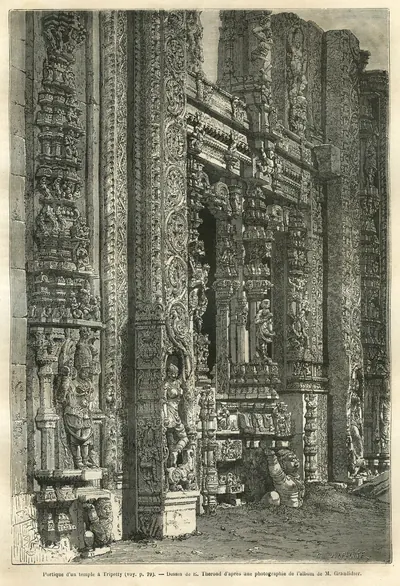 "Gate of the temple at Tripetty", wood engraving by E. Therond, about 1878Drawing · 1878
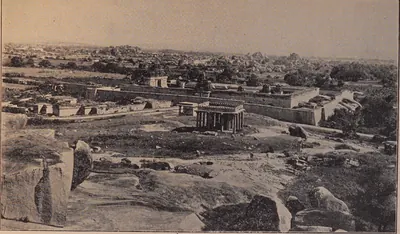 "General view of Krishnapuram showing the Krishna Temple in a high walled enclosure", Hampi (Madras Archaeological Report 1916-17, plate X (PDF p. 249))Historic photograph · 1917
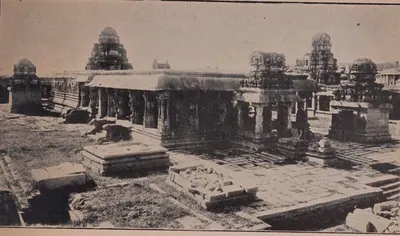 "General view of the Krishna Temple at Krishnapuram", Hampi (Madras Archaeological Report 1916-17, plate XI-a (PDF p. 251))Historic photograph · 1917
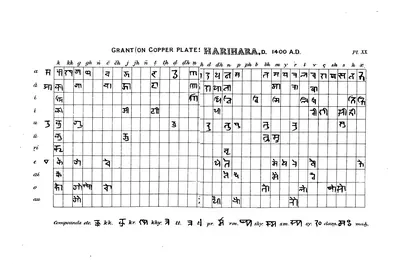 "Grant (on copper plates) of Harihara, d. 1400 A.D." (Burnell, Elements of South-Indian Palaeography, 1878, Pl. XX)Book plate · 1878
 "Hampi Ruins from Hemakutam Hill" (Longhurst, Hampi Ruins, 3rd ed. 1933, fig. 1, frontispiece (PDF p. 14))Historic photograph · 1933
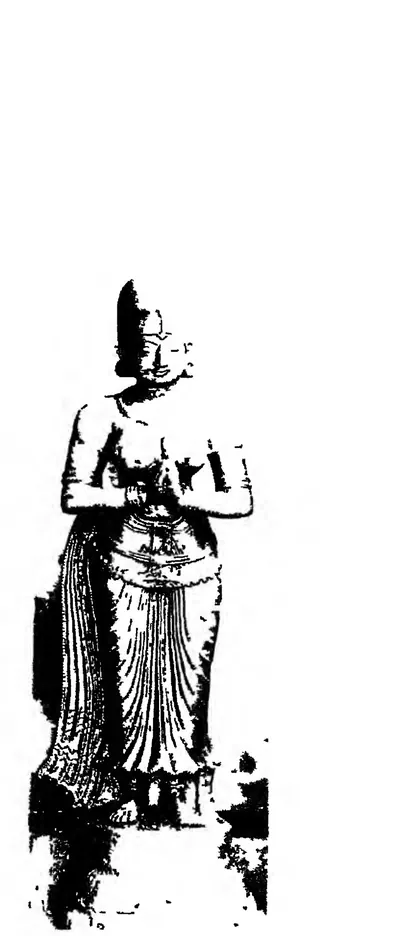 "His queen, perhaps Vengalamba", unlabelled stone image in the Tirumala temple (ASI Annual Report 1911-12, plate LXXVI, fig. 6 (PDF p. 354))Historic photograph · 1915
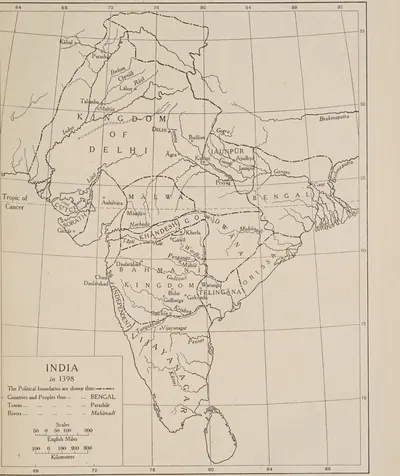 "India in 1398", showing Telingana between the Bahmani kingdom, Orissa and Vijayanagar (The Cambridge History of India, Vol. III, Map 4, between pp. 192 and 193, PDF p. 235 of the archive.org scan cambridgehistory03wols)Map · 1928
 "Interior of the Temple at Vitthalasvami, commenced by Krishna Deva Raya" (from a photograph by Col. W. Hooper) (Sewell 1900, PDF p. 161)Historic photograph · 1900
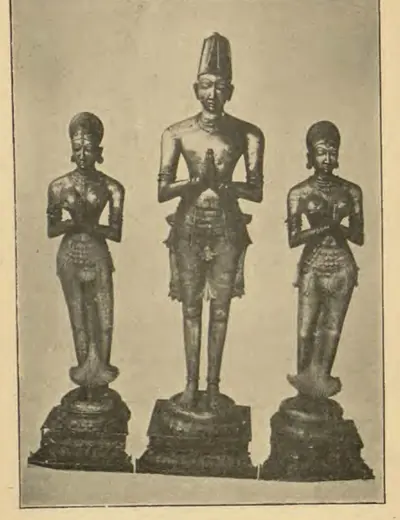 "Metal images of Krishna Raya and his two queens, Tirupati Temple, Chittoor District" (Longhurst, Hampi Ruins, 3rd ed. 1933, fig. 14, p. 42 (PDF p. 56))Historic photograph · 1933
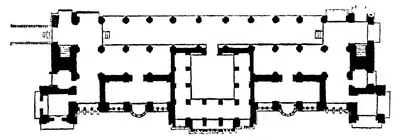 "Plan of the ground floor of Chandragiri Palace (From Drawings by R. F. Chisholm)" (Fergusson, rev. 1910, Vol. I, woodcut 245, p. 418 (PDF p. 465))Plan · 1910
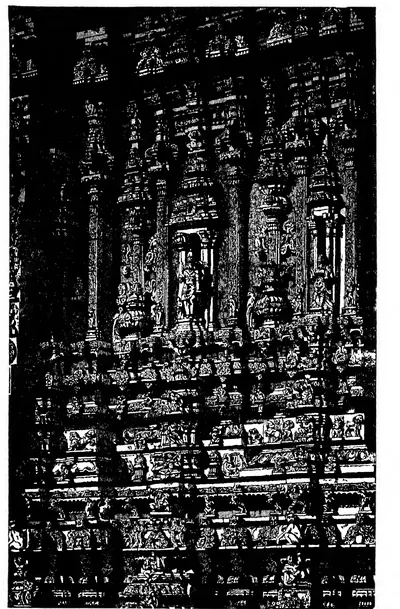 "Portion of Gopuram at Tadpatri" (Fergusson, rev. 1910, Vol. I, woodcut 238, p. 406 (PDF p. 453))Drawing · 1910
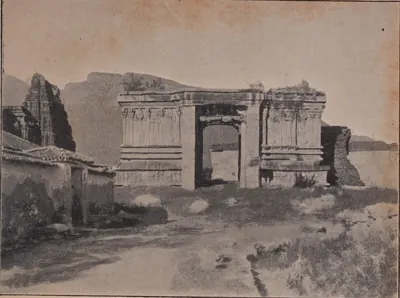 "Raghunayaka Temple, Eastern Gateway", Udayagiri (Madras Archaeological Report 1916-17, plate II-a (PDF p. 233))Historic photograph · 1917
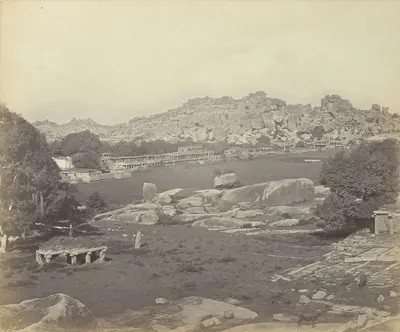 "Ruins of Vijianuggur": the market street in front of the Virupaksha temple (Hampi Bazaar), photographed by Edmund David Lyon about 1868Historic photograph · 1868
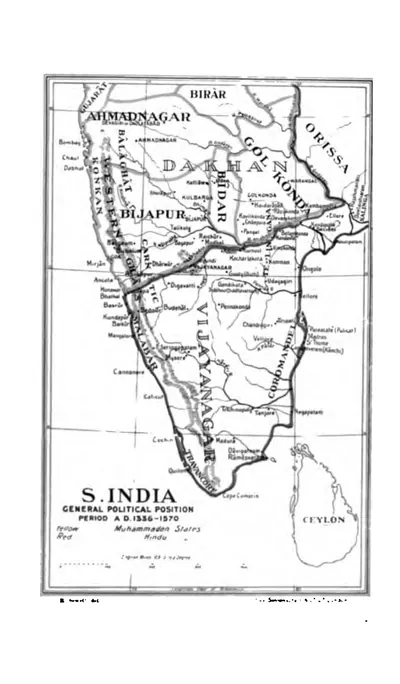 "S. India, General Political Position, Period A.D. 1336-1570" (Sewell 1900, to face p. 1 (PDF p. 38))Map · 1900
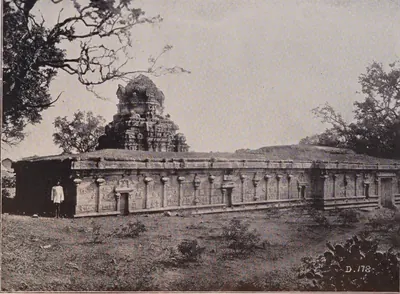 "Siva temple at Penukonda, Anantapur district" (Madras Archaeological Report 1915-16, plate V (b) (PDF p. 165 of the bound volume 31761123499139))Historic photograph · 1916
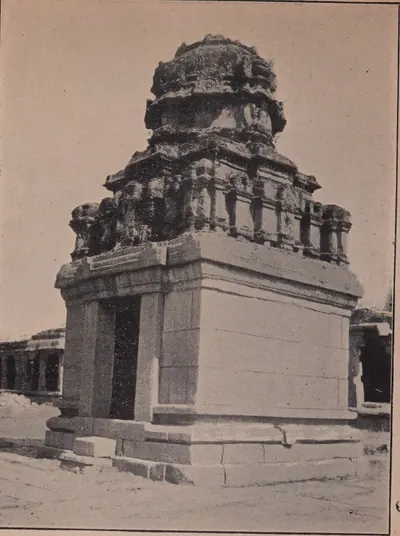 "Small attendant shrine with inscriptions at the Krishna Temple at Krishnapuram" (Madras Archaeological Report 1916-17, plate XII-b (PDF p. 253))Historic photograph · 1917
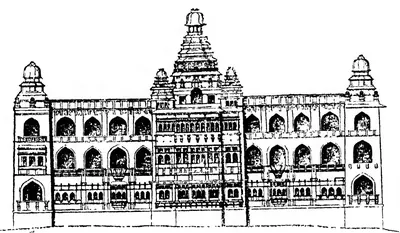 "South Elevation of Chandragiri Palace" (Fergusson, History of Indian and Eastern Architecture, rev. 1910, Vol. I, woodcut 244, p. 418 (PDF p. 465))Drawing · 1910
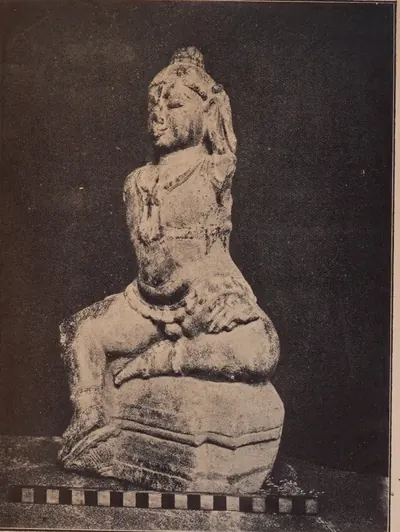 "Stone image of Balakrishna from the Krishna temple at Krishnapuram" (Madras Archaeological Report 1916-17, plate XII-a (PDF p. 253))Historic photograph · 1917
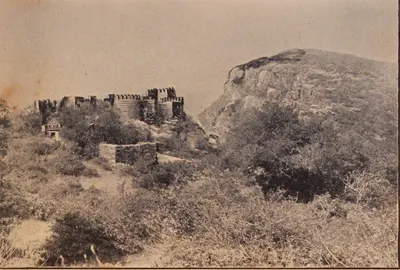 "The Citadel in Udayagiri Fort" (Madras Archaeological Report 1916-17, plate I-b (PDF p. 231))Historic photograph · 1917
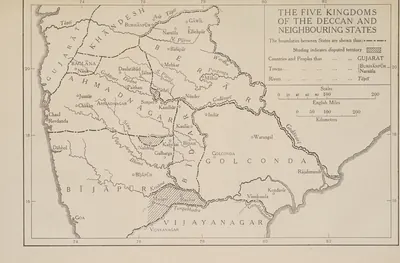 "The Five Kingdoms of the Deccan and Neighbouring States", with Golconda holding Telingana from Warangal to Rajahmundry and Kondavir (The Cambridge History of India, Vol. III (1928), Map 6)Map · 1928
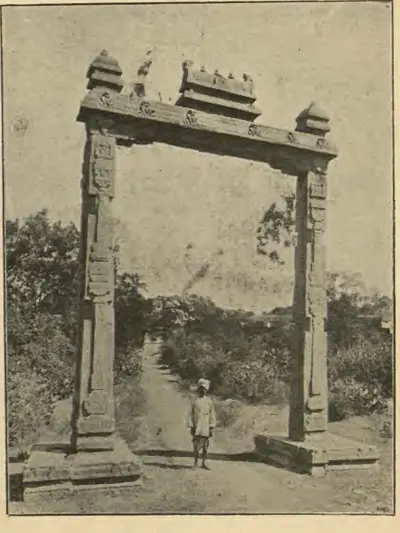 "The King's Balance" (Longhurst, Hampi Ruins, 3rd ed. 1933, fig. 13, p. 40 (PDF p. 54))Historic photograph · 1933
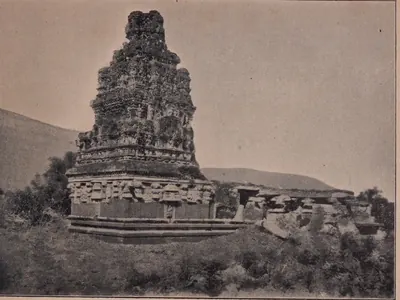 "The Krishna Temple at Udayagiri" (Madras Archaeological Report 1916-17, plate IV-a (PDF p. 237))Historic photograph · 1917
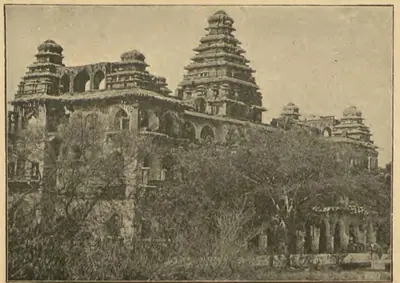 "The Palace at Chandragiri" (A. H. Longhurst, Hampi Ruins Described and Illustrated, 3rd ed. 1933, fig. 6, p. 16 (PDF p. 30))Historic photograph · 1933
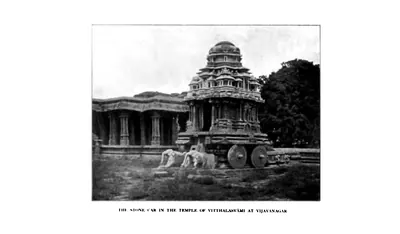 "The Stone Car in the Temple of Vitthalasvami at Vijayanagar" (Sewell 1900, PDF p. 220)Historic photograph · 1900
 "Udayagiri in the Nellore District" (Madras Archaeological Report 1916-17, plate I-a (PDF p. 231 of 31761123499139))Historic photograph · 1917
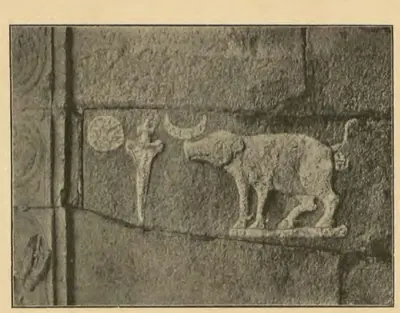 "Varaha or Boar crest of the Vijayanagar Kings" (Longhurst, Hampi Ruins, 3rd ed. 1933, fig. 5, p. 11 (PDF p. 25))Historic photograph · 1933
 "Venkatapatiraya", labelled copper statue at the entrance of the Tirumala temple (ASI Annual Report 1911-12, plate LXXVI, fig. 4 (PDF p. 354))Historic photograph · 1915
 "View of City Gateway, Vijayanagar" (Fergusson, rev. 1910, Vol. I, woodcut 168, p. 311 (PDF p. 352))Drawing · 1910
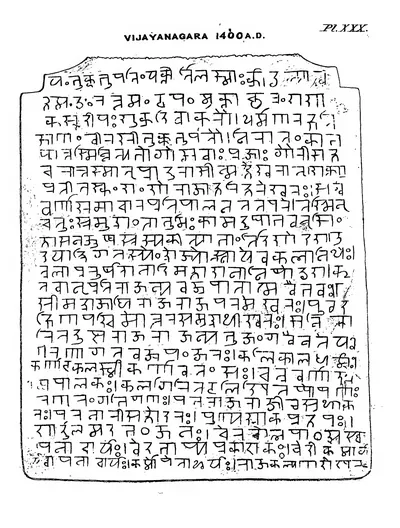 "Vijayanagara 1400 A.D." (Burnell, Elements of South-Indian Palaeography, 1878, Pl. XXX)Book plate · 1878
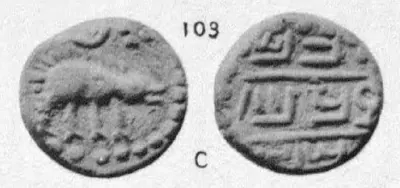 Copper coin No. 103: boar facing right, sword and sun above; legend Chalam Triramala taka (Elliot, Coins of Southern India, 1886, Plate III, No. 103 (PDF p. 191 of scan 00074712bsb))Coin · 1886
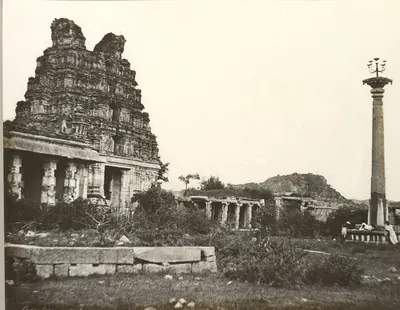 Eastern gopura and lamp column of the Vitthala temple, Hampi, photographed by Alexander Greenlaw in 1856Historic photograph · 1856
 Gold coin attributed to Rama Raja, the "Gandikota pagoda": Vishnu standing under a canopy (V. A. Smith, Catalogue of the Coins in the Indian Museum, Vol. I, 1906, plate XXX, 31 (PDF p. 427))Coin · 1906
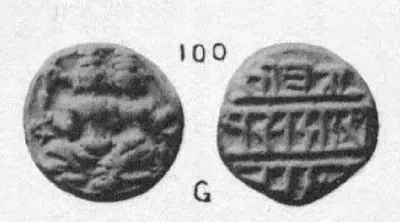 Gold coin No. 100: Siva and Parvati seated; legend Sri Pratapa Sadasiva Raya (Elliot, Coins of Southern India, 1886, Plate III, No. 100 (PDF p. 191 of scan 00074712bsb))Coin · 1886
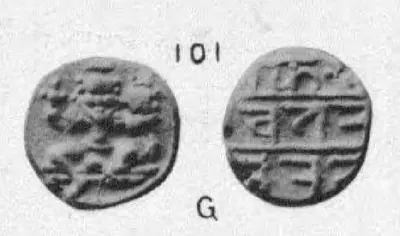 Gold coin No. 101: Siva and Parvati seated; legend possibly Sri Rama Triramala Raya (Elliot, Coins of Southern India, 1886, Plate III, No. 101 (PDF p. 191 of scan 00074712bsb))Coin · 1886
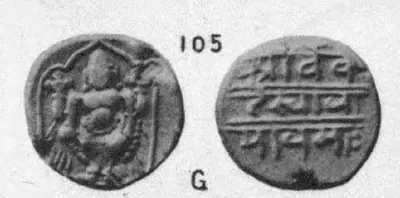 Gold coin No. 105: Vishnu; legend Sri Venkatesvaraya namah (Elliot, Coins of Southern India, 1886, Plate III, No. 105 (PDF p. 191 of scan 00074712bsb))Coin · 1886
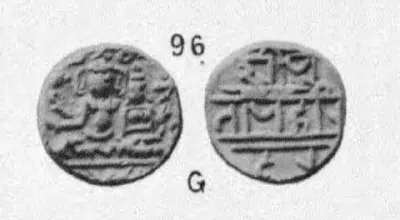 Gold coin No. 96: Siva and Parvati seated; Nagari legend Sri Pratapa Harihara (Elliot, Coins of Southern India, 1886, Plate III, No. 96 (PDF p. 191 of scan 00074712bsb))Coin · 1886
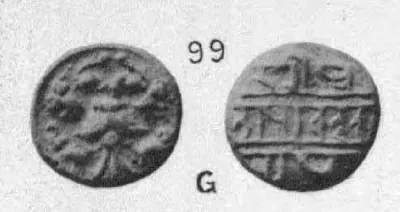 Gold coin No. 99: two-headed Gandabherunda bird holding elephants; legend Sri Pratapa Achyuta Raya (Elliot, Coins of Southern India, 1886, Plate III, No. 99 (PDF p. 191 of scan 00074712bsb))Coin · 1886
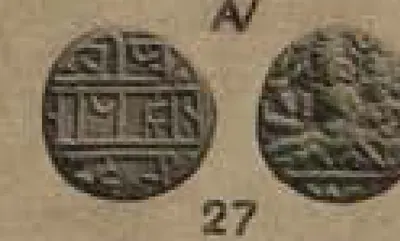 Gold half-pagoda of Krishnadeva Raya: god and goddess seated (V. A. Smith, Catalogue of the Coins in the Indian Museum, Vol. I, 1906, plate XXX, 27 (PDF p. 427))Coin · 1906
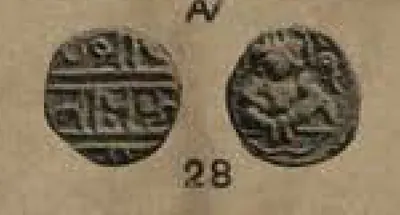 Gold half-pagoda of Krishnadeva Raya: seated Vishnu with shell (V. A. Smith, Catalogue of the Coins in the Indian Museum, Vol. I, 1906, plate XXX, 28 (PDF p. 427))Coin · 1906
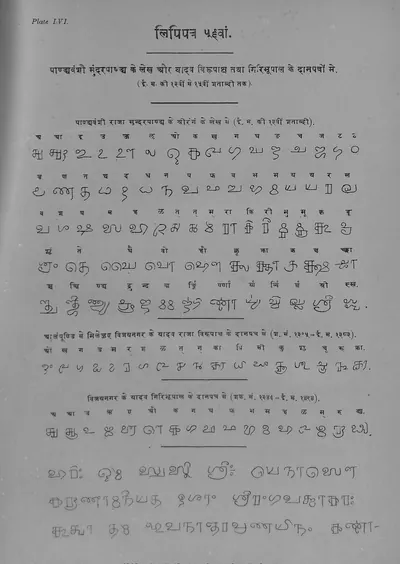 Grantha of the 13th-15th centuries: Srirangam inscription of Sundara Pandya and Vijayanagara grants of 1383 and 1424 (Ojha 1918, Plate 56)Book plate · 1918
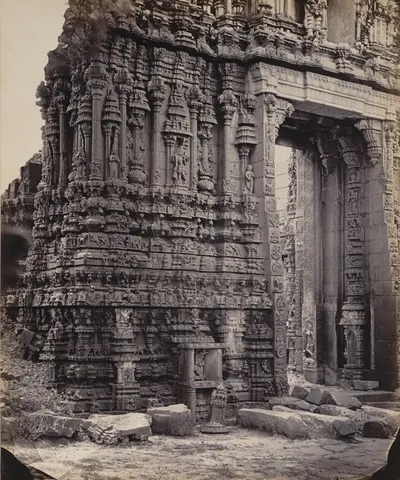 Sculptured base of the south gopura of the Ramalingesvara temple, Tadpatri, photographed by Edmund David Lyon about 1868Historic photograph · 1868
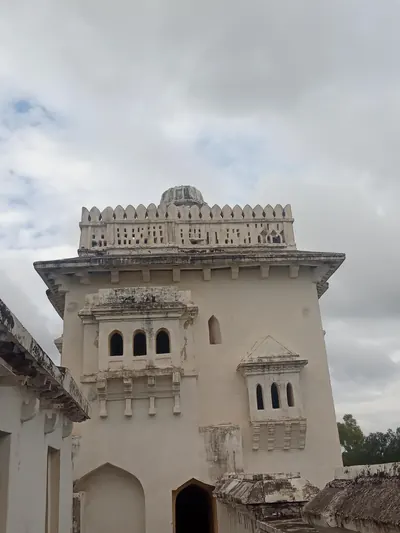 The Gagan Mahal, Penukonda (2019)Photograph · 2019
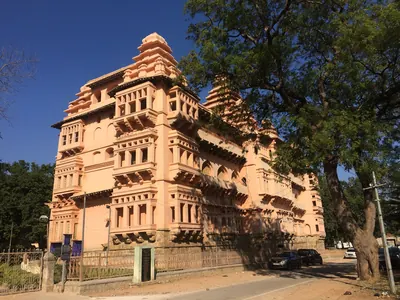 The Raja Mahal at Chandragiri (2017)Photograph · 2017
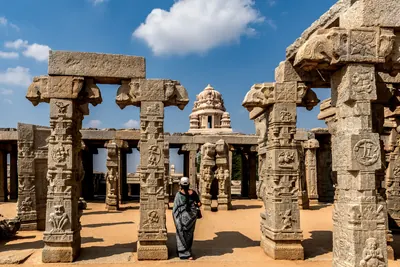 The unfinished kalyana-mandapa of the Virabhadra temple, Lepakshi (2020)Photograph · 2020
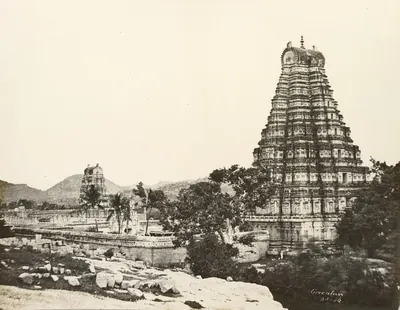 Virupaksha temple complex, Hampi, photographed by Alexander Greenlaw in 1856Historic photograph · 1856
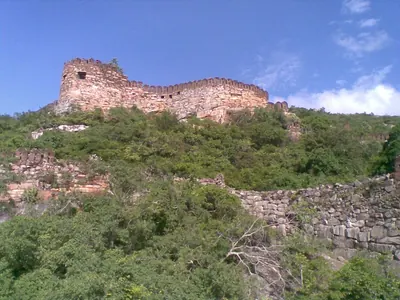 Walls and bastion of the Udayagiri fort on the hill above Udayagiri, Nellore districtPhotograph · 2012
Related
People
Harihara I (Vijayanagara)
c. 1336–1355 CE
First ruler of Vijayanagara and eldest of the five sons of Sangama. With his brother Bukka he founded the kingdom on the Tungabhadra about 1336. His first dated inscription, of 1340, calls him only a mahamandalesvara, 'great lord'. It is disputed whether he and his brothers came from the service of the Kakatiyas of Warangal, of the Rai of Kampili or of the Hoysalas. His brother Kampa held Udayagiri and Nellore, the first Vijayanagara base in the Telugu country.
Bukka I (Vijayanagara)
c. 1355–1377 CE
Second ruler of Vijayanagara, brother and successor of Harihara I, who turned the frontier kingdom into an empire. He fought the Bahmani sultans Muhammad Shah I and Mujahid for the Raichur doab. His son Kumara Kampana destroyed the sultanate of Madura, and his inscriptions boast of driving the Andhras into the hills towards Udayagiri. His minister built the tank of Bukkarayasamudram in the Anantapur country in 1364. Sewell dated his reign 1343–1379 in 1900 and 1355–1377 in 1932.
Deva Raya II (Vijayanagara)
1422–1446 CE
King of Vijayanagara from 1422 or 1423 to 1446, the greatest ruler of the first dynasty. He enlisted Muslim archers in his army, survived an attempt on his life in 1443 and received the Persian envoy Abdur Razzaq. His inscriptions reach the Godavari delta and the Guntur and Nellore country. The Telugu poet Vallabharaya governed Vinukonda for him, and Srinatha was bathed in gold in his Pearl Hall. After his death the Bahmani sultan and the Gajapati of Orissa besieged his capital together.
Saluva Narasimha
c. 1485–1492 CE
Chief of the Saluva family of Chandragiri. He drove the Gajapatis of Orissa back up the coast towards Rajahmundry and faced the Bahmani sultan there in the 1470s. In 1485–86 he took the throne of Vijayanagara from the last Sangama king and founded the second, Saluva, dynasty. He died in 1492–93 and left his young sons in the charge of his general Narasa Nayaka. Whether he recovered Udayagiri from Orissa is disputed.
Krishnadeva Raya
1509–1529 CE
King of Vijayanagara from 1509 to 1529, of the Tuluva dynasty, and the most famous ruler of the empire. In 1512–16 he took Udayagiri, Kondavidu and Kondapalli from the Gajapati Prataparudra. He marched to Simhachalam and married the Gajapati's daughter. In 1520 he defeated the Adil Shah at Raichur. He wrote the Telugu poem Amuktamalyada, in which the god says Telugu is the best of the languages of the land. His court, with Allasani Peddana and Nandi Timmana, began the age of the Telugu prabandha (long narrative poem).
Achyuta Raya
1529–1542 CE
King of Vijayanagara from 1529 or 1530 to 1542, half-brother and successor of Krishnadeva Raya. He was crowned at Tirupati after years of confinement at Chandragiri. He lost Raichur and Mudkal to Bijapur, while Sultan Quli of Golconda attacked Kondavidu. His court poem credits him with a southern campaign and a victory at Raichur. Nuniz, who lived at his capital, called him a tyrant ruled by his two brothers-in-law, the Salakam Tirumalas, whose regency after his death led to civil war.
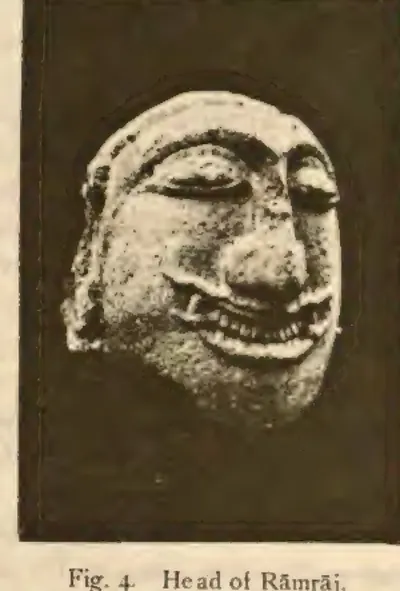
Aliya Rama Raya
1542–1565 CE
Chief of the Aravidu family and son-in-law (aliya) of Krishnadeva Raya. After Achyuta Raya's death, he and his brothers Tirumala and Venkatadri overthrew the regent Salakam Timma. He placed Sadasiva on the throne in 1542 and ruled the empire in his name until 1565. His family's lands lay around Kurnool, Adoni and Gooty, and his governors held Kondavidu. He played the Deccan sultans against each other until they joined against him. He was captured and beheaded in the battle of January 1565.
Tirumala (Aravidu)
c. 1569–1572 CE
Brother of Aliya Rama Raya and the first king of the fourth, Aravidu, dynasty of Vijayanagara. He commanded a wing of the army in the battle of 1565 and lost an eye there. He fled with King Sadasiva and the treasury to Penukonda, which became the capital. He took the throne about 1569–70 and divided the empire into three viceroyalties, the Telugu one under his son Sriranga at Udayagiri and Penukonda. The Telugu poem Vasucharitramu was dedicated to him. Heras dates his death to 1572, Sewell to 1578.
Venkatapati II (Vijayanagara)
1586–1614 CE
King of Vijayanagara from 1586 to 1614, the youngest son of Tirumala and the last strong ruler of the empire. He was chosen king over his young nephews. He ruled first from Penukonda, then from Chandragiri, and from 1606 from Vellore. He fought Golconda for the Telugu country, and the Telugu Ramarajiyamu says peace was made with the Krishna as the boundary. Jesuit missionaries lived at his court, and Tenali Ramakrishna and Tarigoppula Mallana are counted among his poets. His death at Chandragiri in 1614 was followed by a war of succession.
Allasani Peddana
Chief Telugu poet of Krishnadeva Raya's court and first of the Ashtadiggajas (the eight court poets), called Andhrakavitapitamaha, 'grandfather of Telugu poetry'. His Svarochisha Manucharitramu, a story from the Markandeya Purana retold with rich description and dedicated to the king, became the model of the Telugu prabandha (long narrative poem). The king honoured him with the anklet of the champion poet and the village of Kokata, and Peddana mourned him in a famous verse.
Ayyalaraju Ramabhadrudu
Telugu poet of Ontimitta in Kadapa district, counted among the eight poets of Krishnadeva Raya's court. The king asked him to write the Sakalakathasara Sangrahamu, a collection of Puranic stories, but died before it was finished; Ramabhadra later dedicated his Ramabhyudayamu, a poem on Rama, to Gobburi Narasaraja. He was nicknamed Pillala Ramabhadrayya for his many children.
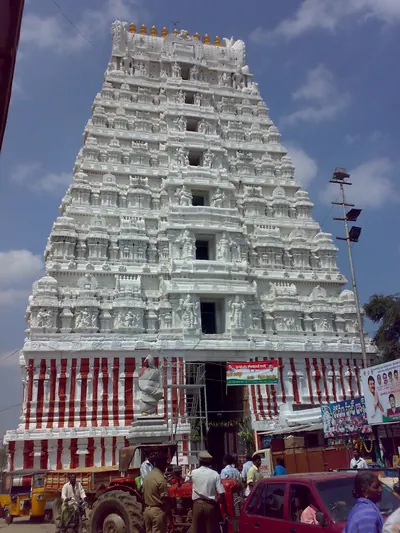
Dhurjati
Telugu Shaiva poet of Srikalahasti, counted among the eight poets (Ashtadiggajas) of Krishnadeva Raya's court. He wrote the Kalahasti Mahatmyamu, a poem on the holy place of Srikalahasti, and the Kalahastisvara Satakamu, a set of devotional verses to its god. Stories about his loose living go back to a verse about the king's question on the sweetness of his style.
Jakkana
Telugu poet of the early 15th century, author of the Vikramarka Charitramu, tales of the legendary King Vikramaditya of Ujjain. He dedicated it to Vennelaganti Siddamantri, whose family was favoured at the court of the Vijayanagara king Devaraya II. K. Sitaramaiya counted him among the later poets who imitated Nannechoda's style.
Madayyagari Mallana
Telugu Shaiva poet of Kondavidu, counted among the eight poets of Krishnadeva Raya's court. His Rajasekhara Charitramu, a story-poem, is dedicated to Nadindla Appa, nephew and son-in-law of the king's minister Saluva Timma, and its opening traces the minister's family. The Rayavachakamu places him with the king after the victory over the sultans.
Mohanangi
Daughter of Krishnadeva Raya of Vijayanagara, remembered in Telugu tradition as a poet and a judge of poetry. She is said to have written the Marichi Parinayamu, a love poem now lost. Court stories make her the princess who bought Sankusala Nrisimha's verses in the market and brought him to the king's notice, and the target of a joke by Tenali Ramakrishna. All that is known of her comes from these stories.
Nachana Somana
Telugu poet at the court of Bukka I of Vijayanagara in the 14th century and author of the Uttara Harivamsamu, a retelling of the later life of Krishna. Critics ranked him with the three poets of the Telugu Mahabharata, and N. Venkataramanayya pointed to him as the only poet in a spoken language known to have been patronised by Bukka.
Nandi Timmana
Telugu poet of Krishnadeva Raya's court and one of the Ashtadiggajas (the eight great poets), popularly called Mukku Timmana. He was a Niyogi Brahman and a Saiva, and a nephew of the poet Malayamaruta. He wrote the Parijatapaharanamu, dedicated to the king, the story of Krishna bringing the parijata tree from heaven for Satyabhama. Its introduction is a source for the careers of Narasa Nayaka and Krishnadeva Raya. Tradition says it was written to reconcile the king with a queen.
Pillalamarri Pinaveerabhadrudu
Telugu poet of the later 15th century at the court of Saluva Narasimha, who became the first king of Vijayanagara's second dynasty. His Jaimini Bharatamu, dedicated to that king, opens with an account of the Saluva family's wars. Many stories grew up around him: that he silenced Srinatha as a boy, and that the goddess Sarasvati wrote his poem in one night.
Ramarajabhushana (Bhattumurti)
Telugu poet of the later 16th century, author of the Vasucharitramu, the story of King Vasu's marriage told in verse full of double meanings, which became the model for later poets. His title means 'ornament of Rama Raja's court'; his own name was Bhattumurti. He dedicated the Vasucharitramu to Tirumala Raya and a book on poetics, the Narasabhupaliyamu, to Rama Raya's nephew. Scholars long argued whether the two names belong to one poet.
Saluva Timma (Timmarasu)
Chief minister of Vira Narasimha and of Krishnadeva Raya of Vijayanagara, known in Telugu tradition as Timmarasu and Appaji, 'father'. Nuniz says he saved Krishnaraya from being blinded and made him king. He managed the campaign against Orissa, took Kondavidu in 1515 and governed it through his family, the Nadindla brothers. Nuniz says the king later blinded and imprisoned him, suspecting him of poisoning the young prince. Telugu tradition makes the king and his minister the heroes of many tales.
Tarigoppula Mallana
Telugu poet of the late 16th and early 17th centuries, author of the Chandrabhanu Charitramu, the story of the marriage of Krishna's son Chandrabhanu. He belonged to the circle of the Vijayanagara king Venkatapati Raya at Chandragiri, where his elder brother Datta Mantri was a minister.
Tenali Ramakrishna
Telugu poet, author of the Panduranga Mahatmyamu. Tradition counts him among the Ashtadiggajas of Krishnadeva Raya's court, and he is famous throughout the Telugu country as a jester. The record is thin. He first wrote as Tenali Ramalinga, a Saiva, before turning Vaishnava. The evidence of his patrons and contemporaries places him in the later sixteenth century, at the court of the Aravidu kings, rather than under Krishnadeva Raya. The jests told of him are folklore.
Vinukonda Vallabharaya
Telugu poet of the 15th century, governor of Vinukonda under the Vijayanagara king Devaraya II, named as the author of the Kridabhiramamu, a lively tour of the streets of Warangal told as a play. His family served the Vijayanagara kings from Bukka I onward as ministers, generals and keepers of the royal jewels. P. T. Raju and K. Sitaramaiya give the Kridabhiramamu to Srinatha instead.
Monuments
Penukonda fort and Gagan Mahal
1354 CE
The hill fort of Penukonda, its half-circle of walls on the plain, the Gagan Mahal palace and the Rama and Isvara temples inside it. An inscription at the north gate dates the building of the fort to 25 March 1354, under Bukka I's son Virupanna. Another, of 1576–77, records that Channappa Nayudu built an inner fort, gates and bastions for Tirumala. The Gagan Mahal and its pavilion are in the arched 'Indo-Saracenic' style of the palace buildings at Hampi, and the two temples carry Ramayana and Purana reliefs.
Kalahastisvara temple, Srikalahasti
1516 CE
Siva temple of the wind linga at the foot of the southern hill of Srikalahasti. It has Chola inscriptions, and a hundred-pillared hall and great gopura (gate tower) that a Telugu inscription of 1516 credits to Krishnadeva Raya. The North Arcot manual says the Chola kings and Krishnadeva Rayalu extended it. Fergusson's revisers list its wind linga among the Pancha-lingams, the five notable symbols of Siva in southern India.
Virabhadra temple, Lepakshi
1538 CE
Temple of Virabhadra on a low rocky hill at Lepakshi in the Anantapur district. It has a double enclosure with a pillared cloister, an unfinished kalyana-mandapa (wedding hall) and a great hall of some sixty carved pillars, whose ceiling is covered with paintings of the epics and Puranas. An inscription by the main entrance dates its building to 1538. Its records of 1533–1538, in the reign of Achyuta Raya, name its builder Virupanna of Penukonda. Local tradition makes him a treasurer of Krishnadeva Raya who blinded himself at the king's order. A colossal bull carved from one stone lies near it.
Chandragiri fort and Raja Mahal
The hill fort of Chandragiri near Tirupati, with its walled enclosure on the plain and the two palaces inside it, the three-storeyed Raja Mahal (King's Palace) and the smaller Rani Mahal. Local tradition makes the fort as old as 1000, and says that Venkatapati enlarged it and built a palace when he moved from Penukonda. The architect R. F. Chisholm judged the King's Palace seventeenth- or early eighteenth-century work. The Archaeological Department in 1920 dated fort and palaces by their style to the seventeenth century.
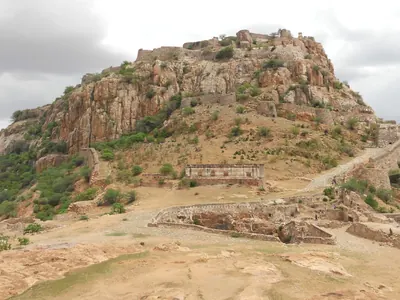
Gooty fort
Hill fortress on a ring of rocky hills at Gooty in the Anantapur district. An outer rampart runs round the town, and a citadel stands on a steep rock 2,105 feet above the sea, reached by a winding paved path through fourteen gateways. Western Chalukya inscriptions of 1121–23 and a verse praising king Bukka of Vijayanagara are cut on its summit. Local belief credited Krishnadeva Raya with building it, which the Anantapur gazetteer rejected. Morari Rao, Haidar Ali and the Company held it in turn.
Narasimha temples, Ahobilam
The temples of Narasimha at Lower (Diguva) and Upper Ahobilam, in the Nallamalai hills of the Kurnool district. Lower Ahobilam has a large unfinished mandapa (pillared hall). Fergusson's revisers compared its plan with the Vitthala temple at Vijayanagara but its style with Nayak work, and rejected a local tradition that gave it to Prataparudra about 1300. Inscriptions of Achyuta Raya, Sadasiva, Sriranga I and Venkatapati record halls, a pillar of victory and a Garuda pillar. They also record how the temple was recovered after the Golconda king had occupied it for seven years.
Venkatesvara temple, Tirumala
Temple of Venkatesvara (Srinivasa-Perumal) on the Tirumala hill above Tirupati. Its walls carry inscriptions of Krishnadeva Raya of 1514 and of his queens of 1512–13. It keeps copper statues of the king and his queens Chinnadevi and Tirumaladevi, which the Telugu Rayavachakamu says he set up before the god, and a labelled copper statue of Venkatapati. Fergusson's revisers thought the temple itself 'a fair specimen of a Dravidian temple of the second class'.
Inscriptions
Penukonda fort inscription (1354)
1354 CE
A Kanarese (Kannada) inscription on a bastion of the north gate of Penukonda fort. It is dated Saka 1276, Jaya, which E. Hultzsch equated with 25 March 1354. It records that the minister Anantarasa built the fort while Bukka I ruled and his son Virupanna governed the province of Penugonde. It is the earliest dated record of the town, and it shows that a prince of the first Vijayanagara dynasty lived there.
Gooty rock inscription of Bukka I
c. 1355 CE
A single Sanskrit verse cut on a rock near the top of the Gooty fort in the Anantapur district. It praises 'Gutti-durga, the king of forts' as the centre of the wheel of king Bukka's rule over the earth. It compares the rock to Vishnu's conch with right-turning whorls. E. Hultzsch, who edited it in 1890, took the king to be Bukka I of Vijayanagara. Sewell's lists of 1882 had suggested an officer of Krishnadeva Raya.
Bitragunta grant of Sangama II (1356)
1356 CE
Five copper plates kept in the Collector's office at Nellore, edited by H. Krishna Sastri in 1895. They record a gift to Brahmans by Sangama II, son of Kampa, in Saka 1278 (1356). He gave the village of Bitragunta near Kavali, renamed Srikanthapura, and Simkesari near Pushpagiri in the Cuddapah country. The grant names all five sons of Sangama I, and it makes Kampa, not Bukka, the successor of Harihara I. Krishna Sastri concluded that Sangama II held parts of the Nellore and Cuddapah districts without accepting his uncle Bukka I as overlord.
Bukkarayasamudram tank inscription (1364)
1364 CE
A Kanarese (Kannada) inscription on a stone at Bukkarayasamudram, the great tank at Anantapur. It is dated Saka 1286, Krodhin (1364), in the reign of Bukka Raya of Vijayanagar. As V. Rangacharya summarised it in 1919, it records that the minister Anantarasa Udayar dug the tank and built a temple of Sankara on its banks. The Telugu chronicle translated by C. P. Brown as 'The Wars of the Rajas' gives the same year but names the builder Chikkappa Wadeyar.
Tirumala inscriptions of Krishnadeva Raya and his queens (1513–1514)
1513–1514 CE
Telugu, Kannada and Tamil inscriptions on the walls of the first and second enclosures of the Venkatesvara temple on the Tirumala hill. Two of Saka 1434 (1512–13) record gifts by Krishnadeva Raya's queens Chimnaji Amma and Tirumalamma. Four of Saka 1436 (1514–15) are in three languages, and one of them mentions his attack on Prataparudra Gajapati, his pursuit of him to Kondavidu and his capture of Udayagiri. The temple also keeps the copper statues of the king and his two queens, which the Telugu Rayavachakamu says he set up before the god.
Amaravati inscription of Krishnadeva Raya (1515)
1515 CE
A Sanskrit verse inscription in Telugu letters on a slab in the Amaresvara temple at Amaravati, edited by H. Luders in 1903. It praises Krishnadeva Raya as the conqueror of Sivanasamudram, Udayagiri, Vinukonda and Bellamkonda, who took Kondavidu after capturing the Gajapati's son Virabhadra alive. It records that in Saka 1437 (1515) the king performed the tulapurusha gift (giving away his weight in gold) and gave agraharas (Brahmin villages) before the god Amaresa on the bank of the Krishna. It was the first inscription found to describe his eastern campaign.
Mangalagiri and Kaza pillar inscriptions (1515–1518)
1515–1518 CE
Two four-sided pillars in the Guntur country, one lying near the steps of the hill temple at Mangalagiri and the other in the Kodandaramasvamin temple at Kaza. They carry almost the same Sanskrit text of about 257 lines. H. Luders edited them in 1901. They record that Saluva Timma, minister of Krishnadeva Raya, took Kondavidu from the Gajapati's governors on 23 June 1515. They also list the gifts that his nephews Nadindla Appa and Gopa made as governors of Vinukonda and Kondavidu between 1516 and 1518.
Simhachalam inscriptions of Krishnadeva Raya (1516–1519)
1516–1519 CE
Three Telugu inscriptions of Krishnadeva Raya in the Varaha-Narasimha temple at Simhachalam near Visakhapatnam. They are on the base of the asthana-mandapa (audience hall) and on a round pillar of the verandah round the central shrine. They are dated Saka 1438 (1516) and 1441 (1519). They record that the king, after subduing Udayagiri, Kondavidu, Kondapalli and Rajahmundry on his 'first campaign', came to Simhadri. For the merit of his parents he gave the god a necklace of 991 pearls and other jewels. His queens Chinnadevi and Tirumaladevi also made gifts, and later the king gave several villages.
Srikalahasti inscription of Krishnadeva Raya (1516)
1516 CE
A Telugu inscription on the west wall of the second enclosure of the Kalahastisvara temple at Srikalahasti. It is dated Saka 1438, Dhatri (1516), in the reign of Krishnadeva Raya. As V. Rangacharya summarised it in 1919, it refers to the king's conquests, his visit to Kalahasti and his building of the hundred-pillared mandapa (hall) and the big gopura (gate tower) of the temple. The Telugu Rayavachakamu instead dates the king's grants at Kalahasti to the cyclic year Srimukha.
Kondavidu pillar inscription of Nadindla Gopa (1520)
1520 CE
A four-sided pillar near the agrahara (Brahmin village) at Kondavidu, inscribed in Sanskrit and Telugu. H. Luders edited it with H. Krishna Sastri in 1901. It is dated at a lunar eclipse on 2 May 1520. It records that Nadindla Gopa, governor of Kondavidu and nephew of Saluva Timma, rebuilt the temple of Raghunayaka at Kondavidu. He gave the temple the customs on goods on every road of the Kondavidu country, with a list of rates for some fifty articles. The record curses Odda, Telugu and Turuka kings who might break the grant.
Lepakshi temple inscriptions of Achyuta Raya's reign (1533–1538)
1533–1538 CE
Some fifteen Sanskrit and Kannada inscriptions on the walls of the Virabhadra temple at Lepakshi in the Anantapur district. They were copied in 1912 and are dated between Saka 1455 and 1460 (1533–1538), in the reign of Achyuta Raya. They record gifts of villages, tolls and lands to the shrines of Virabhadra (Viresvara), Papavinasa and Raghunatha. The givers were Virupanna (Virappannayya) of Penukonda and his brother Virana Nayaka, sons of Nandi Lakkisetti of Lepakshi, and the king himself. Local tradition makes Virupanna a treasurer of Krishnadeva Raya.
Kanuma grant of Sadasiva (1548)
1548 CE
Five copper plates with a boar seal, held by the Collector of Anantapur and edited by S. V. Viswanatha in 1918. They record a gift by the Vijayanagara king Sadasiva in Saka 1470 (1548). He gave the village of Kanuma, in Mundimadugu sima of Gutti valita, to the god Chennakesava and thirty shares of Brahmans. The gift was made at the request of the chief Appalaraja, in the presence of the god Vitthalesvara on the Tungabhadra. Its editor called it the earliest copper-plate grant of Sadasiva then known.
Penukonda inscription of Channappa Nayudu (1577)
c. 1577 CE
An inscription on the south wall of the Anjaneya temple at the north gate of Penukonda fort. It is dated Saka 1499, Dhatri (1576–77), in the reign of Sriranga I. It records that Channappa Nayudu, an officer of Tirumala, built an inner fort, gates, bastions and trenches at Penukonda for Tirumala. He beat off Muslim generals in 1566–67, 1568–69 and 1576–77. The record ends by calling Penukonda a city built by a god, whose walls no man could boast of conquering. H. Krishna Sastri read it as proof that Tirumala held Penukonda before the battle of 1565.
Ahobilam inscription of Sriranga I (1584)
1584 CE
A Telugu inscription on a slab at the Narasimha temple in Lower Ahobilam, Kurnool district. It is dated Saka 1506 (1584), in the reign of Sriranga I, 'ruling at Penugonda'. V. Rangacharya summarised it in 1919. It grants rights in the temple to the chief Venkataraja, because his grandfather had driven out 'Vibhuramu', the Golconda king Ibrahim. Ibrahim had occupied the temple for seven years, in alliance with the Hande chiefs. A companion slab of 1585, of Venkatapati, records the same chief's gift to the temple.
References
Notes (0)
Sources (12)
Spotted an error on this page? Tell us
Last updated: