Dowleswaram anicut
The masonry dam across the Godavari at Dowleswaram, at the head of the delta. Arthur Cotton designed it, and it was built in 1847–52 in four sections joined by the river islands, about 4,000 yards long. Its crest was raised in 1862–67, and again, with self-acting iron shutters, in 1897–99. By 1903–04 its three canal systems watered 662,000 acres of the Godavari delta.
The Godavari gazetteer (1907) praises the Godavari anicut (dam).1 It says the anicut “was the first of any real magnitude to be built by Europeans in this Presidency (the Cauvery system was an elaboration of native enterprize)”.1 It calls it “one of the greatest triumphs of engineering skill in all India”.1
According to the gazetteer, its “conception” (idea) “was due to the genius of Sir Arthur Cotton”.2 But the idea of a dam across the river went back to the astronomer Topping in 1789.2 The Special Commissioner Sir Henry Montgomery revived it in 1844.2 Cotton reported on it in 1845, and the Court of Directors sanctioned the project in a despatch (official letter) of 23 December 1846.2 See Arthur Cotton and Dowleswaram.
Building, 1847–1852
The river at the chosen site was nearly four miles wide.23 But islands took up more than a third of the width, and they divided the river into four branches: Dowleswaram, Rali, Maddur and Vijesvaram.3 The dam across them was about 4,000 yards long.34 It was built on the sand of the river bed, with a long apron (sloping floor) of rough stone behind it.34
Work began in April 1847.4 By July, 10,200 labourers, 500 carpenters and as many smiths had been gathered.4 A railway was laid from the quarry to the river.4
Captain C. A. Orr carried on the work when Cotton went home on leave in 1848.56 The last gap, in the Rali branch, was closed on 23 April 1850 after a hard struggle with the river.56 In the gazetteer’s words, “the great anicut was thus at last an accomplished fact”.56 Some under-sluices collapsed in June 1850, and after that the work was finally completed by 31 March 1852.56
Morris’s Godavari manual (1878) quotes the Government’s order of 1852 that the anicut “may now be said to have arrived at completion”.7 See East India Company.
Under the Crown
The dam was repaired and raised many times.6 The only serious accident to the anicut itself came on 14 November 1857.6 Part of the Maddur section then sank into a scour-hole (a hole dug by the current).6 It had to be rebuilt behind a dam thrown across the river above it.6
Between 1862 and 1867 the masonry was raised by two feet, at a cost of nearly three lakhs.6 In 1897–99 it was raised by a further nine inches of Portland cement concrete.6 On this, self-acting cast-iron shutters two feet high were fixed.6 Locks and sluices were rebuilt after floods in 1878 and 1886, and new under-sluices were begun in 1903.8
In 1903–04 the anicut fed three canal systems.9 They had 493 miles of navigable main canals and 1,929 miles of distributaries (branch channels), and watered 662,000 acres.9 Its capital cost to that year was 135 lakhs, and its net revenue was some 17 to 18 per cent.9 See British Crown (Madras Presidency) and Godavari delta works.
Footnotes
-
F. R. Hemingway, Madras District Gazetteers: Godavari, Vol. I (1907), p. 79 (archive.org (opens in a new tab)). ↩ ↩2 ↩3
-
Hemingway, Godavari (1907), p. 80 (archive.org (opens in a new tab)). ↩ ↩2 ↩3 ↩4 ↩5
-
Hemingway, Godavari (1907), p. 81 (archive.org (opens in a new tab)). ↩ ↩2 ↩3 ↩4
-
Hemingway, Godavari (1907), p. 82 (archive.org (opens in a new tab)). ↩ ↩2 ↩3 ↩4 ↩5
-
Hemingway, Godavari (1907), p. 83 (archive.org (opens in a new tab)). ↩ ↩2 ↩3 ↩4
-
Hemingway, Godavari (1907), p. 84 (archive.org (opens in a new tab)). ↩ ↩2 ↩3 ↩4 ↩5 ↩6 ↩7 ↩8 ↩9 ↩10 ↩11
-
Henry Morris, A Descriptive and Historical Account of the Godavery District (1878), p. 138 (archive.org (opens in a new tab)). ↩
-
Hemingway, Godavari (1907), p. 85 (archive.org (opens in a new tab)). ↩
-
Imperial Gazetteer of India: Madras, Vol. I (1908), p. 165, s.v. Godavari Canals (archive.org (opens in a new tab)). ↩ ↩2 ↩3
Photos
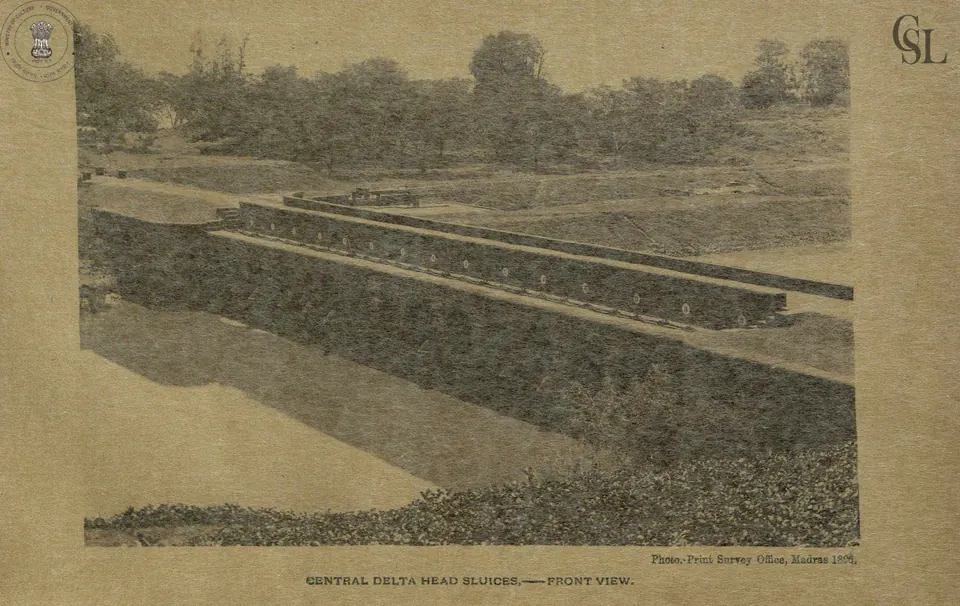
 "Central Delta Head Sluices - front view" (Walch 1896, PDF p. 89)Historic photograph · 1896
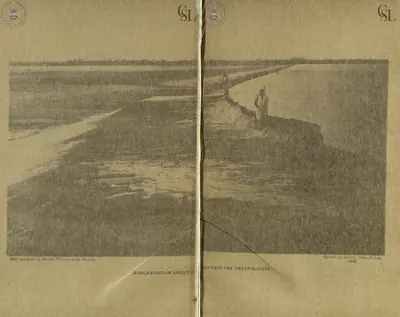 "Dowlaishveram Anicut from near the under sluices" (photograph by Messrs. Nicholas & Co., two halves joined) (Walch 1896, PDF pp. 81-82)Historic photograph · 1896
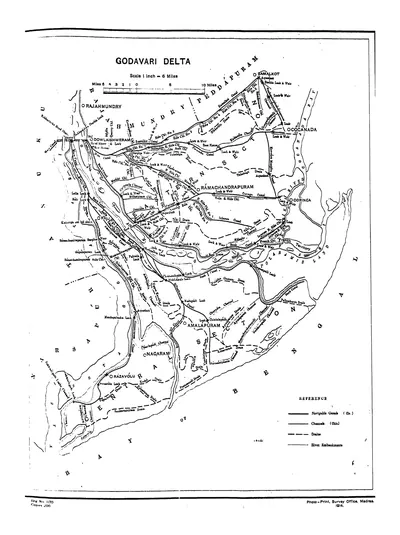 "Godavari Delta" map, with navigable canals, channels, drains and river embankments (Hemingway 1907, PDF p. 97)Map · 1907
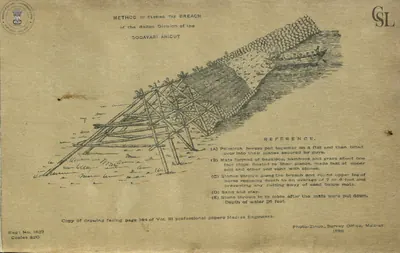 Godavari anicut: "Method of closing the breach of the Ralli division of the Godavari anicut" (Walch 1896, PDF p. 68)Drawing · 1896
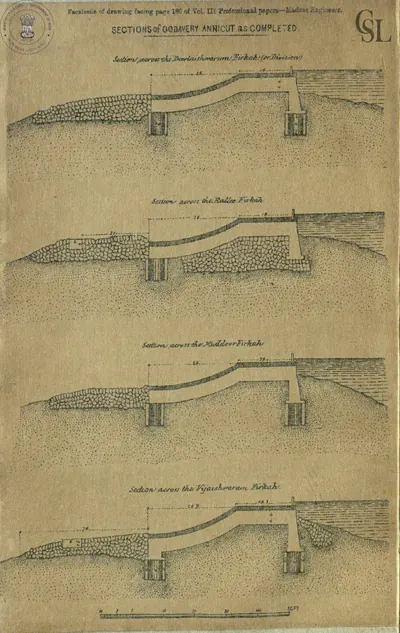 Godavari anicut: "Sections of Godavery Annicut as completed" (facsimile from Professional Papers, Madras Engineers, vol. III) (Walch 1896, facsimile, PDF p. 45)Drawing · 1896
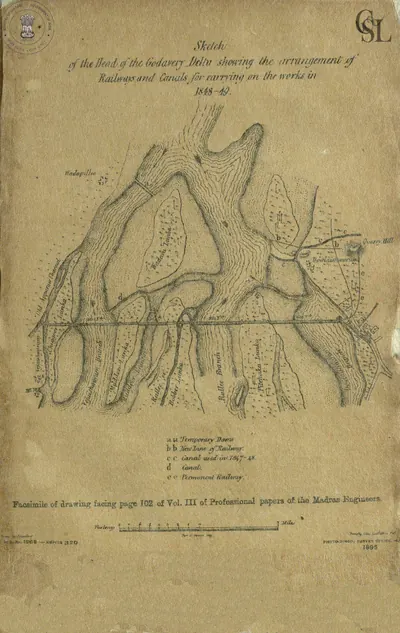 Godavari delta: "Sketch of the Head of the Godavery Delta showing the arrangement of" railways and canals for carrying on the works in 1848-49 (Walch 1896, facsimile, PDF p. 58)Map · 1896
References
Notes (0)
Sources (3)
Spotted an error on this page? Tell us
Last updated: