Choundesvara Temple, Kondaparti
A temple of Choundesvara and a tank, the Chaunda-samudra, at Kondaparti near Warangal. Both were built by Chaunda of the Malyala family, a general of the Kakatiya king Ganapatideva. His inscription there of 1203 records his part in Ganapatideva's conquest of the Divi island.
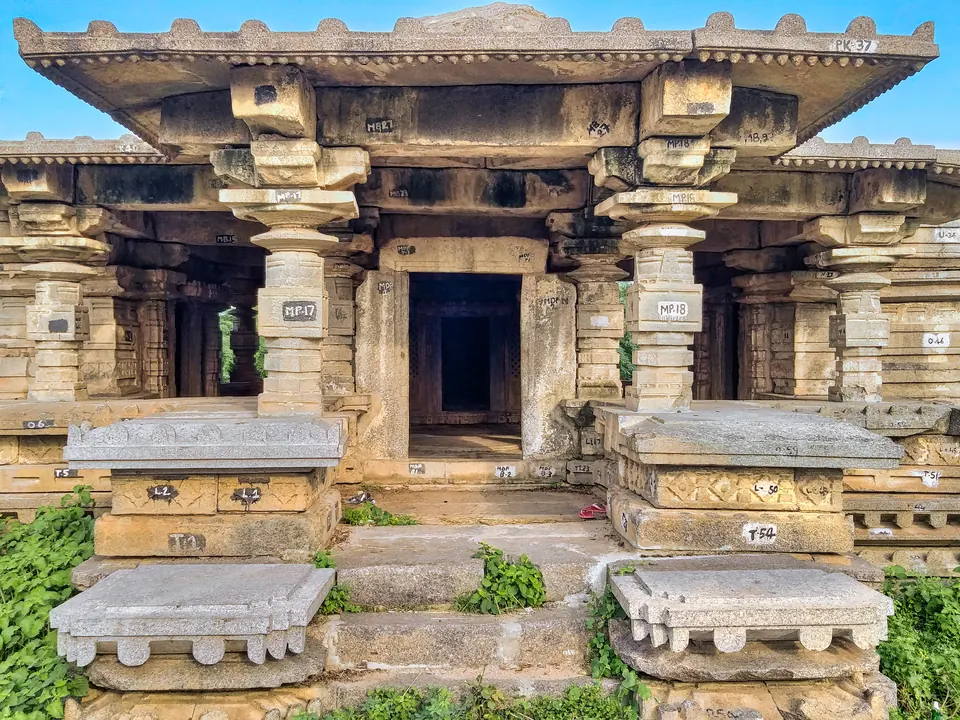
Kondaparti lies about 12 km from Warangal.1 S. Gopalakrishna Murthy, writing in 1964, records that Chaunda, a general of Ganapatideva, dug a tank at Kondaparti, south of Hanamkonda.23 Chaunda also built a temple of Choundesvara there in 1203.23
Murthy describes the temple as built on the plan of the thousand-pillared temples.23 It has carving on its pilasters and three door-keeper figures on either side of the shrine door.23 He noted a broken figure of Sarasvati dancing on her swan.23 Near the bund (embankment) of the tank, which he calls Choundasamudram, stands a two-armed Ganesha.3
Chaunda and his inscription
P. V. Parabrahma Sastry (1978) names the tank Chaunda-samudra and its builder Chaunda-senapati, commander of Ganapatideva’s armies.1 Chaunda’s wife Mailama dug another tank, at Katakuru in Karimnagar district.1 The Malyala chiefs, to whom Chaunda belonged, are known mainly from the Kondaparti records and from Mailama’s Katakuru inscription. According to the family history in the Kondaparti inscription, the family descended from Dannaya.45 Dannaya’s grandson Kata commanded Rudradeva’s armies.45 The inscription of 1203 describes how the Kakatiya army plundered the Divi island at the mouth of the Krishna and enriched Ganapatideva’s treasury with its diamonds. Sastry gives Chaunda the chief credit for this campaign.65 For it the king gave him a title for the conquest of the island.65 See the Kondaparti inscription of Malyala Chaunda.
Footnotes
-
Parabrahma Sastry, The Kakatiyas of Warangal (1978), p. 206 (archive.org (opens in a new tab)). Cite-only; paraphrased. ↩ ↩2 ↩3
-
S. Gopalakrishna Murthy, The Sculpture of the Kakatiyas (Andhra Pradesh Government Archaeological Series 34, n.d.; preface dated 1964), p. 20 (archive.org (opens in a new tab)). Public domain in India; paraphrased. ↩ ↩2 ↩3 ↩4 ↩5
-
Gopalakrishna Murthy, The Sculpture of the Kakatiyas (n.d.; preface dated 1964), p. 21 and fig. 13 (archive.org (opens in a new tab)). Public domain in India; paraphrased. ↩ ↩2 ↩3 ↩4 ↩5 ↩6
-
Parabrahma Sastry, The Kakatiyas of Warangal (1978), p. 149 (archive.org (opens in a new tab)). Cite-only; paraphrased. ↩ ↩2
-
Parabrahma Sastry, The Kakatiyas of Warangal (1978), p. 150 (archive.org (opens in a new tab)). Cite-only; paraphrased. ↩ ↩2 ↩3 ↩4
-
P. V. Parabrahma Sastry, The Kakatiyas of Warangal (1978), p. 107 (archive.org (opens in a new tab)). Cite-only; paraphrased. ↩ ↩2
Photos
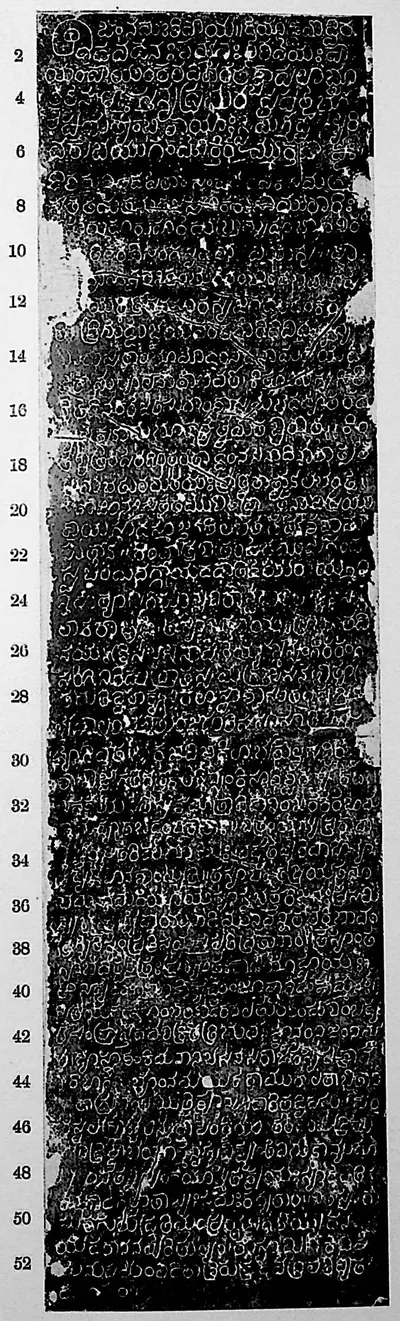 "Koṇḍiparti inscription of Cauṇḍa", face I (Sreenivasachar, Corpus of Inscriptions in the Telingana Districts II, Plate 11 (PDF p. 242))Inscription rubbing · 1940
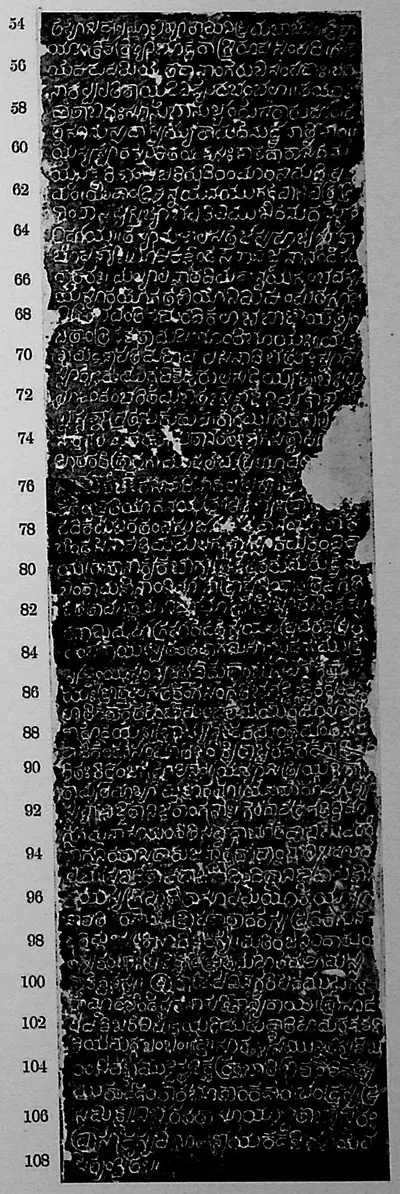 "Koṇḍiparti inscription of Cauṇḍa", face II (Sreenivasachar, Corpus of Inscriptions in the Telingana Districts II, Plate 11 (PDF p. 242))Inscription rubbing · 1940
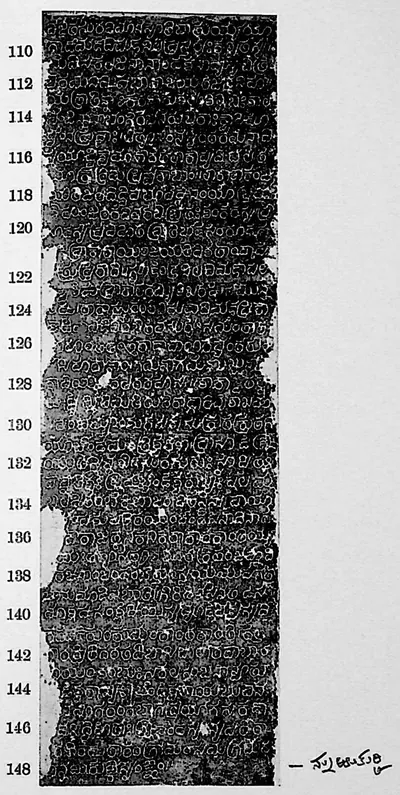 "Koṇḍiparti inscription of Cauṇḍa", face III (Sreenivasachar, Corpus of Inscriptions in the Telingana Districts II, Plate 12 (PDF p. 244))Inscription rubbing · 1940
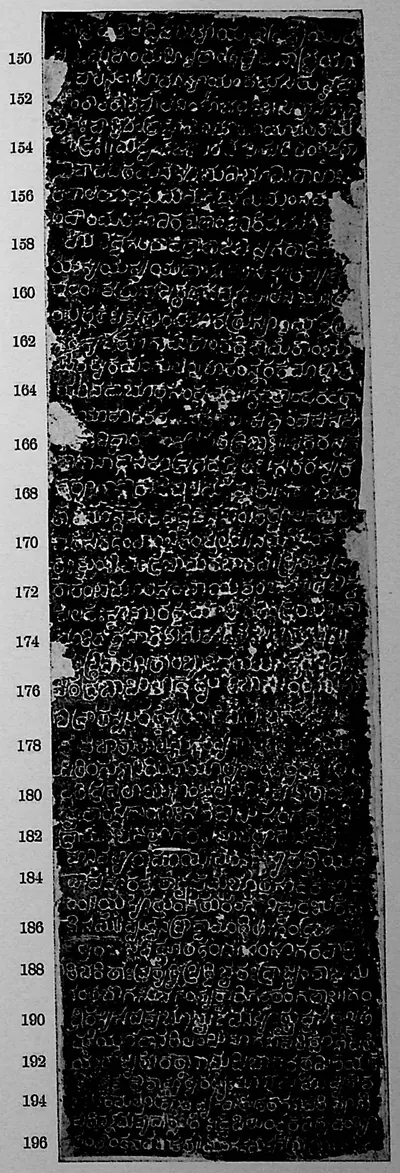 "Koṇḍiparti inscription of Cauṇḍa", face IV (Sreenivasachar, Corpus of Inscriptions in the Telingana Districts II, Plate 12 (PDF p. 244))Inscription rubbing · 1940
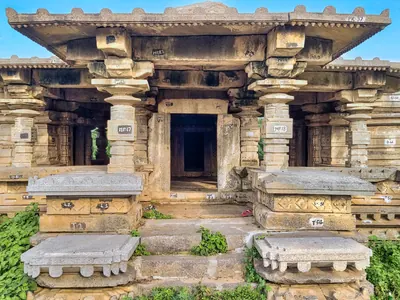 Trikuta temple at KondaparthiPhotograph · 2021
References
Notes (0)
Sources (2)
Spotted an error on this page? Tell us
Last updated: