Ehuvula Chamtamula
Third known Ikshvaku king of Vijayapuri (Nagarjunakonda), son of Virapurushadatta. His records run to his 24th regnal year. In his reign a prince and a noble built the earliest dated Shiva temples in the valley. Queens, bankers and lay Buddhists went on giving gifts to its monasteries. D. C. Sircar dated his reign to about 280–335.
Name and family
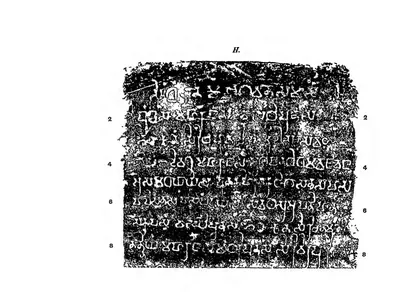
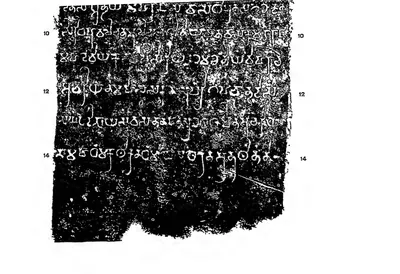
Ehuvula Chamtamula was the third known king of the Ikshvakus of the lower Krishna valley.12 J. Ph. Vogel first read his name in 1933, as Vasethiputa Siri-Ehuvula-Chatamula, but marked the syllables Ehuvula as uncertain.12 Hirananda Sastri’s earlier summary had given the name as Siribahuvalachatamula.3
Later inscriptions spell it Ehuvula, Ehuvala or Ehavala, and one Sanskrit record calls him Ehavalasri.45 B. Ch. Chhabra thought the name was not Sanskrit and was presumably Dravidian.5 The second part repeats the name of his grandfather, Vasishthiputra Chamtamula.6 Vogel took this as a case of naming a child after its grandfather.6
He was the son of King Virapurushadatta and the queen Bhatideva.78 Pillar inscriptions of his 2nd year from the site of Stupa 5 name her as the wife of Virapurushadatta and the daughter-in-law of Chamtamula.78 Hirananda Sastri remarked that one of them “indubitably establishes” her relationship to both kings.78
His metronymic (name taken from the mother) Vasethiputa shows that his mother belonged to the Vasishtha clan.5 In the same way his father’s Madhariputa points to a Mathara mother.5 His sister Kodabalisiri married the Maharaja of Vanavasa (Banavasi).29
Another son of Virapurushadatta, Eli Ehuvuladasa, was born of a different queen.10 He served Ehuvula as a mahasenapati (commander of forces).10
Two of his queens are known. Kupanasiri was a granddaughter of Skandagopa, a mahatalavara (great noble) of the Pushyakandiya family, and a daughter of the mahatalavara Khamdahala.11 Her son, the prince Virapurushadatta, is called maharajakumara and mahasenapati.11 Sircar and Krishnan took the second title to mean that he commanded his father’s forces.11
The other queen, Varmabhatta, was the daughter of a Saka Mahakshatrapa.12 She is remembered on a memorial pillar raised in the reign of Rudrapurushadatta, who was apparently her stepson.12
The records of his reign
The dated records of his reign include:
- Year 2: the queen-mother Bhatideva founded a monastery for teachers of the Bahusutiya school, the “Queen’s Monastery”.713
- Year 8: the lay Buddhist Chandasiri built a stone pavilion and a store-room for a community of monks, for the king’s long life. They stood in the great residence (maha-nikaya) of the Aparamahavinaseliya school at Vijayapura on the Sriparvata.1415
- Year 9: according to the excavators, Stupa 9 was renovated.16
- Year 11: his sister Kodabalisiri founded a monastery for the Mahisasaka school at Kottampalugu.29 In the same year Elisri, a leading talavara and devotee of Karttikeya, built a temple of Shiva.175
- Year 13: a memorial pillar was raised for his half-brother Eli Ehuvuladasa.10
- Year 16: his son, the prince Virapurushadatta, built a shrine to Mahadeva Pushpabhadrasvamin and gave it the village of Pudokedam; see the Pushpabhadrasvamin inscription.411
- Year 24: the banker Kumaranandin installed an image of the Buddha at the Mahadevi-parivena. Sircar took this to be a monk’s residence built by a queen.1819 It is his latest known year.1819
- The cyclic year Vijaya: a group of donors built a shrine of a god perhaps called Nodagisvarasvamin, for the king’s victory and long life.2021 Among them were the woman in charge of the royal harem and a banker’s daughter.2021 They endowed it through four guilds.2021
The prince’s inscription of the 16th year praises the king as the equal of the epic heroes Sagara, Dilipa, Ambarisha, Yudhishthira and Rama.11 The excavators also reported an inscription of his reign on the flagstaff of a ruined Shiva temple.22 The temple stood in what they took to be a royal cremation ground.22
Lead coins of Ehuvula and his two predecessors were found in the city, including the later layers of the citadel.2324
A Shaiva court
Sircar and Krishnan noted that the religion of Virapurushadatta and Ehuvula had been unknown until then. They took the prince’s Shiva temple as the first direct proof that the family leaned towards Shaivism. Elisri, by contrast, was a noble rather than a member of the royal house.25
The excavators found that Brahmanical shrines clustered along the river and in the fortified zone.26 In their view, this reflected the Brahmanical faith of the Ikshvakus.26 Buddhist building went on alongside, paid for by queens, a princess, a banker and lay followers.791519
Date
Sircar’s table of 1939 gave Ehuvula a reign of about 265–275.27 In 1963 he read the date of one of Ehuvula’s inscriptions as the cyclic year Vijaya, and equated it with 333–34. The same year in Virapurushadatta’s reign corresponded to 273–74, so he thought 333 fell near the end of Ehuvula’s long reign.28
He gave two possible views:
- in one, the Abhira king Vasushena overthrew Virapurushadatta about 275, and Ehuvula won back the throne and reigned about 280–335
- in the other, all three later Ikshvaku kings fell within about 265–335282930
Hirananda Sastri once suggested that a child carved on a memorial pillar of Virapurushadatta’s time might be the young prince Ehuvula.31 But he called the identification a guess (conjectural).31
Footnotes
-
J. Ph. Vogel, Prakrit Inscriptions from a Buddhist Site at Nagarjunikonda, Epigraphia Indica XX (1933), p. 3 (archive.org (opens in a new tab)). ↩ ↩2
-
Vogel, Prakrit Inscriptions from Nagarjunikonda (1933), p. 5 (archive.org (opens in a new tab)). ↩ ↩2 ↩3 ↩4
-
A. H. Longhurst, “Excavations at Nagarjunikonda”, Annual Report of the Archaeological Survey of India 1927–28 (1931), p. 118 (archive.org (opens in a new tab)). ↩
-
D. C. Sircar and K. G. Krishnan, “Two Inscriptions from Nagarjunikonda”, Epigraphia Indica XXXIV (1961–62, publ. 1963), p. 17 (archive.org (opens in a new tab)). ↩ ↩2
-
Chhabra, “Nagarjunakonda Inscription of Ehavalasri’s time” (1963), p. 148 (archive.org (opens in a new tab)). ↩ ↩2 ↩3 ↩4 ↩5
-
Vogel, Prakrit Inscriptions from Nagarjunikonda (1933), p. 6 (archive.org (opens in a new tab)). ↩ ↩2
-
J. Ph. Vogel, “Additional Prakrit Inscriptions from Nagarjunikonda”, Epigraphia Indica XXI (1931–32), pp. 61–62 (archive.org (opens in a new tab)). ↩ ↩2 ↩3 ↩4 ↩5
-
Hirananda Sastri, “Nagarjunikonda Inscriptions”, Annual Report of the Archaeological Survey of India 1929–30 (1935), p. 164 (archive.org (opens in a new tab)). ↩ ↩2 ↩3
-
Vogel, Prakrit Inscriptions from Nagarjunikonda (1933), pp. 24–25, translation of inscription H (archive.org (opens in a new tab)). ↩ ↩2 ↩3
-
Sircar, “More Inscriptions from Nagarjunikonda”, p. 10 (archive.org (opens in a new tab)). ↩ ↩2 ↩3
-
Sircar and Krishnan, “Two Inscriptions from Nagarjunikonda” (1963), p. 18 (archive.org (opens in a new tab)). ↩ ↩2 ↩3 ↩4 ↩5
-
Sircar and Krishnan, “Two Inscriptions from Nagarjunikonda” (1963), p. 21 (archive.org (opens in a new tab)). ↩ ↩2
-
Vogel, “Additional Prakrit Inscriptions” (1931–32), pp. 62–63, inscription G 3 (archive.org (opens in a new tab)). ↩
-
Sircar, “More Inscriptions from Nagarjunikonda”, p. 7 (archive.org (opens in a new tab)). ↩
-
Sircar, “More Inscriptions from Nagarjunikonda”, p. 8 (archive.org (opens in a new tab)). ↩ ↩2
-
A. Ghosh (ed.), Indian Archaeology 1958–59: A Review (1959), p. 6 (archive.org (opens in a new tab)). ↩
-
B. Ch. Chhabra, “Nagarjunakonda Inscription of Ehavalasri’s time, Year 11”, Epigraphia Indica XXXIII (1959–60, publ. 1963), p. 147 (archive.org (opens in a new tab)). ↩
-
Sircar, “More Inscriptions from Nagarjunikonda”, p. 11 (archive.org (opens in a new tab)). ↩ ↩2
-
Sircar, “More Inscriptions from Nagarjunikonda”, p. 12 (archive.org (opens in a new tab)). ↩ ↩2 ↩3
-
D. C. Sircar, “More Inscriptions from Nagarjunikonda”, Epigraphia Indica XXXV (1963–64), p. 4 (archive.org (opens in a new tab)). ↩ ↩2 ↩3
-
Sircar, “More Inscriptions from Nagarjunikonda”, p. 5 (archive.org (opens in a new tab)). ↩ ↩2 ↩3
-
Indian Archaeology 1958–59: A Review (1959), p. 8 (archive.org (opens in a new tab)). ↩ ↩2
-
A. Ghosh (ed.), Indian Archaeology 1957–58: A Review (1958), p. 6 (archive.org (opens in a new tab)). ↩
-
Indian Archaeology 1957–58: A Review (1958), p. 9 (archive.org (opens in a new tab)). ↩
-
Sircar and Krishnan, “Two Inscriptions from Nagarjunikonda” (1963), p. 19 (archive.org (opens in a new tab)). ↩
-
A. Ghosh (ed.), Indian Archaeology 1956–57: A Review (1957), p. 36 (archive.org (opens in a new tab)). ↩ ↩2
-
D. C. Sircar, The Successors of the Satavahanas in Lower Deccan (1939), p. 16, genealogical table (archive.org (opens in a new tab)). ↩
-
Sircar, “More Inscriptions from Nagarjunikonda”, p. 6 (archive.org (opens in a new tab)). ↩ ↩2
-
Epigraphia Indica XXXV, “Additions and Corrections”, correction to p. 6, line 30 (archive.org (opens in a new tab)). ↩
-
D. C. Sircar, “Nagarjunikonda Inscription of the time of Abhira Vasushena, Year 30”, Epigraphia Indica XXXIV (1963), p. 201 (archive.org (opens in a new tab)). ↩
-
Hirananda Sastri, “Nagarjunikonda Inscriptions”, ASI Annual Report 1929–30 (1935), p. 166 (archive.org (opens in a new tab)). ↩ ↩2
Photos
Related
Dynasties
References
Notes (0)
Sources (11)
Spotted an error on this page? Tell us
Last updated: