Ikshvakus of Vijayapuri
Dynasty of the lower Krishna valley in the 3rd and early 4th centuries CE, with its capital at Vijayapuri in the Nagarjunakonda valley. Four kings are known from Prakrit and Sanskrit inscriptions. The kings performed Vedic sacrifices and built temples to Shiva and Karttikeya, while the royal women endowed the Buddhist monasteries of the capital.
Swipe sideways to see the whole chart; tap a bar for details.
Each bar is a ruling power in its region; time runs left to right. Dashed = approximate dates. Select a bar for details.
Show as a list
Mauryas & Satavahanas 300 BCE – 225 CE
- Telangana
- Satavahanas (c. 220 BCE – 225 CE)
- Coastal Andhra
- Satavahanas (c. 220 BCE – 225 CE)
- Rayalaseema
- Satavahanas (c. 1–225 CE)
Ikshvakus, Vishnukundins & early kingdoms 225–624 CE
- Telangana
- Vakatakas (c. 300–500 CE) · Ikshvakus (c. 225–352 CE) · Vishnukundins (c. 375–612 CE)
- Coastal Andhra
- Pallavas (c. 250–630 CE) · Ikshvakus (c. 225–350 CE) · Salankayanas of Vengi (c. 300–470 CE)
- Rayalaseema
- Pallavas (c. 300–900 CE)
Kingdoms and empires
Satavahanas
Open page- Telangana: c. 220 BCE – 225 CE (c. 445 years)
IG Hyderabad: rise c. 220 BCE, end about a century after Pulumayi II (acc. c. 138 CE); Sewell: by c. 170 BCE the Andhra king ruled Hyderabad as well as the Telugu tracts
- Coastal Andhra: c. 220 BCE – 225 CE (c. 445 years)
Sources disagree: IG Madras 220 BCE-236 CE; Sewell 'from at least 250 BCE' to c. 225 CE when the Pallava Bappa ended the line; Godavari gazetteer dates the known kings c. 110-220 CE, last inscriptions c. 218
- Rayalaseema: c. 1–225 CE (c. 224 years)
Sewell: about 1 CE the Andhra king ruled parts of Cuddapah and Kurnool; an inscription of Pulumayi II (c. 145 CE) in Adoni taluk proves Andhra rule there; Bellary gazetteer: the Andhras ruled that district in the 2nd century CE. When their rule here began is not recorded
Rulers (12)
- Simuka (c. 220 BCE – 197 BCE)
- Krishna (Kanha) (c. 197 BCE – 179 BCE)
- Sri Satakarni (c. 179 BCE – 169 BCE)
- Sivasvati (c. 85–113 CE)
- Gautamiputra Satakarni (c. 113–138 CE)
- Vasishthiputra Pulumavi (c. 138–170 CE)
… and 6 more
- Siva Sri Satakarni (c. 170–177 CE)
- Sivaskanda Satakarni (c. 177–184 CE)
- Yajna Sri Satakarni (c. 184–213 CE)
- Vijaya Satakarni (c. 213–219 CE)
- Chandra Sri Satakarni (c. 219–229 CE)
- Pulumavi III (c. 229–236 CE)
Capitals
Inscriptions
Sources (5)
Kingdoms and empires
Vakatakas
Open page- Telangana: c. 300–500 CE (c. 200 years)
Partial: the Adilabad, Nizamabad and Karimnagar country north of the Godavari, as part of the Vakataka lands of central India and the northern Deccan. Goel et al. (2022) place the Vakataka lands from the findspots of their 37 inscriptions and name only these three Telangana districts. Jouveau-Dubreuil (1920) claimed much more: almost the whole of the Hyderabad State, and up to Kurnool. A Vakataka princess married the Vishnukundin Madhavavarman (Chikkulla plates). No Vakataka inscription from Telangana is listed in Epigraphia Telanganica I; this span rests on modern histories. Dates follow the Sewell table (Vindhyasakti c. 275-300 to Harishena c. 465-500).
Rulers (8)
- Vindhyasakti (c. 275–300 CE)
- Pravarasena I (c. 300–330 CE)
- Rudrasena I (c. 330–340 CE)
- Prithvisena I (c. 340–390 CE)
- Rudrasena II (c. 390–395 CE)
- Pravarasena II (c. 395–420 CE)
… and 2 more
- Devasena (c. 445–465 CE)
- Harishena (c. 465–500 CE)
Sources (5)
Kingdoms and empires
Ikshvakus
Open page- Coastal Andhra: c. 225–350 CE (c. 125 years)
Lower Krishna valley (Vijayapuri at Nagarjunakonda, Jaggayyapeta, Uppugundur); four kings known; dated inscriptions of 273–74 and 333–34 (Sircar), with an Abhira interlude about 278–79
- Telangana: c. 225–352 CE (c. 127 years)
Partial: the lower Krishna valley on the Nalgonda side. Inscriptions of the Ikshvaku kings Chamtamula and Rudrapurushadatta at Phanigiri (Nalgonda); the editors of Epigraphia Telanganica date Rudrapurushadatta's pillar to 352 and take it as the end of Ikshvaku rule.
Rulers
Capitals
Monuments
Inscriptions
Sources (5)
Kingdoms and empires
Vishnukundins
Open page- Telangana: c. 375–612 CE (c. 237 years)
Partial: the early kingdom north of Srisailam (Nalgonda and Mahabubnagar), with its capital at Keesaragutta near Hyderabad or at Indrapura (Indrapala Gutta near Tummalagudem, Nalgonda); the capital later moved to Trivaranagara (Tiruvuru). The Tummalagudem plates of Govindavarman (37th year) and Vikramendravarman II (Saka 488, 566-67) were found in Nalgonda. The early dates (Indravarman c. 375-400) and the end in 612 follow Goel et al.
- Coastal Andhra: c. 500–630 CE (c. 130 years)
Krishna-Godavari country; later capital Lendulura (Denduluru near Vengi); grants from the Godavari delta, Tenali taluk and the Vizianagaram region, and a pillar at Velpuru south of the Krishna. Dates disputed: K. V. Lakshman Rao (in Sewell 1932) about 357-610; Panchamukhi (1936) about 500 to the Chalukya conquest of 621-631; Mirashi puts Madhavavarman I about 510-568; Sircar (1939) about 500-670 and an end later still
Rulers (7)
- Vikramahendra (c. 500–520 CE)
- Govindavarman (c. 520–535 CE)
- Madhavavarman (Vishnukundin) (c. 535–585 CE)
- Madhavavarman II (Vishnukundin) (c. 585–615 CE)
- Vikramendravarman I (c. 615–625 CE)
- Indravarman (Vishnukundin) (c. 625–655 CE)
Capitals
Inscriptions (7)
- Chikkulla plates of Vikramendravarman II
- Ipur plates (set I) of Govindavarman's son Madhavavarman
- Ipur plates (set II) of Madhavavarman II
- Khanapur plates of Madhavavarman
- Polamuru plates of Madhavavarman Janashraya
- Ramatirtham plates of Indravarman
… and 1 more
Sources (8)
Kingdoms and empires
Pallavas
Open page- Coastal Andhra: c. 250–630 CE (c. 380 years)
Krishna-Guntur, Ongole and Nellore. Prakrit grant of the crown prince Sivaskandavarman to his officer at Dhanyakataka (Amaravati), dated from about 234 (Sewell) or 250-275 (Jouveau-Dubreuil) to the first half of the 4th century (Sircar); Sanskrit grants of a Nellore-Guntur line (Omgodu, Uruvupalli, Pikira, Mangalur, Vilavatti, Chura) in the 5th and 6th centuries. Karmarashtra (Ongole-Bapatla) was Chalukya by about 630 (Kopparam plates of Pulakesin II). The Godavari gazetteer calls 200-615 a Pallava age, and IG Madras calls Vengi originally a Pallava province; Sircar found no evidence that the Pallavas held Vengi itself.
- Rayalaseema: c. 300–900 CE (c. 600 years)
Partial. Pallava frontier guards at Sriparvata (Kurnool) in the 4th century (Talagunda inscription; Sircar); Ganga kings of the Penukonda plates installed by Pallava kings (5th century); inscription of Paramesvaravarman II at Ulchala near Kurnool (728-29); Bana vassals in the Chittoor country under Nripatunga (9th century). The Cuddapah gazetteer has the Pallavas hold the eastern Cuddapah taluks for four centuries until the Chola Aditya I crippled them at the end of the 9th century. The Cuddapah gazetteer says the Pallavas of Kanchi pushed up the Penner from Nellore into north Cuddapah for a time and then ruled the eastern Cuddapah taluks for four centuries, until the Chola Aditya I crippled them at the end of the 9th century; Sewell gives a Pallava regnal-year record in Chittoor (864-65), with the Banas as Pallava vassals.
- Coastal Andhra: c. 670–750 CE (c. 80 years)
Southern Nellore only: grants of Paramesvaravarman I (Podili-Kandukur country, 687) and Narasimhavarman II (Revuru, Atmakur taluk, about 700-711), and a Tamil record of the 15th year of Nandipottarasar at Mallam (Gudur taluk), read as Pallava supremacy (Nellore gazetteer, 1942) or as Pallava rule under the Western Chalukyas (Butterworth and Venugopaul Chetty, 1905).
Rulers (18)
- Bappa (c. 225–250 CE)
- Sivaskandavarman (Pallava) (c. 250–275 CE)
- Vishnugopa of Kanchi (c. 325–350 CE)
- Kumaravishnu II (Pallava) (c. 425–450 CE)
- Skandavarman II (Pallava) (c. 450–475 CE)
- Simhavarman II (Pallava) (c. 500–525 CE)
… and 12 more
- Vishnugopavarman (c. 525–550 CE)
- Simhavishnu (c. 575–600 CE)
- Mahendravarman I (c. 600–630 CE)
- Narasimhavarman I (c. 630–668 CE)
- Mahendravarman II (c. 668–670 CE)
- Paramesvaravarman I (c. 670–690 CE)
- Narasimhavarman II (c. 690–715 CE)
- Nandivarman II Pallavamalla (c. 717–779 CE)
- Dantivarman (c. 779–830 CE)
- Nandivarman III (c. 830–854 CE)
- Nripatunga (c. 854–880 CE)
- Aparajita (c. 880–900 CE)
Capitals
Inscriptions (14)
Sources (19)
Kingdoms and empires
Salankayanas of Vengi
Open page- Coastal Andhra: c. 300–470 CE (c. 170 years)
Vengi (Pedavegi near Eluru), between the Krishna and the Godavari. Dates debated: D. C. Sircar (1939) about 320-470, from Devavarman to Skandavarman; B. V. Krishna Rao puts Nandivarman I at the close of the 3rd century, Sircar (1960) the Ellore and Kanukollu grants in the mid-4th; Subramanian about 275-450; Subba Rao has the Vishnukundins take Vengi about 450. Older works call these rulers Pallavas
Rulers
Capitals
Inscriptions
Sources (5)
Reigns
Each bar is one ruler’s reign; time runs left to right. c. = approximate date.
- Vasishthiputra Chamtamulac. 225–255 CE · c. 30 yrs
- Virapurushadattac. 255–275 CE · c. 20 yrs
- Ehuvula Chamtamulac. 280–335 CE · c. 55 yrs
- Rudrapurushadattac. 335–346 CE · c. 11 yrs
Approximate reign years after D. C. Sircar (Epigraphia Indica XXXV), who dated two inscriptions by the cyclic year Vijaya to 273–74 and 333–34. The chart follows his first alternative, with an Abhira interregnum about 275–80 (not shown); in his second, the three later kings fill about 265–335. The start of Chamtamula's reign is not dated by any inscription.
Family tree
The rulers and the relatives who explain the succession. Every line rests on a cited statement on a person page; the sources are listed below the tree. Select a card to open that page.
- parent and child
- marriage
- adoption
- the sources disagree (see below)
- brother or sister
- order of succession
Generation 1
- MadhariMother of Virapurushadatta (named from his metronymic)Wife of Vasishthiputra Chamtamula
- 1Vasishthiputra Chamtamulac. 225–255 CEHusband of MadhariBrother of ChamtisiriBrother of Hammasiri
- KamdasiriOf the Pukiya family; mahasenapatiHusband of Chamtisiri
- ChamtisiriPrincess; patron of the Great StupaSister of Vasishthiputra ChamtamulaWife of Kamdasiri
- HammasiriMother of two queens of VirapurushadattaSister of Vasishthiputra Chamtamula
Generation 2
- BhatidevaQueen, mother of Ehuvula ChamtamulaWife of Mathariputra Virapurushadatta
- 2Mathariputra Virapurushadattac. 255–275 CESon of Madhari and Vasishthiputra ChamtamulaHusband of BhatidevaHusband of YakhilinikaHusband of Bapisirinika, ChhathisiriHusband of Rudradharabhattarika
- YakhilinikaQueen, mother of Eli EhuvuladasaWife of Mathariputra Virapurushadatta
- Bapisirinika, ChhathisiriQueens; daughters of his aunt HammasiriWives of Mathariputra Virapurushadatta
- RudradharabhattarikaQueen; daughter of the king of Ujjain (Vogel's emended reading)Wife of Mathariputra Virapurushadatta
- Adavi-ChamtisiriWife of Khamdavisakhamnaka of the Dhanaka familyDaughter of Vasishthiputra Chamtamula
- Daughter of ChamtisiriA queen of VirapurushadattaDaughter of Chamtisiri and Kamdasiri
Generation 3
- KupanasiriQueen; of the Pushyakandiya familyWife of Vasishthiputra Ehuvula Chamtamula
- 3Vasishthiputra Ehuvula Chamtamulac. 280–335 CESon of Bhatideva and Mathariputra VirapurushadattaHusband of KupanasiriHusband of Varmabhatta
- VarmabhattaQueen; daughter of a Saka MahakshatrapaWife of Vasishthiputra Ehuvula Chamtamula
- Eli EhuvuladasaPrince and commander (mahasenapati)Son of Mathariputra Virapurushadatta and Yakhilinika
- KodabalisiriWife of the Maharaja of VanavasaDaughter of Mathariputra Virapurushadatta
Generation 4
- VirapurushadattaPrince (maharajakumara) and commanderSon of Kupanasiri and Vasishthiputra Ehuvula Chamtamula
- 4Vasishthiputra Rudrapurushadattac. 335–346 CESon of Vasishthiputra Ehuvula Chamtamula
Sources for every line of the tree
- Madhari · Vasishthiputra Chamtamula (marriage)
- He was the son of King Vasishthiputra Chamtamula, whom he succeeded, and of a mother known only from his metronymic (name taken from the mother), Madhari (Mathari). →
- Sircar, Successors of the Satavahanas (1939), p. 20 (archive.org (opens in a new tab)).
- Sircar, Successors of the Satavahanas (1939), p. 16, genealogical table (archive.org (opens in a new tab)).
- He was the son of King Vasishthiputra Chamtamula, whom he succeeded, and of a mother known only from his metronymic (name taken from the mother), Madhari (Mathari). →
- Madhari and Vasishthiputra Chamtamula → Mathariputra Virapurushadatta (parent and child)
- He was the son of King Vasishthiputra Chamtamula, whom he succeeded, and of a mother known only from his metronymic (name taken from the mother), Madhari (Mathari). →
- Sircar, Successors of the Satavahanas (1939), p. 20 (archive.org (opens in a new tab)).
- Sircar, Successors of the Satavahanas (1939), p. 16, genealogical table (archive.org (opens in a new tab)).
- He is the father of King Virapurushadatta and the grandfather of King Ehuvula Chamtamula. →
- J. Ph. Vogel, Prakrit Inscriptions from a Buddhist Site at Nagarjunikonda, Epigraphia Indica XX (1933), p. 3 and note 2 (archive.org (opens in a new tab)).
- He was the son of King Vasishthiputra Chamtamula, whom he succeeded, and of a mother known only from his metronymic (name taken from the mother), Madhari (Mathari). →
- Vasishthiputra Chamtamula → Adavi-Chamtisiri (parent and child)
- His daughter Adavi-Chamtisiri married Khamdavisakhamnaka of the Dhanaka family, a mahasenapati and mahadandanayaka. →
- Vogel, Prakrit Inscriptions from Nagarjunikonda (1933), p. 5 (archive.org (opens in a new tab)).
- His daughter Adavi-Chamtisiri married Khamdavisakhamnaka of the Dhanaka family, a mahasenapati and mahadandanayaka. →
- Vasishthiputra Chamtamula · Chamtisiri (brother or sister)
- Her inscriptions call her the uterine sister of King Vasishthiputra Chamtamula (his sister by the same mother) and the paternal aunt of his son, King Virapurushadatta. →
- J. Ph. Vogel, Prakrit Inscriptions from a Buddhist Site at Nagarjunikonda, Epigraphia Indica XX (1933), p. 4 and notes (archive.org (opens in a new tab)).
- Her inscriptions call her the uterine sister of King Vasishthiputra Chamtamula (his sister by the same mother) and the paternal aunt of his son, King Virapurushadatta. →
- Vasishthiputra Chamtamula · Hammasiri (brother or sister)
- Bapisirinika and Chhathisiri were daughters of his father's sister Hammasiri. →
- Vogel, Prakrit Inscriptions from Nagarjunikonda (1933), p. 4 (archive.org (opens in a new tab)).
- Bapisirinika and Chhathisiri were daughters of his father's sister Hammasiri. →
- Chamtisiri · Kamdasiri (marriage)
- Chamtisiri married Kamdasiri of the Pukiya family, who held the titles mahasenapati (great commander) and mahatalavara. →
- Vogel, Prakrit Inscriptions from Nagarjunikonda (1933), p. 4 (archive.org (opens in a new tab)).
- Chamtisiri married Kamdasiri of the Pukiya family, who held the titles mahasenapati (great commander) and mahatalavara. →
- Chamtisiri and Kamdasiri → Daughter of Chamtisiri (parent and child)
- A third was a daughter of his other aunt, Chamtisiri. →
- Vogel, Prakrit Inscriptions from Nagarjunikonda (1933), p. 4 (archive.org (opens in a new tab)).
- A third was a daughter of his other aunt, Chamtisiri. →
- Bhatideva · Mathariputra Virapurushadatta (marriage)
- The fifth, Bhatideva, was the mother of his successor, Ehuvula Chamtamula. →
- J. Ph. Vogel, Additional Prakrit Inscriptions from Nagarjunikonda, Epigraphia Indica XXI (1931–32), pp. 61–62 (archive.org (opens in a new tab)).
- Sircar, Successors of the Satavahanas (1939), p. 23 (archive.org (opens in a new tab)).
- The fifth, Bhatideva, was the mother of his successor, Ehuvula Chamtamula. →
- Mathariputra Virapurushadatta · Yakhilinika (marriage)
- A sixth, Yakhilinika, is named on a memorial pillar of her son, the prince Eli Ehuvuladasa, who served his half-brother Ehuvula as a commander. →
- Sircar, "More Inscriptions from Nagarjunikonda", p. 10 (archive.org (opens in a new tab)).
- Sircar, "More Inscriptions from Nagarjunikonda", p. 11 (archive.org (opens in a new tab)).
- A sixth, Yakhilinika, is named on a memorial pillar of her son, the prince Eli Ehuvuladasa, who served his half-brother Ehuvula as a commander. →
- Mathariputra Virapurushadatta · Bapisirinika, Chhathisiri (marriage)
- Bapisirinika and Chhathisiri were daughters of his father's sister Hammasiri. →
- Vogel, Prakrit Inscriptions from Nagarjunikonda (1933), p. 4 (archive.org (opens in a new tab)).
- Bapisirinika and Chhathisiri were daughters of his father's sister Hammasiri. →
- Mathariputra Virapurushadatta · Rudradharabhattarika (marriage)
- A fourth queen, Rudradharabhattarika, was in Vogel's emended reading a daughter of the king of Ujjain. →
- Vogel, Prakrit Inscriptions from Nagarjunikonda (1933), p. 4 (archive.org (opens in a new tab)).
- Vogel, Prakrit Inscriptions from Nagarjunikonda (1933), p. 5 (archive.org (opens in a new tab)).
- A fourth queen, Rudradharabhattarika, was in Vogel's emended reading a daughter of the king of Ujjain. →
- Bhatideva and Mathariputra Virapurushadatta → Vasishthiputra Ehuvula Chamtamula (parent and child)
- He was the son of King Virapurushadatta and the queen Bhatideva. →
- J. Ph. Vogel, "Additional Prakrit Inscriptions from Nagarjunikonda", Epigraphia Indica XXI (1931–32), pp. 61–62 (archive.org (opens in a new tab)).
- Hirananda Sastri, "Nagarjunikonda Inscriptions", Annual Report of the Archaeological Survey of India 1929–30 (1935), p. 164 (archive.org (opens in a new tab)).
- He was the son of King Virapurushadatta and the queen Bhatideva. →
- Mathariputra Virapurushadatta and Yakhilinika → Eli Ehuvuladasa (parent and child)
- A sixth, Yakhilinika, is named on a memorial pillar of her son, the prince Eli Ehuvuladasa, who served his half-brother Ehuvula as a commander. →
- Sircar, "More Inscriptions from Nagarjunikonda", p. 10 (archive.org (opens in a new tab)).
- Sircar, "More Inscriptions from Nagarjunikonda", p. 11 (archive.org (opens in a new tab)).
- Another son of Virapurushadatta, Eli Ehuvuladasa, was born of a different queen. →
- Sircar, "More Inscriptions from Nagarjunikonda", p. 10 (archive.org (opens in a new tab)).
- A sixth, Yakhilinika, is named on a memorial pillar of her son, the prince Eli Ehuvuladasa, who served his half-brother Ehuvula as a commander. →
- Mathariputra Virapurushadatta → Kodabalisiri (parent and child)
- His daughter Kodabalisiri married the Maharaja of Vanavasa (Banavasi, in North Kanara). →
- Vogel, Prakrit Inscriptions from Nagarjunikonda (1933), p. 5 (archive.org (opens in a new tab)).
- His daughter Kodabalisiri married the Maharaja of Vanavasa (Banavasi, in North Kanara). →
- Kupanasiri · Vasishthiputra Ehuvula Chamtamula (marriage)
- Two of his queens are known. →
- Sircar and Krishnan, "Two Inscriptions from Nagarjunikonda" (1963), p. 18 (archive.org (opens in a new tab)).
- Two of his queens are known. →
- Vasishthiputra Ehuvula Chamtamula · Varmabhatta (marriage)
- The other queen, Varmabhatta, was the daughter of a Saka Mahakshatrapa. →
- Sircar and Krishnan, "Two Inscriptions from Nagarjunikonda" (1963), p. 21 (archive.org (opens in a new tab)).
- The other queen, Varmabhatta, was the daughter of a Saka Mahakshatrapa. →
- Kupanasiri and Vasishthiputra Ehuvula Chamtamula → Virapurushadatta (parent and child)
- Her son, the prince Virapurushadatta, is called maharajakumara and mahasenapati. →
- Sircar and Krishnan, "Two Inscriptions from Nagarjunikonda" (1963), p. 18 (archive.org (opens in a new tab)).
- Her son, the prince Virapurushadatta, is called maharajakumara and mahasenapati. →
- Vasishthiputra Ehuvula Chamtamula → Vasishthiputra Rudrapurushadatta (parent and child)
- She was the granddaughter-in-law of Chamtamula, the daughter-in-law of Virapurushadatta, the wife of Ehuvula Chamtamula and the mother of the reigning king. →
- Sircar and Krishnan, "Two Inscriptions from Nagarjunikonda" (1963), p. 21 and notes (archive.org (opens in a new tab)).
- Sircar and Krishnan, "Two Inscriptions from Nagarjunikonda" (1963), p. 22, text (archive.org (opens in a new tab)).
- Because the king's metronymic Vasithiputa points to a mother of the Vasishtha clan, they concluded that Varmabhatta was his stepmother, not his mother. →
- Sircar and Krishnan, "Two Inscriptions from Nagarjunikonda" (1963), p. 21 and notes (archive.org (opens in a new tab)).
- She was the granddaughter-in-law of Chamtamula, the daughter-in-law of Virapurushadatta, the wife of Ehuvula Chamtamula and the mother of the reigning king. →
A line from one parent only means that the cited sources name no other parent.
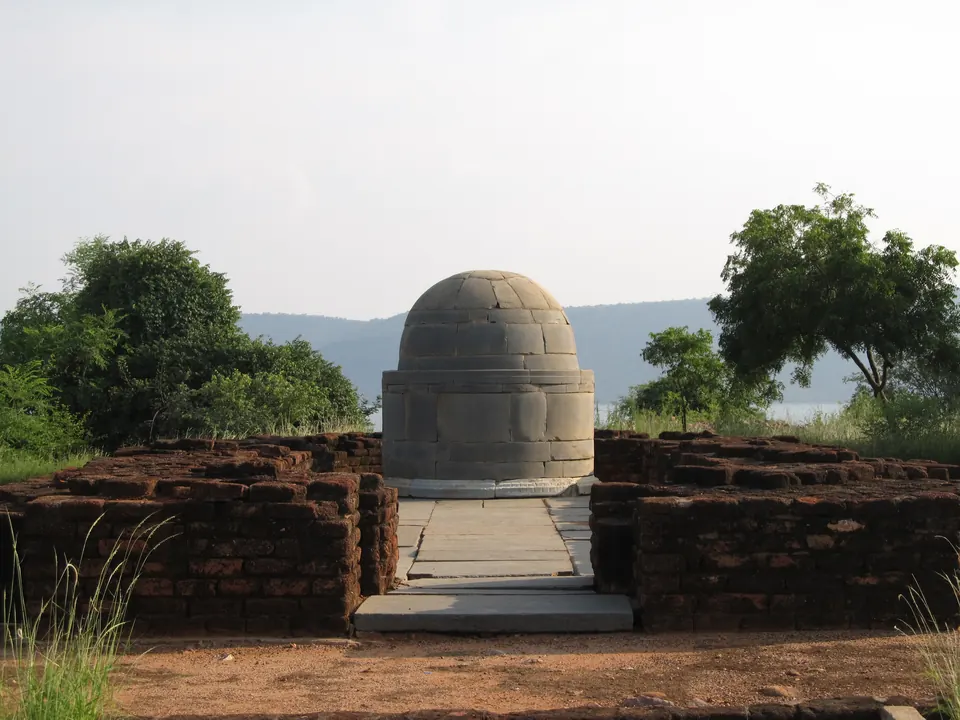
The Ikshvakus ruled the lower Krishna valley in the 3rd and early 4th centuries CE, after the Satavahanas and before the Pallavas. In their own Prakrit inscriptions they are called Ikhaku, and later Ikkhaku. Their capital was Vijayapuri, the city whose ruins fill the valley at Nagarjunakonda, formerly in the Palnad taluk of Guntur district.123
They are known almost entirely from inscriptions:4567
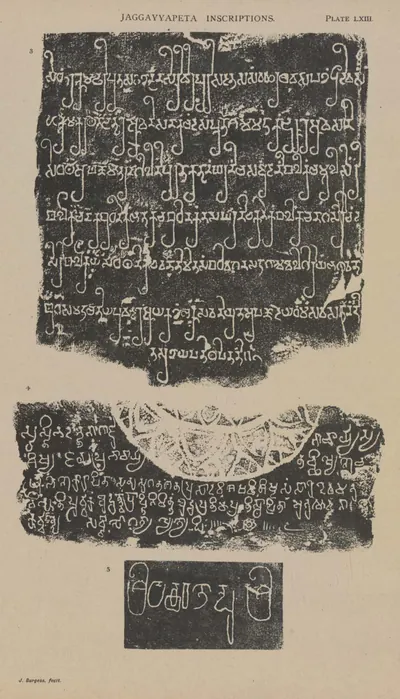
- the pillars of the Jaggayyapeta stupa (relic mound), found in 1882
- the Buddhist records uncovered at Nagarjunakonda from 1926
- the much larger finds of 1954–60, when the Archaeological Survey excavated the valley before it was to be submerged by the reservoir of the Nandikonda (Nagarjunasagar) dam4567
J. Ph. Vogel edited the first group in 1933, and judged that the historical information they gave about the kings was “very meagre”.8 The later finds added a fourth king and two princes.9101112 They also added dated temples to Shiva and Karttikeya, and two dates that can be converted to the Christian era.9101112
How the dynasty was discovered
In February 1882 James Burgess excavated the stupa at Jaggayyapeta and found three copies of one Prakrit inscription. It records that in the 20th year of a king of the “Ikhakus”, the artisan Sidhatha (Siddhartha) and his family set up five ayaka pillars (pillars on the stupa’s platforms).1314 They set them up at the eastern gate of the Great Chaitya of the Buddha “in the village of Velagiri”.1314 Burgess could not identify the king.14 He thought the claim to Ikshvaku descent was “most probably an idle boast” by some local dynasty that had succeeded the Andhras (Satavahanas).14
Robert Sewell’s chronology was compiled from inscriptions known up to 1923 and published in 1932.15 It still had no place for such a dynasty, and made the Pallava Bappa end Andhra rule about 225 CE.15
In March 1926 A. R. Sarasvati of the Madras epigraphy office found inscribed pillars at Nagarjunakonda. M. Hamid Kuraishi’s trial excavation that autumn, and A. H. Longhurst’s excavations of 1927–31, recovered many more, which Vogel edited in Epigraphia Indica XX and XXI.1161718 From 1954 the Nagarjunakonda Excavation Project under R. Subrahmanyam cleared about 1,800 acres of the valley, including the citadel, temples, houses and a stadium.19202122 Its inscriptions were edited by D. C. Sircar and others in Epigraphia Indica XXXIII–XXXV.23
Origins and the Ikshvaku name
The kings called themselves Ikhaku, after Ikshvaku, the mythical ancestor of the solar dynasty of Ayodhya, the line of Rama. Vogel noted that the Buddha too was called a scion of that race.8 One inscription of Virapurushadatta’s reign describes the Buddha as born of a race “sprung from hundreds of sages and excellent kings of Ikhaku’s lineage”.24
Sircar suggested in 1939 that this epithet might reflect the king’s own claim to share the Buddha’s ancestry.2526 He found it hard to tell whether the family descended from northern immigrants, or was a local ruling house that had adopted the famous name.2526
The language of the inscriptions gave another clue. Sten Konow, in a letter printed with Vogel’s edition, found Kanarese-looking (Kannada) names among the donors. He concluded that the inscriptions were written in a standard Prakrit “used by people whose home tongue was Dravidian, and probably Kanarese”. So, he thought, the Ikshvakus might have come to the Krishna country “from the West”. He added that “all such conclusions are bound to be uncertain”.2728
The kings followed Satavahana models. Like Gautamiputra Satakarni and Vasishthiputra Pulumavi, they bore metronymics, names taken from their mothers’ clans (gotra).829 Examples are Vasithiputa, “son of a Vasishtha mother”, and Madhariputa, “son of a Mathara mother”.829 Sircar argued that the first king’s horse sacrifice marked a break from Satavahana overlordship.3031 He placed this break about the third decade of the 3rd century.3031
Sircar later dated the end of Satavahana rule in the Krishna–Guntur region to about the close of the first quarter of that century.32 Excavation found copper coins of Pulumavi, Yajna Satakarni and other Satavahanas in the valley, and coin moulds of Gautamiputra Satakarni.3334 It also found structures older than the Ikshvakus.3334
The family married into western houses. Rudradharabhattarika was a queen of Virapurushadatta.3536 In Vogel’s emended (corrected) reading she was a daughter of the king of Ujjain, probably of the Western Kshatrapa (Saka) line.3536 A memorial pillar of the next generation names Varmabhatta, a queen of Ehuvula Chamtamula, as the daughter of a Mahakshatrapa.37 A daughter of Virapurushadatta married the Maharaja of Vanavasa (Banavasi, in North Kanara).36 Vogel concluded that these alliances showed the Ikshvakus to be “rulers of some importance”.8
Territory and the capital
Vijayapuri lay in a red-soil valley about three miles wide on the right bank of the Krishna. Hills shut it in on three sides and the river on the fourth. In the 1920s it could be reached only by a footpath over the hills or by the river.3839
An inscription of the 14th year of Virapurushadatta places a monastery “on the Siripavata”, Sanskrit Sriparvata, “to the east of Vijayapuri”.242 Vogel concluded that this was the name of the town in the valley.242 Longhurst and Sircar took Sriparvata to be the old name of the Nallamalai hills, of which the Nagarjunakonda hills form part.4041
The excavations of 1957–59 uncovered the citadel. Its walls enclosed a trapezoid about 3,000 by 2,000 feet along the river. They were built in two phases: first a rampart of earth and gravel about 80 feet wide at the base, then a brick wall 9 to 14 feet thick. A ditch up to 132 feet wide surrounded them. There were gateways on the east and west and a postern (small back gate) on the north. Barracks and stables stood near the eastern gate.2142
Inside, a walled group of houses suggested to the excavators a separate quarter for royal buildings.43 The valley had four lines of fortification in all, the last of them medieval.4344
East of the citadel lay a planned township with a main street 25 feet wide, lanes of 15 feet and by-lanes of 8 feet.22 The houses stood in compounds, many with rows of large storage jars.22
The kingdom reached well beyond the valley. Virapurushadatta’s 20th year is recorded at Jaggayyapeta (Velagiri) in Krishna district (inscription).1445 His 19th is recorded at a stupa near Uppugundur in the Ongole taluk, near the coast.4647 B. Ch. Chhabra took the Uppugundur record as new evidence of the extent of his dominions.4647
An inscription of Rudrapurushadatta comes from Gurzala, a few miles east of Nagarjunakonda.37 The title mahatalavara appears in a fragment from Alluru in Nandigama taluk.48 The Uppugundur donor’s grandfather came from Amaravati (Dhanyakataka).47 Vogel once suggested that Nagarjunakonda itself might be the ancient Dhanyakataka.49 But Sircar held that the ruins represented a city called Vijayapuri.3
Their rule also reached the Nalgonda side of the Krishna, in present-day Telangana. Excavations were made at the Buddhist site of Phanigiri, in the Tirumalagiri mandal of the Nalgonda district.5051 They yielded a fragmentary Prakrit inscription naming the king Chamtamula, and a Sanskrit pillar inscription of Rudrapurushadatta.5051
The editors of Epigraphia Telanganica read the pillar as adding seven years to Rudrapurushadatta’s known reign.52 Counting from Sircar’s date of 334 for his accession, they placed the pillar in 352.52 They took that year as the end of Ikshvaku rule.52
Rulers
Four kings are now known, each named with a metronymic:1012
- Vasithiputa Siri-Chamtamula (Vasishthiputra Chamtamula). No record of his own reign survives. His descendants praise him as the performer of the Agnihotra, Agnishtoma, Vajapeya and Ashvamedha sacrifices.3553 A later inscription adds the Bahusuvarnaka sacrifice and credits him with victories won in battle by his own valour.54
- Madhariputa Siri-Virapurisadata (Mathariputra Virapurushadatta), his son. Records are dated in his 6th, 10th, 14th, 15th, 18th, 19th and 20th years.455547 One is dated instead in the cyclic year Vijaya, which Sircar equated with 273–74.11
- Vasethiputa Siri-Ehuvula-Chamtamula, son of Virapurushadatta and the queen Bhatideva, also written Ehuvala or Ehavala. His records run from his 2nd to his 24th year. One is dated in a year Vijaya that Sircar equated with 333–34.5694112
- Vasithiputa Siri-Rudapurisadata (Rudrapurushadatta), son of Ehuvula Chamtamula, known from a memorial pillar of his 11th year. Sircar identified him with the Rulapurisadata of an inscription of the 4th year from Gurzala.1037
Two princes held the rank of mahasenapati. Virapurushadatta (II), a son of Ehuvula Chamtamula and the queen Kupanasiri, built a Shiva temple. Eli Ehuvuladasa, a son of Virapurushadatta by the queen Yakhilinika, is commemorated by a memorial pillar.5457
Nobles and officers
The inscriptions record pious gifts, not government orders, so the administration is seen only through titles. The nobles who married the royal women were mahasenapatis (“great commanders”) and mahatalavaras. Vogel thought the first had become a title of nobility, best rendered “duke”, and could not explain the second.848 Their wives bore the titles mahasenapatini and mahatalavari.48
Hirananda Sastri, the Government Epigraphist, found talavara in an early Jaina text and a commentary.58 He concluded that it meant “a sort of Governor of a province”.58 Sircar likewise took the mahatalavaras to be provincial governors or subordinate rulers.59
The noble families included the Pukiyas, Dhanakas, Hiramnakas, Kulahakas and Pushyakandiyas.3654 Sircar and Krishnan noted that most princesses of Virapurushadatta’s time married mahatalavaras of different clans.54
Other offices appear here and there. One chief bore the titles of mahasenapati, mahatalavara and mahadandanayaka together.36 A donor’s maternal uncle was a kothagarika, which Vogel rendered as treasurer or superintendent of a royal storehouse.48
Elisri built a Shiva temple in the 11th year of Ehuvula Chamtamula.60 He is described as a leading talavara (talavara-vara) and the grandson of a senapati (commander).60 Memorial pillars name rathikas, which Sircar took to be governors of small territorial units (rashtras) under an Ikshvaku king.61 An inscription of Ehuvula’s time names a woman officer in charge of the royal harem.62
Taxes and revenue
No royal land grant of the Ikshvakus survives in these sources. Nothing is known of their taxes or of any exemptions they granted. The eulogy of Chamtamula calls him “the giver of crores of gold, hundred thousands of kine, and hundred thousands of ploughs (of land)”.63 Sircar suggested that the phrase might refer to the great ceremonial gifts (mahadanas) of the Puranas.31
Endowments were made in two ways.5462 The prince Virapurushadatta gave the village of Pudokedam as a perpetual endowment (akhaya-nivi) for his Shiva temple.54 Other donors deposited money with guilds.62
One record of Ehuvula’s reign mentions a hundred dinaris placed with four guilds.62 Interest accrued month by month, though the record does not make clear how it was spent.62 A fragmentary inscription records several endowments: one apparently of villages, one of 150 dinari-masakas, and one placed with a guild under its headman.6465
Law and order
The sources say very little about courts or policing. Vogel translated mahadandanayaka as “a high, probably judicial, official”, but Sircar took it as a leader of forces.6667 One endowment of Ehuvula’s reign made a provision for its shrine.62 If the donor failed to maintain the shrine, the council of citizens headed by the chief banker was to do so.62 Sircar likened this council (nigama) to a panchayat.62
Army
Several kinds of evidence point to a strong military establishment. Brick fortifications on Nagarjuna’s hill used bricks of the same size as the Buddhist buildings, and a second fortified hill guarded the river approach.386869 The citadel had barracks with stables, and an outwork guarded its western gate.214243 The princes Virapurushadatta (II) and Eli Ehuvuladasa served as mahasenapatis.5457
Memorial pillars (chhaya-khambha) were set up for men killed in battle. They name soldiers of contingents led by a commander called Peramadi. They also name leaders, including a prince, who all came from a place called Magalarana. Sircar inferred that a great battle had been fought by supporters of an Ikshvaku king, but no king or date is given.23646170
Another pillar commemorates Chamtapala of the Kulahaka family, a mahasenapati described as a subduer of enemies and a captor of elephants.71 The excavators read his inscription as recording his death in an army camp.72 Sculptures from the palace site show a bearded soldier, apparently a Scythian, in a Roman-like helmet, quilted tunic and trousers.73
Economy and trade
The Krishna was the city’s highway. The limestone of its pillars and sculptures was not quarried locally.747576 It must have been rafted down the river and landed at a stone-built quay about 250 feet long.747576 The excavators found a brick embankment along the river with a dock-like recess and a stepped ghat (river steps).777243 They also found an Ikshvaku-period canal 30 feet wide.777243
Bodhisiri’s inscription mentions an emporium called Kantakasela, which Vogel identified with Ptolemy’s Kantikossula at the mouth of the Krishna.49 Sircar identified it with Ghantasala.78 Vogel attributed the wealth of the Buddhist foundations to sea trade with Sri Lanka and the West. Their followers, he wrote, were “largely recruited from the commercial classes”.79
The townspeople included bankers (sreshthin), merchants and householders. Guilds of confectioners and, probably, of betel-leaf sellers took deposits.62414724
One house in the township was a goldsmith’s shop, with crucibles, a touchstone, weights and moulds for ornaments.22 A pillared hall with storage jars and small vessels may have been a provision shop.43
Roman contacts are attested by two gold coins, of Tiberius and of Faustina the Elder.337 Handles of Roman amphorae (storage jars) and clay sealings with a head perhaps copied from a Roman coin were also found.337 No Rouletted Ware, a fine pottery found at other early sites in Guntur district, was found at Nagarjunakonda.80
Coins
The Ikshvakus issued lead coins. Those found in the 1955–56 season bore an elephant with raised trunk and worn legends, read tentatively as Siri Virapu(rushadata) and Siri Chata(mula).81 Lead coins of the first three kings were found in the citadel’s later layers and in the township.42722 One house there held a hoard of 900 Ikshvaku coins in a small pot.42722
Longhurst had earlier found many small lead coins of the Andhra kind in a monastery cell, with lead ore and an earthenware die.8283 He concluded that the monks made their own coins.8283
The inscriptions also name a money of account, the dinari-masaka.848586 Vogel derived the word from the Latin denarius.84 Sircar connected it with the Kushana gold dinara.8586 Vogel understood one pillar inscription of Virapurushadatta’s 6th year to mean that a queen contributed 170 dinari-masakas towards the building of the Great Stupa.8788
Social life
The inscriptions name many women of the royal house and their marriages.3589 Chamtamula’s sister Chamtisiri married the noble Kamdasiri of the Pukiya family, and her daughter married her cousin, King Virapurushadatta.35 Two other queens of Virapurushadatta were daughters of another sister of Chamtamula.35
Hirananda Sastri remarked that such cousin marriages, though “obnoxious to the Brahmanical Hindus of Northern India”, were still current in the Madras Presidency.90 Kings had several queens. Sircar read the memorial pillar of Chamtamula as listing his sisters, mothers and five queens.89 After them come two women he described as concubines or harem guards.89
Chamtamula’s grandson was named after him.8 Vogel thought this custom was not native to India, but the editor of his article added Indian parallels.8
Lay donors appear with their families. The lay woman Bodhisiri dedicated her gifts in the name of some thirty relatives.24 Among them were her husband, his father the householder Revata of Govagama, and a maternal uncle who was a treasurer.24 A footprint slab was given by Budhi, “the sister of Moda, the Scythian”, evidence that Sakas lived at the capital.9137
Sculptures show female guards, and in one scene an armed woman guards a palace door.9293 The excavators found a stadium between the citadel and Nagarjuna’s hill.214294 It had an arena 309 by 259 feet, sunk 15 feet and surrounded by brick steps for spectators, with a pavilion on the west.214294
They identified a cremation ground on the slopes of the hill, perhaps for the royal family.43 A sculpture of a woman on a ladder suggested to them that sati was practised there.43
Religion
The kings were Brahmanical, and Chamtamula’s eulogy lists the Vedic sacrifices he performed.358 It calls him favoured by Mahasena (Skanda, the war god), lord of the Virupakshas.358 Hirananda Sastri noted that no gift by a male member of the royal house had been found at the Buddhist sites.95 The later excavations found the first direct evidence of their Shaiva worship.96
In the 16th year of Ehuvula Chamtamula, the prince Virapurushadatta built a shrine of Mahadeva Pushpabhadrasvamin (inscription).54 In the 11th year, the noble Elisri, a devotee of Karttikeya, built a temple described as an abode of Shiva.60 Another record of Ehuvula’s reign mentions a shrine of a god whose name may be Nodagisvarasvamin.97
Shrines of Karttikeya stood along the river.7798 Within the citadel the excavators found a stepped tank and animal bones. They interpreted the tank as the purificatory bath of a performer of the horse sacrifice.98
The royal women and many townspeople were Buddhist. Chamtisiri rebuilt or founded the Great Stupa and built a shrine and a pillared hall beside it for the Aparamahavinaseliya school.3545 Bodhisiri built a shrine at the Chula-Dhammagiri monastery for monks from Sri Lanka (inscription).4845 Other women founded monasteries for the Bahusutiya and Mahisasaka schools.4845
A footprint slab names teachers of the Theravada Vibhajjavada school who lived in the Great Monastery (Mahavihara).99 Excavators later observed that Brahmanical shrines clustered along the river and in the fortified zone.77 Buddhist monasteries filled the rest of the valley.77 See also Religion.
Art and architecture
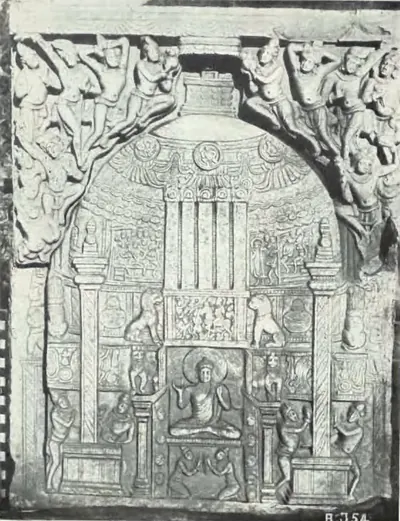
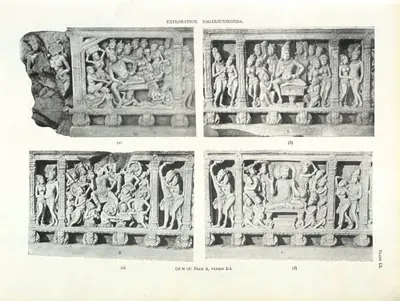
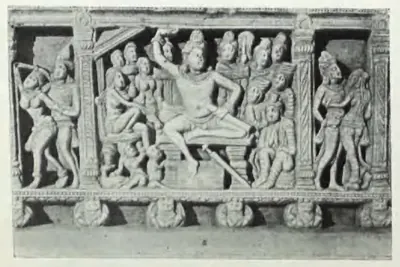
Longhurst’s excavations recovered stupas, monasteries, apsidal temples, a palace site and over four hundred carved reliefs in the style of Amaravati.1775 The buildings were of large bricks laid in mud and finished with plaster and whitewash. Stone was used only for pillars, floors and sculpture.75100
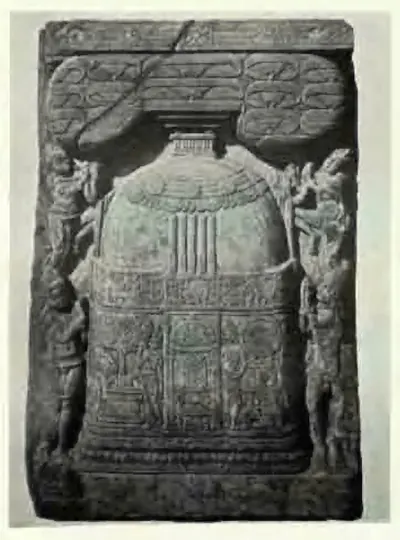
The stupas were built on a wheel plan, with platforms facing the four gateways that carried rows of five pillars.101102 Longhurst regarded these platforms as the most important decorative feature of an Andhra stupa.101102 The temples were long brick halls with an apse and barrel-vaulted roofs.76
Longhurst saw Gandhara and Roman influence in some sculptures.103 Pillars from a building in the city that he took for a palace show a Scythian soldier.73 They also show a figure he thought a crude representation of Dionysus.73 A bronze statuette of Prince Siddhartha as an archer was found in the 1956–57 season.33
The Brahmanical temples were also of brick. Surveyors in 1959–60 found temple complexes with halls in line, an enclosure wall, a gateway and a flagstaff. They also found subsidiary shrines on square, octagonal and circular plans. The main shrines were apsidal, like the contemporary Buddhist halls.104 See Temples and architecture.
Decline and successors
An inscription found at the river’s edge in 1958–59 is dated in the 30th year of the Abhira king Vasishthiputra Vasushena. It records that a local mahatalavara installed the god Ashtabhujasvamin, a form of Vishnu.10567106 Men from Avanti (Ujjain), Sanjayapura and Vanavasa took part with him.10567106
The Abhiras ruled around Nasik.107108 Sircar referred the year to the era of 248 CE, giving 278–79.107108 He suggested that Vasushena briefly extended his rule over the Ikshvaku kingdom.107108 He later proposed that the Abhiras overthrew Virapurushadatta about 275, and that the Ikshvakus regained their throne within a few years.12
The Pallavas of Kanchi followed the Ikshvakus in the Krishna–Guntur region. In 1959 Sircar suggested that the Pallava Simhavarman ended Ikshvaku rule about the end of the 3rd century or the beginning of the 4th. Simhavarman’s Prakrit inscription was found at Manchikallu in Palnad. Sircar thought he perhaps destroyed Vijayapuri. He called this a conjecture.109110111
After the Vijaya-year dates were read, Sircar placed the Pallava conquest about the middle of the 4th century.12 The Brihatphalayanas, who ruled around Machilipatnam (then Masulipatam), may also have weakened the Ikshvakus. The queen Varmabhatta belonged to the Brihatphala clan.311237
Vogel listed several causes for the decline of Buddhism on the lower Krishna:79
- the falling-off of trade with Rome
- the southern campaign of Samudragupta
- the rise of Brahmanical dynasties such as the Pallavas79
B. V. Krishna Rao suggested that the Salankayanas of Vengi had been subordinate to the Ikshvakus before becoming independent.113 Occupation of the valley continued for at least two centuries after the Ikshvakus. A temple of the goddess Hariti there was dated to the 4th or 5th century.3455114 When the Chinese pilgrim Xuanzang passed in the 7th century, he found the region’s convents “mostly deserted and ruined”.49
Evidence and disagreements
Chronology
All Ikshvaku records but two are dated only in regnal years.3511 So the dynasty was long placed only by its script and its relation to the Satavahanas and Pallavas.3511
| Source | Date proposed |
|---|---|
| Burgess (1887)13 | Jaggayyapeta inscriptions “about the third or fourth century A.D., but are possibly earlier” |
| Bühler, accepted by Vogel (1933)48 | Virapurushadatta in the 3rd century, before the Pallavas reached Vengi |
| Hirananda Sastri and Longhurst (1931, 1938)11517 | Dynasty ruling in the 2nd and 3rd centuries |
| Sircar (1939)116117 | Records of the middle and second half of the 3rd century; Chamtamula about 223–240, Virapurushadatta about 240–265 |
| Sircar (1959)32 | Virapurushadatta about the middle of the 3rd century |
| Sircar (1963), alternative A12 | Virapurushadatta about 255–75, Abhira interregnum about 275–80, Ehuvula Chamtamula about 280–335 |
| Sircar (1963), alternative B12118 | Virapurushadatta, his son and grandson about 265–335, ended by a joint attack of Abhiras and Pallavas |
The two cyclic-year dates rest on Sircar’s reading of the word Vijaya in two inscriptions. He admitted that no other Ikshvaku record is dated in this way, but found no other satisfactory explanation.11
How many kings?
Vogel knew three kings. The excavations added Rudrapurushadatta, whom Sircar took to be a son of Ehuvula Chamtamula and grandson of Virapurushadatta.81012 The excavators’ report of 1955–56 also named a king Srivarman of the Brihatphala clan.34 But Sircar and Krishnan found no such king in the inscription.37 The Kekaya prince Sivanandavarman of a 5th-century inscription in Mysore claimed marriage links with Ikshvaku kings. Sircar thought this might mean that the family survived long after it lost Vijayapuri.112
The third king’s name
Vogel read the syllables Ehuvula with hesitation.36 Hirananda Sastri gave the name as Siribahuvalachatamula, and later records spell it Ehavala, Ehuvala and Ehavalasri.119609 Chhabra thought the name, like those of several nobles of the time, non-Sanskrit and presumably Dravidian.60 Sircar connected the element Eli, found in the names of a prince and of the noble Elisri, with Telugu elika, a ruler.120
The memorial pillar of Chamtamula
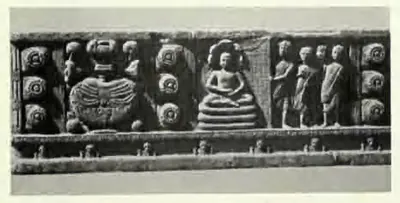
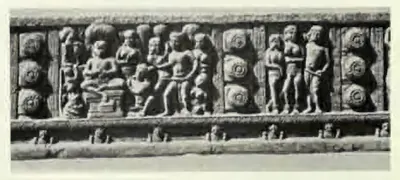
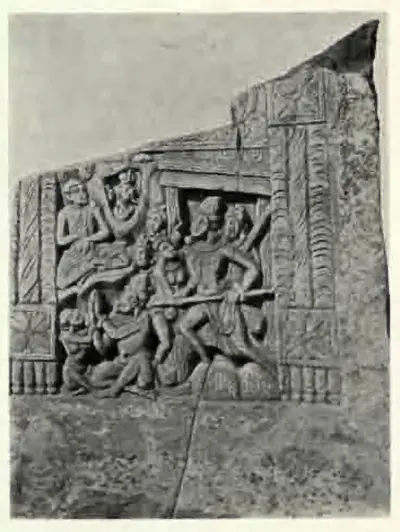
On the memorial pillar, Vogel read the date as the 20th year of Virapurushadatta. Sircar re-read the same word as the cyclic year Vijaya, 273–74, and thought the pillar was raised many years after the king’s death.12112289 Vogel identified the stout king in its carved panels as Chamtamula himself. Hirananda Sastri thought the scenes showed Virapurushadatta with two queens, setting up the pillar.12358124
Other open questions
- Founded or rebuilt? Vogel read one pillar as saying that Chamtisiri erected the Great Stupa. Longhurst thought she only restored an older monument, perhaps of about 200 BCE.3511517
- Wharf or temple? Longhurst identified a long pillared building on the river front as a wharf with a customs house. The excavators of 1956–57 identified it, from its inscribed pillars, as a temple of Karttikeya.7612577
- Monks or nuns? Vogel took Bodhisiri’s shrine to be dedicated to fraternities of monks, while N. Dutt, followed by Sircar in 1939, read it as for nuns. Sircar later rejected the nuns reading on the evidence of the footprint slab.24126127
- A hospital? Some excavators read a fragmentary Sanskrit inscription as naming a hospital. Sircar thought it more likely referred to a Buddhist residence.128
Footnotes
-
J. Ph. Vogel, Prakrit Inscriptions from a Buddhist Site at Nagarjunikonda, Epigraphia Indica XX (1933), p. 1 (archive.org (opens in a new tab)). ↩ ↩2
-
Vogel, “Additional Prakrit Inscriptions” (1931–32), pp. 68–69 (archive.org (opens in a new tab)). ↩ ↩2 ↩3
-
Sircar, Successors of the Satavahanas (1939), p. 14 (archive.org (opens in a new tab)). ↩ ↩2 ↩3
-
Vogel, Prakrit Inscriptions from Nagarjunikonda (1933), p. 2 (archive.org (opens in a new tab)). ↩ ↩2 ↩3
-
Vogel, Prakrit Inscriptions from Nagarjunikonda (1933), p. 3 (archive.org (opens in a new tab)). ↩ ↩2
-
B. Ch. Chhabra, “Nagarjunakonda Inscription of Ehavalasri’s time, Year 11”, Epigraphia Indica XXXIII (1959–60, publ. 1963), p. 147 (archive.org (opens in a new tab)). ↩ ↩2
-
Indian Archaeology 1957–58: A Review (1958), p. 9 (archive.org (opens in a new tab)). ↩ ↩2 ↩3 ↩4 ↩5 ↩6
-
Vogel, Prakrit Inscriptions from Nagarjunikonda (1933), p. 6 (archive.org (opens in a new tab)). ↩ ↩2 ↩3 ↩4 ↩5 ↩6 ↩7 ↩8 ↩9 ↩10 ↩11 ↩12
-
D. C. Sircar and K. G. Krishnan, “Two Inscriptions from Nagarjunikonda”, Epigraphia Indica XXXIV (1961–62, publ. 1963), p. 17 (archive.org (opens in a new tab)). ↩ ↩2 ↩3 ↩4
-
Sircar and Krishnan, “Two Inscriptions from Nagarjunikonda” (1963), p. 20 (archive.org (opens in a new tab)). ↩ ↩2 ↩3 ↩4 ↩5
-
Sircar, “More Inscriptions from Nagarjunikonda”, p. 2 (archive.org (opens in a new tab)). ↩ ↩2 ↩3 ↩4 ↩5 ↩6
-
Sircar, “More Inscriptions from Nagarjunikonda”, p. 6 (archive.org (opens in a new tab)). ↩ ↩2 ↩3 ↩4 ↩5 ↩6 ↩7 ↩8 ↩9
-
James Burgess, The Buddhist Stupas of Amaravati and Jaggayyapeta (1887), p. 110 (archive.org (opens in a new tab)). ↩ ↩2 ↩3
-
Burgess, Buddhist Stupas of Amaravati and Jaggayyapeta (1887), p. 111, translation by G. Bühler (archive.org (opens in a new tab)). ↩ ↩2 ↩3 ↩4 ↩5
-
Robert Sewell and S. Krishnaswami Aiyangar, The Historical Inscriptions of Southern India (1932), p. 16 (archive.org (opens in a new tab)). ↩ ↩2
-
M. Hamid Kuraishi, “Trial Excavations at Alluru, Gummadidurru and Nagarjunikonda”, Annual Report of the Archaeological Survey of India 1926–27 (1930), pp. 156–157 (archive.org (opens in a new tab)). ↩
-
Longhurst, Buddhist Antiquities of Nagarjunakonda (1938), p. 4 (archive.org (opens in a new tab)). ↩ ↩2 ↩3 ↩4
-
J. Ph. Vogel, “Additional Prakrit Inscriptions from Nagarjunikonda”, Epigraphia Indica XXI (1931–32), p. 61 (archive.org (opens in a new tab)). ↩
-
A. Ghosh (ed.), Indian Archaeology 1955–56: A Review (1956), p. 23 (archive.org (opens in a new tab)). ↩
-
A. Ghosh (ed.), Indian Archaeology 1958–59: A Review (1959), p. 5 (archive.org (opens in a new tab)). ↩
-
A. Ghosh (ed.), Indian Archaeology 1957–58: A Review (1958), p. 5 (archive.org (opens in a new tab)). ↩ ↩2 ↩3 ↩4 ↩5
-
A. Ghosh (ed.), Indian Archaeology 1959–60: A Review (1960), p. 9 (archive.org (opens in a new tab)). ↩ ↩2 ↩3 ↩4 ↩5 ↩6
-
D. C. Sircar, “Some Brahmi Inscriptions: B. Fragmentary Inscriptions from Nagarjunikonda”, Epigraphia Indica XXXIV (1963), p. 209 (archive.org (opens in a new tab)). ↩ ↩2
-
Vogel, Prakrit Inscriptions from Nagarjunikonda (1933), p. 23, translation of inscription F (archive.org (opens in a new tab)). ↩ ↩2 ↩3 ↩4 ↩5 ↩6 ↩7
-
Sircar, Successors of the Satavahanas (1939), p. 10 (archive.org (opens in a new tab)). ↩ ↩2
-
Sircar, Successors of the Satavahanas (1939), p. 11 (archive.org (opens in a new tab)). ↩ ↩2
-
Vogel, Prakrit Inscriptions from Nagarjunikonda (1933), p. 25, postscript by Sten Konow (archive.org (opens in a new tab)). ↩
-
Vogel, Prakrit Inscriptions from Nagarjunikonda (1933), p. 26, postscript by Sten Konow (archive.org (opens in a new tab)). ↩
-
Sircar, “Two Inscriptions from Guntur District” (1959), p. 84 (archive.org (opens in a new tab)). ↩ ↩2
-
D. C. Sircar, The Successors of the Satavahanas in Lower Deccan (1939), p. 4 (archive.org (opens in a new tab)). ↩ ↩2
-
Sircar, Successors of the Satavahanas (1939), p. 18 and note 2 (archive.org (opens in a new tab)). ↩ ↩2 ↩3
-
Sircar, “Two Inscriptions from Guntur District” (1959), p. 83 (archive.org (opens in a new tab)). ↩ ↩2
-
Indian Archaeology 1956–57: A Review (1957), p. 38 (archive.org (opens in a new tab)). ↩ ↩2 ↩3 ↩4 ↩5
-
Indian Archaeology 1955–56: A Review (1956), p. 24 (archive.org (opens in a new tab)). ↩ ↩2 ↩3 ↩4
-
Vogel, Prakrit Inscriptions from Nagarjunikonda (1933), p. 4 (archive.org (opens in a new tab)). ↩ ↩2 ↩3 ↩4 ↩5 ↩6 ↩7 ↩8 ↩9 ↩10 ↩11 ↩12
-
Vogel, Prakrit Inscriptions from Nagarjunikonda (1933), p. 5 (archive.org (opens in a new tab)). ↩ ↩2 ↩3 ↩4 ↩5 ↩6
-
Sircar and Krishnan, “Two Inscriptions from Nagarjunikonda” (1963), p. 21 (archive.org (opens in a new tab)). ↩ ↩2 ↩3 ↩4 ↩5 ↩6
-
A. H. Longhurst, The Buddhist Antiquities of Nagarjunakonda (1938), p. 1 (archive.org (opens in a new tab)). ↩ ↩2
-
A. H. Longhurst, “Excavations at Nagarjunikonda”, Annual Report of the Archaeological Survey of India 1927–28 (1931), p. 113 (archive.org (opens in a new tab)). ↩
-
Longhurst, Buddhist Antiquities of Nagarjunakonda (1938), p. 5 (archive.org (opens in a new tab)). ↩
-
Sircar, “More Inscriptions from Nagarjunikonda”, p. 12 (archive.org (opens in a new tab)). ↩ ↩2 ↩3
-
Indian Archaeology 1957–58: A Review (1958), p. 6 (archive.org (opens in a new tab)). ↩ ↩2 ↩3 ↩4 ↩5 ↩6
-
Indian Archaeology 1958–59: A Review (1959), p. 8 (archive.org (opens in a new tab)). ↩ ↩2 ↩3 ↩4 ↩5 ↩6 ↩7 ↩8
-
Indian Archaeology 1958–59: A Review (1959), p. 9 (archive.org (opens in a new tab)). ↩
-
Vogel, “Additional Prakrit Inscriptions” (1931–32), p. 65 (archive.org (opens in a new tab)). ↩ ↩2 ↩3 ↩4 ↩5
-
B. Ch. Chhabra, “Uppugundur Inscription of Virapurisadata’s time, Year 19”, Epigraphia Indica XXXIII (1963), p. 189 (archive.org (opens in a new tab)). ↩ ↩2
-
Chhabra, “Uppugundur Inscription” (1963), p. 190 (archive.org (opens in a new tab)). ↩ ↩2 ↩3 ↩4 ↩5
-
Vogel, Prakrit Inscriptions from Nagarjunikonda (1933), p. 7 and note 1 (archive.org (opens in a new tab)). ↩ ↩2 ↩3 ↩4 ↩5 ↩6
-
Vogel, Prakrit Inscriptions from Nagarjunikonda (1933), p. 9 (archive.org (opens in a new tab)). ↩ ↩2 ↩3
-
Gajjala Vasanta Lakshmi (ed.), Epigraphia Telanganica I (2023), p. 13, Ikshvaku period No. 1, from Indian Archaeology 2010–11: A Review, p. 117. Cite-only; paraphrased. ↩ ↩2
-
Epigraphia Telanganica I (2023), p. 14, Ikshvaku period No. 3, after Epigraphia Indica XLIII pt. 1 (2011), pp. 75–77. Cite-only; paraphrased. ↩ ↩2
-
Epigraphia Telanganica I (2023), p. 15. Cite-only; paraphrased. ↩ ↩2 ↩3
-
Sircar, Successors of the Satavahanas (1939), p. 17 (archive.org (opens in a new tab)). ↩
-
Sircar and Krishnan, “Two Inscriptions from Nagarjunikonda” (1963), p. 18 (archive.org (opens in a new tab)). ↩ ↩2 ↩3 ↩4 ↩5 ↩6 ↩7 ↩8
-
A. Ghosh (ed.), Indian Archaeology 1954–55: A Review (1955), p. 22 (archive.org (opens in a new tab)). ↩ ↩2
-
Vogel, “Additional Prakrit Inscriptions” (1931–32), p. 62 (archive.org (opens in a new tab)). ↩
-
Sircar, “More Inscriptions from Nagarjunikonda”, p. 10 (archive.org (opens in a new tab)). ↩ ↩2
-
Hirananda Sastri, “Nagarjunikonda Inscriptions”, ASI Annual Report 1929–30 (1935), p. 165 (archive.org (opens in a new tab)). ↩ ↩2 ↩3
-
Sircar, Successors of the Satavahanas (1939), p. 19 (archive.org (opens in a new tab)). ↩
-
Chhabra, “Nagarjunakonda Inscription of Ehavalasri’s time” (1963), p. 148 (archive.org (opens in a new tab)). ↩ ↩2 ↩3 ↩4 ↩5
-
Sircar, “More Inscriptions from Nagarjunikonda”, p. 15 (archive.org (opens in a new tab)). ↩ ↩2
-
Sircar, “More Inscriptions from Nagarjunikonda”, p. 5 and notes (archive.org (opens in a new tab)). ↩ ↩2 ↩3 ↩4 ↩5 ↩6 ↩7 ↩8 ↩9
-
Vogel, Prakrit Inscriptions from Nagarjunikonda (1933), p. 17, translation of pillar inscription C 3 (archive.org (opens in a new tab)). ↩
-
Sircar, “Fragmentary Inscriptions from Nagarjunikonda” (1963), p. 210 (archive.org (opens in a new tab)). ↩ ↩2
-
Sircar, “Fragmentary Inscriptions from Nagarjunikonda” (1963), p. 211 (archive.org (opens in a new tab)). ↩
-
Vogel, Prakrit Inscriptions from Nagarjunikonda (1933), p. 32, glossary, s.v. mahadandanayaka (archive.org (opens in a new tab)). ↩
-
Sircar, “Inscription of Abhira Vasushena” (1963), p. 198 (archive.org (opens in a new tab)). ↩ ↩2 ↩3
-
Longhurst, Buddhist Antiquities of Nagarjunakonda (1938), p. 2 (archive.org (opens in a new tab)). ↩
-
Longhurst, Buddhist Antiquities of Nagarjunakonda (1938), p. 3 (archive.org (opens in a new tab)). ↩
-
Sircar, “More Inscriptions from Nagarjunikonda”, p. 16 (archive.org (opens in a new tab)). ↩
-
Sircar, “More Inscriptions from Nagarjunikonda”, p. 14 (archive.org (opens in a new tab)). ↩
-
Indian Archaeology 1955–56: A Review (1956), p. 25 (archive.org (opens in a new tab)). ↩ ↩2 ↩3
-
Longhurst, Buddhist Antiquities of Nagarjunakonda (1938), p. 11 (archive.org (opens in a new tab)). ↩ ↩2 ↩3
-
Longhurst, “Excavations at Nagarjunikonda”, ASI Annual Report 1927–28 (1931), p. 114 (archive.org (opens in a new tab)). ↩ ↩2
-
Longhurst, Buddhist Antiquities of Nagarjunakonda (1938), p. 7 (archive.org (opens in a new tab)). ↩ ↩2 ↩3 ↩4
-
Longhurst, Buddhist Antiquities of Nagarjunakonda (1938), p. 8 (archive.org (opens in a new tab)). ↩ ↩2 ↩3 ↩4
-
A. Ghosh (ed.), Indian Archaeology 1956–57: A Review (1957), p. 36 (archive.org (opens in a new tab)). ↩ ↩2 ↩3 ↩4 ↩5 ↩6
-
Sircar, Successors of the Satavahanas (1939), p. 33 (archive.org (opens in a new tab)). ↩
-
Vogel, Prakrit Inscriptions from Nagarjunikonda (1933), p. 10 (archive.org (opens in a new tab)). ↩ ↩2 ↩3
-
A. Ghosh (ed.), Indian Archaeology 1960–61: A Review (1961), p. 1 (archive.org (opens in a new tab)). ↩
-
Indian Archaeology 1955–56: A Review (1956), p. 26 (archive.org (opens in a new tab)). ↩
-
Longhurst, Buddhist Antiquities of Nagarjunakonda (1938), p. 10 (archive.org (opens in a new tab)). ↩ ↩2
-
Longhurst, “Excavations at Nagarjunikonda”, ASI Annual Report 1927–28 (1931), p. 121 (archive.org (opens in a new tab)). ↩ ↩2
-
Vogel, Prakrit Inscriptions from Nagarjunikonda (1933), p. 29, glossary, s.v. dinari-masaka (archive.org (opens in a new tab)). ↩ ↩2
-
Sircar, Successors of the Satavahanas (1939), p. 26 (archive.org (opens in a new tab)). ↩ ↩2
-
Sircar, Successors of the Satavahanas (1939), p. 27 (archive.org (opens in a new tab)). ↩ ↩2
-
Vogel, Prakrit Inscriptions from Nagarjunikonda (1933), p. 19, translation of pillar inscription B 5 (archive.org (opens in a new tab)). ↩
-
Vogel, Prakrit Inscriptions from Nagarjunikonda (1933), p. 20 (archive.org (opens in a new tab)). ↩
-
Sircar, “More Inscriptions from Nagarjunikonda”, p. 3 (archive.org (opens in a new tab)). ↩ ↩2 ↩3 ↩4
-
Hirananda Sastri, “Nagarjunikonda Inscriptions”, ASI Annual Report 1929–30 (1935), p. 164 (archive.org (opens in a new tab)). ↩
-
J. Ph. Vogel, “Two Additional Inscriptions from Nagarjunikonda”, Epigraphia Indica XX (1933), p. 37 (archive.org (opens in a new tab)). ↩
-
Longhurst, “Excavations at Nagarjunikonda”, ASI Annual Report 1929–30 (1935), p. 149 (archive.org (opens in a new tab)). ↩
-
Longhurst, Buddhist Antiquities of Nagarjunakonda (1938), p. 31, description of Plate XXX (archive.org (opens in a new tab)). ↩
-
Indian Archaeology 1957–58: A Review (1958), p. 8 (archive.org (opens in a new tab)). ↩ ↩2
-
Longhurst, “Excavations at Nagarjunikonda”, ASI Annual Report 1927–28 (1931), p. 119 (archive.org (opens in a new tab)). ↩
-
Sircar and Krishnan, “Two Inscriptions from Nagarjunikonda” (1963), p. 19 (archive.org (opens in a new tab)). ↩
-
Sircar, “More Inscriptions from Nagarjunikonda”, p. 4 (archive.org (opens in a new tab)). ↩
-
Indian Archaeology 1956–57: A Review (1957), p. 37 (archive.org (opens in a new tab)). ↩ ↩2
-
D. C. Sircar and A. N. Lahiri, “Footprint Slab Inscription from Nagarjunikonda”, Epigraphia Indica XXXIII (1963), p. 248 (archive.org (opens in a new tab)). ↩
-
A. H. Longhurst, “Excavations at Nagarjunikonda”, Annual Report of the Archaeological Survey of India 1929–30 (1935), p. 147 (archive.org (opens in a new tab)). ↩
-
Longhurst, Buddhist Antiquities of Nagarjunakonda (1938), p. 12 (archive.org (opens in a new tab)). ↩ ↩2
-
Longhurst, Buddhist Antiquities of Nagarjunakonda (1938), p. 13 (archive.org (opens in a new tab)). ↩ ↩2
-
Longhurst, Buddhist Antiquities of Nagarjunakonda (1938), p. 15 (archive.org (opens in a new tab)). ↩
-
Indian Archaeology 1959–60: A Review (1960), p. 84 (archive.org (opens in a new tab)). ↩
-
D. C. Sircar, “Nagarjunikonda Inscription of the time of Abhira Vasushena, Year 30”, Epigraphia Indica XXXIV (1963), p. 197 (archive.org (opens in a new tab)). ↩ ↩2
-
Sircar, “Inscription of Abhira Vasushena” (1963), p. 203, translation (archive.org (opens in a new tab)). ↩ ↩2
-
Sircar, “Inscription of Abhira Vasushena” (1963), p. 201 (archive.org (opens in a new tab)). ↩ ↩2 ↩3
-
Sircar, “Inscription of Abhira Vasushena” (1963), p. 202 (archive.org (opens in a new tab)). ↩ ↩2 ↩3
-
D. C. Sircar, “Two Inscriptions from Guntur District”, Epigraphia Indica XXXII (1959), p. 82 (archive.org (opens in a new tab)). ↩
-
Sircar, “Two Inscriptions from Guntur District” (1959), p. 88 (archive.org (opens in a new tab)). ↩
-
Sircar, “Two Inscriptions from Guntur District” (1959), p. 89 (archive.org (opens in a new tab)). ↩
-
Sircar, Successors of the Satavahanas (1939), p. 15 (archive.org (opens in a new tab)). ↩ ↩2
-
B. V. Krishna Rao, “Two Salankayana Charters from Kanukollu”, Epigraphia Indica XXXI (1960), p. 3 (archive.org (opens in a new tab)). ↩
-
Indian Archaeology 1954–55: A Review (1955), p. 23 (archive.org (opens in a new tab)). ↩
-
Longhurst, “Excavations at Nagarjunikonda”, ASI Annual Report 1927–28 (1931), p. 115 (archive.org (opens in a new tab)). ↩ ↩2
-
Sircar, Successors of the Satavahanas (1939), p. 9 (archive.org (opens in a new tab)). ↩
-
Sircar, Successors of the Satavahanas (1939), p. 16, genealogical table (archive.org (opens in a new tab)). ↩
-
Epigraphia Indica XXXV, “Additions and Corrections”, correction to p. 6, line 30 (archive.org (opens in a new tab)). ↩
-
Longhurst, “Excavations at Nagarjunikonda”, ASI Annual Report 1927–28 (1931), p. 118 (archive.org (opens in a new tab)). ↩
-
Sircar, “More Inscriptions from Nagarjunikonda”, p. 11 (archive.org (opens in a new tab)). ↩
-
Vogel, “Additional Prakrit Inscriptions” (1931–32), p. 64 (archive.org (opens in a new tab)). ↩
-
D. C. Sircar, “More Inscriptions from Nagarjunikonda”, Epigraphia Indica XXXV (1963–64), p. 1 (archive.org (opens in a new tab)). ↩
-
Vogel, “Additional Prakrit Inscriptions” (1931–32), p. 63 (archive.org (opens in a new tab)). ↩
-
Hirananda Sastri, “Nagarjunikonda Inscriptions”, ASI Annual Report 1929–30 (1935), p. 166 (archive.org (opens in a new tab)). ↩
-
Longhurst, “Excavations at Nagarjunikonda”, ASI Annual Report 1929–30 (1935), p. 148 (archive.org (opens in a new tab)). ↩
-
Sircar, Successors of the Satavahanas (1939), p. 28 and note 1 (archive.org (opens in a new tab)). ↩
-
Sircar and Lahiri, “Footprint Slab Inscription” (1963), p. 249 (archive.org (opens in a new tab)). ↩
-
Sircar, “More Inscriptions from Nagarjunikonda”, p. 18 (archive.org (opens in a new tab)). ↩
Photos
 Bodhisri chaitya, NagarjunakondaPhotograph · 2013
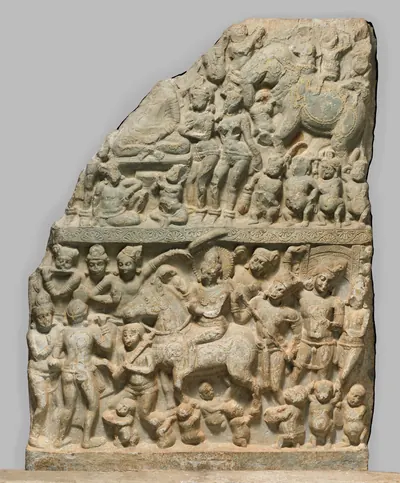 Drum panel with the Great Departure, Nagarjunakonda, 3rd century CEPhotograph · 3rd century CE
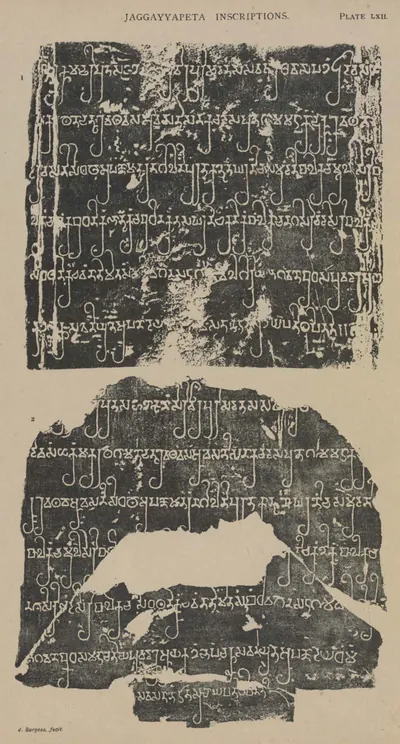 Jaggayyapeta inscriptions, Nos. 1 and 2 (Burgess 1887, Pl. LXII)Inscription rubbing · 1887
 Jaggayyapeta inscriptions, Nos. 3-5 (Burgess 1887, Pl. LXIII)Inscription rubbing · 1887
 Nagarjunakonda: "A Chakravartti and his family as Buddhist disciples" (ASI Annual Report 1929-30, Pl. XXXIX (d))Book plate · 1935
 Nagarjunakonda: "A Chakravartti and his family being converted to Buddhism" (ASI Annual Report 1929-30, Pl. XXXIX (e))Book plate · 1935
 Nagarjunakonda: "A Chakravartti and his wife converted to Buddhism (Stupa 2)" (ASI Annual Report 1929-30, Pl. XL (b))Book plate · 1935
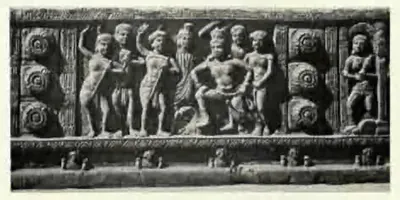 Nagarjunakonda: "A Chakravartti denouncing Brahmanism" (ASI Annual Report 1929-30, Pl. XXXIX (c))Book plate · 1935
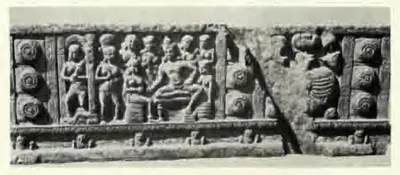 Nagarjunakonda: "A Chakravartti in his palace (Stupa 9)" (ASI Annual Report 1929-30, Pl. XXXIX (a))Book plate · 1935
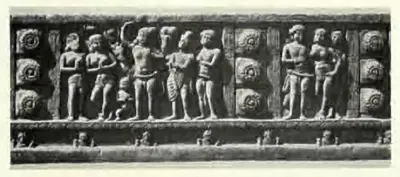 Nagarjunakonda: "A Chakravartti renouncing his kingdom" (ASI Annual Report 1929-30, Pl. XXXIX (b))Book plate · 1935
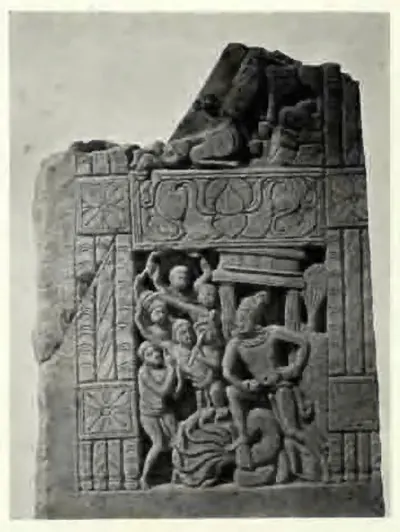 Nagarjunakonda: "A Chakravartti, denouncing Brahmanism (Stupa 2)" (ASI Annual Report 1929-30, Pl. XL (a))Book plate · 1935
 Nagarjunakonda: "Ayaka panel from Stupa 9" (ASI Annual Report 1929-30, Pl. XL (c))Book plate · 1935
Show all (51)
 Nagarjunakonda: "Bas-relief from Stupa No. 2" (ASI Annual Report 1927-28, Pl. LII (b))Book plate · 1931
 Nagarjunakonda: "Beam A, panels 1-4" (ASI Annual Report 1927-28, Pl. LI)Book plate · 1931
 Nagarjunakonda: "Beam A, panels 5-7" (ASI Annual Report 1927-28, Pl. LI(a) (a))Book plate · 1931
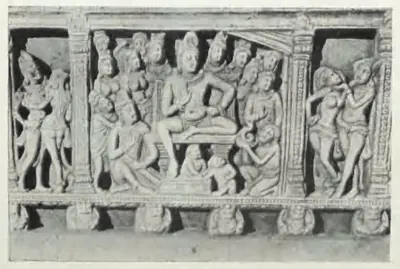 Nagarjunakonda: "Beam A, panels 5-7" (ASI Annual Report 1927-28, Pl. LI(a) (b))Book plate · 1931
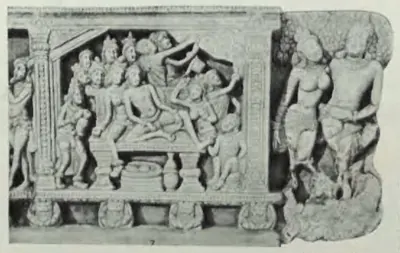 Nagarjunakonda: "Beam A, panels 5-7" (ASI Annual Report 1927-28, Pl. LI(a) (c))Book plate · 1931
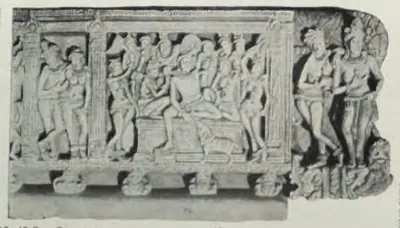 Nagarjunakonda: "Beam B, end panel" (ASI Annual Report 1927-28, Pl. LI(a) (d))Book plate · 1931
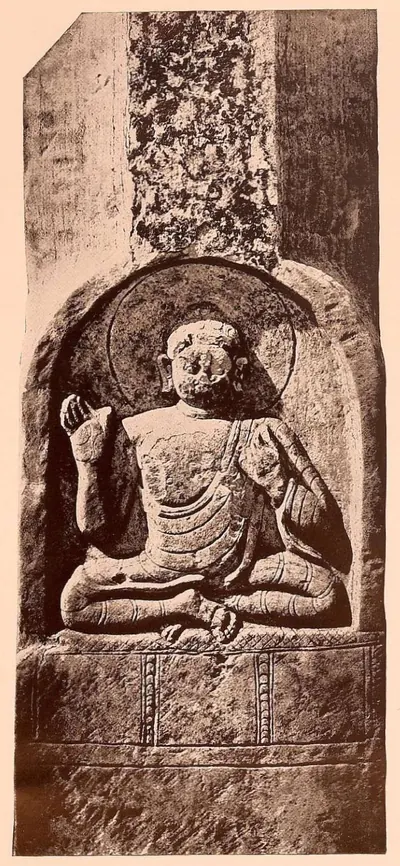 Nagarjunakonda: "Carved ayaka-pillar" (ASI Annual Report 1928-29, Pl. XLVI (a))Book plate · 1933
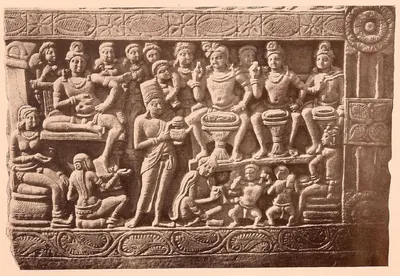 Nagarjunakonda: "Casting the horoscope" (ASI Annual Report 1928-29, Pl. XLVIII (b))Book plate · 1933
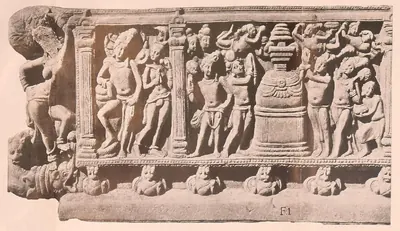 Nagarjunakonda: "Mahaparinirvana" (ASI Annual Report 1928-29, Pl. L (a))Book plate · 1933
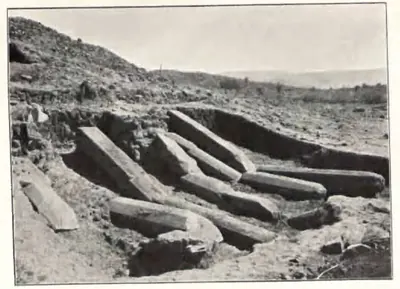 Nagarjunakonda: "Nagarjunikonda: Site No. 1, showing broken pillars on west side of stupa" (ASI Annual Report 1926-27, Pl. XXXVII (a))Historic photograph · 1930
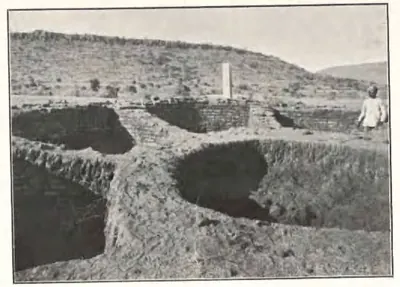 Nagarjunakonda: "Nagarjunikonda: Site No. 1, showing wheel-shaped foundation of stupa" (ASI Annual Report 1926-27, Pl. XXXVII (b))Historic photograph · 1930
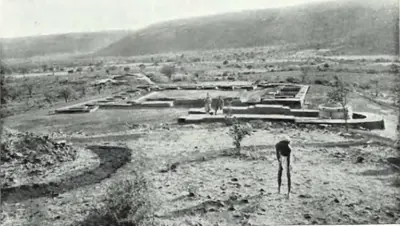 Nagarjunakonda: "Nagarjunikonda. ... Excavated Monastery and Apsidal Temple" (ASI Annual Report 1927-28, Pl. L (b))Book plate · 1931
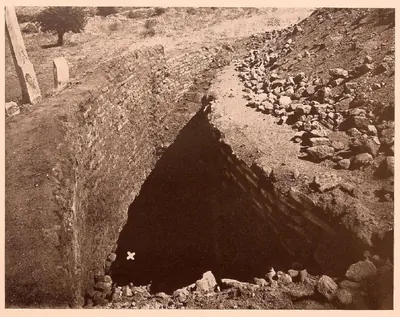 Nagarjunakonda: "Outer wall of the Great Stupa (findspot of relics marked by a cross)" (ASI Annual Report 1928-29, Pl. XLV (b))Plan · 1933
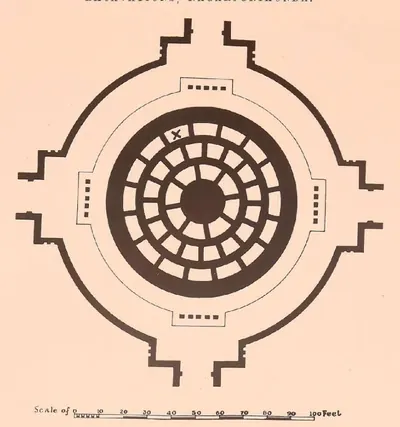 Nagarjunakonda: "Plan of the Great Stupa (findspot of relics marked by a cross)" (ASI Annual Report 1928-29, Pl. XLV (a))Plan · 1933
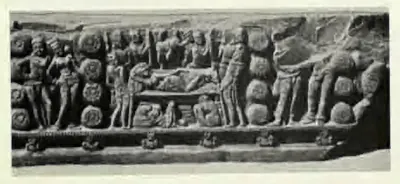 Nagarjunakonda: "Queen Maya's dream (Stupa 9)" (ASI Annual Report 1929-30, Pl. XXXIX (f))Book plate · 1935
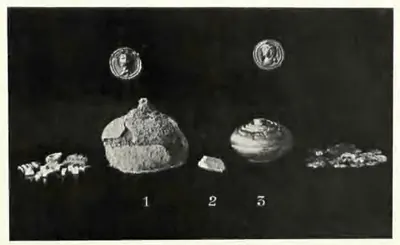 Nagarjunakonda: "Relics recovered from Stupa 6: 1. silver casket; 2. bone relic; 3. gold reliquary. Actual size" (ASI Annual Report 1929-30, Pl. XXXVII d)Book plate · 1935
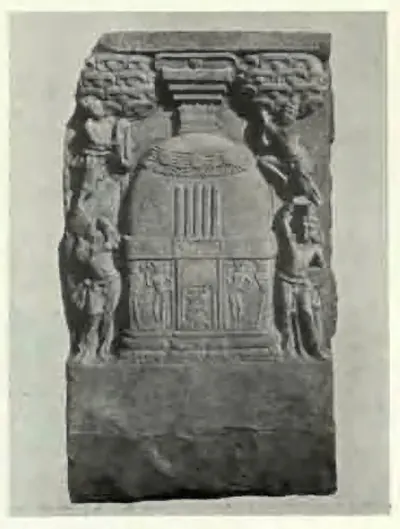 Nagarjunakonda: "Representation of a Buddhist stupa (Stupa 9)" (ASI Annual Report 1929-30, Pl. XL (d))Book plate · 1935
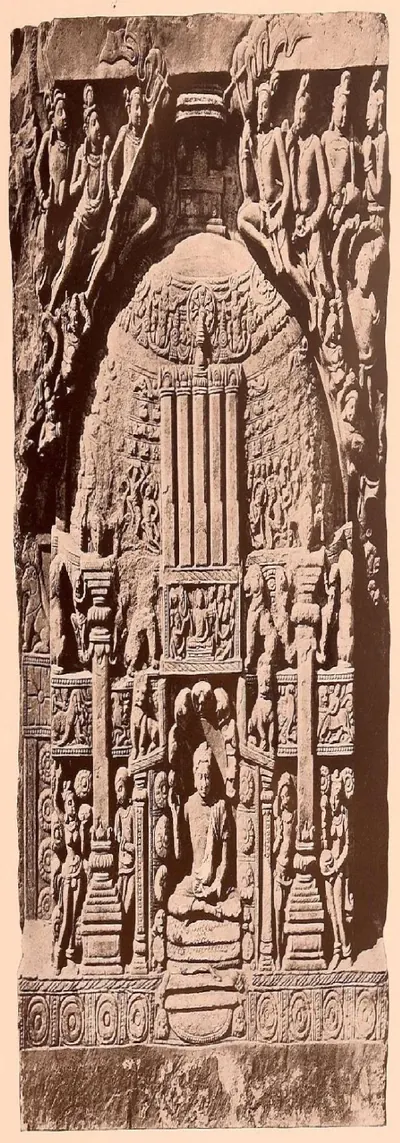 Nagarjunakonda: "Representation of a stupa" (ASI Annual Report 1928-29, Pl. XLVII (a))Book plate · 1933
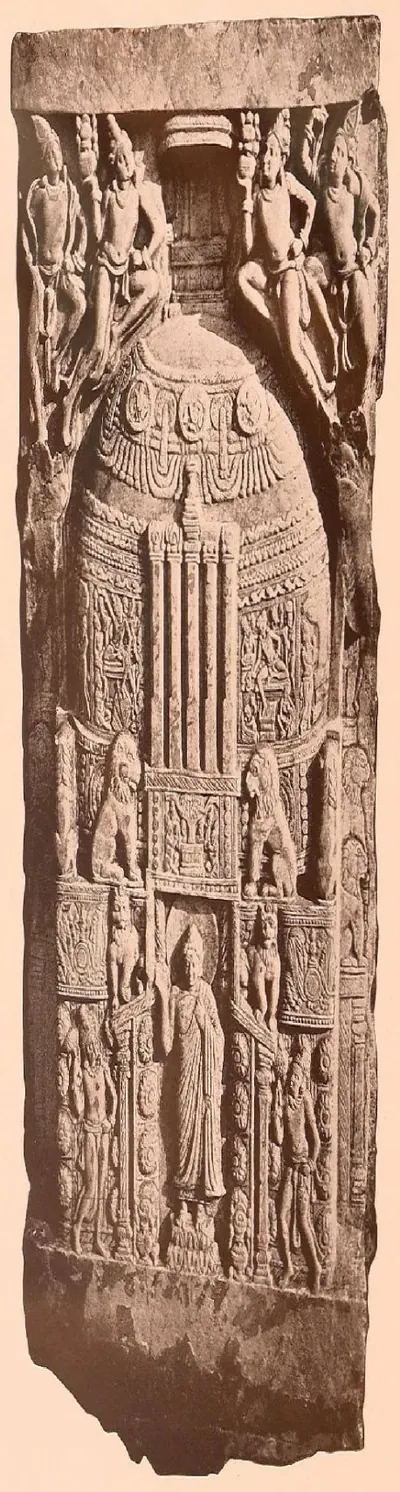 Nagarjunakonda: "Representation of a stupa" (ASI Annual Report 1928-29, Pl. XLVII (b))Book plate · 1933
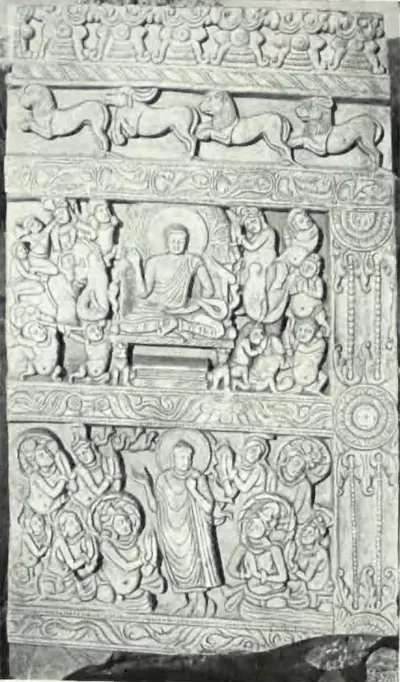 Nagarjunakonda: "Sculptured slab from Stupa No. 2" (ASI Annual Report 1927-28, Pl. LII (a))Book plate · 1931
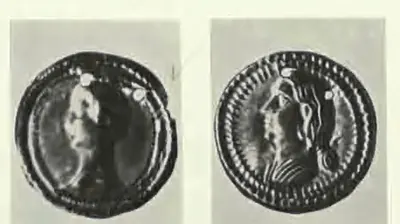 Nagarjunakonda: "Small gold medallions found with the relics recovered from Stupa 6" (ASI Annual Report 1929-30, Pl. XXXVII e)Other · 1935
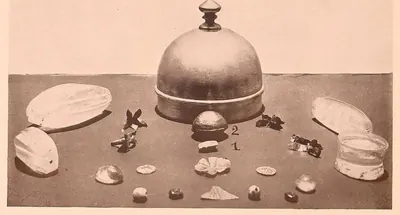 Nagarjunakonda: "The Buddha relics after cleaning and showing (1) the bone relic and (2) the gold box" (ASI Annual Report 1928-29, Pl. XLVI (c))Book plate · 1933
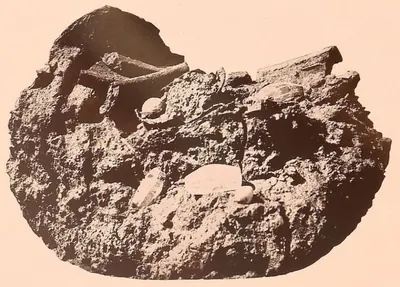 Nagarjunakonda: "The Buddha relics when first discovered" (ASI Annual Report 1928-29, Pl. XLVI (b))Book plate · 1933
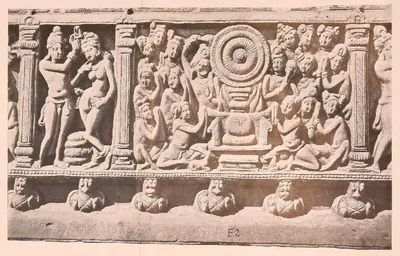 Nagarjunakonda: "The First Sermon" (ASI Annual Report 1928-29, Pl. L (b))Book plate · 1933
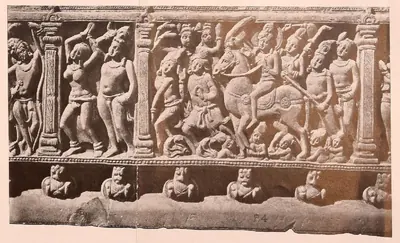 Nagarjunakonda: "The Great Renunciation" (ASI Annual Report 1928-29, Pl. L (d))Book plate · 1933
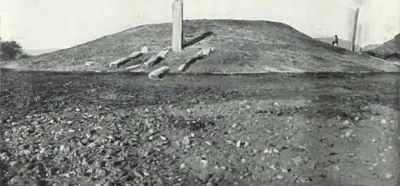 Nagarjunakonda: "The Great Stupa at Nagarjunikonda" (ASI Annual Report 1927-28, Pl. L (a))Book plate · 1931
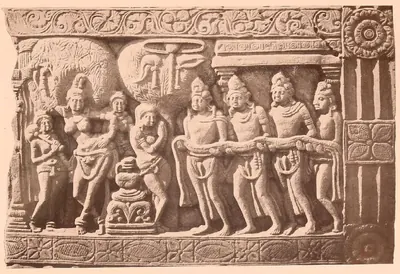 Nagarjunakonda: "The Nativity and the Seven Steps" (ASI Annual Report 1928-29, Pl. XLVIII (a))Book plate · 1933
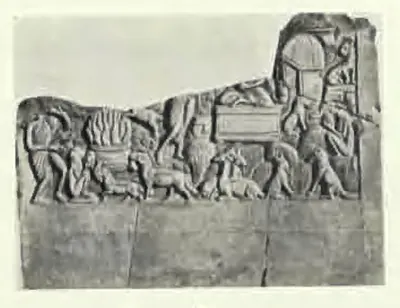 Nagarjunakonda: "The Sasa Jataka (Stupa 9)" (ASI Annual Report 1929-30, Pl. XXXVII f)Book plate · 1935
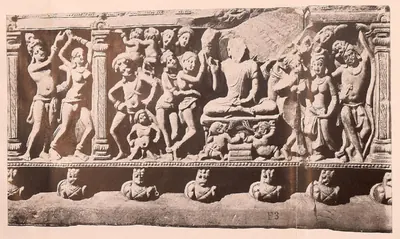 Nagarjunakonda: "The Temptation" (ASI Annual Report 1928-29, Pl. L (c))Book plate · 1933
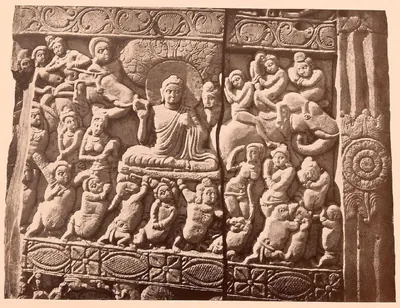 Nagarjunakonda: "The Temptation" (ASI Annual Report 1928-29, Pl. XLIX (b))Book plate · 1933
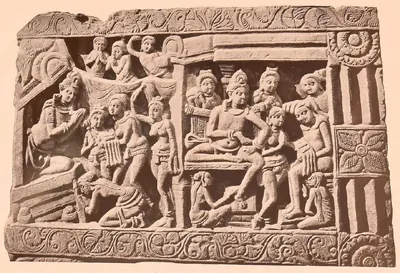 Nagarjunakonda: "To right: The child being presented to Asita; to left: Siddhartha's visit to the Temple" (ASI Annual Report 1928-29, Pl. XLIX (a))Book plate · 1933
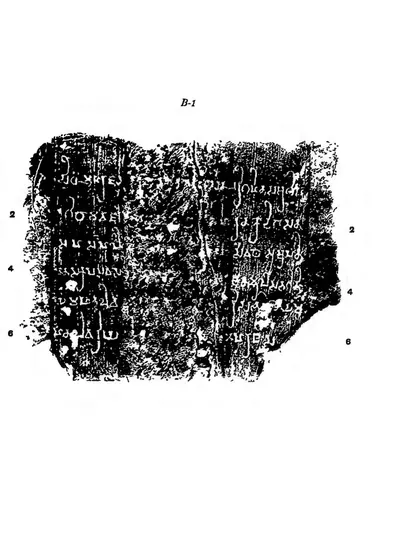 Nagarjunakonda: ayaka-pillar inscription B 1 (south side, first pillar) (Epigraphia Indica XX)Inscription rubbing · 1933
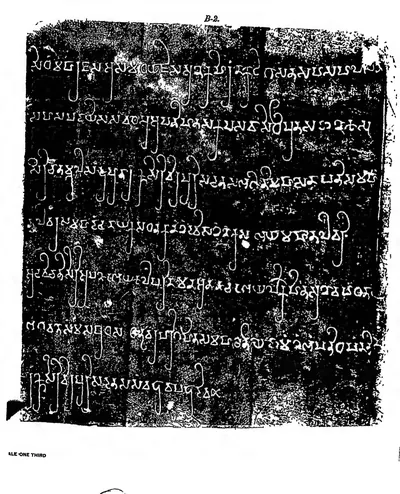 Nagarjunakonda: ayaka-pillar inscription B 2 (south side, second pillar) (Epigraphia Indica XX)Inscription rubbing · 1933
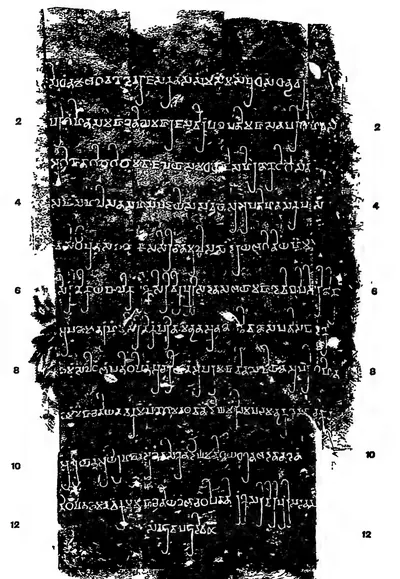 Nagarjunakonda: ayaka-pillar inscription C-2 (west side, second pillar), gift of Mahadevi Bapisirinika, queen of King Siri-Virapurisadata (Epigraphia Indica XX)Inscription rubbing · 1933
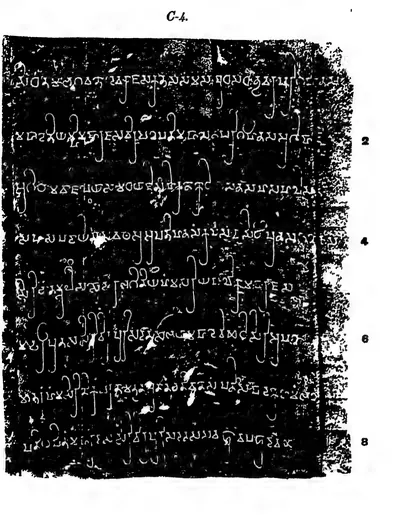 Nagarjunakonda: ayaka-pillar inscription C-4 (west side, fourth pillar), gift of Mahadevi Chhathisiri, queen of King Siri-Virapurisadata (Epigraphia Indica XX)Inscription rubbing · 1933
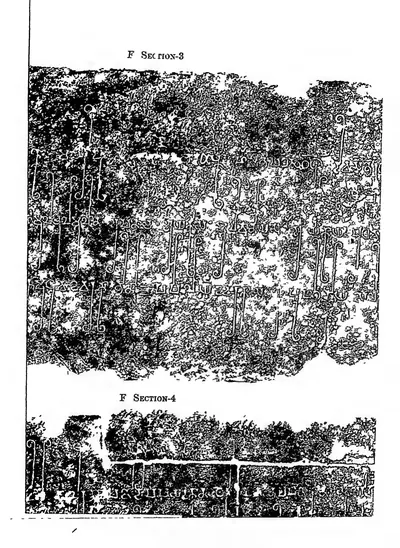 Nagarjunakonda: inscription F, sections 3 and 4 (floor of apsidal shrine No. II) (Epigraphia Indica XX)Inscription rubbing · 1933
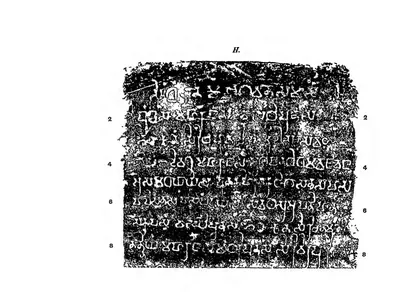 Nagarjunakonda: inscription H, lines 1-9 (stone pillar found at Kottampalugu) (Epigraphia Indica XX)Inscription rubbing · 1933
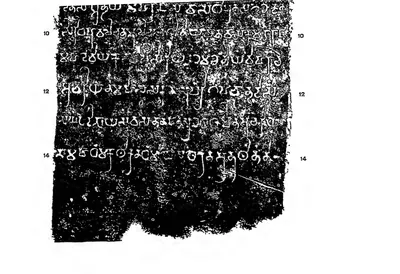 Nagarjunakonda: inscription H, lines 9-14 (stone pillar found at Kottampalugu) (Epigraphia Indica XX)Inscription rubbing · 1933
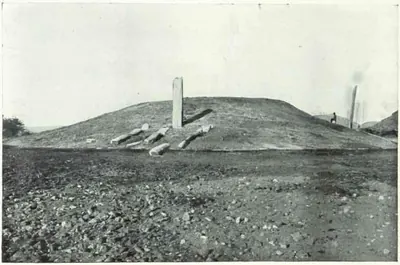 Stupa mound at Nagarjunakonda before excavation, 1927–28Book plate · 1927–28
Related
People
Vasishthiputra Chamtamula
c. 225–255 CE
First known king of the Ikshvakus of Vijayapuri (Nagarjunakonda). His descendants' inscriptions remember him as a performer of the horse sacrifice and other Vedic rites, while the women of his family founded the Buddhist monuments of the Krishna valley. His reign ended before about 255; D. C. Sircar had dated it to about 223–240.
Virapurushadatta
c. 255–275 CE
Ikshvaku king of Vijayapuri (3rd century CE). In his reign the women of the royal family rebuilt the Great Stupa at Nagarjunakonda, and founded shrines and monasteries for Buddhist monks, including monks from Sri Lanka. His records run to his 20th regnal year, and one is dated in a cyclic year equated with 273–74. D. C. Sircar dated his reign to about 255–275.
Ehuvula Chamtamula
c. 280–335 CE
Third known Ikshvaku king of Vijayapuri (Nagarjunakonda), son of Virapurushadatta. His records run to his 24th regnal year. In his reign a prince and a noble built the earliest dated Shiva temples in the valley. Queens, bankers and lay Buddhists went on giving gifts to its monasteries. D. C. Sircar dated his reign to about 280–335.
Rudrapurushadatta
c. 335–346 CE
Fourth and last known Ikshvaku king of Vijayapuri (Nagarjunakonda), son of Ehuvula Chamtamula. He was identified in 1955–56 from a memorial pillar of his 11th regnal year. D. C. Sircar thought his reign ended before about 350, when the Pallavas took the Krishna–Guntur region.
Bhatideva
Ikshvaku queen, wife of King Virapurushadatta and mother of King Ehuvula Chamtamula. In the 2nd year of her son's reign she founded a monastery at Nagarjunakonda for Buddhist teachers of the Bahusutiya school.
Chamtisiri
Ikshvaku princess, sister of King Chamtamula and aunt and later mother-in-law of King Virapurushadatta. She was the chief donor of the Buddhist monuments of Vijayapuri (Nagarjunakonda). She gave the pillars of the Great Stupa, an apsidal shrine and a pillared hall beside it, all to the Aparamahavinaseliya school, in the 3rd century CE.
Monuments
Chula-Dhammagiri monastery
Buddhist monastery buildings on the hill of Naharallabodu at Nagarjunakonda. It is identified with the monastery on the Lesser Dhammagiri east of Vijayapuri. There the lay woman Bodhisiri built an apsidal (round-ended) shrine for monks from Sri Lanka in the 14th year of the Ikshvaku king Virapurushadatta.
Nagarjunakonda Mahachaitya
The Great Stupa of the Ikshvaku city of Vijayapuri. Its limestone ayaka pillars carry Prakrit inscriptions of the princess Chamtisiri and other royal women, dated in the 6th year of King Virapurushadatta. A small bone relic was found in one of its chambers during the 1928–29 excavations.
Vijayapuri citadel
Citadel with brick walls and a moat, the heart of the Ikshvaku capital on the Krishna bank in the Nagarjunakonda valley, excavated in 1956–59. Inside and around it the excavators found barracks, royal houses, a stepped tank they connected with the horse sacrifice, temples of Karttikeya and Shiva, a river ghat and a large stadium.
Inscriptions
Nagarjunakonda inscriptions of Chamtisiri
c. 250 CE
Prakrit inscriptions at Nagarjunakonda recording gifts by the Ikshvaku princess Chamtisiri. They are cut on the ayaka pillars of the Great Stupa (Mahachaitya), on the pillars of a stone hall and on the floor of an apsidal shrine beside it. They are dated in the 6th, 15th and 18th regnal years of King Virapurushadatta.
Nagarjunakonda inscription of Bodhisiri
c. 268 CE
Prakrit inscription on the floor of an apsidal (round-ended) shrine on the Chula-Dhammagiri at Nagarjunakonda, dated in the 14th year of King Mathariputra (Virapurushadatta). It records the gifts of the lay woman Bodhisiri to Buddhist monks from Sri Lanka. It names the city of Vijayapuri, the Sriparvata and the trading town of Kantakasela.
Memorial pillar of Chamtamula, Nagarjunakonda
c. 273 CE
A carved pillar found near Stupa 9 at Nagarjunakonda, with a Prakrit inscription. It records that the sisters, mothers and queens of the dead Ikshvaku king Chamtamula raised it in the reign of his son Virapurushadatta. Vogel dated it to the king's 20th year. Sircar re-read the date as the cyclic year Vijaya, 273–74, the earliest known use of the cyclic year in Indian inscriptions.
Jaggayyapeta inscriptions of Virapurushadatta
c. 274 CE
Three copies of a Prakrit inscription on the ayaka pillars of the Jaggayyapeta stupa. They record the gift of five pillars at the eastern gate of the Great Chaitya by the artisan Siddhartha, in the 20th year of the Ikshvaku king Virapurushadatta. James Burgess found them in 1882, and they were the first Ikshvaku records to be discovered.
Nagarjunakonda inscription of Pushpabhadrasvamin
c. 295 CE
A Sanskrit inscription on a four-faced flagstaff pillar from a temple at the foot of Nagarjuna's hill, dated in the 16th year of the Ikshvaku king Ehuvula Chamtamula. It records that his son, the prince Virapurushadatta, built a shrine of the god Shiva as Pushpabhadrasvamin and gave it a village. It is the first direct evidence of Shaiva worship in the Ikshvaku royal house.
References
Notes (0)
Sources (24)
Spotted an error on this page? Tell us
Last updated: