Nagarjunakonda
Hill and enclosed valley on the right bank of the Krishna in Palnad taluk, Guntur district. It is the site of Vijayapuri, capital of the Ikshvakus in the 3rd and early 4th centuries CE. A. H. Longhurst excavated its Buddhist monuments in 1927–31. The Archaeological Survey excavated the whole valley in 1954–60, before the Nagarjunasagar dam was to submerge it.
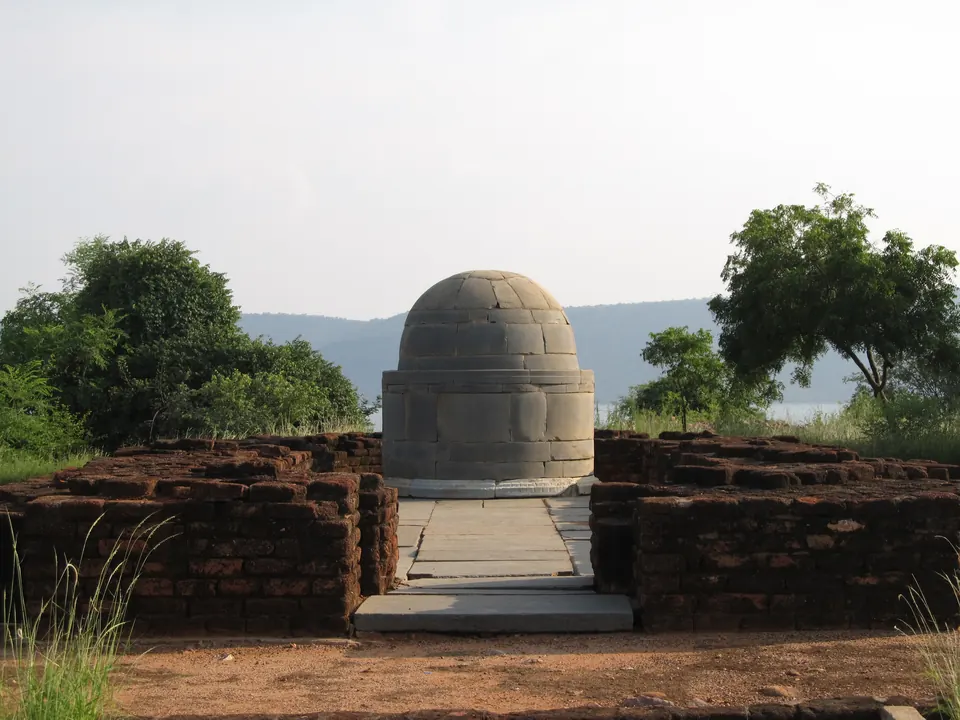
Nagarjunakonda (“Nagarjuna’s hill”) is a flat-topped rocky hill of about 200 acres.12 It overhangs the right bank of the Krishna in the Palnad taluk of Guntur district, on the old border with the Nizam’s Dominions.12 Beside it lies a valley about three miles wide, shut in by hills on three sides and by the river on the fourth.12 In the 1920s the only way in was a footpath over the hills from Nagulavaram, or by the river.1
Before 1926
Nineteenth-century accounts knew the place only as an old hill fort. The Kistna district manual of 1883 records a tradition that the Reddi kings of Kondavidu built “the fortress of Nagarjuna Konda” in the 14th century.34 It lists it among the forts that Pulaya Vema Reddi took.34 Its compiler had not visited this “very remote corner of the District”.5
The Buddhist city
In March 1926 an assistant of the Madras epigraphy office found Buddhist sculpture, brick mounds and inscribed limestone pillars in the valley.67 J. Ph. Vogel, who edited the inscriptions, called it “next to Amaravati, the most important Buddhist site hitherto found in Southern India”.67 M. Hamid Kuraishi began trial excavations at the Great Stupa in 1926–27.8
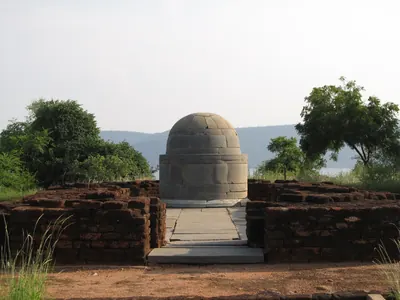
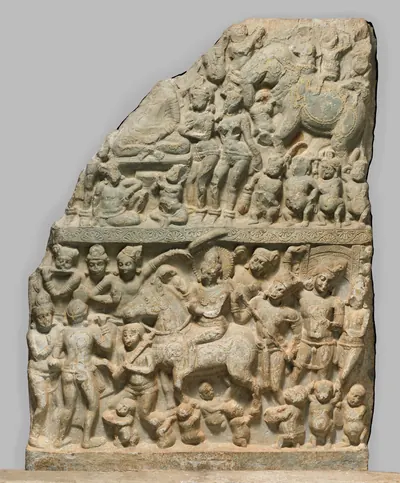
A. H. Longhurst excavated the site between 1927 and February 1931.910 He uncovered stupas (relic mounds), monasteries, apsidal (round-ended) temples, a probable palace site and coins.910 He also found over four hundred carved reliefs in the Amaravati style.910 The principal monument was the Great Stupa or Mahachaitya.
One of the inscriptions names the city that stood in the valley as Vijayapuri.1112 It places a monastery on the “Siripavata” (Sriparvata) to its east.1112
Vogel noted the Tibetan tradition that the Buddhist philosopher Nagarjuna spent his last years on a Sriparvata, which might explain the hill’s modern name.1112 The records belong to the Ikshvaku kings (see Ikshvakus of Vijayapuri). Vogel knew three of these kings, and he placed them in the 3rd century CE.13 Later finds added a fourth king, Rudrapurushadatta.14
D. C. Sircar dated two inscriptions, written in the cyclic year Vijaya, to 273–74 and 333–34.15 He concluded that the dynasty lasted until about the middle of the 4th century.15
Longhurst thought that the building stone had come down the river. He took a pillared building about 250 feet long on the river front for a stone wharf where it was landed.1617 The excavators of 1956–57 identified the same building as a temple of Karttikeya.18 Inscriptions on its pillars name Chanda-Sakti-kumara, probably its founder.18
The excavations of 1954–60
In the 1950s the valley was due to be flooded by the reservoir of the Nandikonda (Nagarjunasagar) dam. So the Archaeological Survey set out to excavate and save as much as it could before the water rose.1920 Its Nagarjunakonda Excavation Project was formed in 1954 under R. Subrahmanyam.2122 By 1958–59 it had extended the work to about 1,800 acres.2122 Across the river, the Andhra Pradesh archaeology department excavated Yelleswaram, which faced the same fate.20
The excavators uncovered the citadel of Vijayapuri beside the river.23 It was a trapezoid of about 3,000 by 2,000 feet.23 A brick wall, built over an earlier earthen rampart, enclosed it, and a ditch surrounded it, with barracks near its eastern gate.23
Between the citadel and Nagarjuna’s hill they found a sunken brick arena, 309 by 259 feet, with steps for spectators, which they called a stadium.2324 East of the citadel lay a planned township, with a main street, lanes and walled house compounds.25 They also found a neolithic settlement and a megalithic burial in the valley.18 Some of the structures were a century or so older than the Ikshvakus, and some at least two centuries later.26
Brahmanical shrines
The new finds changed the picture of the city’s religion. Chhabra observed that the earlier excavations had found almost only Buddhist remains, while the recent digging had brought many Brahmanical ones to light.19 Brahmanical shrines clustered along the northern river front and within the fortified zone. Buddhist monasteries filled the rest of the valley.18
- a temple of Shiva as Pushpabhadrasvamin, built by an Ikshvaku prince in the 16th year of King Ehuvula Chamtamula272818
- a Shiva temple built by the noble Elisri in the same king’s 11th year28
- temples of Karttikeya18
An inscription found at the river’s edge is dated in the 30th year of the Abhira king Vasushena.2930 It records the installation of a form of Vishnu.2930 Sircar dated it about 278.3132 He suggested that the Abhiras, from the Nasik region, briefly held the Ikshvaku kingdom.3132 See also Religion.
Later history
On the hill itself Longhurst found brick fortifications, using bricks of the same size as the Buddhist buildings.133 He also found later stone walls, which he attributed to local chiefs of the Vijayanagara period, and two small Hindu temples, but no Buddhist monuments.133
Longhurst reported a local tradition without endorsing it.34 It credited the destruction of the Buddhist buildings to followers of Shankaracharya.34 The valley’s cultivated land was held as a religious grant by the head of Shankaracharya’s followers, who lived at Pushpagiri.34
In 1959 D. C. Sircar suggested that the Pallava king Simhavarman, whose inscription was found nearby, may have destroyed the city at the end of the 3rd century.35 After reading the two Vijaya-year dates, he placed the Pallava conquest about the middle of the 4th century instead.15
The valley was not abandoned at once.36 A temple of the goddess Hariti, found in 1954–55, was dated by its sculpture to the 4th or 5th century.36 In the 1920s the valley’s only settlement was the hamlet of Pullareddigudem.33
Footnotes
-
A. H. Longhurst, The Buddhist Antiquities of Nagarjunakonda (1938), p. 1 (archive.org (opens in a new tab)). ↩ ↩2 ↩3 ↩4 ↩5 ↩6
-
A. H. Longhurst, “Excavations at Nagarjunikonda”, Annual Report of the Archaeological Survey of India 1927–28 (1931), p. 113 (archive.org (opens in a new tab)). ↩ ↩2 ↩3
-
Mackenzie, Manual of the Kistna District (1883), p. 151 (archive.org (opens in a new tab)). ↩ ↩2
-
Gordon Mackenzie, A Manual of the Kistna District (1883), p. 10 (archive.org (opens in a new tab)). ↩ ↩2
-
Mackenzie, Manual of the Kistna District (1883), p. 160 (archive.org (opens in a new tab)). ↩
-
J. Ph. Vogel, Prakrit Inscriptions from a Buddhist Site at Nagarjunikonda, Epigraphia Indica XX (1933), p. 1 (archive.org (opens in a new tab)). ↩ ↩2
-
Vogel, Prakrit Inscriptions from Nagarjunikonda (1933), p. 2 (archive.org (opens in a new tab)). ↩ ↩2
-
M. Hamid Kuraishi, “Trial Excavations at Alluru, Gummadidurru and Nagarjunikonda”, Annual Report of the Archaeological Survey of India 1926–27 (1930), p. 157 (archive.org (opens in a new tab)). ↩
-
Longhurst, Buddhist Antiquities of Nagarjunakonda (1938), p. 4 (archive.org (opens in a new tab)). ↩ ↩2 ↩3
-
Longhurst, Buddhist Antiquities of Nagarjunakonda (1938), p. 11 (archive.org (opens in a new tab)). ↩ ↩2 ↩3
-
Vogel, Prakrit Inscriptions from Nagarjunikonda (1933), p. 9 (archive.org (opens in a new tab)). ↩ ↩2 ↩3
-
Vogel, Prakrit Inscriptions from Nagarjunikonda (1933), p. 23 (archive.org (opens in a new tab)). ↩ ↩2 ↩3
-
Vogel, Prakrit Inscriptions from Nagarjunikonda (1933), p. 6 (archive.org (opens in a new tab)). ↩
-
Sircar and Krishnan, “Two Inscriptions from Nagarjunikonda” (1963), p. 20 (archive.org (opens in a new tab)). ↩
-
D. C. Sircar, “More Inscriptions from Nagarjunikonda”, Epigraphia Indica XXXV (1963–64), p. 6 (archive.org (opens in a new tab)). ↩ ↩2 ↩3
-
Longhurst, Buddhist Antiquities of Nagarjunakonda (1938), pp. 7–8 (archive.org (opens in a new tab)). ↩
-
A. H. Longhurst, “Excavations at Nagarjunikonda”, Annual Report of the Archaeological Survey of India 1929–30 (1935), p. 148 (archive.org (opens in a new tab)). ↩
-
A. Ghosh (ed.), Indian Archaeology 1956–57: A Review (1957), p. 36 (archive.org (opens in a new tab)). ↩ ↩2 ↩3 ↩4 ↩5 ↩6 ↩7
-
B. Ch. Chhabra, “Nagarjunakonda Inscription of Ehavalasri’s time, Year 11”, Epigraphia Indica XXXIII (1959–60, publ. 1963), p. 147 (archive.org (opens in a new tab)). ↩ ↩2
-
Indian Archaeology 1957–58: A Review (1958), p. 9 (archive.org (opens in a new tab)). ↩ ↩2
-
A. Ghosh (ed.), Indian Archaeology 1955–56: A Review (1956), p. 23 (archive.org (opens in a new tab)). ↩ ↩2
-
A. Ghosh (ed.), Indian Archaeology 1958–59: A Review (1959), p. 5 (archive.org (opens in a new tab)). ↩ ↩2
-
A. Ghosh (ed.), Indian Archaeology 1957–58: A Review (1958), p. 5 (archive.org (opens in a new tab)). ↩ ↩2 ↩3 ↩4
-
Indian Archaeology 1957–58: A Review (1958), p. 6 (archive.org (opens in a new tab)). ↩
-
A. Ghosh (ed.), Indian Archaeology 1959–60: A Review (1960), p. 9 (archive.org (opens in a new tab)). ↩
-
Indian Archaeology 1955–56: A Review (1956), p. 24 (archive.org (opens in a new tab)). ↩
-
D. C. Sircar and K. G. Krishnan, “Two Inscriptions from Nagarjunikonda”, Epigraphia Indica XXXIV (1961–62, publ. 1963), p. 18 (archive.org (opens in a new tab)). ↩ ↩2
-
Chhabra, “Nagarjunakonda Inscription of Ehavalasri’s time” (1963), p. 148 (archive.org (opens in a new tab)). ↩ ↩2 ↩3
-
D. C. Sircar, “Nagarjunikonda Inscription of the time of Abhira Vasushena, Year 30”, Epigraphia Indica XXXIV (1963), p. 197 (archive.org (opens in a new tab)). ↩ ↩2
-
Sircar, “Inscription of Abhira Vasushena” (1963), p. 198 (archive.org (opens in a new tab)). ↩ ↩2
-
Sircar, “Inscription of Abhira Vasushena” (1963), p. 201 (archive.org (opens in a new tab)). ↩ ↩2
-
Sircar, “Inscription of Abhira Vasushena” (1963), p. 202 (archive.org (opens in a new tab)). ↩ ↩2
-
Longhurst, Buddhist Antiquities of Nagarjunakonda (1938), p. 2 (archive.org (opens in a new tab)). ↩ ↩2 ↩3
-
Longhurst, Buddhist Antiquities of Nagarjunakonda (1938), p. 6 (archive.org (opens in a new tab)). ↩ ↩2 ↩3
-
D. C. Sircar, “Two Inscriptions from Guntur District”, Epigraphia Indica XXXII (1959), p. 89 (archive.org (opens in a new tab)). ↩
-
A. Ghosh (ed.), Indian Archaeology 1954–55: A Review (1955), p. 23 (archive.org (opens in a new tab)). ↩ ↩2
Photos
 Bodhisri chaitya, NagarjunakondaPhotograph · 2013
 Drum panel with the Great Departure, Nagarjunakonda, 3rd century CEPhotograph · 3rd century CE
 Nagarjunakonda: "A Chakravartti and his family as Buddhist disciples" (ASI Annual Report 1929-30, Pl. XXXIX (d))Book plate · 1935
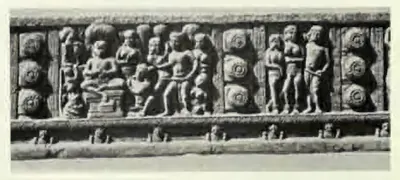 Nagarjunakonda: "A Chakravartti and his family being converted to Buddhism" (ASI Annual Report 1929-30, Pl. XXXIX (e))Book plate · 1935
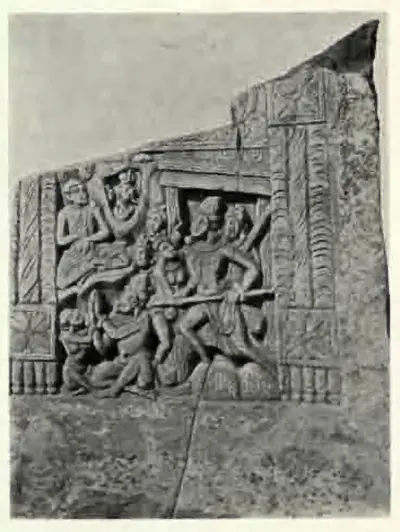 Nagarjunakonda: "A Chakravartti and his wife converted to Buddhism (Stupa 2)" (ASI Annual Report 1929-30, Pl. XL (b))Book plate · 1935
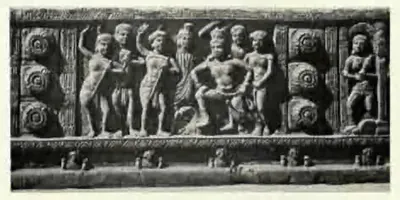 Nagarjunakonda: "A Chakravartti denouncing Brahmanism" (ASI Annual Report 1929-30, Pl. XXXIX (c))Book plate · 1935
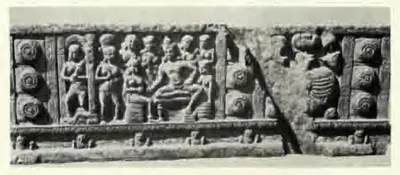 Nagarjunakonda: "A Chakravartti in his palace (Stupa 9)" (ASI Annual Report 1929-30, Pl. XXXIX (a))Book plate · 1935
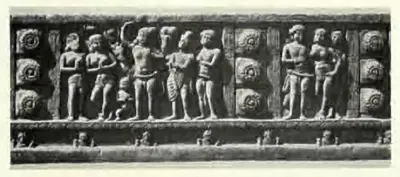 Nagarjunakonda: "A Chakravartti renouncing his kingdom" (ASI Annual Report 1929-30, Pl. XXXIX (b))Book plate · 1935
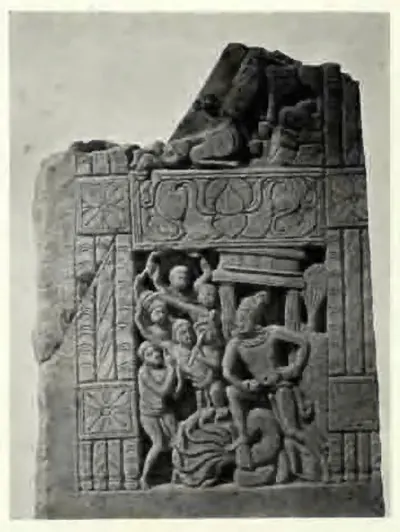 Nagarjunakonda: "A Chakravartti, denouncing Brahmanism (Stupa 2)" (ASI Annual Report 1929-30, Pl. XL (a))Book plate · 1935
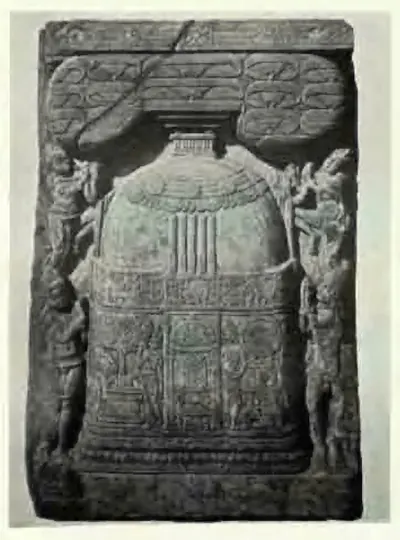 Nagarjunakonda: "Ayaka panel from Stupa 9" (ASI Annual Report 1929-30, Pl. XL (c))Book plate · 1935
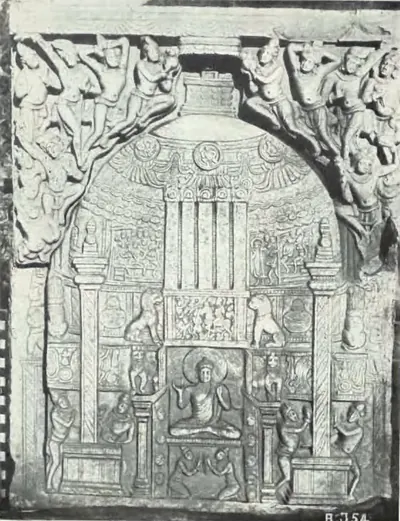 Nagarjunakonda: "Bas-relief from Stupa No. 2" (ASI Annual Report 1927-28, Pl. LII (b))Book plate · 1931
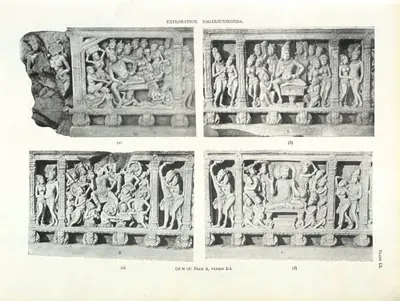 Nagarjunakonda: "Beam A, panels 1-4" (ASI Annual Report 1927-28, Pl. LI)Book plate · 1931
Show all (47)
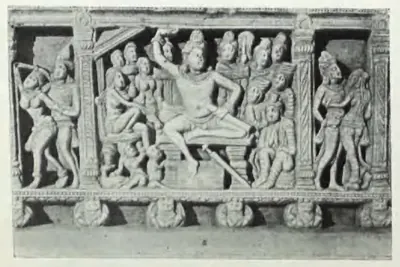 Nagarjunakonda: "Beam A, panels 5-7" (ASI Annual Report 1927-28, Pl. LI(a) (a))Book plate · 1931
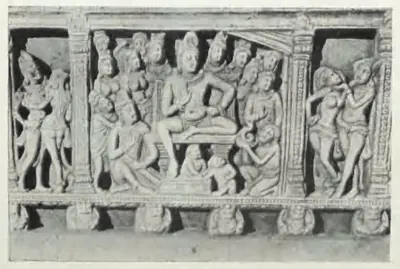 Nagarjunakonda: "Beam A, panels 5-7" (ASI Annual Report 1927-28, Pl. LI(a) (b))Book plate · 1931
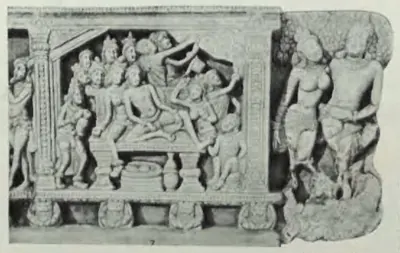 Nagarjunakonda: "Beam A, panels 5-7" (ASI Annual Report 1927-28, Pl. LI(a) (c))Book plate · 1931
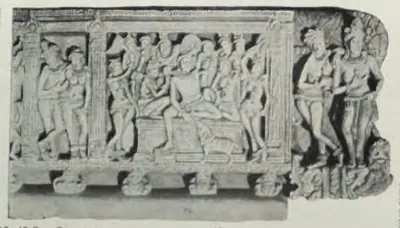 Nagarjunakonda: "Beam B, end panel" (ASI Annual Report 1927-28, Pl. LI(a) (d))Book plate · 1931
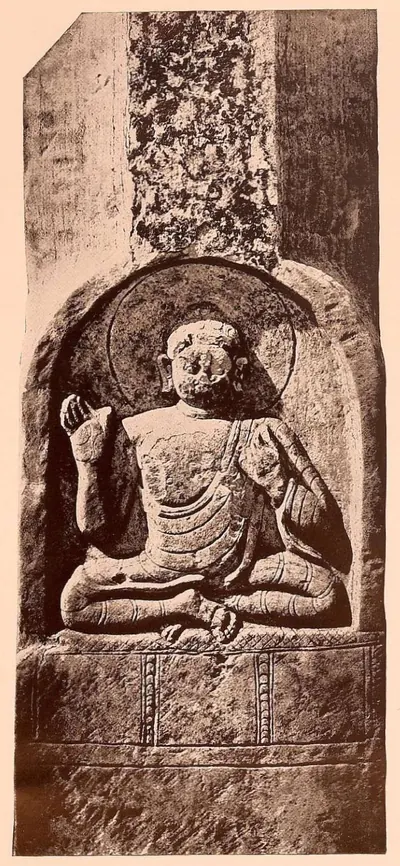 Nagarjunakonda: "Carved ayaka-pillar" (ASI Annual Report 1928-29, Pl. XLVI (a))Book plate · 1933
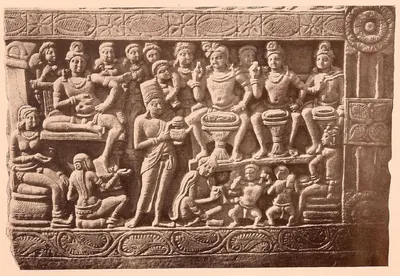 Nagarjunakonda: "Casting the horoscope" (ASI Annual Report 1928-29, Pl. XLVIII (b))Book plate · 1933
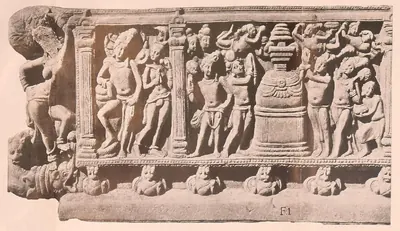 Nagarjunakonda: "Mahaparinirvana" (ASI Annual Report 1928-29, Pl. L (a))Book plate · 1933
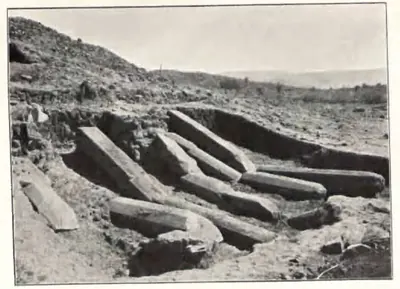 Nagarjunakonda: "Nagarjunikonda: Site No. 1, showing broken pillars on west side of stupa" (ASI Annual Report 1926-27, Pl. XXXVII (a))Historic photograph · 1930
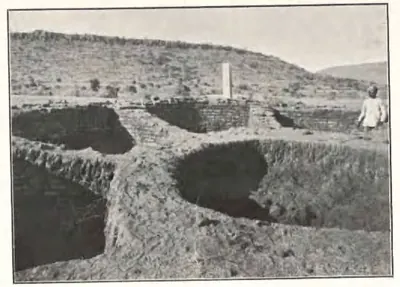 Nagarjunakonda: "Nagarjunikonda: Site No. 1, showing wheel-shaped foundation of stupa" (ASI Annual Report 1926-27, Pl. XXXVII (b))Historic photograph · 1930
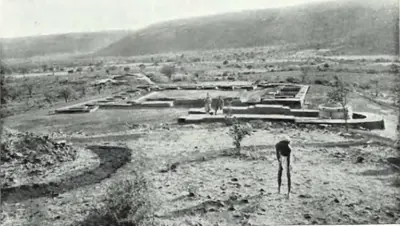 Nagarjunakonda: "Nagarjunikonda. ... Excavated Monastery and Apsidal Temple" (ASI Annual Report 1927-28, Pl. L (b))Book plate · 1931
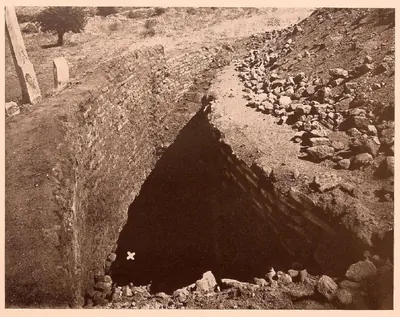 Nagarjunakonda: "Outer wall of the Great Stupa (findspot of relics marked by a cross)" (ASI Annual Report 1928-29, Pl. XLV (b))Plan · 1933
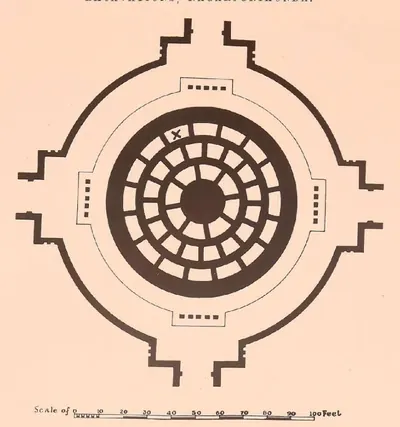 Nagarjunakonda: "Plan of the Great Stupa (findspot of relics marked by a cross)" (ASI Annual Report 1928-29, Pl. XLV (a))Plan · 1933
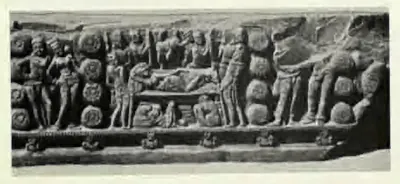 Nagarjunakonda: "Queen Maya's dream (Stupa 9)" (ASI Annual Report 1929-30, Pl. XXXIX (f))Book plate · 1935
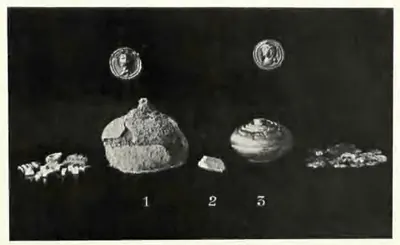 Nagarjunakonda: "Relics recovered from Stupa 6: 1. silver casket; 2. bone relic; 3. gold reliquary. Actual size" (ASI Annual Report 1929-30, Pl. XXXVII d)Book plate · 1935
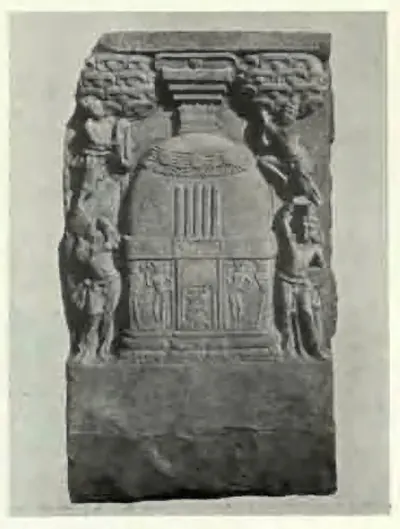 Nagarjunakonda: "Representation of a Buddhist stupa (Stupa 9)" (ASI Annual Report 1929-30, Pl. XL (d))Book plate · 1935
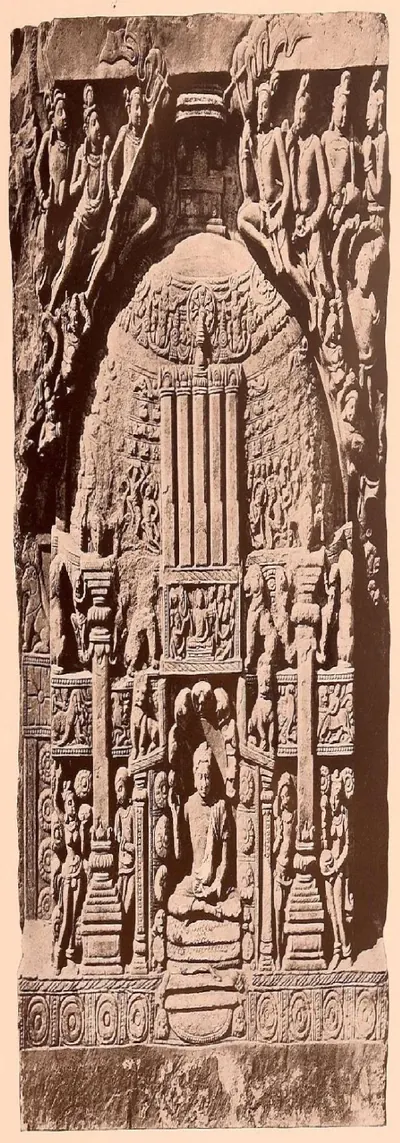 Nagarjunakonda: "Representation of a stupa" (ASI Annual Report 1928-29, Pl. XLVII (a))Book plate · 1933
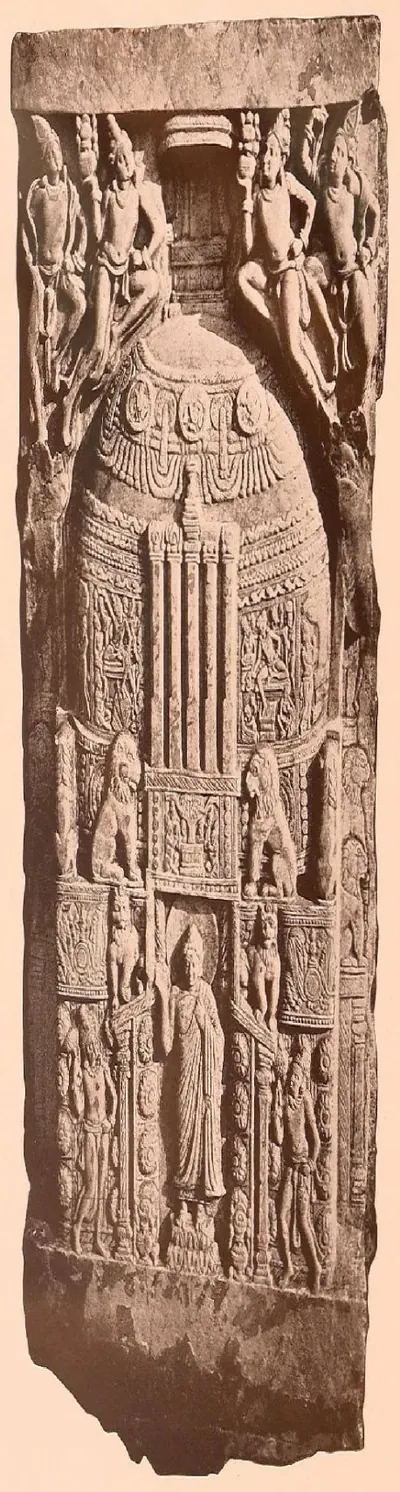 Nagarjunakonda: "Representation of a stupa" (ASI Annual Report 1928-29, Pl. XLVII (b))Book plate · 1933
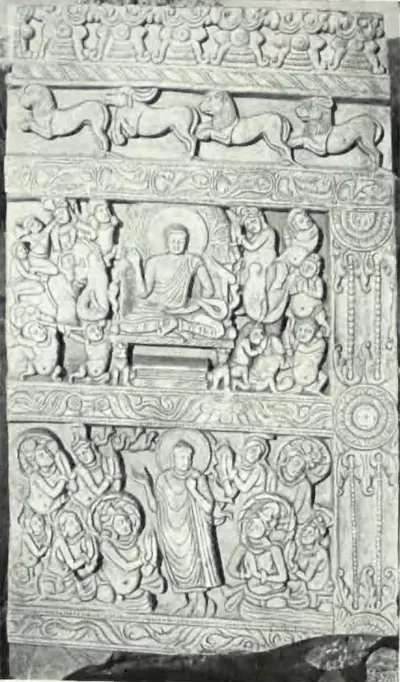 Nagarjunakonda: "Sculptured slab from Stupa No. 2" (ASI Annual Report 1927-28, Pl. LII (a))Book plate · 1931
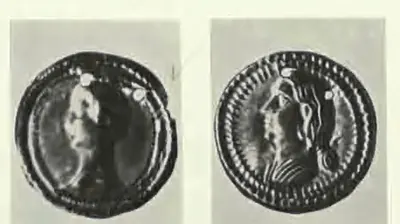 Nagarjunakonda: "Small gold medallions found with the relics recovered from Stupa 6" (ASI Annual Report 1929-30, Pl. XXXVII e)Other · 1935
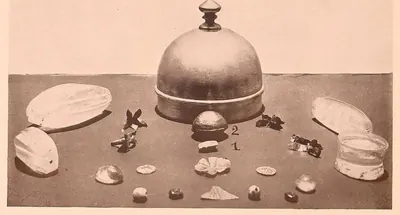 Nagarjunakonda: "The Buddha relics after cleaning and showing (1) the bone relic and (2) the gold box" (ASI Annual Report 1928-29, Pl. XLVI (c))Book plate · 1933
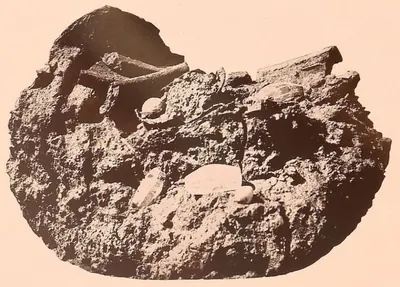 Nagarjunakonda: "The Buddha relics when first discovered" (ASI Annual Report 1928-29, Pl. XLVI (b))Book plate · 1933
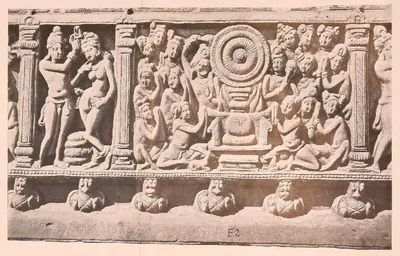 Nagarjunakonda: "The First Sermon" (ASI Annual Report 1928-29, Pl. L (b))Book plate · 1933
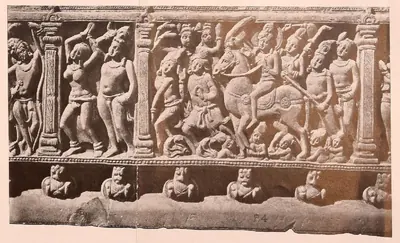 Nagarjunakonda: "The Great Renunciation" (ASI Annual Report 1928-29, Pl. L (d))Book plate · 1933
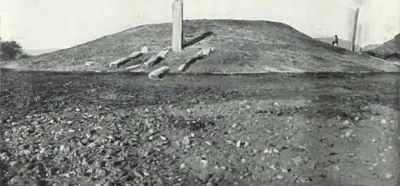 Nagarjunakonda: "The Great Stupa at Nagarjunikonda" (ASI Annual Report 1927-28, Pl. L (a))Book plate · 1931
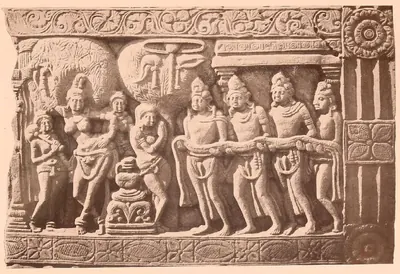 Nagarjunakonda: "The Nativity and the Seven Steps" (ASI Annual Report 1928-29, Pl. XLVIII (a))Book plate · 1933
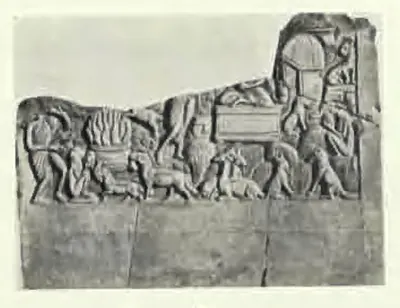 Nagarjunakonda: "The Sasa Jataka (Stupa 9)" (ASI Annual Report 1929-30, Pl. XXXVII f)Book plate · 1935
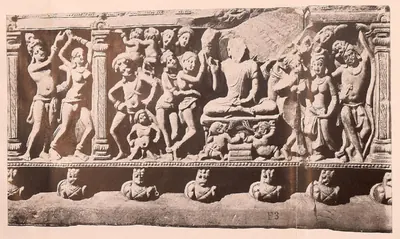 Nagarjunakonda: "The Temptation" (ASI Annual Report 1928-29, Pl. L (c))Book plate · 1933
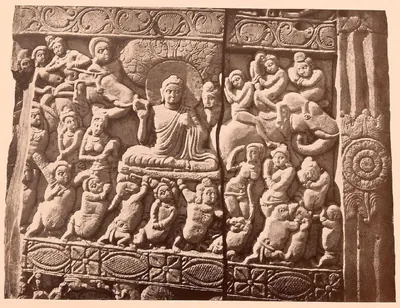 Nagarjunakonda: "The Temptation" (ASI Annual Report 1928-29, Pl. XLIX (b))Book plate · 1933
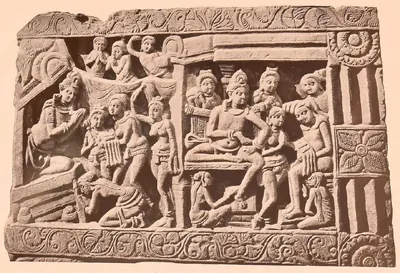 Nagarjunakonda: "To right: The child being presented to Asita; to left: Siddhartha's visit to the Temple" (ASI Annual Report 1928-29, Pl. XLIX (a))Book plate · 1933
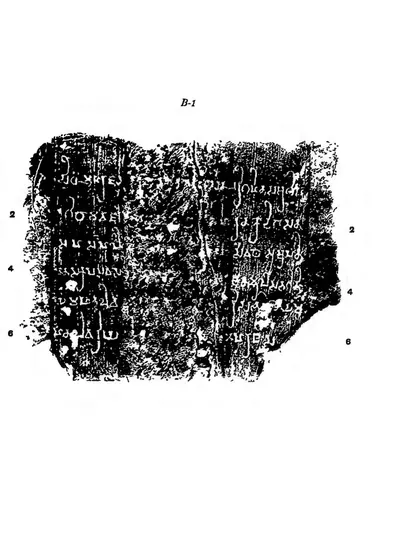 Nagarjunakonda: ayaka-pillar inscription B 1 (south side, first pillar) (Epigraphia Indica XX)Inscription rubbing · 1933
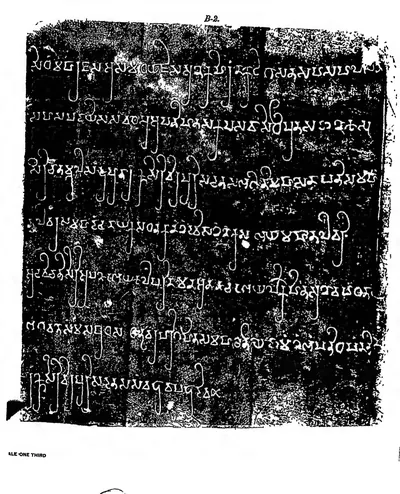 Nagarjunakonda: ayaka-pillar inscription B 2 (south side, second pillar) (Epigraphia Indica XX)Inscription rubbing · 1933
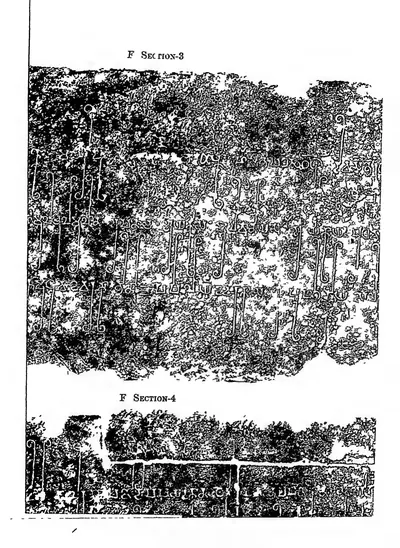 Nagarjunakonda: inscription F, sections 3 and 4 (floor of apsidal shrine No. II) (Epigraphia Indica XX)Inscription rubbing · 1933
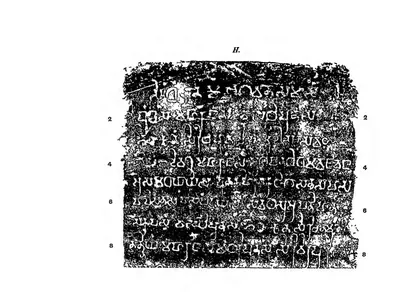 Nagarjunakonda: inscription H, lines 1-9 (stone pillar found at Kottampalugu) (Epigraphia Indica XX)Inscription rubbing · 1933
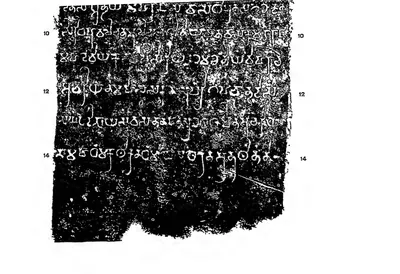 Nagarjunakonda: inscription H, lines 9-14 (stone pillar found at Kottampalugu) (Epigraphia Indica XX)Inscription rubbing · 1933
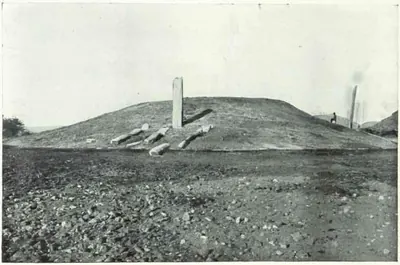 Stupa mound at Nagarjunakonda before excavation, 1927–28Book plate · 1927–28
Related
Dynasties
People
Vasishthiputra Chamtamula
c. 225–255 CE
First known king of the Ikshvakus of Vijayapuri (Nagarjunakonda). His descendants' inscriptions remember him as a performer of the horse sacrifice and other Vedic rites, while the women of his family founded the Buddhist monuments of the Krishna valley. His reign ended before about 255; D. C. Sircar had dated it to about 223–240.
Virapurushadatta
c. 255–275 CE
Ikshvaku king of Vijayapuri (3rd century CE). In his reign the women of the royal family rebuilt the Great Stupa at Nagarjunakonda, and founded shrines and monasteries for Buddhist monks, including monks from Sri Lanka. His records run to his 20th regnal year, and one is dated in a cyclic year equated with 273–74. D. C. Sircar dated his reign to about 255–275.
Ehuvula Chamtamula
c. 280–335 CE
Third known Ikshvaku king of Vijayapuri (Nagarjunakonda), son of Virapurushadatta. His records run to his 24th regnal year. In his reign a prince and a noble built the earliest dated Shiva temples in the valley. Queens, bankers and lay Buddhists went on giving gifts to its monasteries. D. C. Sircar dated his reign to about 280–335.
Rudrapurushadatta
c. 335–346 CE
Fourth and last known Ikshvaku king of Vijayapuri (Nagarjunakonda), son of Ehuvula Chamtamula. He was identified in 1955–56 from a memorial pillar of his 11th regnal year. D. C. Sircar thought his reign ended before about 350, when the Pallavas took the Krishna–Guntur region.
Bhatideva
Ikshvaku queen, wife of King Virapurushadatta and mother of King Ehuvula Chamtamula. In the 2nd year of her son's reign she founded a monastery at Nagarjunakonda for Buddhist teachers of the Bahusutiya school.
Chamtisiri
Ikshvaku princess, sister of King Chamtamula and aunt and later mother-in-law of King Virapurushadatta. She was the chief donor of the Buddhist monuments of Vijayapuri (Nagarjunakonda). She gave the pillars of the Great Stupa, an apsidal shrine and a pillared hall beside it, all to the Aparamahavinaseliya school, in the 3rd century CE.
Simhavarman (Pallava, Manchikallu inscription)
Pallava king of the Bharadvaja gotra, known only from a broken Prakrit pillar inscription found at Manchikallu in the Palnad taluk. D. C. Sircar took it for the earliest Pallava record. He suggested that this Simhavarman brought the Krishna–Guntur country under the Pallavas, pushing out the Ikshvakus, and was perhaps the father of Sivaskandavarman.
Monuments
Chula-Dhammagiri monastery
Buddhist monastery buildings on the hill of Naharallabodu at Nagarjunakonda. It is identified with the monastery on the Lesser Dhammagiri east of Vijayapuri. There the lay woman Bodhisiri built an apsidal (round-ended) shrine for monks from Sri Lanka in the 14th year of the Ikshvaku king Virapurushadatta.
Nagarjunakonda Mahachaitya
The Great Stupa of the Ikshvaku city of Vijayapuri. Its limestone ayaka pillars carry Prakrit inscriptions of the princess Chamtisiri and other royal women, dated in the 6th year of King Virapurushadatta. A small bone relic was found in one of its chambers during the 1928–29 excavations.
Vijayapuri citadel
Citadel with brick walls and a moat, the heart of the Ikshvaku capital on the Krishna bank in the Nagarjunakonda valley, excavated in 1956–59. Inside and around it the excavators found barracks, royal houses, a stepped tank they connected with the horse sacrifice, temples of Karttikeya and Shiva, a river ghat and a large stadium.
Inscriptions
Nagarjunakonda inscriptions of Chamtisiri
c. 250 CE
Prakrit inscriptions at Nagarjunakonda recording gifts by the Ikshvaku princess Chamtisiri. They are cut on the ayaka pillars of the Great Stupa (Mahachaitya), on the pillars of a stone hall and on the floor of an apsidal shrine beside it. They are dated in the 6th, 15th and 18th regnal years of King Virapurushadatta.
Nagarjunakonda inscription of Bodhisiri
c. 268 CE
Prakrit inscription on the floor of an apsidal (round-ended) shrine on the Chula-Dhammagiri at Nagarjunakonda, dated in the 14th year of King Mathariputra (Virapurushadatta). It records the gifts of the lay woman Bodhisiri to Buddhist monks from Sri Lanka. It names the city of Vijayapuri, the Sriparvata and the trading town of Kantakasela.
Memorial pillar of Chamtamula, Nagarjunakonda
c. 273 CE
A carved pillar found near Stupa 9 at Nagarjunakonda, with a Prakrit inscription. It records that the sisters, mothers and queens of the dead Ikshvaku king Chamtamula raised it in the reign of his son Virapurushadatta. Vogel dated it to the king's 20th year. Sircar re-read the date as the cyclic year Vijaya, 273–74, the earliest known use of the cyclic year in Indian inscriptions.
Nagarjunakonda inscription of Abhira Vasushena
c. 278 CE
A Sanskrit-Prakrit inscription found on the Krishna bank at Nagarjunakonda in 1958–59, dated in year 30 of the Abhira king Vasishthiputra Vasushena. It records that a local noble and men from Avanti, Sanjayapura and Vanavasa installed the god Ashtabhujasvamin, a form of Vishnu. D. C. Sircar dated it to about 278–79, and took it as evidence of a short Abhira break in Ikshvaku rule.
Nagarjunakonda inscription of Pushpabhadrasvamin
c. 295 CE
A Sanskrit inscription on a four-faced flagstaff pillar from a temple at the foot of Nagarjuna's hill, dated in the 16th year of the Ikshvaku king Ehuvula Chamtamula. It records that his son, the prince Virapurushadatta, built a shrine of the god Shiva as Pushpabhadrasvamin and gave it a village. It is the first direct evidence of Shaiva worship in the Ikshvaku royal house.
References
Notes (0)
Sources (16)
Spotted an error on this page? Tell us
Last updated: