Virapurushadatta
Ikshvaku king of Vijayapuri (3rd century CE). In his reign the women of the royal family rebuilt the Great Stupa at Nagarjunakonda, and founded shrines and monasteries for Buddhist monks, including monks from Sri Lanka. His records run to his 20th regnal year, and one is dated in a cyclic year equated with 273–74. D. C. Sircar dated his reign to about 255–275.
Name and family
Virapurushadatta was the second known king of the Ikshvakus of the lower Krishna valley. His inscriptions call him Madhariputa Siri-Virapurisadata.1 J. Ph. Vogel rendered this in Sanskrit as Matharīputra Shri Virapurushadatta.1
Georg Bühler first edited the Jaggayyapeta inscriptions.23 He took Purisadata to be the name and siri-vira (“glorious hero”) a title of praise.23 So James Burgess’s translation of 1887 speaks of “the king Purisadata (Purushadatta), the glorious hero (srivira) of the Ikhakus”.23 D. C. Sircar argued that such titles often formed part of a proper name.23 Sircar later read a fragment naming a prince Vira-Ar….4 He took it to show that vira was really a title, also in Virapurushadatta’s name.4
He was the son of King Vasishthiputra Chamtamula, whom he succeeded, and of a mother known only from his metronymic (name taken from the mother), Madhari (Mathari).56 In one of his inscriptions the Buddha is called a scion of the Ikshvaku royal line.7 Sircar thought the phrase might express the king’s own claim to belong to the same legendary solar house.7
Sircar counted five queens of Virapurushadatta in the inscriptions known in 1939.8 Three were his cousins. Bapisirinika and Chhathisiri were daughters of his father’s sister Hammasiri. A third was a daughter of his other aunt, Chamtisiri. Chamtisiri is called his aunt in the records of his 6th year and his mother-in-law in a record of his 18th.9 So Vogel concluded that this marriage took place between those years.9
A fourth queen, Rudradharabhattarika, was in Vogel’s emended reading a daughter of the king of Ujjain.910 Vogel suggested that she came from the house of the Western Kshatrapas, whose kings liked names containing that of the god Rudra.910 The fifth, Bhatideva, was the mother of his successor, Ehuvula Chamtamula.1112
A sixth, Yakhilinika, is named on a memorial pillar of her son, the prince Eli Ehuvuladasa, who served his half-brother Ehuvula as a commander.1314 Her title Mahavalabhika suggested to Sircar the name of her home town, which he could not identify.1314
His daughter Kodabalisiri married the Maharaja of Vanavasa (Banavasi, in North Kanara).10 Vogel took these marriage ties with Ujjain and Vanavasa to show that the Ikshvakus “were rulers of some importance”.15 Sircar suggested that Kodabalisiri’s husband may have been a king of the Chutu-Satakarni line of Banavasi.16
The Buddhist foundations of his reign
Most of the dated Ikshvaku records known in the 1930s fall in Virapurushadatta’s reign.17 From them Vogel drew up a list, in time order, of the Buddhist buildings at Nagarjunakonda.17 Later finds have added to it:
- Year 6: pillars of the Great Stupa (Mahachetiya) dedicated by his aunt Chamtisiri and other royal women.17
- Year 10: an inscribed pilaster in a monastery the excavators called Site III, recording gifts for the benefit of Buddhist and other faiths.18
- Year 14: an apsidal (round-ended) shrine (chetiya-ghara) on the Chula-Dhammagiri. Bodhisiri, a lay woman, founded it for monks from Sri Lanka; see the inscription of Bodhisiri.17
- Year 15: a pillared hall founded by Chamtisiri.17
- Year 18: the apsidal shrine beside the Great Stupa, also founded by Chamtisiri.17
- Year 19: a gift, of which the purpose is lost, at a stupa (relic mound) near Uppugundur in Ongole taluk. The giver was Samghila, son of a merchant and grandson of a householder from Dhanyakataka (Amaravati).1920
- Year 20: five pillars at the eastern gate of the stupa at Jaggayyapeta, given by the artisan Siddhattha; see the Jaggayyapeta inscription.217
- The cyclic year Vijaya: a carved memorial pillar for his father, set up by his father’s sisters, mothers and consorts. Vogel had read its date as the 20th year, but Sircar’s reading is followed here. See the memorial pillar of Chamtamula.1721
James Burgess found the Jaggayyapeta inscriptions in 1882, and they were the first Ikshvaku records to be found.212223 They date the gift to the king’s 20th year but give no family line.212223 They place the Great Chaitya “in the village of Velagiri”.212223
Sircar identified the giver’s home district, Kamaka-ratha, with the Karmarashtra of later inscriptions.22 Karmarashtra has been placed in northern Nellore and southern Guntur.22 Chhabra took the Uppugundur record, near the coast, as fresh evidence of how far the king’s lands reached.20
A footprint slab names Theravada teachers of the Great Monastery.24 It says they had converted Kashmir, Gandhara, the Yavanas, Vanavasa and Sri Lanka.24 On grounds of script the slab was assigned to about the middle of the 3rd century, the time of Virapurushadatta.24 The Nagarjunakonda records of Chamtisiri are described on the page for the inscriptions of Chamtisiri.
The king himself made none of these gifts. Vogel observed that he shared in the religious merit but “does not seem to have had an active part” in the foundations.25 Hirananda Sastri summed up the finds in the Archaeological Survey’s report for 1927–28.26 He too noted that no gift by a man of the royal family had been found.26 Yet all three kings let their names be joined to those of their women relatives.26
The dedications still name him, as in Chamtisiri’s inscription of his 18th year, which dedicates her shrine to the monks of the Aparamahavinaseliya school.27 It was partly “for the longevity and for the victory of her son-in-law”.27
Bodhisiri’s inscription of the 14th year dedicates her shrine to the groups of monks from Tambapamni (Sri Lanka).2829 These monks were said to have converted Kashmir, Gandhara, China and other lands.2829 The inscription places her monastery on Siripavata (Sriparvata), east of Vijayapuri.2829
Vogel linked this wealth and these overseas contacts to the sea trade of the Krishna mouths with Sri Lanka and the West.30 Sircar noted that one gift recorded in the 6th year was paid in dinari-masakas.31 He connected this unit with the gold dinara of the Kushanas.31
Sircar saw the reign as the start of a new era for the Buddhists of the region after the Brahmanical rule of Chamtamula.32 In the 1950s lead coins were found with legends read tentatively as his name, and others with his father’s.33
Date
Most of Virapurushadatta’s inscriptions are dated only in his years of rule.3417 The latest is his 20th, so his reign lasted more than nineteen years.3417 Bühler placed him in the 3rd century, before the Pallavas reached Vengi, and Vogel accepted this.115 Sircar’s family table of 1939 dates his reign to about 240–265.6 In 1959 Sircar again placed him about the middle of the 3rd century.35
The memorial pillar for his father changed this picture.2136 Sircar read its date as the cyclic year Vijaya.2136 He showed that, in the South Indian reckoning, the only Vijaya year that fitted was 273–74.2136
An inscription of the Abhira king Vasushena from Nagarjunakonda is dated in year 30.3738 If this is counted in the era of 248, it gives 278–79.3738 Sircar suggested that the Abhiras overthrew Virapurushadatta about 275.3738 His reign of about twenty years would then fall about 255–75.3738
Sircar also considered another possibility, that the Abhiras and Pallavas attacked together.3839 In that case he placed Virapurushadatta, his son and his grandson within about 265–335.3839 The Archaeological Survey’s review of 1959–60 summed up these finds as suggesting an Abhira break in Ikshvaku rule.40
His son Ehuvula Chamtamula succeeded him.111738 Records of that reign are dated from its 2nd to its 24th year.111738
Footnotes
-
J. Ph. Vogel, Prakrit Inscriptions from a Buddhist Site at Nagarjunikonda, Epigraphia Indica XX (1933), p. 2 (archive.org (opens in a new tab)). ↩ ↩2 ↩3 ↩4 ↩5 ↩6
-
James Burgess, The Buddhist Stupas of Amaravati and Jaggayyapeta (1887), p. 110 (archive.org (opens in a new tab)). ↩ ↩2 ↩3 ↩4 ↩5 ↩6 ↩7 ↩8
-
D. C. Sircar, The Successors of the Satavahanas in Lower Deccan (1939), p. 22, note 1 (archive.org (opens in a new tab)). ↩ ↩2 ↩3 ↩4
-
Sircar, “More Inscriptions from Nagarjunikonda”, pp. 19–20 (archive.org (opens in a new tab)). ↩ ↩2
-
Sircar, Successors of the Satavahanas (1939), p. 20 (archive.org (opens in a new tab)). ↩
-
Sircar, Successors of the Satavahanas (1939), p. 16, genealogical table (archive.org (opens in a new tab)). ↩ ↩2
-
Sircar, Successors of the Satavahanas (1939), p. 10 (archive.org (opens in a new tab)). ↩ ↩2
-
Sircar, Successors of the Satavahanas (1939), pp. 22–23 (archive.org (opens in a new tab)). ↩
-
Vogel, Prakrit Inscriptions from Nagarjunikonda (1933), p. 4 (archive.org (opens in a new tab)). ↩ ↩2 ↩3 ↩4
-
Vogel, Prakrit Inscriptions from Nagarjunikonda (1933), p. 5 (archive.org (opens in a new tab)). ↩ ↩2 ↩3
-
J. Ph. Vogel, Additional Prakrit Inscriptions from Nagarjunikonda, Epigraphia Indica XXI (1931–32), pp. 61–62 (archive.org (opens in a new tab)). ↩ ↩2 ↩3
-
Sircar, Successors of the Satavahanas (1939), p. 23 (archive.org (opens in a new tab)). ↩
-
Sircar, “More Inscriptions from Nagarjunikonda”, p. 10 (archive.org (opens in a new tab)). ↩ ↩2
-
Sircar, “More Inscriptions from Nagarjunikonda”, p. 11 (archive.org (opens in a new tab)). ↩ ↩2
-
Vogel, Prakrit Inscriptions from Nagarjunikonda (1933), p. 6 (archive.org (opens in a new tab)). ↩ ↩2
-
Sircar, Successors of the Satavahanas (1939), p. 24 (archive.org (opens in a new tab)). ↩
-
Vogel, Additional Prakrit Inscriptions from Nagarjunikonda (1931–32), p. 65 (archive.org (opens in a new tab)). ↩ ↩2 ↩3 ↩4 ↩5 ↩6 ↩7 ↩8 ↩9 ↩10 ↩11 ↩12
-
A. Ghosh (ed.), Indian Archaeology 1954–55: A Review (1955), p. 22 (archive.org (opens in a new tab)). ↩
-
B. Ch. Chhabra, “Uppugundur Inscription of Virapurisadata’s time, Year 19”, Epigraphia Indica XXXIII (1959–60, publ. 1963), p. 189 (archive.org (opens in a new tab)). ↩
-
Chhabra, “Uppugundur Inscription” (1963), p. 190 (archive.org (opens in a new tab)). ↩ ↩2
-
D. C. Sircar, “More Inscriptions from Nagarjunikonda”, Epigraphia Indica XXXV (1963–64), pp. 1–3 (archive.org (opens in a new tab)). ↩ ↩2 ↩3 ↩4
-
Sircar, Successors of the Satavahanas (1939), p. 34 (archive.org (opens in a new tab)). ↩ ↩2 ↩3 ↩4 ↩5
-
Burgess, Buddhist Stupas of Amaravati and Jaggayyapeta (1887), p. 111, translation by G. Bühler (archive.org (opens in a new tab)). ↩ ↩2 ↩3
-
D. C. Sircar and A. N. Lahiri, “Footprint Slab Inscription from Nagarjunikonda”, Epigraphia Indica XXXIII (1963), p. 248 (archive.org (opens in a new tab)). ↩ ↩2 ↩3
-
Vogel, Prakrit Inscriptions from Nagarjunikonda (1933), p. 4 (archive.org (opens in a new tab)). ↩
-
A. H. Longhurst, “Excavations at Nagarjunikonda”, Annual Report of the Archaeological Survey of India 1927–28 (1931), p. 119 (archive.org (opens in a new tab)). ↩ ↩2 ↩3
-
Vogel, Prakrit Inscriptions from Nagarjunikonda (1933), p. 21, translation of inscription E (archive.org (opens in a new tab)). ↩ ↩2
-
Vogel, Prakrit Inscriptions from Nagarjunikonda (1933), p. 7 (archive.org (opens in a new tab)). ↩ ↩2 ↩3
-
Vogel, Prakrit Inscriptions from Nagarjunikonda (1933), p. 9 (archive.org (opens in a new tab)). ↩ ↩2 ↩3
-
Vogel, Prakrit Inscriptions from Nagarjunikonda (1933), p. 10 (archive.org (opens in a new tab)). ↩
-
Sircar, Successors of the Satavahanas (1939), pp. 26–27 (archive.org (opens in a new tab)). ↩ ↩2
-
Sircar, Successors of the Satavahanas (1939), p. 38 (archive.org (opens in a new tab)). ↩
-
A. Ghosh (ed.), Indian Archaeology 1955–56: A Review (1956), p. 26 (archive.org (opens in a new tab)). ↩
-
Sircar, Successors of the Satavahanas (1939), p. 24 (archive.org (opens in a new tab)). ↩ ↩2
-
D. C. Sircar, “Two Inscriptions from Guntur District”, Epigraphia Indica XXXII (1959), p. 83 (archive.org (opens in a new tab)). ↩
-
Sircar, “More Inscriptions from Nagarjunikonda”, p. 2 (archive.org (opens in a new tab)). ↩ ↩2 ↩3
-
D. C. Sircar, “Nagarjunikonda Inscription of the time of Abhira Vasushena, Year 30”, Epigraphia Indica XXXIV (1961–62, publ. 1963), pp. 201–202 (archive.org (opens in a new tab)). ↩ ↩2 ↩3 ↩4
-
Sircar, “More Inscriptions from Nagarjunikonda”, p. 6 (archive.org (opens in a new tab)). ↩ ↩2 ↩3 ↩4 ↩5 ↩6 ↩7 ↩8
-
Epigraphia Indica XXXV, “Additions and Corrections”, correction to p. 6, line 30 (archive.org (opens in a new tab)). ↩ ↩2
-
A. Ghosh (ed.), Indian Archaeology 1959–60: A Review (1960), pp. 53–54 (archive.org (opens in a new tab)). ↩
Photos
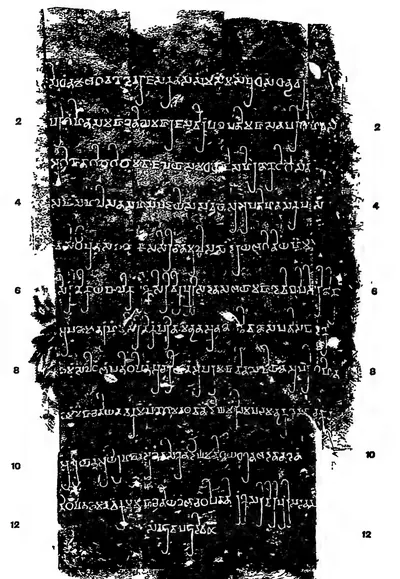 Nagarjunakonda: ayaka-pillar inscription C-2 (west side, second pillar), gift of Mahadevi Bapisirinika, queen of King Siri-Virapurisadata (Epigraphia Indica XX)Inscription rubbing · 1933
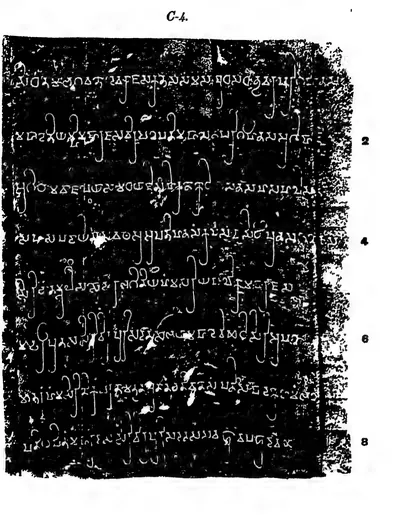 Nagarjunakonda: ayaka-pillar inscription C-4 (west side, fourth pillar), gift of Mahadevi Chhathisiri, queen of King Siri-Virapurisadata (Epigraphia Indica XX)Inscription rubbing · 1933
Related
Dynasties
References
Notes (0)
Sources (12)
Spotted an error on this page? Tell us
Last updated: