Sir Mountstuart Grant Duff
Sir Mountstuart Elphinstone Grant Duff was Governor of Madras from 1881 to 1886. He toured the northern districts, where the people of Vijayawada welcomed him with an address thanking the government for the Krishna irrigation works. In 1883 he opened a new building of the school at Kakinada that became the Pithapuram Raja's College, and at Venkatagiri he laid the foundation of the town hall and opened the Raja's new palace, the Indra Mahal.
Download
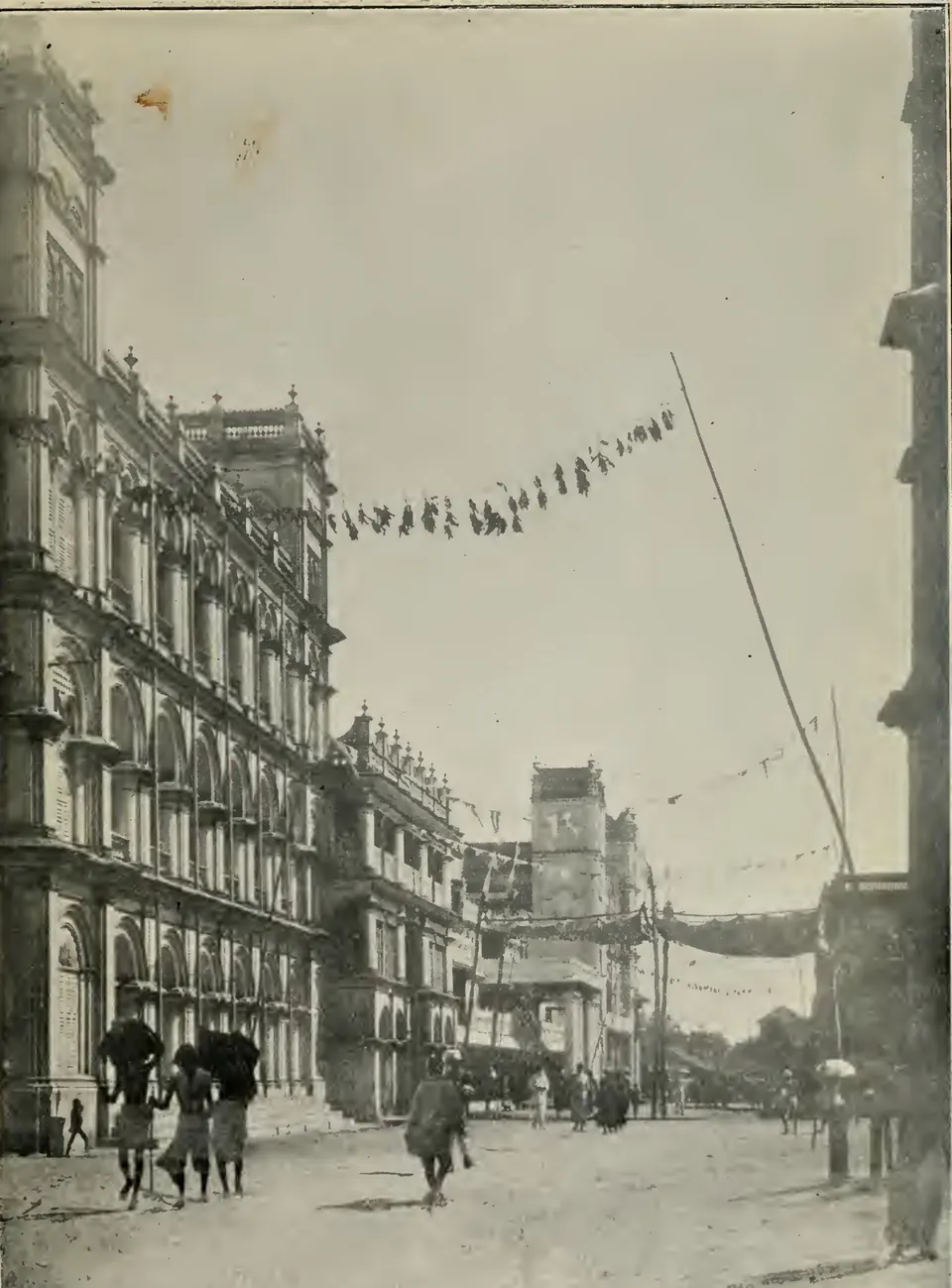
Sir Mountstuart Grant Duff’s visits to the Telugu districts are remembered in three books. They record his welcome at Vijayawada, a school building at Kakinada and a visit to Venkatagiri.123 See British Crown (Madras Presidency).
Governor of Madras
Maclean’s list of Governors shows that Grant Duff took office on 5 November 1881.4
Welcome at Vijayawada
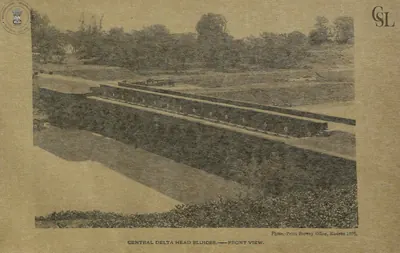
As Governor, Grant Duff visited the northern districts.1 At Vijayawada (then Bezwada) the local reception committee gave him an address.1 Cotton’s biography prints it as proof of how the delta valued its irrigation works.1
Before the irrigation scheme, the address said, Bezwada was “only a small village, and partly in ruins”.1 Its people had died in the Nandana famine, the Guntur famine of 1832.1 Now it was a growing town, and might again become “the largest town in these parts”.1 The address also recalled that the Governor’s father had written about the terrible famines of the land between the Godavari and the Krishna.1 See Vijayawada and Krishna anicut.
Kakinada
At Kakinada (then Cocanada), an English and vernacular school had been founded in 1852.5 It needed more buildings again in 1882.2 A two-storeyed building was put up for 12,000 rupees.2 Half was given by Pydah Ramakrishnayya, one of its earliest students, and half by the government.2 Grant Duff opened it on 3 March 1883.2 In 1884 the school became a college, named the Pithapuram Raja’s College after its patron.2 See Kakinada.
Venkatagiri
In 1883 the Raja of Venkatagiri invited the Governor to his town.3 On 22 July Grant Duff laid the foundation stone of the town hall.3 The family history says the hall later served for public meetings and as a rest-house for officials on tour.6 On the same visit he opened the Raja’s palace, the Indra Mahal, begun in 1880.6 See Venkatagiri and Rajagopala Krishna Yachendra.
Footnotes
-
Lady Hope, General Sir Arthur Cotton, R.E., K.C.S.I.: His Life and Work (1900), pp. 127–128 (archive.org (opens in a new tab)). ↩ ↩2 ↩3 ↩4 ↩5 ↩6 ↩7 ↩8
-
Hemingway, Godavari (1907), p. 158 (archive.org (opens in a new tab)). ↩ ↩2 ↩3 ↩4 ↩5 ↩6
-
A Family History of Venkatagiri Rajas (1922), p. 125 (archive.org (opens in a new tab)). ↩ ↩2 ↩3
-
C. D. Maclean (ed.), Manual of the Administration of the Madras Presidency, Vol. II (1885), p. 270, list of Governors of Fort St. George (archive.org (opens in a new tab)). ↩
-
F. R. Hemingway, Madras District Gazetteers: Godavari, Vol. I (1907), p. 157 (archive.org (opens in a new tab)). ↩
-
Family History of Venkatagiri Rajas (1922), p. 126 (archive.org (opens in a new tab)). ↩ ↩2
Photos
Related
Dynasties
References
Notes (0)
Sources (4)
Spotted an error on this page? Tell us
Last updated: