Schools and learning in the Telugu land
How Telugu children learned to read, write and count, from village pyal schools and their verse books to government and mission schools of the 19th century. This page covers the Madras survey of the 1820s, school books and the Telugu language, and the slow start of schooling for girls. It also looks at schools and teaching in Urdu in the Nizam's Hyderabad, and census findings on literacy.
Download
Long before Europeans came, most villages in the Madras Presidency had their own schools, wrote an education committee in 1884.1 In the Nellore district they were held on house verandas and called pyal schools.2 This page follows what children learned there, and how government and mission schools grew beside them. It covers the Madras districts and the Nizam’s Hyderabad State, from the 1820s to about 1950.
About the sources. This page rests mainly on official records.34567 They include the district manuals of Nellore (1873), Bellary (1872) and Kistna (1883), and the Madras education reports.38910 Others are the Education Commission of 1884, the Imperial Gazetteers and the 1931 census of Hyderabad.4567 S. Satthianadhan’s history of education in Madras (1894) tells the story of the government’s schools.11 A few Telugu school books are cited only to show what they taught. Two later books are cited, not quoted.1213
Village pyal schools
According to the Nellore manual of 1873, village schools “existed in large numbers” in the coastal taluks (sub-districts).3 In the western taluks they were very few.3 The lessons were given on verandas, “or what are called pyal schools”.2 The Madras committee of the Education Commission (1884) described a pyal as a “raised verandah facing the street”.14 Each master had about ten pupils on average.2
The manual’s author, John Boswell, set out the five-year course of a Nellore village school:32
- first the alphabet, then a book called the Balaramayanam, learned by heart3
- halfway through that book, the multiplication table and writing on the ground, which together took about a year3
- next the Amaram, a dictionary in verse, for two years, with fractions and writing on palm leaves (cadjans)215
- in the second year of the Amaram, a story such as the Rukmini Kalyanam or the Vikramarka Charitra2
In these five years, Boswell wrote, the children only learned “to read, write, and count”.2
A. D. Campbell, the Collector of Bellary, described a school in his district in 1823.16 A boy started school at about five years of age.17 He first learned the letters by writing them with his finger in sand on the ground.17 Later he wrote on palm leaves with an iron pen, or on paper with a reed.16 He learned an addition table and counted to a hundred.16
Campbell noticed that fractions were taught by fours, not by tens.16 Twice a day the boys stood in rows and repeated all the tables together.16 They also learned to read handwriting, write letters and draw up agreements.16 The books most used in every school were the Ramayana, the Mahabharata and the Bhagavata.16 For stories they read the Panchatantra.16
All these books were in verse, in a language quite unlike the speech of daily life and business.16 Campbell wrote that few teachers could explain them.18 He compared a schoolboy reciting verses he did not understand to a parrot taught to repeat words.18 Still, the boy learned to read and to write for the business of daily life.18
Not every child went to these schools.8 In the Bellary district in 1872, pyal schools were found in almost every village of any size.8 But only boys of the higher castes attended them.8 Some of them received grants-in-aid.8
The Rev. J. E. Padfield was principal of the Church Missionary Society’s training institution at Machilipatnam (then Masulipatam).19 In 1882 he told the Madras committee of the Education Commission that the old village schools were attended mainly by Brahmins.19 A few Sudras, merchants and others also came.19 The pupils learned slokams (verses) by heart, with some reading and Indian arithmetic.19 Fees were about four annas a month, but they were seldom paid on time.19
Padfield added that the teacher received gifts at the Dasara festival and at family festivals.19 Most masters were Brahmins who had never studied in a regular school.19 They were very poorly paid and seldom stayed long in one place.19
Moral verses were part of the lessons.20 P. Chenchiah and Raja M. Bhujanga Rao (1928) called the Sumati Satakam “one of the most widely read moral text-books in the Telugu schools”.20 In their view this book and Vemana’s verses gave Telugu boys their training in morals.2021 In 1852 C. P. Brown wrote that the Sumati verses were “taught in all the village schools”.22 See Baddena and Vemana.
The Madras survey of the 1820s
Thomas Munro, Governor of Madras, ordered the first inquiry into these schools.23 In a minute (official note) of 25 June 1822, he said the government had surveyed the land and its people.11 But it had done “little or nothing” to learn the state of education.11 He asked every Collector (head of a district) for a list of the schools in his district.24 They were to give the number of pupils and the kind of teaching in each.24
Munro also said that the government should not interfere in these schools.24 The people “should be left to manage their schools in their own way”.24
The Collectors took two years to send in their reports.24 Together they counted 12,498 schools with 188,650 pupils.24 Only 4,540 of the pupils were girls.24 Of the schools, 740 were returned as “colleges”.24 These were mostly pathasalas, schools for the study of the Vedas.25
There was about one school for every 1,000 people.255 Most schools were paid for by the parents of the pupils.25 Poorer families usually paid about four annas a month.25 Teachers rarely earned more than six or seven rupees a month.25
The Kistna manual of 1883 gives the report for the Masulipatam district in 1823.9 It had 465 Telugu schools, 19 Persian schools and 49 “Sanskrit colleges”.9 The manual’s author thought the colleges were schools supported by grants from zamindars (landholders) or attached to temples.9 He thought the Telugu schools were pyal schools like those still found in remote villages.9
Their pupils were 4,974 Hindu boys, 31 Hindu girls, 275 Muslim boys and 2 Muslim girls.9 The total of 5,282 pupils was about one for every hundred people in the district.9
In a minute of 10 March 1826, Munro proposed new government schools.26 Each Collectorate was to have two main schools, one for Hindus and one for Muslims.26 Later each tahsildari, a division of a Collectorate, was to have a smaller school.26 A Collectorate had about fifteen of them.26 He asked the Company’s directors for Rs. 50,000 a year.26
According to the Imperial Gazetteer, 14 Collectorate schools and 81 taluk schools opened in 1826.5 A training school for teachers opened at Madras.5 In 1836 the scheme was judged a failure, and the schools were closed.5
In 1839 Lord Elphinstone planned a university at Madras with English schools in the main towns.27 He proposed four such schools to begin with, one for each language area.27 The school for the Telugu districts was to be at Machilipatnam.27
Mission schools
Satthianadhan lists the mission schools at work in the Telugu districts in 1855–56:2829
- the London Missionary Society’s English schools at Srikakulam (then Chicacole) and Visakhapatnam, and a school for girls at Visakhapatnam28
- the Church Missionary Society’s schools for boys and for girls at Machilipatnam, and for boys at Eluru (then Ellore)28
- two elementary English schools of an American mission at Guntur and at Gurazala (then Goorzul) in Palnadu28
- the Free Church Mission’s English schools at Nellore and Gudur2829
- the London Missionary Society’s few English schools and many vernacular (local-language) schools in Kadapa (then Cuddapah), Kurnool and Bellary29
The Director of Public Instruction wrote that this boys’ school at Machilipatnam had long been thought the best in the Northern Circars.28 Also at Machilipatnam, the Rev. R. T. Noble had started a school in 1843.3031 It grew into the Noble College.3031 In 1864 it was affiliated to the Madras University as a college.31
Rajah B. Manikam wrote in 1929 that Noble was to the Telugu area what John Anderson was to the Tamil area.32 Both were pioneers of higher education.32 One of the college’s students, Velagapudi Sundara Ramayya, was the first to take the M.A. degree of the Madras University.30
Noble openly aimed to make his pupils Christians, says the Kistna manual.30 So the Brahman officials of Machilipatnam supported a Hindu school of their own.30 In 1883 it still ran beside the mission schools as the Hindu Proprietary School.30
At Guntur, the Lutheran mission from America opened its first English school in 1848.33 It closed in 1863, because of money troubles caused by the American Civil War.33 It reopened in 1874.33 In 1885 it became a college of the Madras University.33 Manikam tells its story under the name Andhra Christian College.33
Government schools after 1854
In 1854 the directors of the East India Company sent their despatch (letter of orders) on education.3435 English was to be used in the higher classes, and the local language in the lower ones.34 The despatch began grants-in-aid: government money for private schools that charged some fees and accepted inspection.34 It promised “frank and cordial support” for the education of girls.36
In Madras a Department of Education was set up, with a Director of Public Instruction and inspectors.35 Even before the despatch, in 1853, G. N. Taylor, Sub-Collector of Rajahmundry, had opened an English and vernacular school at Narasapur.36 He also opened three branch schools in nearby towns.36
The farmers (ryots) around Narasapur then asked for schools in their own villages.37 They offered to pay through a fixed addition to the land revenue of each village.37 By 1861 these village schools numbered 101.35 Arbuthnot, the Director, doubted whether this rate could “properly be called voluntary”.37
In Nellore, Boswell wrote, the government took no part in education until 1856.2 That year Henry Morris became Inspector of Schools for the division.2 Four government taluk schools opened in 1857, at Addanki, Kavali, Devarayapalli and Kota.2 They were closed in 1859 and 1860, because too few pupils came.2
From 1864 the department gave grants to pyal schools in Nellore.2 From 1868 schools were paid by results.2 Under this system a school’s grant depended on its pupils’ results in set examinations.38
The Raja of Venkatagiri opened an English and vernacular school at Naidupeta in 1868.39 It had about 109 pupils.39 He also paid for a school at Venkatagiri, where Sanskrit was taught as well.39 At Sriharikota a school for the Yanadis gave them a basic education and taught basket-making and other crafts.39
Boswell found the “rate schools” of the Education Act unpopular in Nellore.39 The local tax (cess) for them was often unpaid, and the teachers went without pay for months.39 In Bellary, the 1872 manual says, the Schools Act of 1863 “has not been a success”.40
In the Kistna district in 1883, the only government school was the high school at Guntur.41 The Hindus of Guntur had started it in 1864 under the grant-in-aid rules.30 The government took it over in 1870.30 Other schools were run by the district Local Fund Boards, which paid teachers’ salaries or grants by results.41 Normal schools at Machilipatnam and Guntur trained village teachers.41
Across the Madras Presidency the number of schools grew fast.35 In 1859 there were 460 schools and colleges, with 14,900 pupils.35 By 1881 there were 12,900, with 327,800 pupils.35 The 1884 committee found that much of this growth came from old village schools joining the system.42 About 8,436 schools of the old kind, with some 185,000 pupils, had come into contact with the department.42
Many village schools still stayed outside this system.43 In 1881–82 the Godavari district had 150 uninspected village schools, with about 3,750 pupils.43 The Kistna district had 16 and the Nellore district 26.43
School books and the Telugu language
Inspectors wanted new books in the village schools.44 H. Bowers was Inspector of Schools for the 1st Division, and wrote his report for 1868–69 from Waltair.45 He complained of a shortage of elementary Telugu and English books in the district stores.44 He hoped to push out “such books as the Balaramayanam and the Amaram”.44 But, he admitted, the parents favoured them.44
According to K. Sitaramaiya (1943), Paravastu Chinnaya Suri’s Bala Vyakaranam was still the standard orthodox Telugu grammar in his day.12 Chinnaya also wrote a prose book, the Niti Chandrika, to show his rules of grammar in use.12 A copy of the grammar printed at Madras in 1871 calls itself the fourth edition.46
Sitaramaiya wrote that before Kandukuri Veeresalingam, there were no graded Telugu readers for schools.47 Nor was there an easy grammar for schoolboys.47 Veeresalingam wrote eight readers.47 His grammar primer, the Sangraha Vyakaranam, was used in schools for a long time.47
More and more children learned Telugu at school.1048 In March 1897, 189,002 boys were learning Telugu in the public schools of the Madras Presidency.10 So were 36,673 girls.10 In 1928–29 the number of boys was 695,296.48 The number of girls was 210,617.48
Later, a fierce dispute arose over the language of school books.49 Sitaramaiya tells how a book in spoken Telugu, Vidhileka Vaidyudu, was prescribed as a textbook.49 He names “Vedam” and “Jayanti” among the great pandits who opposed it.49 By 1943, he wrote, even the universities had to prescribe textbooks in the spoken style (vyavaharika).50 See Gidugu Ramamurti and Language and literature.
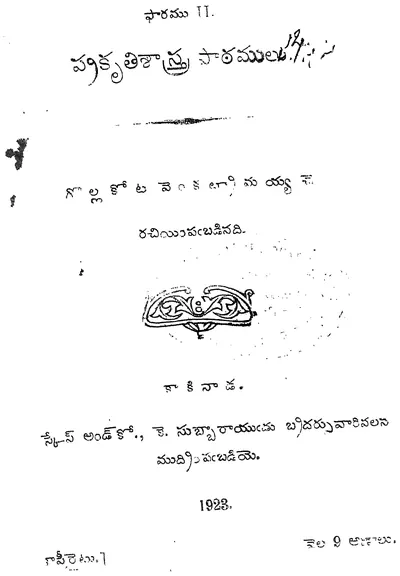
By the 1920s publishers sold graded Telugu school books.51 A publisher’s list from Eluru (then Ellore), printed in a book of 1929, offers verse readers for classes 1 to 5.51 It also offers civics lessons and general-knowledge books.51 The same firm published a Historical Geography of the Vizagapatam District (1929) by U. Satyanarayana, a Deputy Inspector of Schools.52 His preface says this geography for the fourth class also gives local history and the working of the district government.53
Tekumalla Rajagopala Rao’s seventh Sarada reader of Telugu verse came out in Madras in 1929.54 Its lessons include The Andhras, Our language, Famous Andhra cities and The building of Vidyanagara.55 In his preface he wrote that English verse readers taught English children to love their country.54 Telugu, he said, had no such readers until then.54 He dedicated the book to Andhra Mata, “Mother Andhra”.56
Girls’ schooling
At first very few girls went to school.24 In Munro’s survey only 4,540 of the 188,650 pupils were girls.24 The Masulipatam district had just 31 Hindu girls and 2 Muslim girls at school in 1823.9 In Nellore in 1873, Boswell found that “little progress” had been made, because the people’s prejudices were against it.57 The only Hindu women taught to read and write, he wrote, were dancing girls.57
Padfield said much the same in 1882.58 Except for dancing girls, there was little traditional teaching for girls.58 Here and there a few Brahman and other girls studied in the village pyal schools.58 A few Hindus had started a small school for caste girls at Machilipatnam some years before.58
The Imperial Gazetteer says that missionaries began the education of girls.59 The government started its own girls’ schools only in 1866.59 In Nellore the Free Church Mission ran a school for caste girls, with about 40 pupils.57 The Baptist mission had girls’ schools at Nellore and Ongole, and the Lutheran mission one at Gudur.57
Under the rules of 1868, grants for girls were one and a half times those for boys.60 With this help, four village schoolmasters in Nellore opened classes for girls in 1868.57 In some other village schools, girls read with the boys.57
The Maharaja of Vizianagaram opened a school at Vizianagaram for Rajput and Brahman girls in 1868.61 It cost him about Rs. 12,000 a year.61 When Bowers visited it, 185 girls were on the rolls.44 The girls of the highest class could read the Telugu Second Book of Lessons fluently.62
At Visakhapatnam a girls’ school of about 150 pupils was paid for by an Indian lady.62 She was the wife of G. L. Narsing Rao, the proprietor of the Anakapalle taluk.62 The Maharaja also kept a school for caste girls at Rajahmundry.62 In 1881 the Director, H. B. Grigg, noted that the Maharaja’s girls’ schools at Madras and Rajahmundry were in practice run by male teachers.63
In 1874 Kandukuri Veeresalingam became headmaster of a school at Dhavaleswaram, near Rajahmundry.13 There, Anjaneyulu writes, he started a girls’ school with the help of local friends.13 See the Movements page.
For the whole Madras Presidency, the Imperial Gazetteer counted 540 girls’ schools in 1881.59 By 1904 there were 1,091.59 Even then, only 4.8 per cent of girls of school-going age were at school.59
Hyderabad State
In the Nizam’s state, indigenous schools “of the ordinary Indian type” were found in many places.6 They taught reading, writing and simple arithmetic.6 The teacher was usually paid in kind, not in money.6 The first English school in Hyderabad city opened in 1834.6
State education began in 1854, with a school called the Dar-ul-ulum in Hyderabad city.6 In 1859 the state ordered two schools in every taluk, one Persian and one vernacular.6 Revenue officials ran these schools, and the gazetteer says they “did not receive due attention”.6 In 1872 the districts had 125 vernacular schools.64
In 1883 the state had 148 primary schools, with 7,757 pupils.65 That was only 0.5 per cent of the children of school-going age.65 By 1901 there were 753 primary schools, with 41,876 pupils.65 The Nizam College at Hyderabad prepared students for the degrees of the Madras University.65
Girls lagged far behind.66 The 1909 gazetteer gives the share of boys of school-going age at school as 6.1 per cent.66 For girls the figure was only 0.5 per cent.66 The gazetteer named the lack of trained women teachers as the greatest difficulty.66
The state’s Education Code of 1935 said primary schools should teach through the local language.67 Where enough pupils spoke Urdu or another local language, parallel sections were to be formed.67 In secondary schools, however, subjects other than languages were to be taught in Urdu.68 English could be allowed only in special cases.68
University teaching was also in Urdu.69 In 1917 Mr. A. Hydari, Secretary in the Education Department, proposed a new university teaching through Urdu.69 See Akbar Hydari. Osmania University was set up by a charter of the Nizam in 1918.69 Its registrar called it the first attempt in India to give university teaching through an Indian language.69 English was a compulsory second language.69
By 1950 the plan had changed.70 In 1949–50 the primary schools taught in the pupil’s mother tongue, which was usually the regional language.70 In June 1949, teaching in Hindi, Telugu, Marathi and Kannada was extended to classes 5, 6 and 7.71 The first pupils taught in these languages were to sit the class 10 examination in April 1952.71
How many could read and write?
At the 1901 census, 119 men in every 1,000 in the Madras Presidency could read and write.72 Only 9 women in every 1,000 could.72 The Imperial Gazetteer named Salem and Vizagapatam as the most backward districts in education.73
In 1931 only 502 people in every 10,000 in the Nellore district were literate.74 The average for the Presidency was 926.74 Only Vizagapatam had a lower figure.74 Between 1891 and 1931 the number of literate women in Nellore rose from 42 to 180 in every 10,000.74
In Hyderabad State, the 1901 census counted 29.55 literate persons in every 1,000.75 The 1931 census counted as literate anyone who could write a letter to a friend and read the reply.7 It found 50 literates in every 1,000 people aged five and over.7 Among men the figure was 85 in every 1,000.7 In the Madras Presidency it was 219.7
The 1931 census gave Telangana 64 literates in every 1,000, against 36 in Marathwara.7 But it added that this was only because Hyderabad city was counted in Telangana.7 Karimnagar was the most backward district, with 26 in every 1,000.76 Warangal, which had a college and a Telugu training school for women teachers, had 50.76
Where the sources disagree
The sources differ on how many boys Munro’s survey found at school:
- The Imperial Gazetteer of Madras (1908) says the boys taught were “one-fourth” of those of school-going age.5
- The Madras committee of 1884 says village schools reached “rather less than one-sixth” of the boys of school-going age.4
They also differ slightly on the schools opened under Munro’s plan. The Imperial Gazetteer gives 14 Collectorate and 81 taluk schools in 1826.5 Satthianadhan says “about 100” were set up in the end.77
The Nellore gazetteer of 1942 repeats Boswell’s account of the village school course almost word for word.783 But it adds a first book, the Pedda Bala Siksha, before the Balaramayanam.78 Boswell (1873) does not name it.3 A witness to the 1884 committee described the Bala Siksha as a book made for beginners.15
Footnotes
-
Report by the Madras Provincial Committee (1884), p. 67 (archive.org (opens in a new tab)). ↩
-
Boswell, Manual of the Nellore District (1873), p. 702 (archive.org (opens in a new tab)). ↩ ↩2 ↩3 ↩4 ↩5 ↩6 ↩7 ↩8 ↩9 ↩10 ↩11 ↩12 ↩13
-
John A. C. Boswell, A Manual of the Nellore District (1873), p. 701 (archive.org (opens in a new tab)). ↩ ↩2 ↩3 ↩4 ↩5 ↩6 ↩7 ↩8 ↩9
-
Indian Education Commission, Report by the Madras Provincial Committee (1884), p. 5 (archive.org (opens in a new tab)). ↩ ↩2 ↩3
-
Imperial Gazetteer of India, Provincial Series: Madras, Vol. I (1908), p. 117 (archive.org (opens in a new tab)). ↩ ↩2 ↩3 ↩4 ↩5 ↩6 ↩7 ↩8
-
Imperial Gazetteer of India, Provincial Series: Hyderabad State (1909), p. 73 (archive.org (opens in a new tab)). ↩ ↩2 ↩3 ↩4 ↩5 ↩6 ↩7 ↩8 ↩9
-
Census of India 1931, Vol. XXIII: H.E.H. the Nizam’s Dominions, Part I: Report (1933), p. 196 (archive.org (opens in a new tab)). ↩ ↩2 ↩3 ↩4 ↩5 ↩6 ↩7 ↩8
-
Kelsall, Manual of the Bellary District (1872), p. 283 (archive.org (opens in a new tab)). ↩ ↩2 ↩3 ↩4 ↩5
-
Gordon Mackenzie, A Manual of the Kistna District (1883), p. 369 (archive.org (opens in a new tab)). ↩ ↩2 ↩3 ↩4 ↩5 ↩6 ↩7 ↩8
-
Report on Public Instruction in the Madras Presidency for 1896–97 (1897), p. 17, table of scholars by language (archive.org (opens in a new tab)). ↩ ↩2 ↩3 ↩4
-
Satthianadhan, History of Education in the Madras Presidency (1894), p. 1 (archive.org (opens in a new tab)). ↩ ↩2 ↩3
-
K. Sitaramaiya, A Hand Book of Telugu Literature (1943), p. 62 (archive.org (opens in a new tab)). Cite-only; paraphrased. ↩ ↩2 ↩3
-
D. Anjaneyulu, Kandukuri Veeresalingam (1976), p. 14 (archive.org (opens in a new tab)). Cite-only; paraphrased. ↩ ↩2 ↩3
-
Report by the Madras Provincial Committee (1884), p. 76 (archive.org (opens in a new tab)). ↩
-
Report by the Madras Provincial Committee (1884), Evidence taken in October 1882, p. 21, quoting the Deputy Inspector of Schools at Hosur (archive.org (opens in a new tab)). ↩ ↩2
-
Report by the Madras Provincial Committee (1884), p. 68, adapting A. D. Campbell’s account of 1823 (archive.org (opens in a new tab)). ↩ ↩2 ↩3 ↩4 ↩5 ↩6 ↩7 ↩8 ↩9
-
Satthianadhan, History of Education (1894), p. 5, footnote quoting A. D. Campbell (archive.org (opens in a new tab)). ↩ ↩2
-
Satthianadhan, History of Education (1894), p. 4, quoting A. D. Campbell’s report from Bellary (archive.org (opens in a new tab)). ↩ ↩2 ↩3
-
Report by the Madras Provincial Committee (1884), Evidence, p. 246, evidence of the Rev. J. E. Padfield, Principal of the Church Missionary Society’s training institution, Masulipatam (archive.org (opens in a new tab)). ↩ ↩2 ↩3 ↩4 ↩5 ↩6 ↩7 ↩8
-
Chenchiah and Bhujanga Rao, A History of Telugu Literature (1928), p. 56 (archive.org (opens in a new tab)). ↩ ↩2 ↩3
-
Chenchiah and Bhujanga Rao, A History of Telugu Literature (1928), p. 57 (archive.org (opens in a new tab)). ↩
-
Charles Philip Brown, A Dictionary, Telugu and English (1852), p. xiii (archive.org (opens in a new tab)). ↩
-
S. Satthianadhan, History of Education in the Madras Presidency (1894), preface, p. vi (archive.org (opens in a new tab)). ↩
-
Satthianadhan, History of Education (1894), p. 2 (archive.org (opens in a new tab)). ↩ ↩2 ↩3 ↩4 ↩5 ↩6 ↩7 ↩8 ↩9 ↩10
-
Satthianadhan, History of Education (1894), p. 3 (archive.org (opens in a new tab)). ↩ ↩2 ↩3 ↩4 ↩5
-
Satthianadhan, History of Education (1894), p. 6 (archive.org (opens in a new tab)). ↩ ↩2 ↩3 ↩4 ↩5
-
Satthianadhan, History of Education (1894), p. 20 (archive.org (opens in a new tab)). ↩ ↩2 ↩3
-
Satthianadhan, History of Education (1894), p. 52 (archive.org (opens in a new tab)). ↩ ↩2 ↩3 ↩4 ↩5 ↩6
-
Satthianadhan, History of Education (1894), p. 53 (archive.org (opens in a new tab)). ↩ ↩2 ↩3
-
Mackenzie, Manual of the Kistna District (1883), p. 370 (archive.org (opens in a new tab)). ↩ ↩2 ↩3 ↩4 ↩5 ↩6 ↩7 ↩8
-
Manikam, Missionary Collegiate Education (1929), p. 82 (archive.org (opens in a new tab)). ↩ ↩2 ↩3
-
Rajah B. Manikam, Missionary Collegiate Education in the Presidency of Madras (1929), p. 9 (archive.org (opens in a new tab)). ↩ ↩2
-
Manikam, Missionary Collegiate Education (1929), p. 87 (archive.org (opens in a new tab)). ↩ ↩2 ↩3 ↩4 ↩5
-
Satthianadhan, History of Education (1894), p. 42 (archive.org (opens in a new tab)). ↩ ↩2 ↩3
-
Imperial Gazetteer: Madras, Vol. I (1908), p. 118 (archive.org (opens in a new tab)). ↩ ↩2 ↩3 ↩4 ↩5 ↩6
-
Satthianadhan, History of Education (1894), p. 43 (archive.org (opens in a new tab)). ↩ ↩2 ↩3
-
Satthianadhan, History of Education (1894), p. 44 (archive.org (opens in a new tab)). ↩ ↩2 ↩3
-
Imperial Gazetteer: Madras, Vol. I (1908), p. 121 (archive.org (opens in a new tab)). ↩
-
Boswell, Manual of the Nellore District (1873), p. 703 (archive.org (opens in a new tab)). ↩ ↩2 ↩3 ↩4 ↩5 ↩6
-
John Kelsall, Manual of the Bellary District (1872), p. 281 (archive.org (opens in a new tab)). ↩
-
Mackenzie, Manual of the Kistna District (1883), p. 371 (archive.org (opens in a new tab)). ↩ ↩2 ↩3
-
Report by the Madras Provincial Committee (1884), p. 71 (archive.org (opens in a new tab)). ↩ ↩2
-
Report by the Madras Provincial Committee (1884), p. 69 (archive.org (opens in a new tab)). ↩ ↩2 ↩3
-
Report on Public Instruction for 1868–69 (1869), Appendix A, p. xxiv (archive.org (opens in a new tab)). ↩ ↩2 ↩3 ↩4 ↩5
-
Report on Public Instruction in the Madras Presidency for 1868–69 (1869), Appendix A, p. i, report of H. Bowers, Inspector of Schools, 1st Division, dated Waltair, 10 May 1869 (archive.org (opens in a new tab)). ↩
-
Paravastu Chinnaya Suri, Bala Vyakaranamu (4th ed., Madras, 1871), title page, PDF p. 7 (archive.org (opens in a new tab)). ↩
-
Sitaramaiya, A Hand Book of Telugu Literature (1943), p. 68 (archive.org (opens in a new tab)). Cite-only; paraphrased. ↩ ↩2 ↩3 ↩4
-
Report on Public Instruction in the Madras Presidency for 1928–29, Vol. II, Supplemental statistics, p. 13, table 8, public institutions (archive.org (opens in a new tab)). ↩ ↩2 ↩3
-
Sitaramaiya, A Hand Book of Telugu Literature (1943), p. 87 (archive.org (opens in a new tab)). Cite-only; paraphrased. ↩ ↩2 ↩3
-
Sitaramaiya, A Hand Book of Telugu Literature (1943), p. 88 (archive.org (opens in a new tab)). Cite-only; paraphrased. ↩
-
U. Satyanarayana, Historical Geography of the Vizagapatam District (Ellore: Rama & Co., 1929), publisher’s list facing the title page, PDF p. 8 (archive.org (opens in a new tab)). ↩ ↩2 ↩3
-
Satyanarayana, Historical Geography of the Vizagapatam District (1929), English title page, PDF pp. 7–8 (archive.org (opens in a new tab)). ↩
-
Satyanarayana, Historical Geography of the Vizagapatam District (1929), Telugu preface, PDF p. 9 (archive.org (opens in a new tab)). Paraphrased. ↩
-
Tekumalla Rajagopala Rao, Sarada Padya Vachakamulu, seventh reader (Madras, 1929), preface dated 7 February 1929, PDF p. 7 (archive.org (opens in a new tab)). Paraphrased. ↩ ↩2 ↩3
-
Rajagopala Rao, Sarada Padya Vachakamulu (1929), contents, PDF p. 9 (archive.org (opens in a new tab)). ↩
-
Rajagopala Rao, Sarada Padya Vachakamulu (1929), dedication, PDF p. 8 (archive.org (opens in a new tab)). ↩
-
Boswell, Manual of the Nellore District (1873), p. 704 (archive.org (opens in a new tab)). ↩ ↩2 ↩3 ↩4 ↩5 ↩6
-
Report by the Madras Provincial Committee (1884), Evidence, p. 249, Padfield’s answer 41 (archive.org (opens in a new tab)). ↩ ↩2 ↩3 ↩4
-
Imperial Gazetteer: Madras, Vol. I (1908), p. 122 (archive.org (opens in a new tab)). ↩ ↩2 ↩3 ↩4 ↩5
-
Satthianadhan, History of Education (1894), p. 67 (archive.org (opens in a new tab)). ↩
-
Satthianadhan, History of Education (1894), p. 75 (archive.org (opens in a new tab)). ↩ ↩2
-
Report on Public Instruction for 1868–69 (1869), Appendix A, p. xxv (archive.org (opens in a new tab)). ↩ ↩2 ↩3 ↩4
-
Satthianadhan, History of Education (1894), p. 110, quoting H. B. Grigg’s report for 1880–81 (archive.org (opens in a new tab)). ↩
-
Imperial Gazetteer: Hyderabad State (1909), p. 74 (archive.org (opens in a new tab)). ↩
-
Imperial Gazetteer: Hyderabad State (1909), p. 75 (archive.org (opens in a new tab)). ↩ ↩2 ↩3 ↩4
-
Imperial Gazetteer: Hyderabad State (1909), p. 76 (archive.org (opens in a new tab)). ↩ ↩2 ↩3 ↩4
-
The Education Code of H.E.H. the Nizam’s Dominions (1935), p. 52, Article 216 (archive.org (opens in a new tab)). ↩ ↩2
-
The Education Code of H.E.H. the Nizam’s Dominions (Hyderabad, 1935), p. 41, Article 169 (archive.org (opens in a new tab)). ↩ ↩2
-
Census of India 1931, Vol. XXIII, Part I (1933), p. 216, “The Osmania University” by H. A. Ansari, Registrar (archive.org (opens in a new tab)). ↩ ↩2 ↩3 ↩4 ↩5
-
Report on the Administration of the Hyderabad State (1950), p. 136 (archive.org (opens in a new tab)). Paraphrased. ↩ ↩2
-
Report on the Administration of the Hyderabad State (1950), p. 138 (archive.org (opens in a new tab)). Paraphrased. ↩ ↩2
-
Imperial Gazetteer: Madras, Vol. I (1908), p. 124 (archive.org (opens in a new tab)). ↩ ↩2
-
Imperial Gazetteer: Madras, Vol. I (1908), p. 125 (archive.org (opens in a new tab)). ↩
-
Gazetteer of the Nellore District, brought up to 1938, Vol. A (1942), p. 210 (archive.org (opens in a new tab)). Paraphrased. ↩ ↩2 ↩3 ↩4
-
Imperial Gazetteer: Hyderabad State (1909), p. 78 (archive.org (opens in a new tab)). ↩
-
Census of India 1931, Vol. XXIII, Part I (1933), p. 198 (archive.org (opens in a new tab)). ↩ ↩2
-
Satthianadhan, History of Education (1894), p. 8 (archive.org (opens in a new tab)). ↩
-
Gazetteer of the Nellore District, brought up to 1938, Vol. A (1942), p. 211 (archive.org (opens in a new tab)). Paraphrased. ↩ ↩2
Photos
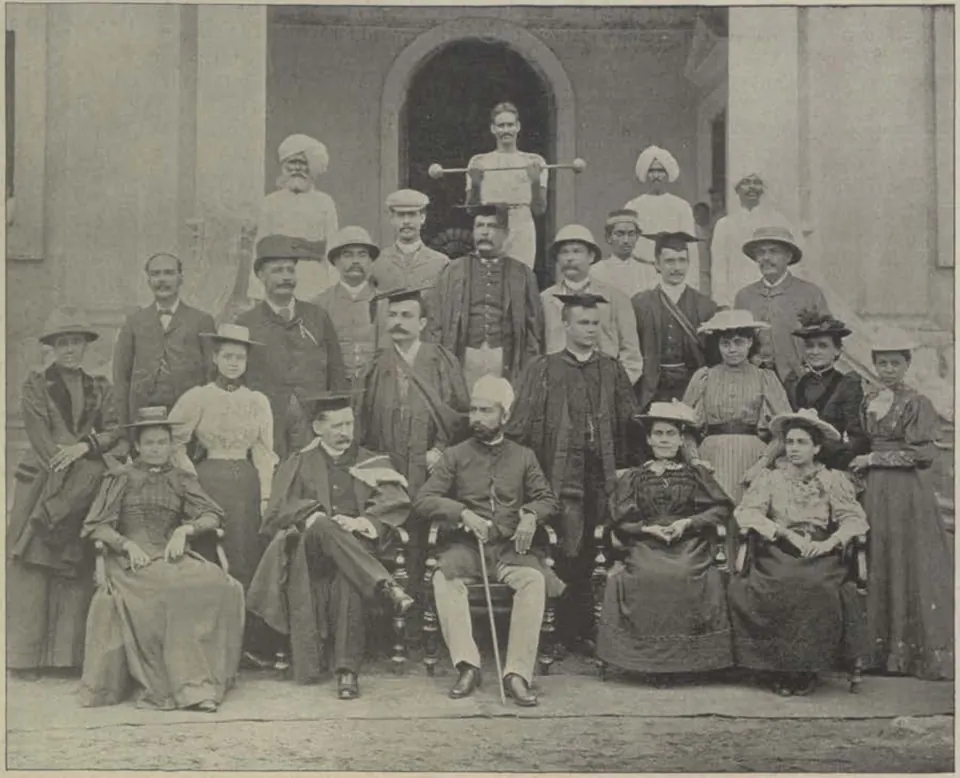
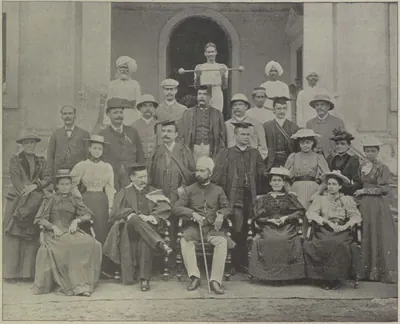 Hyderabad: "Committee and Staff—St. George's Grammar School" (Campbell 1898, p. 194)Historic photograph · 1898
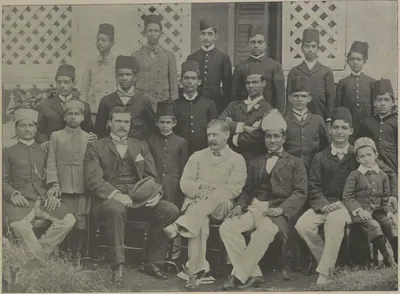 Hyderabad: "Masters and Boarders, Nizam College" (Campbell 1898, p. 192)Historic photograph · 1898
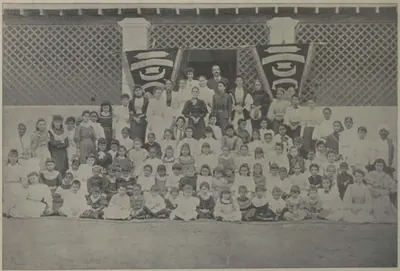 Hyderabad: "St. George's Girls' Seminary" (Campbell 1898, p. 195)Historic photograph · 1898
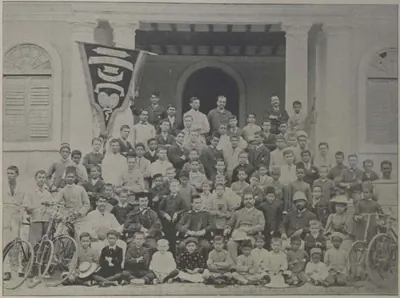 Hyderabad: "St. George's Grammar School" (Campbell 1898, p. 195)Historic photograph · 1898
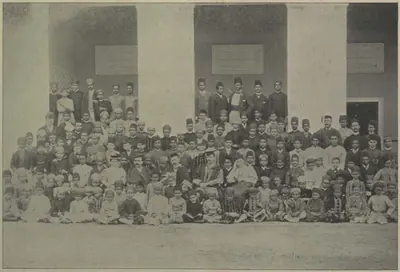 Hyderabad: "The Madrasa-i-Aliya, Nizam College" (Campbell 1898, p. 192)Historic photograph · 1898
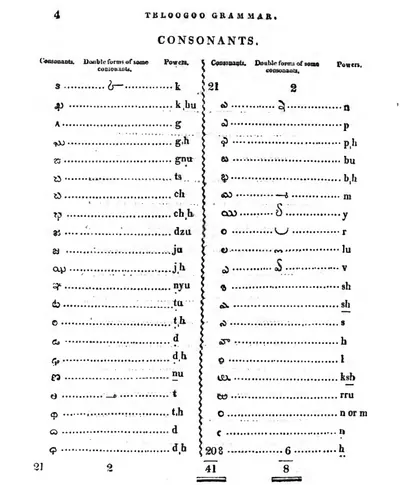 "Consonants": the Telugu consonants with their double forms and sounds (Campbell 1816, p. 4 (PDF p. 76))Other · 1816
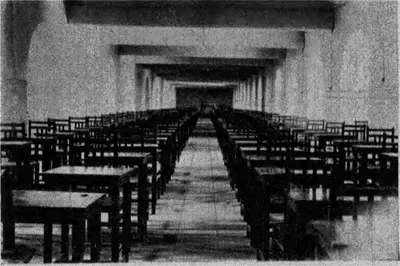 "Examination Hall (North Wing Basement Floor)", Osmania University (Osmania University Buildings Project report, 1934, Plate XV (PDF p. 57))Historic photograph · 1934
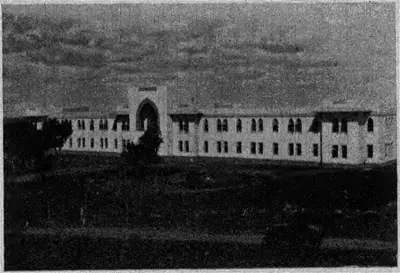 "Hostel A (Completed)", Osmania University (Osmania University Buildings Project report, 1934, Plate XVIII (PDF p. 65))Historic photograph · 1934
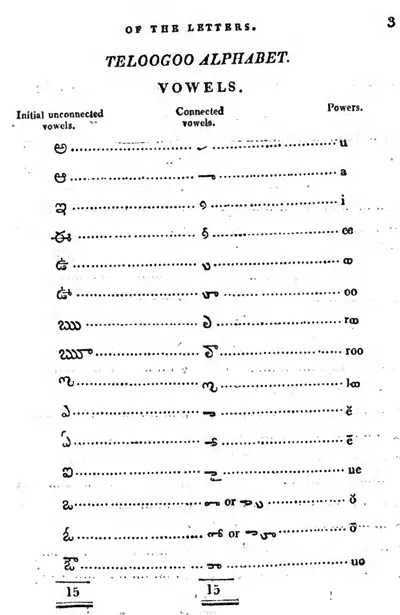 "Teloogoo Alphabet. Vowels": initial and connected vowel forms with their sounds (Campbell, A Grammar of the Teloogoo Language, Madras, 1816, p. 3 (PDF p. 75))Other · 1816
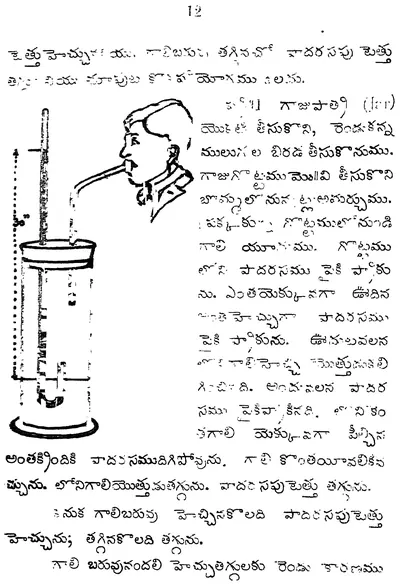 A lesson page on air and mercury in "Prakriti Sastra Pathamulu", with a drawing of a boy blowing into a tube in a jar (Telugu school book, Kakinada, 1923, p. 12 (PDF p. 11))Other · 1923
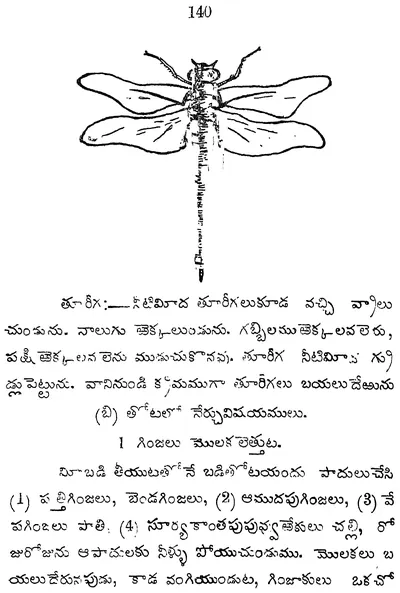 A lesson page on the dragonfly (తూనీగ) in "Prakriti Sastra Pathamulu" (Telugu school book, Kakinada, 1923, p. 140 (PDF p. 138))Other · 1923
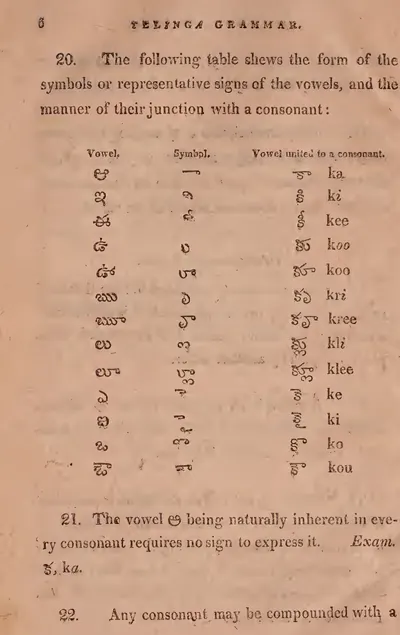 Carey's table of "the form of the symbols or representative signs of the vowels, and the manner of their junction with a consonant" (ka, ki, kee ...) (Carey 1814, p. 6 (PDF p. 12))Other · 1814
Show all (16)
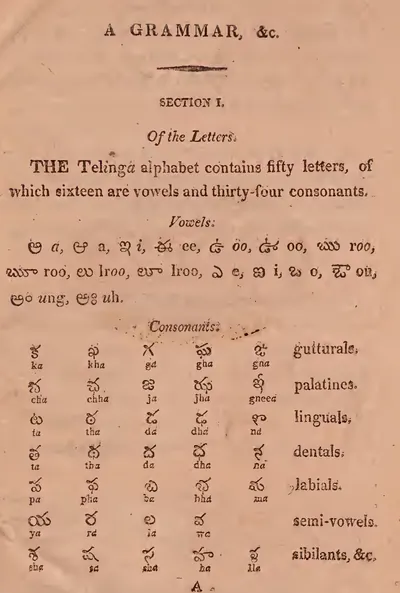 Carey's Telugu alphabet: "The Telinga alphabet contains fifty letters, of which sixteen are vowels and thirty-four consonants" (Carey, A Grammar of the Telinga Language, Serampore, 1814, p. 1 (PDF p. 7))Other · 1814
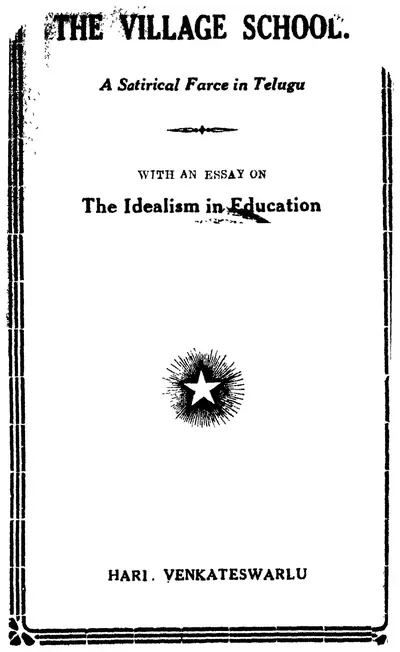 Cover of "The Village School: A Satirical Farce in Telugu, with an Essay on The Idealism in Education" (Palleturi Pathasala) by Hari Venkateswarlu (Madanapalle, 1930, PDF p. 2)Other · 1930
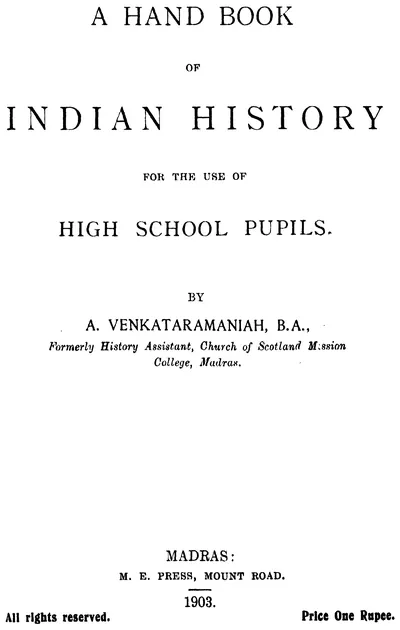 Title page of "A Hand Book of Indian History for the Use of High School Pupils" by A. Venkataramaniah (M. E. Press, Madras, 1903; price one rupee) (PDF p. 5)Other · 1903
 Title page of "Prakriti Sastra Pathamulu", a Telugu nature-study book for Form II by Gollakota Venkataramayya (Kakinada, 1923; price 9 annas) (PDF p. 1)Other · 1923
Related
People
Paravastu Chinnaya Suri
1807–1861 CE
Paravastu Chinnaya Suri (1807–1861) was a Telugu scholar and teacher at the Presidency College, Madras. His Bala Vyakaranamu (about 1855) became the standard grammar of literary Telugu, and his Niti Chandrika retold Panchatantra stories in a classical prose style. Later writers praise his grammar but some blame his heavy style for holding back modern Telugu prose.
Raghupati Venkataratnam Naidu
1862–1939 CE
Sir Raghupati Venkataratnam Naidu (1862–1939), born at Machilipatnam, was a teacher, Brahmo Samaj leader and social reformer. He was principal of the Mahbub College at Secunderabad and of the Pithapuram Raja's College at Kakinada, campaigned against the devadasi system, and became Vice-Chancellor of Madras University. Later writers rank him next to Veeresalingam among Andhra reformers.
Lord Napier (Madras)
1866–1872 CE
Lord Napier of Merchistoun was Governor of Madras from 1866 to 1872, and left to act as Viceroy after Lord Mayo's death. Worried by the backwardness of education in Kurnool, he had the government open two small taluk schools there, though they later closed. In 1869 he attended the Nellore agricultural exhibition and cattle show, which was unusually successful that year.
Bandaru Achamamba
1874–1905 CE
Bandaru Achamamba (1874–1905), sister of Komarraju Lakshmana Rao, was a Telugu writer and speaker for women's education. She wrote the Abala Saccharitra Ratnamala, lives of famous women, and her story Gunavathiyagu Stree (1901) is called the first Telugu short story by a woman. The women's journal Hindu Sundari printed her writings, her portrait and, after her early death, a tribute.
Kattamanchi Ramalinga Reddy
1880–1951 CE
Sir Kattamanchi Ramalinga Reddy, known as C. R. Reddy (1880–1951), was born at Kattamanchi in Chittoor district. An educationist, critic and poet, he studied at Cambridge, served in education in Baroda and Mysore, and was the first Vice-Chancellor of Andhra University from 1926. His Musalamma Maranamu (1900) and Kavitva Tattva Vicharamu helped begin modern Telugu criticism.
Sir Mountstuart Grant Duff
1881–1886 CE
Sir Mountstuart Elphinstone Grant Duff was Governor of Madras from 1881 to 1886. He toured the northern districts, where the people of Vijayawada welcomed him with an address thanking the government for the Krishna irrigation works. In 1883 he opened a new building of the school at Kakinada that became the Pithapuram Raja's College, and at Venkatagiri he laid the foundation of the town hall and opened the Raja's new palace, the Indra Mahal.
Viscount Goschen
1924–1929 CE
Viscount Goschen was Governor of Madras from 1924 to 1929. As Governor he was the first Chancellor of the Andhra University, whose first Vice-Chancellor took office in 1926, and the university gave him an honorary doctorate. He visited Nellore after the great cyclone of 1 November 1927, when the government sanctioned 20,000 rupees for relief. A scheme of subsidised village doctors begun in his time was known in Nellore as the 'Goschen scheme'.
Institutions
Noble College, Machilipatnam
1843 CE
The Church Missionary Society's college at Machilipatnam, the oldest college in the Telugu country. It grew from a school that the missionary Robert Noble opened on 21 November 1843 with two boys. It became a second-grade college of the Madras University in 1864 and a first-grade college in 1892, and joined the new Andhra University in 1926.
Andhra Christian College, Guntur
1848 CE
The American Lutheran mission's college at Guntur. Its first English school opened in 1848, closed in 1863 when the American Civil War cut its funds, and reopened in 1874 under Dr. L. L. Uhl. It became a second-grade college in 1885 and a first-grade college in 1926, and took the name Andhra Christian College in 1927. In 1929 it had more students than any other college of the Andhra University.
Pithapuram Raja's College, Kakinada
1852 CE
A college at Kakinada that began in 1852 as an English and vernacular school founded by the Collector and his sheristadar. The Raja of Pithapuram, one of its first pupils, endowed it; it opened its first college class in January 1884 and took the Raja's name. The Maharaja of Pithapuram became its sole owner in 1926–27 and raised it to a first-grade college.
Government Arts College, Rajahmundry
1853 CE
The Madras government's college for the Northern Circars. It opened in 1853 as a district (zilla) school, was made a provincial school in 1868, started its first college class in 1873 and became a first-grade college teaching up to the B.A. in 1877. In 1907 it was one of only three government first-grade colleges in the Presidency; in 1939–40 it was a first-grade college of the Andhra University.
Dar-ul-ulum, Hyderabad
1854 CE
The first state school of Hyderabad, founded in the city in 1854. It trained the state's first schoolmasters, was later split into branch schools, and grew into an Oriental College that sent students to the Oriental examinations of the Punjab University. In 1898 its college had 55 students and its school 317. By the 1920s an Osmania High School carried its name.
Hindu College, Machilipatnam
1856 CE
A Hindu college at Machilipatnam. The Andhra University register says Sir Seshaiah Sastri founded it on 1 January 1856 as the Hindu Anglo-Vernacular School, for Hindu families who wanted a good education for their sons without missionary pressure. It became a high school in 1863, a second-grade college in July 1928 and a first-grade college in July 1934.
Maharaja's College, Vizianagaram
1857 CE
The college of the Maharajas of Vizianagaram. The Andhra University register says a Maharaja of Vizianagaram, whom it calls Sir Viziaramaraj, founded the school in 1857 and made it a high school in 1868. It opened its first college class in 1877 (1879 in the register) and taught up to the B.A. from 1883. For decades the Vizianagaram estate paid for it, and in 1885 it was the only first-grade college of the Vizagapatam district.
Mrs. A. V. N. College, Visakhapatnam
1860 CE
A college at Visakhapatnam. It began in 1860 as an Anglo-Vernacular School founded by the Inspector of Schools, the Collector, the Maharaja of Vizianagaram and a local gentleman, and became the Hindu College when it was raised to a second-grade college. A bequest of one lakh of rupees from A. V. Narasinga Rao (1892) turned it, from 1 April 1899, into the Mrs. A. V. Narasinga Rao College.
Venkatagiri Raja's College, Nellore
1875 CE
A college at Nellore, founded as a school in 1875 by S. Narayanaswami Chetty, Dewan of the Venkatagiri estate. The Maharaja of Venkatagiri saved it in 1886 and it took his name in 1895. His son raised it to a college, opened in July 1920; in 1939–40 it was a second-grade college of the Andhra University with 337 Intermediate students.
Government Training College, Rajahmundry
1883 CE
A college for training Telugu teachers at Rajahmundry. It began in 1883 as a district board normal school, became a college in February 1894 and trained graduates for the L.T. (Licentiate in Teaching) from 1904. Its graduate class was moved to Saidapet near Madras in 1911, but a separate Teachers' College for the Telugu districts reopened at Rajahmundry on 2 July 1917.
Nizam College
c. 1888 CE
The English-medium college of Hyderabad city, affiliated to the University of Madras. The Imperial Gazetteer traces it to the Chadarghat high school, which became a college about 1880; Campbell says the Nizam College was formed in 1888 by joining the old Hyderabad College with the Madrasa-i-Aliya. In 1936 a committee proposed linking it to Osmania University.
Osmania University
1918 CE
The university of Hyderabad State, ordered by the seventh Nizam in April 1917 and set up by a charter in 1918. It taught in Urdu, with English as a compulsory language. Its first college opened in 1919; colleges of law, medicine, engineering and teacher training, intermediate colleges at Warangal and Aurangabad and a college for women followed by 1930.
Andhra University
1926 CE
The university of the Telugu districts of the Madras Presidency, created by an Act of January 1926 that came into force that April. Its headquarters, first placed at Vijayawada (then Bezwada), moved to Visakhapatnam in 1928–29. It opened its own colleges of arts (1931) and of science and technology (1932) at Waltair, and by 1939–40 had 23 colleges.
Madrasa-i-Aliya
A school in Hyderabad city for the sons of the nobility. It began as a private school with English teachers for the sons and relatives of the minister Sir Salar Jang, and in the 1870s became a public school for the higher classes. It had 19 pupils in 1879 and about 200 by the 1900s, and was attached to the Nizam College.
Themes
References
Notes (0)
Sources (22)
Spotted an error on this page? Tell us
Last updated: