Paramesvaravarman I
Pallava king of Kanchi in the later 7th century, son of Mahendravarman II and grandson of Narasimhavarman I. He fought the Chalukya Vikramaditya I, who took Kanchi in his reign and was later driven back. His Vunna Guravayapalem plates, issued from Kanchipura in his 19th year and dated by D. C. Sircar to December 687, grant a village in the Podili–Kandukur country of Nellore.
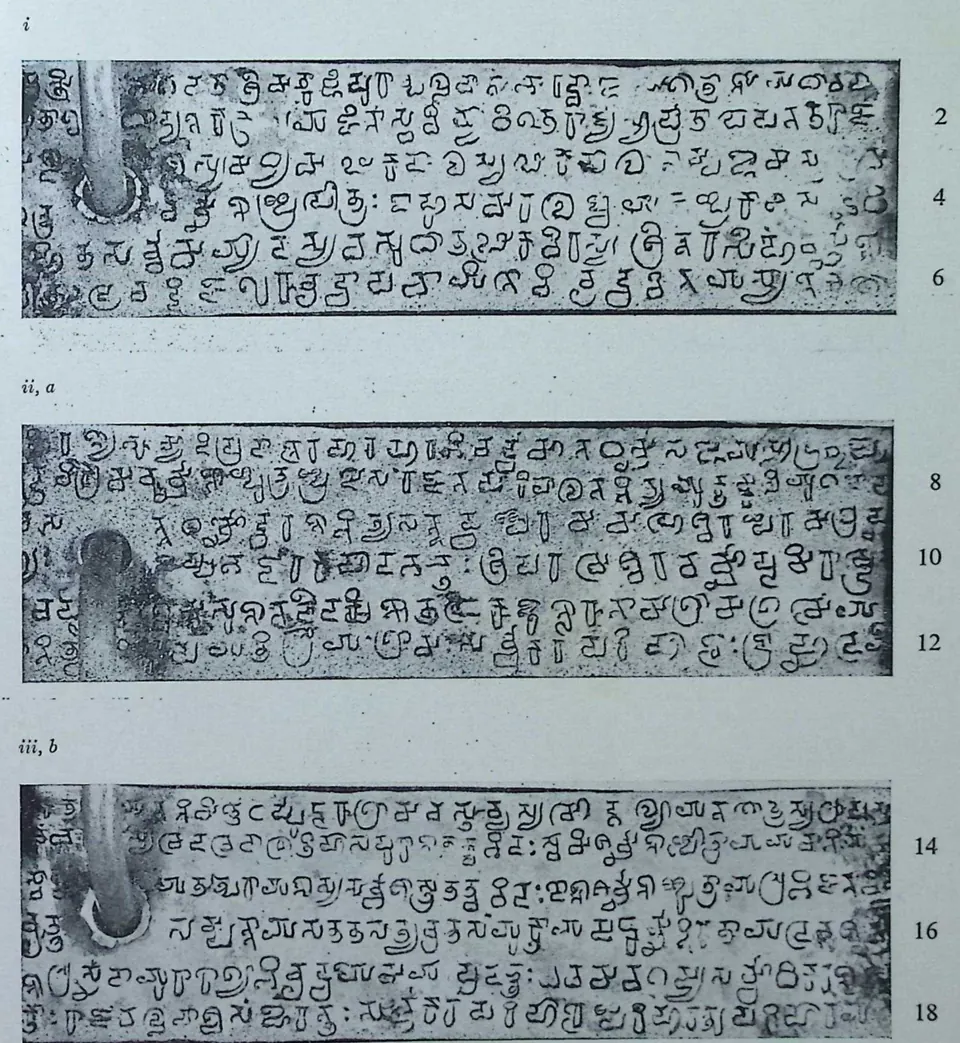
Paramesvaravarman I was a Pallava king of the later 7th century, whose grant shows the Pallavas once more giving land in the Nellore country.12 This was more than half a century after the Chalukya conquest of the Guntur country.12 See the Vunna Guravayapalem plates.
Family
The Vunna Guravayapalem plates call Paramesvaravarman the son of Mahendravikramavarman (Mahendravarman II).3 They make him the grandson of Narasimhavarman I and great-grandson of Mahendravarman I.3 Mahendravarman II was the son of Narasimhavarman I.34 Paramesvaravarman I was the son of Mahendravarman II.3
R. Gopalan noted that almost nothing is known of Mahendravarman II except a line in the Kuram plates, and that Mahendravarman II succeeded his father about 655.45 Paramesvaravarman’s son and successor was Narasimhavarman II.67
The war with Vikramaditya I
According to his Gadval plates of 674, the Chalukya king Vikramaditya I conquered Kanchi, defeated “Isvarapotaraja” and destroyed the Mahamalla family.58 The plates place him at that time in camp at Uragapura, on the southern bank of the Kaveri.58
The Pallava records tell another story.89 The Kuram plates, issued by Paramesvaravarman himself, say that he made Vikramaditya flee “covered only by a rag”.89 They describe Vikramaditya as one “whose army consisted of several lakshas” (hundreds of thousands).89 The Udayendiram plates name the battlefield as Peruvalanallur, which Gopalan placed in the Lalgudi taluk of Tiruchirappalli (then Trichinopoly).89
The Vunna Guravayapalem plates
Paramesvaravarman issued the grant from Kanchipura in the 19th year of his reign.1 He gave the village of Kubunuru, on the southern bank of the river Musuna in Pumi-rashtra, to the Brahman Devasarman.1 He made the gift at the winter solstice, for the increase of his own life and health.1
D. C. Sircar placed the village in the Podili–Kandukur region of the Nellore district, taking the river to be the Musi, which runs between the Kandukur and Ongole taluks.2 The executor was Kulavarman, son of Nagi- or Tagi-pallava and ruler of Nandakurra.1102 Nandakurra has been tentatively identified with Nandavaram in the Udayagiri taluk, and Sircar took its chiefs to be feudatories of the Pallavas.1102
The plates call Paramesvaravarman a devotee of Siva and of the Brahmans.111 But unlike the Reyuru grant of his son, they do not credit him with the horse sacrifice.111 Sircar concluded that the son’s grant gave him this title wrongly.1 P. B. Desai, editing the Reyuru grant, reached a similar conclusion.11
Date
The Gadval plates of 674 already name him as Vikramaditya’s enemy.58 G. Jouveau-Dubreuil gave him 670–690.12 Sircar worked out from the date of the Vunna Guravayapalem plates that their 19th year fell between December 686 and December 688.102 He concluded that Paramesvaravarman came to the throne between December 668 and December 669, and ruled at least until about 687–689.102
Footnotes
-
Sircar and Seshadri Sastri, “Vunna Guravayapalem Plates” (EI XXXII), p. 94 (archive.org (opens in a new tab)). ↩ ↩2 ↩3 ↩4 ↩5 ↩6 ↩7 ↩8 ↩9 ↩10
-
Sircar and Seshadri Sastri, “Vunna Guravayapalem Plates” (EI XXXII), p. 96 (archive.org (opens in a new tab)). ↩ ↩2 ↩3 ↩4 ↩5 ↩6 ↩7
-
D. C. Sircar and P. Seshadri Sastri, “Vunna Guravayapalem Plates of Paramesvaravarman I, Year 19”, Epigraphia Indica XXXII (1957–58), p. 93 (archive.org (opens in a new tab)). ↩ ↩2 ↩3 ↩4
-
Gopalan, History of the Pallavas of Kanchi (1928), p. 103 (archive.org (opens in a new tab)). ↩ ↩2
-
Gopalan, History of the Pallavas (1928), p. 104 (archive.org (opens in a new tab)). ↩ ↩2 ↩3 ↩4
-
P. B. Desai, “Reyuru Grant of Pallava Narasimhavarman; Year 12”, Epigraphia Indica XXIX (1951–52), p. 92 (archive.org (opens in a new tab)). ↩
-
R. Gopalan, History of the Pallavas of Kanchi (1928), p. 83 (archive.org (opens in a new tab)). ↩
-
Gopalan, History of the Pallavas (1928), p. 105 (archive.org (opens in a new tab)). ↩ ↩2 ↩3 ↩4 ↩5 ↩6 ↩7
-
Gopalan, History of the Pallavas (1928), p. 106 (archive.org (opens in a new tab)). ↩ ↩2 ↩3 ↩4
-
Sircar and Seshadri Sastri, “Vunna Guravayapalem Plates” (EI XXXII), p. 95 (archive.org (opens in a new tab)). ↩ ↩2 ↩3 ↩4
-
Desai, “Reyuru Grant” (EI XXIX), p. 93 (archive.org (opens in a new tab)). ↩ ↩2 ↩3
-
G. Jouveau-Dubreuil, Ancient History of the Deccan (1920), p. 70, genealogical table (archive.org (opens in a new tab)). ↩
Photos
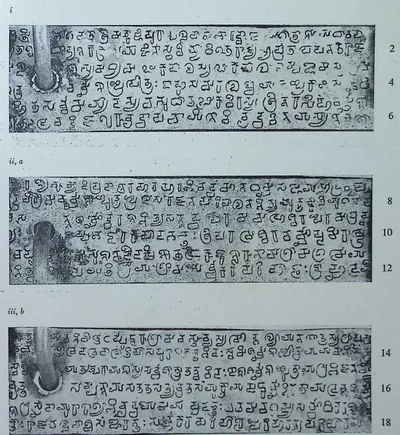 "Vunna Guravayapalem Plates of Paramesvaravarman I, Year 19", the first three inscribed plate sides, lines 1-18 (Epigraphia Indica XXXII, plate with No. 9 (PDF p. 148))Historic photograph · 1959
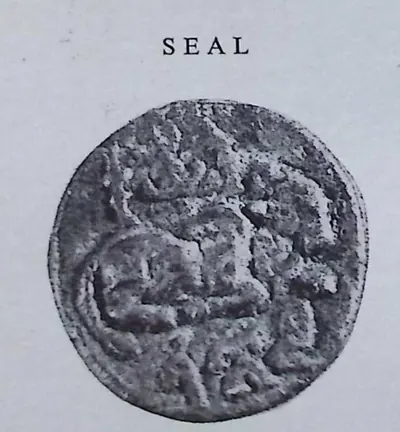 Seal of the "Vunna Guravayapalem Plates of Paramesvaravarman I, Year 19" (Epigraphia Indica XXXII, plate with No. 9 (PDF p. 149))Historic photograph · 1959
Related
Dynasties

References
Notes (0)
Sources (4)
Spotted an error on this page? Tell us
Last updated: