Pallavas
Dynasty of Kanchi (Kanchipuram) whose kings held the Telugu country south of the Krishna for much of the 4th to 7th centuries CE. Their earliest charters, in Prakrit, were sent from Kanchi to an officer at Dhanyakataka near Amaravati. A later line issued Sanskrit grants of villages in the Guntur and Nellore country from camps such as Palakkada and Dasanapura. The Chalukyas took Vengi and the Guntur country early in the 7th century. But Pallava kings still granted villages in Nellore until about 700, and their vassals held parts of Chittoor and Rayalaseema until the Chola conquest about 900.
Swipe sideways to see the whole chart; tap a bar for details.
Each bar is a ruling power in its region; time runs left to right. Dashed = approximate dates. Select a bar for details.
Show as a list
Mauryas & Satavahanas 300 BCE – 225 CE
- Telangana
- Satavahanas (c. 220 BCE – 225 CE)
- Coastal Andhra
- Satavahanas (c. 220 BCE – 225 CE)
- Rayalaseema
- Satavahanas (c. 1–225 CE)
Ikshvakus, Vishnukundins & early kingdoms 225–624 CE
- Telangana
- Vakatakas (c. 300–500 CE) · Ikshvakus (c. 225–352 CE) · Vishnukundins (c. 375–612 CE)
- Coastal Andhra
- Pallavas (c. 250–630 CE) · Ikshvakus (c. 225–350 CE) · Vishnukundins (c. 500–630 CE) · Salankayanas of Vengi (c. 300–470 CE) · Eastern Gangas of Kalinga (c. 537–1434 CE) · Eastern Chalukyas of Vengi (c. 615–973 CE) · Chalukyas of Badami (c. 615–642 CE)
- Rayalaseema
- Pallavas (c. 300–900 CE) · Telugu Cholas of Renadu (c. 550–800 CE)
Eastern Chalukyas & the Deccan powers 624–1163 CE
- Telangana
- Chalukyas of Badami (c. 655–753 CE) · Chalukyas of Mudigonda (c. 890–1218 CE) · Chalukyas of Vemulavada (c. 750–973 CE) · Kakatiyas (c. 1052–1162 CE) · Rashtrakutas of Malkhed (c. 753–973 CE) · Telugu Chodas of Kanduru (c. 1060–1160 CE) · Eastern Chalukyas of Vengi (c. 935–973 CE) · Western Chalukyas of Kalyani (c. 973–1163 CE)
- Coastal Andhra
- Pallavas (c. 250–630 CE) · Chalukyas of Badami (c. 655–680 CE) · Cholas of Tanjore (c. 999–1135 CE) · Vishnukundins (c. 500–630 CE) · Eastern Chalukyas of Vengi (c. 999–1077 CE) · Kotas of Dharanikota (c. 1100–1276 CE) · Eastern Gangas of Kalinga (c. 537–1434 CE) · Haihayas of Kona and Palnadu (c. 1073–1364 CE) · Telugu Chodas of Pottapi and Nellore (c. 1106–1316 CE) · Velanati Chodas (c. 1118–1209 CE) · Western Chalukyas of Kalyani (c. 1118–1126 CE)
- Rayalaseema
- Pallavas (c. 300–900 CE) · Cholas of Tanjore (c. 985–1268 CE) · Telugu Cholas of Renadu (c. 550–800 CE) · Western Chalukyas of Kalyani (c. 1000–1190 CE) · Chalukyas of Badami (c. 654–753 CE) · Telugu Chodas of Pottapi and Nellore (c. 1120–1268 CE) · Banas (c. 700–915 CE) · Vaidumbas (c. 750–1000 CE) · Nolamba-Pallavas (c. 750–974 CE) · Rashtrakutas of Malkhed (c. 750–973 CE)
Kingdoms and empires
Satavahanas
Open page- Telangana: c. 220 BCE – 225 CE (c. 445 years)
IG Hyderabad: rise c. 220 BCE, end about a century after Pulumayi II (acc. c. 138 CE); Sewell: by c. 170 BCE the Andhra king ruled Hyderabad as well as the Telugu tracts
- Coastal Andhra: c. 220 BCE – 225 CE (c. 445 years)
Sources disagree: IG Madras 220 BCE-236 CE; Sewell 'from at least 250 BCE' to c. 225 CE when the Pallava Bappa ended the line; Godavari gazetteer dates the known kings c. 110-220 CE, last inscriptions c. 218
- Rayalaseema: c. 1–225 CE (c. 224 years)
Sewell: about 1 CE the Andhra king ruled parts of Cuddapah and Kurnool; an inscription of Pulumayi II (c. 145 CE) in Adoni taluk proves Andhra rule there; Bellary gazetteer: the Andhras ruled that district in the 2nd century CE. When their rule here began is not recorded
Rulers (12)
- Simuka (c. 220 BCE – 197 BCE)
- Krishna (Kanha) (c. 197 BCE – 179 BCE)
- Sri Satakarni (c. 179 BCE – 169 BCE)
- Sivasvati (c. 85–113 CE)
- Gautamiputra Satakarni (c. 113–138 CE)
- Vasishthiputra Pulumavi (c. 138–170 CE)
… and 6 more
- Siva Sri Satakarni (c. 170–177 CE)
- Sivaskanda Satakarni (c. 177–184 CE)
- Yajna Sri Satakarni (c. 184–213 CE)
- Vijaya Satakarni (c. 213–219 CE)
- Chandra Sri Satakarni (c. 219–229 CE)
- Pulumavi III (c. 229–236 CE)
Capitals
Inscriptions
Sources (5)
Kingdoms and empires
Vakatakas
Open page- Telangana: c. 300–500 CE (c. 200 years)
Partial: the Adilabad, Nizamabad and Karimnagar country north of the Godavari, as part of the Vakataka lands of central India and the northern Deccan. Goel et al. (2022) place the Vakataka lands from the findspots of their 37 inscriptions and name only these three Telangana districts. Jouveau-Dubreuil (1920) claimed much more: almost the whole of the Hyderabad State, and up to Kurnool. A Vakataka princess married the Vishnukundin Madhavavarman (Chikkulla plates). No Vakataka inscription from Telangana is listed in Epigraphia Telanganica I; this span rests on modern histories. Dates follow the Sewell table (Vindhyasakti c. 275-300 to Harishena c. 465-500).
Rulers (8)
- Vindhyasakti (c. 275–300 CE)
- Pravarasena I (c. 300–330 CE)
- Rudrasena I (c. 330–340 CE)
- Prithvisena I (c. 340–390 CE)
- Rudrasena II (c. 390–395 CE)
- Pravarasena II (c. 395–420 CE)
… and 2 more
- Devasena (c. 445–465 CE)
- Harishena (c. 465–500 CE)
Sources (5)
Kingdoms and empires
Chalukyas of Badami
Open page- Coastal Andhra: c. 615–642 CE (c. 27 years)
Pulakesin II took Pishtapura (Pithapuram) and the Kolleru lake country (Aihole inscription) about 615 and left his brother Vishnuvardhana to govern Vengi, which was an independent kingdom by 632 (Fleet); his Kopparam plates grant land in Karmarashtra (Guntur) in 631, and Hultzsch read them as showing Vishnuvardhana still his subordinate then. The Vizagapatam gazetteer adds that the Badami Chalukyas had already conquered Kalinga in the 6th century.
- Rayalaseema: c. 654–753 CE (c. 99 years)
Copper-plate grants of Vikramaditya I in Kurnool (654-55, 657-58, 663); his grant names the Nalavadi district (near Madakasira, Anantapur); grants of 680 in Anantapur and Bellary; grants of Vinayaditya in the Kurnool district (Nandyal, 689-90); the Telugu Cholas of Renadu were their vassals. Fleet guessed that Kirtivarman I's enemies the Nalas lived towards Bellary and Kurnool.
- Telangana: c. 655–753 CE (c. 98 years)
Partial: the Alampur-Gadwal country. Amudalapadu plates of Vikramaditya I (Alampur taluk, 660), Gadval plates (674), Pallepadu plates of Vinayaditya (682, issued at Pangal), and inscriptions in the Alampur temples of a queen of Vikramaditya I, of Vinayaditya's reign and of Vijayaditya (704, 713). IG Hyderabad: displaced by the Rashtrakutas (Dantidurga, 753).
- Coastal Andhra: c. 655–680 CE (c. 25 years)
Partial: Nellore. Talamanchi plates of Vikramaditya I (found near Nellore, 13 July 660), a grant to his preceptor Meghacharya.
Rulers (9)
- Pulakesin I (c. 550–566 CE)
- Kirtivarman I (c. 566–597 CE)
- Mangalesa (c. 597–609 CE)
- Pulakesin II (c. 609–642 CE)
- Vikramaditya I (Chalukya of Badami) (c. 655–680 CE)
- Vinayaditya (c. 680–696 CE)
… and 3 more
- Vijayaditya (c. 696–733 CE)
- Vikramaditya II (c. 733–746 CE)
- Kirtivarman II (c. 746–757 CE)
Capitals
Monuments
Inscriptions
Sources (12)
Kingdoms and empires
Chalukyas of Mudigonda
Open page- Telangana: c. 890–1218 CE (c. 328 years)
Partial: Mudigonda (Khammam), the Manchikonda district and the Koravi (Kuravi) country, later the Visuru-nadu on the Godavari; feudatories of the Eastern Chalukyas, later of the Chalukyas of Kalyani. No record of the family is dated: start from Kusumayudha I's part in Chalukya-Bhima I's coronation (892), end from Parabrahma Sastry's identification of Kusumaditya and Nagati in a record of 1218. Driven out by the Kakatiyas (Recherla Rudra; Ganapatideva).
Rulers (13)
- Kokiraja (c. 865–890 CE)
- Kusumayudha I (c. 890–915 CE)
- Bijayita (c. 915–940 CE)
- Kusumayudha II (c. 940–965 CE)
- Vijayaditya (c. 965–990 CE)
- Kusumayudha III (c. 990–1015 CE)
… and 7 more
- Nijjiyaraja (c. 1015–1040 CE)
- Kusumayudha IV (Chalukya of Mudigonda) (c. 1040–1065 CE)
- Beta (c. 1065–1090 CE)
- Kusumayudha V (c. 1090–1110 CE)
- Bottu-Beta (c. 1110–1140 CE)
- Kusumaditya (Chalukya of Mudigonda) (c. 1140–1165 CE)
- Nagati (c. 1165–1196 CE)
Capitals
Inscriptions
Sources (4)
Kingdoms and empires
Ikshvakus
Open page- Coastal Andhra: c. 225–350 CE (c. 125 years)
Lower Krishna valley (Vijayapuri at Nagarjunakonda, Jaggayyapeta, Uppugundur); four kings known; dated inscriptions of 273–74 and 333–34 (Sircar), with an Abhira interlude about 278–79
- Telangana: c. 225–352 CE (c. 127 years)
Partial: the lower Krishna valley on the Nalgonda side. Inscriptions of the Ikshvaku kings Chamtamula and Rudrapurushadatta at Phanigiri (Nalgonda); the editors of Epigraphia Telanganica date Rudrapurushadatta's pillar to 352 and take it as the end of Ikshvaku rule.
Rulers
Capitals
Monuments
Inscriptions
Sources (5)
Kingdoms and empires
Vishnukundins
Open page- Telangana: c. 375–612 CE (c. 237 years)
Partial: the early kingdom north of Srisailam (Nalgonda and Mahabubnagar), with its capital at Keesaragutta near Hyderabad or at Indrapura (Indrapala Gutta near Tummalagudem, Nalgonda); the capital later moved to Trivaranagara (Tiruvuru). The Tummalagudem plates of Govindavarman (37th year) and Vikramendravarman II (Saka 488, 566-67) were found in Nalgonda. The early dates (Indravarman c. 375-400) and the end in 612 follow Goel et al.
- Coastal Andhra: c. 500–630 CE (c. 130 years)
Krishna-Godavari country; later capital Lendulura (Denduluru near Vengi); grants from the Godavari delta, Tenali taluk and the Vizianagaram region, and a pillar at Velpuru south of the Krishna. Dates disputed: K. V. Lakshman Rao (in Sewell 1932) about 357-610; Panchamukhi (1936) about 500 to the Chalukya conquest of 621-631; Mirashi puts Madhavavarman I about 510-568; Sircar (1939) about 500-670 and an end later still
Rulers (7)
- Vikramahendra (c. 500–520 CE)
- Govindavarman (c. 520–535 CE)
- Madhavavarman (Vishnukundin) (c. 535–585 CE)
- Madhavavarman II (Vishnukundin) (c. 585–615 CE)
- Vikramendravarman I (c. 615–625 CE)
- Indravarman (Vishnukundin) (c. 625–655 CE)
Capitals
Inscriptions (7)
- Chikkulla plates of Vikramendravarman II
- Ipur plates (set I) of Govindavarman's son Madhavavarman
- Ipur plates (set II) of Madhavavarman II
- Khanapur plates of Madhavavarman
- Polamuru plates of Madhavavarman Janashraya
- Ramatirtham plates of Indravarman
… and 1 more
Sources (8)
Kingdoms and empires
Chalukyas of Vemulavada
Open page- Telangana: c. 750–973 CE (c. 223 years)
Partial: the Sabbi Thousand (Karimnagar), capital Vemulavada (Lembulavataka), as Rashtrakuta feudatories; Podana (Bodhan) under the founder Yuddhamalla I (Venkataramanayya). Dated records: Chennur 940, Parbhani plates 966, Repaka 968. Ended when the Chalukyas of Kalyani took Telangana between 966 and 973.
Rulers (10)
- Vinayaditya-Yuddhamalla I (Chalukya of Vemulavada) (c. 750–775 CE)
- Arikesari I (c. 775–800 CE)
- Narasimha I (c. 800–825 CE)
- Yuddhamalla II (c. 825–850 CE)
- Baddega I Soladaganda (Chalukya of Vemulavada) (c. 850–895 CE)
- Yuddhamalla III (c. 895–915 CE)
Capitals
Monuments
Inscriptions
Sources (3)
Kingdoms and empires
Kakatiyas
Open page- Telangana: c. 1052–1162 CE (c. 110 years)
Partial: feudatory chiefs of Anumakonda (Hanamkonda) under the Chalukyas of Kalyani. Prola I received the Anumakonda district as a permanent fief from Someshvara I (record of 1053); Prola II's last record as a subordinate is of 1149; Rudradeva subdued the other Telangana chiefs c. 1157–62 (Parabrahma Sastry). Earlier members served the Rashtrakutas (Mangallu grant, c. 956) according to Parabrahma Sastry, a link rejected by Venkataramanayya and Somasekhara Sarma (1960).
- Telangana: c. 1163–1323 CE (c. 160 years)
Sovereign from Rudradeva's Anumakonda inscription of January 1163; capital moved to Orugallu (Warangal) under Ganapatideva. Warangal taken by Ulugh Khan in 1323 (Parabrahma Sastry, after Isami); Barani and the Imperial Gazetteer give 1321.
- Coastal Andhra: c. 1185–1323 CE (c. 138 years)
Rudradeva subdued the Kotas of Dharanikota and the Kondapadumatis (Tripurantakam grant 1185); Ganapatideva annexed Divi (1203) and Velanadu (records from 1209; Jaya governor 1213) and held the coast from the Godavari to the Penna; Kakatiya records at Draksharama from 1212, but the Eastern Gangas held the region north of the Godavari c. 1230–33 and again c. 1262–78; the Telugu Chodas of Nellore were allies; Nellore was lost to the Pandyas c. 1263 and recovered under Prataparudra.
- Rayalaseema: c. 1250–1323 CE (c. 73 years)
Through the Kayastha chiefs (Gangaya Sahini, bahattara-niyogadhipati c. 1250, capital Valluru in Cuddapah); Ambadeva independent c. 1272–1291, until Prataparudra's armies retook Tripurantakam (between 13 June and 11 August 1291) and the Kayastha lands within about eight years.
Rulers (11)
Capitals
Monuments (16)
Inscriptions (36)
- Kazipet Dargah pillar inscription
- Matedu inscription of Vemabola Malle-nayaka
- Gudur pillar inscriptions of the Viriyala family
- Thousand Pillar Temple inscription of Rudradeva
- Karimnagar inscription of Gangadhara
- Warangal fort inscription of Rudradeva
… and 30 more
- Pillalamarri inscription of Recherla Nami-reddi
- Kondaparti inscription of Malyala Chaunda
- Inugurti pillar inscription of Natavadi Rudra
- Bayyaram tank inscription of Mailama
- Chebrolu inscription of Jaya
- Palampet pillar inscription of Recherla Rudra
- Ganapavaram inscription of Devapala
- Warangal toll inscription of Ganapatideva
- Ganapesvaram inscription of Jaya
- Upparapalli pillar inscription of Kataya
- Motupalli pillar inscription of Ganapatideva
- Pakhal lake inscription of Jagadala Mummadi
- Rayaparti fragment of Saka 1169
- Ekamranatha temple inscription of Ganapati
- Nayanapalle inscription of Ganapatideva
- Durgi inscription of Gangaya-sahini
- Sarngapuram plates of Sarngadhara
- Bothpur tank inscription of Malyala Gunda
- Garavapadu plates of Ganapatideva
- Malkapuram pillar inscription of Rudramadevi
- Kotagiri plates of Viryala Sura
- Kolanupaka inscription of Rudramadevi's reign
- Chandupatla inscription
- Panugallu inscription of Immadi Mallikarjuna-nayaka
- Tripurantakam inscription of Ambadeva
- Raichur fort inscription of Gona Vithala
- Mellacheruvu inscription of Prataparudra's reign
- Srirangam inscription of Prataparudra
- Dharmasagar inscription of the minister Malla
- Hanamkonda inscription of Gangadhara
Sources (7)
Kingdoms and empires
Rashtrakutas of Malkhed
Open page- Rayalaseema: c. 750–973 CE (c. 223 years)
Through the Nolambas in Anantapur from about 750. The Cuddapah gazetteer finds no lasting foothold in Cuddapah until Indra III (c. 915), and says Krishna III (940-956) held all of Cuddapah except the east. The dynasty fell in 973.
- Telangana: c. 753–973 CE (c. 220 years)
Displaced the Chalukyas mid-8th century (Dantidurga 753). Inscriptions of their reigns or their feudatories at Alampur (Dhruva, about 780), Kuruvagattu (Govinda III), Mallikarjunapalli (846, 946), Khajipet, Velmajala (907), Padaturu (913) and Chennur (940); the Vemulavada Chalukyas and probably the early Kakatiyas were their subordinates. The dynasty fell in 973 and Western Chalukya rule in Telangana is attested by 995.
Rulers (13)
- Dantidurga (c. 753–756 CE)
- Krishna I (c. 756–774 CE)
- Govinda II (c. 774–780 CE)
- Dhruva (c. 780–793 CE)
- Govinda III (Rashtrakuta) (c. 793–814 CE)
- Amoghavarsha I (c. 814–878 CE)
… and 7 more
- Krishna II (Rashtrakuta) (c. 878–914 CE)
- Indra III (c. 915–917 CE)
- Govinda IV (c. 918–935 CE)
- Amoghavarsha III (Vaddiga) (c. 935–939 CE)
- Krishna III (Rashtrakuta) (c. 939–966 CE)
- Khottiga (c. 966–972 CE)
- Kakka II (c. 972–973 CE)
Capitals
Inscriptions
Sources (14)
Kingdoms and empires
Telugu Chodas of Kanduru
Open page- Telangana: c. 1060–1160 CE (c. 100 years)
Partial (Kandurunadu: the Jadcharla and Achampet areas of Mahbubnagar and the Nalgonda and Miryalaguda areas of Nalgonda), ruled from Kodur and Panugallu as feudatories of the Chalukyas of Kalyani; Tondarasa of Kandur governed the Kollipake province in 1088. Prola II restored Udaya Choda at Panugallu about 1131; Rudradeva drove out Bhima and annexed the country in the 1150s (last record of Bhima 1157). The family then held fiefs under the Kakatiyas, with a last record in 1282.
Rulers
- Tondaya II (Tondarasa) of Kandur (1088–1091 CE)
- Bhima Choda III of Kandur (c. 1105–1157 CE)
- Gokarna Choda I (c. 1124–1128 CE)
- Udaya Choda II of Kandur (1136–1176 CE)
- Bhima IV and Gokarna II (1178 CE)
Capitals
Inscriptions
Sources (5)
Kingdoms and empires
Eastern Chalukyas of Vengi
Open page- Coastal Andhra: c. 615–973 CE (c. 358 years)
Vengi, between the Godavari and the Krishna, with the Vizagapatam country to the north (Chipurupalle grant of 632) and Karmarashtra, the Ongole-Guntur country, to the south (grants of 664 and 673). Kubja Vishnuvardhana was installed as yuvaraja in 615 (Fleet) and was independent by 632; others date the start about 605 (Hultzsch 1890, Mackenzie), after 631 (Kopparam plates, Hultzsch 1926) or in 624-25 (Rama Rao 1964). The line of kings from the grants ends with Danarnava (970-973).
- Telangana: c. 935–973 CE (c. 38 years)
Partial: the Chalukya chiefs of Mudigonda and Koravi (Khammam and Warangal) owed allegiance to Vengi rather than to the Rashtrakutas, in Parabrahma Sastry's account; ended after the death of Danarnava in 973.
- Coastal Andhra: c. 999–1077 CE (c. 78 years)
After an interval that the grants call twenty-seven years without a ruler, Saktivarman I was restored about 999 with the help of the Chola Rajaraja I, "as king (or perhaps feudatory)" in the Godavari gazetteer's words. His successors married Chola princesses; Rajendra II, heir to Vengi in 1063, became the Chola emperor Kulottunga I in 1070. His uncle Vijayaditya VII governed Vengi until he died in 1077 (1076 in Sewell's table), after which Vengi was ruled for the Cholas by viceroys.
Rulers (29)
- Kubja Vishnuvardhana (c. 615–633 CE)
- Jayasimha I (c. 633–663 CE)
- Indra-Bhattaraka (c. 663 CE)
- Vishnuvardhana II (Eastern Chalukya) (c. 663–672 CE)
- Mangi-yuvaraja (c. 672–696 CE)
- Jayasimha II (Eastern Chalukya) (c. 696–709 CE)
… and 23 more
- Kokkili (c. 709 CE)
- Vishnuvardhana III (Eastern Chalukya) (c. 709–746 CE)
- Vijayaditya I (c. 746–764 CE)
- Vishnuvardhana IV (Eastern Chalukya) (c. 764–799 CE)
- Vijayaditya II Narendra-mrigaraja (c. 799–843 CE)
- Kali-Vishnuvardhana V (c. 843–844 CE)
- Gunaga Vijayaditya III (c. 844–888 CE)
- Chalukya-Bhima I (c. 888–918 CE)
- Vijayaditya IV (Kollabhiganda) (c. 918 CE)
- Amma I (c. 918–925 CE)
- Beta-Vijayaditya V (c. 925 CE)
- Tadapa (c. 925 CE)
- Vikramaditya II (c. 926 CE)
- Bhima III (c. 926–927 CE)
- Yuddhamalla II (c. 927–934 CE)
- Chalukya-Bhima II (c. 934–945 CE)
- Amma II (945–970 CE)
- Danarnava (970–973 CE)
- Saktivarman I (c. 999–1011 CE)
- Vimaladitya (1011–1022 CE)
- Rajaraja Narendra (1022–1063 CE)
- Kulottunga I (c. 1063–1070 CE)
- Vijayaditya VII (c. 1063–1076 CE)
Capitals
Monuments
Inscriptions (36)
- Satara grant of Vishnuvardhana I
- Timmapuram plates of Vishnuvardhana I
- Chipurupalle plates of Vishnuvardhana I
- Pedda-Vegi plates of Jayasimha I
- Niduparu grant of Jayasimha I
- Pulibumra plates of Jayasimha I
… and 30 more
- Gudivada plates of Jayasimha I (three grants)
- Chendalur plates of Sarvalokasraya (Mangi-yuvaraja)
- Penukaparu grant of Jayasimha II
- Ipur plates of Vishnuvardhana III
- Ederu plates of Vijayaditya II
- Addanki inscription of Pandaranga
- Masulipatam (?) plates of Vijayaditya III
- Bezwada plates of Chalukya-Bhima I
- Bezwada pillar inscription of Yuddhamalla
- Chevuru plates of Amma I
- Ederu plates of Amma I
- Diggubarru grant of Chalukya-Bhima II
- Gundugolanu plates of Amma II
- Kaluchumbarru grant of Amma II
- Maliyapundi grant of Amma II
- Masulipatam plates of Amma II
- Padamkaluru grant of Amma II
- Vandram plates of Amma II
- Vemalurpadu plates of Amma II
- Yelavarru plates of Amma II
- Arumbaka plates of Badapa
- Mangallu grant of Amma II
- Sripundi plates of Tala II
- Tandikonda grant of Amma II
- Ranastipundi grant of Vimaladitya
- Kalidindi grant of Rajaraja I
- Korumelli plates of Rajaraja I
- Nandamapundi grant of Rajaraja Narendra
- Teki plates of Rajaraja-Chodaganga
- Chellur plates of Vira-Choda
Sources (10)
Kingdoms and empires
Western Chalukyas of Kalyani
Open page- Telangana: c. 973–1163 CE (c. 190 years)
Restored 973 (Korapolu, Medak district, inscription of Ahavamalla Taila II, April 973; earliest near Anumakonda Jammikunta 995). Held through feudatories (Kakatiyas, Polavasa chiefs, Kandur Chodas, Mudigonda chiefs) and the Kollipake (Kolanupaka) province under royal governors and princes; Taila III's death is recorded at Anumakonda in January 1163, when the Kakatiyas became sovereign
- Rayalaseema: c. 1000–1190 CE (c. 190 years)
11th-12th centuries in Anantapur (Vikramaditya VI's inscriptions at Gooty; records of 1113 and 1121), Kurnool (1122) and Tripurantakam (1122, 1126); a Chola chief governed Renadu (Cuddapah) under Vikramaditya VI in 1124; overthrown c. 1189 by the Hoysalas and Yadavas
- Coastal Andhra: c. 1118–1126 CE (c. 8 years)
Vengi: after the Chola viceroy Vikrama Chola left in 1118, Vikramaditya VI ruled "the Vengi 14000 country" (Sewell) through his general Anantapala; records at Draksharama 1120-1124; the Godavari gazetteer has him "undisputed king of Vengi" 1120-1124. Vikrama Chola was again supreme south of the Krishna by 1127. Earlier, only single records (Satyasraya at Chebrolu, 1006)
Rulers (11)
- Taila II (973–997 CE)
- Satyasraya (c. 997–1008 CE)
- Vikramaditya V (c. 1008–1015 CE)
- Jayasimha II (Western Chalukya) (c. 1015–1042 CE)
- Somesvara I (c. 1042–1068 CE)
- Somesvara II (1068–1076 CE)
… and 5 more
- Vikramaditya VI (1076–1126 CE)
- Somesvara III (1126–1138 CE)
- Jagadekamalla II (1138–1150 CE)
- Taila III (c. 1150–1162 CE)
- Somesvara IV (c. 1183–1189 CE)
Capitals
Inscriptions (9)
Sources (9)
Kingdoms and empires
Pallavas
Open page- Coastal Andhra: c. 250–630 CE (c. 380 years)
Krishna-Guntur, Ongole and Nellore. Prakrit grant of the crown prince Sivaskandavarman to his officer at Dhanyakataka (Amaravati), dated from about 234 (Sewell) or 250-275 (Jouveau-Dubreuil) to the first half of the 4th century (Sircar); Sanskrit grants of a Nellore-Guntur line (Omgodu, Uruvupalli, Pikira, Mangalur, Vilavatti, Chura) in the 5th and 6th centuries. Karmarashtra (Ongole-Bapatla) was Chalukya by about 630 (Kopparam plates of Pulakesin II). The Godavari gazetteer calls 200-615 a Pallava age, and IG Madras calls Vengi originally a Pallava province; Sircar found no evidence that the Pallavas held Vengi itself.
- Rayalaseema: c. 300–900 CE (c. 600 years)
Partial. Pallava frontier guards at Sriparvata (Kurnool) in the 4th century (Talagunda inscription; Sircar); Ganga kings of the Penukonda plates installed by Pallava kings (5th century); inscription of Paramesvaravarman II at Ulchala near Kurnool (728-29); Bana vassals in the Chittoor country under Nripatunga (9th century). The Cuddapah gazetteer has the Pallavas hold the eastern Cuddapah taluks for four centuries until the Chola Aditya I crippled them at the end of the 9th century. The Cuddapah gazetteer says the Pallavas of Kanchi pushed up the Penner from Nellore into north Cuddapah for a time and then ruled the eastern Cuddapah taluks for four centuries, until the Chola Aditya I crippled them at the end of the 9th century; Sewell gives a Pallava regnal-year record in Chittoor (864-65), with the Banas as Pallava vassals.
- Coastal Andhra: c. 670–750 CE (c. 80 years)
Southern Nellore only: grants of Paramesvaravarman I (Podili-Kandukur country, 687) and Narasimhavarman II (Revuru, Atmakur taluk, about 700-711), and a Tamil record of the 15th year of Nandipottarasar at Mallam (Gudur taluk), read as Pallava supremacy (Nellore gazetteer, 1942) or as Pallava rule under the Western Chalukyas (Butterworth and Venugopaul Chetty, 1905).
Rulers (18)
- Bappa (c. 225–250 CE)
- Sivaskandavarman (Pallava) (c. 250–275 CE)
- Vishnugopa of Kanchi (c. 325–350 CE)
- Kumaravishnu II (Pallava) (c. 425–450 CE)
- Skandavarman II (Pallava) (c. 450–475 CE)
- Simhavarman II (Pallava) (c. 500–525 CE)
… and 12 more
- Vishnugopavarman (c. 525–550 CE)
- Simhavishnu (c. 575–600 CE)
- Mahendravarman I (c. 600–630 CE)
- Narasimhavarman I (c. 630–668 CE)
- Mahendravarman II (c. 668–670 CE)
- Paramesvaravarman I (c. 670–690 CE)
- Narasimhavarman II (c. 690–715 CE)
- Nandivarman II Pallavamalla (c. 717–779 CE)
- Dantivarman (c. 779–830 CE)
- Nandivarman III (c. 830–854 CE)
- Nripatunga (c. 854–880 CE)
- Aparajita (c. 880–900 CE)
Capitals
Inscriptions (14)
Sources (19)
Kingdoms and empires
Cholas of Tanjore
Open page- Rayalaseema: c. 985–1268 CE (c. 283 years)
Rajaraja I (from 982/985) claims Nulambapadi and had the Vaidumbas of Cuddapah as feudatories. Chola inscriptions in Kurnool are dated 1108 and 1123. The east of Cuddapah (Pottapi-nadu) stayed under Chola suzerainty through the Telugu Chodas until Rajendra III's death in 1268. IG Madras has Cuddapah Chola from the 11th to the 13th century.
- Coastal Andhra: c. 999–1135 CE (c. 136 years)
Overlords of the Eastern Chalukya kings from 999; Kulottunga I's sons ruled Vengi as viceroys 1077-1118; Vengi was lost to the Western Chalukyas after Vikrama-Chola left in 1118, and his records reappear at Chebrolu (1127) and Nidubrolu (1135). Nellore stayed under Chola suzerainty into the 13th century (IG Madras)
- Coastal Andhra: c. 1135–1264 CE (c. 129 years)
Partial (Nellore). After Vengi was lost, Nellore stayed under the Cholas until their 13th-century decline: Rajaraja III is recognised there in 1237 and Rajendra III in 1253, with the Telugu Choda chiefs ruling locally as their vassals. A Tamil record at Punjulurupadu, in the Gudur country, is still dated in the 20th year of Rajendra III, Saka 1185 (1263-64).
Rulers (14)
- Rajaraja I (Chola) (985–1016 CE)
- Rajendra I (Chola) (1012–1043 CE)
- Rajadhiraja I (Chola) (1018–1052 CE)
- Rajendradeva (1052–1063 CE)
- Virarajendra (Chola) (1063–1070 CE)
- Adhirajendra (1070 CE)
… and 8 more
- Kulottunga I (1070–1118 CE)
- Vikrama-Chola (1118–1133 CE)
- Kulottunga II (Chola) (1133–1146 CE)
- Rajaraja II (Chola) (1146–1163 CE)
- Rajadhiraja II (1163–1178 CE)
- Kulottunga III (Chola) (1178–1216 CE)
- Rajaraja III (1216–1246 CE)
- Rajendra III (Chola) (1246–1267 CE)
Capitals
Inscriptions (10)
Sources (9)
Kingdoms and empires
Kotas of Dharanikota
Open page- Coastal Andhra: c. 1100–1276 CE (c. 176 years)
Partial (the Six-thousand country, Konnatavadi, south of the Krishna about Amaravati–Dharanikota and the Sattenapalle taluk). Line from Bhima I (c. 1100, Sewell); Keta II from about 1182; subdued by the Kakatiya Rudradeva about 1185 and thereafter Kakatiya subordinates and relatives by marriage (Ganapamba, widow of Kota Beta, ruled in the 1250s); last record of a Kota Rudra 1275–76.
Rulers
- Kota Keta II (c. 1182–1209 CE)
- Manma-Keta (Keta III) (c. 1234–1240 CE)
- Kota Beta (c. 1250–1251 CE)
- Ganapamba (c. 1251–1257 CE)
- Bhima IV (1265 CE)
Capitals
Inscriptions
Sources (5)
Kingdoms and empires
Salankayanas of Vengi
Open page- Coastal Andhra: c. 300–470 CE (c. 170 years)
Vengi (Pedavegi near Eluru), between the Krishna and the Godavari. Dates debated: D. C. Sircar (1939) about 320-470, from Devavarman to Skandavarman; B. V. Krishna Rao puts Nandivarman I at the close of the 3rd century, Sircar (1960) the Ellore and Kanukollu grants in the mid-4th; Subramanian about 275-450; Subba Rao has the Vishnukundins take Vengi about 450. Older works call these rulers Pallavas
Rulers
Capitals
Inscriptions
Sources (5)
Kingdoms and empires
Eastern Gangas of Kalinga
Open page- Coastal Andhra: c. 537–1434 CE (c. 897 years)
Partial: only the far north coast (the old Ganjam and Vizagapatam districts, now Srikakulam-Vizianagaram- Visakhapatnam), capital Kalinganagara (Mukhalingam). Earliest dated grant: Jirjingi, near Tekkali, Ganga year 39 (c. 537 on Mirashi's epoch of 498; Fleet put the early grants in the 7th century and Sewell used an epoch of 877-78; the Imperial Gazetteer, the 7th century). Later line in power from the end of the 9th century (Vizagapatam gazetteer): Vajrahasta III crowned 1038; Anantavarman Chodaganga 1078-1146, with records at Mukhalingam, Srikurmam, Simhachalam and Visakhapatnam. South of the Godavari only records and raids (Draksharama 1128-1274; Bendapudi). Ended 1434, when the minister Kapilesvara founded the Gajapati line
Rulers (15)
- Vajrahasta III (Eastern Ganga) (1038–1070 CE)
- Rajaraja I (Eastern Ganga) (1070–1078 CE)
- Anantavarman Chodaganga (c. 1078–1146 CE)
- Madhu-Kamarnava (c. 1146–1152 CE)
- Raghava (c. 1152–1166 CE)
- Rajaraja II (c. 1166–1192 CE)
… and 9 more
- Aniyanka-Bhima (c. 1192–1202 CE)
- Anangabhima III (c. 1219–1253 CE)
- Narasimha I (Eastern Ganga) (c. 1253–1256 CE)
- Bhanudeva I (c. 1256–1275 CE)
- Narasimha II (c. 1275–1306 CE)
- Bhanudeva II (c. 1306–1323 CE)
- Narasimha III (c. 1323–1346 CE)
- Bhanudeva III (c. 1346–1378 CE)
- Narasimha IV (c. 1378–1397 CE)
Capitals
Monuments
Inscriptions (8)
Sources (10)
Kingdoms and empires
Haihayas of Kona and Palnadu
Open page- Coastal Andhra: c. 1073–1364 CE (c. 291 years)
Partial. Kona chiefs of Konamandala (the Godavari delta, Amalapuram taluk), with records at Draksharama and Palakol from Saka 995 (1073) to 1364–65, dependent on the Chola–Chalukya kings and the Velanati Chodas, later on the Kakatiyas; Haihaya chiefs of the Chagi family in the Palnadu (Macherla 1111, Gurazala 1129) as feudatories of the Chalukyas of Kalyani; the Palnadu war of the ballads is undated (proposals 1080–1386).
Rulers
- Rajendra Choda I of Kona (1128 CE)
- Mummadi-Bhima II and Satya I (1135 CE)
- Bhima III (c. 1153–1168 CE)
- Mallideva of Kona (c. 1155–1207 CE)
- Ganapatideva of Kona (c. 1262–1300 CE)
- Bhima-Vallabha (1318 CE)
Inscriptions
Sources (5)
Kingdoms and empires
Telugu Chodas of Pottapi and Nellore
Open page- Coastal Andhra: c. 1106–1316 CE (c. 210 years)
Konidena branch in the Guntur country from 1106 to about 1150; the main line at Nellore (Vikramasimhapura) from Tammusiddhi's anointment in 1205-06, under the Cholas and then the Kakatiyas, who restored Manumasiddhi II; held Kanchi under Tikka I (1209/1223-1248/1250) and Manmasiddhi III. Last date 1316 (Sewell); the Nellore gazetteer finds no Telugu Choda record in Nellore after 1305.
- Rayalaseema: c. 1120–1268 CE (c. 148 years)
Pottapinadu (Pullampet country of Cuddapah), seat of the Madhurantaka Pottapi-Cholas under the Chola emperors: Betta 1120-21, Vimaladitya c. 1125; Pottapi remained their seat until Tikka I moved to Nellore; Manumasiddhi II recorded at Pottapi 1258-59; the country passed to the Kayastha Ambadeva after 1268.
Rulers
- Tammusiddhi (c. 1205–1209 CE)
- Tikka I (Telugu Choda of Nellore) (c. 1209–1248 CE)
- Manumasiddhi II (c. 1248–1290 CE)
- Manmasiddhi III (c. 1290–1316 CE)
Capitals
Inscriptions
Sources (5)
Kingdoms and empires
Velanati Chodas
Open page- Coastal Andhra: c. 1118–1209 CE (c. 91 years)
Chiefs of Velanadu (the Chandavolu country, western Krishna delta), officers of Kulottunga I from 1076 (Gonka I at Chebrolu); Choda (Rajendra Choda I), adopted by Kulottunga, governed Vengi from between 1100 and 1112 and went over to Vikramaditya VI when the Chola viceroy left in 1118. Gonka II claimed rule from Kalahasti to the Mahendra mountain; Rajendra Choda II (1163–1181) held the coast from Darsi to Simhachalam after 1172 (Parabrahma Sastry). Last ruler Prithvisvara (1186; last record 1206); Velanadu Kakatiya by 1209.
Rulers
Capitals
Inscriptions
Sources (7)
Kingdoms and empires
Telugu Cholas of Renadu
Open page- Rayalaseema: c. 550–800 CE (c. 250 years)
Renandu, the country between the Chitravati and the Cheyyeru (most of Cuddapah, parts of Kolar and Chittoor; Sewell: Cuddapah and Kurnool), with capitals at Chippili and Malepadu. Undated records placed by EI XXVII between the later 6th and the end of the 8th century (Nandivarman c. 550, Punyakumara c. 625); Krishna Sastri (1912) and Narasimhaswami (1956) put Punyakumara near 800 and about 740. A collateral line at Budili lasted to Srikantha, c. 850.
Rulers (9)
- Nandivarman (c. 550–575 CE)
- Dhananjaya (Telugu Chola) (c. 575–600 CE)
- Mahendravikrama (Telugu Chola) (c. 600–625 CE)
- Punyakumara (c. 625–650 CE)
- Vikramaditya I (c. 650–675 CE)
- Saktikumara (c. 675–700 CE)
… and 3 more
- Vikramaditya II (Telugu Chola) (c. 700–725 CE)
- Uttamaditya (c. 725–750 CE)
- Vijayaditya Chola (Telugu Chola) (c. 750–775 CE)
Capitals
Inscriptions (7)
- Kalamalla inscription of Erikal Muturaju Dhananjaya
- Erragudipadu inscription of Erikal-Mutturaju
- Malepadu plates of Punyakumara
- Tippaluru inscription of Punyakumara
- Malepadu stone inscription of Satyaditya
- Dommara-Nandyala plates of Punyakumara
… and 1 more
Sources (4)
Kingdoms and empires
Banas
Open page- Rayalaseema: c. 700–915 CE (c. 215 years)
Partial (the Chittoor hills between Kolar and Kalahasti, with Punganur and Kalahasti among their chief towns; north Cuddapah in the late 9th century). Brackenbury says the Bana kingdom was set up early in the 8th century and was acknowledged in north Cuddapah by 884, before the Banas became feudatories of the Chola Parantaka I (907-940). Five Bana records at Gudimallam (Venkayya 1912) show them as subordinates of the Pallava kings of Kanchi. Sewell and Sircar trace the Banas of North Arcot and Chittoor back to the 4th century. The Nolamba Mahendra attacked their country of Pulinadu, round Punganur, in the later 9th century.
Rulers
- Vijayaditya (under Dantivarman) (c. 820–830 CE)
- Vikramaditya I (Banavidyadhara, Jayameru) (c. 850–880 CE)
- Vijayaditya II Prabhumeru (Bana) (c. 880–910 CE)
- Vikramaditya II (c. 910–921 CE)
Inscriptions
Sources (6)
Kingdoms and empires
Vaidumbas
Open page- Rayalaseema: c. 750–1000 CE (c. 250 years)
Partial (south Anantapur, Rayachoti, Madanapalle; Kamalapuram by 975). Brackenbury says the Vaidumbas ruled from very early times and reached Rayachoti taluk by the 8th century; Panchamukhi (EI XXIV) thought they grew strong only in the 9th century, after the Banas, and then took the Renandu Seven Thousand country. They fought beside the Banas at Soremati (dated about 877-78 by Sewell, about 885 by Panchamukhi, 900 by Brackenbury). After Krishna III died they were the apparent sovereign as far north as Kamalapuram taluk (975-976), and they became Chola feudatories under Rajaraja I. They stayed Chola feudatories at Rayachoti until at least 1102.
Rulers
- Manuja-Trinetra (c. 860–880 CE)
- Ganda-Trinetra (Vaidumba) (c. 880–900 CE)
- Sandaiyan Tiruvaiyan (c. 940–965 CE)
Sources (3)
Kingdoms and empires
Nolamba-Pallavas
Open page- Rayalaseema: c. 750–974 CE (c. 224 years)
Partial (Anantapur: Hemavati, Gooty, Madakasira, Kambaduru, Hindupur; Kaniyakal in Rayadrug). Nolambavadi, a province covering most of Anantapur, was ruled by the Nolambas, a Pallava branch and feudatories of the Rashtrakutas. Henjeru (Hemavati) was their capital (Krishna Sastri 1910). Dated records: Hindupur 853, Kambaduru 883 and 965 (Rangacharya). The Anantapur gazetteer says 8th to 10th centuries; the Bellary gazetteer says from the mid-7th century for three centuries. The Ganga Marasimha crushed them about 970-974.
Sources (6)
Reigns
Each bar is one ruler’s reign; time runs left to right. c. = approximate date.
- Bappac. 225–250 CE · c. 25 yrs
- Sivaskandavarman (Pallava)c. 250–275 CE · c. 25 yrs
- Vishnugopa of Kanchic. 325–350 CE · c. 25 yrs
- Kumaravishnu II (Pallava)c. 425–450 CE · c. 25 yrs
- Skandavarman II (Pallava)c. 450–475 CE · c. 25 yrs
- Simhavarman II (Pallava)c. 500–525 CE · c. 25 yrs
- Vishnugopavarmanc. 525–550 CE · c. 25 yrs
- Simhavishnuc. 575–600 CE · c. 25 yrs
- Mahendravarman Ic. 600–630 CE · c. 30 yrs
- Narasimhavarman Ic. 630–668 CE · c. 38 yrs
- Mahendravarman IIc. 668–670 CE · c. 2 yrs
- Paramesvaravarman Ic. 670–690 CE · c. 20 yrs
- Narasimhavarman IIc. 690–715 CE · c. 25 yrs
- Nandivarman II Pallavamallac. 717–779 CE · c. 62 yrs
- Dantivarmanc. 779–830 CE · c. 51 yrs
- Nandivarman IIIc. 830–854 CE · c. 24 yrs
- Nripatungac. 854–880 CE · c. 26 yrs
- Aparajitac. 880–900 CE · c. 20 yrs
Approximate reign years from G. Jouveau-Dubreuil's genealogy of the Pallavas (1920), which allows about 25 years a generation back from Mahendravarman I (about 600). Only kings who matter for the Telugu country are charted; Dubreuil's Buddhavarman and Buddhyankura (275–325) are left out because no source shows that they reigned. Other chronologies differ widely. Dubreuil identified Sivaskandavarman with Vijaya-Skandavarman; D. C. Sircar (1939) placed Sivaskandavarman in the first quarter of the 4th century. Fleet, Krishna Sastri, Gopalan and Sircar date the accession of Simhavarman, son of Vishnugopa, to 436 from the Jain work Lokavibhaga, which Dubreuil distrusted. Sircar dated Paramesvaravarman I's accession to 669 from his Vunna Guravayapalem plates.
Family tree
The rulers and the relatives who explain the succession. Every line rests on a cited statement on a person page; the sources are listed below the tree. Select a card to open that page.
- parent and child
- marriage
- adoption
- the sources disagree (see below)
- brother or sister
- order of succession
Generation 1
- Simhavarman (Pallava, Manchikallu inscription)
- Vijaya-Skandavarman (Pallava)
- KumaravishnuMaharaja; great-grandfather of Skandavarman II (Omgodu grant)
- SkandavarmanMaharaja; great-grandfather of Kumaravishnu II (Chendalur plates)
- 8Simhavishnuc. 575–600 CE
- HiranyavarmanDescendant of Bhimavarman, brother of Simhavishnu
Generation 2
- 2Sivaskandavarmanc. 250–275 CE
- CharudeviQueen of Vijaya-Buddhavarman; donor of the British Museum grantWife of Vijaya-Buddhavarman
- Vijaya-BuddhavarmanCrown prince (yuvamaharaja) in the Charudevi grantSon of Vijaya-Skandavarman (Pallava)Husband of Charudevi
- Skandavarman IMaharaja; grandfather of Skandavarman IISon of Kumaravishnu
- Kumaravishnu IMaharaja; grandfather of Kumaravishnu IISon of Skandavarman
- 9Mahendravarman Ic. 600–630 CESon of Simhavishnu
- 14Nandivarman IIc. 717–779 CESon of Hiranyavarman
Generation 3
- BuddhyankuraSon of CharudeviSon of Vijaya-Buddhavarman and Charudevi
- ViravarmanFather of Skandavarman II; perhaps the Virakorchavarman of the Darsi plateSon of Skandavarman I
- BuddhavarmanMaharaja; father of Kumaravishnu IISon of Kumaravishnu I
- 10Narasimhavarman Ic. 630–668 CESon of Mahendravarman I
Generation 4
- 5Skandavarman IIc. 450–475 CESon of Viravarman
- 4Kumaravishnu IIc. 425–450 CESon of Buddhavarman
- 11Mahendravarman IIc. 668–670 CESon of Narasimhavarman I
Generation 5
- Vishnugopa (Pallava crown prince)Son of Skandavarman II
- Simhavarman (elder brother?)King in whose 11th year the Uruvupalli grant is dated, if not Vishnugopa's sonsources disagree
- 12Paramesvaravarman Ic. 670–690 CESon of Mahendravarman II
Generation 6
- 6Simhavarmanc. 500–525 CESon of Vishnugopa (Pallava crown prince)
- 13Narasimhavarman IIc. 690–715 CESon of Paramesvaravarman I
Generation 7
- Vijaya-VishnugopavarmanIssuer of the Chura grant from Palotkata
Where the sources disagree
Was Simhavarman of the Manchikallu inscription the father of Sivaskandavarman?
Who was the Simhavarman of the Uruvupalli grant?
An elder brother of Vishnugopa (Fleet, 1876; Dubreuil, 1920)
- Fleet supposed that this Simhavarman was an elder brother of Vishnugopa, then reigning, and placed Simhavarman I before Vishnugopa in his table of the family. →
- J. F. Fleet, "Sanskrit and Old-Canarese Inscriptions, No. XII", Indian Antiquary V (1876), p. 50 (archive.org (opens in a new tab)).
- Fleet, "Sanskrit and Old-Canarese Inscriptions, No. XV", Indian Antiquary V (1876), p. 154 (archive.org (opens in a new tab)).
Vishnugopa's own son Simhavarman (Hultzsch, 1906)
- Hultzsch held instead that the Uruvupalli grant was dated in the reign of Vishnugopa's own son Simhavarman. →
- E. Hultzsch, "Pikira Grant of Simhavarman", Epigraphia Indica VIII (1905–06), p. 160 (archive.org (opens in a new tab)).
- Hultzsch, "Pikira Grant of Simhavarman" (1906), p. 161 (archive.org (opens in a new tab)).
Was the issuer of the Chura grant a son of this Simhavarman?
Sources for every line of the tree
- Simhavarman (Pallava, Manchikallu inscription) → Sivaskandavarman (parent and child) · sources disagree
- Sircar suggested that Simhavarman was the father and immediate predecessor of Sivaskandavarman. →
- Sircar, "Two Inscriptions from Guntur District" (EI XXXII), p. 89 (archive.org (opens in a new tab)).
- Sircar suggested that Simhavarman was the father and immediate predecessor of Sivaskandavarman. →
- Vijaya-Skandavarman (Pallava) → Vijaya-Buddhavarman (parent and child)
- Vijaya-Buddhavarman was, in Hultzsch's reading of the grant, the son of Vijaya-Skandavarman. →
- Hultzsch, "British Museum Plates of Charudevi" (1906), p. 145 (archive.org (opens in a new tab)).
- Vijaya-Buddhavarman was, in Hultzsch's reading of the grant, the son of Vijaya-Skandavarman. →
- Vijaya-Buddhavarman · Charudevi (marriage)
- Charudevi was the queen of the crown prince Vijaya-Buddhavarman. →
- Hultzsch, "British Museum Plates of Charudevi" (1906), p. 144 (archive.org (opens in a new tab)).
- Hultzsch, "British Museum Plates of Charudevi" (1906), p. 146, translation (archive.org (opens in a new tab)).
- Charudevi was the queen of the crown prince Vijaya-Buddhavarman. →
- Vijaya-Buddhavarman and Charudevi → Buddhyankura (parent and child)
- Buddhyankura was the son of Charudevi and Vijaya-Buddhavarman. →
- Hultzsch, "British Museum Plates of Charudevi" (1906), p. 145 (archive.org (opens in a new tab)).
- Hultzsch, "British Museum Plates of Charudevi" (1906), p. 146, translation (archive.org (opens in a new tab)).
- Buddhyankura was the son of Charudevi and Vijaya-Buddhavarman. →
- Kumaravishnu → Skandavarman I (parent and child)
- Skandavarman I was the son of Kumaravishnu, according to the Omgodu grant. →
- Krishna Sastri, "Two Pallava Copper-plate Grants" (1920), p. 250 (archive.org (opens in a new tab)).
- Skandavarman I was the son of Kumaravishnu, according to the Omgodu grant. →
- Skandavarman I → Viravarman (parent and child)
- Viravarman was the son of Skandavarman I. →
- Krishna Sastri, "Two Pallava Copper-plate Grants" (1920), p. 250 (archive.org (opens in a new tab)).
- J. F. Fleet, "Sanskrit and Old-Canarese Inscriptions, No. XII", Indian Antiquary V (1876), pp. 52–53, translation (archive.org (opens in a new tab)).
- Viravarman was the son of Skandavarman I. →
- Viravarman → Skandavarman II (parent and child)
- Skandavarman II was the son of Viravarman. →
- Krishna Sastri, "Two Pallava Copper-plate Grants" (1920), p. 250 (archive.org (opens in a new tab)).
- E. Hultzsch, "Pikira Grant of Simhavarman", Epigraphia Indica VIII (1905–06), p. 160 (archive.org (opens in a new tab)).
- Skandavarman II was the son of Viravarman. →
- Skandavarman II → Vishnugopa (Pallava crown prince) (parent and child)
- Vishnugopa was the son of Skandavarman II. →
- J. F. Fleet, "Sanskrit and Old-Canarese Inscriptions, No. XII", Indian Antiquary V (1876), p. 50 (archive.org (opens in a new tab)).
- E. Hultzsch, "Pikira Grant of Simhavarman", Epigraphia Indica VIII (1905–06), p. 160 (archive.org (opens in a new tab)).
- Vishnugopa was the son of Skandavarman II. →
- Simhavarman (elder brother?) · Vishnugopa (Pallava crown prince) (brother or sister) · sources disagree
- Fleet supposed that this Simhavarman was an elder brother of Vishnugopa, then reigning, and placed Simhavarman I before Vishnugopa in his table of the family. →
- J. F. Fleet, "Sanskrit and Old-Canarese Inscriptions, No. XII", Indian Antiquary V (1876), p. 50 (archive.org (opens in a new tab)).
- Fleet, "Sanskrit and Old-Canarese Inscriptions, No. XV", Indian Antiquary V (1876), p. 154 (archive.org (opens in a new tab)).
- Fleet supposed that this Simhavarman was an elder brother of Vishnugopa, then reigning, and placed Simhavarman I before Vishnugopa in his table of the family. →
- Vishnugopa (Pallava crown prince) → Simhavarman (parent and child)
- Simhavarman was the son of the crown prince Vishnugopa. →
- E. Hultzsch, "Pikira Grant of Simhavarman", Epigraphia Indica VIII (1905–06), p. 160 (archive.org (opens in a new tab)).
- H. Krishna Sastri, "Two Pallava Copper-plate Grants", Epigraphia Indica XV (1919–20), p. 252 (archive.org (opens in a new tab)).
- Simhavarman was the son of the crown prince Vishnugopa. →
- Simhavarman → Vijaya-Vishnugopavarman (parent and child) · sources disagree
- Vijaya-Vishnugopavarman, the issuer of the Chura grant, calls himself the son of a Simhavarman, grandson of a Maharaja Vishnugopavarman and great-grandson of a Skandavarman. →
- C. R. Krishnamacharlu, "Chura Grant of Pallava Vijaya-Vishnugopavarman", Epigraphia Indica XXIV (1937–38), p. 138 (archive.org (opens in a new tab)).
- Krishnamacharlu, "Chura Grant" (1938), p. 139 (archive.org (opens in a new tab)).
- Vijaya-Vishnugopavarman, the issuer of the Chura grant, calls himself the son of a Simhavarman, grandson of a Maharaja Vishnugopavarman and great-grandson of a Skandavarman. →
- Skandavarman → Kumaravishnu I (parent and child)
- Kumaravishnu I was the son of Skandavarman. →
- Hultzsch, "Chendalur Plates of Kumaravishnu II" (1906), p. 236, translation (archive.org (opens in a new tab)).
- Kumaravishnu I was the son of Skandavarman. →
- Kumaravishnu I → Buddhavarman (parent and child)
- Buddhavarman was the son of Kumaravishnu I. →
- Hultzsch, "Chendalur Plates of Kumaravishnu II" (1906), p. 236, translation (archive.org (opens in a new tab)).
- Buddhavarman was the son of Kumaravishnu I. →
- Buddhavarman → Kumaravishnu II (parent and child)
- Kumaravishnu II was the son of Buddhavarman. →
- Hultzsch, "Chendalur Plates of Kumaravishnu II" (1906), p. 236, translation (archive.org (opens in a new tab)).
- Kumaravishnu II was the son of Buddhavarman. →
- Simhavishnu → Mahendravarman I (parent and child)
- Mahendravarman I was the son of Simhavishnu. →
- Gopalan, History of the Pallavas (1928), p. 83 (archive.org (opens in a new tab)).
- Mahendravarman I was the son of Simhavishnu. →
- Mahendravarman I → Narasimhavarman I (parent and child)
- Narasimhavarman I was the son of Mahendravarman I. →
- R. Gopalan, History of the Pallavas of Kanchi (1928), p. 83 (archive.org (opens in a new tab)).
- Narasimhavarman I was the son of Mahendravarman I. →
- Narasimhavarman I → Mahendravarman II (parent and child)
- Mahendravarman II was the son of Narasimhavarman I. →
- D. C. Sircar and P. Seshadri Sastri, "Vunna Guravayapalem Plates of Paramesvaravarman I, Year 19", Epigraphia Indica XXXII (1957–58), p. 93 (archive.org (opens in a new tab)).
- Gopalan, History of the Pallavas of Kanchi (1928), p. 103 (archive.org (opens in a new tab)).
- Mahendravarman II was the son of Narasimhavarman I. →
- Mahendravarman II → Paramesvaravarman I (parent and child)
- Paramesvaravarman I was the son of Mahendravarman II. →
- D. C. Sircar and P. Seshadri Sastri, "Vunna Guravayapalem Plates of Paramesvaravarman I, Year 19", Epigraphia Indica XXXII (1957–58), p. 93 (archive.org (opens in a new tab)).
- Paramesvaravarman I was the son of Mahendravarman II. →
- Paramesvaravarman I → Narasimhavarman II (parent and child)
- Narasimhavarman II was the son of Paramesvaravarman I. →
- Desai, "Reyuru Grant" (EI XXIX), p. 91 (archive.org (opens in a new tab)).
- Desai, "Reyuru Grant" (EI XXIX), p. 92 (archive.org (opens in a new tab)).
- Narasimhavarman II was the son of Paramesvaravarman I. →
- Hiranyavarman → Nandivarman II (parent and child)
- Nandivarman II was the son of Hiranyavarman. →
- R. Gopalan, History of the Pallavas of Kanchi (1928), p. 113 (archive.org (opens in a new tab)).
- Gopalan, History of the Pallavas (1928), p. 115 (archive.org (opens in a new tab)).
- Gopalan, History of the Pallavas (1928), p. 117 (archive.org (opens in a new tab)).
- Nandivarman II was the son of Hiranyavarman. →
A line from one parent only means that the cited sources name no other parent.
The Pallavas were the kings of Kanchi (Kanchipuram), but for several centuries they also ruled the Telugu country south of the Krishna. Their oldest known charter, the Mayidavolu plates, was sent from Kanchipura by the crown prince Sivaskandavarman to his officer at Amaravati (then Dhannakada).12 It was about a village in Andhrapatha, the Telugu country.12
E. Hultzsch concluded in 1901 that the Pallava kingdom then included “the Telugu country as far as the Krishna river”.1 This page follows the dynasty in the Telugu districts: the Guntur, Nellore, Prakasam, Kurnool, Kadapa (Cuddapah) and Chittoor country. Its history at Kanchi and in the Tamil country is told only where it bears on the north.
The name and the origin of the Pallavas
The origin of the Pallavas was already disputed a century ago. V. Venkayya and L. Rice connected the name with the Pahlavas, the Parthians of north-western India.34 The Satavahana king Gautamiputra Satakarni claimed to have defeated these Pahlavas.34
R. Gopalan, writing in 1928, rejected this.3 He noted that the Pallava inscriptions never mention any migration.3 He also noted that Vincent Smith had given up the Parthian theory.3 Smith suggested instead that the Pallavas were a tribe or caste formed in the northern part of the Madras Presidency, “possibly in the Vengi country”.3
G. Jouveau-Dubreuil in 1920 connected the early kings of Kanchi with Suvisakha, a Pahlava minister of the Saka ruler Rudradaman.56 He pointed out that the Mayidavolu plates spell the name Palava.56 Gopalan thought this connection also lacked evidence.67 He concluded that “the theory of foreign origin” was “without foundation”.67
Other writers looked for a southern origin. One derived the dynasty from Manipallavam, the home of the Naga mother of the Tamil chief Tondaman Ilam Tiraiyan. Another took the early Pallavas to be the Tiraiyar of Tamil literature. Gopalan rejected both, because the Pallavas wrote their charters in Prakrit and Sanskrit, claimed the Bharadvaja gotra (clan) and performed Vedic sacrifices.89
H. Krishna Sastri suggested in 1920 that the family arose from intermarriage between Brahmans and Dravidian peoples.10 He thought the Pallavas’ own story of a Brahman ancestor who married a Naga woman seemed to show this.10
D. C. Sircar argued in 1939 that the Pallavas were originally officers of the Satavahanas.1112 He argued that the Bharadvaja gotra of their earliest records pointed to a Brahman family from northern India.1112 He held that they cannot have been Parthians.1112
In Sanskrit pallava means a sprout.13 E. Hultzsch noted that the name of the prince Buddhyankura, “sprout of the Buddha”, was formed with ankura, a word of the same meaning.13 He added that other Pallavas formed surnames in the same way.13
How the Telugu-country charters came to light
The first of the Telugu-country grants to be published were two Sanskrit charters in Sir Walter Elliot’s collection of facsimiles (exact copies). J. F. Fleet edited them in 1876. They were the Uruvupalli grant of the crown prince Vishnugopavarman and the Mangalur grant of Simhavarman. Fleet had no information on where the Uruvupalli plates had been found. He remarked that “but little is known as yet regarding the Pallava family”, beyond its having ruled in the Deccan before the Chalukyas.1415
A grant of a Pallava queen, Charudevi, now in the British Museum, came from Elliot’s collection too.16 Robert Sewell recorded in 1884 that it had been found near Guntur.17 G. Bühler edited the Prakrit Hirahadagalli plates of Sivaskandavarman in 1892.18 In the same year E. Hultzsch edited a single plate from Darsi in the Nellore district.19
The charters edited in Epigraphia Indica over the next forty years came almost all from the Guntur and Nellore districts. They include:202122102324
- the Mayidavolu plates, found in 1899
- the Pikira grant
- the two sets of Chendalur plates
- the two Omgodu grants
- the Chura and Vilavatti grants202122102324
Two charters of the later kings of Kanchi were added in the 1950s.2526 They were the Reyuru grant of Narasimhavarman II and the Vunna Guravayapalem plates of Paramesvaravarman I.2526 D. C. Sircar also published a Prakrit pillar inscription of a Pallava king Simhavarman from Manchikallu in Palnad.2728 He took it to be the earliest Pallava record of all.2728
The Prakrit charters: Andhrapatha and Dhanyakataka
Three charters in Prakrit are the oldest Pallava grants on copper. The Mayidavolu plates describe the crown prince Sivaskandavarman as “of the family of the Pallavas, who belongs to the gotra of the Bharadvajas”. He orders his official at Amaravati to treat the village of Viripara in Andhrapatha as a Brahman’s grant. The order is dated in the tenth year, apparently of his father’s reign.12
The Hirahadagalli plates were bought at Hirahadagalli in the Ballari (then Bellary) district.182930 In them the same prince, now king, calls himself the righteous supreme king of great kings, and a performer of the Agnishtoma, Vajapeya and Asvamedha sacrifices.182930 He confirms a garden given by “the great king, the lord Bappa”.182930 Bühler took Bappa to be probably his father.182930
The third is the British Museum grant of Charudevi, issued in the reign of a king Vijaya-Skandavarman and found near Guntur.1317
Writers drew the same conclusion from these grants: the Pallavas had succeeded the Satavahanas in the Krishna valley. Hultzsch held that the kingdom of Sivaskandavarman and his predecessor reached in the north “the Telugu country as far as the Krishna river”.1 Jouveau-Dubreuil wrote in 1917 that the Pallavas “have thus succeeded the Andhras on the banks of the Krishna”.31
Gopalan thought that the kingdom was divided into two parts.3233 One was a northern part with Amaravati (Dhanyakataka) as its capital.3233 The other was a southern part round Kanchi, bounded by the Palar in the south and the Krishna in the north.3233
Krishna Sastri pointed to the name of the Satahani district in the Hirahadagalli plates, and of Satavahani-hara in a Satavahana inscription from the same region.34 He saw in these names a sign that the Pallavas were the political successors of the Satavahanas.34
Sircar’s Manchikallu inscription carries the story a step back. It records gifts made by a Pallava king Simhavarman of the Bharadvaja gotra. Sircar placed it about the end of the 3rd century.28 He conjectured (guessed) that this Simhavarman brought the Krishna–Guntur region under the Pallavas, perhaps ending the rule of the Ikshvakus of Vijayapuri.28 After dating the last Ikshvaku records, he moved the Pallava conquest to about the middle of the 4th century.35
The date of Sivaskandavarman himself is disputed:363738
- about 234 in Sewell’s chronology of 193236
- 250–275 in Jouveau-Dubreuil’s37
- the first quarter of the 4th century in Sircar’s38
Vishnugopa of Kanchi and Samudragupta
The Allahabad pillar inscription of the Gupta emperor Samudragupta names Vishnugopa of Kanchi among the kings of the south whom he captured and released. Most scholars have taken him for a Pallava, since the name was common among later Pallava kings.3439 Gopalan dated him about 340–350.40
Where the encounter took place is disputed, and Jouveau-Dubreuil argued that Samudragupta never reached Kanchi.4142 In his view, a coalition of kings stopped Samudragupta near the Godavari and the Krishna.4142 Its head was Vishnugopa, who “reigned on the right bank of the Krishna”.4142 Gopalan rejected this and held that there was no evidence against the older view that Samudragupta advanced against Kanchi.43 See Vishnugopa of Kanchi.
The Nellore–Guntur line of the Sanskrit charters
A group of Sanskrit charters found in the Guntur and Nellore districts gives a line of Pallava kings.4445 These kings issued their grants not from Kanchi but from places called Tambrapa, Palakkada, Dasanapura and Menmatura.4445 Krishna Sastri wrote that “a century or so” before Simhavishnu “there ruled a regular line of Pallava kings in and about the Nellore district”.34 Together the grants give five generations.4647
- Skandavarman II, son of Viravarman and grandson of Skandavarman I, issued the first Omgodu grant from Tambrapa in the 33rd year of his reign.45
- His son, the crown prince Vishnugopa, issued the Uruvupalli grant from Palakkada in the 11th year of a king Simhavarman.1448
- Vishnugopa’s son Simhavarman issued the second Omgodu grant in his 4th year, the Pikira grant from Menmatura in his 5th, the Mangalur grant from Dasanapura in his 8th, and the Vilavatti grant in his 10th.49501551
- A Vijaya-Vishnugopavarman, son of a Simhavarman, issued the Chura grant from Palotkata, which Sircar took to be the same as Palakkada.5253
Their grants give villages in three districts:45545155
- Karmarashtra (Kammanadu), the country of Ongole and Bapatla
- Mundarashtra, round Kovur in the Nellore district
- Vengorashtra, which Sircar took for the southern fringe of the Vengi country55
The Darsi fragment, issued from Dasanapura by a great-grandson of a king Virakorchavarman, may belong to the same line.56 Krishna Sastri identified Virakorchavarman with Viravarman.46
Why did they not rule from Kanchi?
The scholars disagree. Krishna Sastri, like V. Venkayya before him, thought that about 350 the Pallavas were driven out of Kanchi, perhaps by the Cholas.444657 He thought that only Kumaravishnu I, a grandson of Viravarman, “re-conquered Kanchi-pura”.444657
The Nellore gazetteer of 1942 similarly held that the centre of Pallava power moved to the Telugu country.58 It thought this was perhaps because the Cholas had driven them out of Kanchi.58 Jouveau-Dubreuil concluded in 1920 that from about 400 to 550 the Pallava empire was divided into two kingdoms.59 They were Tondaimandalam round Kanchi in the south, and the Guntur and Nellore districts in the north.59
Sircar suggested that a Pallava prince sent as viceroy to the north set up a separate principality there.60 Gopalan rejected the idea of a Chola interlude (break) at Kanchi.6162 He argued that the places named were simply camps where the king happened to be when a grant was made.6162
Where were the camps?
None of the four camps has been certainly identified. Fleet wondered whether Palakkada might be Palghat.15 Hultzsch rejected the identification with Pulicat made by A. C. Burnell.63 He noted Venkayya’s view that all three places must be looked for in the Nellore district.63
Venkayya suggested that Dasanapura was the ancient name of Darsi.616458 Sircar and the Nellore gazetteer reported this identification.6458 The gazetteer added that Nellore itself is called Palakkada in inscriptions, and that Tambrapa was probably Chebrolu in the Bapatla taluk.58
Dates
Fleet placed the Uruvupalli grant in the 5th century from its letters.14 A Jain work, the Lokavibhaga, was copied in the 22nd year of a Simhavarman, lord of Kanchi, equated with 458.6566 Fleet, Krishna Sastri and Gopalan took this king to be Vishnugopa’s son and dated his accession to 436.6566
Jouveau-Dubreuil distrusted the Lokavibhaga date because it does not say which Simhavarman is meant.6737 He placed this Simhavarman about 500–525.6737 Krishnamacharlu, editing the Vilavatti grant, defended 436 against an astronomical objection of Krishna Sastri’s.51 See Evidence and disagreements below.
The Kadambas and the Sriparvata frontier
The Talagunda inscription of the Kadamba kings tells how Mayurasarman, a Brahman student at Kanchi, quarrelled with a Pallava horseman and took up arms. In F. Kielhorn’s translation he “defeated in battle the frontier-guards of the Pallava lords”.6869 He then “occupied the inaccessible forest stretching to the gates of Sriparvata”.6869
Sircar placed Sriparvata in the Kurnool district.70 Sewell’s chronology took the raid as far east as Srisailam.71 The Pallava kings could not subdue him, so they made him a chief of their own over the country between the western sea and a boundary called Prehara.68
The Simhavishnu line and the loss of the north
From about 575 a new line ruled at Kanchi: Simhavishnu, his son Mahendravarman I, and their successors.7273 Jouveau-Dubreuil argued in 1917 that this line descended from the Pallavas of the Guntur and Nellore country.747576 He explained the Telugu surnames of Mahendravarman I in his cave inscriptions by supposing that he or his father had ruled north of Nellore.747576
Gopalan noted these Telugu surnames.777879 But he found no clear evidence that Mahendravarman’s cave style had been borrowed from caves on the Krishna.777879
The northern provinces were lost to the Chalukyas of Badami. The Aihole inscription of Pulakesin II records that he took Pithapuram (then Pishtapura).8081 It records that he ravaged “the water of Kunala”, which Kielhorn identified with the Kolleru lake.8081 He also drove the lord of the Pallavas behind the walls of Kanchipura.8081
Gopalan wrote that early in the 7th century Pulakesin II “made himself Master of Vengi which till then was under the Pallavas”.82 In Gopalan’s account, Pulakesin placed his brother Kubja-Vishnuvardhana there as viceroy.82 Sewell had written in 1884 that “early in the seventh century the Pallavas were driven out of their northern possessions, the Kingdom of Vengi”.83
Jouveau-Dubreuil concluded that Mahendravarman I saved Kanchi but “lost the districts of Guntur and Nellore which remained in the hands of the Chalukyas”.59 The Kopparam plates of Pulakesin II were found in the Narasaraopet taluk and are dated in his 21st year.848554 They grant land in Karmarashtra, the district of the earlier Pallava grants.848554
The struggle went on in the Nellore country. The earliest record in Butterworth and Venugopaul Chetty’s collection of Nellore inscriptions is a grant of the Chalukya king Vikramaditya I.86 They saw in it “an indication of the dispossession of the Pallavas from this part of the East Coast”.86
Yet the Vunna Guravayapalem plates of Paramesvaravarman I were issued from Kanchipura in his 19th year.8788 They grant a village in the Podili–Kandukur country.8788 Sircar dated the grant to December 687.8788
The Reyuru grant of Narasimhavarman II gives a village in Mel-Mundarashtra.54 P. B. Desai placed this in the Atmakur taluk of Nellore.54 He suggested that these kings had won back part of Karmarashtra from the Eastern Chalukyas.54 Desai also noted an inscription of Paramesvaravarman II found at Ulchala near Kurnool.89
Under Nandivarman II the general Udayachandra pursued a Nishada chief named Prithivivyaghra out of the land of Vishnuraja.90 Gopalan identified Vishnuraja with the Eastern Chalukya Vishnuvardhana III.90
The end of Pallava rule in the Telugu land
In the 9th century the Pallavas’ hold on the south of the Telugu country rested partly on vassals. An inscription at Gudimallam, near Kalahasti, shows the Bana chief Vidyadhara acknowledging the Pallava king Nripatunga.91 Sewell’s chronology lists an inscription of 864–65 in the Chittoor district, dated in the eleventh year of Nripatunga.92 Its table of Pallava kings makes the Bana chief Vidyadhara his tributary.93
The Chola king Aditya I conquered Tondaimandalam.94 Gopalan noted an inscription of his 21st year near Kalahasti.94 It showed that his empire reached Kalahasti by about 900.94
The Cuddapah gazetteer of 1915 held that the Pallavas ruled the eastern taluks of Kadapa for four centuries.95 In its account, Aditya I badly weakened their power at the end of the 9th century.95 After the main line ended, a branch called the Nolambas ruled Nolambavadi, in the Ballari district and parts of Mysore, until the 13th century.96 The Nolambas claimed descent from Trinayana-Pallava.96
The Pallava name lived on in the Telugu country. The Telugu Cholas of Renandu took names and titles of the Pallava kings of the Simhavishnu line.97 Butterworth and Venugopaul Chetty found that the later chiefs of the Nellore district were mainly “of Pallava and Chola descent”.86 A grant of a Pallava king called Mukkanti-Kaduvetti was still cited in a land dispute in the Kadapa district in the 13th century.98
Government
The charters show a royal order passing from the king to local officers. Sivaskandavarman’s Mayidavolu order went to his vyaprita or vapata, his official at Dhannakada.2 Sircar called this officer the governor.99
The Hirahadagalli plates address lords of provinces, royal princes, generals, rulers of districts, custom-house officers and village freeholders.29100 They grant immunities (freedom from dues) “of the eighteen kinds”.29100 The Sanskrit grants are addressed to the villagers and to officers.45101102 These officers include adhikritas, ayuktakas, royal favourites (vallabhas) and touring officials (sancharantakas).45101102
Gopalan saw in these grants an administration on the lines of the Dharmasastras and Arthasastra, the old books of law and statecraft.103 In his view, salt and jaggery were royal monopolies.103 The Vilavatti grant lists the dues the king gave up in one village.104 Among them were taxes on metal-workers, leather-workers, cloth-dealers, weavers, barbers, gambling and marriages.104
Religion
The kings of the Sanskrit charters open their grants with the words jitam bhagavata, “victory has been achieved by the Lord”.63101105 They call themselves parama-bhagavata, devotees of Vishnu.63101105 Sivaskandavarman claimed the Vedic sacrifices, including the horse sacrifice.29106 Later charters credit the Pallava family as a whole with many horse sacrifices.29106
The bull was the crest of the family.13107108 P. B. Desai noted that it can first be recognised beyond doubt on the seal of the Vilavatti grant.108 Buddhism was still honoured at Amaravati.109 A Sanskrit inscription on a pillar there gives a list of Pallava kings.109 It records that Simhavarman II “paid honour to the shrine of Buddha at Dhanyaghata”.109
Art and architecture
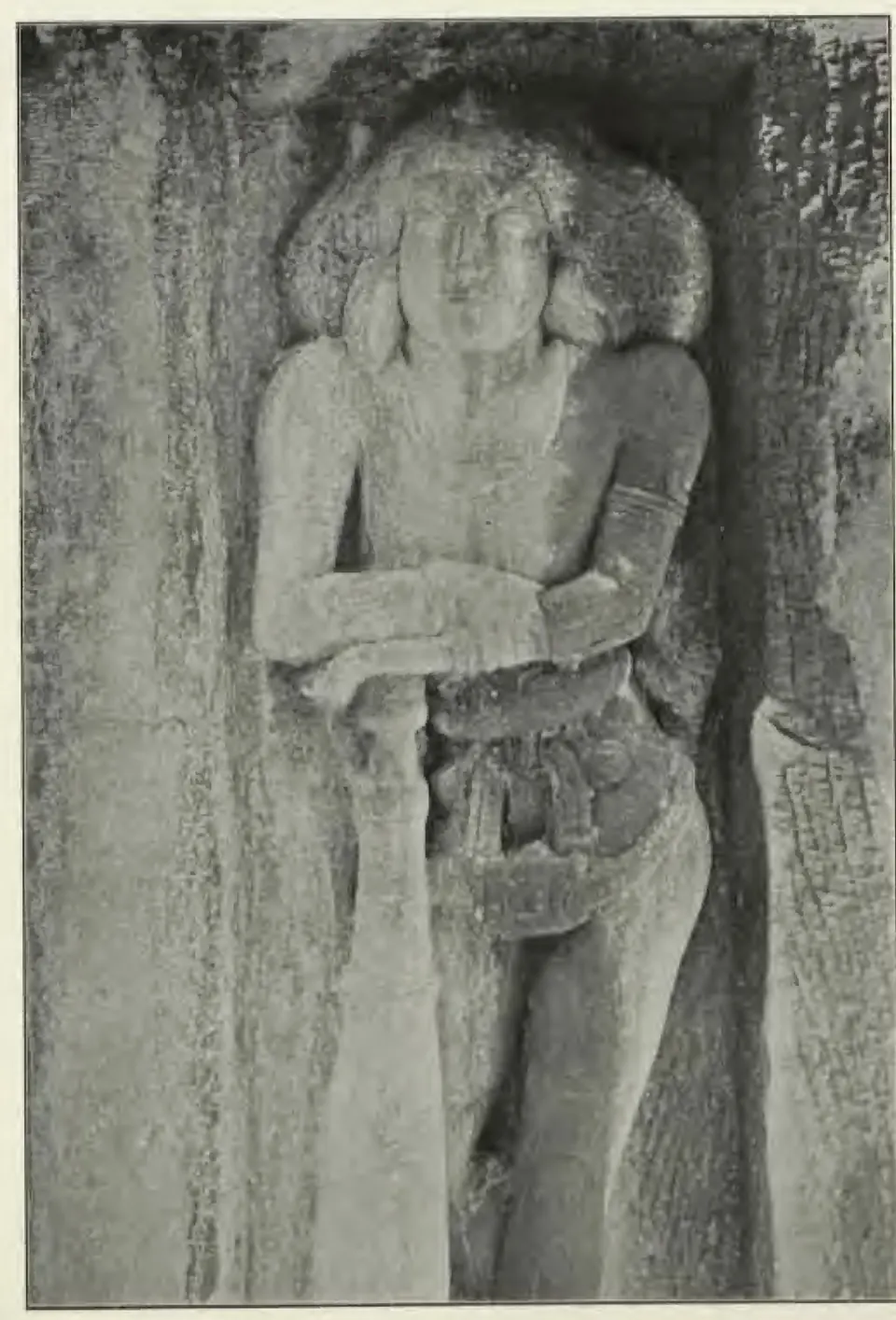
No building in the Telugu country can be dated to the Pallavas by an inscription. Jouveau-Dubreuil argued in 1917 that many of the Buddhist marbles of the Krishna valley were carved “when the Pallava kings reigned over this country”, and not under the Satavahanas.110 He also found the cave temples at Undavalli to be “entirely” in the style of Mahendravarman I.111112 He did not, however, credit them to the Pallavas, but to the Vishnukundins.111112
Gopalan thought the origin of the Undavalli caves still unsettled.79 A. H. Longhurst discovered the rock-cut temples at Bhairavakonda in the Nellore district.113 Gopalan described them as “attributable to the Pallava age”.113
Evidence and disagreements
Chronology
| Source | Dates proposed |
|---|---|
| Fleet (1876)14 | Uruvupalli grant 5th century |
| Jouveau-Dubreuil (1920)37 | Bappa 225–250, Sivaskandavarman 250–275, Vishnugopa 325–350, Simhavarman son of Vishnugopa 500–525 |
| Krishna Sastri (1920)4465 | Prakrit charters at least the beginning of the 4th century; Simhavarman from 436 |
| Gopalan (1928)40114115 | Bappa about 215; Vishnugopa 340–350; Simhavarman 436–460; Simhavishnu 575–600 |
| Sewell (1932)3671 | Mayidavolu plates about 234; Simhavarman from 436 |
| Sircar (1939)38116 | Sivaskandavarman first quarter of the 4th century; Simhavarman from 436 |
| Sircar (1963)35 | Simhavarman of Manchikallu and Sivaskandavarman in the 340s |
Were the Prakrit and Sanskrit kings one family?
The kings of the Prakrit charters, those of the Nellore–Guntur grants and those of the Simhavishnu line all call themselves Bharadvajas. But their charters never connect them. Hultzsch could establish no “lineal connection” between the kings of the Chendalur plates and those of the Uruvupalli group.117 Gopalan concluded from the shared gotra and the long genealogy of a 7th-century pillar inscription at Vayalur that they were one family.42118119 But he called his table tentative.42118119 Sircar treated the kings of the north as a branch line.12060
Sivaskandavarman and Vijaya-Skandavarman
Gopalan thought the Vijaya-Skandavarman of Charudevi’s grant was “presumably identical” with Sivaskandavarman, because the letters of their grants are so alike.114121 Jouveau-Dubreuil had doubted the identity in 1917.122 Sircar argued that Siva was part of the name, not an honorific (title of respect), and that the British Museum grant was later.123124125 He suggested that Vijaya-Skandavarman may have belonged to the Nellore–Guntur house.123124125
The place of Kumaravishnu II
Hultzsch placed the Chendalur kings between Simhavarman and Simhavishnu because their letters looked later.117 Jouveau-Dubreuil argued in 1920 that Kumaravishnu II reigned at Kanchi before Simhavarman, as a contemporary of Skandavarman II.126127 Sircar put him after Vishnugopa and before the kings of the Udayendiram plates.128 See Kumaravishnu II.
The Mallam record
An 8th-century Tamil inscription at Mallam in the Gudur taluk, dated in the 15th year of Nandipottarasar, records a gift made at the order of a Chalukya, “Chalakkiaradar”.129 Butterworth and Venugopaul Chetty read it as showing a Pallava king ruling part of the district “in subordination, apparently, to the Western Chalukyans”.86 The Nellore gazetteer of 1942 took the Chalukya to be the Eastern Chalukya Vishnuvardhana III.130 It concluded that both he and a local chief then acknowledged the supremacy of the Pallava king Nandivarman II.130
Footnotes
-
Hultzsch, “Mayidavolu Plates of Sivaskandavarman” (1901), p. 85 (archive.org (opens in a new tab)). ↩ ↩2 ↩3 ↩4 ↩5
-
Hultzsch, “Mayidavolu Plates of Sivaskandavarman” (1901), p. 88, translation (archive.org (opens in a new tab)). ↩ ↩2 ↩3 ↩4
-
Gopalan, History of the Pallavas of Kanchi (1928), p. 16 (archive.org (opens in a new tab)). ↩ ↩2 ↩3 ↩4 ↩5 ↩6
-
Gopalan, History of the Pallavas (1928), p. 17 (archive.org (opens in a new tab)). ↩ ↩2
-
Gopalan, History of the Pallavas (1928), p. 19 (archive.org (opens in a new tab)). ↩ ↩2
-
Gopalan, History of the Pallavas (1928), p. 20 (archive.org (opens in a new tab)). ↩ ↩2 ↩3 ↩4
-
Gopalan, History of the Pallavas (1928), p. 26 (archive.org (opens in a new tab)). ↩ ↩2
-
Gopalan, History of the Pallavas (1928), p. 21 (archive.org (opens in a new tab)). ↩
-
Gopalan, History of the Pallavas (1928), pp. 22–23 (archive.org (opens in a new tab)). ↩
-
H. Krishna Sastri, “Two Pallava Copper-plate Grants”, Epigraphia Indica XV (1919–20), p. 246 (archive.org (opens in a new tab)). ↩ ↩2 ↩3 ↩4
-
D. C. Sircar, The Successors of the Satavahanas in Lower Deccan (1939), p. 152 (archive.org (opens in a new tab)). ↩ ↩2 ↩3
-
Sircar, Successors of the Satavahanas (1939), pp. 154–156 (archive.org (opens in a new tab)). ↩ ↩2 ↩3
-
Hultzsch, “British Museum Plates of Charudevi” (1906), p. 144 (archive.org (opens in a new tab)). ↩ ↩2 ↩3 ↩4 ↩5
-
J. F. Fleet, “Sanskrit and Old-Canarese Inscriptions, No. XII”, Indian Antiquary V (1876), p. 50 (archive.org (opens in a new tab)). ↩ ↩2 ↩3 ↩4
-
Fleet, “Sanskrit and Old-Canarese Inscriptions, No. XV”, Indian Antiquary V (1876), p. 154 (archive.org (opens in a new tab)). ↩ ↩2 ↩3
-
E. Hultzsch, “British Museum Plates of Charudevi”, Epigraphia Indica VIII (1905–06), p. 143 (archive.org (opens in a new tab)). ↩
-
Robert Sewell, Lists of Inscriptions, and Sketch of the Dynasties of Southern India (1884), p. 211 (archive.org (opens in a new tab)). ↩ ↩2
-
G. Bühler, “A Prakrit Grant of the Pallava King Sivaskandavarman”, Epigraphia Indica I (1892), p. 2 (archive.org (opens in a new tab)). ↩ ↩2 ↩3 ↩4 ↩5
-
E. Hultzsch, “A Plate of a Pallava Copper-plate Grant”, Epigraphia Indica I (1892), p. 397 (archive.org (opens in a new tab)). ↩
-
E. Hultzsch, “Mayidavolu Plates of Sivaskandavarman”, Epigraphia Indica VI (1900–01), p. 84 (archive.org (opens in a new tab)). ↩ ↩2
-
E. Hultzsch, “Pikira Grant of Simhavarman”, Epigraphia Indica VIII (1905–06), p. 159 (archive.org (opens in a new tab)). ↩ ↩2
-
E. Hultzsch, “Chendalur Plates of Kumaravishnu II”, Epigraphia Indica VIII (1905–06), p. 233 (archive.org (opens in a new tab)). ↩ ↩2
-
C. R. Krishnamacharlu, “Chura Grant of Pallava Vijaya-Vishnugopavarman”, Epigraphia Indica XXIV (1937–38), p. 137 (archive.org (opens in a new tab)). ↩ ↩2
-
C. R. Krishnamacharlu, “Vilavatti Grant of Pallava Simhavarman”, Epigraphia Indica XXIV (1937–38), p. 296 (archive.org (opens in a new tab)). ↩ ↩2
-
P. B. Desai, “Reyuru Grant of Pallava Narasimhavarman; Year 12”, Epigraphia Indica XXIX (1951–52), p. 89 (archive.org (opens in a new tab)). ↩ ↩2
-
D. C. Sircar and P. Seshadri Sastri, “Vunna Guravayapalem Plates of Paramesvaravarman I, Year 19”, Epigraphia Indica XXXII (1957–58), p. 91 (archive.org (opens in a new tab)). ↩ ↩2
-
D. C. Sircar, “Two Inscriptions from Guntur District”, Epigraphia Indica XXXII (1957–58), p. 82 (archive.org (opens in a new tab)). ↩ ↩2
-
Sircar, “Two Inscriptions from Guntur District” (EI XXXII), p. 89 (archive.org (opens in a new tab)). ↩ ↩2 ↩3 ↩4
-
Bühler, “A Prakrit Grant of the Pallava King Sivaskandavarman” (1892), p. 7, translation (archive.org (opens in a new tab)). ↩ ↩2 ↩3 ↩4 ↩5 ↩6 ↩7 ↩8
-
Bühler, “A Prakrit Grant of the Pallava King Sivaskandavarman” (1892), pp. 4, 8 (archive.org (opens in a new tab)). ↩ ↩2 ↩3 ↩4
-
G. Jouveau-Dubreuil, The Pallavas (1917), p. 1 (archive.org (opens in a new tab)). ↩
-
Gopalan, History of the Pallavas (1928), p. 34 (archive.org (opens in a new tab)). ↩ ↩2 ↩3
-
Gopalan, History of the Pallavas (1928), p. 36 (archive.org (opens in a new tab)). ↩ ↩2 ↩3
-
Krishna Sastri, “Two Pallava Copper-plate Grants” (1920), p. 247 (archive.org (opens in a new tab)). ↩ ↩2 ↩3 ↩4
-
D. C. Sircar, “More Inscriptions from Nagarjunikonda”, Epigraphia Indica XXXV (1963–64), p. 6 (archive.org (opens in a new tab)). ↩ ↩2
-
Robert Sewell and S. Krishnaswami Aiyangar, The Historical Inscriptions of Southern India (1932), p. 16 (archive.org (opens in a new tab)). ↩ ↩2 ↩3
-
Jouveau-Dubreuil, Ancient History of the Deccan (1920), p. 70, genealogical table (archive.org (opens in a new tab)). ↩ ↩2 ↩3 ↩4 ↩5
-
Sircar, Successors of the Satavahanas (1939), p. 166 (archive.org (opens in a new tab)). ↩ ↩2 ↩3
-
Gopalan, History of the Pallavas (1928), p. 46 (archive.org (opens in a new tab)). ↩
-
Gopalan, History of the Pallavas (1928), p. 33 (archive.org (opens in a new tab)). ↩ ↩2
-
Jouveau-Dubreuil, The Pallavas (1917), pp. 14–15 (archive.org (opens in a new tab)). ↩ ↩2 ↩3
-
Gopalan, History of the Pallavas (1928), p. 44 (archive.org (opens in a new tab)). ↩ ↩2 ↩3 ↩4 ↩5
-
Gopalan, History of the Pallavas (1928), p. 45 (archive.org (opens in a new tab)). ↩
-
Krishna Sastri, “Two Pallava Copper-plate Grants” (1920), p. 248 (archive.org (opens in a new tab)). ↩ ↩2 ↩3 ↩4 ↩5
-
Krishna Sastri, “Two Pallava Copper-plate Grants” (1920), p. 250 (archive.org (opens in a new tab)). ↩ ↩2 ↩3 ↩4 ↩5 ↩6
-
Krishna Sastri, “Two Pallava Copper-plate Grants” (1920), p. 249 (archive.org (opens in a new tab)). ↩ ↩2 ↩3 ↩4
-
Sircar, Successors of the Satavahanas (1939), p. 174 (archive.org (opens in a new tab)). ↩
-
Fleet, “Sanskrit and Old-Canarese Inscriptions, No. XII” (1876), p. 53, translation (archive.org (opens in a new tab)). ↩
-
Krishna Sastri, “Two Pallava Copper-plate Grants” (1920), p. 252 (archive.org (opens in a new tab)). ↩
-
Hultzsch, “Pikira Grant of Simhavarman” (1906), p. 160 (archive.org (opens in a new tab)). ↩
-
Krishnamacharlu, “Vilavatti Grant” (1938), p. 301 (archive.org (opens in a new tab)). ↩ ↩2 ↩3
-
Krishnamacharlu, “Chura Grant” (1938), p. 138 (archive.org (opens in a new tab)). ↩
-
Sircar, Successors of the Satavahanas (1939), p. 172 (archive.org (opens in a new tab)). ↩
-
Desai, “Reyuru Grant” (EI XXIX), p. 94 (archive.org (opens in a new tab)). ↩ ↩2 ↩3 ↩4 ↩5 ↩6
-
Sircar, Successors of the Satavahanas (1939), p. 212 (archive.org (opens in a new tab)). ↩ ↩2
-
Hultzsch, “A Plate of a Pallava Copper-plate Grant” (1892), p. 398 (archive.org (opens in a new tab)). ↩
-
Gopalan, History of the Pallavas (1928), p. 55 (archive.org (opens in a new tab)). ↩ ↩2
-
Gazetteer of the Nellore District, brought up to 1938, Vol. A (1942), p. 30 (archive.org (opens in a new tab)). ↩ ↩2 ↩3 ↩4 ↩5
-
Jouveau-Dubreuil, Ancient History of the Deccan (1920), p. 69 (archive.org (opens in a new tab)). ↩ ↩2 ↩3
-
Sircar, Successors of the Satavahanas (1939), p. 175 (archive.org (opens in a new tab)). ↩ ↩2
-
Gopalan, History of the Pallavas (1928), p. 62 (archive.org (opens in a new tab)). ↩ ↩2 ↩3
-
Gopalan, History of the Pallavas (1928), pp. 63–65 (archive.org (opens in a new tab)). ↩ ↩2
-
Hultzsch, “Pikira Grant of Simhavarman” (1906), p. 161 (archive.org (opens in a new tab)). ↩ ↩2 ↩3 ↩4
-
Sircar, Successors of the Satavahanas (1939), p. 211 (archive.org (opens in a new tab)). ↩ ↩2
-
Krishna Sastri, “Two Pallava Copper-plate Grants” (1920), p. 253 (archive.org (opens in a new tab)). ↩ ↩2 ↩3
-
Gopalan, History of the Pallavas (1928), p. 66 (archive.org (opens in a new tab)). ↩ ↩2
-
Jouveau-Dubreuil, The Pallavas (1917), p. 18 (archive.org (opens in a new tab)). ↩ ↩2
-
F. Kielhorn, “Talagunda Pillar Inscription of Kakusthavarman”, Epigraphia Indica VIII (1905–06), p. 28 (archive.org (opens in a new tab)). ↩ ↩2 ↩3
-
Kielhorn, “Talagunda Pillar Inscription” (1906), p. 34, translation of verse 14 (archive.org (opens in a new tab)). ↩ ↩2
-
Sircar, Successors of the Satavahanas (1939), p. 184, note (archive.org (opens in a new tab)). ↩
-
Sewell and Aiyangar, Historical Inscriptions of Southern India (1932), p. 18 (archive.org (opens in a new tab)). ↩ ↩2
-
Gopalan, History of the Pallavas (1928), p. 79 (archive.org (opens in a new tab)). ↩
-
Gopalan, History of the Pallavas (1928), p. 83 (archive.org (opens in a new tab)). ↩
-
Jouveau-Dubreuil, The Pallavas (1917), pp. 24–25 (archive.org (opens in a new tab)). ↩ ↩2
-
Jouveau-Dubreuil, The Pallavas (1917), p. 27 (archive.org (opens in a new tab)). ↩ ↩2
-
Jouveau-Dubreuil, The Pallavas (1917), p. 28 (archive.org (opens in a new tab)). ↩ ↩2
-
Gopalan, History of the Pallavas (1928), p. 90 (archive.org (opens in a new tab)). ↩ ↩2
-
Gopalan, History of the Pallavas (1928), p. 91 (archive.org (opens in a new tab)). ↩ ↩2
-
Gopalan, History of the Pallavas (1928), p. 78 (archive.org (opens in a new tab)). ↩ ↩2 ↩3
-
F. Kielhorn, “Aihole Inscription of Pulikesin II”, Epigraphia Indica VI (1900–01), p. 2 (archive.org (opens in a new tab)). ↩ ↩2 ↩3
-
Kielhorn, “Aihole Inscription of Pulikesin II” (1901), p. 11, translation of verses 27–29 (archive.org (opens in a new tab)). ↩ ↩2 ↩3
-
Gopalan, History of the Pallavas (1928), p. 89 (archive.org (opens in a new tab)). ↩ ↩2
-
Sewell, Lists of Inscriptions, and Sketch of the Dynasties (1884), p. 212 (archive.org (opens in a new tab)). ↩
-
E. Hultzsch, “Kopparam Plates of Pulakesin II”, Epigraphia Indica XVIII (1925–26), p. 257 (archive.org (opens in a new tab)). ↩ ↩2
-
Hultzsch, “Kopparam Plates of Pulakesin II” (1926), p. 258 (archive.org (opens in a new tab)). ↩ ↩2
-
Alan Butterworth and V. Venugopaul Chetty, A Collection of the Inscriptions on Copper-Plates and Stones in the Nellore District, Part I (1905), Preface, p. vi (archive.org (opens in a new tab)). ↩ ↩2 ↩3 ↩4
-
Sircar and Seshadri Sastri, “Vunna Guravayapalem Plates” (EI XXXII), p. 95 (archive.org (opens in a new tab)). ↩ ↩2 ↩3
-
Sircar and Seshadri Sastri, “Vunna Guravayapalem Plates” (EI XXXII), p. 96 (archive.org (opens in a new tab)). ↩ ↩2 ↩3
-
Desai, “Reyuru Grant” (EI XXIX), p. 92 (archive.org (opens in a new tab)). ↩
-
Gopalan, History of the Pallavas (1928), p. 125 (archive.org (opens in a new tab)). ↩ ↩2
-
Gopalan, History of the Pallavas (1928), p. 140 (archive.org (opens in a new tab)). ↩
-
Sewell and Aiyangar, Historical Inscriptions of Southern India (1932), p. 36 (archive.org (opens in a new tab)). ↩
-
Sewell and Aiyangar, Historical Inscriptions of Southern India (1932), p. 375, table of Pallava kings (archive.org (opens in a new tab)). ↩
-
Gopalan, History of the Pallavas (1928), p. 133 (archive.org (opens in a new tab)). ↩ ↩2 ↩3
-
Brackenbury, Cuddapah (1915), p. 30 (archive.org (opens in a new tab)). ↩ ↩2
-
Gopalan, History of the Pallavas (1928), p. 145 (archive.org (opens in a new tab)). ↩ ↩2
-
C. F. Brackenbury, Madras District Gazetteers: Cuddapah (1915), p. 27 (archive.org (opens in a new tab)). ↩
-
Brackenbury, Cuddapah (1915), p. 33 (archive.org (opens in a new tab)). ↩
-
Sircar, Successors of the Satavahanas (1939), p. 185 (archive.org (opens in a new tab)). ↩
-
Bühler, “A Prakrit Grant of the Pallava King Sivaskandavarman” (1892), p. 9 (archive.org (opens in a new tab)). ↩ ↩2
-
Hultzsch, “Pikira Grant of Simhavarman” (1906), pp. 162–163, translation (archive.org (opens in a new tab)). ↩ ↩2 ↩3 ↩4
-
Sircar and Seshadri Sastri, “Vunna Guravayapalem Plates” (EI XXXII), p. 97, text (archive.org (opens in a new tab)). ↩ ↩2
-
Gopalan, History of the Pallavas (1928), p. 38 (archive.org (opens in a new tab)). ↩ ↩2
-
Krishnamacharlu, “Vilavatti Grant” (1938), p. 298 (archive.org (opens in a new tab)). ↩ ↩2
-
Sircar, Successors of the Satavahanas (1939), p. 205 (archive.org (opens in a new tab)). ↩ ↩2
-
Desai, “Reyuru Grant” (EI XXIX), p. 93 (archive.org (opens in a new tab)). ↩ ↩2
-
Krishnamacharlu, “Vilavatti Grant” (1938), p. 297 (archive.org (opens in a new tab)). ↩
-
Desai, “Reyuru Grant” (EI XXIX), p. 90 (archive.org (opens in a new tab)). ↩ ↩2
-
James Burgess, The Buddhist Stupas of Amaravati and Jaggayyapeta (1887), p. 106 (archive.org (opens in a new tab)). ↩ ↩2 ↩3
-
Jouveau-Dubreuil, The Pallavas (1917), p. 11 (archive.org (opens in a new tab)). ↩
-
Jouveau-Dubreuil, The Pallavas (1917), pp. 30, 32 (archive.org (opens in a new tab)). ↩ ↩2
-
Jouveau-Dubreuil, The Pallavas (1917), p. 33 (archive.org (opens in a new tab)). ↩ ↩2
-
R. Gopalan, History of the Pallavas of Kanchi (1928), p. 8 (archive.org (opens in a new tab)). ↩ ↩2
-
Gopalan, History of the Pallavas (1928), p. 35 (archive.org (opens in a new tab)). ↩ ↩2
-
Gopalan, History of the Pallavas (1928), p. 68 (archive.org (opens in a new tab)). ↩
-
Sircar, Successors of the Satavahanas (1939), pp. 181–182 (archive.org (opens in a new tab)). ↩
-
Hultzsch, “Chendalur Plates of Kumaravishnu II” (1906), p. 234 (archive.org (opens in a new tab)). ↩ ↩2
-
Gopalan, History of the Pallavas (1928), p. 48 (archive.org (opens in a new tab)). ↩ ↩2
-
Gopalan, History of the Pallavas (1928), p. 60 (archive.org (opens in a new tab)). ↩ ↩2
-
Sircar, Successors of the Satavahanas (1939), p. 169 (archive.org (opens in a new tab)). ↩
-
Gopalan, History of the Pallavas (1928), p. 39 (archive.org (opens in a new tab)). ↩
-
Jouveau-Dubreuil, The Pallavas (1917), p. 14 (archive.org (opens in a new tab)). ↩
-
Sircar, Successors of the Satavahanas (1939), pp. 166–167 (archive.org (opens in a new tab)). ↩ ↩2
-
Sircar, Successors of the Satavahanas (1939), p. 168 (archive.org (opens in a new tab)). ↩ ↩2
-
Sircar, Successors of the Satavahanas (1939), p. 194 (archive.org (opens in a new tab)). ↩ ↩2
-
G. Jouveau-Dubreuil, Ancient History of the Deccan (1920), pp. 66–67 (archive.org (opens in a new tab)). ↩
-
Jouveau-Dubreuil, Ancient History of the Deccan (1920), p. 68 (archive.org (opens in a new tab)). ↩
-
Sircar, Successors of the Satavahanas (1939), p. 180 (archive.org (opens in a new tab)). ↩
-
Butterworth and Venugopaul Chetty, Nellore District Inscriptions (1905), p. 429, Gudur No. 54 (archive.org (opens in a new tab)). ↩
-
Gazetteer of the Nellore District (1942), p. 34 (archive.org (opens in a new tab)). ↩ ↩2
Photos
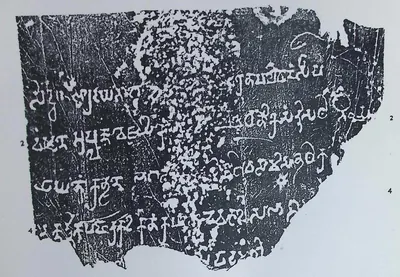 "2. Manchikallu Inscription of Pallava Simhavarman" (Epigraphia Indica XXXII, plate with No. 8, "Two Inscriptions from Guntur District" (PDF p. 137))Inscription rubbing · 1959
 "Bhairavakonda temple No. III: detail of doorkeeper" (Longhurst, Pallava Architecture I, 1924, Plate XVII (b) (PDF p. 86))Historic photograph · 1924
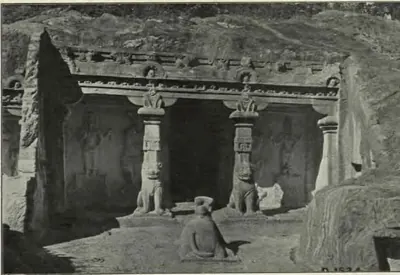 "Bhairavakonda temple No. VII: general view" (Longhurst, Pallava Architecture I, 1924, Plate XX (b) (PDF p. 92))Historic photograph · 1924
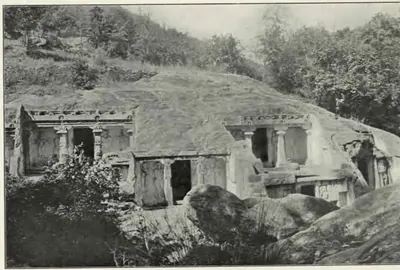 "Bhairavakonda: general view of ten rock-cut temples" (Longhurst, Pallava Architecture I, 1924, Plate XV (a) (PDF p. 82))Historic photograph · 1924
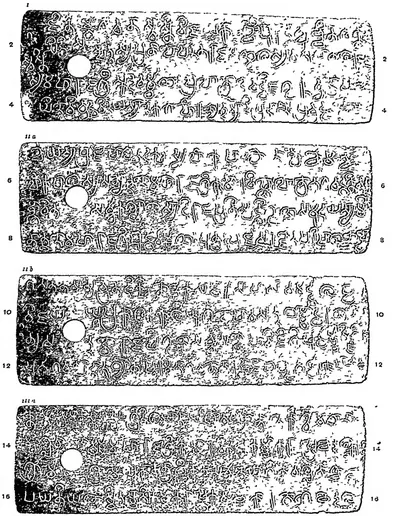 "Chendalur plates of Kumaravishnu II", plates i, ii a, ii b and iii a (Epigraphia Indica VIII, plate with No. 23 (PDF p. 295))Inscription rubbing · 1906
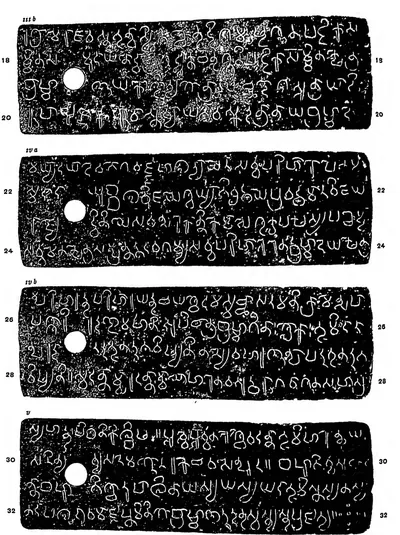 "Chendalur plates of Kumaravishnu II", plates iii b, iv a, iv b and v (Epigraphia Indica VIII, plate with No. 23 (PDF p. 296))Inscription rubbing · 1906
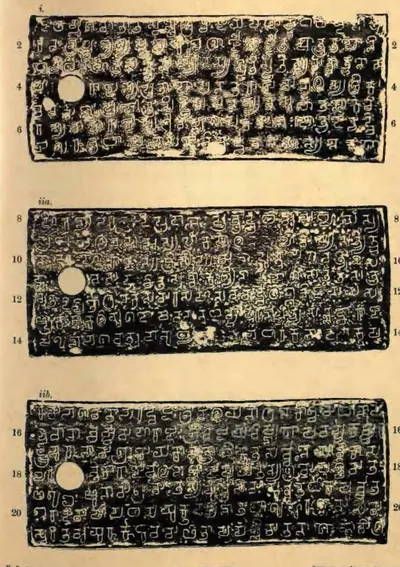 "Chura Grant of Pallava Vijaya-Vishnugopavarman", plates i, ii a and ii b (Epigraphia Indica XXIV, plate with No. 18 (PDF p. 174))Inscription rubbing · 1938
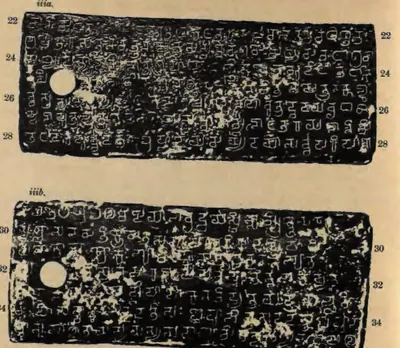 "Chura Grant of Pallava Vijaya-Vishnugopavarman", plates iii a and iii b (Epigraphia Indica XXIV, plate with No. 18 (PDF p. 175))Inscription rubbing · 1938
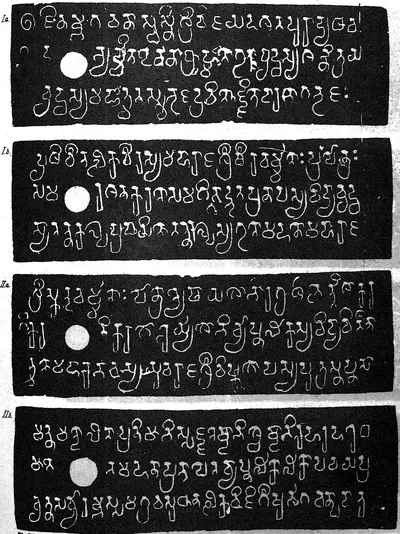 "Copper-plate Grant of the Pallava Dynasty" (the Mangalur grant of Simhavarman), plates I a, I b, II a and II b (Indian Antiquary V, 1876, plate at p. 154 (PDF p. 186))Inscription rubbing · 1876
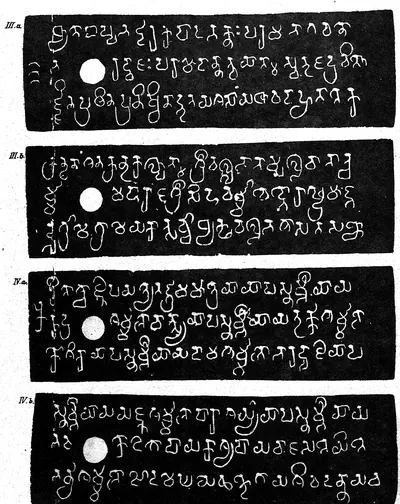 "Copper-plate Grant of the Pallava Dynasty" (the Mangalur grant of Simhavarman), plates III a, III b, IV a and IV b (Indian Antiquary V, 1876, plate at p. 155 (PDF p. 187))Inscription rubbing · 1876
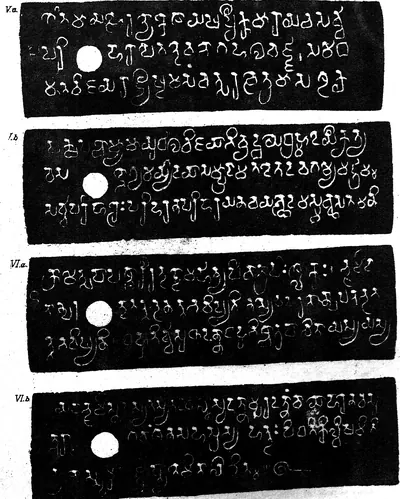 "Copper-plate Grant of the Pallava Dynasty" (the Mangalur grant of Simhavarman), plates V a, V b, VI a and VI b (Indian Antiquary V, 1876, plate at p. 156 (PDF p. 190))Inscription rubbing · 1876
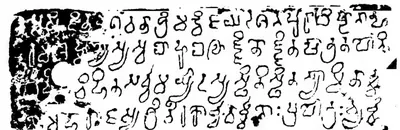 "First Plate of a Pallava Copper-plate Grant" (the Darsi fragment) (Epigraphia Indica I, plate with No. XLV, facing p. 397 (PDF p. 446 of the scan in.ernet.dli.2015.56636))Inscription rubbing · 1892
Show all (44)
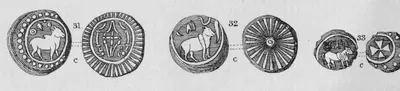 "Kurumbar or Pallava Coins of the Coromandel Coast": copper coins with a bull (Elliot 1886, Pl. I, Nos. 31-33)Coin · 1886
 "Kurumbar or Pallava Coins of the Coromandel Coast": copper coins with a bull, crab, fish and ship (Elliot 1886, Pl. I, Nos. 34-38)Coin · 1886
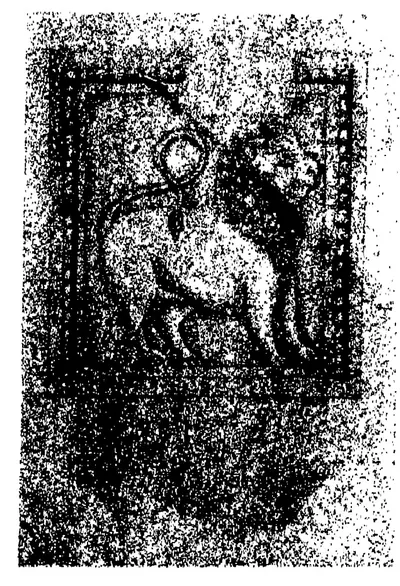 "Lion seal and sculptures of about the Seventh Century A.D.", D: "Sculpture on the rock-cut temple, Siyamangalam" (a Pallava lion, shown for comparison with the seal of the Malepadu plates) (Epigraphia Indica XI, plate to face p. 338, panel D (PDF p. 400))Historic photograph · 1912
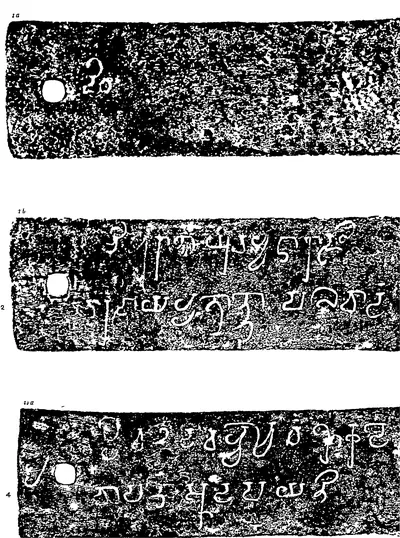 "Mayidavolu Plates of Sivaskandavarman", plates i a, i b and ii a (Epigraphia Indica VI, plate between pp. 84 and 85 (PDF p. 112 of the archive.org scan in.ernet.dli.2015.56212))Inscription rubbing · 1901
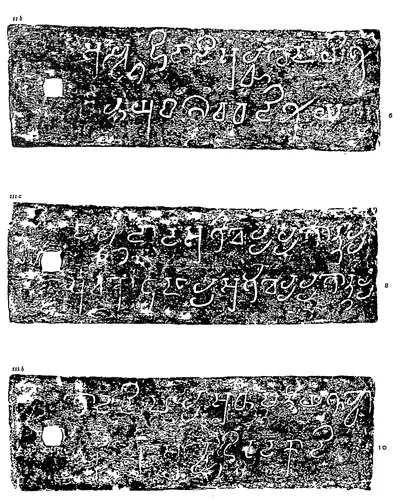 "Mayidavolu Plates of Sivaskandavarman", plates ii b, iii a and iii b (Epigraphia Indica VI, plate between pp. 84 and 85 (PDF p. 113 of scan in.ernet.dli.2015.56212))Inscription rubbing · 1901
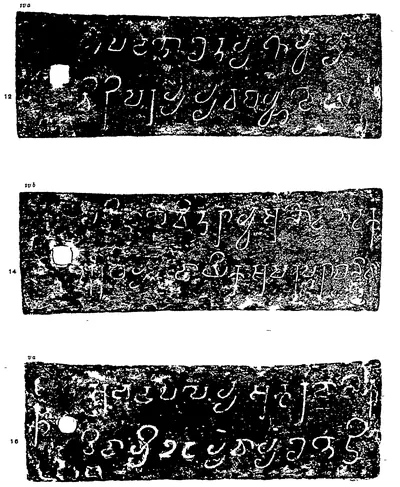 "Mayidavolu Plates of Sivaskandavarman", plates iv a, iv b and v a (Epigraphia Indica VI, second plate between pp. 86 and 87 (PDF p. 116 of scan in.ernet.dli.2015.56212))Inscription rubbing · 1901
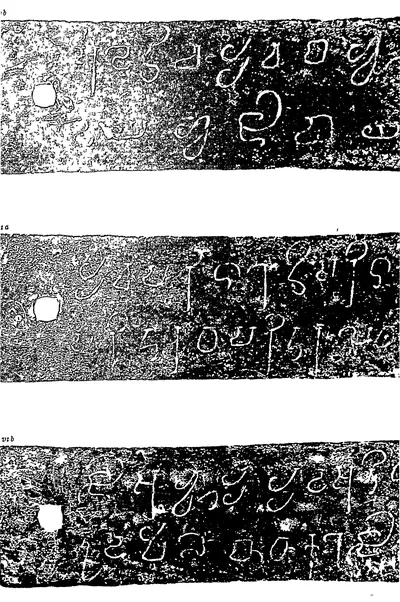 "Mayidavolu Plates of Sivaskandavarman", plates v b, vi a and vi b (Epigraphia Indica VI, second plate between pp. 86 and 87 (PDF p. 117 of scan in.ernet.dli.2015.56212))Inscription rubbing · 1901
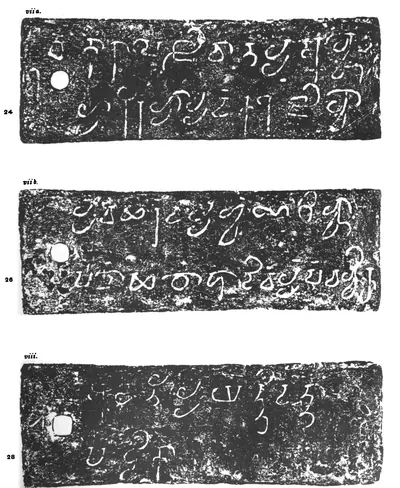 "Mayidavolu Plates of Sivaskandavarman", plates vii a, vii b and viii (Epigraphia Indica VI, third plate (PDF p. 115 of the archive.org scan EpigraphiaIndicaVol6))Inscription rubbing · 1901
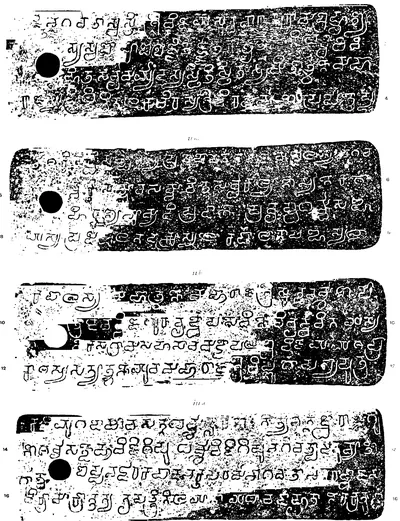 "Omgodu Grant of the Pallava Simhavarman II: the 4th year", first page, lines 1-16 (Epigraphia Indica XV, plate with No. 11 (PDF p. 304))Inscription rubbing · 1920
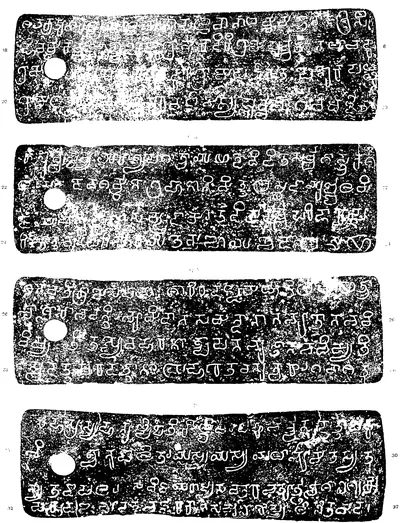 "Omgodu Grant of the Pallava Simhavarman II: the 4th year", second page, lines 17-32 (Epigraphia Indica XV, plate with No. 11 (PDF p. 305))Inscription rubbing · 1920
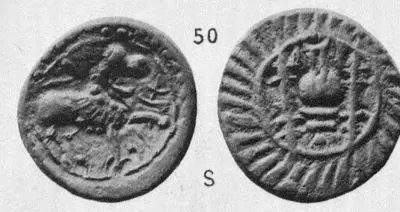 "Pallava Coins": alloy coin of the maned-lion and vase type (Elliot 1886, Pl. II, No. 50)Coin · 1886
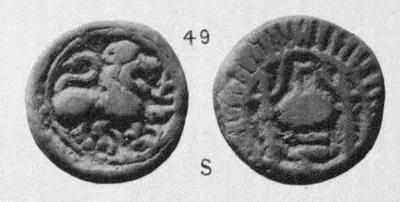 "Pallava Coins": alloy coin with a maned lion and, on the reverse, a vase on a stand between two lamp-stands (Elliot 1886, Pl. II, No. 49)Coin · 1886
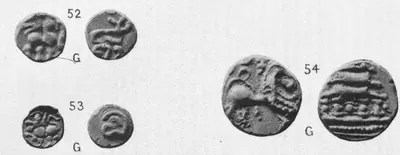 "Pallava Coins": small gold coins with a lion (Elliot 1886, Pl. II, Nos. 52-54)Coin · 1886
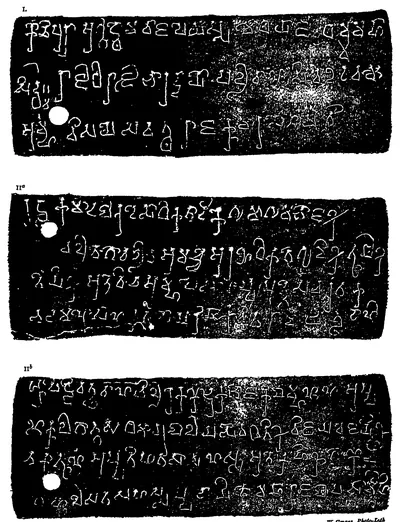 "Pallava Copperplate Grant of Sivaskandavarman" (Hirahadagalli plates), Plate I: plates I, II a and II b (Epigraphia Indica I, Plate I with No. I (PDF p. 20))Inscription rubbing · 1892
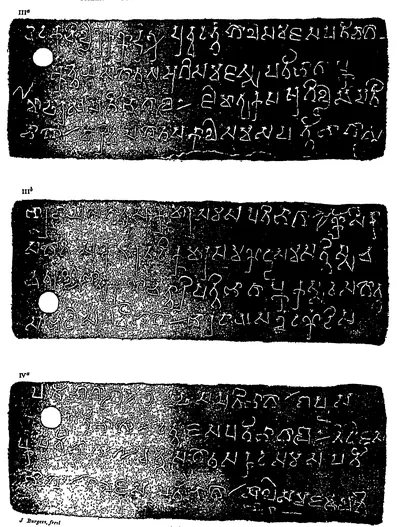 "Pallava Copperplate Grant of Sivaskandavarman" (Hirahadagalli plates), Plate II: plates III a, III b and IV a (Epigraphia Indica I, Plate II with No. I (PDF p. 21))Inscription rubbing · 1892
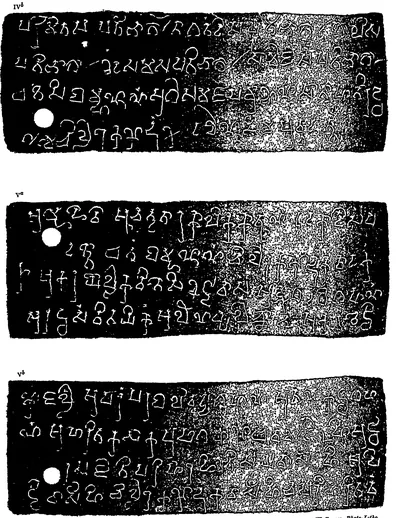 "Pallava Copperplate Grant of Sivaskandavarman" (Hirahadagalli plates), Plate III: plates IV b, V a and V b (Epigraphia Indica I, Plate III with No. I (PDF p. 22))Inscription rubbing · 1892
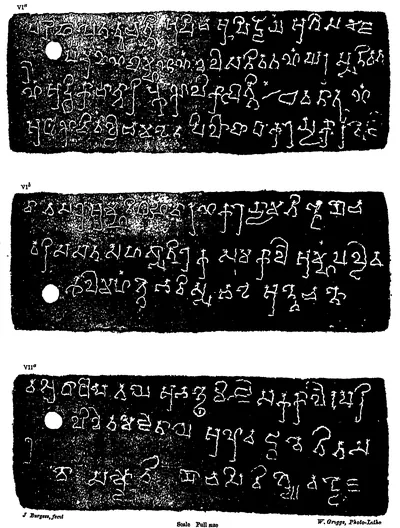 "Pallava Copperplate Grant of Sivaskandavarman" (Hirahadagalli plates), Plate IV: plates VI a, VI b and VII a (Epigraphia Indica I, Plate IV with No. I (PDF p. 23))Inscription rubbing · 1892
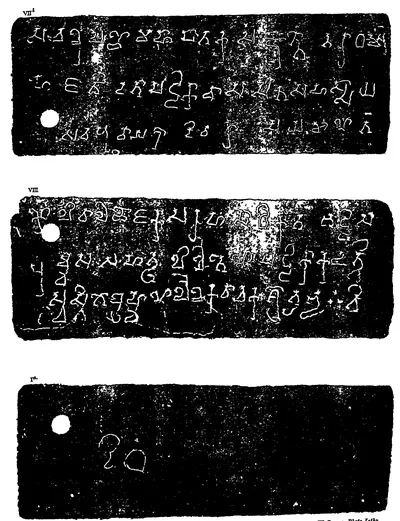 "Pallava Copperplate Grant of Sivaskandavarman" (Hirahadagalli plates), Plate V: plates VII b, VIII and I a (Epigraphia Indica I, Plate V with No. I (PDF p. 24))Inscription rubbing · 1892
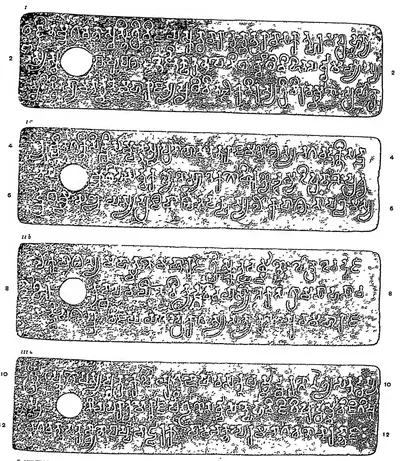 "Pikira grant of Simhavarman", plates i, ii a, ii b and iii a (Epigraphia Indica VIII, plate with No. 15 (PDF p. 201))Inscription rubbing · 1906
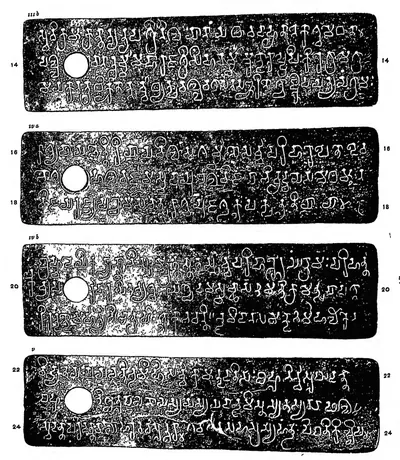 "Pikira grant of Simhavarman", plates iii b, iv a, iv b and v (Epigraphia Indica VIII, plate with No. 15 (PDF p. 202))Inscription rubbing · 1906
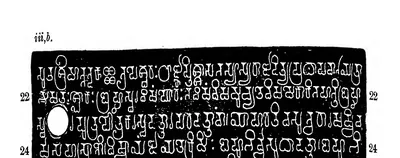 "Reyuru Grant of Pallava Narasimhavarman; Year 12", plate iii b (Epigraphia Indica XXIX, plate with No. 11 (PDF p. 199))Inscription rubbing · 1952
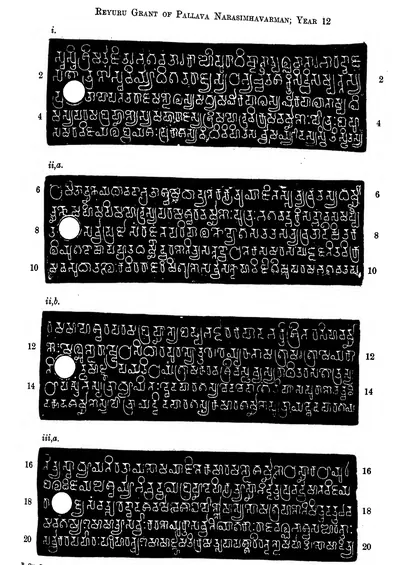 "Reyuru Grant of Pallava Narasimhavarman; Year 12", plates i, ii a, ii b and iii a (Epigraphia Indica XXIX, plate with No. 11 (PDF p. 198))Inscription rubbing · 1952
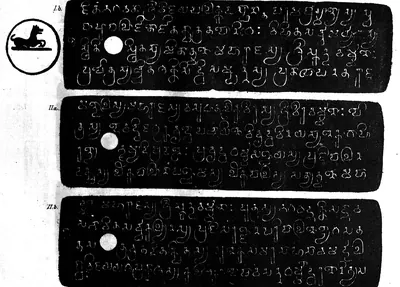 "Uruvupalli Copper-plate Grant of the Pallava Dynasty", plates I b, II a and II b, with the seal (Indian Antiquary V, 1876, plate at p. 50, printed sideways (PDF p. 66))Inscription rubbing · 1876
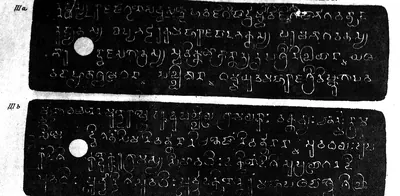 "Uruvupalli Copper-plate Grant of the Pallava Dynasty", plates III a and III b (Indian Antiquary V, 1876, plate at p. 51, printed sideways (PDF p. 67))Inscription rubbing · 1876
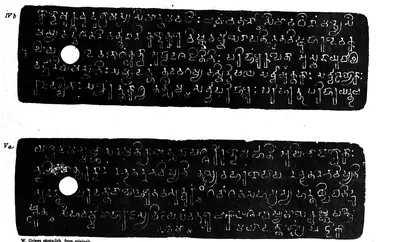 "Uruvupalli Copper-plate Grant of the Pallava Dynasty", plates IV b and V a (Indian Antiquary V, 1876, plate at p. 52, printed sideways (PDF p. 70))Inscription rubbing · 1876
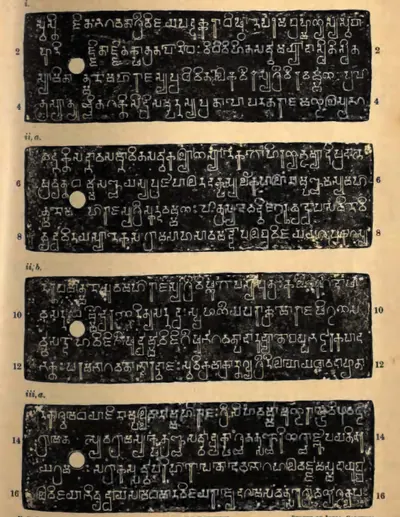 "Vilavatti Grant of Pallava Simhavarman", plates i, ii a, ii b and iii a (Epigraphia Indica XXIV, plate with No. 43 (PDF p. 382))Inscription rubbing · 1938
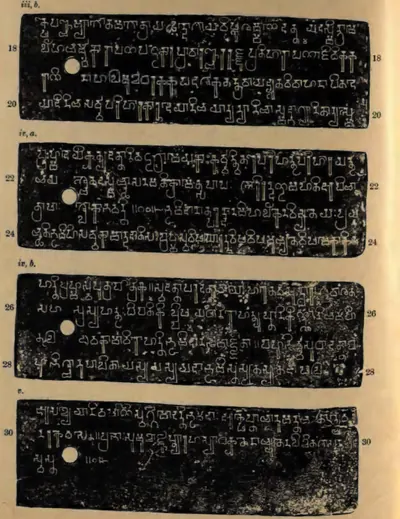 "Vilavatti Grant of Pallava Simhavarman", plates iii b, iv a, iv b and v (Epigraphia Indica XXIV, plate with No. 43 (PDF p. 383))Inscription rubbing · 1938
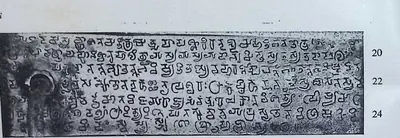 "Vunna Guravayapalem Plates of Paramesvaravarman I, Year 19", plate iii, lines 19-24 (Epigraphia Indica XXXII, plate with No. 9 (PDF p. 149))Historic photograph · 1959
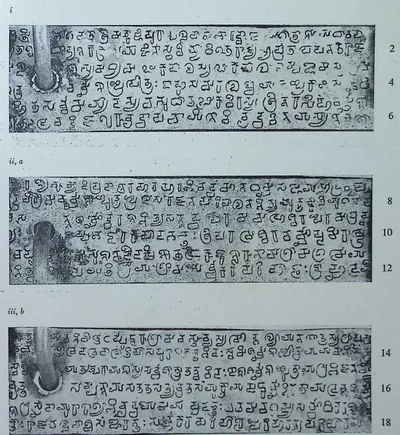 "Vunna Guravayapalem Plates of Paramesvaravarman I, Year 19", the first three inscribed plate sides, lines 1-18 (Epigraphia Indica XXXII, plate with No. 9 (PDF p. 148))Historic photograph · 1959
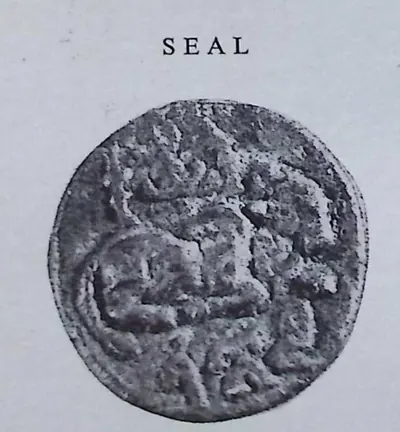 Seal of the "Vunna Guravayapalem Plates of Paramesvaravarman I, Year 19" (Epigraphia Indica XXXII, plate with No. 9 (PDF p. 149))Historic photograph · 1959
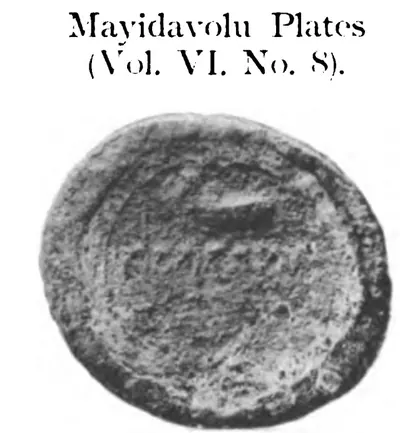 Seal of the Mayidavolu plates of Sivaskandavarman: "Mayidavolu Plates (Vol. VI, No. 8)", from the plate "Seals. Full-size" (Epigraphia Indica VI, plate of seals printed with No. 28 (PDF p. 369 of the archive.org scan EpigraphiaIndicaVol6))Historic photograph · 1901
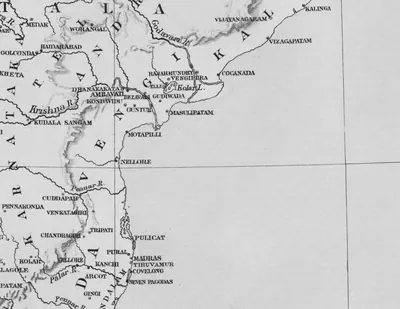 Vengi, the Krishna and the coast south to Kanchi and Tondamandalam: detail of "A Map of Southern India shewing the territories of the ancient dynasties according to the best authorities" (Elliot 1886, folding map, PDF p. 185)Map · 1886
Related
People
Sivaskandavarman (Pallava)
c. 250–275 CE
Earliest Pallava king known from his own charters. As crown prince he sent the Mayidavolu plates from Kanchipura to his officer at Dhannakada (Amaravati), granting a village in Andhrapatha, the Telugu country. As king he issued the Hirahadagalli plates and claimed the horse sacrifice. His date is disputed: from the early 3rd century to the middle of the 4th.
Vijaya-Skandavarman (Pallava)
c. 275–340 CE
Pallava king in whose reign the queen Charudevi, wife of the crown prince Vijaya-Buddhavarman, granted land to a temple of Narayana. Her Prakrit grant was found near Guntur and is now in the British Museum. It is the only record of his reign. Scholars disagree whether he was the same man as Sivaskandavarman of the Mayidavolu and Hirahadagalli plates.
Vishnugopa of Kanchi
c. 325–350 CE
King of Kanchi named in the Allahabad pillar inscription of the Gupta emperor Samudragupta, among the southern kings whom he captured and released, about the middle of the 4th century. Most scholars take him for a Pallava. G. Jouveau-Dubreuil argued that the meeting took place near the Krishna, where Vishnugopa led an alliance of eastern kings, not at Kanchi.
Kumaravishnu II (Pallava)
c. 425–450 CE
Pallava king of Kanchi known from the Chendalur plates. He issued them from Kanchipura in the second year of his reign, granting land in the village of Chendalura in Karmarashtra, in the present Prakasam district. Where he belongs in the Pallava line is disputed: before Simhavarman, according to Jouveau-Dubreuil, or between Simhavarman and Simhavishnu, according to Hultzsch.
Skandavarman II (Pallava)
c. 450–475 CE
Pallava king of the Nellore–Guntur country, known from the first Omgodu grant, issued from Tambrapa in the 33rd year of his reign. The grant gives his ancestors back to a Kumaravishnu, who performed the horse sacrifice. He was the father of the crown prince Vishnugopa and the grandfather of Simhavarman, whose grants come from the same region.
Vishnugopa (Pallava crown prince)
c. 475–500 CE
Pallava prince of the Nellore–Guntur line, son of Skandavarman II and father of Simhavarman. As crown prince (yuvamaharaja) he issued the Uruvupalli grant from Palakkada, dated in the 11th year of a king Simhavarman, giving land to a temple at Kandukura. Scholars disagree whether he ever reigned, and who the Simhavarman of his grant was.
Mahendravarman I
c. 600–630 CE
Pallava king of Kanchi (about 600–630), son of Simhavishnu. In his reign the Chalukya Pulakesin II took Vengi and the Pallava provinces of the Guntur and Nellore country, though Mahendravarman defended Kanchi. Some of his surnames in his cave inscriptions in the Tamil country are Telugu. This led Jouveau-Dubreuil to argue that his family and his cave style came from the Telugu country.
Narasimhavarman I
c. 630–668 CE
Pallava king of Kanchi (about 630–668), son of Mahendravarman I, called Mahamalla and Vatapikonda, 'conqueror of Vatapi'. He defeated the Chalukya Pulakesin II and took the Chalukya capital Badami (Vatapi). The Telugu provinces lost in his father's reign were not recovered, and the Chalukya Vikramaditya I, whose grants reach the Nellore country, fought him and his successors.
Paramesvaravarman I
c. 670–690 CE
Pallava king of Kanchi in the later 7th century, son of Mahendravarman II and grandson of Narasimhavarman I. He fought the Chalukya Vikramaditya I, who took Kanchi in his reign and was later driven back. His Vunna Guravayapalem plates, issued from Kanchipura in his 19th year and dated by D. C. Sircar to December 687, grant a village in the Podili–Kandukur country of Nellore.
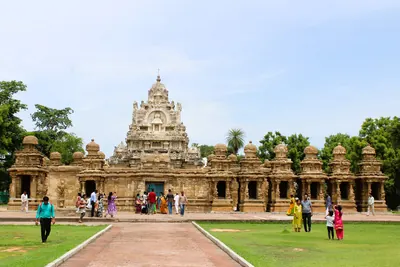
Narasimhavarman II
c. 690–715 CE
Pallava king of Kanchi about 700, son of Paramesvaravarman I, also called Rajasimha, builder of the Kailasanatha temple at Kanchipuram. His Reyuru grant, kept in the archives of the Raja of Kalahasti, gives a village in Mel-Mundarashtra, which P. B. Desai placed in the Atmakur taluk of Nellore. Desai suggested that he or his father had won back part of the Nellore country from the Eastern Chalukyas.
Nandivarman II Pallavamalla
c. 717–779 CE
Pallava king of Kanchi for more than sixty years in the 8th century. He came from a side branch of the family descended from Simhavishnu's brother Bhimavarman, and was chosen king as a boy after the death of Paramesvaravarman II. His general Udayachandra drove a Nishada chief out of the land of 'Vishnuraja', identified with the Eastern Chalukya Vishnuvardhana III. An inscription of his 15th year at Mallam in the Gudur taluk shows Pallava rule in southern Nellore.
Simhavarman (Pallava, Manchikallu inscription)
Pallava king of the Bharadvaja gotra, known only from a broken Prakrit pillar inscription found at Manchikallu in the Palnad taluk. D. C. Sircar took it for the earliest Pallava record. He suggested that this Simhavarman brought the Krishna–Guntur country under the Pallavas, pushing out the Ikshvakus, and was perhaps the father of Sivaskandavarman.
Simhavarman II (Pallava)
Pallava king of the Nellore–Guntur country, son of the crown prince Vishnugopa. Four of his grants survive. All give villages in the Guntur and Nellore districts and were issued from camps, not from Kanchi: the second Omgodu grant (year 4), the Pikira grant from Menmatura (year 5), the Mangalur grant from Dasanapura (year 8) and the Vilavatti grant (year 10). Many scholars date his accession to 436 from a Jain work, the Lokavibhaga; others place him about 500.
Inscriptions
Mayidavolu plates of Sivaskandavarman
c. 250 CE
A Prakrit copper-plate grant issued from Kanchipura by the Pallava crown prince Sivaskandavarman to his official at Dhannakada (Amaravati). It gives the village of Viripara in Andhrapatha, the Telugu country, to two Brahmans. It was found in 1899 at Mayidavolu near Narasaraopet and edited by E. Hultzsch in 1901. It is the earliest Pallava copper-plate charter, and it shows the Pallavas ruling as far as the Krishna.
Manchikallu inscription of Simhavarman
c. 300 CE
A broken Prakrit inscription on part of an eight-sided stone pillar from Manchikallu in the Palnad taluk. It records gifts by the Pallava king Simhavarman of the Bharadvaja gotra to the priests of the god Jivasivasvamin. D. C. Sircar, who edited it, took it for the earliest Pallava record. He dated it first to the end of the 3rd century and later to the middle of the 4th.
Omgodu grant of Simhavarman (No. 2)
c. 440 CE
A Sanskrit copper-plate grant of the Pallava king Simhavarman, son of the crown prince Vishnugopa, made in the fourth year of his reign. It gives the village of Omgodu in Karmarashtra, bounded by Kodikim, Narachadu, Kadakuduru and Penukaparru, to the Brahman Devasarman of Kundur. Its editor, H. Krishna Sastri, thought it a 7th-century copy of an earlier grant. Its date became part of the debate over the Lokavibhaga date of 436 for Simhavarman.
Vilavatti grant of Simhavarman
c. 446 CE
Sanskrit copper-plate grant issued from Paddukkara in the tenth year of the Pallava king Simhavarman, son of the crown prince Vishnugopa. It gives the village of Vilavatti in Mundarashtra, with the taxes due from it, to the Brahman Vishnusarman. It was found about 1928 at Vavveru in the Kovur taluk of Nellore, and C. R. Krishnamacharlu edited it in 1938. It lists the dues of craftsmen and traders and bears the earliest clear Pallava bull on its seal.
Vunna Guravayapalem plates of Paramesvaravarman I
687 CE
A Sanskrit copper-plate grant of the Pallava king Paramesvaravarman I, issued from Kanchipura in his 19th year. It gives the village of Kubunuru, on the southern bank of the river Musuna in Pumi-rashtra, to the Brahman Devasarman. The plates were shown to P. Seshadri Sastri at Vunna Guravayapalem in the Podili taluk of Nellore. D. C. Sircar and Seshadri Sastri edited them from photographs. The grant is dated to 22 December 687 and gave the first date for this king that can be checked.
Reyuru grant of Narasimhavarman II
c. 711 CE
A Sanskrit copper-plate grant issued from Kanchipura in the 12th year of the Pallava king Narasimhavarman II, on a lunar eclipse in Vaisakha. It gives the village of Reyuru in Mel-Mundarashtra to the Brahman Kumaramandasarman of Kuravasri. It was kept in the archives of the Raja of Kalahasti and edited by P. B. Desai. It is the only dated record of this king. Desai placed the village at Revuru in the Atmakur taluk of Nellore.
British Museum grant of Charudevi
A Prakrit copper-plate grant of the Pallava queen Charudevi, wife of the crown prince Vijaya-Buddhavarman, made in the reign of the Maharaja Vijaya-Skandavarman. It gives four nivartanas of land to the temple of Narayana at Dalura. Sir Walter Elliot secured the plates, which are now in the British Museum. They were reported to have been found near Guntur. J. F. Fleet first edited them in 1880, and E. Hultzsch edited them again in 1906.
Chendalur plates of Kumaravishnu II
A Sanskrit copper-plate grant issued from Kanchipura in the second year of the Pallava king Kumaravishnu II. It gives a field of 432 pattikas (a land measure) in the village of Chendalura in Karmarashtra to the Brahman Bhavaskandatrata. It was found buried in a pot of paddy husk at Chendalur in the Ongole taluk, and E. Hultzsch edited it in 1906. With it he edited a grant of the same village by the Eastern Chalukya Sarvalokasraya of 673, which was reported found in the same way.
Chura grant of Vijaya-Vishnugopavarman
A Sanskrit copper-plate grant, with some Telugu words, issued from Palotkata by the Pallava king Vijaya-Vishnugopavarman, son of a Simhavarman. It gives 108 nivartanas in the village of Chura in Karmarashtra to the Brahman Chasamisarman of Kundur. It was obtained at Narasaraopet and edited by C. R. Krishnamacharlu in 1938. It is written in letters of about the 7th century, and he took it to be a copy of an older grant.
Darsi plate of a Pallava grant
Single copper plate, the first of a lost Sanskrit grant of a Pallava king, found in a tobacco field at Darsi in the Nellore district and now in the Madras Museum. A great-grandson of the Maharaja Virakorchavarman issued it 'from the prosperous and victorious residence of Dasanapura'. E. Hultzsch edited it in 1892. Later scholars identified Virakorchavarman with Viravarman of the Nellore–Guntur line and Dasanapura with Darsi itself.
Mangalur grant of Simhavarman
A Sanskrit copper-plate grant issued from Dasanapura in the eighth year of the Pallava king Simhavarman, son of the crown prince Vishnugopa. It gives the village of Mangadur in Vengorashtra to eight Brahmans. J. F. Fleet published it in 1876 from Sir Walter Elliot's facsimiles. D. C. Sircar took Vengorashtra to be the southern edge of the Vengi country, and V. Venkayya suggested that Dasanapura was Darsi.
Omgodu grant of Skandavarman II (No. 1)
Sanskrit copper-plate grant of the Pallava king Vijaya-Skandavarman (Skandavarman II), issued from Tambrapa in the 33rd year of his reign. It gives the village of Omgodu in Karmarashtra to the Brahman Golasarman. H. Krishna Sastri edited it in 1920. It gave the earliest known members of the Pallava line of the Nellore–Guntur country and is dated in the old seasonal manner of the Prakrit charters.
Pikira grant of Simhavarman
A Sanskrit copper-plate grant issued from the camp at Menmatura in the fifth year of the Pallava king Simhavarman, son of the crown prince Vishnugopa. It gives the village of Pikira in Mundarashtra to the Brahman Vilasasarman. The village munsiff (headman) of Nelatur in the Ongole taluk sent in the plates, which had been the unclaimed property of a dead ascetic. E. Hultzsch edited the grant in 1906.
Uruvupalli grant of Vishnugopavarman
A Sanskrit copper-plate grant of the Pallava crown prince Vishnugopavarman, issued from Palakkada in the 11th year of a king Simhavarman. It gives two hundred nivartanas of land in the village of Uruvupalli, in the country of Munda, to a temple at Kandukura. J. F. Fleet published it in 1876 from Sir Walter Elliot's facsimiles. Its findspot is unknown.
References
Notes (0)
Sources (22)
Spotted an error on this page? Tell us
Last updated: