Kanchipuram
City in the Tamil country, the capital of the Pallava kings. The earliest Pallava charter of the Telugu country, the Mayidavolu plates, was issued from Kanchipura. So were later Pallava grants of villages in the Ongole and Nellore country. The Chalukyas besieged the city in the 7th and 8th centuries, and the Chola Aditya I conquered it at the end of the 9th.
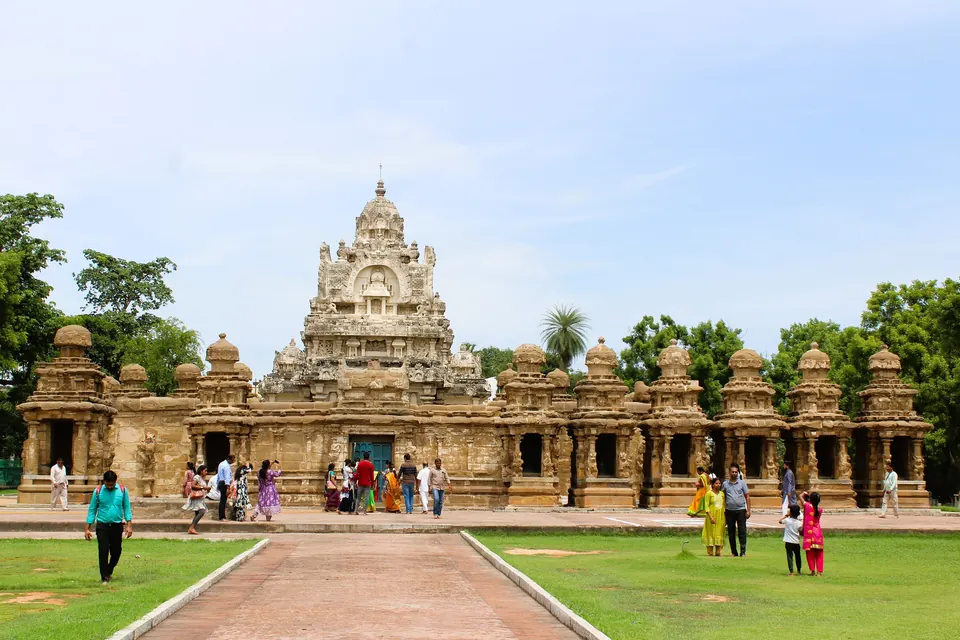
Kanchipura, the modern Kanchipuram, was the capital of the Pallavas. The crown prince Sivaskandavarman issued his Mayidavolu plates, about a village in the Telugu country, “from Kanchipura”.1 E. Hultzsch concluded that the Pallava kingdom of that time included Tondaimandalam, “to which their capital, Kanchipura, belongs”.2 In the north it included the Telugu country as far as the Krishna.2
R. Gopalan called Kanchi both the imperial capital and the local capital of the Tamil dominions.34 He called Dhanyakataka the capital of the Telugu country.34
Kanchi and the Telugu country
Several Pallava kings of the 5th and 6th centuries issued their grants of land in the Guntur and Nellore country from camps such as Palakkada and Dasanapura, not from Kanchi.5 H. Krishna Sastri thought this meant that they had lost Kanchi for a time, perhaps to the Cholas.56 In his view this lasted until Kumaravishnu I “re-conquered Kanchi-pura”.56 Gopalan rejected the idea of such a Chola interregnum (break in Pallava rule).78
Three later grants for villages in the Telugu country were all issued from Kanchipura:91011
- the Chendalur plates of Kumaravishnu II9
- the Vunna Guravayapalem plates of Paramesvaravarman I10
- the Reyuru grant of Narasimhavarman II11
Sieges and conquests
In F. Kielhorn’s translation of the Aihole inscription, the Chalukya Pulakesin II drove the Pallava king “behind the walls of Kanchipura”.12 G. Jouveau-Dubreuil concluded that Mahendravarman I kept Kanchi but lost the Guntur and Nellore districts.13
The Chalukya Vikramaditya II entered Kanchi in the reign of Nandivarman II.1415 Gopalan noted that he enriched its temples instead of destroying the city.1415 The Chinese pilgrim Hiuen Tsang (Xuanzang) visited the city about 642.16
The Chola king Aditya I conquered Tondaimandalam at the end of the 9th century.17 By about 900 his rule reached Kalahasti.17
Footnotes
-
Hultzsch, “Mayidavolu Plates of Sivaskandavarman” (1901), p. 88, translation (archive.org (opens in a new tab)). ↩
-
E. Hultzsch, “Mayidavolu Plates of Sivaskandavarman”, Epigraphia Indica VI (1900–01), p. 85 (archive.org (opens in a new tab)). ↩ ↩2
-
R. Gopalan, History of the Pallavas of Kanchi (1928), p. 34 (archive.org (opens in a new tab)). ↩ ↩2
-
Gopalan, History of the Pallavas of Kanchi (1928), p. 36 (archive.org (opens in a new tab)). ↩ ↩2
-
H. Krishna Sastri, “Two Pallava Copper-plate Grants”, Epigraphia Indica XV (1919–20), p. 248 (archive.org (opens in a new tab)). ↩ ↩2 ↩3
-
Krishna Sastri, “Two Pallava Copper-plate Grants” (1920), p. 249 (archive.org (opens in a new tab)). ↩ ↩2
-
Gopalan, History of the Pallavas (1928), p. 63 (archive.org (opens in a new tab)). ↩
-
Gopalan, History of the Pallavas (1928), pp. 64–65 (archive.org (opens in a new tab)). ↩
-
E. Hultzsch, “Chendalur Plates of Kumaravishnu II”, Epigraphia Indica VIII (1905–06), p. 233 (archive.org (opens in a new tab)). ↩ ↩2
-
D. C. Sircar and P. Seshadri Sastri, “Vunna Guravayapalem Plates of Paramesvaravarman I, Year 19”, Epigraphia Indica XXXII (1957–58), p. 93 (archive.org (opens in a new tab)). ↩ ↩2
-
P. B. Desai, “Reyuru Grant of Pallava Narasimhavarman; Year 12”, Epigraphia Indica XXIX (1951–52), p. 92 (archive.org (opens in a new tab)). ↩ ↩2
-
F. Kielhorn, “Aihole Inscription of Pulikesin II”, Epigraphia Indica VI (1900–01), p. 11, translation of verse 29 (archive.org (opens in a new tab)). ↩
-
G. Jouveau-Dubreuil, Ancient History of the Deccan (1920), p. 69 (archive.org (opens in a new tab)). ↩
-
Gopalan, History of the Pallavas (1928), p. 121 (archive.org (opens in a new tab)). ↩ ↩2
-
Gopalan, History of the Pallavas (1928), p. 122 (archive.org (opens in a new tab)). ↩ ↩2
-
Gopalan, History of the Pallavas (1928), p. 102 (archive.org (opens in a new tab)). ↩
-
Gopalan, History of the Pallavas (1928), p. 133 (archive.org (opens in a new tab)). ↩ ↩2
Photos
Related
Dynasties

People
Sivaskandavarman (Pallava)
c. 250–275 CE
Earliest Pallava king known from his own charters. As crown prince he sent the Mayidavolu plates from Kanchipura to his officer at Dhannakada (Amaravati), granting a village in Andhrapatha, the Telugu country. As king he issued the Hirahadagalli plates and claimed the horse sacrifice. His date is disputed: from the early 3rd century to the middle of the 4th.
Vishnugopa of Kanchi
c. 325–350 CE
King of Kanchi named in the Allahabad pillar inscription of the Gupta emperor Samudragupta, among the southern kings whom he captured and released, about the middle of the 4th century. Most scholars take him for a Pallava. G. Jouveau-Dubreuil argued that the meeting took place near the Krishna, where Vishnugopa led an alliance of eastern kings, not at Kanchi.
Kumaravishnu II (Pallava)
c. 425–450 CE
Pallava king of Kanchi known from the Chendalur plates. He issued them from Kanchipura in the second year of his reign, granting land in the village of Chendalura in Karmarashtra, in the present Prakasam district. Where he belongs in the Pallava line is disputed: before Simhavarman, according to Jouveau-Dubreuil, or between Simhavarman and Simhavishnu, according to Hultzsch.
Mahendravarman I
c. 600–630 CE
Pallava king of Kanchi (about 600–630), son of Simhavishnu. In his reign the Chalukya Pulakesin II took Vengi and the Pallava provinces of the Guntur and Nellore country, though Mahendravarman defended Kanchi. Some of his surnames in his cave inscriptions in the Tamil country are Telugu. This led Jouveau-Dubreuil to argue that his family and his cave style came from the Telugu country.
Narasimhavarman I
c. 630–668 CE
Pallava king of Kanchi (about 630–668), son of Mahendravarman I, called Mahamalla and Vatapikonda, 'conqueror of Vatapi'. He defeated the Chalukya Pulakesin II and took the Chalukya capital Badami (Vatapi). The Telugu provinces lost in his father's reign were not recovered, and the Chalukya Vikramaditya I, whose grants reach the Nellore country, fought him and his successors.
Paramesvaravarman I
c. 670–690 CE
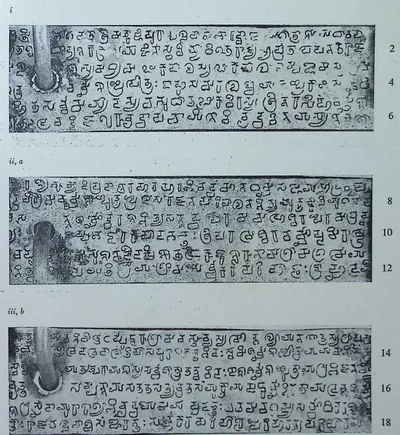
Pallava king of Kanchi in the later 7th century, son of Mahendravarman II and grandson of Narasimhavarman I. He fought the Chalukya Vikramaditya I, who took Kanchi in his reign and was later driven back. His Vunna Guravayapalem plates, issued from Kanchipura in his 19th year and dated by D. C. Sircar to December 687, grant a village in the Podili–Kandukur country of Nellore.
Narasimhavarman II
c. 690–715 CE
Pallava king of Kanchi about 700, son of Paramesvaravarman I, also called Rajasimha, builder of the Kailasanatha temple at Kanchipuram. His Reyuru grant, kept in the archives of the Raja of Kalahasti, gives a village in Mel-Mundarashtra, which P. B. Desai placed in the Atmakur taluk of Nellore. Desai suggested that he or his father had won back part of the Nellore country from the Eastern Chalukyas.
Nandivarman II Pallavamalla
c. 717–779 CE
Pallava king of Kanchi for more than sixty years in the 8th century. He came from a side branch of the family descended from Simhavishnu's brother Bhimavarman, and was chosen king as a boy after the death of Paramesvaravarman II. His general Udayachandra drove a Nishada chief out of the land of 'Vishnuraja', identified with the Eastern Chalukya Vishnuvardhana III. An inscription of his 15th year at Mallam in the Gudur taluk shows Pallava rule in southern Nellore.
Dantidurga
c. 753–756 CE
Rashtrakuta king (about 753–756) who overthrew the Chalukyas of Badami and founded the Rashtrakuta supremacy of the Deccan. His Samangad grant of January 754 says that he won the sovereignty by conquering the Chalukya 'Vallabha'. An inscription at Ellora lists among the rulers he subdued those of Kalinga, Kosala and the Srisaila country, which J. F. Fleet took to be the Kurnool country.
Krishna III (Rashtrakuta)
c. 939–966 CE
Rashtrakuta king (about 939–966), the most powerful of the line, who took Kanchi and Tanjore from the Cholas. In the Telugu country he held most of the Cuddapah country through the Vaidumba chiefs, and the Nolamba chiefs of Anantapur served under him. The Eastern Chalukya pretender Badapa sought his help to drive Amma II out of Vengi. Inscriptions of his reign or of his feudatories have been found at Chennur, Mallikarjunapalli, Minambaram and Inavolu in Telangana.
Kulottunga I
c. 1063–1118 CE
Eastern Chalukya prince of Vengi, son of Rajaraja Narendra and the Chola princess Ammangadevi. As Rajendra (Rajendra-Choda, Rajendra II) he was heir to Vengi in 1063. In 1070 he seized the Chola throne, and he reigned as Kulottunga Chola I until about 1118. He united the Eastern Chalukya and Chola crowns, and governed Vengi first through his uncle Vijayaditya VII and then through his own sons as viceroys.
Karunakara Tondaiman
c. 1076–1112 CE
General and minister of the Chola king Kulottunga I, the hero of the Tamil poem Kalingattupparani, which describes how he marched an army north from Kanchi across the Penna, the Krishna and the Godavari to defeat the king of northern Kalinga. A Sanskrit inscription of 1103 at Draksharama, which K. V. Subrahmanya Aiyer identified as his, records the burning of Kalinga, a victory pillar on the borders of Orissa and his gifts in the Vengi country. The date of the war is disputed: about 1076–77, 1084–90, before 1095–96, or about 1111–12.
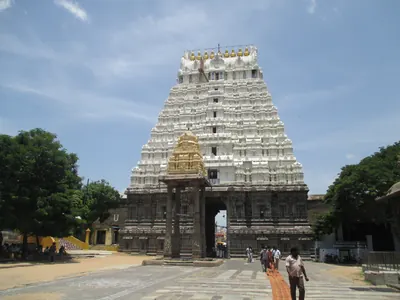
Tammusiddhi
c. 1205–1208 CE
Telugu Choda king of the Pottapi and Nellore family, and a vassal of the Chola king Kulottunga III. He was anointed at Nellore in 1205–06 and made grants at Kanchipuram, Tiruvalangadu, Tiruppasur, Tiruvorriyur, Nellore and Kavali. His inscriptions give the fullest early family tree of the family, but they disagree about who his brother or uncle Nallasiddhi was.
Tikka I (Telugu Choda of Nellore)
c. 1209–1248 CE
Telugu Choda king of Nellore, also called Tirukalatti and Ganda-Gopala, who ruled from about 1209 to 1248 or 1250. He was a loyal vassal of the Chola Rajaraja III, fought the Hoysalas and held Kanchi. In one modern account he owed his throne at Nellore to the Kakatiya Ganapatideva. He was the father of Manumasiddhi II.
Jatavarman Sundara Pandya I
c. 1251–1268 CE
Pandya king of Madurai who came to the throne in 1251 and led the second Pandya empire to its height. His records claim the defeat of the Hoysala Somesvara, the capture of Kopperunjinga's fortress, the occupation of Kanchi after killing Gandagopala, and a victory over the Telugus and their allies at Mudugur, from which he drove them to the Krishna. He was anointed as conqueror at Nellore. P. V. Parabrahma Sastry dates the battle at Muttukuru to 1263 and adds that he struck coins with the Kakatiya boar. Robert Sewell doubted the northern march.
Muhammad Shah III
1463–1482 CE
Bahmani sultan (1463–1482) who came to the throne as a boy. He brought Rajahmundry, Kondapalli and the Krishna–Godavari coast under Bahmani rule, and spent three years settling Telangana. In 1481 he had his great minister Mahmud Gawan executed because of a forged letter, a deed the sources blame for the break-up of the kingdom.
Saluva Narasimha
c. 1485–1492 CE
Chief of the Saluva family of Chandragiri. He drove the Gajapatis of Orissa back up the coast towards Rajahmundry and faced the Bahmani sultan there in the 1470s. In 1485–86 he took the throne of Vijayanagara from the last Sangama king and founded the second, Saluva, dynasty. He died in 1492–93 and left his young sons in the charge of his general Narasa Nayaka. Whether he recovered Udayagiri from Orissa is disputed.
Inscriptions
Arulala-Perumal inscription of Tammusiddhi, 1205–06
1205 CE
A Sanskrit inscription in Grantha letters on the base of the platform called 'the mountain' in the Arulala-Perumal (Varadaraja) temple at Kanchipuram. It records that in Saka 1127 (1205–06) the Telugu Choda king Tammusiddhi, having been anointed at Nellore, gave the village of Muttiyampakka to the god. It names his father's surname, Ganda-Gopala, and the place of his anointment.
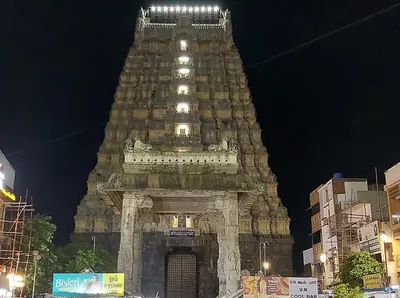
Ekamranatha temple inscription of Ganapati
1249 CE
A Sanskrit inscription in Grantha script of June 1249 on a wall of the Ekamranatha temple at Kanchipuram. It records a village given by Ganapati's minister and general Samanta-Bhoja, governor of Kanchi. It is evidence that the Kakatiya kingdom then reached the Tamil country.
References
Notes (0)
Sources (7)
Spotted an error on this page? Tell us
Last updated: