Secunderabad
British cantonment (military station) six miles north-east of Hyderabad, named after the Nizam Sikandar Jah. The British subsidiary force was stationed here, paid for by the cession of the Ceded Districts (1800). In 1901 it had 83,550 people, besides Bolarum and Trimulgherry, and was one of the largest military stations in India. The Hyderabad Contingent, absorbed into the Indian Army in 1902, had its head-quarters at neighbouring Bolarum.
Secunderabad grew up as the British cantonment (military station) beside Hyderabad, the capital of the Asaf Jahi Nizams. The Imperial Gazetteer of 1909 places it six miles north-east of the city, beyond the Husain Sagar.12 It says the cantonment was “named after the Nizam Sikandar Jah”.12 Campbell (1898) also says it was named after Sikandar Jah.3
The cantonment
The gazetteer says the British troops at Secunderabad “were formerly known as the Subsidiary Force”.1 They “were paid from the revenues of the districts ceded by the Nizam for this purpose under the treaty of 1800”.1 The Hyderabad Contingent had its head-quarters at neighbouring Bolarum, and Berar was assigned for its payment in 1853.1 By an agreement of 1902 the Contingent was merged in the Indian Army, and Bolarum became part of Secunderabad.4
In 1901 the population of Secunderabad was 83,550.14 Bolarum and Trimulgherry had another 12,888, making it “one of the largest military stations in India”.14 The combined cantonment covered 22 square miles.14 The gazetteer adds that in 1857 an unsuccessful attempt was made “to tamper with the fidelity of the troops at Secunderabad”.14
Gribble’s History of the Deccan (1924) says the British had levied and kept the excise revenues of the cantonments of Secunderabad and Jalna from 1812 to 1853.5 It counts this among the reasons for calling the Nizam’s debt of 1853 an “alleged debt”.5
Footnotes
-
Imperial Gazetteer: Hyderabad (1909), p. 119 (archive.org (opens in a new tab)). ↩ ↩2 ↩3 ↩4 ↩5 ↩6 ↩7 ↩8 ↩9
-
Imperial Gazetteer of India: Hyderabad State (1909), p. 118 (archive.org (opens in a new tab)). ↩ ↩2
-
A. Claude Campbell, Glimpses of the Nizam’s Dominions (1898), p. 125 (archive.org (opens in a new tab)). ↩
-
Imperial Gazetteer: Hyderabad (1909), p. 120 (archive.org (opens in a new tab)). ↩ ↩2 ↩3 ↩4 ↩5
-
J. D. B. Gribble (ed. M. Pendlebury), A History of the Deccan, Vol. II (1924), p. 226 (archive.org (opens in a new tab)). ↩ ↩2
Photos
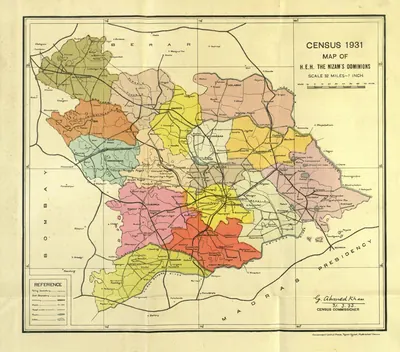 "Census 1931 Map of H.E.H. the Nizam's Dominions" (coloured) (Census of India 1931, Hyderabad, folding map, PDF p. 3)Map · 1933
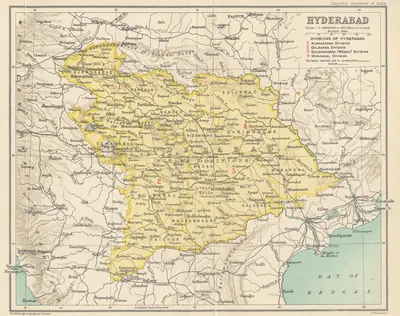 Hyderabad State (Imperial Gazetteer, 1909)Map · 1909
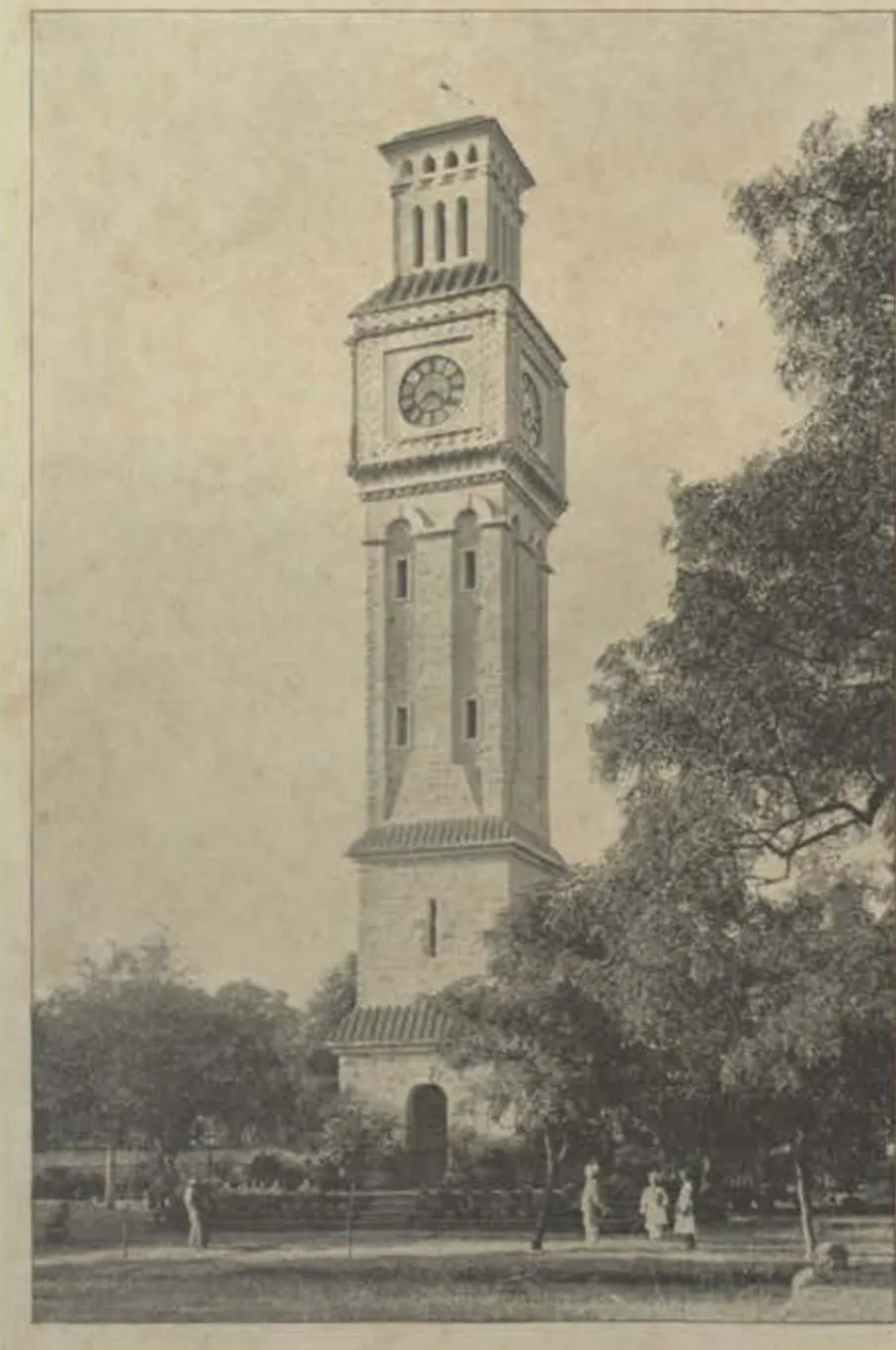
 Secunderabad: "The Clock Tower" (Campbell 1898, p. 256)Historic photograph · 1898
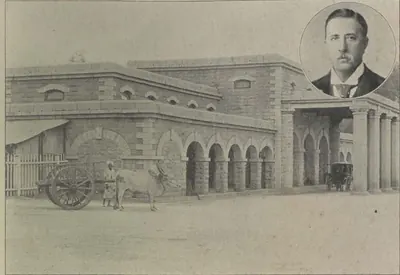 Secunderabad: "The Secunderabad Railway Station" (Campbell 1898, p. 144)Historic photograph · 1898
Related
People
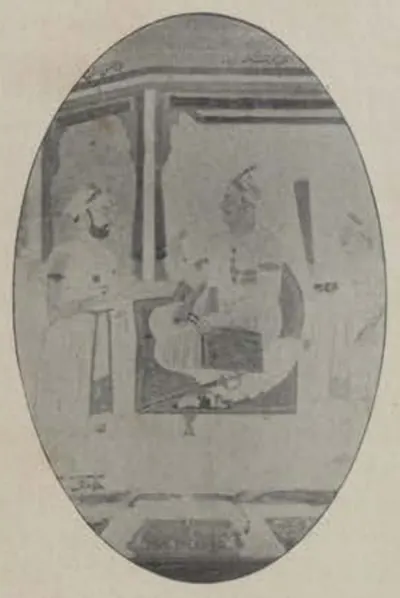
Sikandar Jah (Asaf Jah III)
1803–1829 CE
Eldest son of Nizam Ali Khan, Nizam of Hyderabad from 1803 to 1829. His reign began with the Maratha war of 1803 and ended in debt. He left the government to his ministers Mir Alam and Munir-ul-Mulk and their deputy Chandu Lal. Under them European officers supervised the districts from about 1820, and the Nizam's tribute from the Northern Circars was bought out (1823). The cantonment of Secunderabad is named after him.
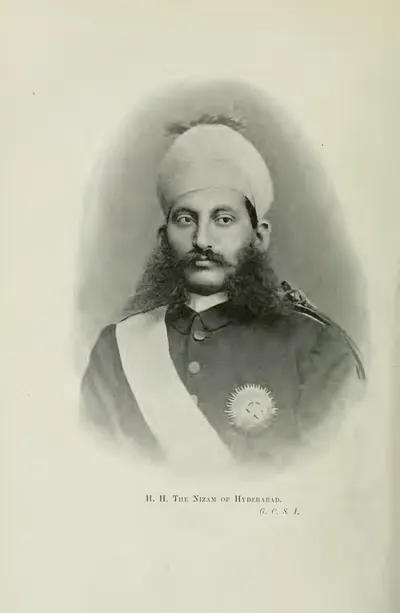
Mir Mahbub Ali Khan (Asaf Jah VI)
1869–1911 CE
Nizam of Hyderabad from 1869 to 1911, only son of Afzal-ud-daula. Placed on the throne at the age of two, he grew up under the regency of Salar Jang I and took full powers from the Viceroy Lord Ripon on 5 February 1884. His reign saw the railways, the cotton mills, the code of 1892, the lease of Berar to the British in perpetuity (1902), the purchase of the Falaknuma palace (1897) and the Musi flood of 1908. Remembered in Hyderabad as 'Mahboob Pasha', he died on 31 August 1911.
Mir Osman Ali Khan (Asaf Jah VII)
1911–1948 CE
Seventh and last ruling Nizam of Hyderabad (1911–1948), son of Mahbub Ali Khan. He ruled directly from 1914 to 1919 and then through an Executive Council. His reign brought Osmania University (founded by his farman of 1917, with Urdu as the medium of teaching), the Osman Sagar and Himayat Sagar reservoirs built after the Musi flood of 1908, the City Improvement Board, the new High Court and the Osmania General Hospital. His government ended in September 1948, when the Indian Army entered the state and a military governor took charge.
J. N. Chaudhuri
1948–1949 CE
Indian Army officer who commanded the main force in the Police Action against Hyderabad in September 1948 and then governed the state as Military Governor until 1 December 1949. With a cabinet nominated by the Government of India, he disbanded the Razakars and other private armies, brought in officers from the Indian provinces and toured the districts; his government's publicity of 1949 presented his rule as secular and even-handed.
References
Notes (0)
Sources (3)
Spotted an error on this page? Tell us
Last updated: