Uttamaditya (Telugu Chola)
Uttamaditya was a Telugu Chola king of the 8th century, probably the elder son of Vikramaditya II. As a junior chief he ruled at Chilamakuru together with his mother, Queen Cholamahadevi, in his father's lifetime. Later a stone at Veludurti was set up in the reign of 'Uttamaditya Chola-Maharaja', recording a gift to a Brahmin. The editors of these records dated him about 725, and the Veludurti stone to the second quarter of the 8th century.
Download
Uttamaditya was a king of the Telugu Cholas, the family that ruled the Renandu country in today’s Kadapa district.12 He is known from two short stone inscriptions in early Telugu.31 One shows him as a prince beside his mother, and the other as king.41
Family
Uttamaditya was most probably a son of Vikramaditya II.41 The Malepadu stone names another son of that king, Satyaditya.4 K. A. Nilakanta Sastri and M. Venkataramayya, who edited the family’s records in 1956, made the two brothers.4 They thought Uttamaditya was probably the elder and the heir, because he ruled beside his mother in his father’s lifetime.41
The Chilamakuru pillar
A pillar from the Agastyesvara temple at Chilamakuru, in the Kamalapuram taluk, records a gift in the reign of Vikramaditya Chola-Maharaja.3 At that time his queen, Cholamahadevi, was ruling at Chirumburu, the modern Chilamakuru, together with Uttamaditya.35 The record calls Uttamaditya a samantaka (subordinate chief).3 The editors took him to be the queen’s son.34
The Veludurti stone
A stone in front of the Chennakesava temple at Veludurti, in the Kamalapuram taluk, was set up “while Uttamaditya Chola-Maharaja was ruling the earth”.16 It stands next to an older inscription of Punyakumara.1
The record says that one Immadi Ito gave a pannavisa to Chedisarmma, a Brahmin of the Kausika gotra (family line).16 The editors did not explain what a pannavisa was. Erama, the Brahmin of Kacheru, composed the record, and an engraver named Kunandiluvangu cut it.1 Two witnesses are named.1 One of them came from Eyarikallu, which the editors thought might be Erigal, an early seat of the family.16
The editors found the record interesting for the history of Telugu. It uses some archaic Telugu words, and joins words in a way no longer used.1 They took chokshi to mean “witness” and kottali to mean “engraver”.1 They saw in its letters a stage between the earlier square forms and the later round ones.1
Dates
No record of the family gives a date in any era.7 The editors judged by its letters that the Veludurti stone belongs to the same period as Satyaditya’s Malepadu stone.1 They placed it in the second quarter of the 8th century.1 They dated the Chilamakuru pillar a little earlier, to about the beginning of the 8th century.54 In their family table, Uttamaditya and Satyaditya stand about 725.82
Where the sources disagree
- The date of the Telugu Chola stones. Nilakanta Sastri and Venkataramayya placed the Veludurti stone in the second quarter of the 8th century.1 H. Krishna Sastri compared the letters of Satyaditya’s Malepadu stone, of the same period, with Alupa inscriptions of about 800.19
- His place in the dynasty. The 1956 editors joined the line of Vikramaditya I, Saktikumara and Vikramaditya II to the line of Punyakumara by probability only.82 So Uttamaditya’s descent from the earlier kings of Renandu is likely, not proved.82
Footnotes
-
Nilakanta Sastri and Venkataramayya, “Telugu Chola Records” (1956), p. 240, Veludurti inscription of Uttamaditya, and note 2 (archive.org (opens in a new tab)). Paraphrased. ↩ ↩2 ↩3 ↩4 ↩5 ↩6 ↩7 ↩8 ↩9 ↩10 ↩11 ↩12 ↩13 ↩14 ↩15 ↩16 ↩17 ↩18
-
Nilakanta Sastri and Venkataramayya, “Telugu Chola Records” (1956), p. 249 (archive.org (opens in a new tab)). Paraphrased. ↩ ↩2 ↩3 ↩4
-
K. A. Nilakanta Sastri and M. Venkataramayya, “Telugu Chola Records from Anantapur and Cuddapah”, Epigraphia Indica XXVII (1956), p. 236, Chilamakuru inscription (archive.org (opens in a new tab)). Paraphrased. ↩ ↩2 ↩3 ↩4 ↩5
-
Nilakanta Sastri and Venkataramayya, “Telugu Chola Records” (1956), p. 239 (archive.org (opens in a new tab)). Paraphrased. ↩ ↩2 ↩3 ↩4 ↩5 ↩6 ↩7
-
Nilakanta Sastri and Venkataramayya, “Telugu Chola Records” (1956), p. 237 and note 1 (archive.org (opens in a new tab)). Paraphrased. ↩ ↩2
-
Nilakanta Sastri and Venkataramayya, “Telugu Chola Records” (1956), p. 241, text of the Veludurti inscription (archive.org (opens in a new tab)). Paraphrased. ↩ ↩2 ↩3
-
Nilakanta Sastri and Venkataramayya, “Telugu Chola Records” (1956), p. 250 (archive.org (opens in a new tab)). Paraphrased. ↩
-
Nilakanta Sastri and Venkataramayya, “Telugu Chola Records” (1956), p. 248, genealogical table and note (archive.org (opens in a new tab)). Paraphrased. ↩ ↩2 ↩3
-
H. Krishna Sastri, “Malepadu Plates of Punyakumara; the Fifth Year”, Epigraphia Indica XI (1912), p. 345, note 4 (archive.org (opens in a new tab)). ↩
Photos
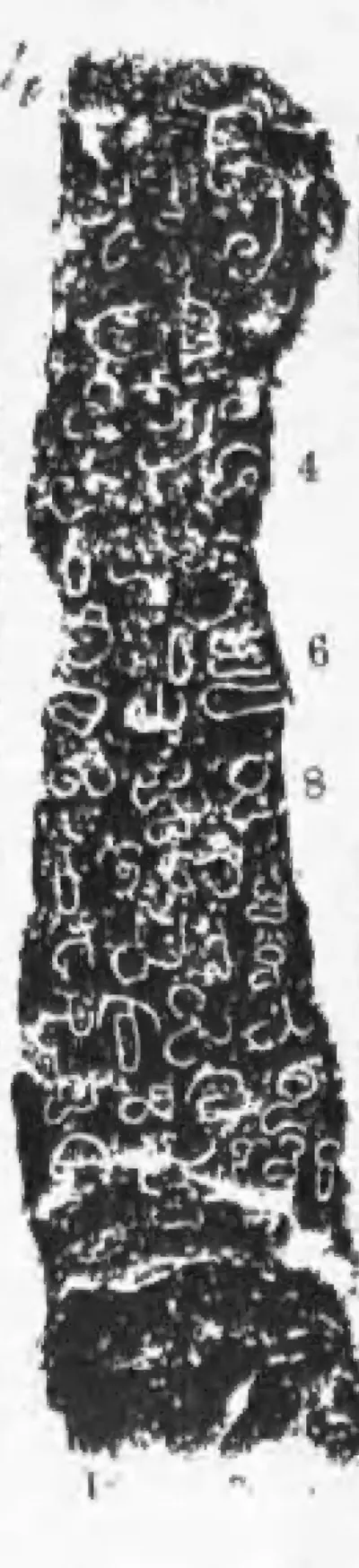 "Telugu Chola Records from Anantapur and Cuddapah", J: the Veludurti inscription of Uttamaditya Chola-Maharaja, face with lines 1-9 (Epigraphia Indica XXVII, second plate page between pp. 228 and 229, panel J, middle face (PDF p. 317))Inscription rubbing · 1956
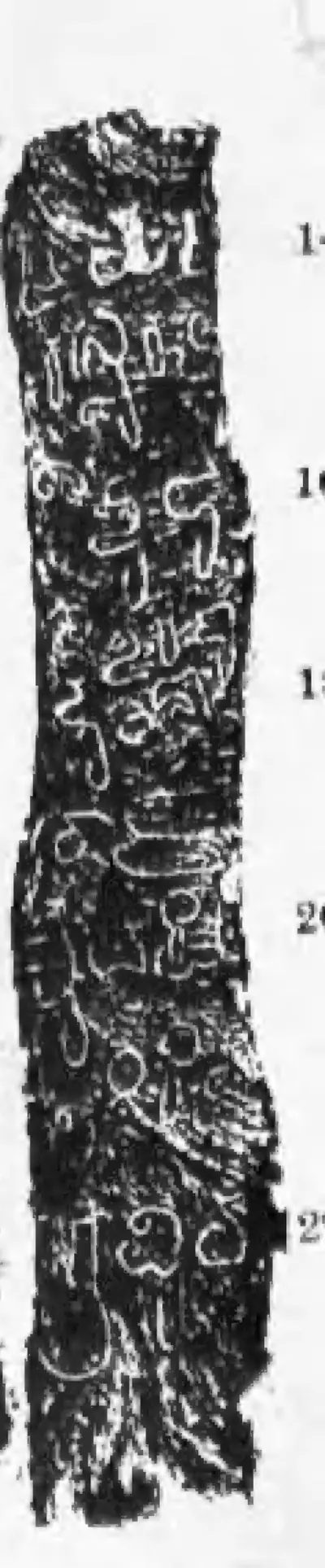 "Telugu Chola Records from Anantapur and Cuddapah", J: the Veludurti inscription of Uttamaditya Chola-Maharaja, face with lines 14-22 (Epigraphia Indica XXVII, second plate page between pp. 228 and 229, panel J, right-hand face (PDF p. 317))Inscription rubbing · 1956
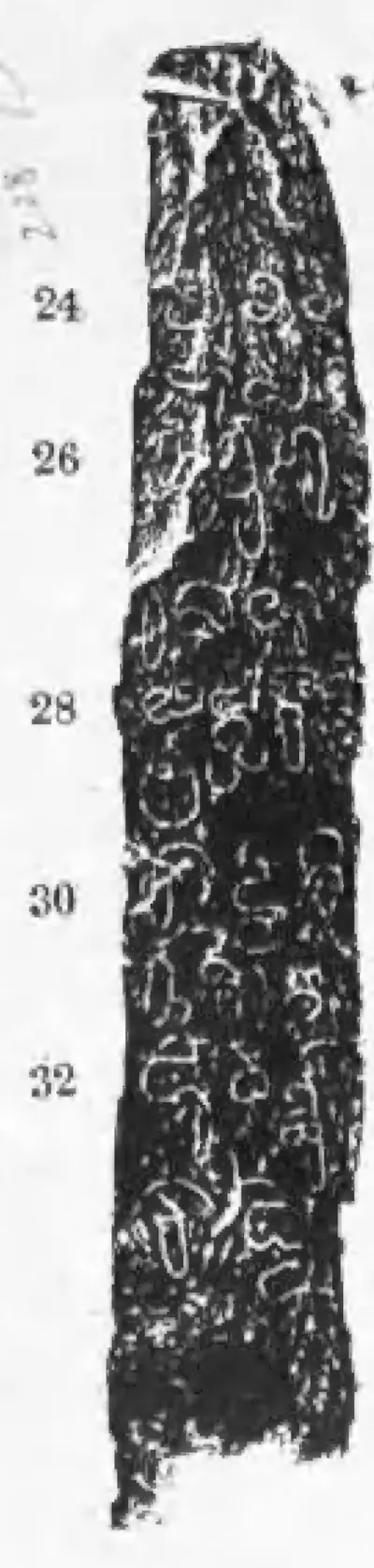 "Telugu Chola Records from Anantapur and Cuddapah", J: the Veludurti inscription of Uttamaditya Chola-Maharaja, face with lines 24-32 (Epigraphia Indica XXVII, second plate page between pp. 228 and 229, panel J, left-hand face (PDF p. 317))Inscription rubbing · 1956
Related
Dynasties
References
Notes (0)
Sources (2)
Spotted an error on this page? Tell us
Last updated: