Punganur
Town and seat of a zamindari (landed estate) on the Mysore plateau, in the north-west of the old North Arcot district. It was part of Cuddapah until 1858. Its Telugu poligar family held Kolar until Bijapur took it in 1639, and then held Punganur under Golconda, the Mughals and the Nawabs of Cuddapah. When the Marathas killed the Nawab of Cuddapah in 1757, Punganur passed to them. After about twenty years of contest it went to Haidar Ali, who took it in 1774. After Tipu's fall in 1799 the whole estate was transferred to the East India Company.
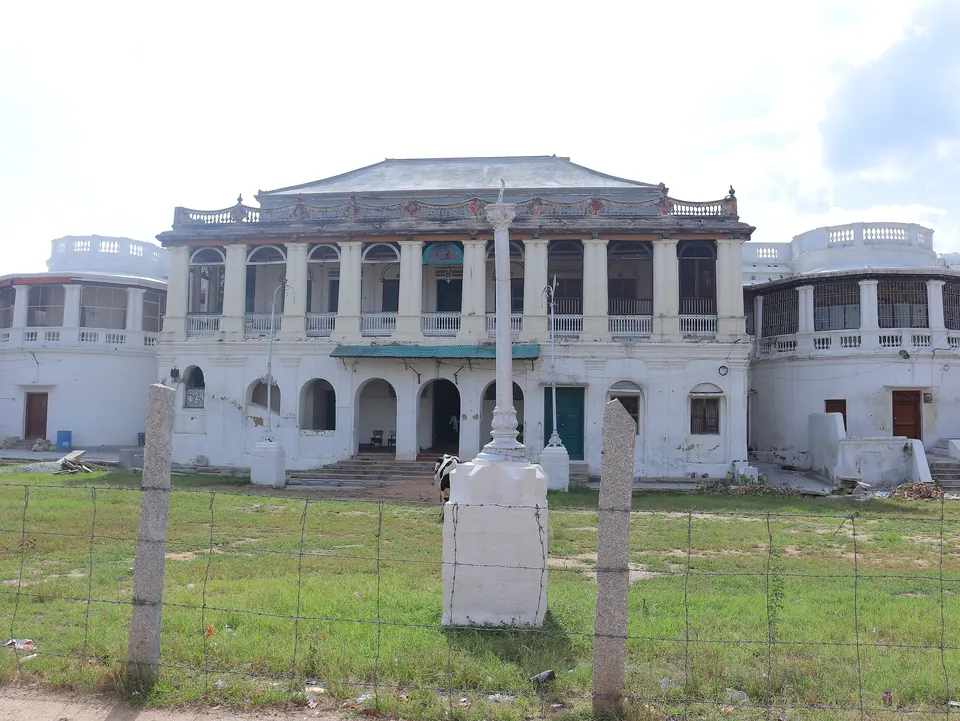
Punganur is a town on the Mysore plateau, in the north-west corner of the old North Arcot district.1 Its poligars (local chiefs) held Kolar until Bijapur took it in 1639, and then held Punganur.23 After Tipu’s fall in 1799, the whole estate was transferred to the East India Company.4
Punganur lies above the Eastern Ghats.1 According to the district manual, it had Mysore to the west and Kadapa (then Cuddapah) to the north.1 The Chandragiri (then Chendragiri) and Chittoor taluks lay to the east, and the Palamaner (then Palmanér) taluk to the south.1 The natural features of the estate, the manual says, are “those of the rest of the Mysore plateau”.1
Gribble’s manual of the Kadapa district notes that Punganur was part of that district until 1858.5 In that year the Ceded Districts were rearranged, and Punganur was transferred to North Arcot.5 Its poligars came to be called zamindars (landholders).3 They belonged to the Sivachar or Lingayat caste.3 See the Marathas in the Telugu country.
Kolar and Bijapur
The North Arcot manual summarises the family’s own history.23 It says that the poligars’ ancestors settled in the country in the thirteenth century.23 Later they founded and fortified Kolar, Hoskote and Anekal.23 One ancestor built the fort of Punganur but went on living at Kolar.23
While Hulsammal was regent, the Bijapur ruler “Tenésha Padshah” sent “Ranadhullá Khán” to besiege “Kólár and Uskóta”.23 The regent fled with her nephew to Avulapalli in 1639.23 The sultan then confirmed the young poligar in Punganur, Saddam, Kandur and other districts.23 Kolar became part of the jagir (land grant) of Shivaji’s father, Shahji Bhonsle.6
Gribble’s version is based on Munro’s report of 1802.5 He says that “about 1612 both the above jaghirs were taken by the Mahrattas, probably by Shahjee”.5 He adds that the poligar went to Hyderabad and received Punganur and Avulapalli from the Nizam.5 The revenue history in the first volume of the North Arcot manual gives another date.7 It says he was “dispossessed in 1642 by the Sultán of Bijapúr”, that is, driven out.7
Golconda, the Mughals and Cuddapah
The North Arcot manual gives Munro’s report.74 According to it, the poligar received Punganur and Avulapalli at Hyderabad on a peshkash (yearly tribute) of half their value.74 Under Aurangzeb, Zulfiqar Khan fixed his tribute at 10,000 pagodas (gold coins) in cash.74 The poligar also had to serve with a hundred horsemen and two thousand foot soldiers.74 In 1713 the Nawab of Kadapa raised the tribute to Rs 32,000.74 He also required 2,000 foot soldiers in time of war.74
Gribble dates the Nawab’s expedition to 1718.58 In that year, he says, Abdul Nabi Khan “invaded and subdued Baramahl, and on his way reduced the Punganoor Poligar”.58 The Kadapa gazetteer says that Abdul Nabi Khan, Nawab from 1714, “extended his province as far south as Punganúr”.9
The Marathas and Mysore
The second volume of the North Arcot manual tells what happened next.3 In 1757 the poligar Mummidi Chikkarayalu “fell fighting against the Mahráttas”.3 He fought on the side of “Abdul Mahsim Khán, Nabob of Cuddapah”.3 The Nawab was killed too, and the Marathas took half his soubah (province), including Punganur.3 From them it passed to Haidar (“Hyder”) after “twenty years of contest between the nabob, the Mahráttas and Mysore”.3 During that time, Punganur paid tribute sometimes to one and sometimes to another.3
Gribble and the first volume of the manual date the Maratha conquest to 1755.84 Gribble says that “a new Poligar was appointed by Madoo Row, the Mahratta General”.8 In 1771 this general cut the tribute to Rs 28,000.84 The manual says he did so “on account of the destitute condition of the country”, that is, because the country was very poor.4
In 1774, Gribble says, Haidar Ali took possession of the estate and raised its tribute.83 The poligar followed Haidar into the Carnatic and died before Wandiwash.83 Tipu drove out his son in 1785, and again in 1795.83 After Tipu’s fall in 1799, the poligar got his estate back, and the whole of it was transferred to the Company.4 See Balwant Rao Mendle and Gurramkonda.
Where the sources disagree
- The loss of Kolar. The second volume of the North Arcot manual says that the regent fled from Kolar in 1639, when Bijapur attacked.23 Gribble, following Munro, says that the Marathas took the family’s lands “about 1612”.5 The first volume of the manual says the poligar was driven out by the Sultan of Bijapur in 1642.7
- The Maratha conquest. The second volume of the manual dates the battle in which the poligar and the Nawab of Cuddapah were killed to 1757.3 Gribble and the first volume of the manual date the Maratha conquest of Punganur to 1755.84
Footnotes
-
Arthur F. Cox, rev. Harold A. Stuart, Madras District Manuals: North Arcot, Vol. II (1894), p. 406 (archive.org (opens in a new tab)). ↩ ↩2 ↩3 ↩4 ↩5
-
Cox and Stuart, North Arcot, Vol. II (1894), p. 407 (archive.org (opens in a new tab)). ↩ ↩2 ↩3 ↩4 ↩5 ↩6 ↩7 ↩8 ↩9
-
Cox and Stuart, North Arcot, Vol. II (1894), p. 408 (archive.org (opens in a new tab)). ↩ ↩2 ↩3 ↩4 ↩5 ↩6 ↩7 ↩8 ↩9 ↩10 ↩11 ↩12 ↩13 ↩14 ↩15 ↩16 ↩17 ↩18 ↩19 ↩20 ↩21
-
Cox and Stuart, North Arcot, Vol. I (1895), p. 177 (archive.org (opens in a new tab)). ↩ ↩2 ↩3 ↩4 ↩5 ↩6 ↩7 ↩8 ↩9 ↩10 ↩11 ↩12
-
J. D. B. Gribble, A Manual of the District of Cuddapah (1875), p. 89 (archive.org (opens in a new tab)). ↩ ↩2 ↩3 ↩4 ↩5 ↩6 ↩7 ↩8
-
James Grant Duff, A History of the Mahrattas, Vol. I (1826), p. 121 (archive.org (opens in a new tab)). ↩
-
Cox and Stuart, North Arcot, Vol. I (1895), p. 176 (archive.org (opens in a new tab)). ↩ ↩2 ↩3 ↩4 ↩5 ↩6 ↩7 ↩8 ↩9
-
Gribble, Cuddapah (1875), p. 90 (archive.org (opens in a new tab)). ↩ ↩2 ↩3 ↩4 ↩5 ↩6 ↩7 ↩8 ↩9
-
C. F. Brackenbury, Madras District Gazetteers: Cuddapah, Vol. I (1915), p. 41 (archive.org (opens in a new tab)). ↩
Photos
Related
People
Vijayaditya II Prabhumeru (Bana)
c. 898–909 CE
Bana king of the country west of the Andhra road (the Chittoor country), also called Prabhumeru, Vira-Chulamani and Mahavali-Vanaraya. He was the son of Vikramaditya Jayameru (Banavidyadhara) and the father of Vikramaditya II, donor of the Gudimallam plates. His stone records at Gudimallam and in the Kolar country are dated Saka 820, 827 and 831 (898, 905 and 909), with no overlord named. He drove back the Nolamba invasion of Pulinadu and fought, with the Vaidumbas, at Soremati.
Abdul Nabi Khan (Nawab of Cuddapah)
c. 1714 CE
Pathan (Miana) Nawab of Cuddapah in the early eighteenth century. Gribble's chronology calls him 'the greatest of the Cuddapah Nabobs'. Kirmani says that the emperor Bahadur Shah gave him Cuddapah as a land grant, and the Cuddapah gazetteer dates his governorship from 1714. He took Sidhout from its fort commander in 1714 and held Gandikota, Cumbum and Gurramkonda. He made the poligar of Punganur pay him tribute, raided the Baramahal and joined the Nawab of Arcot in taking money from Mysore. Local tradition says he founded the town of Cuddapah. He had stopped ruling by 1732, when an inscription names his son as Nawab.
Madhavrao I
1761–1772 CE
Peshwa (chief minister) of the Marathas from 1761 to his death in November 1772, and the son of Balaji Baji Rao. As a young man he fought beside his uncle Raghunath Rao against Nizam Ali at Rakshasbhuvan on the Godavari in 1763. In his wars with Haidar Ali of Mysore he took Sira in 1767, and the Mysore commander Mir Sahib then received Gurramkonda from the Marathas. His uncle Trimbak Rao took Gurramkonda by siege in 1771. The treaty of June 1772 left it with the Marathas until Tipu took it back in 1773–74.
Balwant Rao Mendle
before 1760 CE
Maratha commander of the Peshwa Balaji Baji Rao, left in the Carnatic in 1757 to collect tribute. On 24 September 1757 he defeated the Nawabs of Cuddapah and Kurnool near Cuddapah. The Nawab of Cuddapah was killed, and the Marathas took Gurramkonda and Punganur. He then marched across the Cuddapah country to the coast. He took tribute from the zamindars of Venkatagiri and Kalahasti and was bought off before Nellore. He was killed at Panipat in December 1760.
Shahji Bhonsle
before 1664 CE
Maratha captain of hired soldiers and father of Shivaji. He served the Nizam Shahs of Ahmadnagar, and from 1636 the Adil Shahs of Bijapur. As second in command to Randaula Khan, he took part in Bijapur's conquest of the Karnatak. He was given a jagir (land grant) round Bangalore and Kolar, a country taken from the forebears of the Telugu poligars of Punganur. He kept a court at Bangalore and died in 1664. His son Vyankoji inherited his Karnatak jagir.
References
Notes (0)
Sources (5)
Spotted an error on this page? Tell us
Last updated: