Haidar Ali
A soldier who made himself master of Mysore in 1761 and ruled it until he died in December 1782. In the Telugu country he took Penukonda and Madakasira from the Maratha Morari Rao in 1762. He won back Gurramkonda through his brother-in-law Mir Sahib in 1768, took Bellary in 1775 and took Gooty from Morari Rao in 1776. In 1779 he conquered the Nawab of Cuddapah, and the Nawab of Kurnool and the poligars of the Bellary and Anantapur country paid him tribute. His invasion of the Carnatic in 1780 began the Second Mysore War.
Haidar Ali was a Muslim soldier who rose in the army of the Hindu kings of Mysore.12 From 1761 he governed their kingdom in his own name.12 His conquests to the north and east brought the forts and poligars (local chiefs) of the Bellary, Anantapur and Kadapa (then Cuddapah) country under one ruler.12 This had not happened since Vijayanagara.12 This was the western half of the later Rayalaseema.12 See Mysore under Haidar Ali and Tipu Sultan.12
Family and rise
Lewin Bowring wrote a life of Haidar and Tipu in 1893, and he gives the family tradition.34 Haidar’s grandfather Ali Muhammad moved from Gulbarga to Kolar, “in the eastern part of Mysore”.34 Ganjikota, in the next quotation, is Gandikota in the Kadapa country. His father Fatah Muhammad “at the siege of Ganjikota won applause, and preferment at the hands of the Subahdar of Sira, being raised to the rank of Nayak”.34 See Gandikota.
Fatah Muhammad later received Budikota as a jagir (land grant).4 He married two sisters, and by the younger one he had two sons, Shahbaz and Haidar.4 Bowring notes that some writers give Haidar’s birth as 1722 and others as 1717.4
Haidar first made his name in 1749 at the siege of Devanhalli.5 He served there as a volunteer in his brother’s force.5 Bowring says he “was wholly illiterate, and indeed never learned to write”.5
Mark Wilks wrote Historical Sketches of the South of India (1810–17), which is still the fullest English account.6 He says Haidar’s brother-in-law was Mir Sahib, an orphan of a family once favoured at Golconda.6 Mir Sahib gave his sister in marriage to “Hyder Naick” during the campaign of 1750.6
Charles Philip Brown made notes on the Marathi memoir of Ram Chandra Rao of Punganur, an officer of the Mysore treasury.7 Brown wrote that Tipu’s mother was “the daughter of Mir Moin ad Din late Commandant of Cuddapah: her brother was Mir Ali Raja”.7 See Mir Ali Raza Khan (Mir Sahib).
According to Wilks, by about June 1761 the Raja of Mysore had been made to hand Haidar the running of the whole country.1 The Raja kept only a reserve for his own expenses, “and from this moment his usurpation was complete”.1
In the same year Basalat Jung, the brother of the Nizam, was besieging Hoskote.8 For three lakhs of rupees he agreed “to invest Hyder with the office of Nabob of Sera; an office, a country, and a capital, which were yet to be conquered!”8 From those deeds Haidar took the title of Nawab and the name “Hyder Ali Khan Behauder”.910 The allied armies took Sira, which made only “a feeble resistance”.910 They parted about the beginning of 1762.910
Conquests in the Telugu country
Haidar then turned on the Maratha Morari Rao of Gooty.11 According to Wilks, Haidar defeated him near Little Balapur in 1762.11 He then “extended his conquest over a considerable sweep of country to the northward”.11 This included “Coodiconda, Penconda (the former capital of Carnatic), and Merg Sera”, and Morari Rao went back to his capital of Gooty.11 The Anantapur gazetteer names Penukonda and Madakasira as Haidar’s first gains in that district.12 See Penukonda and Madakasira.
Gurramkonda changed hands through his brother-in-law.131415 The Peshwa Madhavrao I invaded Mysore in 1767.131415 Mir Sahib then surrendered Sira and received Gurramkonda from the Marathas.131415 In 1768 Haidar marched on Gurramkonda.131415 Wilks writes that “the terms of reconciliation were finally adjusted, and in the event were mutually and faithfully observed, during the remainder of their lives”.131415 See Gurramkonda and Madhavrao I.
Wilks says that in 1769 Haidar claimed Kadapa, Kurnool and the other country south of the Tungabhadra.16 He based this on secret articles of his treaty with Nizam Ali Khan.16 He collected payments from the Pathan Nawabs of Cuddapah and Kurnool, from Gadwal, and from the poligars of Kotakonda and Kappatralla.16 He exchanged presents with Morari Rao at Gooty.16 At Bellary he was “beaten off with great loss”.16
In November 1775 the poligar of Bellary was besieged by Basalat Jang’s minister and the French force of Monsieur Lally.1718 He called on Haidar for help.1718 Haidar came from Srirangapatna (then Seringapatam) in five days and drove off the besiegers.1718 Then he demanded the fort for himself, so that “Hyder’s garrison was introduced into the place on the 8th day after his march”.1718 The Bellary gazetteer adds that he built the present upper and lower forts there.19 See Bellary.
Morari Rao refused to pay him, and Haidar besieged Gooty.20 His troops stormed the town and lower forts after about five weeks.212223 The citadel held out two months longer, until its crowded garrison ran short of water.212223
At dinner, Morari Rao’s envoy let slip that “nothing short of being reduced to three days water could have induced Morari Row to agree to such hard conditions”.212223 Haidar then broke off the treaty.212223 He starved the rock into surrender early in April 1776.212223 Morari Rao was sent to Kabbaldurga, “where Morari Row soon afterwards died”.24
The Anantapur gazetteer places the capture in 1775.1225 It says these victories made Haidar “suzerain of the district and the poligars paid their tribute (which he usually considerably enhanced) to him”.1225
The last of his conquests in the Telugu districts was Kadapa.262728 Late in 1778 he sent Mir Sahib against its Nawab, who had disobeyed him.262728 In 1779 he came himself, surrounded the Nawab’s Pathan horsemen near Duvvur and took the town of Kadapa.262728 The Nawab, Abd-ul-Halim Khan, surrendered at Sidhout on 27 May.262728
A sister of the Nawab at first refused Haidar.2930 She was married to him all the same, and as Buckshee Begum she became the head of his household.2930 He then added Sidhout to Mir Sahib’s family seat at Gurramkonda.30 He gave it “as a military dependency, on the condition of maintaining for his service, together with the requisite garrisons, three thousand horse of the first order of efficiency”.30 See Kadapa and Siddhavatam.
The Nizam, the Company and the war of 1780
Haidar’s dealings with Hyderabad and Madras swung between alliance and war.3132 By the treaty of 1766 the English agreed to help the Nizam against him.3132 But the Nizam soon joined Haidar in invading the Carnatic.3132 The treaty of 1768 pulled him away again.3132
According to the official record of treaties, under that treaty the Nizam “revoked all sanads granted to Haidar Ali by the Subadars of the Deccan”.3132 He also gave the English the diwani (right to collect revenue) of the Carnatic above the Ghats, “which had been seized by Haidar Ali”.3132
In 1779 the Company rented the Guntur Circar from Basalat Jang.333435 Wilks describes a British force that marched through the Kadapa passes towards Adoni without permission.333435 Haidar’s troops turned it back in a narrow pass, while his light horse laid waste the country of Adoni.333435 The record of treaties says Haidar, “further irritated by the arrangements made with Basalat Jang respecting the Guntur Circar”, burst into the Carnatic in 1780.36 See Adoni.
Government and revenue
Wilks describes Haidar’s money rule from the time after the Gooty campaign.3738 Haidar then called all his aumils, or revenue managers, to Srirangapatna.3738 His demand on tributary chiefs was “far from being the nominal acknowledgment of dependency, tolerated under weaker governments”.3738 For example, he raised the tribute of Anegundi from 7,000 to 12,000 pagodas, besides its contingent of troops.3738
He “left the fiscal institutions of Chick Deo Raj as he found them”.3839 When a manager was found to have collected money in secret, Haidar added that sum to the fixed revenue.3839 He also laid on the whole country a forced payment “under the name of free gift”.3839
The Anantapur gazetteer quotes figures of Thomas Munro for the Ceded Districts: “The assessment fixed by Hyder Ali was Controy pagodas 19,77,776”.4041 Taking back inams (rent-free lands) and fees added five to ten per cent to the revenue.4041 The Cuddapah gazetteer quotes a letter Munro wrote in 1802.2 In it he said that “Haidar Ali was the only Indian sovereign we know of who ever subdued all his petty feudatories and was really master of his country.”2
The poligar families felt the weight of this rule.42 Haidar became overlord of Anantapur in 1775, and the poligar’s tribute was raised to 23,625 Kanthiraya pagodas.42 This was more than the estate could pay, and it fell behind.42 One of Haidar’s officers arrested the poligar, and his two elder sons were drafted into Haidar’s army and killed in battle.42
The Kurnool manual quotes a passage about a holy man who protected Kurnool.43 Haidar brushed him aside and took two lakhs of rupees from its Nawab, Munawwar Khan.43 The Kurnool manual dates this attack to “about 1775”, in the later part of Munawwar Khan’s reign.43 The Imperial Gazetteer of Madras dates a march of Haidar against Kurnool to 1755.44 It says that Haidar “subsequently usurped the Mysore throne”, so in its account the march came before he ruled Mysore.44 See “Where the sources disagree”.
Coins
J. R. Henderson listed the Madras Museum’s coins of Haidar and Tipu in 1921.45 He says Haidar struck coins only after he took Bednur in 1763.45 Even then he did so “with extreme caution, for none of his coins exhibits more than the initial letter of his name”.45 His earliest pagoda kept the god Siva and his consort from the coin of the old Ikkeri rajas.45
Among his gold coins was a “new Muhammad Shahi” pagoda struck at Gooty.454647 It copied a Mughal pagoda of the same mint, which Morari Rao had also issued.454647 Henderson lists two rough copper coins without dates, struck at Bellary, as doubtful coins of Haidar.454647
Death
Haidar died on 7 December 1782, while the war was still going on.48 Gribble’s Cuddapah manual says he died “in the vicinity of Arcot”.49 His ministers Purnaiya and Krishna Rao kept the army quiet until his son Tipu Sultan arrived.49 Tipu had been besieging Palghat on the west coast, and he joined the army on 28 December.49
Gribble added his own view that “Hyder Ali as well deserves the name of Great as did the first Napoleon”.49 Wilks notes that the force of Mir Sahib was then on its way from Kadapa.50
Where the sources disagree
- Haidar and Kurnool. Wilks puts Haidar’s levy on the Pathan Nawabs of Cuddapah and Kurnool in 1769, after his treaty with Nizam Ali.16 The Kurnool manual dates Haidar’s attack on Munawwar Khan, with the story of the holy man, to “about 1775”.43 The Imperial Gazetteer says that Haidar marched against Kurnool and levied tribute in 1755.44 It places this before he “usurped the Mysore throne”.44
Footnotes
-
Mark Wilks, Historical Sketches of the South of India, Vol. I (1810), p. 433 (archive.org (opens in a new tab)). ↩ ↩2 ↩3 ↩4 ↩5 ↩6 ↩7 ↩8
-
C. F. Brackenbury, Madras District Gazetteers: Cuddapah, Vol. I (1915), p. 40, quoting Munro’s letter of 20 March 1802 (archive.org (opens in a new tab)). ↩ ↩2 ↩3 ↩4 ↩5 ↩6 ↩7 ↩8
-
Lewin B. Bowring, Haidar Ali and Tipu Sultan (Rulers of India, 1893), p. 12 (archive.org (opens in a new tab)). ↩ ↩2 ↩3
-
Bowring, Haidar Ali and Tipu Sultan (1893), p. 13 and note (archive.org (opens in a new tab)). ↩ ↩2 ↩3 ↩4 ↩5 ↩6
-
Bowring, Haidar Ali and Tipu Sultan (1893), p. 18 (archive.org (opens in a new tab)). ↩ ↩2 ↩3
-
Wilks, Historical Sketches, Vol. II (1817), p. 11 and note (archive.org (opens in a new tab)). ↩ ↩2 ↩3
-
Ram Chandra Rao Punganuri, Memoirs of Hyder and Tippoo, tr. C. P. Brown (1849), p. 3, translator’s note 1 (archive.org (opens in a new tab)). ↩ ↩2
-
Wilks, Historical Sketches, Vol. I (1810), p. 438 (archive.org (opens in a new tab)). ↩ ↩2
-
Wilks, Historical Sketches, Vol. I (1810), p. 439 (archive.org (opens in a new tab)). ↩ ↩2 ↩3
-
Wilks, Historical Sketches, Vol. I (1810), p. 441 (archive.org (opens in a new tab)). ↩ ↩2 ↩3
-
Wilks, Historical Sketches, Vol. I (1810), p. 446 (archive.org (opens in a new tab)). ↩ ↩2 ↩3 ↩4
-
W. Francis, Madras District Gazetteers: Anantapur (1905), p. 22 (archive.org (opens in a new tab)). ↩ ↩2 ↩3
-
Mark Wilks, Historical Sketches of the South of India, Vol. II (1817), p. 10 (archive.org (opens in a new tab)). ↩ ↩2 ↩3 ↩4 ↩5
-
Wilks, Historical Sketches, Vol. II (1817), p. 80 (archive.org (opens in a new tab)). ↩ ↩2 ↩3 ↩4 ↩5
-
Wilks, Historical Sketches, Vol. II (1817), p. 81 (archive.org (opens in a new tab)). ↩ ↩2 ↩3 ↩4 ↩5
-
Wilks, Historical Sketches, Vol. II (1817), p. 131 (archive.org (opens in a new tab)). ↩ ↩2 ↩3 ↩4 ↩5 ↩6
-
Wilks, Historical Sketches, Vol. II (1817), p. 165 (archive.org (opens in a new tab)). ↩ ↩2 ↩3 ↩4
-
Wilks, Historical Sketches, Vol. II (1817), p. 166 (archive.org (opens in a new tab)). ↩ ↩2 ↩3 ↩4
-
W. Francis, Madras District Gazetteers: Bellary (1904), p. 218 (archive.org (opens in a new tab)). ↩
-
Wilks, Historical Sketches, Vol. II (1817), p. 167 (archive.org (opens in a new tab)). ↩
-
Wilks, Historical Sketches, Vol. II (1817), p. 168 (archive.org (opens in a new tab)). ↩ ↩2 ↩3 ↩4 ↩5
-
Wilks, Historical Sketches, Vol. II (1817), p. 169 (archive.org (opens in a new tab)). ↩ ↩2 ↩3 ↩4 ↩5
-
Wilks, Historical Sketches, Vol. II (1817), p. 170 (archive.org (opens in a new tab)). ↩ ↩2 ↩3 ↩4 ↩5
-
Wilks, Historical Sketches, Vol. II (1817), p. 171 (archive.org (opens in a new tab)). ↩
-
Francis, Anantapur Gazetteer (1905), p. 23 (archive.org (opens in a new tab)). ↩ ↩2
-
Wilks, Historical Sketches, Vol. II (1817), p. 187 (archive.org (opens in a new tab)). ↩ ↩2 ↩3 ↩4
-
Wilks, Historical Sketches, Vol. II (1817), p. 191 (archive.org (opens in a new tab)). ↩ ↩2 ↩3 ↩4
-
Wilks, Historical Sketches, Vol. II (1817), p. 195 (archive.org (opens in a new tab)). ↩ ↩2 ↩3 ↩4
-
Wilks, Historical Sketches, Vol. II (1817), p. 197 (archive.org (opens in a new tab)). ↩ ↩2
-
Wilks, Historical Sketches, Vol. II (1817), p. 198 (archive.org (opens in a new tab)). ↩ ↩2 ↩3 ↩4
-
C. U. Aitchison, A Collection of Treaties, Engagements and Sanads, Vol. IX (4th ed., 1909), p. 2 (archive.org (opens in a new tab)). ↩ ↩2 ↩3 ↩4 ↩5 ↩6
-
Aitchison, Treaties, Vol. IX (1909), p. 3 (archive.org (opens in a new tab)). ↩ ↩2 ↩3 ↩4 ↩5 ↩6
-
Wilks, Historical Sketches, Vol. II (1817), p. 234 (archive.org (opens in a new tab)). ↩ ↩2 ↩3
-
Wilks, Historical Sketches, Vol. II (1817), p. 236 (archive.org (opens in a new tab)). ↩ ↩2 ↩3
-
Wilks, Historical Sketches, Vol. II (1817), p. 237 (archive.org (opens in a new tab)). ↩ ↩2 ↩3
-
Aitchison, Treaties, Vol. IX (1909), p. 180 (archive.org (opens in a new tab)). ↩
-
Wilks, Historical Sketches, Vol. II (1817), p. 174 and note (archive.org (opens in a new tab)). ↩ ↩2 ↩3 ↩4
-
Wilks, Historical Sketches, Vol. II (1817), p. 175 (archive.org (opens in a new tab)). ↩ ↩2 ↩3 ↩4 ↩5 ↩6 ↩7
-
Wilks, Historical Sketches, Vol. II (1817), p. 176 (archive.org (opens in a new tab)). ↩ ↩2 ↩3
-
Francis, Anantapur Gazetteer (1905), p. 103, quoting Munro (archive.org (opens in a new tab)). ↩ ↩2
-
Francis, Anantapur Gazetteer (1905), p. 104, quoting Munro (archive.org (opens in a new tab)). ↩ ↩2
-
Francis, Anantapur Gazetteer (1905), p. 146 (archive.org (opens in a new tab)). ↩ ↩2 ↩3 ↩4
-
Narahari Gopalakristnamah Chetty, A Manual of the Kurnool District (1886), p. 35 (archive.org (opens in a new tab)). ↩ ↩2 ↩3 ↩4
-
Imperial Gazetteer of India, Provincial Series: Madras, Vol. I (1908), p. 406 (archive.org (opens in a new tab)). ↩ ↩2 ↩3 ↩4
-
J. R. Henderson, The Coins of Haidar Ali and Tipu Sultan (Madras Government Museum, 1921), p. 1 (archive.org (opens in a new tab)). ↩ ↩2 ↩3 ↩4 ↩5 ↩6 ↩7
-
Henderson, Coins of Haidar Ali and Tipu Sultan (1921), p. 2 (archive.org (opens in a new tab)). ↩ ↩2 ↩3
-
Henderson, Coins of Haidar Ali and Tipu Sultan (1921), p. 77 (archive.org (opens in a new tab)). ↩ ↩2 ↩3
-
Aitchison, Treaties, Vol. IX (1909), p. 181 (archive.org (opens in a new tab)). ↩
-
J. D. B. Gribble, A Manual of the District of Cuddapah (1875), p. 99 (archive.org (opens in a new tab)). ↩ ↩2 ↩3 ↩4
-
Wilks, Historical Sketches, Vol. II (1817), p. 419 (archive.org (opens in a new tab)). ↩
Photos
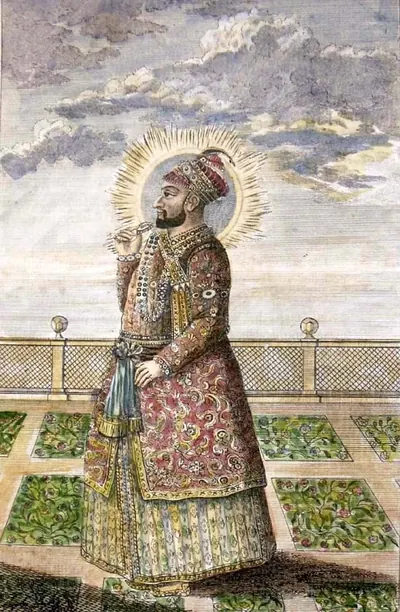 "Hyder Ali": engraving of the 1790s, with later hand colouringOther · 1790s
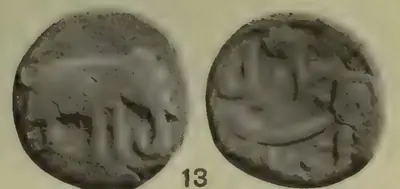 Copper paisa of the Bellary mint, listed among the doubtful coins of Haidar Ali (Henderson 1921, pl. I, No. 13)Coin · 1921
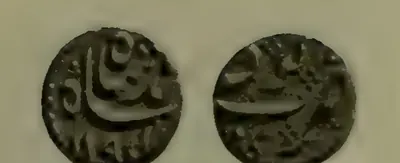 Gold "new Muhammad Shahi" pagoda of Haidar Ali struck at Gooty, dated 1194 (Henderson 1921, pl. I, No. 3)Coin · 1921
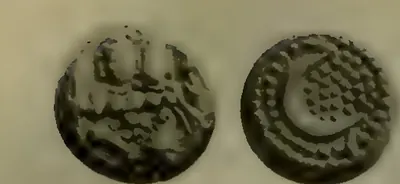 Gold pagoda of Haidar Ali, the "Bahaduri" pagoda: Siva and Parvati, and Haidar's initial (Henderson 1921, pl. I, No. 1)Coin · 1921
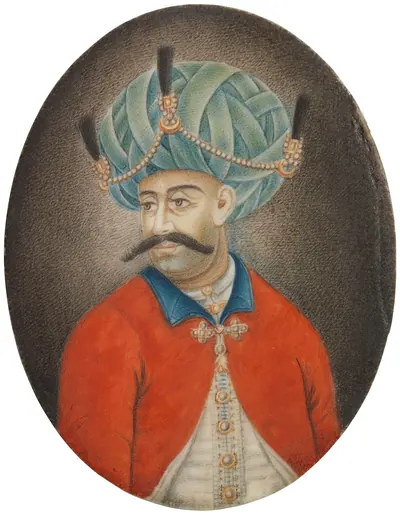 Haidar Ali: Indian portrait in an oval, mid-nineteenth centuryOther · mid-19th century
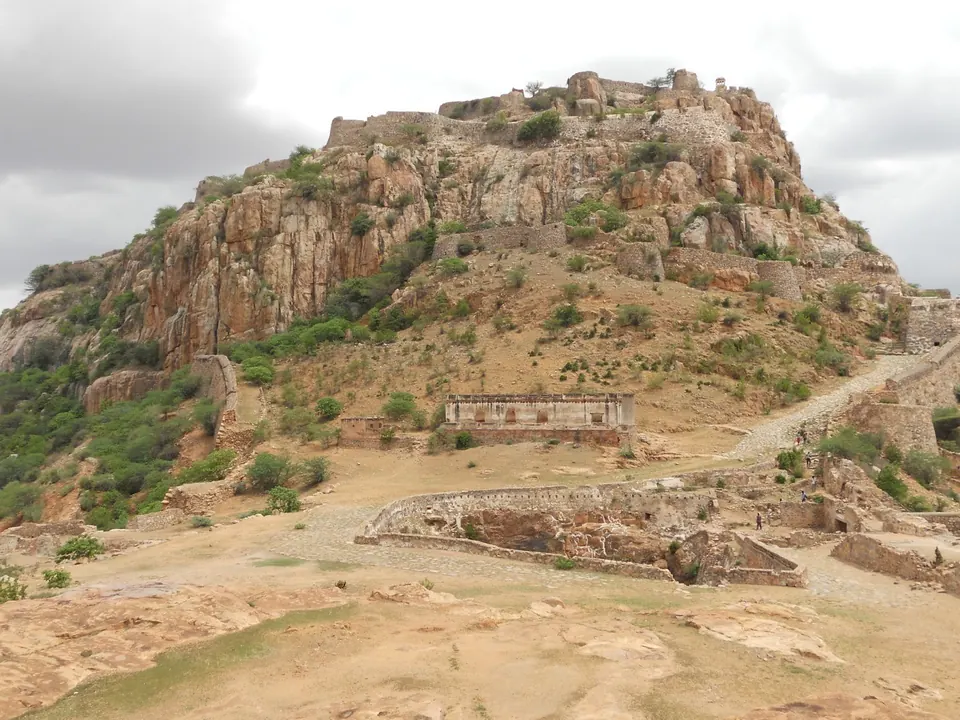
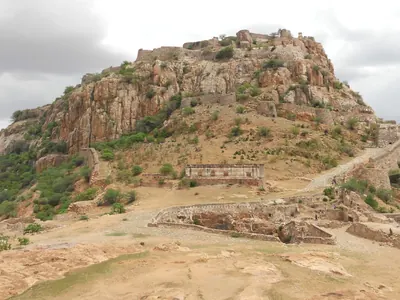 The Gooty fort on its rock (2013)Photograph · 2013
Related
Dynasties
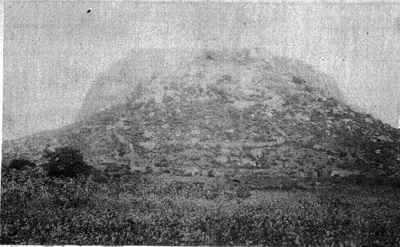
Nawabs of Cuddapah
c. 1714–1779 CE
Pathan (Miana) chiefs who governed the Cuddapah country, first for the Mughals and then for the Nizams, from Cuddapah and the fort of Sidhout. The Cuddapah gazetteer dates the rule of Abdul Nabi Khan from 1714. He held Sidhout, Gandikota, Cumbum and Gurramkonda, made the poligar of Punganur pay him tribute and raided the Baramahal. A Nawab of Cuddapah took part in the killing of Nasir Jang in 1750 and in the attack on Muzaffar Jang in 1751. In 1757 the Maratha general Balwant Rao defeated and killed the Nawab Abdul Majid Khan and took Gurramkonda. After a disputed succession, Abdul Halim Khan ruled from 1761 until Haidar Ali conquered him in 1779 and gave the country to Mir Sahib. It passed to the Nizam in 1792 and to the East India Company in 1800.
Mysore under Haidar Ali and Tipu Sultan
1761–1799 CE
Haidar Ali, who made himself master of Mysore in 1761, and his son Tipu Sultan, who ruled until 1799, carried Mysore's frontier north and east into the Telugu country. Haidar took Penukonda and Madakasira from the Maratha Morari Rao in 1762, and recovered Gurramkonda through his brother-in-law Mir Sahib in 1768. He took Bellary in 1775 and Gooty in 1776, and conquered the Nawab of Cuddapah in 1779. The Nawab of Kurnool and the poligars of the Bellary and Anantapur country became his tributaries. Their wars with the Marathas, the Nizam and the East India Company were fought partly over these districts. By the treaty of 1792 Tipu ceded Cuddapah, Gurramkonda, Bellary and the Tadpatri country to the Nizam. After Tipu's death at Seringapatam in 1799 the Nizam took Gooty, Penukonda and the rest. In 1800 he ceded both gains to the Company as the Ceded Districts.
References
Notes (0)
Sources (12)
Spotted an error on this page? Tell us
Last updated: