Nawabs of Cuddapah
Pathan (Miana) chiefs who governed the Cuddapah country, first for the Mughals and then for the Nizams, from Cuddapah and the fort of Sidhout. The Cuddapah gazetteer dates the rule of Abdul Nabi Khan from 1714. He held Sidhout, Gandikota, Cumbum and Gurramkonda, made the poligar of Punganur pay him tribute and raided the Baramahal. A Nawab of Cuddapah took part in the killing of Nasir Jang in 1750 and in the attack on Muzaffar Jang in 1751. In 1757 the Maratha general Balwant Rao defeated and killed the Nawab Abdul Majid Khan and took Gurramkonda. After a disputed succession, Abdul Halim Khan ruled from 1761 until Haidar Ali conquered him in 1779 and gave the country to Mir Sahib. It passed to the Nizam in 1792 and to the East India Company in 1800.
Swipe sideways to see the whole chart; tap a bar for details.
Each bar is a ruling power in its region; time runs left to right. Dashed = approximate dates. Select a bar for details.
Show as a list
Vijayanagara & the Qutb Shahis 1336–1687 CE
- Telangana
- Adil Shahis of Bijapur (c. 1489–1686 CE) · Qutb Shahis of Golconda (c. 1518–1687 CE)
- Coastal Andhra
- Qutb Shahis of Golconda (c. 1524–1687 CE)
- Rayalaseema
- Vijayanagara Empire (c. 1336–1646 CE) · Marathas (c. 1677–1687 CE) · Adil Shahis of Bijapur (c. 1568–1686 CE) · Qutb Shahis of Golconda (c. 1579–1687 CE) · Mughal Empire (c. 1686–1724 CE)
Mughals, Asaf Jahis & the British 1687–1948 CE
- Telangana
- Mughal Empire (1687–1724 CE) · Asaf Jahi Nizams of Hyderabad (1724–1948 CE)
- Coastal Andhra
- Nawabs of the Carnatic (Arcot) (c. 1710–1801 CE) · French East India Company (1817–1954 CE) · Mughal Empire (1687–1724 CE) · Asaf Jahi Nizams of Hyderabad (1724–1753 CE) · East India Company (1759–1858 CE)
- Rayalaseema
- Nawabs of Kurnool (c. 1690–1839 CE) · Nawabs of the Carnatic (Arcot) (c. 1710–1801 CE) · Nawabs of Cuddapah (c. 1714–1779 CE) · East India Company (1792–1858 CE) · Mughal Empire (c. 1686–1724 CE) · Morari Rao Ghorpade of Gooty (c. 1741–1776 CE) · Banganapalle State (c. 1724–1948 CE) · Asaf Jahi Nizams of Hyderabad (c. 1724–1800 CE) · Marathas (c. 1743–1774 CE) · Mysore under Haidar Ali and Tipu Sultan (c. 1762–1799 CE)
Reform, freedom & people's movements 1850–1956 CE
- Telangana
- Asaf Jahi Nizams of Hyderabad (1724–1948 CE)
- Coastal Andhra
- French East India Company (1817–1954 CE) · East India Company (1759–1858 CE)
- Rayalaseema
- East India Company (1792–1858 CE) · Banganapalle State (c. 1724–1948 CE)
Sultanates
Adil Shahis of Bijapur
Open page- Telangana: c. 1489–1686 CE (c. 197 years)
After the Bahmani break-up part of Mahbubnagar district went to Bijapur (the rest to Golconda) and stayed with it until Aurangzeb annexed Bijapur in 1686; the Raichur district article likewise passes Raichur (which then included the Alampur taluk and Gadwal) from the Bahmanis to the Adil Shahis.
- Rayalaseema: c. 1568–1686 CE (c. 118 years)
Partial, the western uplands only. Adoni taken by Ali Adil Shah's general Ankus Khan in 1568 after a failed siege in 1535-37; Penukonda besieged in the 1570s (dates disputed) and taken in 1652 (Mackenzie MS); Kurnool taken from Gopala Raja early in the 17th century and governed by Abdul Wahab (d. 1618) and later deputies, Siddi Jauhar holding it as his jagir about 1660; the Bellary and Anantapur uplands held through governors and tributary poligars; Bijapur's rights there passed to Shivaji in 1677-80 (Francis); Bijapur fell to Aurangzeb on 12 September 1686, but Siddi Masud held Adoni until 1688 (Sarkar) or 1687 (Bellary gazetteer)
Rulers (9)
Capitals
Monuments
Sources (11)
Kingdoms and empires
Mughal Empire
Open page- Rayalaseema: c. 1686–1724 CE (c. 38 years)
Kurnool passed to the emperor with the Bijapur provinces in 1686 and was later the jagir of Daud Khan Panni and his brother; Adoni (renamed Imtiyazgarh, a Mughal mint) surrendered by Masaud Khan; the uplands of the Haidarabadi Karnatak (Cuddapah, Gandikota, Gooty, Sidhout) came with Golconda in 1687; Anantapur added to the subah of Bijapur; poligars largely independent (Cuddapah gazetteer); Francis dates the Nizam's independence to 1723
- Telangana: 1687–1724 CE (37 years)
Golconda taken on 21 September 1687 and the kingdom annexed as the subah of Haidarabad, governed from Hyderabad by subahdars (Mahabat Khan, Ruhullah Khan, Jan Sipar Khan, Rustam Dil Khan, Yusuf Khan, Mubariz Khan); Kam Bakhsh held Hyderabad as a rival emperor in 1708 until his defeat on 13 January 1709; Mubariz Khan was killed by Nizam-ul-Mulk at Shakar Kheda in October 1724
- Coastal Andhra: 1687–1724 CE (37 years)
Kondapalli gained by bribery in July 1687; Guntur (Murtazanagar), Kondapalli (Mustafanagar), Ellore, Rajahmundry and Chicacole formed the Northern Circars, with Masulipatam as their chief town and a Mughal mint; the Qutb Shahi assessment of 1635 was kept on Aurangzeb's records (Grant)
Rulers
- Shah Jahan (1628–1658 CE)
- Aurangzeb (Alamgir) (1658–1707 CE)
- Bahadur Shah (Shah Alam I) (1707–1712 CE)
- Jahandar Shah (1712–1713 CE)
- Farrukhsiyar (1713–1719 CE)
- Muhammad Shah (1719–1748 CE)
Inscriptions
Sources (14)
Sultanates
Qutb Shahis of Golconda
Open page- Telangana: c. 1518–1687 CE (c. 169 years)
Sultan Quli governed Telingana for the Bahmanis from 1493-95 and declared independence in 1512 (Ferishta, Haig, IG Hyderabad) or 1518 (Bilgrami, from the Golconda mosque inscription of AH 924); he took the forts of the Telugu chiefs, among them Rachakonda, Devarakonda and, from Shitab Khan, Warangal and Khammam (1519-1525 per Bilgrami). Tributary to the Mughals from 1635-36 (khutba and coins in Shah Jahan's name; two lakhs of huns a year). Hyderabad taken by the Mughals in 1656 and 1685; Golconda surrendered on 21 September 1687 (Old Style) and was annexed
- Coastal Andhra: c. 1524–1687 CE (c. 163 years)
Sultan Quli took Kondapalli and fixed the Godavari as his frontier with Orissa (Ellore ceded) some time before his 1530 campaign, and a 1524 record shows him granting villages near Kondapalli and Bezwada; the Godavari gazetteer and IG Madras date the Krishna-Godavari doab to c. 1540 or 'before 1543', and the IG Madras Kistna article to after 1565.
- Rayalaseema: c. 1579–1687 CE (c. 108 years)
Partial; the sources disagree on when Golconda's hold began. IG Madras says Kurnool and Cuddapah were overrun soon after 1565. The Kurnool Manual dates the campaigns that took Gurramkonda (1579) and Gandikota, Nandyal and Musalimadugu (c. 1590). The Cuddapah gazetteer says Golconda only turned to Cuddapah in the early 17th century and never really conquered it. Chandragiri fell to Golconda in 1646.
Rulers (8)
Capitals
Monuments (13)
Inscriptions (7)
- Epitaph of Sultan Quli, Golconda (1543)
- Makka Darwaza inscription, Golconda (1559)
- Jami Masjid inscription, Hyderabad
- Epitaph of Muhammad Quli Qutb Shah, Golconda (1612)
- Ma Saheba tank inscriptions (1625)
- Musa Burj inscription, Golconda fort (1666–67)
… and 1 more
Sources (23)
Kingdoms and empires
Asaf Jahi Nizams of Hyderabad
Open page- Telangana: 1724–1948 CE (224 years)
Asaf Jah, viceroy of the Deccan from 1713, independent after defeating Mubariz Khan at Shakar Kheda (11 October 1724 in Irvine; 1723 in Gribble); Telangana remained the Telugu heart of the Nizam's Dominions, with the samasthans of Gadwal, Wanaparthy, Jatprole, Amarchinta and Palvancha as tributary estates. Regular districts were formed in 1865-66 and the Telugu divisions surveyed and settled by 1905; the districts were redrawn in 1905 and an Executive Council governed from November 1919. The Standstill Agreement with India was signed on 29 November 1947. Indian troops entered the state on 13 September 1948 (the Police Action); the Nizam ordered a ceasefire on 17 September, and a military governor took charge on 18 September
- Coastal Andhra: 1724–1753 CE (29 years)
The Nizam's governor at Rajahmundry collected the tribute of the coastal zamindars; Masulipatam granted to the French by Muzaffar Jang in 1750 and the lands of Nizampatnam and Kondavid by Salabat Jang in 1751; the four Circars of Mustafanagar, Ellore, Rajahmundry and Chicacole assigned to the French on 4 December 1753 to pay Bussy's army
- Rayalaseema: c. 1724–1800 CE (c. 76 years)
Nominal over much of the region (Kurnool and Cuddapah Nawabs, Maratha tribute, Morari Rao at Gooty, Haidar Ali from 1761); the Nizam gained Tipu Sultan's districts by the treaties of 1792 and 1799 and ceded them to the Company by the treaty of 12 October 1800 to pay the subsidiary force (the Ceded Districts)
- Coastal Andhra: 1759–1788 CE (29 years)
Guntur (Murtazanagar) stayed with the Nizam's brother Basalat Jang after the French were driven out; it was excluded from the cessions of 1766 and 1768, rented by the Company in 1779 and restored, and handed over to the Company only in 1788; the Nizam's claims to the Circars' payments were bought out in 1823
Rulers (10)
Capitals
Monuments (11)
Inscriptions
Sources (16)
Kingdoms and empires
Nawabs of the Carnatic (Arcot)
Open page- Coastal Andhra: c. 1710–1801 CE (c. 91 years)
Partial (Nellore and Ongole, the Palnad, the jagir of Udayagiri and the tributary zamindaris of Venkatagiri and Kalahasti). Saadatullah Khan became Nawab of the Carnatic, the coast from Guntur to the Coleroon, in 1710 (Orme) or 1713 (Wilks), and his fauzdar governed Nellore; he granted the Udayagiri jagir in 1720. Under Muhammad Ali Walajah (1749-95) his brother Najib-ullah held Nellore, rebelled in 1757 and was dislodged by an English force in 1762. The revenues were assigned to the Company in 1781-85 and managed by it in 1790-92; by the treaty of 31 July 1801 Azim-ud-daula handed over the government of the Carnatic, and Nellore, Ongole and the Palnad became British
- Rayalaseema: c. 1710–1801 CE (c. 91 years)
Partial (Chittoor taluks). The Nawabs at Arcot, first as deputies under the Nizam, took tribute from the Chittoor and Chendragiri poligars and the Kalahasti and Karvetnagar zamindars; Muhammad Ali gave Chittoor and Chendragiri to his brother Abdul Wahab as a jagir, and the Carnatic was handed to the Company on 31 July 1801.
Rulers
- Saadatullah Khan (c. 1710–1732 CE)
- Dost Ali Khan (1732–1740 CE)
- Safdar Ali Khan (c. 1740–1742 CE)
- Anwar-ud-din Khan (1744–1749 CE)
- Muhammad Ali Khan Walajah (1749–1795 CE)
- Umdat-ul-Umara (1795–1801 CE)
Capitals
Sources (11)
Colonial powers
French East India Company
Open page- Coastal Andhra: 1750–1759 CE (9 years)
Partial at first (Masulipatam and the island of Divi, seized in July 1750 under Muzaffar Jang's grant; Nizampatnam, Narsapur and Kondavid added by Salabat Jang in 1751-52); from December 1753 the four Northern Circars of Mustafanagar (Kondapalli), Ellore, Rajahmundry and Chicacole, granted for the pay of Bussy's army and settled by Bussy in person from July 1754. Forde routed the French at Condore (Chandurti) on 9 December 1758 and stormed Masulipatam on 7-8 April 1759; by the treaty of May 1759 Salabat Jang ceded the Masulipatam country to the English and excluded the French from the Deccan
- Coastal Andhra: c. 1765–1793 CE (c. 28 years)
Partial (Yanam only): the French factory town on the Godavari, ceded to them in 1752, reoccupied after the peace of 1763 (the restored possessions 'were not occupied before 1765'); the French possessions were also in English hands in 1778-83
- Coastal Andhra: 1817–1954 CE (137 years)
Partial (Yanam only): occupied by the English from 1793 (except 1802-03) and handed back in 1817 under the treaties of 1814-15; about 2,258 acres. The Government of India took over the French Establishments, Yanam among them, from 1 November 1954 after the agreement with France of 21 October 1954
Rulers
- Joseph François Dupleix (1750–1754 CE)
- Charles de Bussy (1754–1758 CE)
- Marquis de Conflans (1758–1759 CE)
Capitals
Sources (10)
Colonial powers
East India Company
Open page- Coastal Andhra: 1759–1858 CE (99 years)
Partial at first: the Masulipatam and Nizampatam Circars ceded by Salabat Jang on 14 May 1759 after Forde's defeat of the French. The emperor Shah Alam granted the five Northern Circars on 12 August 1765; by the treaties of 12 November 1766 and 23 February 1768 the Nizam ceded Kondapalli, Ellore, Rajahmundry and Chicacole for a yearly payment (capitalised in 1823), Guntur following in September 1788. Governed through renters until 1769, Chiefs and Councils at Masulipatam and Vizagapatam until 1794, then Collectors; the zamindaris were permanently settled in 1802-03. Nellore, Ongole and the Palnad came with the Carnatic from the Nawab of Arcot on 31 July 1801. Transferred to the Crown in 1858
- Rayalaseema: 1792–1858 CE (66 years)
Partial at first: Kangundi came to the Company with the Baramahal in 1792, when it also began collecting the Kalahasti and Karvetnagar tribute for the Nawab; Punganur and Venkatagirikota (Palmaner) followed from Tipu's lands in 1799. On 12 October 1800 the Nizam ceded the territories he had gained from Mysore in 1792 and 1799, the Ceded Districts of Bellary (with Anantapur) and Cuddapah, with the tribute of the Nawab of Kurnool; Thomas Munro, Principal Collector 1800-1807, reduced the poligars and made the ryotwari settlement. The Nawab of Arcot's Chittoor and Chendragiri country came with the Carnatic in 1801, and the Kurnool Nawab's jagir was annexed in 1839. Transferred to the Crown in 1858
Rulers (23)
- George Pigot (1755–1763 CE)
- Robert Palk (1763–1767 CE)
- Charles Bourchier (1767–1770 CE)
- Josias Du Pré (1770–1773 CE)
- Alexander Wynch (1773–1775 CE)
- Lord Pigot (1775–1776 CE)
… and 17 more
- Sir Thomas Rumbold (1778–1780 CE)
- Lord Macartney (1781–1785 CE)
- Sir Archibald Campbell (1786–1789 CE)
- William Medows (1790–1792 CE)
- Sir Charles Oakeley (1792–1794 CE)
- Lord Hobart (1794–1798 CE)
- Lord Clive (Edward Clive) (1798–1803 CE)
- Lord William Bentinck (1803–1807 CE)
- Sir George Barlow (1807–1813 CE)
- Hugh Elliot (1814–1820 CE)
- Sir Thomas Munro (1820–1827 CE)
- Stephen Rumbold Lushington (1827–1832 CE)
- Sir Frederick Adam (1832–1837 CE)
- Lord Elphinstone (1837–1842 CE)
- Marquis of Tweeddale (1842–1848 CE)
- Sir Henry Pottinger (1848–1854 CE)
- Lord Harris (1854–1859 CE)
Capitals
Monuments
Sources (10)
Kingdoms and empires
Vijayanagara Empire
Open page- Rayalaseema: c. 1336–1646 CE (c. 310 years)
Founded c. 1335-36; Bukka I held Penukonda and Gooty (records of 1352 and a Gooty rock inscription) and his minister built the Bukkarayasamudram tank near Anantapur in 1364; Cuddapah in the 14th century; Kurnool wholly annexed under Krishnadeva Raya. After Talikota (1565) the kings ruled from Penukonda, which held out against Bijapur in 1577 and Golconda in 1589; the country north of Penukonda was lost after Sriranga I's capture (c. 1579-80); Venkatapati II moved to Chandragiri c. 1592; Golconda held the Cuddapah district and took Chandragiri (Chittoor) in 1646. Bijapur and Golconda took most of the region piecemeal after 1565
- Coastal Andhra: c. 1350–1579 CE (c. 229 years)
Vijayanagara officers kept Guntur (Kondavidu, Vinukonda, Bellamkonda) and the governor of Udayagiri kept Nellore after Talikota; Golconda took Kondavidu in April 1579 (Kistna Manual) or 1580 (a Guntur record of 1592 cited by Sewell), though Sewell thinks Guntur was already under Muslim rule by 1576 and the Nellore Manual says the Muslims held Nellore from 1565.
- Telangana: c. 1563–1565 CE (c. 2 years)
To end the confederate invasion of Golconda, Ibrahim Qutb Shah let Rama Raja keep the forts of Ghanpur and Panagal (Mahbubnagar) until Talikota; Ferishta places this after the Kalyani campaign of the early 1560s, the Kistna Manual dates it to 1557.
Rulers (24)
- Harihara I (Vijayanagara) (c. 1336–1355 CE)
- Bukka I (Vijayanagara) (1355–1377 CE)
- Harihara II (1377–1404 CE)
- Bukka II (1404–1406 CE)
- Deva Raya I (1406–1422 CE)
- Vijaya (Bukka III) (1422 CE)
… and 18 more
- Deva Raya II (Vijayanagara) (1422–1446 CE)
- Mallikarjuna (1446–1465 CE)
- Virupaksha (1465–1485 CE)
- Saluva Narasimha (1485–1492 CE)
- Immadi Narasimha (1492–1505 CE)
- Narasa Nayaka (c. 1505 CE)
- Vira Narasimha (1505–1509 CE)
- Krishnadeva Raya (1509–1529 CE)
- Achyuta Raya (1529–1542 CE)
- Venkata I (1542 CE)
- Sadasiva (c. 1542–1569 CE)
- Tirumala (Aravidu) (c. 1569–1572 CE)
- Sriranga I (1572–1586 CE)
- Venkatapati II (Vijayanagara) (1586–1614 CE)
- Sriranga II (1614 CE)
- Rama Deva (1614–1630 CE)
- Pedda Venkata (1630–1642 CE)
- Sriranga III (c. 1642–1670 CE)
Monuments (7)
- Penukonda fort and Gagan Mahal
- Kalahastisvara temple, Srikalahasti
- Virabhadra temple, Lepakshi
- Chandragiri fort and Raja Mahal
- Gooty fort
- Narasimha temples, Ahobilam
… and 1 more
Inscriptions (14)
- Penukonda fort inscription (1354)
- Gooty rock inscription of Bukka I
- Bitragunta grant of Sangama II (1356)
- Bukkarayasamudram tank inscription (1364)
- Tirumala inscriptions of Krishnadeva Raya and his queens (1513–1514)
- Amaravati inscription of Krishnadeva Raya (1515)
… and 8 more
- Mangalagiri and Kaza pillar inscriptions (1515–1518)
- Simhachalam inscriptions of Krishnadeva Raya (1516–1519)
- Srikalahasti inscription of Krishnadeva Raya (1516)
- Kondavidu pillar inscription of Nadindla Gopa (1520)
- Lepakshi temple inscriptions of Achyuta Raya's reign (1533–1538)
- Kanuma grant of Sadasiva (1548)
- Penukonda inscription of Channappa Nayudu (1577)
- Ahobilam inscription of Sriranga I (1584)
Sources (20)
Kingdoms and empires
Marathas
Open page- Rayalaseema: c. 1677–1687 CE (c. 10 years)
Partial (the Bellary and Anantapur uplands). Shivaji crossed the Krishna near Kurnool in March 1677, went to Srisailam and sent his army south through the Cuddapah country; Gribble says he took and garrisoned poligars' forts in the Cuddapah and Bellary districts. On his return he took Bellary fort after a 27-day siege (1677-78). In 1680 Bijapur formally ceded its rights over the country round Kopal and Bellary and the poligars paid him tribute (chauth), until Aurangzeb overthrew Maratha power in the district in 1687
- Rayalaseema: c. 1743–1774 CE (c. 31 years)
Partial. The Cuddapah gazetteer says the Nizam ceded Penukonda to the Marathas in 1743 (Grant Duff and the Anantapur gazetteer give Gooty and Penukonda to Morari Rao instead). After Balwant Rao killed the Nawab of Cuddapah near Cuddapah on 24 September 1757 the Marathas held Gurramkonda and Punganur (1755 in Gribble). Gurramkonda went to Haidar Ali through Mir Sahib in 1766-67, was retaken by Trimbak Rao after a two-month siege in 1771 and confirmed to the Marathas by the treaty of 1772, and was lost with Punganur, Sira and Madhugiri to Tipu and Haidar in 1773-74
Rulers
- Shivaji (1674–1680 CE)
- Sambhaji (1680–1689 CE)
- Rajaram (1689–1700 CE)
- Shahu (1708–1749 CE)
Sources (11)
Kingdoms and empires
Nawabs of Kurnool
Open page- Rayalaseema: c. 1690–1839 CE (c. 149 years)
Partial (Kurnool proper, the taluks of Ramallakota, Nandikotkur, Nandyal and Sirvel). The Mughals took Kurnool in 1686-88 and gave it as a jagir to the Pathan general Daud Khan Panni in the latter part of the seventeenth century (about 1698 in Burhanuddin); his kinsman Ibrahim Khan seized the fort in 1715, and his son Alif Khan acknowledged Asaf Jah in 1724. The French and Salabat Jang stormed Kurnool in March 1751 and held it for the Nizam until Ranmast (Munawwar) Khan recovered it in 1752. The Nawabs paid tribute to the Nizam and, from 1769, to Haidar Ali and Tipu Sultan; in 1800 the Nizam ceded the tribute to the Company, which fixed it in 1804 at a lakh and a quarter of Gadwal rupees, then a lakh. The last Nawab, Ghulam Rasul Khan, was deposed in 1839 and the jagir annexed
Rulers (8)
- Daud Khan Panni (c. 1690–1715 CE)
- Ibrahim Khan (1715–1724 CE)
- Alif Khan (1724–1733 CE)
- Himmat Bahadur Khan (Nawab of Kurnool) (1733–1751 CE)
- Ranmast Khan (Munawwar Khan, Nawab of Kurnool) (1752–1792 CE)
- Alif Khan II (Nawab of Kurnool) (1792–1815 CE)
… and 2 more
- Munawwar Khan II (1815–1823 CE)
- Ghulam Rasul Khan (Nawab of Kurnool) (1823–1839 CE)
Capitals
Sources (6)
Kingdoms and empires
Nawabs of Cuddapah
Open page- Rayalaseema: c. 1714–1779 CE (c. 65 years)
Partial (the Cuddapah uplands, the circars of Sidhout, Gandikota, Gurramkonda and Cumbum, with the poligar of Punganur as tributary). Pathan (Miana) Nawabs under the Mughals and the Nizams; Abdul Nabi Khan, governor from 1714, was the first to assert real control and raided the Baramahal. After the Maratha general Balwant Rao killed the Nawab Abdul Majid Khan in 1757, Gurramkonda went to the Marathas. The last Nawab, Abdul Halim Khan (from 1761), surrendered to Haidar Ali at Sidhout on 27 May 1779 (Wilks; 1778 in Gribble's local chronology and Brown, 1780 in the Cuddapah gazetteer, 1777 in Kirmani)
Rulers
- Abdul Nabi Khan (Nawab of Cuddapah) (c. 1714–1732 CE)
- Abdul Majid Khan (c. 1732–1757 CE)
- Mohsin Khan (c. 1757–1761 CE)
- Abdul Halim Khan (Nawab of Cuddapah) (1761–1779 CE)
Capitals
Sources (7)
Kingdoms and empires
Morari Rao Ghorpade of Gooty
Open page- Rayalaseema: c. 1741–1776 CE (c. 35 years)
Partial (Gooty, Penukonda, Madakasira, Kodikonda and Tadpatri, with tribute from the Anantapur poligars). The Maratha Morari Rao Ghorpade made the Madakasira poligar pay tribute in 1741, was recognised as chief of Gooty by the first Nizam in 1743-44 and settled there about 1746 (permanent seat 1754). Haidar Ali took Penukonda, Madakasira and Kodikonda in 1762; Morari Rao recovered some forts after the Maratha peace of 1765. Gooty fell to Haidar early in April 1776 (Wilks; 1775 in the Anantapur gazetteer), and Morari Rao died a prisoner at Kabbaldurga
Rulers
Capitals
Sources (5)
Kingdoms and empires
Banganapalle State
Open page- Rayalaseema: c. 1724–1948 CE (c. 224 years)
Partial (a nawabi enclave of about 255 square miles round Banganapalle in the Kurnool district). Muhammad Beg Khan, Mughal killedar of Banganapalle from the late seventeenth century, became a petty Nawab when Asaf Jah made himself independent, and Asaf Jah confirmed the jagir. Tipu Sultan occupied it from 1783 until the family, with the Nizam's troops, won it back at Tammadapalle in 1790. In 1800 the Nizam transferred his control to the East India Company, which took no tribute; the Madras government managed the indebted jagir from 1825 (1832 in the Imperial Gazetteer) to 1848 and restored it by the sanad of 1849. The ruler became a hereditary Nawab in 1876; the Madras government took over the administration on 23 February 1948
Rulers (10)
- Muhammad Beg Khan (c. 1724–1758 CE)
- Muhammad Beg Khan Laug (regent) (c. 1758–1766 CE)
- Fazl Ali Khan (Gulli Nawab) (c. 1766–1782 CE)
- Husain Ali Khan (c. 1782–1783 CE)
- Ghulam Ali Khan (Mansur-ud-daula) of Banganapalle (c. 1790–1821 CE)
- Husain Ali Khan II (c. 1821–1848 CE)
… and 4 more
- Ghulam Muhammad Ali Khan of Banganapalle (1848–1868 CE)
- Fateh Ali Khan, Nawab of Banganapalle (1868–1905 CE)
- Ghulam Ali Khan III (1905–1922 CE)
- Fazl-i-Ali Khan (1922–1948 CE)
Capitals
Sources (5)
Kingdoms and empires
Mysore under Haidar Ali and Tipu Sultan
Open page- Rayalaseema: c. 1762–1799 CE (c. 37 years)
Partial (the Anantapur, Bellary and Cuddapah uplands). Haidar Ali, master of Mysore from 1761, took Penukonda, Madakasira and Kodikonda from Morari Rao of Gooty in 1762 (some went back to Morari Rao in 1764-66). Gurramkonda came to him through Mir Sahib in 1768, was lost to the Marathas in 1771 and recovered by Tipu in 1773-74. He took Bellary in 1775 and Gooty in April 1776 (1775 in the Anantapur gazetteer), and the Nawab of Cuddapah surrendered at Sidhout on 27 May 1779 (1780 in the Cuddapah gazetteer); the Nawab of Kurnool and the poligars of the Bellary and Anantapur country paid him tribute. By the treaty of 18 March 1792 Tipu ceded the Cuddapah taluks, Gurramkonda, Bellary and the Gooty taluks of Tadpatri and Tadimarri to the Nizam; Gooty, Penukonda, Madakasira, Anantapur and the rest of Gurramkonda went to the Nizam after Tipu's death in May 1799, and the Nizam ceded both gains to the Company in 1800
Rulers
Sources (7)
Reigns
Each bar is one ruler’s reign; time runs left to right. c. = approximate date.
- Abdul Nabi Khan (Nawab of Cuddapah)c. 1714–1732 CE · c. 18 yrs
- Abdul Majid Khanc. 1732–1757 CE · c. 25 yrs
- Mohsin Khanc. 1757–1761 CE · c. 4 yrs
- Abdul Halim Khan (Nawab of Cuddapah)1761–1779 CE · 18 yrs
No source gives a full list, and Gribble (1875) found the absence of trustworthy data made one very difficult. The chart follows the Cuddapah gazetteer (1915) for Abdul Nabi Khan's start in 1714 and for his son Mahazid (Abdul Majid) Khan as Nawab in 1732, Kirmani for Abdul Majid Khan's death at the hands of Balwant Rao (1757) and for his successor Mohsin Khan, and the Telugu account translated by C. P. Brown for Abdul Halim Khan's release from prison in 1761 and his eighteen years' rule; Wilks dates Halim Khan's surrender to 27 May 1779. The gazetteer also mentions a Nawab Abdul Nabi Khan in 1740, and Gribble and the gazetteer think the Nawab of 1750–51 was killed in 1751; see 'Where the sources disagree'.
Family tree
The rulers and the relatives who explain the succession. Every line rests on a cited statement on a person page; the sources are listed below the tree. Select a card to open that page.
- parent and child
- marriage
- adoption
- the sources disagree (see below)
- brother or sister
- order of succession
Generation 1
- 1Abdul Nabi Khanc. 1714–1732 CE
Generation 2
- 3Mohsin Khanc. 1757–1761 CEBrother of Abdul Majid; took the Nawabship and imprisoned his nephews at Sidhout; died at KurnoolBrother of Abdul Majid Khan
- 2Abdul Majid Khanc. 1732–1757 CENawab of Cuddapah, named in an inscription of 1732; Kirmani says Balwant Rao killed him (1757)Brother of Mohsin Khan
Generation 3
- 4Abdul Halim Khan1761–1779 CESon of Abdul Majid KhanBrother of Bakhshi Begum
- Haidar AliHusband of Bakhshi Begum
- Bakhshi BegumSister of Abdul Halim Khan; married to Haidar Ali by nikah after the fall of Sidhout (1779)Sister of Abdul Halim KhanWife of Haidar Ali
Where the sources disagree
Abdul Majid Khan's father
Son of Abdul Nabi Khan, named as Nawab in an inscription of 1732 (Gribble, 1875; Cuddapah gazetteer, 1915)
- In that year an inscription names his son Mahazid Khan as the Nawab, and the Cuddapah gazetteer of 1915 says the same. →
- Gribble, Cuddapah (1875), p. 91 (archive.org (opens in a new tab)).
- C. F. Brackenbury, Madras District Gazetteers: Cuddapah, Vol. I (1915), p. 41 (archive.org (opens in a new tab)).
Son of Abdul Hamid Khan (the Telugu account translated by C. P. Brown, 1849)
- In it, Abdul Halim Khan is the son of Abdul Masid Khan, "who was son of Abdul Hamid Khan". →
- Ram Chandra Rao Punganuri, Memoirs of Hyder and Tippoo, tr. C. P. Brown (1849), p. 26 (archive.org (opens in a new tab)).
Sources for every line of the tree
- Abdul Nabi Khan → Abdul Majid Khan (parent and child) · sources disagree
- In that year an inscription names his son Mahazid Khan as the Nawab, and the Cuddapah gazetteer of 1915 says the same. →
- Gribble, Cuddapah (1875), p. 91 (archive.org (opens in a new tab)).
- C. F. Brackenbury, Madras District Gazetteers: Cuddapah, Vol. I (1915), p. 41 (archive.org (opens in a new tab)).
- In that year an inscription names his son Mahazid Khan as the Nawab, and the Cuddapah gazetteer of 1915 says the same. →
- Abdul Majid Khan · Mohsin Khan (brother or sister)
- He says that Mahazid Khan died leaving a baby son, and his brother Mahasim Khan took the Nawabship. →
- J. D. B. Gribble, A Manual of the District of Cuddapah (1875), p. 91 (archive.org (opens in a new tab)).
- He says that Mahazid Khan died leaving a baby son, and his brother Mahasim Khan took the Nawabship. →
- Abdul Majid Khan → Abdul Halim Khan (parent and child)
- In it, Abdul Halim Khan is the son of Abdul Masid Khan, "who was son of Abdul Hamid Khan". →
- Ram Chandra Rao Punganuri, Memoirs of Hyder and Tippoo, tr. C. P. Brown (1849), p. 26 (archive.org (opens in a new tab)).
- He says that Mahazid Khan died leaving a baby son, and his brother Mahasim Khan took the Nawabship. →
- J. D. B. Gribble, A Manual of the District of Cuddapah (1875), p. 91 (archive.org (opens in a new tab)).
- In it, Abdul Halim Khan is the son of Abdul Masid Khan, "who was son of Abdul Hamid Khan". →
- Abdul Halim Khan · Bakhshi Begum (brother or sister)
- Wilks says that a sister of Abd-ul-Halim Khan, eighteen years old and unmarried, refused Haidar's call. →
- Wilks, Historical Sketches, Vol. II (1817), p. 197 (archive.org (opens in a new tab)).
- Wilks, Historical Sketches, Vol. II (1817), p. 198 (archive.org (opens in a new tab)).
- Wilks says that a sister of Abd-ul-Halim Khan, eighteen years old and unmarried, refused Haidar's call. →
- Haidar Ali · Bakhshi Begum (marriage)
- Wilks says that a sister of Abd-ul-Halim Khan, eighteen years old and unmarried, refused Haidar's call. →
- Wilks, Historical Sketches, Vol. II (1817), p. 197 (archive.org (opens in a new tab)).
- Wilks, Historical Sketches, Vol. II (1817), p. 198 (archive.org (opens in a new tab)).
- Wilks says that a sister of Abd-ul-Halim Khan, eighteen years old and unmarried, refused Haidar's call. →
A line from one parent only means that the cited sources name no other parent.
The Nawabs of Cuddapah were Pathan soldiers. They held the uplands west of the Eastern Ghats, the later Kadapa (then Cuddapah) district, for most of the eighteenth century. Their most powerful chief, Abdul Nabi Khan, ruled from about 1714.1 The last, Abdul Halim Khan, was conquered by Haidar Ali in 1779.2
The Imperial Gazetteer of Madras describes their beginning.3 After the Golconda conquest, it says, “Cuddapah town similarly continued in the hands of the successors of a Pathan Nawab to whom it was granted about this time”.3 This Nawab “played an important part in the various stormy episodes that occurred within the District”.3 Wilks describes the “two Patan families of Savanoor and Kurpa, and a third at Kurnool”.4 These families gathered round them “the remains of the genuine Patans” from the north.4 This page follows their history and the places where the sources disagree about it. See also the Nawabs of Kurnool and the Nawabs of the Carnatic (Arcot).
The sources
There is no history of the family from its own side. The fullest accounts are in two Cuddapah manuals.567 The first is J. D. B. Gribble’s Manual of the District of Cuddapah (1875).56 It prints a chronology of Sidhout collected by the taluk sheristadar (head clerk of the taluk office).5 Gribble admits that “the absence of any trustworthy data” makes a list of the Nawabs “very difficult”.6 The second is C. F. Brackenbury’s Madras District Gazetteer (1915), which uses Thomas Munro’s reports of 1801–02.7
For the end of the family there are these sources:289
- Mark Wilks’s Historical Sketches (1817)2
- Kirmani’s Persian history of Haidar Ali, translated by W. Miles (1842)8
- a Telugu account of “Halim Khan’s downfall”9
Charles Philip Brown added this Telugu account to his translation of the memoirs of Ram Chandra Rao of Punganur (1849).9 He added it because the Marathi and Persian manuscripts left it out.9 Robert Orme and James Grant Duff describe the Maratha war of 1757.1011 Brown’s Carnatic Chronology (1863) gives a list of dates from local records.12
Origins
Several sources give the family’s name as Miana.1314 Kirmani says that the emperor Bahadur Shah “gave Kirpa in Jageer to Abdunnubbee Khan, the nephew of Azum Khan Meeana”.13 A jageer (jagir) is a land grant.13 Gribble records the tradition that “Abdul Nabbi Meana” founded the town of Kadapa.14 By the same tradition “he is said to have received a patent as Nabob from Delhi”.14
Gribble himself thought the town was older.1514 He thought it grew round a fort raised about 1570 by a lieutenant of the Golconda general Mir Jumla.1514 He guessed that the family went back to about 1640–50, or that there were earlier chiefs after 1565.6
The Cuddapah gazetteer says that the Nawabs did not “attain to any political importance” before a certain time.1 That time came when “the Nizam of Hyderabad began to rule the Deccan as a practically independent monarch in the early part of the 18th century”.1 As late as 1694, it adds, the Nawab of Arcot appointed the governor of the Sidhout country.1 Gribble’s chronology of Sidhout names him “Sadoolla Khan of Arcot”.5 But Wilks dates Saadatullah Khan’s appointment as Nawab to 1713 (see “Where the sources disagree”).16 See Abdul Nabi Khan and Kadapa.
Territory
Wilks describes the Carnatic Hyderabad Balaghat, the country above the Ghats, as five circars (districts): Sidhout, Gandikota, Gooty, Gurramkonda and Cumbum.17 He says that all of them except Gooty “afterwards formed the petty state of the Patan Nabobs of Kurpa, who established themselves there about this period”.17 Within a few years, he adds, they “extended their possessions along the back of the eastern Ghauts, nearly to the Cavery, including most of the Baramahal”.17
Wilks says the Nawab of Cuddapah “might be considered as the subordinate Nabob (or deputy of a deputy’s deputy) of the Carnatic Hyderabad Balaghaut”.18 The Nawab held the whole of it “excepting Gooti”.18 The Imperial Gazetteer says that Gandikota was the capital of one of these five sarkars “until it was absorbed by the Pathan Nawab of Cuddapah”.19
Abdul Nabi Khan took Sidhout from its killadar (fort commander) in 1714.52021 In 1718, Gribble says, he “invaded and subdued Baramahl, and on his way reduced the Punganoor Poligar and made him pay a peiscush of 32,000 pagodas”.2021 A peiscush (peshkash) is a yearly tribute, and pagodas were gold coins.2021 See Siddhavatam, Gandikota, Gurramkonda and Punganur.
Government and revenue
The Nawabs ruled through forts and left most of the country to its poligars (local chiefs). According to the gazetteer, Abdul Nabi Khan “established garrisons at Gandikota in the north and Gurramkonda in the south, but made no real attempt to reduce the country to order”.1 The poligars were left alone “as long as they shared their ill-gotten gains with the Muhammadan governors”.1
Munro wrote that “the Cuddapah Nawabs expelled some of them (poligars)”.22 But “neither they nor the Mahrattas were ever able to reduce the rest, or even enforce the regular payment of their peshkash”.22
The Matla rajas of Chitvel paid the Nawabs a peshkash of “above a lakh of rupees” at the time of Haidar’s conquest.7 Abdul Nabi Khan had fixed the tribute of the poligar of Punganur at 32,000 pagodas, and from 1747 the poligar paid 20,000.2021
Gurramkonda was held on military tenure, that is, in return for troops.20 Gribble says that “beyond the supply of troops little if any tribute was demanded from the governor”.20 Its governors had “almost a royal” privilege, the right of coining money.20 As a result, “at the end of the last century the Gurramkonda rupees were current over the whole of the sub-division”.20 Walter Elliot lists Gurramkonda pagodas among the coins current in the Ceded Districts when the Company took them over.23
Army and forts
The Nawabs’ strength was their Pathan cavalry. Wilks writes that in 1779 “a chosen band of two thousand Patan horse, commanded by the nephew of the chief of Kurpa”, held off Haidar’s general Mir Sahib.2425 Haidar’s whole army then surrounded them, and they retreated shooting arrows.2425 Wilks calls the arrow “an antient and formidable missile of retreating cavalry”.2425
Their forts were Gandikota, Gurramkonda and Sidhout.2627 The gazetteer says that a Matla raja began Sidhout in 1604 as “the nucleus of the fort which was afterwards completed by a Nawab of Cuddapah”.26 In its works Gribble found “traces, not only of Hindu and Mahomedan architecture, but also of European fortification”.27
Gribble describes Sidhout as the home of the Pathan Nawab, “joined to the fiefship of Cuddapah”.2829 It stayed so until Haidar ended the dynasty and pulled the fort down.2829
Buildings
Gribble thought the town of Kadapa wholly Muslim in origin.15 In his words, “the indisputable character of all the old public buildings, bastions, palaces, and offices” showed “a purely Mahomedan architecture untinged by Hindu art”.15 At Sidhout, he says, “the only sign left of the rule of the latter is a mosque in which worship is still maintained”.29
Rangacharya lists two Persian inscriptions at Sidhout from Mackenzie’s copies.30 One records a mosque built in the fort by “Mayana Alam Khan, the Subadar of Cuddapah” (subadar means governor) in the Hijri year AH 1184 (1770–71; AH is the Islamic way of counting years).30 The other records a mosque built on the rampart by “Alam Khan” in AH 1186 (1772–73).30
The Marathas and the Nizams, 1740–1757
In May 1740 a Maratha army defeated the Nawab of Kurnool.1 It then fought the Nawab of Cuddapah before his capital.1 The gazetteer calls this Nawab Abdul Nabi Khan.1 He sent his family to Gandikota and bought peace for a lakh and a half of rupees.1
In 1743 “the sons of Abdul Nabi Khan” followed Nizam-ul-Mulk to the south.31 In 1746 the Nawabs of Kurnool and Kadapa helped the son of the Nawab of Arcot to defeat a Maratha chief at Kurnool.31
In 1750 Nasir Jang besieged Jinji with his “vassal Naibs of Cuddapah, Kurnool, and Savanore” (a naib is a deputy).3233 The Pathan chiefs did not get the rewards they hoped for, and they plotted with the French.3233 Gribble says that the Nawab of Cuddapah shot Nasir Jang from his elephant.3233
The new Nizam, Muzaffar Jang, then marched north from Pondicherry.3334 Gribble writes that “the conspirators met him at the narrow pass of Luckireddipally in the Royachoty Taluq of the Cuddapah District”.3334 Muzaffar Jang fell there, “struck down by a javelin thrown by the Nabob of Kurnool (January 1751)”.3334 The Nawab of Cuddapah was “severely, if not mortally, wounded”.3334 See Nasir Jang, Muzaffar Jang and Lakkireddipalle.
Kirkpatrick says that in 1752 the chief of Kadapa was “Abdal Nuby Khan”.35 This chief gave money to the Nawab of Kurnool, who had lost his capital, to win it back.35
On 24 September 1757 the Maratha general Balwant Rao fought “the Nabobs of Kurpa and Kurnoul” near Kadapa.11 Grant Duff writes that “the Nabob of Kurpa was killed, and his capital plundered”.11 But “Abdool Nubee Khan, the cousin and heir of the late Nabob, still defended the country”.11 Kirmani names the Nawab killed “by the hand of Bulwunt Rao” as Abdul Mujeed Khan.36
Orme says that Abdul Nabi Khan shut himself up in Sidhout.1037 At last he made a treaty there with Balwant Rao.1037 By this treaty “it was agreed, that the country should be equally divided betwixt them”.1037 Under it “the Morratoes were put in possession of Goramcondah”, that is, the Marathas got Gurramkonda.1037 See Balwant Rao Mendle.
Mohsin Khan and Abdul Halim Khan, 1757–1769
The Nawab who followed was Mohsin Khan.385 Kirmani calls him “the Chief of Kirpa, Mohsun Khan, (alias Moocha Mean,)”.38 Gribble’s Sidhout chronology calls him “Moochi Meer”.5 He “made peace with Moorari Rau by the cession of half his territory, comprising Gooty and Gurramkonda”.385 He also imprisoned “the three sons of the former Nabob” in the fort of Sidhout.385
The Telugu account says that in 1760 Mohsin Khan fell out with Sarvar Khan, the commandant of Sidhout.39 In 1761, it says, captains in the fort released Abdul Halim Khan and made him ruler.39 Mohsin Khan left for Kurnool and died there.39
Gribble’s chronology says that he died “at Kandakoor”.5 He left “a will to the effect that he should be succeeded by Abdul Allim Khan, the son of the former Nabob whom he had imprisoned”.5 See Abdul Halim Khan.
Haidar Ali and the end of the Nawabship
In 1769 Haidar Ali claimed Kadapa and Kurnool under a secret treaty with the Nizam.40 He levied contributions on “Kurpa, and Kurnool, the territories of the Patan Nabobs”.40 The memoir of Ram Chandra Rao says that he took two lakhs of rupees from Halim Khan.41
In 1776 Halim Khan joined Haidar’s tributaries with 2,000 horse.42 But in the same year he helped the Nizam’s general against Haidar.43
Haidar sent Mir Sahib against him late in 1778.44252 In 1779 Haidar came himself, defeated the Pathan horse near Duvvur and took the town of Kadapa “without resistance”.44252 The Nawab held out at Sidhout until he surrendered, on 27 May in Wilks’s account.2
Wilks says that after a plot was discovered at Srirangapatna (then Seringapatam), “all the male adults of the family” were secretly killed.245 He also says that Haidar married the Nawab’s sister.245 Haidar added the conquered country to Gurramkonda.46 He gave the whole “as a military dependency” to Mir Sahib, on condition that he kept 3,000 horse.46 See Mysore under Haidar Ali and Tipu Sultan.
One claimant tried to revive the title. Wilks tells of Sayyid Muhammad, a son-in-law of “the vanquished Patan nabob”.4748 Haidar had released him as a “fakeer” (a holy beggar).4748 After Haidar’s death he raised a force and “entered the province of Kurpa, supported by the English Government under the designation of the Nabob of Kurpa”.4748 Qamar-ud-din defeated him in 1783.4748
The Kadapa taluks passed to the Nizam by the treaty of Seringapatam in 1792.49 The treaty’s schedule begins “Talook Kurpah, 61 Talooks”.49 The Nizam gave them to the Company in 1800.50 See Qamar-ud-din Khan.
Where the sources disagree
- The end of the Nawabship. Wilks dates Halim Khan’s surrender at Sidhout to 27 May 1779.2 The Telugu account dates the night battle before it to 1 April 1779.51 Gribble’s Sidhout chronology and Brown’s Carnatic Chronology put the conquest in 1778.552 Kirmani heads his chapter “1191, Hijri.—A. D. 1777”.8 Gribble’s narrative and the Cuddapah gazetteer put Haidar’s own campaign in the year after 1779, that is 1780.2753 Elsewhere Gribble says the town was “sacked by Hyder Ali in 1779”.14
- The Nawab killed in 1757. Kirmani names him Abdul Majid Khan.36 Grant Duff and Orme leave him unnamed and call Abdul Nabi Khan his “cousin and heir”.1110 Gribble’s Sidhout chronology says that the man killed was Syed Meer, jagirdar (holder of a land grant) of Sidhout.5 In the chronology the Nawab, “Moochi Meer”, survived and made peace.5 Gribble’s narrative has “Mahasim Khan”, whom he identifies with Moochi Meer, killed in 1751.6
- The Nawab of 1750–51. Gribble and the gazetteer think that the de facto Nawab who shot Nasir Jang was mortally wounded at Lakkireddipalle.333453 In their view the minor Abdul Alim (Halim) Khan followed him.333453 Briggs (1861) names the Nawab who shot Nasir Jang as “Mahommed Khan, the Patan Nuwab of Kurpa”.54 Kirkpatrick names the chief of Kadapa in 1752 as Abdul Nabi Khan.35 Brown’s chronology has Majid Khan ruling in 1753.12
- Who killed Nasir Jang and Muzaffar Jang. Gribble, the gazetteer and the Nellore manual make the Nawab of Cuddapah the killer of Nasir Jang.335556 Kirkpatrick, following Mir Husain and the Maasir-ul-Umara, names the Nawab of Kurnool, and so do the Kurnool manual’s “other historians”.575859 Gribble and the Kurnool manual say the Nawab of Kurnool killed Muzaffar Jang.335859 The Nellore manual says the Nawab of Cuddapah killed him.5556
- Abdul Nabi Khan’s dates. The gazetteer dates his rule from 1714 and says his son was Nawab in 1732.1 Gribble dates his conquest of Punganur both to 1714 and to 1718.206 Brown has him ruling Gandikota in 1710 and dying in 1747 after ruling Kadapa eleven years.6012 Burhanuddin implies that he was dead by 1733.61
- Halim Khan’s father. The Telugu account makes him the son of Abdul Masid Khan, son of Abdul Hamid Khan.39 Brown’s chronology also calls Majid Khan the son of Abdul Hamid Khan.12 Gribble and the gazetteer make Mahazid (Majid) Khan the son of Abdul Nabi Khan.61
- The Nawab of Arcot in 1694. The gazetteer says that “as late as A.D. 1694” the Nawab of Arcot appointed a governor of the Siddhavatam country.1 Gribble’s Sidhout chronology names him “Sadoolla Khan of Arcot”.5 Wilks says that Saadatullah Khan became Nawab of the two Carnatics only in 1713.16 He says the records of Madras give the same year.16 Wilks adds that Orme places it in 1710.16
Footnotes
-
C. F. Brackenbury, Madras District Gazetteers: Cuddapah, Vol. I (1915), p. 41 (archive.org (opens in a new tab)). ↩ ↩2 ↩3 ↩4 ↩5 ↩6 ↩7 ↩8 ↩9 ↩10 ↩11 ↩12 ↩13
-
Mark Wilks, Historical Sketches of the South of India, Vol. II (1817), p. 195 (archive.org (opens in a new tab)). ↩ ↩2 ↩3 ↩4 ↩5 ↩6 ↩7 ↩8 ↩9
-
Imperial Gazetteer of India, Provincial Series: Madras, Vol. I (1908), p. 373 (archive.org (opens in a new tab)). ↩ ↩2 ↩3
-
Mark Wilks, Historical Sketches of the South of India, Vol. I (1810), p. 219 (archive.org (opens in a new tab)). ↩ ↩2
-
J. D. B. Gribble, A Manual of the District of Cuddapah (1875), p. 51 (archive.org (opens in a new tab)). ↩ ↩2 ↩3 ↩4 ↩5 ↩6 ↩7 ↩8 ↩9 ↩10 ↩11 ↩12 ↩13 ↩14 ↩15
-
Gribble, Cuddapah (1875), p. 91 (archive.org (opens in a new tab)). ↩ ↩2 ↩3 ↩4 ↩5 ↩6 ↩7
-
Brackenbury, Cuddapah (1915), p. 40, quoting Munro (1801) (archive.org (opens in a new tab)). ↩ ↩2 ↩3
-
Mir Husain Ali Khan Kirmani, The History of Hydur Naik, tr. W. Miles (1842), p. 351 (archive.org (opens in a new tab)). ↩ ↩2 ↩3
-
Ram Chandra Rao Punganuri, Memoirs of Hyder and Tippoo, tr. C. P. Brown (1849), p. 25, translator’s note (archive.org (opens in a new tab)). ↩ ↩2 ↩3 ↩4
-
Robert Orme, A History of the Military Transactions of the British Nation in Indostan, Vol. II (Madras reprint, 1861), p. 291 (archive.org (opens in a new tab)). ↩ ↩2 ↩3 ↩4 ↩5 ↩6
-
James Grant Duff, A History of the Mahrattas, Vol. II (1826), p. 104 (archive.org (opens in a new tab)). ↩ ↩2 ↩3 ↩4 ↩5
-
C. P. Brown, Carnatic Chronology (1863), p. 73 (archive.org (opens in a new tab)). ↩ ↩2 ↩3 ↩4
-
Kirmani, History of Hydur Naik, tr. Miles (1842), p. 271 (archive.org (opens in a new tab)). ↩ ↩2 ↩3
-
Gribble, Cuddapah (1875), p. 61 (archive.org (opens in a new tab)). ↩ ↩2 ↩3 ↩4 ↩5 ↩6
-
Gribble, Cuddapah (1875), p. 60 (archive.org (opens in a new tab)). ↩ ↩2 ↩3 ↩4
-
Wilks, Historical Sketches, Vol. I (1810), p. 226 and note (archive.org (opens in a new tab)). ↩ ↩2 ↩3 ↩4
-
Wilks, Historical Sketches, Vol. I (1810), p. 218 (archive.org (opens in a new tab)). ↩ ↩2 ↩3
-
Wilks, Historical Sketches, Vol. I (1810), p. 227 (archive.org (opens in a new tab)). ↩ ↩2
-
Imperial Gazetteer: Madras, Vol. I (1908), p. 394 (archive.org (opens in a new tab)). ↩
-
Gribble, Cuddapah (1875), p. 89 (archive.org (opens in a new tab)). ↩ ↩2 ↩3 ↩4 ↩5 ↩6 ↩7 ↩8 ↩9
-
Gribble, Cuddapah (1875), p. 90 (archive.org (opens in a new tab)). ↩ ↩2 ↩3 ↩4
-
Brackenbury, Cuddapah (1915), p. 45, quoting Munro (archive.org (opens in a new tab)). ↩ ↩2
-
Walter Elliot, Coins of Southern India (1886), p. 145 (archive.org (opens in a new tab)). ↩
-
Wilks, Historical Sketches, Vol. II (1817), p. 190 (archive.org (opens in a new tab)). ↩ ↩2 ↩3
-
Wilks, Historical Sketches, Vol. II (1817), p. 191 (archive.org (opens in a new tab)). ↩ ↩2 ↩3 ↩4 ↩5
-
Brackenbury, Cuddapah (1915), p. 39 (archive.org (opens in a new tab)). ↩ ↩2
-
Gribble, Cuddapah (1875), p. 97 (archive.org (opens in a new tab)). ↩ ↩2 ↩3
-
Gribble, Cuddapah (1875), p. 48 (archive.org (opens in a new tab)). ↩ ↩2
-
Gribble, Cuddapah (1875), p. 49 (archive.org (opens in a new tab)). ↩ ↩2 ↩3
-
V. Rangacharya, A Topographical List of the Inscriptions of the Madras Presidency, Vol. I (1919), p. 662, Cuddapah district, Siddhavattam, Nos. 928–929 (archive.org (opens in a new tab)). ↩ ↩2 ↩3
-
Brackenbury, Cuddapah (1915), p. 42 (archive.org (opens in a new tab)). ↩ ↩2
-
Gribble, Cuddapah (1875), p. 93 (archive.org (opens in a new tab)). ↩ ↩2 ↩3
-
Gribble, Cuddapah (1875), p. 94 (archive.org (opens in a new tab)). ↩ ↩2 ↩3 ↩4 ↩5 ↩6 ↩7 ↩8 ↩9 ↩10 ↩11
-
Gribble, Cuddapah (1875), p. 95 (archive.org (opens in a new tab)). ↩ ↩2 ↩3 ↩4 ↩5 ↩6
-
William Kirkpatrick (tr.), Select Letters of Tippoo Sultan (1811), Appendix G, p. lviii (archive.org (opens in a new tab)). ↩ ↩2 ↩3
-
Kirmani, History of Hydur Naik, tr. Miles (1842), p. 67 (archive.org (opens in a new tab)). ↩ ↩2
-
Orme, Military Transactions, Vol. II (1861), p. 292 (archive.org (opens in a new tab)). ↩ ↩2 ↩3 ↩4
-
Kirmani, History of Hydur Naik, tr. Miles (1842), p. 68 (archive.org (opens in a new tab)). ↩ ↩2 ↩3 ↩4
-
Ram Chandra Rao, Memoirs, tr. Brown (1849), p. 26 (archive.org (opens in a new tab)). ↩ ↩2 ↩3 ↩4
-
Wilks, Historical Sketches, Vol. II (1817), p. 131 (archive.org (opens in a new tab)). ↩ ↩2
-
Ram Chandra Rao, Memoirs, tr. Brown (1849), p. 20 (archive.org (opens in a new tab)). ↩
-
Wilks, Historical Sketches, Vol. II (1817), p. 173 note (archive.org (opens in a new tab)). ↩
-
Kirmani, History of Hydur Naik, tr. Miles (1842), p. 323 (archive.org (opens in a new tab)). ↩
-
Wilks, Historical Sketches, Vol. II (1817), p. 187 (archive.org (opens in a new tab)). ↩ ↩2
-
Wilks, Historical Sketches, Vol. II (1817), p. 197 (archive.org (opens in a new tab)). ↩ ↩2
-
Wilks, Historical Sketches, Vol. II (1817), p. 198 (archive.org (opens in a new tab)). ↩ ↩2
-
Wilks, Historical Sketches, Vol. II (1817), p. 465 (archive.org (opens in a new tab)). ↩ ↩2 ↩3 ↩4
-
Wilks, Historical Sketches, Vol. II (1817), p. 466 (archive.org (opens in a new tab)). ↩ ↩2 ↩3 ↩4
-
C. U. Aitchison, A Collection of Treaties, Engagements and Sanads, Vol. IX (4th ed., 1909), p. 214, treaty of Seringapatam, districts ceded to the Nizam (archive.org (opens in a new tab)). ↩ ↩2
-
Aitchison, Treaties, Vol. IX (1909), p. 69, treaty of 12 October 1800, Articles 5–6 (archive.org (opens in a new tab)). ↩
-
Ram Chandra Rao, Memoirs, tr. Brown (1849), p. 27 (archive.org (opens in a new tab)). ↩
-
Brown, Carnatic Chronology (1863), p. 76 (archive.org (opens in a new tab)). ↩
-
Brackenbury, Cuddapah (1915), p. 44 (archive.org (opens in a new tab)). ↩ ↩2 ↩3
-
Henry George Briggs, The Nizam, Vol. I (1861), p. 56 (archive.org (opens in a new tab)). ↩
-
John A. C. Boswell, A Manual of the Nellore District (1873), p. 447 (archive.org (opens in a new tab)). ↩ ↩2
-
Boswell, Nellore District (1873), p. 448 (archive.org (opens in a new tab)). ↩ ↩2
-
Kirkpatrick, Select Letters of Tippoo Sultan (1811), Appendix G, p. lvii and note 15 (archive.org (opens in a new tab)). ↩
-
Narahari Gopalakristnamah Chetty, A Manual of the Kurnool District (1886), p. 32 (archive.org (opens in a new tab)). ↩ ↩2
-
Chetty, Kurnool District (1886), p. 33 (archive.org (opens in a new tab)). ↩ ↩2
-
Brown, Carnatic Chronology (1863), p. 71 (archive.org (opens in a new tab)). ↩
-
Muhammad Burhanuddin Siddiqui, The Carnatic & Kurnool, their Last Muhammedan Rulers (Madras, 1905), p. 23 (archive.org (opens in a new tab)). ↩
Photos
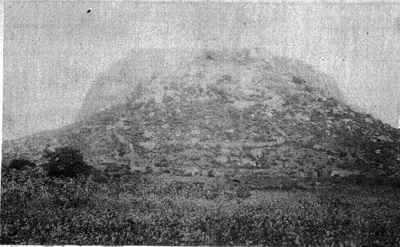 "Gurramkonda Hill and Fort": photograph in Gribble's Manual of the District of Cuddapah (1875), plate between pp. 90 and 91Historic photograph · 1875
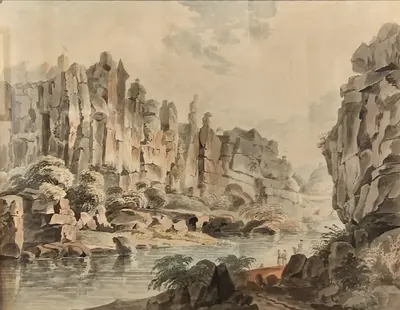 "View within the Northern Entrance of Gundecotta Pass": watercolour of about 1800 attributed on Commons to Thomas Anburey (Indian Museum, Kolkata)Drawing · c. 1800
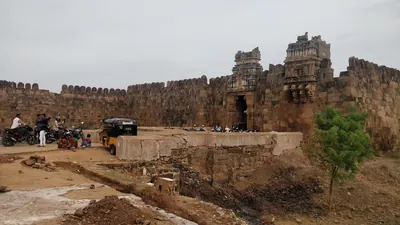 The fort walls and gateway of Siddhavatam (Sidhout), where the last Nawab of Cuddapah surrendered to Haidar Ali in 1779 (2018)Photograph · 2018
Related
People
Abdul Nabi Khan (Nawab of Cuddapah)
c. 1714 CE
Pathan (Miana) Nawab of Cuddapah in the early eighteenth century. Gribble's chronology calls him 'the greatest of the Cuddapah Nabobs'. Kirmani says that the emperor Bahadur Shah gave him Cuddapah as a land grant, and the Cuddapah gazetteer dates his governorship from 1714. He took Sidhout from its fort commander in 1714 and held Gandikota, Cumbum and Gurramkonda. He made the poligar of Punganur pay him tribute, raided the Baramahal and joined the Nawab of Arcot in taking money from Mysore. Local tradition says he founded the town of Cuddapah. He had stopped ruling by 1732, when an inscription names his son as Nawab.
Abdul Halim Khan (Nawab of Cuddapah)
1761–1779 CE
The last Pathan Nawab of Cuddapah. He ruled Cuddapah and Sidhout from 1761 until Haidar Ali conquered him in 1779. A Telugu account translated by C. P. Brown says he was freed from prison in the fort of Sidhout in 1761 and became ruler when the Nawab Mohsin Khan left. Gribble says he followed his uncle, whom he calls Mahasim Khan. He paid Haidar money in 1769 and sent him horsemen in 1776, but he sided with the Nizam's general against him. In 1779 Haidar and Mir Sahib defeated his Pathan horsemen near Duvvur, took Cuddapah and forced him to surrender at Sidhout. He died a prisoner at Seringapatam, and his sister became Haidar's wife as Bakhshi Begum.
References
Notes (0)
Sources (18)
Spotted an error on this page? Tell us
Last updated: