Srikakulam
Town on the Langulya river, formerly Chicacole. In 1908 it was the headquarters of a taluk of the Ganjam district. A hoard of six copper-plate grants dug up in the town is now in the Madras Museum. It includes several of the oldest grants of the Ganga kings of Kalinganagara. In the Qutb Shahi period the town was the capital of the Chicacole Sarkar.
Srikakulam (then Chicacole) is a town on the Langulya river.1 The Imperial Gazetteer (1908) describes it as the headquarters of a subdivision and taluk of the Ganjam district, “on the left bank of the Langulya 4 miles from its mouth”.1
Under the Muslim rulers
Under the Muslims the town was the capital of the Srikakulam Sarkar, one of the Northern Circars.1 Sher Muhammad Khan built its mosque in 1641 “from the materials of a demolished Hindu temple”.1 He was “the first Faujdar, or military governor, under the Kutb Shahi dynasty of Golconda”.1 The gazetteer adds that for about 180 years from about 1571 the country “was ruled from Chicacole by Muhammadans”.2
The copper plates
Robert Sewell’s Lists of Antiquities (1882) records that the town “is said to have been the earliest capital of the kingdom of Kalinga”.3 He describes the discovery of six copper-plate grants in a pot sunk in the ground.3 W. F. Grahame rescued them and gave them to the Madras Museum.3
J. F. Fleet and E. Hultzsch edited the plates.4 They include grants of the Ganga kings Indravarman and Devendravarman, issued from Kalinganagara.4 See the Chicacole plates of Devendravarman.
Arasavalli
At Arasavalli near the town, V. Rangacharya listed Telugu inscriptions of the Ganga king Anantavarmadeva in the Suryanarayana temple.5 Two of them are dated in his seventy-second year.5 See Anantavarman Chodaganga and the Eastern Gangas.
Footnotes
-
Imperial Gazetteer: Madras, Vol. I (1908), p. 222 (archive.org (opens in a new tab)). ↩ ↩2 ↩3 ↩4 ↩5
-
Imperial Gazetteer of India, Provincial Series: Madras, Vol. I (1908), p. 197 (archive.org (opens in a new tab)). ↩
-
Robert Sewell, Lists of the Antiquarian Remains in the Presidency of Madras, Vol. I (1882), p. 7 (archive.org (opens in a new tab)). ↩ ↩2 ↩3
-
E. Hultzsch, “Chicacole Plates of Gunarnava’s Son Devendravarman; the Year 183”, Epigraphia Indica III (1894–95), p. 130 (archive.org (opens in a new tab)). ↩ ↩2
-
V. Rangacharya, A Topographical List of the Inscriptions of the Madras Presidency, Vol. I (1919), p. 682, Ganjam Nos. 135–137 (archive.org (opens in a new tab)). ↩ ↩2
Photos
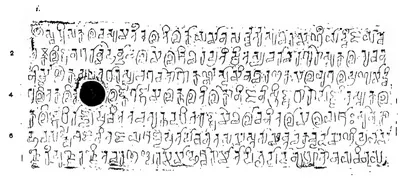 "Chicacole Plates of Devendravarman.—The Year 183", first plate (lines 1-7) (Epigraphia Indica III, plates between pp. 132 and 133, PDF p. 184)Inscription rubbing · 1895
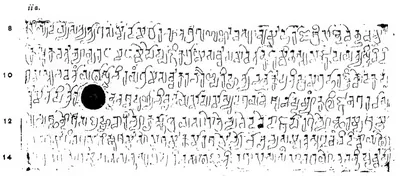 "Chicacole Plates of Devendravarman.—The Year 183", first side of the second plate (lines 8-14) (Epigraphia Indica III, plates between pp. 132 and 133, PDF p. 184)Inscription rubbing · 1895
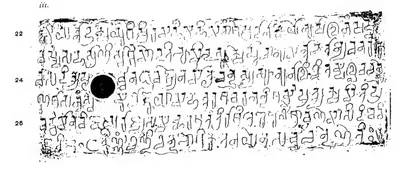 "Chicacole Plates of Devendravarman.—The Year 183", third plate (lines 22-27) (Epigraphia Indica III, plates between pp. 132 and 133, PDF p. 185)Inscription rubbing · 1895
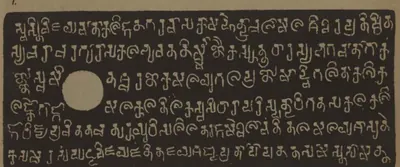 "Ganga Grant of Indravarma. The 128th Year", first plate (J. F. Fleet, Indian Antiquary XIII, plate between pp. 120 and 121, PDF p. 139)Inscription rubbing · 1884
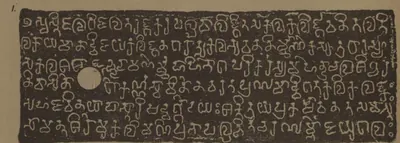 "Ganga Grant of Indravarma. The 146th Year", first plate (J. F. Fleet, Indian Antiquary XIII, plate between pp. 122 and 123, PDF p. 143)Inscription rubbing · 1884
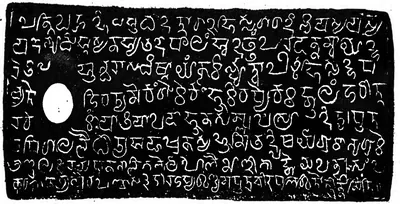 "Ganga Grant of Satyavarma", second side of the second plate (J. F. Fleet, Indian Antiquary XIV, plate between pp. 10 and 11, PDF p. 17)Inscription rubbing · 1885
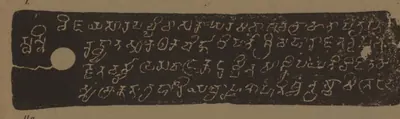 "Kalinga Grant of Nandaprabhanjanavarma", first plate (J. F. Fleet, Indian Antiquary XIII, plate between pp. 48 and 49, PDF p. 58)Inscription rubbing · 1884
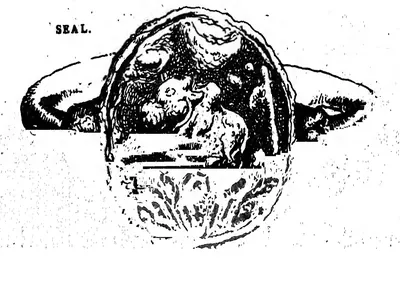 "Seal": the bull seal of the Ganga grant of Satyavarman from Chicacole (J. F. Fleet, Indian Antiquary XIV, plate between pp. 10 and 11, PDF p. 17)Drawing · 1885
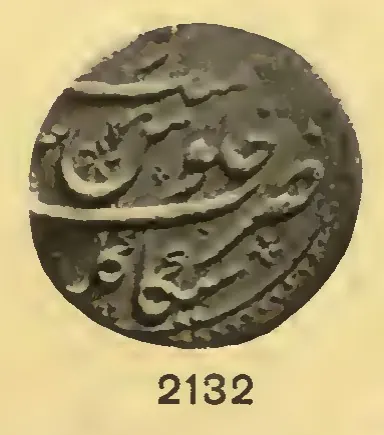 Gold mohur of Farrukhsiyar struck at Sikakul (Chicacole, Srikakulam) (Whitehead 1914, No. 2132, pl. XIII)Coin · 1914
References
Notes (0)
Sources (4)
Spotted an error on this page? Tell us
Last updated: