Simhachalam
Hill just north of Visakhapatnam with the temple of Narasimha, the richest and best-known shrine of the old Vizagapatam district. More than five hundred inscriptions on the temple record gifts from the Chola king Kulottunga I, the Eastern Ganga kings and their feudatories, the Reddis and the Vijayanagara king Krishnadeva Raya.
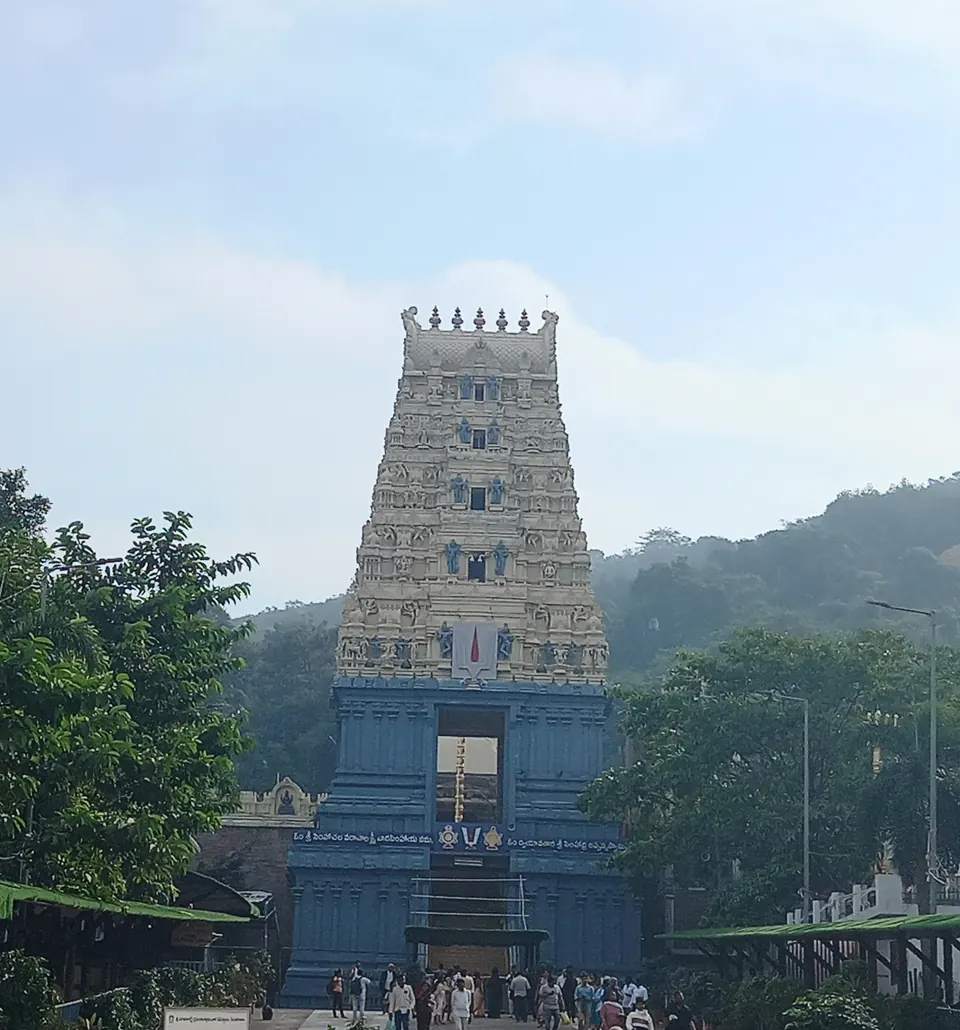
The Vizagapatam district gazetteer (1907) describes Simhachalam, “the lion hill”, as rising to about 800 feet just north of Visakhapatnam (then Vizagapatam).1 On its north side, in a wooded hollow, stands the temple of Narasimha, which the gazetteer calls “the most famous, richest, and best sculptured shrine in Vizagapatam”.1 In its honour many people of the district were named Simhachalam, Simhadri or Narasimha.1
The temple’s inscriptions were printed in South-Indian Inscriptions VI (1928).2 They number 525, and “a large number” of them are of the reigns of Eastern Ganga kings.2 See the Simhachalam temple.
Was Nuniz’s “Symamdary” Simhachalam?
The Portuguese chronicler Nuniz placed an inscription of Krishnadeva Raya at “Symamdary”, which Robert Sewell had taken for Rajahmundry.3 The gazetteer argued that Nuniz’s distance from Kondapalli “suits Simhachalam better, and ‘Simhadri’ is still in use as a form of ‘Simhachalam’”.3 See the Eastern Gangas.
Footnotes
-
W. Francis, Madras District Gazetteers: Vizagapatam, Vol. I (1907), p. 323 (archive.org (opens in a new tab)). ↩ ↩2 ↩3
-
K. V. Subrahmanya Aiyer (ed.), South-Indian Inscriptions (Texts), Vol. VI (1928), Preface (archive.org (opens in a new tab)). ↩ ↩2
-
Francis, Vizagapatam (1907), p. 29, note 2 (archive.org (opens in a new tab)). ↩ ↩2
Photos
Related
People
Anantavarman Chodaganga
c. 1078–1146 CE
Eastern Ganga king of Kalinga, crowned in 1078 and still reigning in his 72nd regnal year (1146–47). He was a son of the Ganga king Rajaraja and of Rajasundari, a daughter of Kulottunga I, so he was a grandson of the Chola-Chalukya emperor whose armies invaded Kalinga in his reign. Dozens of his Telugu and Sanskrit inscriptions survive at Mukhalingam, Srikurmam, Simhachalam, Draksharama and other places in the north of the Telugu country. His grants trace the Ganga family back to Brahma.
Narasimha I (Eastern Ganga)
c. 1250–1268 CE
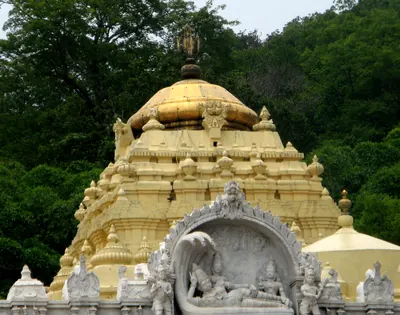
Eastern Ganga king of Kalinga and Orissa in the mid-13th century, son of Anangabhima. The Vizagapatam gazetteer credits him with building the central shrine, the halls and the enclosing verandah of the Simhachalam temple in black stone in 1267–68. His feudatories and ministers left records at Srikurmam. The Orissa temple chronicle remembers him as Languliya Narsinh, builder of the Sun temple at Konarak. His dates differ widely between the sources.
Kataya Vema
c. 1386–1415 CE
Minister and brother-in-law of Kumaragiri of Kondavidu. He received 'the eastern country' with Rajahmundry as its capital in the 1380s, and ruled the Godavari delta and the coast to Simhachalam until about 1414–16. A grandson of Prolaya Vema through his mother, he was also a Sanskrit scholar. He wrote the Kumaragirirajiyam, a commentary on Kalidasa's plays.
Kapilendra (Kapilesvara)
c. 1434–1470 CE
Founder of the Suryavamsi Gajapati dynasty of Orissa, who took the throne of the last Eastern Ganga king in 1434–35 and reigned until about 1470. He conquered the Reddi kingdoms of Rajahmundry and Kondavidu, and governed them through his nephew Raghudeva and his kinsman Ganadeva. He relieved Devarakonda from the Bahmanis in 1459, and his son Hamvira and Raghudeva took Warangal in 1460. His records credit him with conquests down the coast to the Kaveri.
Hamvira (Hambira)
c. 1459–1478 CE
Son of the Gajapati king Kapilendra and the leading general of his conquests in the Telugu and Tamil countries. He captured the fort of Warangal on 2 February 1460 and made the Chiruvroli grant on the Krishna in 1461. In 1464 his son Dakshina-Kapilesvara governed Kondavidu and the forts of the south. Ferishta writes of an 'Ambur Ray' who took the Orissan throne with Bahmani help after Kapilendra's death. This man has been identified with Hamvira, but the succession is disputed.
Purushottama (Gajapati)
c. 1470–1497 CE
Gajapati king of Orissa from 1469–70 to 1496–97, son of Kapilendra. Early in his reign the Bahmanis took Rajahmundry and Kondapalli or Kondavidu, after a disputed succession in which he may have bought their help. His attempt to recover the Godavari country in the 1470s ended with Muhammad Shah III's invasion of Orissa. But by 1489 his grants and inscriptions reach the Krishna and the Ongole country again. Orissan tradition credits him with an expedition to Kanchi and a romantic marriage.
Prataparudra (Gajapati)
c. 1497–1540 CE
Gajapati king of Orissa from 1496–97 to about 1540, son of Purushottama, and the last great king of the Suryavamsi line. At his accession his empire reached from Bengal to the Guntur and Nellore country. In 1512–19 the Vijayanagara king Krishnadeva Raya took Udayagiri, Kondavidu and Kondapalli, captured his son Virabhadra, marched to Simhachalam and married his daughter. The Qutb Shahi sultan of Golconda then took the Godavari–Krishna country. The legal digest Sarasvativilasa bears his name. He was a disciple of Chaitanya.
Krishnadeva Raya
1509–1529 CE
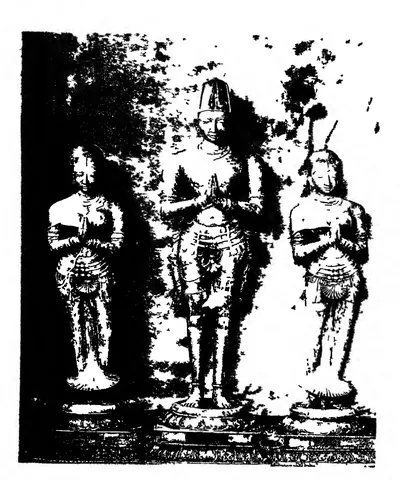
King of Vijayanagara from 1509 to 1529, of the Tuluva dynasty, and the most famous ruler of the empire. In 1512–16 he took Udayagiri, Kondavidu and Kondapalli from the Gajapati Prataparudra. He marched to Simhachalam and married the Gajapati's daughter. In 1520 he defeated the Adil Shah at Raichur. He wrote the Telugu poem Amuktamalyada, in which the god says Telugu is the best of the languages of the land. His court, with Allasani Peddana and Nandi Timmana, began the age of the Telugu prabandha (long narrative poem).
Monuments
Inscriptions
Simhachalam inscription of Kulottunga I
1099 CE
Damaged Tamil inscription of the Chola king Kulottunga I on a slab in the mandapa of the Varaha-Narasimha temple at Simhachalam, near Visakhapatnam, dated Saka 1021 (1099). V. Rangacharya and W. Francis took it as confirmation of Kulottunga's conquest of Kalinga celebrated in the Tamil poem Kalingattupparani; Robert Sewell was more cautious.
Simhachalam inscriptions of Krishnadeva Raya (1516–1519)
1516–1519 CE
Three Telugu inscriptions of Krishnadeva Raya in the Varaha-Narasimha temple at Simhachalam near Visakhapatnam. They are on the base of the asthana-mandapa (audience hall) and on a round pillar of the verandah round the central shrine. They are dated Saka 1438 (1516) and 1441 (1519). They record that the king, after subduing Udayagiri, Kondavidu, Kondapalli and Rajahmundry on his 'first campaign', came to Simhadri. For the merit of his parents he gave the god a necklace of 991 pearls and other jewels. His queens Chinnadevi and Tirumaladevi also made gifts, and later the king gave several villages.
References
Notes (0)
Sources (2)
Spotted an error on this page? Tell us
Last updated: