The Madras studio years, 1947–1962
How Telugu film-making grew in the big studios of Madras after the Second World War: the lean years 1946–49, the folk-tale films and two-language films that lifted production after 1950, the studios and companies of the 1950s, the first national awards for Telugu films, dubbed films in the early 1960s, and the first film companies and studio at Hyderabad.
Download
After the Second World War, Telugu films were made almost only in the big studios of Madras.12 For a few years production was low, because films had become costly to make.3 Then, from 1950, folk tales made in two languages brought a boom, and Telugu films became an everyday pleasure for ordinary people.24 This page follows the industry from 1947 to the early 1960s. The years before are on The first Telugu talkies, and the cinema halls and their audiences on Cinema halls and audiences.
About the sources. The main sources are the Silver Jubilee Souvenir of the Indian talkie (1956), a film almanac of 1953, the report of the Film Enquiry Committee (1951) and essays by the writer Kodavatiganti Kutumbarao.5678 The library has few sources for the years after about 1962. So this page stops there, and does not follow the industry’s later move to Hyderabad.
The lean years, 1946–1949
The end of the war first brought a burst of films. Ten Telugu films came out in 1946, Kutumbarao writes.3 But the age of social films was over, he says, because nobody knew what message to give a society coming out of the war.3 Of the twenty films of 1947, 1948 and 1949, only three were social films:3
- Mana Desam, which Kutumbarao calls political rather than social
- Geetanjali, which failed as soon as it was released
- Drohi, which did moderately well3
The number of films fell back to six or seven a year.3 This time the cause was neither the war nor the permits, but the rising cost of making a film.3 The souvenir also says the years 1946 to 1949 averaged “not more than 6” Telugu films.5 A table in the 1951 report shows that by 1947 and 1948 every Telugu film was made at Madras.1
By 1951 the Film Enquiry Committee could say that Madras made the films in Tamil, Telugu, Kannada and Malayalam.7 A Telugu producer without a studio had sometimes shot his film at Bombay or Calcutta. With more studios in the south, the committee said, this had become rare.7
Folk tales in two languages
The social films had cost Telugu producers one thing, Kutumbarao writes: the Tamil market.3 While films were cheap, this did not matter. But costs rose, and folk tales, with their beautiful stars, grand sets and popular songs, cost even more.3
The way out, found only in 1950, was to make each folk film in both Telugu and Tamil.2 Telugu production rose quickly:2
- 7 films in 1949
- 16 in 1950, three of them Telugu versions of films from other languages
- 22 in 1951
- 25 in 19522
A strong bond formed between the Telugu and Tamil film industries, Kutumbarao says.2 The souvenir agrees that many Madras films were made in “double-version”, Telugu and Tamil. Stars such as N. T. Rama Rao, Nageswara Rao, Anjali Devi and Bhanumathi acted in both.9
The folk films made money. Patala Bhairavi was released in three languages and earned its producers 30 lakh rupees, Kutumbarao writes.4 In 1952 it was one of four Indian films chosen for the International Film Festival of India.10 Kutumbarao calls K. V. Reddy’s Patala Bhairavi the best model of the folk film. He praises its writer Pingali and its heroine Anjali Devi.11
Kutumbarao saw two good results of the folk-film years. They made the cinema a daily need for ordinary people.4 They also brought many Telugu writers, poets, singers and amateur actors into films.4 The souvenir noted that Telugu films, more than films in any other language, “leaned heavily on Folklore and fantasy”.9
Not every film followed the trend. Kutumbarao says B. N. Reddi’s Malleswari broke new ground. Its story was set in a far-off past, yet it showed the realism of a social film.1112 He calls Pelli Chesi Choodu (1952) the first Telugu musical comedy, and praises its writer Chakrapani for creating living characters.12
Studios and companies
The film almanac of 1953 lists the studios at Madras. Several of them belonged to Telugu film-makers:6
- Bharani Studios, owned by P. Bhanumati and P. S. Ramakrishna Rao
- Prakash Studios, owned by K. S. Prakash Rao
- Rohini Studios, owned by H. M. Reddy
- the Sobhanachala studio of the Raja of Mirzapur
- Vauhini Studios, leased to Vijaya Productions under B. Nagi Reddi6
The Andhra year book of 1954–55 says four studios at Madras were owned by Telugu people. It adds that South India had 24 film studios in all.1314 It names Vijaya Productions, founded in 1949 by B. Nagi Reddi and Chakrapani. Their films included Shavukaru, Patala Bhairavi, Pelli Chesi Choodu and Chandraharam.15 Kutumbarao calls the rise of Vijaya Productions a big turning point after the war.16
Kutumbarao also notes that stars set up their own companies, besides the studio firms:17
- N. A. T., the company of N. T. Rama Rao, whose Seetarama Kalyanam was a great success
- Bharani Pictures of Bhanumathi, where her husband Ramakrishna produced and directed
- Annapurna Pictures of Nageswara Rao17
Many producers made only one film. The souvenir’s statistics, taken from the censors’ records, count 302 Telugu talkies from 1931 to June 1956.18 They were made by 187 producers, and 139 of these made just one film.18
Voices before the 1951 committee
In July 1950 the Film Enquiry Committee heard witnesses at Madras. Among them were several Telugu film people and public men:1920
- H. M. Reddy, president of the South Indian Film Chamber of Commerce
- B. N. Reddy of Vauhini Pictures, and V. Nagiah, producer, actor and director
- Alluri Satyanarayana Raju, a member of the Madras legislature
- a distributor and exhibitor of Bezwada, and an exhibitor of Vijayawada
- Narla Venkateswara Rao, editor of the Telugu daily Andhra Prabha1920
The first national awards
The State awards for films began in 1954. From 1955 they included films in the regional languages too.21 In the awards of 1955, Peddamanushulu, made by Vauhini Productions of Madras, won the Silver Medal for the best Telugu film.21 Certificates of merit went to two more Telugu films of Madras companies, Thodu Dongalu and Vipranarayana.21 The souvenir calls Peddamanushulu “a social satire”.9
The awards continued:
- In 1956 Bangaru Papa won the Silver Medal, and Ardhangi a certificate of merit.21
- In 1957 Tenali Ramakrishna, by Vikram Productions of Madras, won the Silver Medal.22
- In 1958 Bhagya Rekha and Todi Kodalu won certificates of merit.23
Dubbed films, around 1962
In an essay written in about 1962, Kutumbarao says a Telugu film came out roughly every fortnight.24 Films from other languages were also dubbed into Telugu, that is, given Telugu speech.24 In 1961, he writes, more dubbed films were released than films made in Telugu.24 In another essay he gives the total for 1961 as 54 films in Telugu.25 About one Telugu film in nine ran for a hundred days.24
Kutumbarao adds that Madras had been the centre of Telugu film-making since before the war.16 Many good Telugu films came from Tamil and Kannada producers. Camera men, sound recordists, art and music directors from outside Andhra also worked on Telugu films.16
Towards Hyderabad
The first signs of film-making at Hyderabad appear in these years. The almanac of 1953 lists one studio at Hyderabad, called Cine Studios.26 In April 1953 Kutumbarao reported that two companies had been formed at Hyderabad. Both planned to make their first films that year.27
By 1962 the census handbook of Hyderabad district listed Sri Sarathi Studios among the city’s factories.28 The sources in our library do not follow the industry’s later growth at Hyderabad.
Landmark films
The year, company and place are from the souvenir’s list, where “M” means Madras.2930
| Film | Year | Company (place) | What the sources say |
|---|---|---|---|
| Thyagaiah | 1946 | Sri Renuka Films (M) | Nagaiah’s own film; the first Telugu musical2912 |
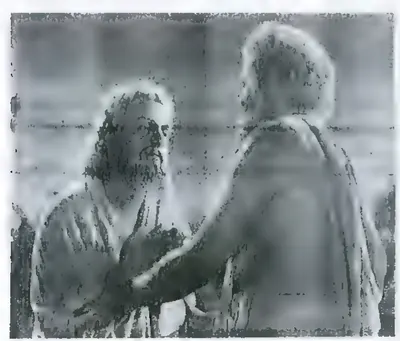
| Yogi Vemana | 1947 | Vauhini Pictures (M) | With Nagaiah as Vemana2931 |
| Keelu Gurram | 1949 | Shobhanachala (M) | A folk film293 |
| Shavukaru | 1950 | Vijaya Productions (M) | Vijaya’s first film2915 |
| Samsaram | 1950 | Sadhana Pictures (M) | Directed by L. V. Prasad299 |
| Patala Bhairavi | 1951 | Vijaya Productions (M) | K. V. Reddy’s folk film, in three languages29114 |
| Malleswari | 1951 | Vauhini Pictures (M) | By B. N. Reddi2911 |
| Pelli Chesi Choodu | 1952 | Vijaya Productions (M) | First Telugu musical comedy3012 |
Where the sources disagree
How many Telugu films. The figures for single years differ slightly:
| Year | The souvenir (1956) | Kutumbarao (1953) |
|---|---|---|
| 1950 | 185 | 162 |
| 1951 | 215 | 222 |
The totals differ more. Kutumbarao counts 224 Telugu films from 1931 to the end of August 1953, counting each film made in two versions once.8 The Andhra year book’s list of Telugu films from 1931 to 1953 adds up to 333.14 The souvenir’s article counts 289 from 1931 to 1955.5
Footnotes
-
Report of the Film Enquiry Committee (1951), p. 322, Appendix XIII, from the Handbook of the Film Industry of the Motion Picture Society of India (archive.org (opens in a new tab)). ↩ ↩2
-
Kutumbarao, “Simhavalokanam” (1953), Cinema Vyasalu, Vol. 1, p. 174 (archive.org (opens in a new tab)). Cite-only; paraphrased. ↩ ↩2 ↩3 ↩4 ↩5 ↩6 ↩7 ↩8
-
Kutumbarao, “Simhavalokanam” (1953), Cinema Vyasalu, Vol. 1, p. 173 (archive.org (opens in a new tab)). Cite-only; paraphrased. ↩ ↩2 ↩3 ↩4 ↩5 ↩6 ↩7 ↩8 ↩9 ↩10
-
Kutumbarao, “Vividha dashallo cinema kala” (weekly, Andhra State issue, October 1953), Cinema Vyasalu, Vol. 1, p. 170 (archive.org (opens in a new tab)). Cite-only; paraphrased. ↩ ↩2 ↩3 ↩4 ↩5
-
“Telugu Film”, unsigned article in Indian Talkie, 1931–56: Silver Jubilee Souvenir (Bombay: Film Federation of India, 1956), p. 91 (archive.org (opens in a new tab)). ↩ ↩2 ↩3 ↩4 ↩5
-
Indian Motion Picture Almanac (1953), p. 115, motion picture studios (archive.org (opens in a new tab)). ↩ ↩2 ↩3
-
Film Enquiry Committee, Report of the Film Enquiry Committee, 1951 (New Delhi: Government of India Press, 1951), p. 64 (archive.org (opens in a new tab)). ↩ ↩2 ↩3
-
Kutumbarao, “Telugu chitralu: simhavalokanam” (“Telugu films: a look back”), Andhra Prabha, 1 October 1953, in Cinema Vyasalu, Vol. 1, p. 171 (archive.org (opens in a new tab)). Cite-only; paraphrased. ↩ ↩2
-
“Telugu Film”, Silver Jubilee Souvenir (1956), p. 92 (archive.org (opens in a new tab)). ↩ ↩2 ↩3 ↩4
-
I. K. Menon and S. G. Chandavarkar (compilers), Indian Motion Picture Almanac and Who’s Who, 1953 (Bombay: Film Federation of India, 1953), p. xxiii (archive.org (opens in a new tab)). ↩
-
Kodavatiganti Kutumbarao, “Telugu cinema vishishta charitralo konni mailurallu” (“Some milestones in the history of Telugu cinema”, 1952), in Cinema Vyasalu, Vol. 1 (Viplava Rachayitala Sangham, 2000), p. 160 (in Telugu) (archive.org (opens in a new tab)). Cite-only; paraphrased. ↩ ↩2 ↩3 ↩4
-
Kutumbarao, “Mailurallu” (1952), Cinema Vyasalu, Vol. 1, p. 161 (archive.org (opens in a new tab)). Cite-only; paraphrased. ↩ ↩2 ↩3 ↩4
-
Prapancha Darsini (1955), p. 518 (archive.org (opens in a new tab)). Cite-only; paraphrased. ↩
-
Kappagantula Satyanarayana (ed.), Prapancha Darsini (Andhra Directory and Year Book 1954–55) (1955), p. 251 (in Telugu) (archive.org (opens in a new tab)). Cite-only; paraphrased. ↩ ↩2
-
Prapancha Darsini (1955), p. 519 (archive.org (opens in a new tab)). Cite-only; paraphrased. ↩ ↩2
-
Kutumbarao, “Telugu cinemalu” (about 1962), Cinema Vyasalu, Vol. 1, p. 230 (archive.org (opens in a new tab)). Cite-only; paraphrased. ↩ ↩2 ↩3
-
Kutumbarao, “Telugu cinemalu” (about 1962), Cinema Vyasalu, Vol. 1, p. 231 (archive.org (opens in a new tab)). Cite-only; paraphrased. ↩ ↩2
-
Silver Jubilee Souvenir (1956), unnumbered page (PDF p. 229), “70.41% infant mortality among film-makers” (archive.org (opens in a new tab)). ↩ ↩2
-
Report of the Film Enquiry Committee (1951), p. 280, Appendix IV, witnesses examined at Madras, 26–31 July 1950 (archive.org (opens in a new tab)). ↩ ↩2
-
Report of the Film Enquiry Committee (1951), p. 281 (archive.org (opens in a new tab)). ↩ ↩2
-
Silver Jubilee Souvenir (1956), p. 194, “State Awards” (archive.org (opens in a new tab)). ↩ ↩2 ↩3 ↩4
-
India 1958: A Reference Annual (Delhi: Publications Division, 1958), p. 586, film awards of 1957 for films of 1956 (archive.org (opens in a new tab)). ↩
-
India 1958: A Reference Annual (1958), p. 587, film awards of 1958 (archive.org (opens in a new tab)). ↩
-
Kutumbarao, “Telugu cinemalu” (written about 1962), Cinema Vyasalu, Vol. 1, p. 227 (archive.org (opens in a new tab)). Cite-only; paraphrased. ↩ ↩2 ↩3 ↩4
-
Kutumbarao, “Dubbing chitralu” (“Dubbed films”), Cinema Vyasalu, Vol. 1, p. 233 (archive.org (opens in a new tab)). Cite-only; paraphrased. ↩
-
Indian Motion Picture Almanac (1953), p. 116 (archive.org (opens in a new tab)). ↩
-
Kutumbarao, review of the year 1952, Telugu Swatantra, 10 April 1953, in Cinema Vyasalu, Vol. 2 (Viplava Rachayitala Sangham, 2000), p. 157 (in Telugu) (archive.org (opens in a new tab)). Cite-only; paraphrased. ↩
-
Census of India 1961, Andhra Pradesh: District Census Handbook, Hyderabad District (1968), p. B 34, Table 4.3, list of factories, 1962. Cite-only. ↩
-
Silver Jubilee Souvenir (1956), p. XXII, list of Telugu talkies, 1936–1952 (archive.org (opens in a new tab)). ↩ ↩2 ↩3 ↩4 ↩5 ↩6 ↩7 ↩8
-
Silver Jubilee Souvenir (1956), p. XXIII, list of Telugu talkies, 1952–1956 (archive.org (opens in a new tab)). ↩ ↩2
-
K. N. T. Sastry, Chittoor V. Nagaiah: A Monograph (New Delhi: Publications Division, 2000), p. 23 (archive.org (opens in a new tab)). Cite-only; paraphrased. ↩
Photos
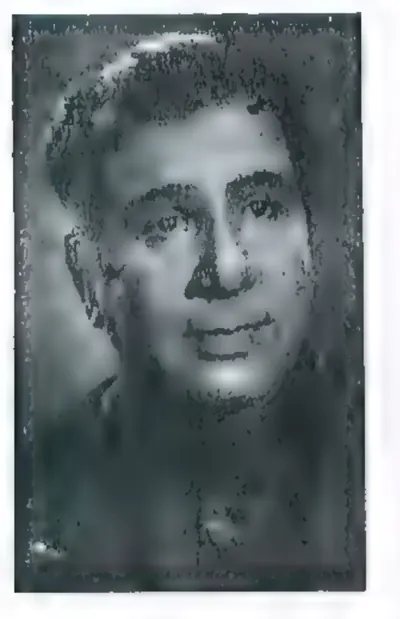 Chittoor V. Nagaiah (photograph, 1956)Historic photograph · 1956
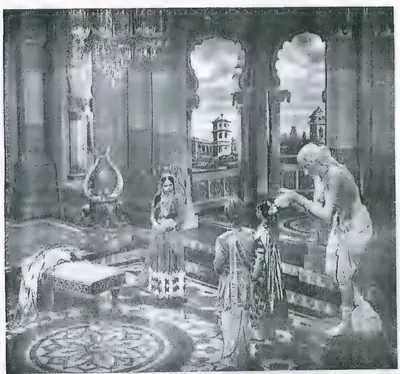 A palace scene from Vauhini's Malleswari (film still, 1956 souvenir)Historic photograph · 1956
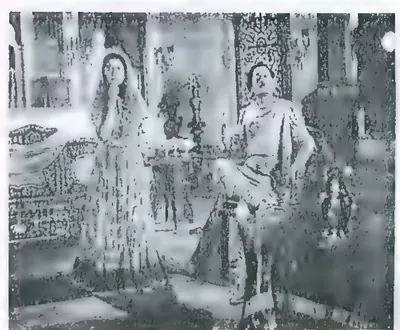 C. S. R. Anjaneyulu and Anjali Devi in Stree Sahasam (film still, 1956 souvenir)Historic photograph · 1956
 Chittoor V. Nagaiah and Lingamurthy in Yogi Vemana (film still, 1956 souvenir)Historic photograph · 1956
Related
People
B. N. Reddi
1908 CE
B. Narasimha Reddi (born 1908), from Kadapa district, was a Telugu film producer and director. He helped H. M. Reddy make Gruhalakshmi (1938), founded Vauhini Pictures in 1939 and later the Vauhini Studios at Madras, and made Vande Mataram, Sumangali, Devata, Swarga Seema and Malleswari. Writers of his time counted him among the first Telugu film-makers to treat cinema as an art.
Chittoor V. Nagaiah
before 1973 CE
Chittoor Vuppaladadiyam Nagaiah (died 1973), stage actor, singer and freedom-movement worker from Chittoor district, became one of the first stars of Telugu cinema. He entered films in Gruhalakshmi (1938), was the hero and composer of Vauhini's first films, played the saint-poets Potana, Vemana and Tyagaraja, and directed Thyagayya (1946). He received the Padma Shri in 1965 but died poor.
Institutions
Rohini Pictures, Madras
c. 1937 CE
The film company of H. M. Reddy, the director of the first Telugu talkie, set up at Madras in 1937 or 1938. Its first film, Gruhalakshmi (1938), against drink and full of patriotic songs, began the age of Telugu social films and introduced Chittoor V. Nagaiah. B. N. Reddi worked with it before founding Vauhini. By 1953 Reddy also owned the Rohini Studios at Madras.
Vauhini Pictures, Madras
1939 CE
The Telugu film company founded at Madras by B. N. Reddi in 1939, with Chittoor V. Nagaiah, K. V. Reddy and Samudrala Raghavacharya. It made Vande Mataram, Sumangali and Devata on the problems of society, Bhakta Potana and Yogi Vemana on the saint-poets, and Malleswari. Its Vauhini Studios were later leased to Vijaya Productions, and its Peddamanushulu won the Silver Medal for Telugu in 1955.
References
Notes (0)
Sources (9)
Spotted an error on this page? Tell us
Last updated: