B. N. Reddi
B. Narasimha Reddi (born 1908), from Kadapa district, was a Telugu film producer and director. He helped H. M. Reddy make Gruhalakshmi (1938), founded Vauhini Pictures in 1939 and later the Vauhini Studios at Madras, and made Vande Mataram, Sumangali, Devata, Swarga Seema and Malleswari. Writers of his time counted him among the first Telugu film-makers to treat cinema as an art.
Download
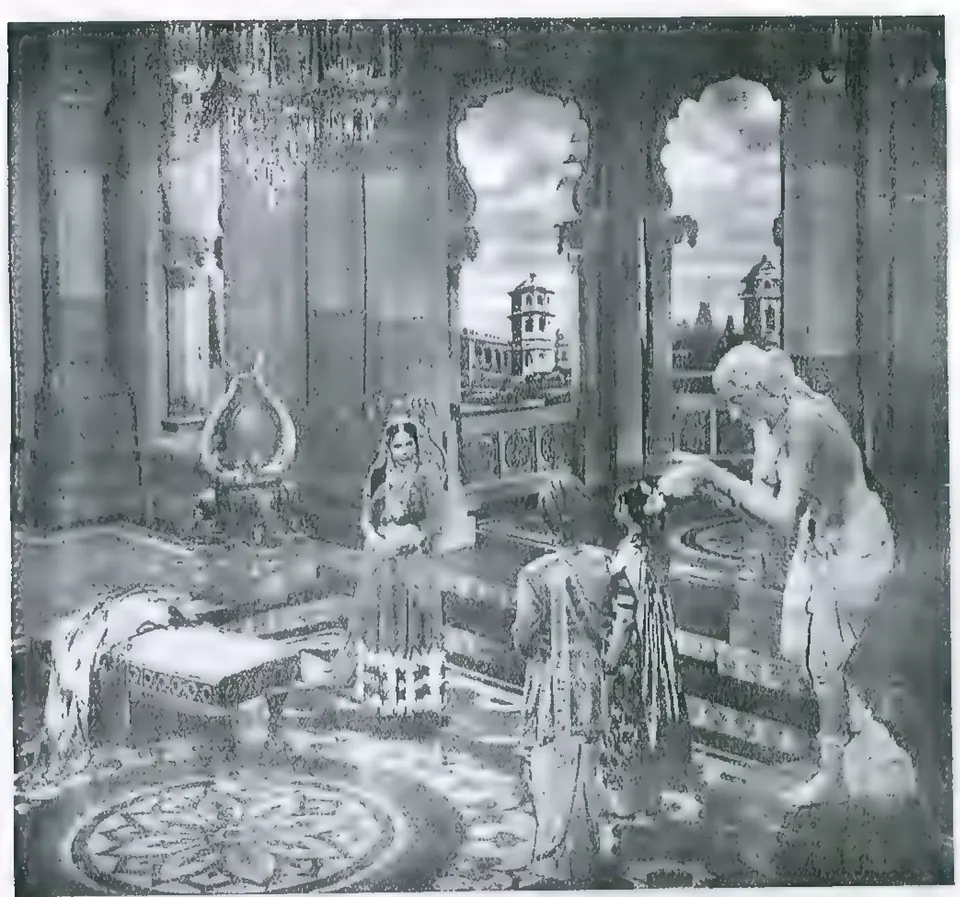
B. N. Reddi was a Telugu film producer and director who founded Vauhini Pictures at Madras in 1939.12 His social films and his Malleswari (1951) made his name.34 Kodavatiganti Kutumbarao called him one of the first producers to treat films as works of art.4
Early life
The film almanac of 1953 gives his full name as B. Narasimha Reddi. It says he was born in 1908 at Kothapally, in Cuddapah (Kadapa) district.1 As a young man in Madras he studied auditing, K. N. T. Sastry writes.5 There he met the singer and actor Chittoor V. Nagaiah through the Chennapuri Andhra Maha Sabha, an association of Telugu people in Madras. The two became close friends.5
Rohini and Vauhini
Reddi was part of the team of H. M. Reddy’s Rohini Pictures, which made Gruhalakshmi in 1938.67 He suggested Nagaiah for the part of the patriot in it, and H. M. Reddy agreed.7 Nagaiah later said B. N. Reddi helped him drop the habits of the stage when acting for the camera.8
Sastry writes that the two Reddys parted in 1939.2 B. N. Reddi then started Vauhini Pictures, whose first office was in Nagaiah’s cottage.2 The almanac says he was managing director of Vauhini Pictures from 1938 to 1948, and of Vauhini Productions from 1948 to 1949.1 It calls him the founder of the Vauhini Studios.1
His films
Vauhini’s first film was Vande Mataram (1939), a social film.91 Kutumbarao names Reddi and Gudavalli Ramabrahmam as the two men who led the turn of Telugu films from the gods to society.3 Ramabrahmam’s films, he says, carried a purpose and national feeling. Reddi’s films did most to open people’s minds.310
The souvenir of 1956 gives a short account of his films:11
- Sumangali looked at the lives of widows, without saying that remarriage was the only answer.
- Vemana and Potana brought the treasures of Telugu literature to the ordinary man.
- Swarga Seema was his greatest success as a producer.
- Malleswari was set in the time of Krishnadevaraya.11
Kutumbarao says Malleswari broke new ground. It had no magic or miracles, and showed the realism of a social film in a story of the past.1012 Reddi himself said in a newspaper that Malleswari was not a folk film.1012 Kutumbarao, writing about 1962, says cultured people praised it.4
In the State film awards given in 1956, Reddi’s Bangaru Papa won the Silver Medal for Telugu.1311 In July 1950 he gave evidence to the Film Enquiry Committee at Madras, for Vauhini Pictures.14
His ideas
Sastry writes that B. N. Reddi stressed the need for realism in cinema.15 He also warned Nagaiah against building a studio of his own, though the warning came too late.16 In later life, Sastry says, Reddi kept away from film-making, disgusted by how the cinema had changed.17
Where the sources disagree
When Vauhini began. Sastry dates Reddi’s break with H. M. Reddy and the start of Vauhini to 1939.2 The almanac says Reddi was managing director of Vauhini Pictures from 1938.1 The Andhra year book of 1954–55 says he left Rohini and founded Vauhini in 1949.18
Footnotes
-
I. K. Menon and S. G. Chandavarkar (compilers), Indian Motion Picture Almanac and Who’s Who, 1953 (Bombay: Film Federation of India, 1953), p. 378, Who’s Who, “Reddy, B. N. (B. Narasimha Reddi)” (archive.org (opens in a new tab)). ↩ ↩2 ↩3 ↩4 ↩5 ↩6
-
Sastry, Chittoor V. Nagaiah (2000), p. 21 (archive.org (opens in a new tab)). Cite-only; paraphrased. ↩ ↩2 ↩3 ↩4
-
Kodavatiganti Kutumbarao, “Telugu cinema vishishta charitralo konni mailurallu” (1952), in Cinema Vyasalu, Vol. 1 (Viplava Rachayitala Sangham, 2000), p. 159 (in Telugu) (archive.org (opens in a new tab)). Cite-only; paraphrased. ↩ ↩2 ↩3
-
Kutumbarao, “Telugu cinemalu” (written about 1962), Cinema Vyasalu, Vol. 1, p. 230 (archive.org (opens in a new tab)). Cite-only; paraphrased. ↩ ↩2 ↩3
-
Sastry, Chittoor V. Nagaiah (2000), p. 16 (archive.org (opens in a new tab)). Cite-only; paraphrased. ↩ ↩2
-
Sastry, Chittoor V. Nagaiah (2000), p. 19 (archive.org (opens in a new tab)). Cite-only; paraphrased. ↩
-
Sastry, Chittoor V. Nagaiah (2000), p. 20 (archive.org (opens in a new tab)). Cite-only; paraphrased. ↩ ↩2
-
Sastry, Chittoor V. Nagaiah (2000), p. 31 (archive.org (opens in a new tab)). Cite-only; paraphrased. ↩
-
Kutumbarao, “Telugu chitralu: simhavalokanam”, Andhra Prabha, 1 October 1953, in Cinema Vyasalu, Vol. 1, p. 172 (archive.org (opens in a new tab)). Cite-only; paraphrased. ↩
-
Kutumbarao, “Mailurallu” (1952), Cinema Vyasalu, Vol. 1, p. 160 (archive.org (opens in a new tab)). Cite-only; paraphrased. ↩ ↩2 ↩3
-
“Telugu Film”, unsigned article in Indian Talkie, 1931–56: Silver Jubilee Souvenir (Bombay: Film Federation of India, 1956), p. 92 (archive.org (opens in a new tab)). ↩ ↩2 ↩3
-
Kutumbarao, “Mailurallu” (1952), Cinema Vyasalu, Vol. 1, p. 161 (archive.org (opens in a new tab)). Cite-only; paraphrased. ↩ ↩2
-
Silver Jubilee Souvenir (1956), p. 194, “State Awards” (archive.org (opens in a new tab)). ↩
-
Film Enquiry Committee, Report of the Film Enquiry Committee, 1951 (New Delhi: Government of India Press, 1951), p. 280, Appendix IV (archive.org (opens in a new tab)). ↩
-
K. N. T. Sastry, Chittoor V. Nagaiah: A Monograph (New Delhi: Publications Division, 2000), p. 4 (archive.org (opens in a new tab)). Cite-only; paraphrased. ↩
-
Sastry, Chittoor V. Nagaiah (2000), p. 24 (archive.org (opens in a new tab)). Cite-only; paraphrased. ↩
-
Sastry, Chittoor V. Nagaiah (2000), p. 8 (archive.org (opens in a new tab)). Cite-only; paraphrased. ↩
-
Kappagantula Satyanarayana (ed.), Prapancha Darsini (Andhra Directory and Year Book 1954–55) (1955), p. 518 (in Telugu) (archive.org (opens in a new tab)). Cite-only; paraphrased. ↩
Photos
Related
Institutions
References
Notes (0)
Sources (6)
Spotted an error on this page? Tell us
Last updated: