The first Telugu talkies, 1931–1947
How Telugu films began to talk: Bhakta Prahlada (1931) and the stories of the gods made at Bombay and Calcutta, the first studios at Madras, Rajahmundry and Visakhapatnam, the turn to social films about drink, dowry, widows and caste after 1938, patriotic songs and a banned film, and the shortage of raw film in the Second World War.
Download
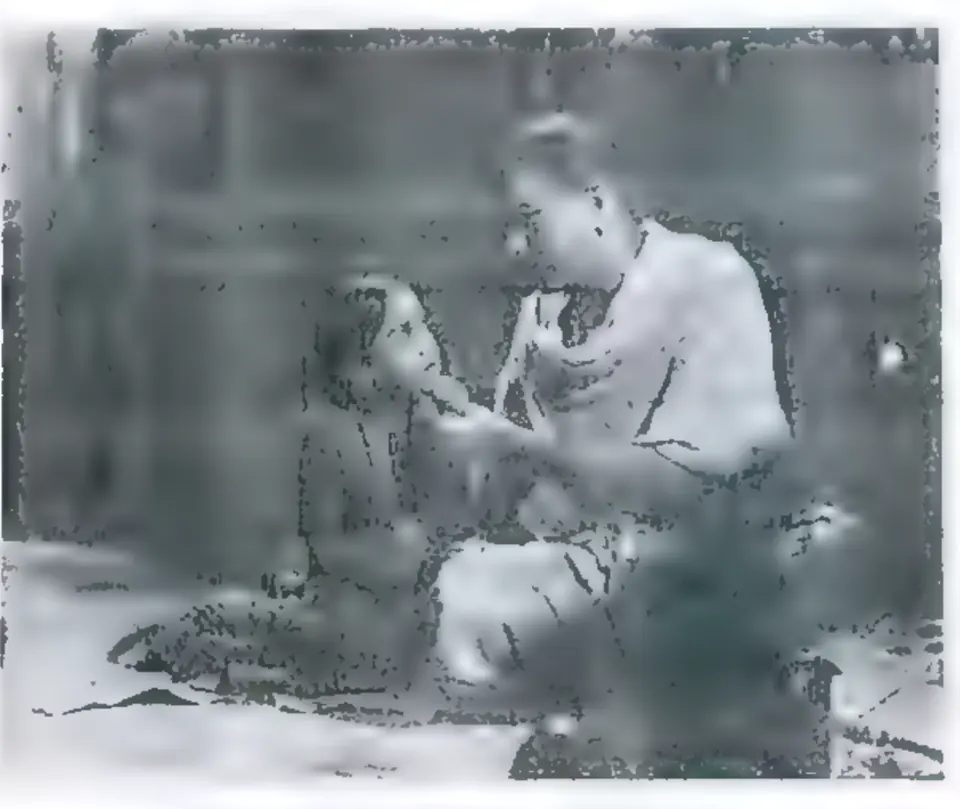
The first Telugu talking film came out in 1931, the same year as the first Indian talkie.12 For the next few years Telugu films were made far away, at Bombay and Calcutta, and told the old stories of the gods.13 By 1940 Telugu film-making had settled at Madras, and the films had begun to talk about the society around them.4 This page follows the Telugu talkie from 1931 to the end of the Second World War. The silent years before it are on The coming of cinema.
About the sources. The main sources are an unsigned article on the Telugu film in the Silver Jubilee Souvenir of the Indian talkie (1956), and two essays by the writer Kodavatiganti Kutumbarao, written in 1952 and 1953.153 Kutumbarao worked in films from 1936, so he writes partly from memory.6 His essays are in Telugu and are cited, not quoted.
The first Telugu talkie
The Silver Jubilee Souvenir says the first Telugu talkie was Bhakta Prahlada, made in 1931.1 H. M. Reddy directed it, and it starred V. V. Subbarao and Surabhi Kamalabai.1 Kamalabai came from the family theatre of the Surabhi companies.7 The souvenir says the film was made at the Krishna Movietone studio in Bombay.1
H. M. Reddy had entered films in 1927, the film almanac of 1953 says. He worked for the Sharda Film Company and then the Imperial Film Company of Bombay.8 In 1931 he directed both the first Tamil talkie, Kalidas, and Bhakta Prahlada for the Krishna Movietone.8
More films followed from studios far from the Telugu country:1
- in 1932, Paduka Pattabhishekam and Sakuntala, both made by the Sagar Movietone of Bombay
- in 1933, two films called Savitri, one from the East India Film Company of Calcutta and one from the Krishna Film Company of Bombay1
Films made far from home
Why were Telugu films made so far away? Panna Shah explains that South India had no studios when sound came. So the first Tamil and Telugu talkies were shot at the studios of western and eastern India.9 Taking actors and technicians so far was costly, and local studios soon opened.9
Kutumbarao adds that no Telugu film was made at Madras until 1934. That year the Vel Pictures studio at Madras released Seetha Kalyanam, under the management of P. V. Das, a Telugu man.3 The souvenir also calls Seetha Kalyanam (1934) “the first Telugu Talkie produced in Madras itself”.1 The souvenir’s own list of films shows the pattern. Of the eighteen Telugu films it lists for 1931–1935, only three are marked as made at Madras.10
Most producers and directors of these early films were not Telugu people, Kutumbarao writes. Of the 224 Telugu films made up to August 1953, about a quarter were made by non-Telugus.3 Makers from many regions could easily film only stories that all India knew. These were the stories of the gods, and so the first years were an age of mythological films.4
Studios in Andhra
Kutumbarao says nobody tried to build a studio in Andhra until 1936. That year the Durga Cinetone was set up at Rajahmundry, and it made Sampoorna Ramayanam.3 Later C. Pullaiah renamed it Andhra Talkies and made two films there:3
- Satyanarayana Vratam, shown with two short films
- Mohini Bhasmasura3
At about the same time the Andhra Cinetone was set up at Visakhapatnam. It made Jayadeva and Pasupatastram.3 Then both studios closed, and by 1953 no one had tried again.3
Writers of the time saw the same small studios. In 1939 Y. A. Fazalbhoy listed Bezwada (Vijayawada), Vizagapatam and Rajahmundry among the places where films were made.11 Panna Shah counts local studios at Madras, Bangalore, Coimbatore and Vizagapatam, about fifteen in all within a couple of years.9
Madras becomes the centre
In 1938 Telugu film-making moved firmly to Madras, Kutumbarao writes. Three companies made it happen:4
- the Raja of Mirzapuram’s Jaya Films, whose first film was Jarasandha
- H. M. Reddy’s Rohini Pictures, formed after he left Bombay for Madras, whose first film was Gruhalakshmi
- Gudavalli Ramabrahmam, who had learned the work at Vel Pictures, with his Mala Pilla4
The Andhra year book of 1954–55 gives more dates. It says Rohini Pictures was founded in 1937.12 It adds that Jaya Pictures, also started in 1937, was renamed Sobhanachala Pictures in 1944, with its own studio.12 In 1939 two more Telugu companies opened at Madras: B. N. Reddi’s Vauhini Pictures and Y. V. Rao’s Jagadish Films.4
Fazalbhoy was worried that the Madras studios were too small. In 1938 he wrote in the Madras Mail that they should join into a few large companies, to work more cheaply.13
Roots in the stage
Many early talkies looked like stage plays on film, K. N. T. Sastry writes, because many stage plays were simply filmed.14 The souvenir says Telugu films were popular from the start because of good actors, folk songs and the Telugu stage.1 It notes that several later Telugu leaders had acted in plays. Konda Venkatappayya played men’s parts, and “Andhrakesari” Tanguturi Prakasam did well in women’s parts.1 The stage itself is on Telugu theatre and early cinema.
Not every stage actor liked the cinema. Bellary Raghava, the great actor of the Telugu stage, acted in three films, including Raithu Bidda.15 M. Nagabhushana Sarma says he disliked the mechanical acting the directors wanted. He felt that money, not art, drove the film-makers, so he went back to the stage.15
Educated readers were doubtful at first. Sastry says the Telugu monthly Bharati called the talkie a “dangerous development fraught with grave consequences”.14 Later the same journal accepted the cinema and printed articles on film-making.1617
From the gods to society
Kutumbarao divides these years into two ages. From 1931 to 1938 the films told stories of the gods, and from 1938 to 1946 social films led.3 Sastry says a film with something of a social theme came in 1936: Prema Vijayam, made by Krithiventi Nageswara Rao of the Indian Art Cinetone.1416 The editors of Kutumbarao’s essays call it the first Telugu social film.18
The real change came after the success of Gruhalakshmi and Mala Pilla in 1938, Kutumbarao writes.4 In 1939 alone five social films came out, more than in all the years before.4 The souvenir also says the trend turned “in favour of purposeful social themes” in 1939, with Gruhalakshmi, Vande Mataram and Malli Pelli.1 Each film took up a problem of the day:
- Gruhalakshmi (1938) showed the evil of drink.19
- Malli Pelli (1939) and Sumangali (1940) dealt with the remarriage of widows.19
- Vara Vikrayam (1939), by C. Pullaiah, dealt with dowry.16 The souvenir says it was the first film of Bhanumathi, who later became a star.20
- Mala Pilla (1938) told of a Brahmin boy’s love for a girl of the Mala caste, a Dalit community.421
The souvenir notes that Sumangali looked at the lives of widows “without emphasis on re-marriage being the only solution”.20 Sastry says the old reformer that Chittoor V. Nagaiah played in it was modelled on Kandukuri Veeresalingam.17 Kutumbarao praises the actress Kanchanamala for a new realism, and says social films would hardly have been possible without her.22 For the reform movements behind these films, see Society and communities and Dalit history.
Songs of freedom and a banned film
Some films carried the mood of the freedom movement. Sastry writes that H. M. Reddy put patriotism into Gruhalakshmi.16 In it Nagaiah played a patriot and sang songs such as “Lendu Bharata Veerulara” (“Rise, heroes of India”), which became popular at once.23
Censorship set limits. Kutumbarao writes that under foreign rule the government’s goad stopped films from showing real life openly.19 Raithu Bidda (1939) took up the quarrel between landlords and their tenants. Even though it made peace with the landlords in the story, it was banned.19
The war years
Until 1942 about twelve Telugu films came out each year, Kutumbarao writes.24 Then the government controlled raw film, the plastic strip that films are printed on, and gave it out only by permit.2425 The number of films fell to a third, and costs rose.24 The few films that were made earned large profits, because the cinema had become the people’s main amusement.24
Kutumbarao counts four Telugu films each in 1944 and 1945, and ten in 1946.24 The Film Enquiry Committee of 1951 notes that India had 1,265 permanent cinemas in 1939 and 2,090 in 1945.25 So more people went to the cinema in the war, while fewer films were made.2524
The war also changed what was filmed. Kutumbarao says the age of social films then gave way to folk tales, which ran on into the 1950s.1924 That story continues on The Madras studio years.
Landmark films
The table lists some films that the sources treat as landmarks. The year, company and place are from the souvenir’s list; “B” there means Bombay, “C” Calcutta and “M” Madras.1026
| Film | Year | Company (place) | What the sources say |
|---|---|---|---|
| Bhakta Prahlada | 1931 | Bharat Movietone (B) | First Telugu talkie, directed by H. M. Reddy110 |
| Paduka Pattabhishekam | 1932 | Sagar (B) | Made by the Sagar Movietone110 |
| Seetha Kalyanam | 1934 | Vel Pictures (M) | First Telugu talkie made at Madras110 |
| Lava Kusa | 1934 | East India Film Co. (C) | Made by C. Pullaiah2210 |
| Sampoorna Ramayanam | 1936 | Durga (M) | Made at the Durga Cinetone, Rajahmundry326 |
| Gruhalakshmi | 1938 | Rohini Pictures (M) | Directed by H. M. Reddy; Nagaiah’s first film162326 |
| Mala Pilla | 1938 | Sarathi Films (M) | By Gudavalli Ramabrahmam426 |
| Vande Mataram | 1939 | Vauhini Pictures (M) | Vauhini’s first film426 |
| Vara Vikrayam | 1939 | East India Film Co. (C) | By C. Pullaiah; on dowry41626 |
Where the sources disagree
The first Telugu talkie. The souvenir’s article says Bhakta Prahlada was made in 1931 at the Krishna Movietone studio in Bombay.1 The souvenir’s own list gives the maker as the Bharat Movietone of Bombay.10 Bhargavi Kaveti dates the film to 1932 and says it was shot at Calcutta.7 T. S. Mahadeo, writing in the same souvenir, calls Sagar’s Sree Rama Paduka Pattabhishekam “the first Telugu Talkie”.27
Who started Vel Pictures. The souvenir says Vel Pictures was set up in 1934 under the guidance of M. T. Rajan.1 Kutumbarao says it was set up under the management of P. V. Das.3 The almanac’s Who’s Who says A. Muthuswami, called Murugadasa, started the Vel Pictures studio at Madras in 1933.28
How many Telugu films the war allowed. Panna Shah counts Telugu films passed by the censors as four in 1943, five in 1944 and four in 1945.29 A table in the 1951 committee’s report, taken from the Handbook of the Film Industry, gives six, six and five.30 Kutumbarao gives four each for 1944 and 1945.24
Footnotes
-
“Telugu Film”, unsigned article in Indian Talkie, 1931–56: Silver Jubilee Souvenir (Bombay: Film Federation of India, 1956), p. 91 (archive.org (opens in a new tab)). ↩ ↩2 ↩3 ↩4 ↩5 ↩6 ↩7 ↩8 ↩9 ↩10 ↩11 ↩12 ↩13 ↩14 ↩15 ↩16 ↩17
-
I. K. Menon and S. G. Chandavarkar (compilers), Indian Motion Picture Almanac and Who’s Who, 1953 (Bombay: Film Federation of India, 1953), p. xix (archive.org (opens in a new tab)). ↩
-
Kutumbarao, “Telugu chitralu: simhavalokanam” (“Telugu films: a look back”), Andhra Prabha, 1 October 1953, in Cinema Vyasalu, Vol. 1, p. 171 (archive.org (opens in a new tab)). Cite-only; paraphrased. ↩ ↩2 ↩3 ↩4 ↩5 ↩6 ↩7 ↩8 ↩9 ↩10 ↩11 ↩12
-
Kutumbarao, “Simhavalokanam” (1953), Cinema Vyasalu, Vol. 1, p. 172 (archive.org (opens in a new tab)). Cite-only; paraphrased. ↩ ↩2 ↩3 ↩4 ↩5 ↩6 ↩7 ↩8 ↩9 ↩10 ↩11
-
Kutumbarao, “Mailurallu” (1952), Cinema Vyasalu, Vol. 1, p. 158 (archive.org (opens in a new tab)). Cite-only; paraphrased. ↩
-
Kodavatiganti Kutumbarao, “Telugu cinema vishishta charitralo konni mailurallu” (“Some milestones in the history of Telugu cinema”, 1952), in Cinema Vyasalu, Vol. 1 (Viplava Rachayitala Sangham, 2000), p. 157 (in Telugu) (archive.org (opens in a new tab)). Cite-only; paraphrased. ↩
-
Bhargavi Kaveti, “The Stage Craft of Surabhi Drama: History and Evolution”, Kakatiya Journal of Historical Studies, Vol. XV, No. 1 (2020), p. 120 (archive.org (opens in a new tab)). Cite-only; paraphrased. ↩ ↩2
-
Indian Motion Picture Almanac (1953), p. 378, Who’s Who, “Reddy, H. M.” (archive.org (opens in a new tab)). ↩ ↩2
-
Panna Shah, The Indian Film (Bombay: Motion Picture Society of India, 1950), p. 49 (archive.org (opens in a new tab)). Cite-only; paraphrased. ↩ ↩2 ↩3
-
Silver Jubilee Souvenir (1956), p. XXI, list of Telugu talkies, 1931–1935 (archive.org (opens in a new tab)). ↩ ↩2 ↩3 ↩4 ↩5 ↩6 ↩7
-
Y. A. Fazalbhoy, The Indian Film: A Review (Bombay: Bombay Radio Press, 1939), p. 3 (archive.org (opens in a new tab)). Cite-only; paraphrased. ↩
-
Kappagantula Satyanarayana (ed.), Prapancha Darsini (Andhra Directory and Year Book 1954–55) (1955), p. 518 (in Telugu) (archive.org (opens in a new tab)). Cite-only; paraphrased. ↩ ↩2
-
Fazalbhoy, The Indian Film (1939), p. 8 (archive.org (opens in a new tab)). Cite-only; paraphrased. ↩
-
K. N. T. Sastry, Chittoor V. Nagaiah: A Monograph (New Delhi: Publications Division, 2000), p. 2 (archive.org (opens in a new tab)). Cite-only; paraphrased. ↩ ↩2 ↩3
-
M. Nagabhushana Sarma, “Bellary Raghava: The Man who Made the Modern Telugu Theatre”, Sangeet Natak, No. 57 (1980), p. 9 (archive.org (opens in a new tab)). Cite-only; paraphrased. ↩ ↩2
-
Sastry, Chittoor V. Nagaiah (2000), p. 3 (archive.org (opens in a new tab)). Cite-only; paraphrased. ↩ ↩2 ↩3 ↩4 ↩5 ↩6
-
Sastry, Chittoor V. Nagaiah (2000), p. 4 (archive.org (opens in a new tab)). Cite-only; paraphrased. ↩ ↩2
-
Krishnabai and Prasad, editors’ introduction to Kutumbarao, Cinema Vyasalu, Vol. 1 (2000), p. vi (archive.org (opens in a new tab)). Cite-only; paraphrased. ↩
-
Kutumbarao, “Mailurallu” (1952), Cinema Vyasalu, Vol. 1, p. 160 (archive.org (opens in a new tab)). Cite-only; paraphrased. ↩ ↩2 ↩3 ↩4 ↩5
-
“Telugu Film”, Silver Jubilee Souvenir (1956), p. 92 (archive.org (opens in a new tab)). ↩ ↩2
-
Kutumbarao, “Mana directorlu” (“Our directors”), Cinema Vyasalu, Vol. 1, p. 52 (archive.org (opens in a new tab)). Cite-only; paraphrased. ↩
-
Kutumbarao, “Mailurallu” (1952), Cinema Vyasalu, Vol. 1, p. 159 (archive.org (opens in a new tab)). Cite-only; paraphrased. ↩ ↩2
-
Sastry, Chittoor V. Nagaiah (2000), p. 20 (archive.org (opens in a new tab)). Cite-only; paraphrased. ↩ ↩2
-
Kutumbarao, “Simhavalokanam” (1953), Cinema Vyasalu, Vol. 1, p. 173 (archive.org (opens in a new tab)). Cite-only; paraphrased. ↩ ↩2 ↩3 ↩4 ↩5 ↩6 ↩7 ↩8
-
Film Enquiry Committee, Report of the Film Enquiry Committee, 1951 (New Delhi: Government of India Press, 1951), p. 12 (archive.org (opens in a new tab)). ↩ ↩2 ↩3
-
Silver Jubilee Souvenir (1956), p. XXII, list of Telugu talkies, 1936–1952 (archive.org (opens in a new tab)). ↩ ↩2 ↩3 ↩4 ↩5 ↩6
-
T. S. Mahadeo, “Triumphal Tour of First Talkie Party”, Silver Jubilee Souvenir (1956), p. 148 (archive.org (opens in a new tab)). Signed article, cite-only. ↩
-
Indian Motion Picture Almanac (1953), p. 349, Who’s Who, “Muthuswami, A. (Murugadasa)” (archive.org (opens in a new tab)). ↩
-
Panna Shah, The Indian Film (1950), p. 67, table of pictures censored by language (archive.org (opens in a new tab)). Cite-only. ↩
-
Report of the Film Enquiry Committee (1951), p. 322, Appendix XIII, from the Handbook of the Film Industry of the Motion Picture Society of India (archive.org (opens in a new tab)). ↩
Photos
Related
People
Y. V. Rao
1903 CE
Y. V. Rao (born 1903 at Nellore) was a film director and producer who worked in silent films at Bombay and Madras, made Kannada and Tamil talkies, and in 1939 started his own company, Jagadish Films, whose Malli Pelli was one of the first Telugu social films.
B. N. Reddi
1908 CE
B. Narasimha Reddi (born 1908), from Kadapa district, was a Telugu film producer and director. He helped H. M. Reddy make Gruhalakshmi (1938), founded Vauhini Pictures in 1939 and later the Vauhini Studios at Madras, and made Vande Mataram, Sumangali, Devata, Swarga Seema and Malleswari. Writers of his time counted him among the first Telugu film-makers to treat cinema as an art.
Chittoor V. Nagaiah
before 1973 CE
Chittoor Vuppaladadiyam Nagaiah (died 1973), stage actor, singer and freedom-movement worker from Chittoor district, became one of the first stars of Telugu cinema. He entered films in Gruhalakshmi (1938), was the hero and composer of Vauhini's first films, played the saint-poets Potana, Vemana and Tyagaraja, and directed Thyagayya (1946). He received the Padma Shri in 1965 but died poor.
Gudavalli Ramabrahmam
Gudavalli Ramabrahmam (died by 1953) was a Telugu film producer and director who started the paper Prajamitra. His Sarathi Films made Mala Pilla (1938), on a Brahmin youth's love for a Dalit girl, and Raithu Bidda (1939), on landlords and tenants, which was banned. A Congressman, he also loved the folk arts and dreamed of filming the war of Palnadu.
Institutions
Rohini Pictures, Madras
c. 1937 CE
The film company of H. M. Reddy, the director of the first Telugu talkie, set up at Madras in 1937 or 1938. Its first film, Gruhalakshmi (1938), against drink and full of patriotic songs, began the age of Telugu social films and introduced Chittoor V. Nagaiah. B. N. Reddi worked with it before founding Vauhini. By 1953 Reddy also owned the Rohini Studios at Madras.
Vauhini Pictures, Madras
1939 CE
The Telugu film company founded at Madras by B. N. Reddi in 1939, with Chittoor V. Nagaiah, K. V. Reddy and Samudrala Raghavacharya. It made Vande Mataram, Sumangali and Devata on the problems of society, Bhakta Potana and Yogi Vemana on the saint-poets, and Malleswari. Its Vauhini Studios were later leased to Vijaya Productions, and its Peddamanushulu won the Silver Medal for Telugu in 1955.
References
Notes (0)
Sources (10)
Spotted an error on this page? Tell us
Last updated: