Chittoor V. Nagaiah
Chittoor Vuppaladadiyam Nagaiah (died 1973), stage actor, singer and freedom-movement worker from Chittoor district, became one of the first stars of Telugu cinema. He entered films in Gruhalakshmi (1938), was the hero and composer of Vauhini's first films, played the saint-poets Potana, Vemana and Tyagaraja, and directed Thyagayya (1946). He received the Padma Shri in 1965 but died poor.
Download
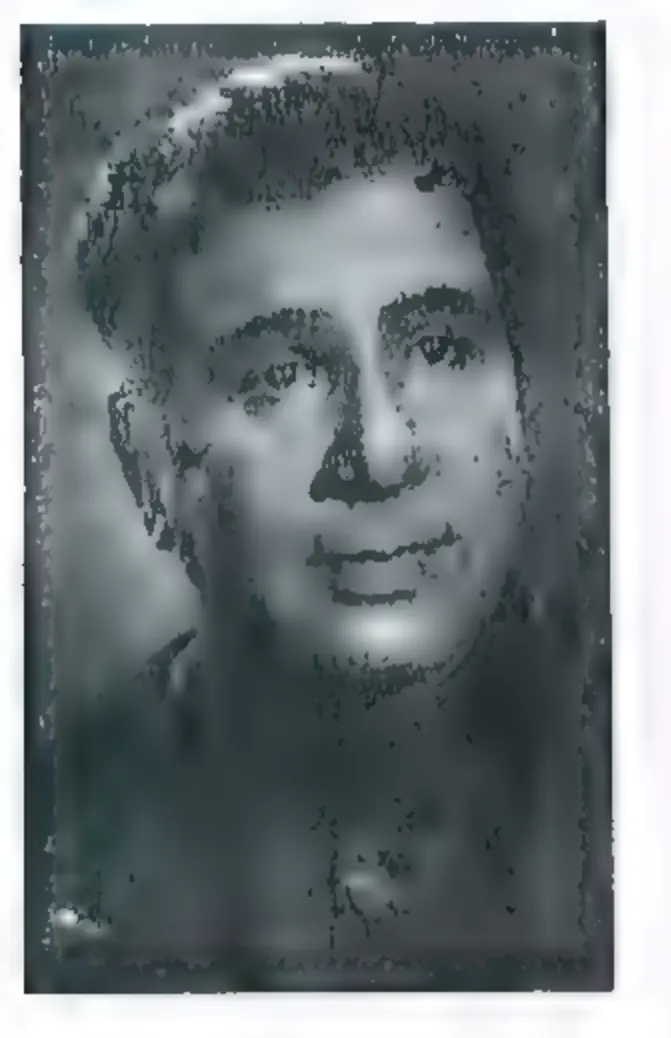
Chittoor V. Nagaiah was a stage actor and singer who became one of the first stars of Telugu cinema.12 K. N. T. Sastry, who wrote a study of his life for the National Film Archive, says his career follows the rise of meaningful Telugu cinema in the 1940s.1 Nagaiah is remembered above all for playing the saint-poets on the screen.3 Sastry draws on Nagaiah’s own life story, edited by Inturi Venkateswara Rao.4
Childhood and the stage
Sastry says Nagaiah was born at Repalle on 28 March 1904.5 When he was about two, his grandmother took him to her village of Gogunur, near Kuppam in Chittoor district.5 His father, Ramalinga Sharma, was a poor revenue clerk who later became a harikatha (sacred story-telling) artist.56 The boy learned music from childhood.6
The family moved to Chittoor, and there the boy fell in love with the stage.67 His first part came by chance. When the boy playing Prahlada in a visiting Surabhi company fell ill, his headmaster pushed Nagaiah onto the stage.7 His parents sent him to Tirupati to take his mind off plays, but he joined a drama society there too.8
He trained as a teacher and worked as a clerk and, briefly, as a police constable.89 He kept acting all the while. He played Chitrangi, a woman’s part, with the Surabhi company, and Kabir in Bellary Raghava’s production of Ramadasu.910 He took a B.A. degree by private study.1011
The freedom movement
Nagaiah was moved by the writings of reformers like Kandukuri Veeresalingam.11 He attended the Congress session at Gauhati in 1926.11 Because he felt strongly against English rule, he stayed away from the ceremony for his degree.11 When the salt agitation began at Madras, he organised squads of volunteers.12
In Madras he joined the Chennapuri Andhra Maha Sabha, where he met B. N. Reddi, then a student.12 Kasinadhuni Nageswara Rao saw one of his plays and made him a correspondent of the Andhra Patrika.12 After his second wife and his father died, he recorded songs for the Gramophone Company for a living.1213
Into the films
When the talkies came, Nagaiah tried for seven years to enter films, and failed again and again.142 A cheat who posed as a businessman from Ceylon took all his savings, and he had to move into a slum.15 Then H. M. Reddy’s new company, Rohini Pictures, began Gruhalakshmi. On B. N. Reddi’s advice, Reddy cast Nagaiah as Gopi, a patriot.152 The film came out in 1938, and his patriotic songs became popular at once.2
In 1939 B. N. Reddi left H. M. Reddy and started Vauhini Pictures, with its office in Nagaiah’s cottage.16 Nagaiah was the hero and music composer of Vauhini’s first film, Vande Mataram.16 In Sumangali he played an old reformer modelled on Veeresalingam.316 Writing in 1956, Nagaiah said that this part made him famous. The editor Baburao Patel wrote of him in Film India, “Here is a Paul Muni.”17
The saint-poets
Vauhini then cast him as Bammera Potana in Bhakta Potana (1944), directed by K. V. Reddy.1819 It became the turning point of his career.2018 He went on to play Vemana in Yogi Vemana, and the image of a saint stayed with him for good.19
Nagaiah set up his own company, Renuka Films.1821 For his second film he wrote, directed and composed the music of Thyagayya (1946), and played Tyagaraja himself.221923 Kodavatiganti Kutumbarao called it the first Telugu film whose story was carried by music. He wrote that it gave Nagaiah a lasting place in the history of Telugu cinema.24
He acted in Tamil films too, and in 1950 the Motion Pictures Academy of Madras named him best actor for Ezhai Padum Paadu.1625 In July 1950 he gave evidence to the Film Enquiry Committee at Madras, as a producer, actor and director.26
Last years
Nagaiah earned well but gave money away freely, Sastry writes. Visitors, friends and political workers rarely left his house empty-handed.1927 Bad investments and debts left him poor.2829 He struggled for a decade to finish his last film as director, Ramadasu, on Kancherla Gopanna, and it won the President’s Medal.2930
The Government of India gave him the Padma Shri in 1965.30 He kept acting in small parts almost until his death.30 He died on 30 December 1973, and Sastry says all Madras seemed to come out for his funeral.31
Where the sources disagree
When and where he was born. Sastry says Nagaiah was born at Repalle on 28 March 1904.5 Yet Sastry also says he was 29 when he entered films, in 1938.232 The film almanac of 1953 says he was born at Kuppam, in Chittoor district, in 1910.21
Footnotes
-
K. N. T. Sastry, Chittoor V. Nagaiah: A Monograph (New Delhi: Publications Division, 2000), p. 1 (archive.org (opens in a new tab)). Cite-only; paraphrased. ↩ ↩2
-
Sastry, Chittoor V. Nagaiah (2000), p. 20 (archive.org (opens in a new tab)). Cite-only; paraphrased. ↩ ↩2 ↩3 ↩4 ↩5
-
Sastry, Chittoor V. Nagaiah (2000), p. 4 (archive.org (opens in a new tab)). Cite-only; paraphrased. ↩ ↩2
-
Sastry, Chittoor V. Nagaiah (2000), preface (archive.org (opens in a new tab)). Cite-only; paraphrased. ↩
-
Sastry, Chittoor V. Nagaiah (2000), p. 9 (archive.org (opens in a new tab)). Cite-only; paraphrased. ↩ ↩2 ↩3 ↩4
-
Sastry, Chittoor V. Nagaiah (2000), p. 10 (archive.org (opens in a new tab)). Cite-only; paraphrased. ↩ ↩2 ↩3
-
Sastry, Chittoor V. Nagaiah (2000), p. 11 (archive.org (opens in a new tab)). Cite-only; paraphrased. ↩ ↩2
-
Sastry, Chittoor V. Nagaiah (2000), p. 12 (archive.org (opens in a new tab)). Cite-only; paraphrased. ↩ ↩2
-
Sastry, Chittoor V. Nagaiah (2000), p. 13 (archive.org (opens in a new tab)). Cite-only; paraphrased. ↩ ↩2
-
Sastry, Chittoor V. Nagaiah (2000), p. 14 (archive.org (opens in a new tab)). Cite-only; paraphrased. ↩ ↩2
-
Sastry, Chittoor V. Nagaiah (2000), p. 15 (archive.org (opens in a new tab)). Cite-only; paraphrased. ↩ ↩2 ↩3 ↩4
-
Sastry, Chittoor V. Nagaiah (2000), p. 16 (archive.org (opens in a new tab)). Cite-only; paraphrased. ↩ ↩2 ↩3 ↩4
-
Sastry, Chittoor V. Nagaiah (2000), p. 17 (archive.org (opens in a new tab)). Cite-only; paraphrased. ↩
-
Sastry, Chittoor V. Nagaiah (2000), p. 18 (archive.org (opens in a new tab)). Cite-only; paraphrased. ↩
-
Sastry, Chittoor V. Nagaiah (2000), p. 19 (archive.org (opens in a new tab)). Cite-only; paraphrased. ↩ ↩2
-
Sastry, Chittoor V. Nagaiah (2000), p. 21 (archive.org (opens in a new tab)). Cite-only; paraphrased. ↩ ↩2 ↩3 ↩4
-
V. Nagiah, “Artistes are Born, Actors are Made”, in Indian Talkie, 1931–56: Silver Jubilee Souvenir (Bombay: Film Federation of India, 1956), p. 137 (archive.org (opens in a new tab)). Signed article, cite-only; paraphrased. ↩
-
Sastry, Chittoor V. Nagaiah (2000), p. 22 (archive.org (opens in a new tab)). Cite-only; paraphrased. ↩ ↩2 ↩3
-
Sastry, Chittoor V. Nagaiah (2000), p. 23 (archive.org (opens in a new tab)). Cite-only; paraphrased. ↩ ↩2 ↩3 ↩4
-
Sastry, Chittoor V. Nagaiah (2000), p. 5 (archive.org (opens in a new tab)). Cite-only; paraphrased. ↩
-
I. K. Menon and S. G. Chandavarkar (compilers), Indian Motion Picture Almanac and Who’s Who, 1953 (Bombay: Film Federation of India, 1953), p. 349, Who’s Who, “Nagiah, V.” (archive.org (opens in a new tab)). ↩ ↩2
-
Sastry, Chittoor V. Nagaiah (2000), p. 6 (archive.org (opens in a new tab)). Cite-only; paraphrased. ↩
-
Sastry, Chittoor V. Nagaiah (2000), p. 160, filmography (archive.org (opens in a new tab)). Cite-only. ↩
-
Kodavatiganti Kutumbarao, “Telugu cinema vishishta charitralo konni mailurallu” (1952), in Cinema Vyasalu, Vol. 1 (Viplava Rachayitala Sangham, 2000), p. 161 (in Telugu) (archive.org (opens in a new tab)). Cite-only; paraphrased. ↩
-
Sastry, Chittoor V. Nagaiah (2000), p. 25 (archive.org (opens in a new tab)). Cite-only; paraphrased. ↩
-
Film Enquiry Committee, Report of the Film Enquiry Committee, 1951 (New Delhi: Government of India Press, 1951), p. 280, Appendix IV (archive.org (opens in a new tab)). ↩
-
Sastry, Chittoor V. Nagaiah (2000), p. 28 (archive.org (opens in a new tab)). Cite-only; paraphrased. ↩
-
Sastry, Chittoor V. Nagaiah (2000), p. 24 (archive.org (opens in a new tab)). Cite-only; paraphrased. ↩
-
Sastry, Chittoor V. Nagaiah (2000), p. 26 (archive.org (opens in a new tab)). Cite-only; paraphrased. ↩ ↩2
-
Sastry, Chittoor V. Nagaiah (2000), p. 27 (archive.org (opens in a new tab)). Cite-only; paraphrased. ↩ ↩2 ↩3
-
Sastry, Chittoor V. Nagaiah (2000), p. 29 (archive.org (opens in a new tab)). Cite-only; paraphrased. ↩
-
Sastry, Chittoor V. Nagaiah (2000), p. 31 (archive.org (opens in a new tab)). Cite-only; paraphrased. ↩
Photos
References
Notes (0)
Sources (5)
Spotted an error on this page? Tell us
Last updated: