Nagarjunakonda inscriptions of Chamtisiri
Prakrit inscriptions at Nagarjunakonda recording gifts by the Ikshvaku princess Chamtisiri. They are cut on the ayaka pillars of the Great Stupa (Mahachaitya), on the pillars of a stone hall and on the floor of an apsidal shrine beside it. They are dated in the 6th, 15th and 18th regnal years of King Virapurushadatta.
These are the most important of the Prakrit inscriptions found at Nagarjunakonda in the Krishna valley.1234 They were cut on the ayaka pillars of the Great Stupa, and on the floor of a small shrine beside it.1234 The ayaka pillars were the rows of five limestone columns that stood on platforms facing the four entrances of the monument.1234
Most of the inscriptions record the gift of a pillar by Chamtisiri, a princess of the Ikshvaku dynasty.1234 This dynasty ruled from the city of Vijayapuri in the 3rd and early 4th centuries CE.1234 Fragments of a third group, on the pillars of a stone hall beside the stupa (relic mound), also name her.5
Discovery
A. R. Sarasvati of the Madras epigraphy office noticed three inscribed pillars at the site in March 1926.6 M. Hamid Kuraishi made trial excavations, reported early in 1927, which brought to light eighteen more inscriptions.6 A. H. Longhurst’s excavations from 1927–28 added further finds.6
Hirananda Sastri, the Government Epigraphist, had impressions (estampages) made.6 He sent them to J. Ph. Vogel of Leiden, who edited all the records together in Epigraphia Indica XX.6 Of the inscriptions found by Kuraishi, fifteen were on the pillars of the Great Stupa.7
Physical description
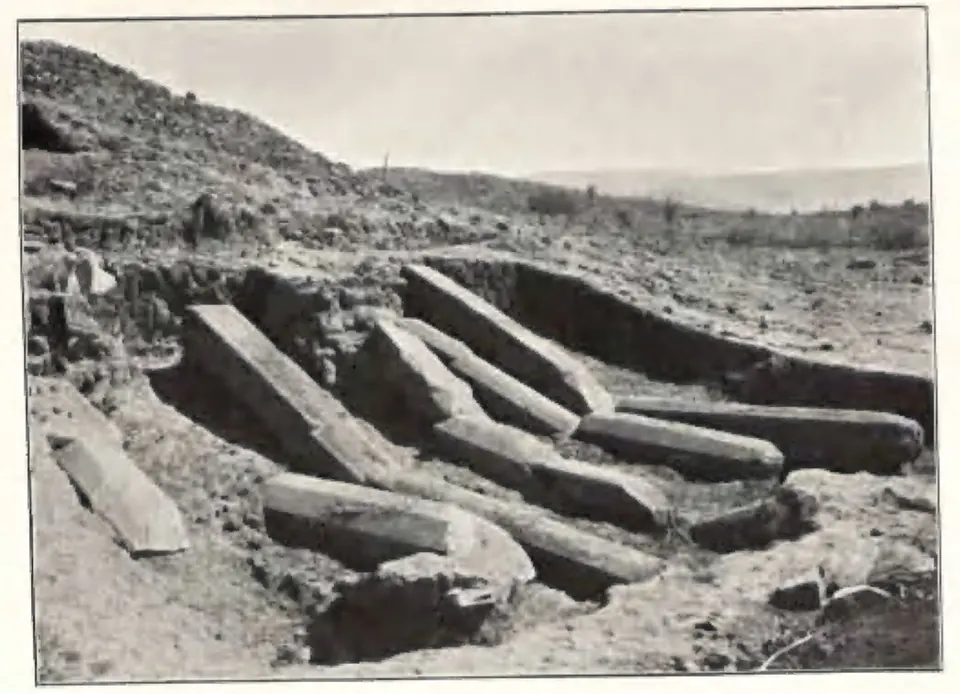
Seventeen ayaka pillars of the Great Stupa were recovered.2 All were inscribed, and thirteen of them were complete or nearly complete.2 Each pillar’s original position, on the north, south, east or west side, could be identified.2
The inscriptions run to between five and thirteen lines on the lower part of each shaft.89 The lines are roughly 16 to 25 inches long.89 A further inscription, labelled E by Vogel, is cut on the stone floor of the apsidal shrine (a hall with one rounded end) immediately east of the stupa.9 It is in two very long lines, 14 feet 5 inches long.9
Close to the east side of that shrine, Longhurst uncovered the remains of a large stone-paved hall.5 Its stone pillars, all broken, had sockets at the top for the timber beams of the roof.5 Their shafts were inscribed below carvings of two recumbent (lying) animals, probably lions.5
Twenty inscribed fragments were recovered, two of which fit together.5 None of the texts survives complete.5 Vogel published them in Epigraphia Indica XXI as M 1–19.5
Language and script
The language is Prakrit, a vernacular form descended from Sanskrit, and the script is Brahmi, the ancient Indian alphabet.1011 Vogel found the engraving technically excellent but the texts carelessly drafted.1011 Syllables and whole words are omitted, vowel lengths are often unmarked, and even the king’s name is usually misspelt.1011 No two of the nine copies of Chamtisiri’s text agree exactly.1011 The pillars use numerical symbols for the dates.11
Content
The standard text opens with a long invocation of the Buddha.12 It then names the donor, the mahatalavari (a noble title) Chamtisiri, and describes her as:12
- uterine sister (sister by the same mother) of the Maharaja Vasithiputa Siri-Chamtamula of the Ikhaku (Ikshvaku) family, who is praised as a giver of crores of gold, hundreds of thousands of cows and ploughs of land12
- paternal aunt of King Madhariputa Siri-Virapurisadata (Virapurushadatta)12
- wife of the general (mahasenapati) and mahatalavara Vasithiputa Kamdasiri of the Pukiya family12
- mother of Khamdasagaramnaka12
She is said to have set up the pillar “for the attainment of welfare and happiness in both the worlds”.12 She is also said to have set it up for her own Nirvana and for the welfare of the whole world.12 The date follows: the 6th year of King Virapurisadata, the 6th fortnight of the rainy season, the 10th day.12 Some copies praise Chamtamula as the performer of the Vedic sacrifices Agnihotra, Agnishtoma, Vajapeya and Ashvamedha (the Vedic horse sacrifice performed by kings).3
One copy (C 1) adds that “this pious foundation of the Mahachetiya” was completed, and the pillars set up, by the monk Ananda.12 Ananda knew two collections of the Buddha’s discourses by heart.12 The work was done for the benefit of the teachers of the Aparamahavinaseliya school.12
The floor inscription E records that Chamtisiri built a chaitya-hall, a stone hall with a cloister, at the foot of the Mahachaitya.1314 She built it for the same school, for the long life and victory of her son-in-law King Virapurushadatta, in his 18th year.1314 Vogel inferred that between the 6th and 18th years the king had married Chamtisiri’s daughter, his cousin.3
The hall inscriptions differ in wording from one another.515 But Vogel found in them phrases also used on the stupa pillars and in inscription E.515 One fragment (M 1) repeats Chamtisiri’s descent and marriage much as on the stupa pillars.515 He concluded that all of them recorded the same act: Chamtisiri’s foundation of the pillared hall (mandapa) for the masters of the Aparamahavinaseliya school.515
Two joined fragments (M 4) give the date as the 15th year of Virapurushadatta, the 8th fortnight of the rainy season, and the day is lost.515 Vogel identified this hall with the stone hall at the foot of the Mahachaitya that inscription E records three years later.515 No trace was found of the cloister named with it.515
Date
The records give regnal years only. Vogel accepted Bühler’s palaeographic dating (dating from the letters) of Virapurushadatta to the 3rd century CE.16 Hirananda Sastri placed the dynasty in the 2nd and 3rd centuries.7 D. C. Sircar in 1959 put Virapurushadatta about the middle of the 3rd century.17
Sircar later dated another inscription of Virapurushadatta’s reign, the memorial pillar of Chamtamula, to 273–74.4 That inscription was written in the cyclic year Vijaya.4 In one of his reconstructions Virapurushadatta reigned about 255–75.4 In the other, he and his two successors reigned about 265–335.4
Significance
The inscriptions show that the Ikshvaku king was praised for Vedic sacrifices.318 But the Buddhist foundations of his capital were paid for by the women of the royal house.318 Hirananda Sastri remarked that no gift by a male member of the family had been found.318
They also name Buddhist schools, titles of the nobility such as mahatalavara, and marriage links with Vanavasi and probably Ujjain.163 Their wording was later read as evidence that the stupa enshrined a bodily relic of the Buddha.1219 This reading was disputed between Vogel and Hirananda Sastri.1219
Edition
- J. Ph. Vogel, “Prakrit Inscriptions from a Buddhist Site at Nagarjunikonda”, Epigraphia Indica XX (1929–30, published 1933), pp. 1 ff., with plates; the text of C 3 with variant readings of the other copies is on p. 16, its translation on p. 17.12
- J. Ph. Vogel, “Additional Prakrit Inscriptions from Nagarjunikonda”, Epigraphia Indica XXI (1931–32), pp. 64–65: the hall inscriptions M 1–19, transcribed but not translated because they are so incomplete.15
Footnotes
-
Vogel, Prakrit Inscriptions from Nagarjunikonda (1933), p. 2 (archive.org (opens in a new tab)). ↩ ↩2 ↩3 ↩4 ↩5
-
Vogel, Prakrit Inscriptions from Nagarjunikonda (1933), p. 3 (archive.org (opens in a new tab)). ↩ ↩2 ↩3 ↩4 ↩5 ↩6 ↩7 ↩8
-
Vogel, Prakrit Inscriptions from Nagarjunikonda (1933), p. 4 (archive.org (opens in a new tab)). ↩ ↩2 ↩3 ↩4 ↩5 ↩6 ↩7 ↩8 ↩9 ↩10 ↩11
-
D. C. Sircar, “More Inscriptions from Nagarjunikonda”, Epigraphia Indica XXXV (1963–64), p. 6 (archive.org (opens in a new tab)). ↩ ↩2 ↩3 ↩4 ↩5 ↩6 ↩7 ↩8 ↩9
-
J. Ph. Vogel, “Additional Prakrit Inscriptions from Nagarjunikonda”, Epigraphia Indica XXI (1931–32), p. 64 (archive.org (opens in a new tab)). ↩ ↩2 ↩3 ↩4 ↩5 ↩6 ↩7 ↩8 ↩9 ↩10 ↩11 ↩12 ↩13 ↩14
-
J. Ph. Vogel, Prakrit Inscriptions from a Buddhist Site at Nagarjunikonda, Epigraphia Indica XX (1933), p. 1 (archive.org (opens in a new tab)). ↩ ↩2 ↩3 ↩4 ↩5
-
A. H. Longhurst, “Excavations at Nagarjunikonda”, Annual Report of the Archaeological Survey of India 1927–28 (1931), p. 115 (archive.org (opens in a new tab)). ↩ ↩2
-
Vogel, Prakrit Inscriptions from Nagarjunikonda (1933), p. 13 (archive.org (opens in a new tab)). ↩ ↩2
-
Vogel, Prakrit Inscriptions from Nagarjunikonda (1933), p. 14 (archive.org (opens in a new tab)). ↩ ↩2 ↩3 ↩4
-
Vogel, Prakrit Inscriptions from Nagarjunikonda (1933), p. 11 (archive.org (opens in a new tab)). ↩ ↩2 ↩3 ↩4
-
Vogel, Prakrit Inscriptions from Nagarjunikonda (1933), p. 12 (archive.org (opens in a new tab)). ↩ ↩2 ↩3 ↩4 ↩5
-
Vogel, Prakrit Inscriptions from Nagarjunikonda (1933), pp. 16–17 (archive.org (opens in a new tab)). ↩ ↩2 ↩3 ↩4 ↩5 ↩6 ↩7 ↩8 ↩9 ↩10 ↩11 ↩12 ↩13 ↩14 ↩15
-
Vogel, Prakrit Inscriptions from Nagarjunikonda (1933), p. 21 (archive.org (opens in a new tab)). ↩ ↩2
-
Vogel, Prakrit Inscriptions from Nagarjunikonda (1933), p. 22 (archive.org (opens in a new tab)). ↩ ↩2
-
Vogel, “Additional Prakrit Inscriptions” (1931–32), p. 65 (archive.org (opens in a new tab)). ↩ ↩2 ↩3 ↩4 ↩5 ↩6 ↩7 ↩8
-
Vogel, Prakrit Inscriptions from Nagarjunikonda (1933), p. 6 (archive.org (opens in a new tab)). ↩ ↩2
-
D. C. Sircar, “Two Inscriptions from Guntur District”, Epigraphia Indica XXXII (1959), p. 83 (archive.org (opens in a new tab)). ↩
-
Longhurst, “Excavations at Nagarjunikonda”, ASI Annual Report 1927–28 (1931), pp. 118–119 (archive.org (opens in a new tab)). ↩ ↩2 ↩3
-
A. H. Longhurst, The Buddhist Antiquities of Nagarjunakonda (1938), p. 18 (archive.org (opens in a new tab)). ↩ ↩2
Photos
 Nagarjunakonda: "Nagarjunikonda: Site No. 1, showing broken pillars on west side of stupa" (ASI Annual Report 1926-27, Pl. XXXVII (a))Historic photograph · 1930
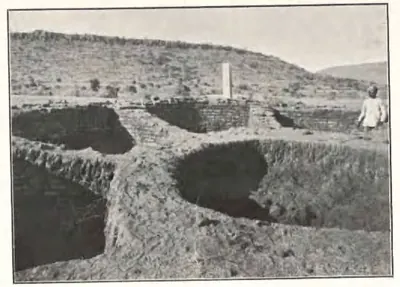 Nagarjunakonda: "Nagarjunikonda: Site No. 1, showing wheel-shaped foundation of stupa" (ASI Annual Report 1926-27, Pl. XXXVII (b))Historic photograph · 1930
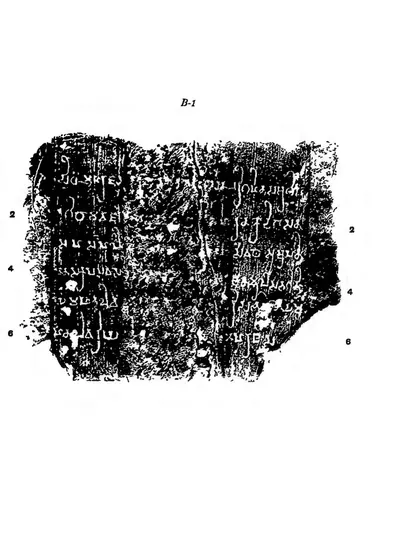 Nagarjunakonda: ayaka-pillar inscription B 1 (south side, first pillar) (Epigraphia Indica XX)Inscription rubbing · 1933
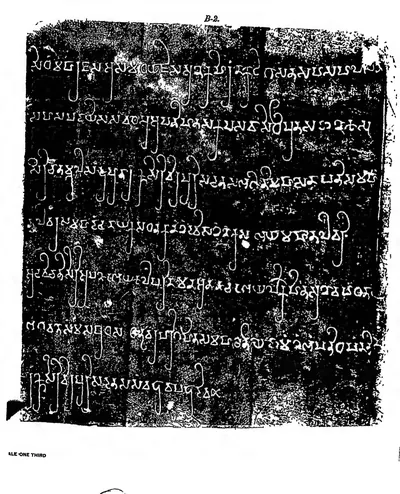 Nagarjunakonda: ayaka-pillar inscription B 2 (south side, second pillar) (Epigraphia Indica XX)Inscription rubbing · 1933
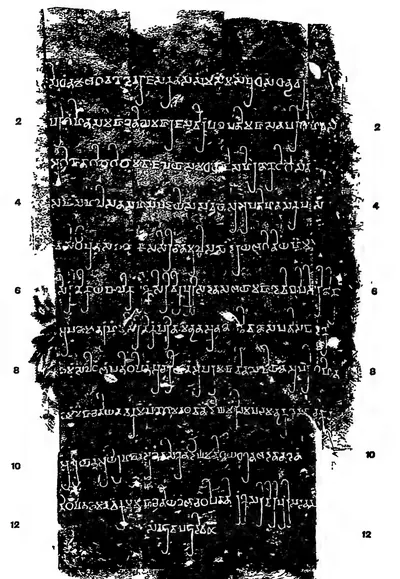 Nagarjunakonda: ayaka-pillar inscription C-2 (west side, second pillar), gift of Mahadevi Bapisirinika, queen of King Siri-Virapurisadata (Epigraphia Indica XX)Inscription rubbing · 1933
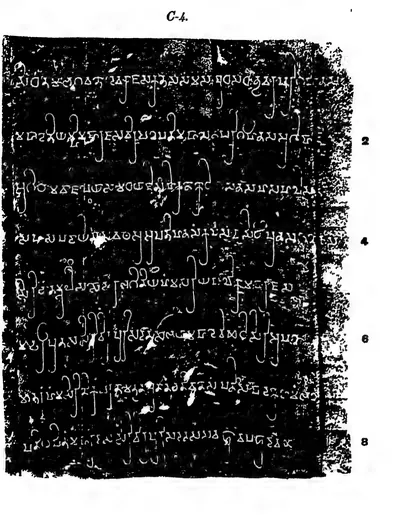 Nagarjunakonda: ayaka-pillar inscription C-4 (west side, fourth pillar), gift of Mahadevi Chhathisiri, queen of King Siri-Virapurisadata (Epigraphia Indica XX)Inscription rubbing · 1933
References
Notes (0)
Sources (6)
Spotted an error on this page? Tell us
Last updated: