Bommala Gutta (Kurikyal)
Rocky hill at Kurikyal near Gangadhara, west of Karimnagar. Jaina images are carved on a rock at its summit. Beside them is the inscription of Jinavallabha, younger brother of the Kannada poet Pampa, of about 945. The inscription calls the rock the Siddha-sila. It says that Jinavallabha had the first and last Jinas and the goddess Chakresvari carved there, and built a temple, a tank and a garden nearby.
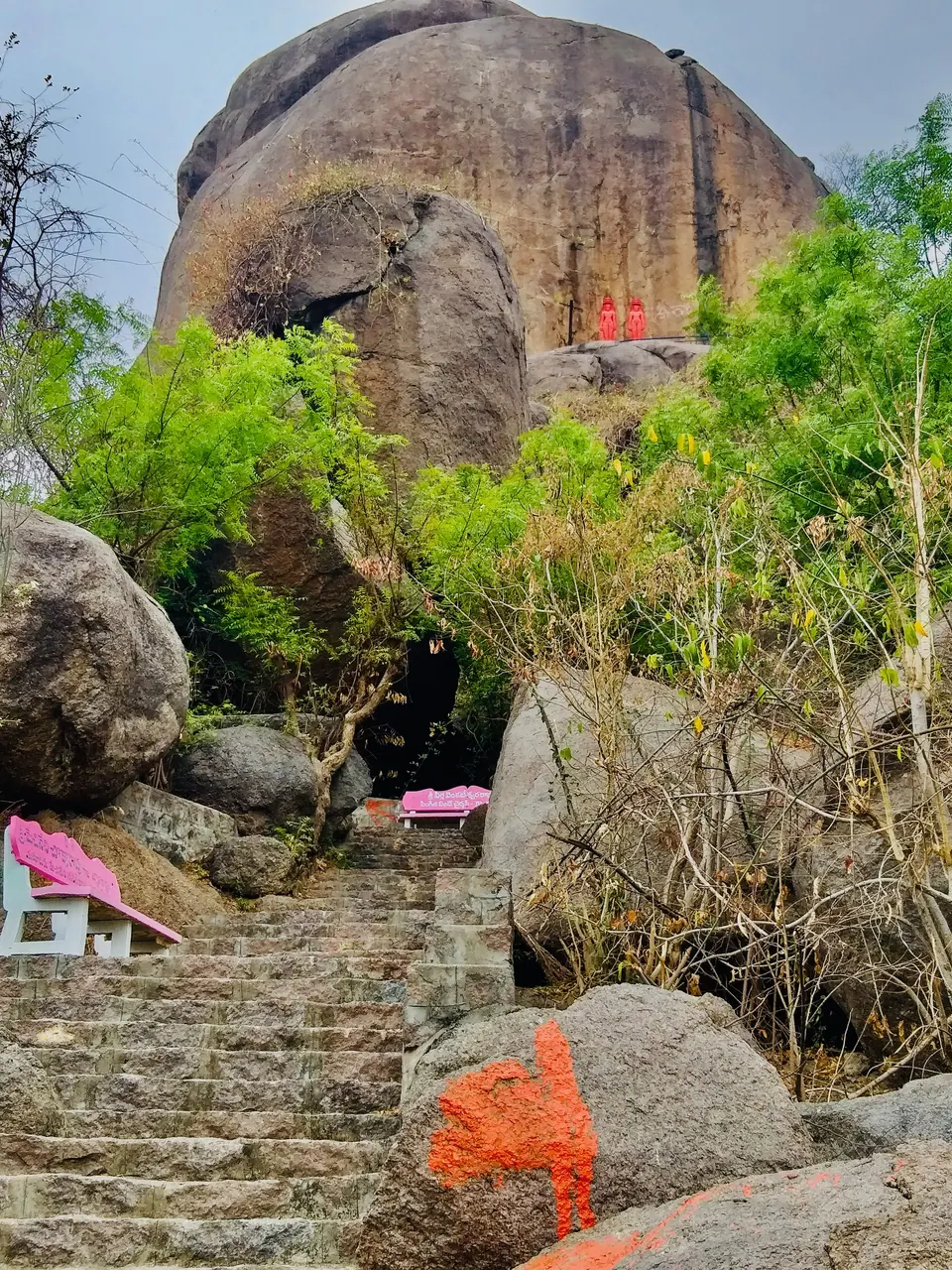
The Bommala Gutta is a hillock in the lands of Kurikyal, near Gangadharam in the Karimnagar district.1 On a huge rock at its top is cut the inscription of Jinavallabha.1 Jinavallabha was the younger brother of the poet Pampa.1
The carvings
The inscription says that Jinavallabha had images carved on the Siddha-sila, “the rock of the Siddhas”.2 They were of his family gods, the first and the last Jinas, and of Chakresvari and other Jaina gods.2 The rock lay south of the old holy place of Vrishabhagiri, north of Dharmavura, in the middle of Sabbi-nadu.2
N. Venkataramanayya edited the inscription.3 He identified the first and last Jinas as Vrishabha (Adinatha) and Vardhamana.3 He noted that Pampa too was a devotee of Adinatha and Chakresvari.3
Venkataramanayya identified the Siddha-sila with the Bommala Gutta.4 He did so from the inscription itself, and from the images of the Jinas, Chakresvari and other Jaina gods carved on the rock at the summit, as the inscription describes.4 He could not identify Vrishabhagiri, the hill to its north.4
The temple, tank and garden
Jinavallabha also built a Jaina temple called Tribhuvanatilaka.2 He dug a tank called Kavitagunarnava and made a garden called Madanavilasa.2 Venkataramanayya found no trace of the temple or the garden near the hill.4 He suggested that the irrigation tank at its northern foot represents Jinavallabha’s tank.4 In his view the temple and garden may have stood in the village of Gangadharam, where Jaina images lie scattered in the fields.4
Footnotes
-
Gajjala Vasanta Lakshmi (ed.), Epigraphia Telanganica I: Pre-Kakatiya Telangana (2023), p. 394, reprinting N. Venkataramanayya, “The Kurkiyala Inscription of Jinavallabha”, Epigraphia Andhrica II (1974), pp. 21–28. Cite-only; paraphrased. ↩ ↩2 ↩3
-
Epigraphia Telanganica I (2023), p. 395, reprinting Venkataramanayya (1974). Cite-only; paraphrased. ↩ ↩2 ↩3 ↩4 ↩5
-
Epigraphia Telanganica I (2023), p. 397, reprinting Venkataramanayya (1974). Cite-only; paraphrased. ↩ ↩2 ↩3
-
Epigraphia Telanganica I (2023), p. 399, reprinting Venkataramanayya (1974). Cite-only; paraphrased. ↩ ↩2 ↩3 ↩4 ↩5 ↩6
Photos
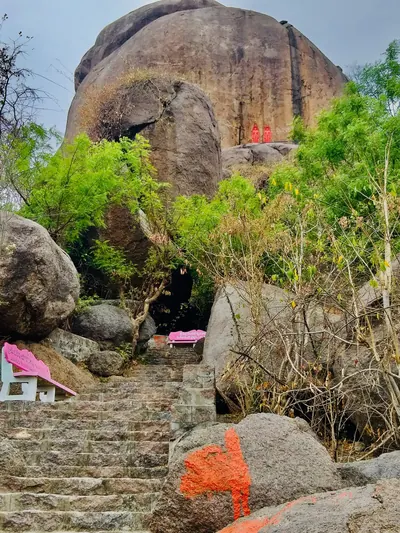 "10th century Bommalagutta Jain bas-reliefs and inscription, Telangana - 01" (photograph by P. Madhusudan, 2021, Wikimedia Commons)Photograph · 2021
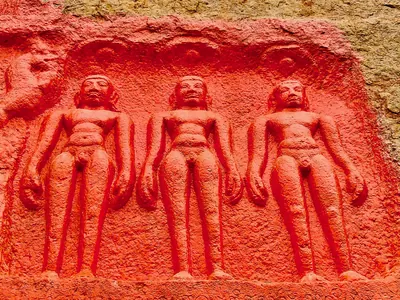 "10th century Bommalagutta Jain bas-reliefs and inscription, Telangana - 07" (photograph by P. Madhusudan, 2021, Wikimedia Commons)Photograph · 2021
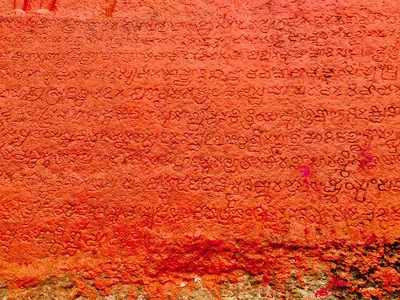 "10th century Bommalagutta Jain bas-reliefs and inscription, Telangana - 12" (photograph by P. Madhusudan, 2021, Wikimedia Commons)Photograph · 2021
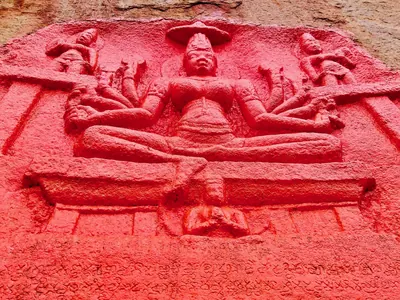 "10th century Bommalagutta Jain bas-reliefs and inscription, Telangana - 27" (photograph by P. Madhusudan, 2021, Wikimedia Commons)Photograph · 2021
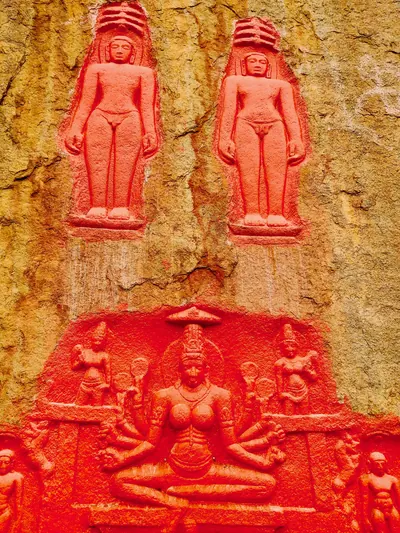 "10th century Bommalagutta Jain bas-reliefs and inscription, Telangana - 9" (photograph by P. Madhusudan, 2021, Wikimedia Commons)Photograph · 2021
Related
Inscriptions
References
Notes (0)
Sources (1)
Spotted an error on this page? Tell us
Last updated: