Kurkyal inscription of Jinavallabha
A rock inscription of about 945 on the Bommala Gutta, a hill at Kurikyal near Gangadhara in the Karimnagar district. Jinavallabha, younger brother of the Kannada poet Pampa, set it up. Written in Sanskrit, Kannada and Telugu, it records Jaina images, a temple, a tank and a garden made by Jinavallabha. It gives Pampa's family and home in the Vengi country, and confirms that the Chalukya king Arikesari II gave Pampa the village of Dharmavura for his Vikramarjunavijaya. Its three Telugu verses in the kanda metre are among the earliest Telugu verse.
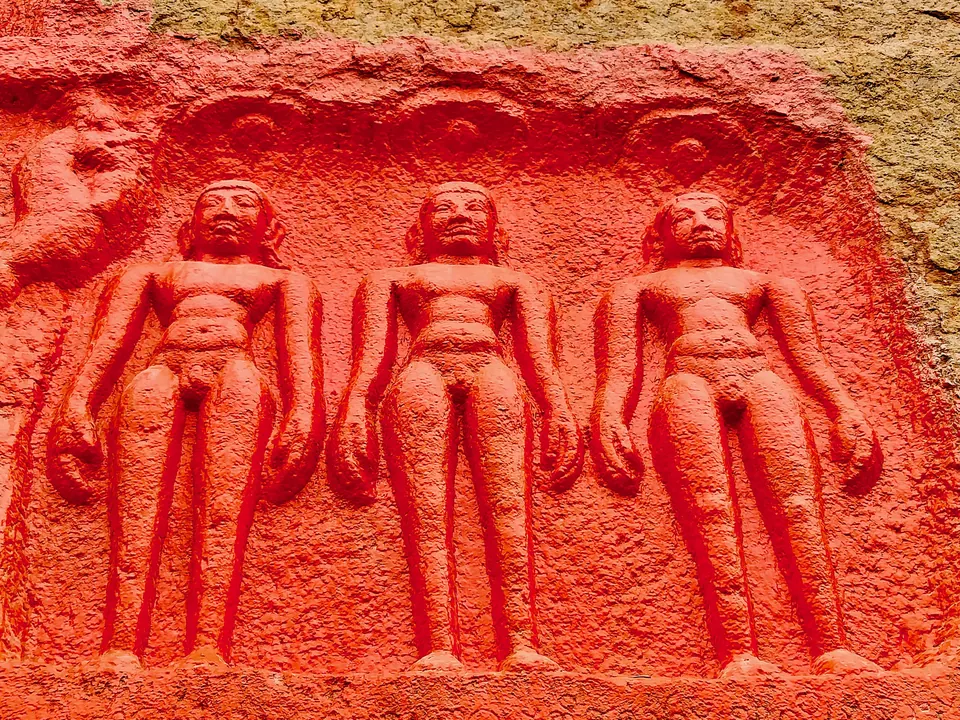
The Kurkyal inscription is a rock record of Pampa’s younger brother, Jinavallabha.12 It is the only inscription that names the poet and his work.12 It is also one of the earliest records with verse in Telugu.12
The rock
The inscription is cut on a huge rock on the top of the Bommala Gutta, a hillock near Gangadharam in the Karimnagar district.1 The hillock is in the lands of Kurikyal.1 The inscription has eleven lines: ten are about 14 feet 5 inches long and one about 4 feet.1 The letters are about half an inch high and deeply cut, and except where the stone has peeled they are easy to read.1
N. Venkataramanayya edited the inscription in Epigraphia Andhrica II (1974).1 He found the Telugu-Kannada letters close to those of the Vemulavada inscription of Arikesari II.1 Images of Jaina divinities are carved on the same rock.3 See the Bommala Gutta.
Three languages
The record opens with a Sanskrit formula of homage to the Siddhas.1 A long prose passage in Kannada follows.1 Then come three Sanskrit verses, six Kannada verses and three Telugu verses in the kanda metre.1 A closing passage of Kannada prose ends the record.1
Venkataramanayya thought the scribe was careful but unfamiliar with Telugu, since most of the mistakes are in the Telugu part.1 He suggested that Jinavallabha, whom the record praises as a poet, may have composed it himself.2
Contents
Jinavallabha describes himself as a Kamme-Brahmana of the Srivatsa gotra (clan).4 He says he came from Vangiparru, one of the seven villages of Bengi-nadu.4 He names his parents as Bhimapayya and Vabbanabbe, and calls himself the younger brother of Pampa, author of the Vikramarjunavijaya.4 He was a disciple of the Jaina teacher Jayamgonda Siddhanta-bhatara.4
He had images of the first and last Jinas, of the goddess Chakresvari and of other Jaina divinities carved on the Siddha-sila.4 This was a rock to the south of the old holy place of Vrishabhagiri, which lay north of Dharmavura in the middle of Sabbi-nadu.4 He built a Jaina temple called Tribhuvanatilaka.4 He dug a tank called Kavitagunarnava, after Pampa’s title, and laid out a garden called Madanavilasa.4
The inscription then says that King Arikesari of the Chalukya family, called Hariga and Ariga, gave Pampa the village of Dharmavura as an agrahara (village granted to Brahmans).4 He gave it in appreciation of the Vikramarjunavijaya.4
Someone might doubt whether a charter had been written, whether Arikesari had really given the village or whether Pampa had accepted it.4 Such a person, the record says, should go to the Vrishabhadri and read the letters cut there.4 Erityamma engraved the record on the Siddha-sila.4
Its importance
Venkataramanayya used the inscription to correct Pampa’s own family tree.56 The printed text of the Vikramarjunavijaya calls Pampa’s father Abhimanadevaraya.56 But manuscripts at Poona and Agra read Bhima, which agrees with the inscription.56
He identified the Siddha-sila with the Bommala Gutta, about 13 miles west of Karimnagar on the Karimnagar–Kamareddy road.73 He identified the tank at the northern foot of the hill with Jinavallabha’s tank.73 He found no trace of the temple or the garden.73
He thought the temple and garden may have stood in Gangadharam, where Jaina images lie scattered in the fields.73 He could not identify Vrishabhagiri and Dharmavura, though several villages named Dharmapuri or Dharmaram lie in the Karimnagar district.73
He called the three Telugu kanda verses “the earliest of their kind in the language”.2 He took them to show that Telugu poetry was written in the north-western marches (border lands) of the Telugu country at least a century before Nannaya.2
The inscription is undated.2 It mentions the Vikramarjunavijaya, which was written after 941.2 From its letters, and because of this mention, Venkataramanayya suggested 945 as “a very good date for it”.2
Epigraphia Telanganica (2023) also summarises the inscription from Inscriptions of Karimnagar District (reprint, 2016).89 There it is listed as a record of the reign of Arikesari II.89
Footnotes
-
Epigraphia Telanganica I (2023), p. 394, reprinting N. Venkataramanayya, “The Kurkiyala Inscription of Jinavallabha”, Epigraphia Andhrica II (1974), pp. 21–28. Cite-only; paraphrased. ↩ ↩2 ↩3 ↩4 ↩5 ↩6 ↩7 ↩8 ↩9 ↩10 ↩11 ↩12 ↩13 ↩14
-
Epigraphia Telanganica I (2023), p. 401, reprinting Venkataramanayya (1974). Cite-only; paraphrased except for two short phrases. ↩ ↩2 ↩3 ↩4 ↩5 ↩6 ↩7 ↩8 ↩9
-
Epigraphia Telanganica I (2023), p. 399, reprinting Venkataramanayya (1974). Cite-only; paraphrased. ↩ ↩2 ↩3 ↩4 ↩5 ↩6
-
Epigraphia Telanganica I (2023), p. 395, reprinting Venkataramanayya (1974). Cite-only; paraphrased. ↩ ↩2 ↩3 ↩4 ↩5 ↩6 ↩7 ↩8 ↩9 ↩10 ↩11 ↩12 ↩13
-
Epigraphia Telanganica I (2023), p. 396, reprinting Venkataramanayya (1974). Cite-only; paraphrased. ↩ ↩2 ↩3
-
Epigraphia Telanganica I (2023), p. 397, reprinting Venkataramanayya (1974). Cite-only; paraphrased. ↩ ↩2 ↩3
-
Epigraphia Telanganica I (2023), p. 398, reprinting Venkataramanayya (1974). Cite-only; paraphrased. ↩ ↩2 ↩3 ↩4 ↩5
-
Gajjala Vasanta Lakshmi (ed.), Epigraphia Telanganica I: Pre-Kakatiya Telangana (2023), p. 89, No. 4. Cite-only; paraphrased. ↩ ↩2
-
Epigraphia Telanganica I (2023), p. 90. Cite-only; paraphrased. ↩ ↩2
Photos
 "10th century Bommalagutta Jain bas-reliefs and inscription, Telangana - 07" (photograph by P. Madhusudan, 2021, Wikimedia Commons)Photograph · 2021
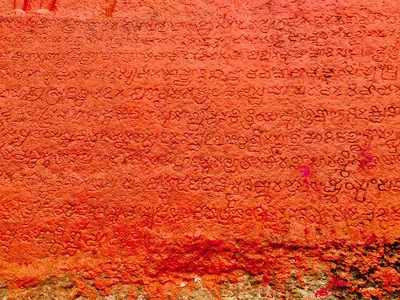 "10th century Bommalagutta Jain bas-reliefs and inscription, Telangana - 12" (photograph by P. Madhusudan, 2021, Wikimedia Commons)Photograph · 2021
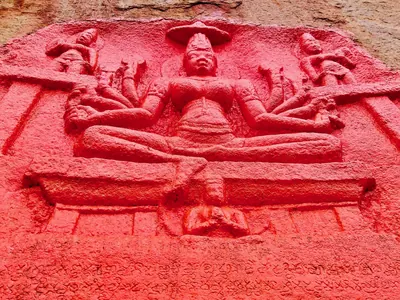 "10th century Bommalagutta Jain bas-reliefs and inscription, Telangana - 27" (photograph by P. Madhusudan, 2021, Wikimedia Commons)Photograph · 2021
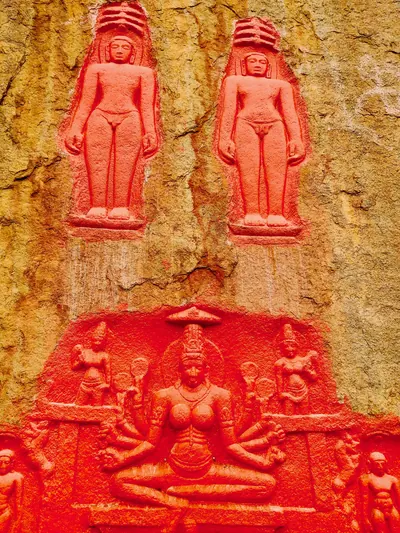 "10th century Bommalagutta Jain bas-reliefs and inscription, Telangana - 9" (photograph by P. Madhusudan, 2021, Wikimedia Commons)Photograph · 2021
References
Notes (0)
Sources (1)
Spotted an error on this page? Tell us
Last updated: