Jaya (Jayapa)
General and minister of the Kakatiya king Ganapatideva, of the Ayya family of Divi. Ganapati married his two sisters and made him commander of the elephant troops and governor of Velanadu. He built the Ganapesvara temple on Divi in 1231 and wrote the Nritta Ratnavali, a Sanskrit treatise on dance.
Jaya was a general and minister of the Kakatiya king Ganapatideva.12 He built the Ganapesvara temple on the island of Divi in 1231.1 He is best remembered for the Nritta Ratnavali, a Sanskrit book on dance.34
Family
Jaya, also called Jayana or Jayapa, came from the Ayya family, chiefs of the island of Divi (Dvipa) at the mouth of the Krishna. The Ganapesvaram inscription of 1231, which he set up, traces his family from Bhima of the Ayya race.5 Bhima lived at Kroyyuru in the Velanandu country, and his sons served a king called Chodi.5 One of them, Narayana, fortified Divi and received its lordship.5
Jaya’s father Pinna-Chodi and mother Damamba had two daughters, Naramba and Peramamba, and three sons, Prithva, Jaya and Narayana.51 P. V. Parabrahma Sastry noted that the Chebrolu inscription makes his mother a niece of a Velanati chief.6
In Ganapatideva’s service
Early in Ganapatideva’s reign the Kakatiya general Malyala Chaunda took Divi.7 The Ayya chiefs had held it for the Velanati king Prithvishvara.7 According to the Ganapesvaram inscription, Ganapati conquered the country of Velanandu together with Divi.1 He took Jaya’s sisters as his wives, and took Jaya into his service and made him a general.1
Parabrahma Sastry adds, from Jaya’s own treatise, that the king placed the boy under a minister named Gundamatya for his education.82 Later the king put him in charge of the elephant troops.82
The inscription credits him with an early victory over an enemy whose title, Vairigodhumagharatta, means a grindstone for wheat-like foes.19 Parabrahma Sastry connected the victory with the Kakatiya campaigns in Kalinga before 1213.9
Jaya governed Velanadu, the old country of the Velanati Chodas, with Chandavolu as its capital, from about 1209–10.2 His inscription at Chebrolu records that in Saka 1135 (1213–14; Saka is an Indian way of counting years) he received the city of Chebrolu from Ganapatideva.1011 It calls him chief of the king’s elephant troops, and credits him with building a wall round the town and repairing its temples.1011 E. Hultzsch called this “the earliest authenticated date of Ganapati’s reign”.1011
Parabrahma Sastry noted that the same inscription says Ganapati gave him the lordship of the region on his return from his southern expedition.12 Jaya was later a minister at Orugallu (Warangal), but remained popularly known as the general (senapati).2 In 1246 his minister Manchiraja heard a canal dispute in the Karimnagar region for the king.13
In 1253 Jaya gave a lamp to the god Bhimeshvara at Draksharama.14 He dated the gift by the regnal year of a Chola king who was no longer reigning.14 Parabrahma Sastry took this as respect for local custom rather than Chola authority.14
The Ganapesvara temple
On Divi Jaya built a temple of Shiva, which he named Ganapesvara, or Ganapatisvara, after his king. The hamlet of Ganapesvaram still bears the name. Hultzsch, following S. B. Dikshit, dated its consecration to 7 April 1231. The Telugu part of the inscription assigns to the temple the dues of every boat touching at Hangegadda.1 It also gives the temple the revenue of several villages, and twenty-five cows for a perpetual lamp.1
The Nritta Ratnavali
Jaya wrote the Nritta Ratnavali, a Sanskrit treatise in eight chapters on dance and drama. Parabrahma Sastry valued it above all for its separate chapter on desi dance, the local and regional dances of Andhra in Ganapatideva’s time. It was edited by V. Raghavan and published in 1965.34
Jaya is also said to have written the Gita Ratnavali on music and the Vadya Ratnavali on instruments.215 Neither is known to survive.215 Some authorities on dance have compared the dancers carved on Kakatiya temples with the regional styles that he describes.16
Footnotes
-
E. Hultzsch, “Ganapesvaram Inscription of the Time of Ganapati”, Epigraphia Indica III (1894–95), p. 84 (archive.org (opens in a new tab)). ↩ ↩2 ↩3 ↩4 ↩5 ↩6 ↩7 ↩8
-
P. V. Parabrahma Sastry, The Kakatiyas of Warangal (1978), p. 168. ↩ ↩2 ↩3 ↩4 ↩5 ↩6 ↩7
-
P. V. Parabrahma Sastry, The Kakatiyas of Warangal (1978), p. 10. ↩ ↩2
-
P. V. Parabrahma Sastry, The Kakatiyas of Warangal (1978), pp. 294–295. ↩ ↩2
-
E. Hultzsch, “Ganapesvaram Inscription of the Time of Ganapati”, Epigraphia Indica III (1894–95), p. 83 (archive.org (opens in a new tab)). ↩ ↩2 ↩3 ↩4
-
P. V. Parabrahma Sastry, The Kakatiyas of Warangal (1978), p. 167. ↩
-
P. V. Parabrahma Sastry, The Kakatiyas of Warangal (1978), p. 107. ↩ ↩2
-
P. V. Parabrahma Sastry, The Kakatiyas of Warangal (1978), pp. 107–108. ↩ ↩2
-
P. V. Parabrahma Sastry, The Kakatiyas of Warangal (1978), p. 110. ↩ ↩2
-
E. Hultzsch, “Chebrolu Inscription of Jaya; after Saka-Samvat 1135”, Epigraphia Indica V (1898–99), p. 142 (archive.org (opens in a new tab)). ↩ ↩2 ↩3
-
E. Hultzsch, “Chebrolu Inscription of Jaya; after Saka-Samvat 1135”, Epigraphia Indica V (1898–99), p. 143 (archive.org (opens in a new tab)). ↩ ↩2 ↩3
-
P. V. Parabrahma Sastry, The Kakatiyas of Warangal (1978), p. 109. ↩
-
P. V. Parabrahma Sastry, The Kakatiyas of Warangal (1978), p. 190. ↩
-
P. V. Parabrahma Sastry, The Kakatiyas of Warangal (1978), p. 176. ↩ ↩2 ↩3
-
P. V. Parabrahma Sastry, The Kakatiyas of Warangal (1978), p. 295. ↩ ↩2
-
P. V. Parabrahma Sastry, The Kakatiyas of Warangal (1978), p. 303. ↩
Photos
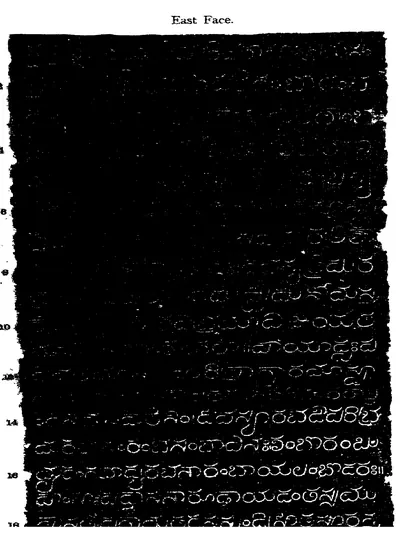 "Chebrolu Pillar Inscription of Jaya; after Saka-Samvat 1135", east face, opening lines (numbered 2 to 18) (Epigraphia Indica V, plate between pp. 146 and 147 (PDF p. 204))Inscription rubbing · 1899
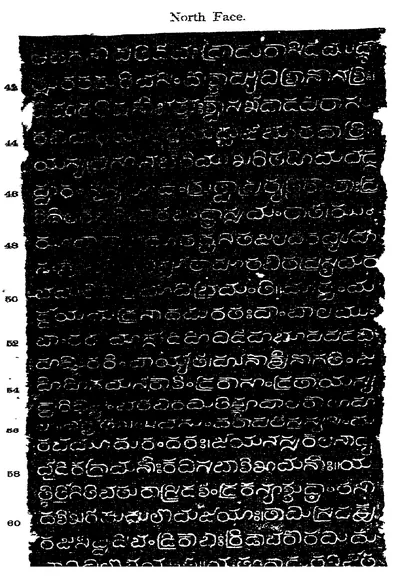 "Chebrolu Pillar Inscription of Jaya; after Saka-Samvat 1135", north face, part (lines numbered 43 to 60) (Epigraphia Indica V, plate between pp. 146 and 147 (PDF p. 204))Inscription rubbing · 1899
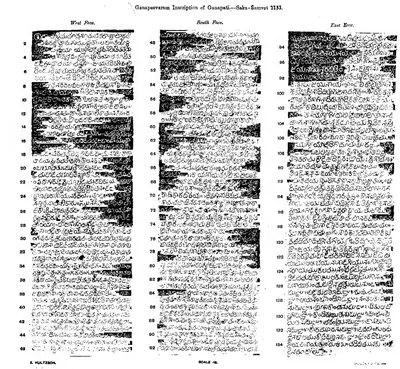 "Ganapesvaram Inscription of Ganapati.—Saka-Samvat 1153": west, south and east faces (Epigraphia Indica III)Book plate · 1895
Related
Dynasties

References
Notes (0)
Sources (3)
Spotted an error on this page? Tell us
Last updated: