Chebrolu
Old town on a sandstone ridge nine miles south-east of Guntur, called Tamrapuri or the 'city of Shanmukha' in its inscriptions, after its temple of Kumarasvamin. Its records run from 1006. They include gifts of the Velanadu chiefs, and a long inscription of 1213 by Jaya, the Kakatiya king Ganapati's general, who received the town and rebuilt its temples and walls. M. Rama Rao attributed its Bhimesvara temple to the Eastern Chalukya king Chalukya-Bhima I.
Chebrolu lies on the edge of a sandstone ridge overlooking the Krishna delta, on the road from Guntur to Bapatla. The Kistna district manual of 1883 put it nine miles from Guntur and called it “a place of considerable antiquity”.1 Robert Sewell’s list of 1882 placed it eight miles south by east of Guntur.2 It was then in the Bapatla taluk of Krishna (then Kistna) district, and later of Guntur district.13
Names
An inscription of 1213 calls the town Tamrapuri and Tamranagari in its Sanskrit verses.4 E. Hultzsch explained these as Sanskrit renderings of the Telugu name Chembrolu, the old form of Chebrolu.4 The same record calls it “the city of Shanmukha”, after its temple of Kumarasvamin (Skanda).4 Hultzsch said that this temple was by then called the Nagesvara temple.4
The Kistna manual adds that the zamindar (landholder) Raja Vasireddi Venkatadri Naidu of Chintapalle restored some of its temples.1 He gave the place the name Chaturmukhapuram, “the city facing the four points of the compass”.1 M. Rama Rao suggested that Chebrolu might be the Tambrapasthana of a Pallava copper-plate grant.3 The Nellore district gazetteer of 1942 likewise took the Pallava camp of Tambrapa to be probably Chebrolu.5 See Omgodu grant of Skandavarman II.
Early remains
Rama Rao described a big mound at the eastern end of the village, the site of most of its temples.3 Coins of the Satavahana kings Gautamiputra Satakarni and Yajna Sri Satakarni had been found in it, with coloured pottery and terracottas of the same period.3 Two uprights of a Buddhist stupa (relic mound) railing had lain near the Bhimesvara temple until shortly before his survey.3
Both 19th-century accounts mention finds of gold and silver coins.12 Sewell said that they had been dug up in a stone box with a stone image.2
Temples and inscriptions
Sewell and the Kistna manual both found the inscriptions of Chebrolu at the temple of Nagesvara. Hultzsch identified that temple with the old temple of Kumarasvamin.214 Rama Rao believed instead that the temple of Kumara to which most records belonged no longer existed.3
V. Rangacharya’s list of 1919 gives the records copied in 1897.67 The earliest dated one, of Saka 928 (1006; Saka is an Indian way of counting years), is a gift to Kumarasvamin under the Western Chalukya king Satyasraya II.6 Others record lamps given by the Velanadu chiefs Gonka and Choda and their families from 1077 onwards.67 There is also a record of the Chola king Vikrama-Chola dated 1127.67
The Eastern Chalukya Yuddhamalla left a Telugu verse inscription on a pillar at Vijayawada (then Bezwada).89 It records that the god Kumarasvamin, or, in another reading, the king Malla, came from “the celebrated (town of) Chebrolu” to a festival at Vijayawada.89 See Bezwada pillar inscription of Yuddhamalla.
The inscription of Jaya
The longest inscription is on a pillar in front of the Nagesvara temple.10 It records that the Kakatiya king Ganapati was returning from a conquest of the southern kings.10 In Saka 1135 (1213–14) he gave Chebrolu to Jaya, commander of his elephant troops, telling him to rule the “city of Shanmukha”.10
Jaya repaired and whitewashed its temples, and gilded the image of Kumarasvamin.10 He built an enclosure and a three-storeyed gopura (gateway tower), and he surrounded the town with a wall and towers.10 A list of the temple’s servants follows, from priests, an astrologer and a doctor to three hundred dancing-girls, carpenters, smiths and washermen.11
A second inscription of Jaya, of 1235, records that he built the temple of Chodesvara, named after his father.7 Hultzsch noted that another inscription of Jaya is built into a temple at Chandavolu.11 He called Chandavolu the capital of the Velanadu chiefs.11
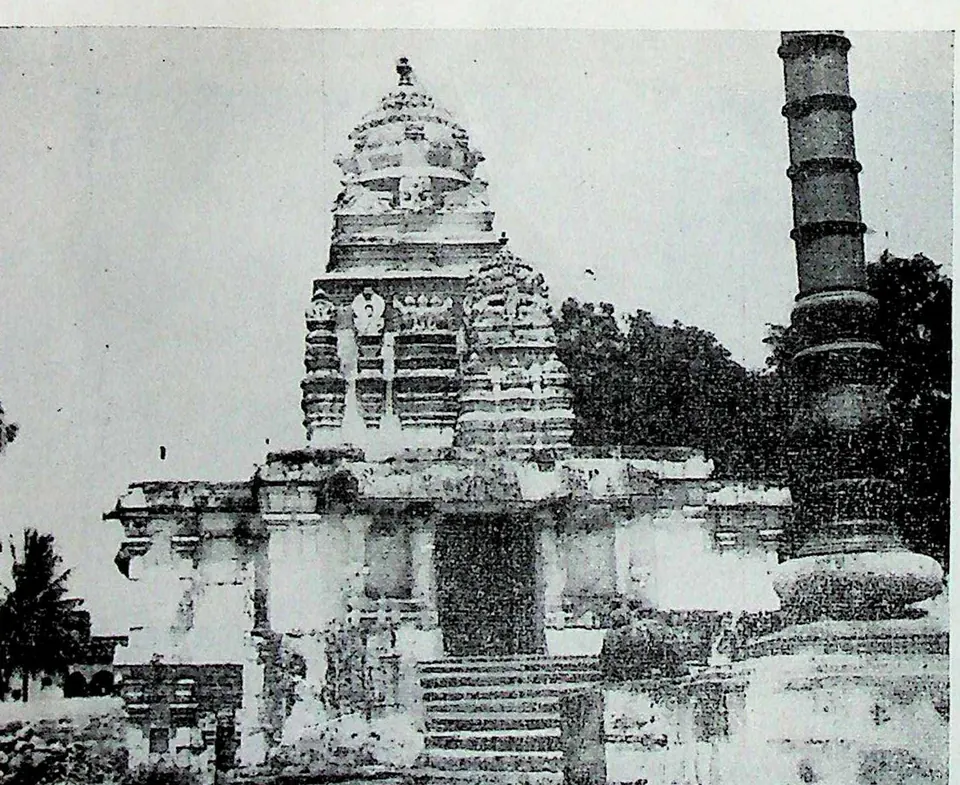
M. Rama Rao attributed the Bhimesvara temple on the mound to the Eastern Chalukya king Chalukya-Bhima I.1213 The older accounts do not mention it.21 See Bhimesvara temple, Chebrolu.
Footnotes
-
Gordon Mackenzie, A Manual of the Kistna District (1883), p. 203 (archive.org (opens in a new tab)). ↩ ↩2 ↩3 ↩4 ↩5 ↩6 ↩7
-
Robert Sewell, Lists of the Antiquarian Remains in the Presidency of Madras, Vol. I (1882), p. 82, s.v. Chebrolu (archive.org (opens in a new tab)). ↩ ↩2 ↩3 ↩4 ↩5
-
Rama Rao, Eastern Calukyan Temples (1964), p. 45 (archive.org (opens in a new tab)). ↩ ↩2 ↩3 ↩4 ↩5 ↩6
-
E. Hultzsch, “Chebrolu Inscription of Jaya; after Saka-Samvat 1135”, Epigraphia Indica V (1898–99), p. 143 (archive.org (opens in a new tab)). ↩ ↩2 ↩3 ↩4 ↩5
-
Gazetteer of the Nellore District, brought up to 1938, Vol. A (1942), p. 30 (archive.org (opens in a new tab)). ↩
-
V. Rangacharya, A Topographical List of the Inscriptions of the Madras Presidency, Vol. II (1919), p. 754, Bapatla taluk, Chebrolu, Nos. 83–87 (archive.org (opens in a new tab)). ↩ ↩2 ↩3 ↩4
-
Rangacharya, Topographical List, Vol. II (1919), p. 755, Nos. 88–93 (archive.org (opens in a new tab)). ↩ ↩2 ↩3 ↩4
-
J. Ramayya Pantulu, “The Bezwada Pillar Inscription of Yuddhamalla”, Epigraphia Indica XV (1919–20), p. 153, with H. Krishna Sastri’s notes (archive.org (opens in a new tab)). ↩ ↩2
-
Ramayya Pantulu, “The Bezwada Pillar Inscription” (1920), p. 159, translation (archive.org (opens in a new tab)). ↩ ↩2
-
Hultzsch, “Chebrolu Inscription of Jaya” (1899), p. 149, abstract of contents (archive.org (opens in a new tab)). ↩ ↩2 ↩3 ↩4 ↩5
-
Hultzsch, “Chebrolu Inscription of Jaya” (1899), p. 150 and postscript (archive.org (opens in a new tab)). ↩ ↩2 ↩3
-
Rama Rao, Eastern Calukyan Temples (1964), p. 2 (archive.org (opens in a new tab)). ↩
-
M. Rama Rao, Eastern Calukyan Temples of Andhra Desa (1964), preface (unnumbered) (archive.org (opens in a new tab)). ↩
Photos
 "47. Bhīmēśvara Temple - Chēbrōlu - Front view" (M. Rama Rao, Eastern Calukyan Temples of Andhra Desa, 1964, Fig. 47 (PDF p. 123))Historic photograph · 1964
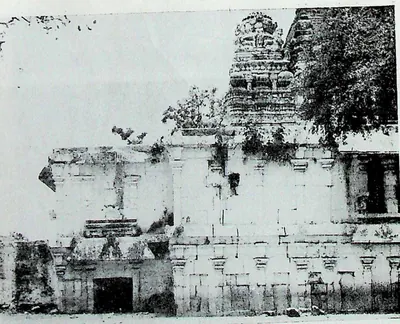 "48. Bhīmēśvara Temple - Chēbrōlu - North Side view" (M. Rama Rao, Eastern Calukyan Temples of Andhra Desa, 1964, Fig. 48 (PDF p. 125))Historic photograph · 1964
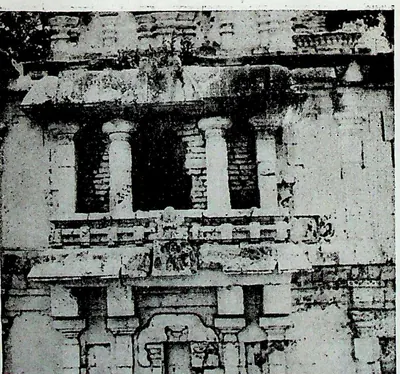 "49. Bhīmēśvara Temple - Chēbrōlu–Central Part of North Wall" (M. Rama Rao, Eastern Calukyan Temples of Andhra Desa, 1964, Fig. 49 (PDF p. 127))Historic photograph · 1964
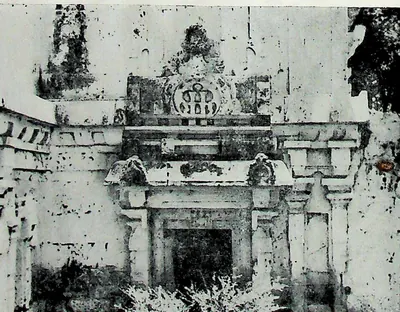 "50. Bhīmēśvara Temple - Chēbrōlu - Projection of South Wall" (M. Rama Rao, Eastern Calukyan Temples of Andhra Desa, 1964, Fig. 50 (PDF p. 129))Historic photograph · 1964
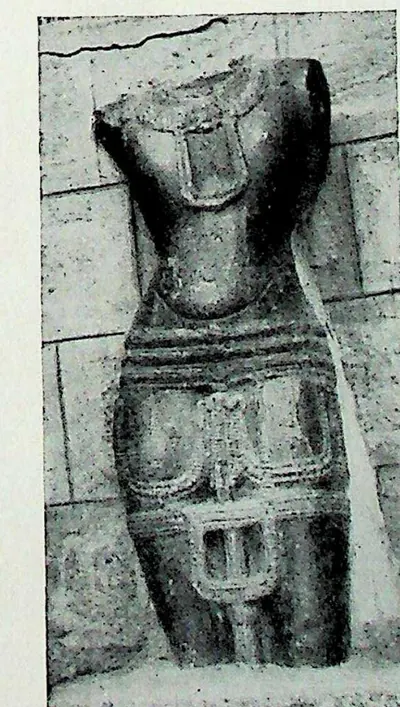 "51. Kumāra - Chēbrōlu" (M. Rama Rao, Eastern Calukyan Temples of Andhra Desa, 1964, Fig. 51 (PDF p. 129))Historic photograph · 1964
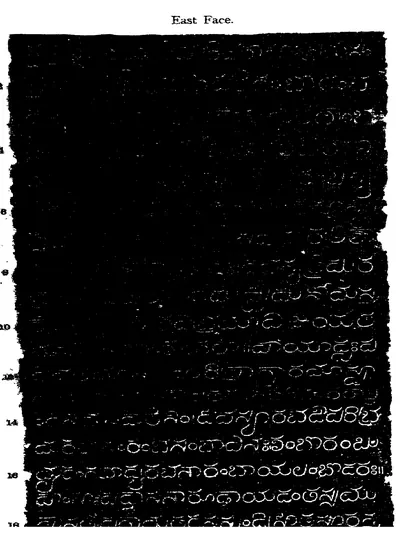 "Chebrolu Pillar Inscription of Jaya; after Saka-Samvat 1135", east face, opening lines (numbered 2 to 18) (Epigraphia Indica V, plate between pp. 146 and 147 (PDF p. 204))Inscription rubbing · 1899
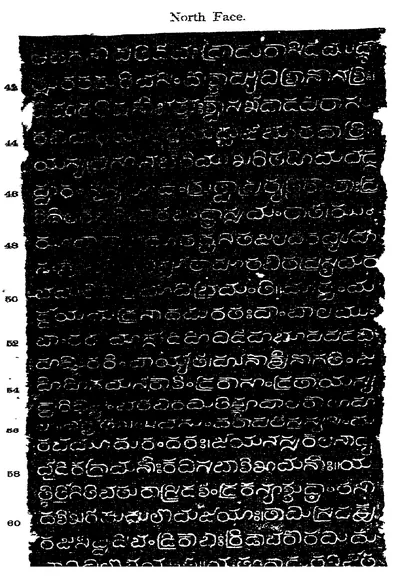 "Chebrolu Pillar Inscription of Jaya; after Saka-Samvat 1135", north face, part (lines numbered 43 to 60) (Epigraphia Indica V, plate between pp. 146 and 147 (PDF p. 204))Inscription rubbing · 1899
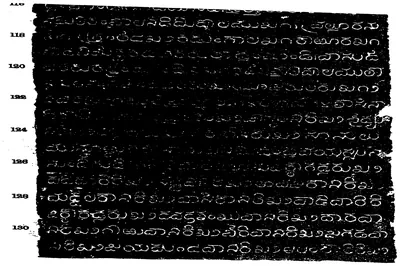 "Chebrolu Pillar Inscription of Jaya; after Saka-Samvat 1135", second page of the plate, lines 116-131 (Epigraphia Indica V, plate between pp. 146 and 147 (PDF p. 205))Inscription rubbing · 1899
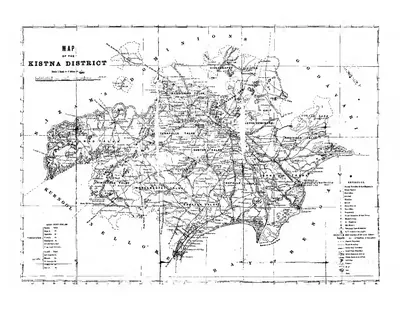 "Map of the Kistna District" (folding map) (Mackenzie 1883, folding map, PDF p. 1)Map · 1883
Related
People
Gonka I (Velanati)
c. 1076–1117 CE
First prominent chief of the Velanati Chodas. He ruled the Andhra country, or part of it, as an officer of the Chola–Chalukya emperor Kulottunga I. A record of his at Chebrolu is dated 1076. M. Rama Rao dated his rule from 1076 to 1117. His son Choda (Rajendra Choda I) was adopted by Kulottunga and made governor of Vengi.
Vikrama-Chola
c. 1118–1135 CE
Son of the Chola emperor Kulottunga I who governed Vengi for his father from about 1092–93 and left it in 1118 to be crowned Chola king. In his absence the Western Chalukya Vikramaditya VI took the Vengi province, holding Draksharama from 1120–21 to 1123–24; Vikrama-Chola won it back, and his records are found at Chebrolu and Nidubrolu in 1127 and 1135. An inscription of his ninth year records the building of the temple at Gudimallam, and his records are at Nandalur and Tripurantakam.
Jaya (Jayapa)
c. 1209–1253 CE
General and minister of the Kakatiya king Ganapatideva, of the Ayya family of Divi. Ganapati married his two sisters and made him commander of the elephant troops and governor of Velanadu. He built the Ganapesvara temple on Divi in 1231 and wrote the Nritta Ratnavali, a Sanskrit treatise on dance.
Monuments
Inscriptions
References
Notes (0)
Sources (7)
Spotted an error on this page? Tell us
Last updated: