Western Chalukyas of Kalyani
A dynasty of the western Deccan that overthrew the Rashtrakutas in 973 and ruled from Kalyana (Kalyani) until about 1189. Telangana was part of their kingdom. Kannada inscriptions of their reigns run from Korapolu in the Medak district (973) to Alampur, Gangapuram, Kolanupaka and Hanamkonda, where the early Kakatiya chiefs, the Polavasa chiefs and the Kandur Chodas served them as feudatories. They fought the Cholas for Vengi for a century, and Vikramaditya VI was recognised as king there from 1118 to about 1126. After the Kalachuris took over in the 1150s, the Kakatiyas declared their own sovereignty in 1163.
Swipe sideways to see the whole chart; tap a bar for details.
Each bar is a ruling power in its region; time runs left to right. Dashed = approximate dates. Select a bar for details.
Show as a list
Eastern Chalukyas & the Deccan powers 624–1163 CE
- Telangana
- Chalukyas of Vemulavada (c. 750–973 CE) · Kakatiyas (c. 1052–1162 CE) · Rashtrakutas of Malkhed (c. 753–973 CE) · Telugu Chodas of Kanduru (c. 1060–1160 CE) · Chalukyas of Mudigonda (c. 890–1218 CE) · Eastern Chalukyas of Vengi (c. 935–973 CE) · Western Chalukyas of Kalyani (c. 973–1163 CE)
- Coastal Andhra
- Eastern Gangas of Kalinga (c. 537–1434 CE) · Eastern Chalukyas of Vengi (c. 615–973 CE) · Cholas of Tanjore (c. 999–1135 CE) · Kotas of Dharanikota (c. 1100–1276 CE) · Haihayas of Kona and Palnadu (c. 1073–1364 CE) · Telugu Chodas of Pottapi and Nellore (c. 1106–1316 CE) · Velanati Chodas (c. 1118–1209 CE) · Western Chalukyas of Kalyani (c. 1118–1126 CE)
- Rayalaseema
- Pallavas (c. 300–900 CE) · Cholas of Tanjore (c. 985–1268 CE) · Banas (c. 700–915 CE) · Western Chalukyas of Kalyani (c. 1000–1190 CE) · Vaidumbas (c. 750–1000 CE) · Telugu Chodas of Pottapi and Nellore (c. 1120–1268 CE) · Nolamba-Pallavas (c. 750–974 CE) · Rashtrakutas of Malkhed (c. 750–973 CE)
Kakatiyas 1163–1323 CE
- Telangana
- Kakatiyas (c. 1163–1323 CE) · Chalukyas of Mudigonda (c. 890–1218 CE)
- Coastal Andhra
- Eastern Gangas of Kalinga (c. 537–1434 CE) · Kakatiyas (c. 1185–1323 CE) · Kotas of Dharanikota (c. 1100–1276 CE) · Haihayas of Kona and Palnadu (c. 1073–1364 CE) · Telugu Chodas of Pottapi and Nellore (c. 1106–1316 CE) · Velanati Chodas (c. 1118–1209 CE) · Pandyas (c. 1260–1264 CE) · Cholas of Tanjore (c. 1135–1264 CE)
- Rayalaseema
- Cholas of Tanjore (c. 985–1268 CE) · Western Chalukyas of Kalyani (c. 1000–1190 CE) · Kakatiyas (c. 1250–1323 CE) · Telugu Chodas of Pottapi and Nellore (c. 1120–1268 CE) · Hoysalas (c. 1178–1342 CE)
Kingdoms and empires
Chalukyas of Vemulavada
Open page- Telangana: c. 750–973 CE (c. 223 years)
Partial: the Sabbi Thousand (Karimnagar), capital Vemulavada (Lembulavataka), as Rashtrakuta feudatories; Podana (Bodhan) under the founder Yuddhamalla I (Venkataramanayya). Dated records: Chennur 940, Parbhani plates 966, Repaka 968. Ended when the Chalukyas of Kalyani took Telangana between 966 and 973.
Rulers (10)
- Vinayaditya-Yuddhamalla I (Chalukya of Vemulavada) (c. 750–775 CE)
- Arikesari I (c. 775–800 CE)
- Narasimha I (c. 800–825 CE)
- Yuddhamalla II (c. 825–850 CE)
- Baddega I Soladaganda (Chalukya of Vemulavada) (c. 850–895 CE)
- Yuddhamalla III (c. 895–915 CE)
Capitals
Monuments
Inscriptions
Sources (3)
Kingdoms and empires
Kakatiyas
Open page- Telangana: c. 1052–1162 CE (c. 110 years)
Partial: feudatory chiefs of Anumakonda (Hanamkonda) under the Chalukyas of Kalyani. Prola I received the Anumakonda district as a permanent fief from Someshvara I (record of 1053); Prola II's last record as a subordinate is of 1149; Rudradeva subdued the other Telangana chiefs c. 1157–62 (Parabrahma Sastry). Earlier members served the Rashtrakutas (Mangallu grant, c. 956) according to Parabrahma Sastry, a link rejected by Venkataramanayya and Somasekhara Sarma (1960).
- Telangana: c. 1163–1323 CE (c. 160 years)
Sovereign from Rudradeva's Anumakonda inscription of January 1163; capital moved to Orugallu (Warangal) under Ganapatideva. Warangal taken by Ulugh Khan in 1323 (Parabrahma Sastry, after Isami); Barani and the Imperial Gazetteer give 1321.
- Coastal Andhra: c. 1185–1323 CE (c. 138 years)
Rudradeva subdued the Kotas of Dharanikota and the Kondapadumatis (Tripurantakam grant 1185); Ganapatideva annexed Divi (1203) and Velanadu (records from 1209; Jaya governor 1213) and held the coast from the Godavari to the Penna; Kakatiya records at Draksharama from 1212, but the Eastern Gangas held the region north of the Godavari c. 1230–33 and again c. 1262–78; the Telugu Chodas of Nellore were allies; Nellore was lost to the Pandyas c. 1263 and recovered under Prataparudra.
- Rayalaseema: c. 1250–1323 CE (c. 73 years)
Through the Kayastha chiefs (Gangaya Sahini, bahattara-niyogadhipati c. 1250, capital Valluru in Cuddapah); Ambadeva independent c. 1272–1291, until Prataparudra's armies retook Tripurantakam (between 13 June and 11 August 1291) and the Kayastha lands within about eight years.
Rulers (11)
Capitals
Monuments (16)
Inscriptions (36)
- Kazipet Dargah pillar inscription
- Matedu inscription of Vemabola Malle-nayaka
- Gudur pillar inscriptions of the Viriyala family
- Thousand Pillar Temple inscription of Rudradeva
- Karimnagar inscription of Gangadhara
- Warangal fort inscription of Rudradeva
… and 30 more
- Pillalamarri inscription of Recherla Nami-reddi
- Kondaparti inscription of Malyala Chaunda
- Inugurti pillar inscription of Natavadi Rudra
- Bayyaram tank inscription of Mailama
- Chebrolu inscription of Jaya
- Palampet pillar inscription of Recherla Rudra
- Ganapavaram inscription of Devapala
- Warangal toll inscription of Ganapatideva
- Ganapesvaram inscription of Jaya
- Upparapalli pillar inscription of Kataya
- Motupalli pillar inscription of Ganapatideva
- Pakhal lake inscription of Jagadala Mummadi
- Rayaparti fragment of Saka 1169
- Ekamranatha temple inscription of Ganapati
- Nayanapalle inscription of Ganapatideva
- Durgi inscription of Gangaya-sahini
- Sarngapuram plates of Sarngadhara
- Bothpur tank inscription of Malyala Gunda
- Garavapadu plates of Ganapatideva
- Malkapuram pillar inscription of Rudramadevi
- Kotagiri plates of Viryala Sura
- Kolanupaka inscription of Rudramadevi's reign
- Chandupatla inscription
- Panugallu inscription of Immadi Mallikarjuna-nayaka
- Tripurantakam inscription of Ambadeva
- Raichur fort inscription of Gona Vithala
- Mellacheruvu inscription of Prataparudra's reign
- Srirangam inscription of Prataparudra
- Dharmasagar inscription of the minister Malla
- Hanamkonda inscription of Gangadhara
Sources (7)
Kingdoms and empires
Rashtrakutas of Malkhed
Open page- Rayalaseema: c. 750–973 CE (c. 223 years)
Through the Nolambas in Anantapur from about 750. The Cuddapah gazetteer finds no lasting foothold in Cuddapah until Indra III (c. 915), and says Krishna III (940-956) held all of Cuddapah except the east. The dynasty fell in 973.
- Telangana: c. 753–973 CE (c. 220 years)
Displaced the Chalukyas mid-8th century (Dantidurga 753). Inscriptions of their reigns or their feudatories at Alampur (Dhruva, about 780), Kuruvagattu (Govinda III), Mallikarjunapalli (846, 946), Khajipet, Velmajala (907), Padaturu (913) and Chennur (940); the Vemulavada Chalukyas and probably the early Kakatiyas were their subordinates. The dynasty fell in 973 and Western Chalukya rule in Telangana is attested by 995.
Rulers (13)
- Dantidurga (c. 753–756 CE)
- Krishna I (c. 756–774 CE)
- Govinda II (c. 774–780 CE)
- Dhruva (c. 780–793 CE)
- Govinda III (Rashtrakuta) (c. 793–814 CE)
- Amoghavarsha I (c. 814–878 CE)
… and 7 more
- Krishna II (Rashtrakuta) (c. 878–914 CE)
- Indra III (c. 915–917 CE)
- Govinda IV (c. 918–935 CE)
- Amoghavarsha III (Vaddiga) (c. 935–939 CE)
- Krishna III (Rashtrakuta) (c. 939–966 CE)
- Khottiga (c. 966–972 CE)
- Kakka II (c. 972–973 CE)
Capitals
Inscriptions
Sources (14)
Kingdoms and empires
Telugu Chodas of Kanduru
Open page- Telangana: c. 1060–1160 CE (c. 100 years)
Partial (Kandurunadu: the Jadcharla and Achampet areas of Mahbubnagar and the Nalgonda and Miryalaguda areas of Nalgonda), ruled from Kodur and Panugallu as feudatories of the Chalukyas of Kalyani; Tondarasa of Kandur governed the Kollipake province in 1088. Prola II restored Udaya Choda at Panugallu about 1131; Rudradeva drove out Bhima and annexed the country in the 1150s (last record of Bhima 1157). The family then held fiefs under the Kakatiyas, with a last record in 1282.
Rulers
- Tondaya II (Tondarasa) of Kandur (1088–1091 CE)
- Bhima Choda III of Kandur (c. 1105–1157 CE)
- Gokarna Choda I (c. 1124–1128 CE)
- Udaya Choda II of Kandur (1136–1176 CE)
- Bhima IV and Gokarna II (1178 CE)
Capitals
Inscriptions
Sources (5)
Kingdoms and empires
Chalukyas of Mudigonda
Open page- Telangana: c. 890–1218 CE (c. 328 years)
Partial: Mudigonda (Khammam), the Manchikonda district and the Koravi (Kuravi) country, later the Visuru-nadu on the Godavari; feudatories of the Eastern Chalukyas, later of the Chalukyas of Kalyani. No record of the family is dated: start from Kusumayudha I's part in Chalukya-Bhima I's coronation (892), end from Parabrahma Sastry's identification of Kusumaditya and Nagati in a record of 1218. Driven out by the Kakatiyas (Recherla Rudra; Ganapatideva).
Rulers (13)
- Kokiraja (c. 865–890 CE)
- Kusumayudha I (c. 890–915 CE)
- Bijayita (c. 915–940 CE)
- Kusumayudha II (c. 940–965 CE)
- Vijayaditya (c. 965–990 CE)
- Kusumayudha III (c. 990–1015 CE)
… and 7 more
- Nijjiyaraja (c. 1015–1040 CE)
- Kusumayudha IV (Chalukya of Mudigonda) (c. 1040–1065 CE)
- Beta (c. 1065–1090 CE)
- Kusumayudha V (c. 1090–1110 CE)
- Bottu-Beta (c. 1110–1140 CE)
- Kusumaditya (Chalukya of Mudigonda) (c. 1140–1165 CE)
- Nagati (c. 1165–1196 CE)
Capitals
Inscriptions
Sources (4)
Kingdoms and empires
Eastern Chalukyas of Vengi
Open page- Coastal Andhra: c. 615–973 CE (c. 358 years)
Vengi, between the Godavari and the Krishna, with the Vizagapatam country to the north (Chipurupalle grant of 632) and Karmarashtra, the Ongole-Guntur country, to the south (grants of 664 and 673). Kubja Vishnuvardhana was installed as yuvaraja in 615 (Fleet) and was independent by 632; others date the start about 605 (Hultzsch 1890, Mackenzie), after 631 (Kopparam plates, Hultzsch 1926) or in 624-25 (Rama Rao 1964). The line of kings from the grants ends with Danarnava (970-973).
- Telangana: c. 935–973 CE (c. 38 years)
Partial: the Chalukya chiefs of Mudigonda and Koravi (Khammam and Warangal) owed allegiance to Vengi rather than to the Rashtrakutas, in Parabrahma Sastry's account; ended after the death of Danarnava in 973.
- Coastal Andhra: c. 999–1077 CE (c. 78 years)
After an interval that the grants call twenty-seven years without a ruler, Saktivarman I was restored about 999 with the help of the Chola Rajaraja I, "as king (or perhaps feudatory)" in the Godavari gazetteer's words. His successors married Chola princesses; Rajendra II, heir to Vengi in 1063, became the Chola emperor Kulottunga I in 1070. His uncle Vijayaditya VII governed Vengi until he died in 1077 (1076 in Sewell's table), after which Vengi was ruled for the Cholas by viceroys.
Rulers (29)
- Kubja Vishnuvardhana (c. 615–633 CE)
- Jayasimha I (c. 633–663 CE)
- Indra-Bhattaraka (c. 663 CE)
- Vishnuvardhana II (Eastern Chalukya) (c. 663–672 CE)
- Mangi-yuvaraja (c. 672–696 CE)
- Jayasimha II (Eastern Chalukya) (c. 696–709 CE)
… and 23 more
- Kokkili (c. 709 CE)
- Vishnuvardhana III (Eastern Chalukya) (c. 709–746 CE)
- Vijayaditya I (c. 746–764 CE)
- Vishnuvardhana IV (Eastern Chalukya) (c. 764–799 CE)
- Vijayaditya II Narendra-mrigaraja (c. 799–843 CE)
- Kali-Vishnuvardhana V (c. 843–844 CE)
- Gunaga Vijayaditya III (c. 844–888 CE)
- Chalukya-Bhima I (c. 888–918 CE)
- Vijayaditya IV (Kollabhiganda) (c. 918 CE)
- Amma I (c. 918–925 CE)
- Beta-Vijayaditya V (c. 925 CE)
- Tadapa (c. 925 CE)
- Vikramaditya II (c. 926 CE)
- Bhima III (c. 926–927 CE)
- Yuddhamalla II (c. 927–934 CE)
- Chalukya-Bhima II (c. 934–945 CE)
- Amma II (945–970 CE)
- Danarnava (970–973 CE)
- Saktivarman I (c. 999–1011 CE)
- Vimaladitya (1011–1022 CE)
- Rajaraja Narendra (1022–1063 CE)
- Kulottunga I (c. 1063–1070 CE)
- Vijayaditya VII (c. 1063–1076 CE)
Capitals
Monuments
Inscriptions (36)
- Satara grant of Vishnuvardhana I
- Timmapuram plates of Vishnuvardhana I
- Chipurupalle plates of Vishnuvardhana I
- Pedda-Vegi plates of Jayasimha I
- Niduparu grant of Jayasimha I
- Pulibumra plates of Jayasimha I
… and 30 more
- Gudivada plates of Jayasimha I (three grants)
- Chendalur plates of Sarvalokasraya (Mangi-yuvaraja)
- Penukaparu grant of Jayasimha II
- Ipur plates of Vishnuvardhana III
- Ederu plates of Vijayaditya II
- Addanki inscription of Pandaranga
- Masulipatam (?) plates of Vijayaditya III
- Bezwada plates of Chalukya-Bhima I
- Bezwada pillar inscription of Yuddhamalla
- Chevuru plates of Amma I
- Ederu plates of Amma I
- Diggubarru grant of Chalukya-Bhima II
- Gundugolanu plates of Amma II
- Kaluchumbarru grant of Amma II
- Maliyapundi grant of Amma II
- Masulipatam plates of Amma II
- Padamkaluru grant of Amma II
- Vandram plates of Amma II
- Vemalurpadu plates of Amma II
- Yelavarru plates of Amma II
- Arumbaka plates of Badapa
- Mangallu grant of Amma II
- Sripundi plates of Tala II
- Tandikonda grant of Amma II
- Ranastipundi grant of Vimaladitya
- Kalidindi grant of Rajaraja I
- Korumelli plates of Rajaraja I
- Nandamapundi grant of Rajaraja Narendra
- Teki plates of Rajaraja-Chodaganga
- Chellur plates of Vira-Choda
Sources (10)
Kingdoms and empires
Western Chalukyas of Kalyani
Open page- Telangana: c. 973–1163 CE (c. 190 years)
Restored 973 (Korapolu, Medak district, inscription of Ahavamalla Taila II, April 973; earliest near Anumakonda Jammikunta 995). Held through feudatories (Kakatiyas, Polavasa chiefs, Kandur Chodas, Mudigonda chiefs) and the Kollipake (Kolanupaka) province under royal governors and princes; Taila III's death is recorded at Anumakonda in January 1163, when the Kakatiyas became sovereign
- Rayalaseema: c. 1000–1190 CE (c. 190 years)
11th-12th centuries in Anantapur (Vikramaditya VI's inscriptions at Gooty; records of 1113 and 1121), Kurnool (1122) and Tripurantakam (1122, 1126); a Chola chief governed Renadu (Cuddapah) under Vikramaditya VI in 1124; overthrown c. 1189 by the Hoysalas and Yadavas
- Coastal Andhra: c. 1118–1126 CE (c. 8 years)
Vengi: after the Chola viceroy Vikrama Chola left in 1118, Vikramaditya VI ruled "the Vengi 14000 country" (Sewell) through his general Anantapala; records at Draksharama 1120-1124; the Godavari gazetteer has him "undisputed king of Vengi" 1120-1124. Vikrama Chola was again supreme south of the Krishna by 1127. Earlier, only single records (Satyasraya at Chebrolu, 1006)
Rulers (11)
- Taila II (973–997 CE)
- Satyasraya (c. 997–1008 CE)
- Vikramaditya V (c. 1008–1015 CE)
- Jayasimha II (Western Chalukya) (c. 1015–1042 CE)
- Somesvara I (c. 1042–1068 CE)
- Somesvara II (1068–1076 CE)
… and 5 more
- Vikramaditya VI (1076–1126 CE)
- Somesvara III (1126–1138 CE)
- Jagadekamalla II (1138–1150 CE)
- Taila III (c. 1150–1162 CE)
- Somesvara IV (c. 1183–1189 CE)
Capitals
Inscriptions (9)
Sources (9)
Kingdoms and empires
Eastern Gangas of Kalinga
Open page- Coastal Andhra: c. 537–1434 CE (c. 897 years)
Partial: only the far north coast (the old Ganjam and Vizagapatam districts, now Srikakulam-Vizianagaram- Visakhapatnam), capital Kalinganagara (Mukhalingam). Earliest dated grant: Jirjingi, near Tekkali, Ganga year 39 (c. 537 on Mirashi's epoch of 498; Fleet put the early grants in the 7th century and Sewell used an epoch of 877-78; the Imperial Gazetteer, the 7th century). Later line in power from the end of the 9th century (Vizagapatam gazetteer): Vajrahasta III crowned 1038; Anantavarman Chodaganga 1078-1146, with records at Mukhalingam, Srikurmam, Simhachalam and Visakhapatnam. South of the Godavari only records and raids (Draksharama 1128-1274; Bendapudi). Ended 1434, when the minister Kapilesvara founded the Gajapati line
Rulers (15)
- Vajrahasta III (Eastern Ganga) (1038–1070 CE)
- Rajaraja I (Eastern Ganga) (1070–1078 CE)
- Anantavarman Chodaganga (c. 1078–1146 CE)
- Madhu-Kamarnava (c. 1146–1152 CE)
- Raghava (c. 1152–1166 CE)
- Rajaraja II (c. 1166–1192 CE)
… and 9 more
- Aniyanka-Bhima (c. 1192–1202 CE)
- Anangabhima III (c. 1219–1253 CE)
- Narasimha I (Eastern Ganga) (c. 1253–1256 CE)
- Bhanudeva I (c. 1256–1275 CE)
- Narasimha II (c. 1275–1306 CE)
- Bhanudeva II (c. 1306–1323 CE)
- Narasimha III (c. 1323–1346 CE)
- Bhanudeva III (c. 1346–1378 CE)
- Narasimha IV (c. 1378–1397 CE)
Capitals
Monuments
Inscriptions (8)
Sources (10)
Kingdoms and empires
Cholas of Tanjore
Open page- Rayalaseema: c. 985–1268 CE (c. 283 years)
Rajaraja I (from 982/985) claims Nulambapadi and had the Vaidumbas of Cuddapah as feudatories. Chola inscriptions in Kurnool are dated 1108 and 1123. The east of Cuddapah (Pottapi-nadu) stayed under Chola suzerainty through the Telugu Chodas until Rajendra III's death in 1268. IG Madras has Cuddapah Chola from the 11th to the 13th century.
- Coastal Andhra: c. 999–1135 CE (c. 136 years)
Overlords of the Eastern Chalukya kings from 999; Kulottunga I's sons ruled Vengi as viceroys 1077-1118; Vengi was lost to the Western Chalukyas after Vikrama-Chola left in 1118, and his records reappear at Chebrolu (1127) and Nidubrolu (1135). Nellore stayed under Chola suzerainty into the 13th century (IG Madras)
- Coastal Andhra: c. 1135–1264 CE (c. 129 years)
Partial (Nellore). After Vengi was lost, Nellore stayed under the Cholas until their 13th-century decline: Rajaraja III is recognised there in 1237 and Rajendra III in 1253, with the Telugu Choda chiefs ruling locally as their vassals. A Tamil record at Punjulurupadu, in the Gudur country, is still dated in the 20th year of Rajendra III, Saka 1185 (1263-64).
Rulers (14)
- Rajaraja I (Chola) (985–1016 CE)
- Rajendra I (Chola) (1012–1043 CE)
- Rajadhiraja I (Chola) (1018–1052 CE)
- Rajendradeva (1052–1063 CE)
- Virarajendra (Chola) (1063–1070 CE)
- Adhirajendra (1070 CE)
… and 8 more
- Kulottunga I (1070–1118 CE)
- Vikrama-Chola (1118–1133 CE)
- Kulottunga II (Chola) (1133–1146 CE)
- Rajaraja II (Chola) (1146–1163 CE)
- Rajadhiraja II (1163–1178 CE)
- Kulottunga III (Chola) (1178–1216 CE)
- Rajaraja III (1216–1246 CE)
- Rajendra III (Chola) (1246–1267 CE)
Capitals
Inscriptions (10)
Sources (9)
Kingdoms and empires
Kotas of Dharanikota
Open page- Coastal Andhra: c. 1100–1276 CE (c. 176 years)
Partial (the Six-thousand country, Konnatavadi, south of the Krishna about Amaravati–Dharanikota and the Sattenapalle taluk). Line from Bhima I (c. 1100, Sewell); Keta II from about 1182; subdued by the Kakatiya Rudradeva about 1185 and thereafter Kakatiya subordinates and relatives by marriage (Ganapamba, widow of Kota Beta, ruled in the 1250s); last record of a Kota Rudra 1275–76.
Rulers
- Kota Keta II (c. 1182–1209 CE)
- Manma-Keta (Keta III) (c. 1234–1240 CE)
- Kota Beta (c. 1250–1251 CE)
- Ganapamba (c. 1251–1257 CE)
- Bhima IV (1265 CE)
Capitals
Inscriptions
Sources (5)
Kingdoms and empires
Haihayas of Kona and Palnadu
Open page- Coastal Andhra: c. 1073–1364 CE (c. 291 years)
Partial. Kona chiefs of Konamandala (the Godavari delta, Amalapuram taluk), with records at Draksharama and Palakol from Saka 995 (1073) to 1364–65, dependent on the Chola–Chalukya kings and the Velanati Chodas, later on the Kakatiyas; Haihaya chiefs of the Chagi family in the Palnadu (Macherla 1111, Gurazala 1129) as feudatories of the Chalukyas of Kalyani; the Palnadu war of the ballads is undated (proposals 1080–1386).
Rulers
- Rajendra Choda I of Kona (1128 CE)
- Mummadi-Bhima II and Satya I (1135 CE)
- Bhima III (c. 1153–1168 CE)
- Mallideva of Kona (c. 1155–1207 CE)
- Ganapatideva of Kona (c. 1262–1300 CE)
- Bhima-Vallabha (1318 CE)
Inscriptions
Sources (5)
Kingdoms and empires
Telugu Chodas of Pottapi and Nellore
Open page- Coastal Andhra: c. 1106–1316 CE (c. 210 years)
Konidena branch in the Guntur country from 1106 to about 1150; the main line at Nellore (Vikramasimhapura) from Tammusiddhi's anointment in 1205-06, under the Cholas and then the Kakatiyas, who restored Manumasiddhi II; held Kanchi under Tikka I (1209/1223-1248/1250) and Manmasiddhi III. Last date 1316 (Sewell); the Nellore gazetteer finds no Telugu Choda record in Nellore after 1305.
- Rayalaseema: c. 1120–1268 CE (c. 148 years)
Pottapinadu (Pullampet country of Cuddapah), seat of the Madhurantaka Pottapi-Cholas under the Chola emperors: Betta 1120-21, Vimaladitya c. 1125; Pottapi remained their seat until Tikka I moved to Nellore; Manumasiddhi II recorded at Pottapi 1258-59; the country passed to the Kayastha Ambadeva after 1268.
Rulers
- Tammusiddhi (c. 1205–1209 CE)
- Tikka I (Telugu Choda of Nellore) (c. 1209–1248 CE)
- Manumasiddhi II (c. 1248–1290 CE)
- Manmasiddhi III (c. 1290–1316 CE)
Capitals
Inscriptions
Sources (5)
Kingdoms and empires
Velanati Chodas
Open page- Coastal Andhra: c. 1118–1209 CE (c. 91 years)
Chiefs of Velanadu (the Chandavolu country, western Krishna delta), officers of Kulottunga I from 1076 (Gonka I at Chebrolu); Choda (Rajendra Choda I), adopted by Kulottunga, governed Vengi from between 1100 and 1112 and went over to Vikramaditya VI when the Chola viceroy left in 1118. Gonka II claimed rule from Kalahasti to the Mahendra mountain; Rajendra Choda II (1163–1181) held the coast from Darsi to Simhachalam after 1172 (Parabrahma Sastry). Last ruler Prithvisvara (1186; last record 1206); Velanadu Kakatiya by 1209.
Rulers
Capitals
Inscriptions
Sources (7)
Kingdoms and empires
Pandyas
Open page- Coastal Andhra: c. 1260–1264 CE (c. 4 years)
Partial (Nellore). Jatavarman Sundara Pandya I beat the Telugus at Mudugur, drove them to the Krishna and was crowned at Nellore (Aiyangar, from his records); Sewell dates the march to 1260, Parabrahma Sastry the battle to 1263. Aiyangar says the conquest was not permanent and the Nellore gazetteer says Ganapati recovered Nellore almost at once, so the span is short. A later Jatavarman Sundara Pandya, crowned at Nellore after 1276 (Nellore gazetteer), endowed a hall in the Ranganayaka temple there; no source gives the length of this second hold, so it has no span.
- Rayalaseema: 1285–1293 CE (8 years)
Partial (Nandalur, east Cuddapah). Jatavarman Sundara Pandya II has dated records at Nandalur in 1285, 1286 and 1293, six in all from 1286-1293, as Pandya power spread north after the Chola collapse.
Rulers
- Jatavarman Sundara Pandya I (c. 1251–1268 CE)
- Maravarman Kulasekhara I (1268–1311 CE)
- Jatavarman Sundara Pandya (crowned at Nellore) (c. 1276–1293 CE)
Inscriptions
Sources (5)
Kingdoms and empires
Pallavas
Open page- Coastal Andhra: c. 250–630 CE (c. 380 years)
Krishna-Guntur, Ongole and Nellore. Prakrit grant of the crown prince Sivaskandavarman to his officer at Dhanyakataka (Amaravati), dated from about 234 (Sewell) or 250-275 (Jouveau-Dubreuil) to the first half of the 4th century (Sircar); Sanskrit grants of a Nellore-Guntur line (Omgodu, Uruvupalli, Pikira, Mangalur, Vilavatti, Chura) in the 5th and 6th centuries. Karmarashtra (Ongole-Bapatla) was Chalukya by about 630 (Kopparam plates of Pulakesin II). The Godavari gazetteer calls 200-615 a Pallava age, and IG Madras calls Vengi originally a Pallava province; Sircar found no evidence that the Pallavas held Vengi itself.
- Rayalaseema: c. 300–900 CE (c. 600 years)
Partial. Pallava frontier guards at Sriparvata (Kurnool) in the 4th century (Talagunda inscription; Sircar); Ganga kings of the Penukonda plates installed by Pallava kings (5th century); inscription of Paramesvaravarman II at Ulchala near Kurnool (728-29); Bana vassals in the Chittoor country under Nripatunga (9th century). The Cuddapah gazetteer has the Pallavas hold the eastern Cuddapah taluks for four centuries until the Chola Aditya I crippled them at the end of the 9th century. The Cuddapah gazetteer says the Pallavas of Kanchi pushed up the Penner from Nellore into north Cuddapah for a time and then ruled the eastern Cuddapah taluks for four centuries, until the Chola Aditya I crippled them at the end of the 9th century; Sewell gives a Pallava regnal-year record in Chittoor (864-65), with the Banas as Pallava vassals.
- Coastal Andhra: c. 670–750 CE (c. 80 years)
Southern Nellore only: grants of Paramesvaravarman I (Podili-Kandukur country, 687) and Narasimhavarman II (Revuru, Atmakur taluk, about 700-711), and a Tamil record of the 15th year of Nandipottarasar at Mallam (Gudur taluk), read as Pallava supremacy (Nellore gazetteer, 1942) or as Pallava rule under the Western Chalukyas (Butterworth and Venugopaul Chetty, 1905).
Rulers (18)
- Bappa (c. 225–250 CE)
- Sivaskandavarman (Pallava) (c. 250–275 CE)
- Vishnugopa of Kanchi (c. 325–350 CE)
- Kumaravishnu II (Pallava) (c. 425–450 CE)
- Skandavarman II (Pallava) (c. 450–475 CE)
- Simhavarman II (Pallava) (c. 500–525 CE)
… and 12 more
- Vishnugopavarman (c. 525–550 CE)
- Simhavishnu (c. 575–600 CE)
- Mahendravarman I (c. 600–630 CE)
- Narasimhavarman I (c. 630–668 CE)
- Mahendravarman II (c. 668–670 CE)
- Paramesvaravarman I (c. 670–690 CE)
- Narasimhavarman II (c. 690–715 CE)
- Nandivarman II Pallavamalla (c. 717–779 CE)
- Dantivarman (c. 779–830 CE)
- Nandivarman III (c. 830–854 CE)
- Nripatunga (c. 854–880 CE)
- Aparajita (c. 880–900 CE)
Capitals
Inscriptions (14)
Sources (19)
Kingdoms and empires
Banas
Open page- Rayalaseema: c. 700–915 CE (c. 215 years)
Partial (the Chittoor hills between Kolar and Kalahasti, with Punganur and Kalahasti among their chief towns; north Cuddapah in the late 9th century). Brackenbury says the Bana kingdom was set up early in the 8th century and was acknowledged in north Cuddapah by 884, before the Banas became feudatories of the Chola Parantaka I (907-940). Five Bana records at Gudimallam (Venkayya 1912) show them as subordinates of the Pallava kings of Kanchi. Sewell and Sircar trace the Banas of North Arcot and Chittoor back to the 4th century. The Nolamba Mahendra attacked their country of Pulinadu, round Punganur, in the later 9th century.
Rulers
- Vijayaditya (under Dantivarman) (c. 820–830 CE)
- Vikramaditya I (Banavidyadhara, Jayameru) (c. 850–880 CE)
- Vijayaditya II Prabhumeru (Bana) (c. 880–910 CE)
- Vikramaditya II (c. 910–921 CE)
Inscriptions
Sources (6)
Kingdoms and empires
Vaidumbas
Open page- Rayalaseema: c. 750–1000 CE (c. 250 years)
Partial (south Anantapur, Rayachoti, Madanapalle; Kamalapuram by 975). Brackenbury says the Vaidumbas ruled from very early times and reached Rayachoti taluk by the 8th century; Panchamukhi (EI XXIV) thought they grew strong only in the 9th century, after the Banas, and then took the Renandu Seven Thousand country. They fought beside the Banas at Soremati (dated about 877-78 by Sewell, about 885 by Panchamukhi, 900 by Brackenbury). After Krishna III died they were the apparent sovereign as far north as Kamalapuram taluk (975-976), and they became Chola feudatories under Rajaraja I. They stayed Chola feudatories at Rayachoti until at least 1102.
Rulers
- Manuja-Trinetra (c. 860–880 CE)
- Ganda-Trinetra (Vaidumba) (c. 880–900 CE)
- Sandaiyan Tiruvaiyan (c. 940–965 CE)
Sources (3)
Kingdoms and empires
Nolamba-Pallavas
Open page- Rayalaseema: c. 750–974 CE (c. 224 years)
Partial (Anantapur: Hemavati, Gooty, Madakasira, Kambaduru, Hindupur; Kaniyakal in Rayadrug). Nolambavadi, a province covering most of Anantapur, was ruled by the Nolambas, a Pallava branch and feudatories of the Rashtrakutas. Henjeru (Hemavati) was their capital (Krishna Sastri 1910). Dated records: Hindupur 853, Kambaduru 883 and 965 (Rangacharya). The Anantapur gazetteer says 8th to 10th centuries; the Bellary gazetteer says from the mid-7th century for three centuries. The Ganga Marasimha crushed them about 970-974.
Sources (6)
Kingdoms and empires
Hoysalas
Open page- Rayalaseema: c. 1178–1342 CE (c. 164 years)
Partial (south and west Anantapur: Hemavati, Madakasira, Penukonda, Gooty claim; Rayachoti taluk in the later 13th century). A record at Parigi (Hindupur taluk) of Saka 1100 (1178) shows Ballala II ruling at Dorasamudra; he took Nolambavadi, and his inscription of 1205-06 is at Hemavati. A record at Kodigepalle of 1328 shows Ballala III's minister ruling at Penugonda. Ballala III's inscriptions in Anantapur district run from 1317 through 1320 and 1323 to 1340. He was killed fighting the Sultan of Madurai on 8 September 1342.
Rulers
- Ballala II (Hoysala) (1173–1220 CE)
- Narasimha II (1220–1235 CE)
- Somesvara (1233–1254 CE)
- Narasimha III (1254–1291 CE)
- Ballala III (Hoysala) (1291–1342 CE)
- Ballala IV (Virupaksha) (1342–1343 CE)
Capitals
Sources (6)
Reigns
Each bar is one ruler’s reign; time runs left to right. c. = approximate date.
- Taila II973–997 CE · 24 yrs
- Satyasrayac. 997–1008 CE · c. 11 yrs
- Vikramaditya Vc. 1008–1015 CE · c. 7 yrs
- Jayasimha II (Western Chalukya)c. 1015–1042 CE · c. 27 yrs
- Somesvara Ic. 1042–1068 CE · c. 26 yrs
- Somesvara II1068–1076 CE · 8 yrs
- Vikramaditya VI1076–1126 CE · 50 yrs
- Somesvara III1126–1138 CE · 12 yrs
- Jagadekamalla II1138–1150 CE · 12 yrs
- Taila IIIc. 1150–1162 CE · c. 12 yrs
- Somesvara IVc. 1183–1189 CE · c. 6 yrs
Reign years after J. F. Fleet's chapter in the Bombay Gazetteer (1896). Fleet dated Taila II from 973 to the end of 997, Satyasraya to 1008 and Vikramaditya V's accession probably to 1009; Robert Sewell (1932) put Vikramaditya V's accession in 1008 and Jayasimha II's, whom he numbers Jayasimha III, in 1015, where Fleet's earliest record is of 1018. Somesvara I's records run from 1044 to 1068; Sewell dates his death to 30 March 1068. Taila III's last certain date is 1155; the Kalachuri Bijjala took part of the kingdom in 1156 and the rest by 1162, and his family held it until Somesvara IV's revival of 1183. Somesvara IV's last date is 25 December 1189.
Family tree
The rulers and the relatives who explain the succession. Every line rests on a cited statement on a person page; the sources are listed below the tree. Select a card to open that page.
- parent and child
- marriage
- adoption
- the sources disagree (see below)
- brother or sister
- order of succession
Generation 1
- Vikramaditya IVFather of Taila II
- BonthadeviKalachuri princess, mother of Taila II
Generation 2
- Jakavve (Jakkaladevi)Rashtrakuta princess, queen of Taila IIWife of Taila II
- 1Taila II973–997 CESon of Vikramaditya IV and BonthadeviHusband of Jakavve (Jakkaladevi)
Generation 3
- 2Satyasrayac. 997–1008 CESon of Taila II
- Dasavarman (Yasovarman)Younger son of Taila II; did not reignSon of Taila II
Generation 4
- 3Vikramaditya Vc. 1008–1015 CESon of Dasavarman (Yasovarman)
- 4Jayasimha IIc. 1015–1042 CESon of Dasavarman (Yasovarman)Brother of Ayyana IIBrother of Akkadevi
- Ayyana IIDid not reignBrother of Jayasimha II
- AkkadeviGoverned the Kisukad seventy districtSister of Jayasimha II
Generation 5
- BachaladeviQueen of Somesvara IWife of Somesvara I
- 5Somesvara Ic. 1042–1068 CESon of Jayasimha IIHusband of Bachaladevi
Generation 6
- 6Somesvara II1068–1076 CESon of Somesvara I and Bachaladevi
- ChandaladeviSilahara princess, queen of Vikramaditya VIWife of Vikramaditya VI
- 7Vikramaditya VI1076–1126 CESon of Somesvara I and BachaladeviHusband of Chandaladevi
- Jayasimha IIIViceroy at Banavasi; rebelledSon of Somesvara I and Bachaladevi
- Vishnuvardhana-VijayadityaFourth son; styled lord of the province of VengiSon of Somesvara I
Generation 7
- JayakarnaProbably the eldest son; died before his fatherSon of Vikramaditya VI and Chandaladevi
- Kumara TailapaSon of Vikramaditya VI and Chandaladevi
- 8Somesvara III1126–1138 CESon of Vikramaditya VI
Generation 8
- 9Jagadekamalla II1138–1150 CESon of Somesvara III
- 10Taila IIIc. 1150–1162 CESon of Somesvara III
Generation 9
- 11Somesvara IVc. 1183–1189 CESon of Taila III
Sources for every line of the tree
- Vikramaditya IV and Bonthadevi → Taila II (parent and child)
- Taila II was a son of Vikramaditya IV and of Bonthadevi, a daughter of Lakshmana of the Kalachuri family of Central India. →
- Fleet, "Dynasties of the Kanarese Districts" (1896), p. 427 (archive.org (opens in a new tab)).
- Taila II was a son of Vikramaditya IV and of Bonthadevi, a daughter of Lakshmana of the Kalachuri family of Central India. →
- Taila II · Jakavve (Jakkaladevi) (marriage)
- Taila married Jakavve or Jakkaladevi, the daughter of a Rashtrakuta named Bhammaha. →
- Fleet, "Dynasties of the Kanarese Districts" (1896), p. 428 (archive.org (opens in a new tab)).
- Taila married Jakavve or Jakkaladevi, the daughter of a Rashtrakuta named Bhammaha. →
- Taila II → Satyasraya and Dasavarman (Yasovarman) (parent and child)
- Taila II was succeeded, probably towards the end of 997, by his eldest son Satyasraya. →
- Fleet, "Dynasties of the Kanarese Districts" (1896), p. 432 (archive.org (opens in a new tab)).
- Taila's younger son Dasavarman, also called Yasovarman, married Bhagyavati or Bhagaladevi and never reigned. →
- Fleet, "Dynasties of the Kanarese Districts" (1896), p. 434 (archive.org (opens in a new tab)).
- His son Vikramaditya V succeeded Satyasraya. →
- Fleet, "Dynasties of the Kanarese Districts" (1896), p. 434 (archive.org (opens in a new tab)).
- Taila II was succeeded, probably towards the end of 997, by his eldest son Satyasraya. →
- Dasavarman (Yasovarman) → Vikramaditya V and Jayasimha II (parent and child)
- Taila's younger son Dasavarman, also called Yasovarman, married Bhagyavati or Bhagaladevi and never reigned. →
- Fleet, "Dynasties of the Kanarese Districts" (1896), p. 434 (archive.org (opens in a new tab)).
- His son Vikramaditya V succeeded Satyasraya. →
- Fleet, "Dynasties of the Kanarese Districts" (1896), p. 434 (archive.org (opens in a new tab)).
- Jayasimha II was the youngest son of Dasavarman, a younger son of Taila II, and succeeded his eldest brother Vikramaditya V. →
- Fleet, "Dynasties of the Kanarese Districts" (1896), p. 433 (archive.org (opens in a new tab)).
- J. F. Fleet, "Dynasties of the Kanarese Districts", Gazetteer of the Bombay Presidency I, pt. II (1896), p. 434 (archive.org (opens in a new tab)).
- Fleet, "Dynasties of the Kanarese Districts" (1896), p. 435 (archive.org (opens in a new tab)).
- Taila's younger son Dasavarman, also called Yasovarman, married Bhagyavati or Bhagaladevi and never reigned. →
- Ayyana II · Jayasimha II (brother or sister)
- Another brother, Ayyana II, is named in the genealogies but did not reign. →
- Fleet, "Dynasties of the Kanarese Districts" (1896), p. 435 (archive.org (opens in a new tab)).
- Another brother, Ayyana II, is named in the genealogies but did not reign. →
- Akkadevi · Jayasimha II (brother or sister)
- Akkadevi, an elder sister of Jayasimha II, governed the Kisukad seventy district under him and was still in authority under his son. →
- Fleet, "Dynasties of the Kanarese Districts" (1896), p. 435 (archive.org (opens in a new tab)).
- Akkadevi, an elder sister of Jayasimha II, governed the Kisukad seventy district under him and was still in authority under his son. →
- Jayasimha II → Somesvara I (parent and child)
- Somesvara I was the son of Jayasimha II, and had the double biruda (title of honour) Trailokyamalla-Ahavamalla. →
- Fleet, "Dynasties of the Kanarese Districts" (1896), p. 438 (archive.org (opens in a new tab)).
- Jayasimha II was succeeded by his son, Somesvara I. →
- Fleet, "Dynasties of the Kanarese Districts" (1896), p. 438 (archive.org (opens in a new tab)).
- Somesvara I was the son of Jayasimha II, and had the double biruda (title of honour) Trailokyamalla-Ahavamalla. →
- Somesvara I · Bachaladevi (marriage)
- His queens included Bachaladevi, the mother of his sons Somesvara II, Vikramaditya VI and Jayasimha III. →
- Fleet, "Dynasties of the Kanarese Districts" (1896), p. 438 (archive.org (opens in a new tab)).
- His queens included Bachaladevi, the mother of his sons Somesvara II, Vikramaditya VI and Jayasimha III. →
- Somesvara I and Bachaladevi → Somesvara II, Vikramaditya VI and Jayasimha III (parent and child)
- His queens included Bachaladevi, the mother of his sons Somesvara II, Vikramaditya VI and Jayasimha III. →
- Fleet, "Dynasties of the Kanarese Districts" (1896), p. 438 (archive.org (opens in a new tab)).
- Vikramaditya VI was the second son of Somesvara I and Bachaladevi. →
- J. F. Fleet, "Dynasties of the Kanarese Districts", Gazetteer of the Bombay Presidency I, pt. II (1896), p. 438 (archive.org (opens in a new tab)).
- Fleet, "Dynasties of the Kanarese Districts" (1896), p. 441 (archive.org (opens in a new tab)).
- His queens included Bachaladevi, the mother of his sons Somesvara II, Vikramaditya VI and Jayasimha III. →
- Somesvara I → Vishnuvardhana-Vijayaditya (parent and child)
- Fleet found that his fourth son, Vishnuvardhana-Vijayaditya, governing the Nolambavadi province in 1064 and 1066, had the title "lord of the province of Vengi". →
- Fleet, "Dynasties of the Kanarese Districts" (1896), p. 454 and note 5 (archive.org (opens in a new tab)).
- Fleet found that his fourth son, Vishnuvardhana-Vijayaditya, governing the Nolambavadi province in 1064 and 1066, had the title "lord of the province of Vengi". →
- Vikramaditya VI · Chandaladevi (marriage)
- Fleet listed six wives of Vikramaditya VI. →
- Fleet, "Dynasties of the Kanarese Districts" (1896), p. 448 (archive.org (opens in a new tab)).
- Fleet, "Dynasties of the Kanarese Districts" (1896), p. 449 (archive.org (opens in a new tab)).
- Fleet listed six wives of Vikramaditya VI. →
- Vikramaditya VI and Chandaladevi → Jayakarna and Kumara Tailapa (parent and child)
- Jayakarna, his son by Chandaladevi and very probably his eldest son, seems to have died before him. →
- Fleet, "Dynasties of the Kanarese Districts" (1896), p. 455 (archive.org (opens in a new tab)).
- Tailapa was a son of Vikramaditya VI by his queen Chandaladevi. →
- Desai, Kannada Inscriptions of Andhra Pradesh (1961), p. 7, Nos. 15–16 (archive.org (opens in a new tab)). Paraphrased.
- Jayakarna, his son by Chandaladevi and very probably his eldest son, seems to have died before him. →
- Vikramaditya VI → Somesvara III (parent and child)
- Somesvara III was a son of Vikramaditya VI and succeeded him. →
- J. F. Fleet, "Dynasties of the Kanarese Districts", Gazetteer of the Bombay Presidency I, pt. II (1896), p. 455 (archive.org (opens in a new tab)).
- Somesvara III was a son of Vikramaditya VI and succeeded him. →
- Somesvara III → Jagadekamalla II and Taila III (parent and child)
- He was succeeded by his eldest son, Jagadekamalla II. →
- Fleet, "Dynasties of the Kanarese Districts" (1896), p. 456 (archive.org (opens in a new tab)).
- Taila III was a younger son of Somesvara III and succeeded his brother Jagadekamalla II. →
- J. F. Fleet, "Dynasties of the Kanarese Districts", Gazetteer of the Bombay Presidency I, pt. II (1896), p. 456, note 2 (archive.org (opens in a new tab)).
- Fleet, "Dynasties of the Kanarese Districts" (1896), p. 459 (archive.org (opens in a new tab)).
- He was succeeded by his eldest son, Jagadekamalla II. →
- Taila III → Somesvara IV (parent and child)
- Taila III left a son, Somesvara IV, who did not succeed him at once. →
- Fleet, "Dynasties of the Kanarese Districts" (1896), p. 462 (archive.org (opens in a new tab)).
- Taila III left a son, Somesvara IV, who did not succeed him at once. →
A line from one parent only means that the cited sources name no other parent.
The Western Chalukyas of Kalyani were a dynasty of the western Deccan, and the name is the one J. F. Fleet gave them.1 From the time of Somesvara I their capital was Kalyana, the modern Kalyani in Karnataka.1
They matter to the history of the Telugu country for three reasons:2345
- Telangana was part of their kingdom for nearly two centuries.2345 It was governed through feudatory chiefs (local chiefs who served the king), among them the early Kakatiyas.2345 It was also governed through princes and officers of the royal house at Kollipake, the modern Kolanupaka.2345
- They fought the Cholas and the Eastern Chalukyas for Vengi, and Vikramaditya VI was recognised as king on the Godavari late in his reign.2345
- Their decline in the 1150s allowed the Kakatiyas to become sovereign (fully independent).2345
The dynasty in brief
The dynasty began when Taila II overthrew Kakka II, the last Rashtrakuta king of Malkhed, in 973.67 The records represent the new kings as direct descendants of the Chalukyas of Badami.1 Fleet doubted it, because they spell the family name differently and allot too few generations to the gap.1 Taila’s son Satyasraya succeeded at the end of 997, and his nephews Vikramaditya V and Jayasimha II followed.8910
Somesvara I made Kalyana the capital.11121314 His eldest son Somesvara II succeeded him in 1068.11121314 His brother Vikramaditya VI deposed him in 1076 and reigned for fifty years.11121314
Somesvara III (1126–1138) and his sons Jagadekamalla II and Taila III followed.151617 Under Taila III the Kalachuri general Bijjala took over the kingdom between 1156 and 1162.51819 Taila’s son Somesvara IV revived the dynasty in 1183, and his latest date is 25 December 1189.51819
According to the Imperial Gazetteer of Hyderabad (1909), the Chalukyan dynasty was restored about 973 and kept its position for nearly 200 years.220 It did so “in spite of fierce struggles with the Cholas and Hoysalas of Dorasamudra”.220 The gazetteer adds: “The Chalukya power fell about 1189 to the Hoysalas and Yadavas”.220 The Madras volume of the same gazetteer (1908) says that they were “finally overthrown by two of their own feudatories, the Yadavas of Deogiri and the Hoysalas of Dorasamudra”.21
Taila II and Telangana
The new dynasty took over the Rashtrakuta lands in Telangana. An inscription at Korapolu in the Medak district is dated in the reign of Ahavamalla Taila II.22 P. B. Desai equated its date with 10 April 973.22 It shows Taila’s feudatory Soma Permadi ruling from Korapolu.22 See the Korapolu inscription.
Fleet told the story of the Paramara king Munja’s last war against Taila.8 In it Munja crossed the Godavari, “which is said to have formed the northern boundary of Taila’s kingdom”.8
P. V. Parabrahma Sastry dated the earliest record of Taila II near Anumakonda (Hanamkonda) to 995, at Jammikunta. He argued that the Kakatiya chief Gunda IV, a Rashtrakuta subordinate, refused to submit to Taila.23 In his account, a chief with Taila’s support killed Gunda.23 So, he argued, Taila rooted out the last of Rashtrakuta influence in Telangana.23 See the Rashtrakutas.
Subordinate chiefs in Telangana
Parabrahma Sastry described Telangana under the Chalukyas of Kalyani as a patchwork of feudatory states around the Kakatiya fief (land held from the king) of Anumakonda. In his account, the Chalukya chiefs of Mudigonda held the east, in the Khammam country. The Polavasa chiefs held the north-west, in the Karimnagar country, and the Telugu Choda chiefs of Kandur held the south. The country to the west of Anumakonda was under the king’s direct control, administered from Kolanupaka.24
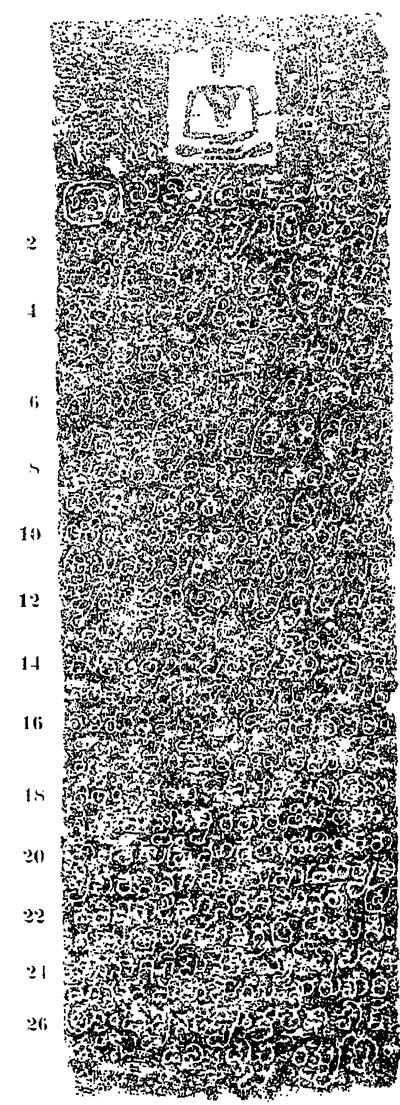
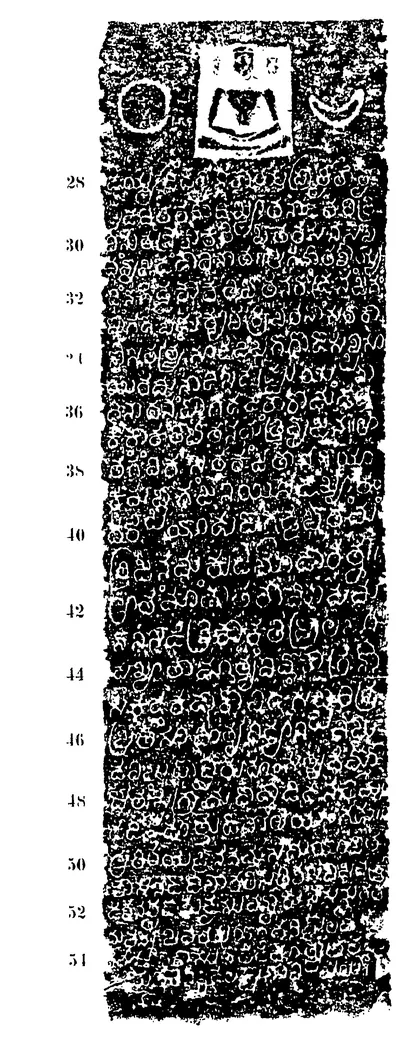
- The Kakatiyas. Beta I and Prola I served Somesvara I.25 Prola obtained the Anumakonda district from him as a permanent fief.25 Beta II, who bore Vikramaditya VI’s title Tribhuvanamalla, received the Sabbi thousand district from that king.262728 The Padmakshi temple inscription of 1117 shows his son Prola II ruling at Anumakonda as Vikramaditya’s feudatory.262728
- The Polavasa chiefs. Medaraja and his family were Jainas with their capital at Polavasa.2930 They held a fief from Polavasa to Narasampet.2930 Parabrahma Sastry found them naming the Chalukya king in only two of their records.2930 He argued that their disloyalty led Prola II and Rudradeva to attack them.2930
- The Kandur Chodas. A Telugu Choda family with capitals at Kodur and Panugallu held the Kandurunadu country from about 1060 to 1160.3132 This country lay in the Mahbubnagar and Nalgonda country.3132 Parabrahma Sastry read the Ollala inscription as saying that Choda Bhima II obtained Kandurunadu from Vikramaditya VI.3132 One of the family, Tondarasa Choda-Maharaja of Kandur, was ruling the Kollipake seven-thousand province in 1088.33
- The Mudigonda or Bottu chiefs. Parabrahma Sastry dated their possession of Koravi under the Chalukyas of Kalyani from about 1000.34 See the Chalukyas of Vemulavada and Mudigonda.
Other feudatories appear in the Kannada records, among them the mandalika (local lord) Duggarasa, lord of the Natavadi region, with his wife Muppama in 1104.35 At Alampur the records name the Choda chiefs Chiddana and Irugana, the Vaidumba chief Malla-Maharaja and the lord of Kodur, Mallarasa.36373839
The Kollipake province and the princes
Fleet named Kollipake as a minor capital of Jayasimha II, but he could not identify it.40 The inscriptions found at Kolanupaka showed that Kollipake was that place.3 Parabrahma Sastry described it as the seat of a province of seven thousand villages.41 Viceroys of the rank of mahamandalesvara (great provincial lord) governed it.41
A grant of 1033, of the time of Jagadekamalla I, lies in the Kollipake seven-thousand district.33 See the Kolanupaka inscription of Tondarasa. Its later governors included:34233
- the Choda chief Tondarasa (1088)33
- the Paramara prince Jagaddeva of Malwa, whom Vikramaditya VI treated as his own son (1104)42
- the king’s son Somesvara, the future Somesvara III, who called it “his capital” in 11253
See the Kolanupaka inscription of Jagaddeva and the pillar of Kumara Somesvara.
Another son of Vikramaditya VI, Kumara Tailapa, governed the Kandur thousand district from his capital Kolur from at least 1110.4344 He issued regulations for its towns.4344
Somesvara III was crowned on 20 February 1127.454640 An inscription at Patancheru records a grant made that day.4546 Desai took it to identify Patancheru with Pottalakere.4546 Fleet had placed Pottalakere in the Ballari (then Bellary) district.40 See the Patancheru inscription.
The contest for Vengi
From the reign of Satyasraya the Western Chalukyas fought the Cholas, who had become the overlords of the Eastern Chalukyas of Vengi. Robert Sewell noted an inscription of Satyasraya at Chebrolu, in the Guntur district, dated 1006.47 He took it to disprove the Chola claim to have conquered the whole of Satyasraya’s country.47
In an inscription of 1017–18, the Chola Rajendra I claims to have taken Kollippakkai from the Western Chalukya king.48 An editor’s note in Sewell’s book identifies it with Kulpak (Kolanupaka).48
Under Somesvara I, relations with Vengi were at first friendly.49 A daughter of one of his ministers made a gift at Draksharama in 1055–56.49 His eldest son was styled “lord of Vengi” in 1053.1150 His fourth son, Vishnuvardhana-Vijayaditya, was styled “lord of the province of Vengi”.1150
The Chola inscriptions of Virarajendra say that an army Somesvara sent into the Vengi country was destroyed.51 They say that his sons Vikramaditya and Jayasimha were defeated at Kudalasangamam.51 They add that Virarajendra then marched to Vengi, fought at Vijayawada (then Bezwada) and gave Vengi to Vijayaditya VII.52 Sewell thought the capture of Vengi unlikely.5152
The Godavari district gazetteer (1907) says that Vikramaditya twice invaded Vengi, but the Chola king defeated him.53 Bilhana, the poet of Vikramaditya’s court, credits him as a prince with conquering “Vengi, the capital of the Eastern Chalukyas”.1213 Bilhana credits him with later defeating “Rajiga, the lord of Vengi”, the future Kulottunga I, before he took his brother’s throne in 1076.1213
Late in his reign Vikramaditya VI was recognised in Vengi. The Chola viceroy Vikrama Chola left for the south in 1118.54 Then an inscription of 18 December 1118 shows Vikramaditya ruling “the Vengi 14000 country”.54 The Velanadu chief Rajendra-Choda, who governed part of Vengi, accepted him as overlord.54
A Kannada record of the same month at Kommuru, in the Guntur district, has the general Anantapalayya ruling “Vengi fourteen-thousand”.55 An inscription of June 1126 at Tripurantakam has him ruling the Vengi twelve-thousand, while his nephew Govinda ruled the Kondapalli three-hundred.56 See the Tripurantakam inscription of Anantapala. Records at Draksharama show Vikramaditya reigning there in 1120–22 and 1123–24.5758
The Godavari gazetteer says that “from 1120 to 1124 Vikramaditya was undisputed king of Vengi”.4 Sewell found Vikrama Chola supreme again south of the Krishna by 1127.59 But Sewell also cited a record of Somesvara III of 1129 in the Palnad taluk.59
Parabrahma Sastry mentions a battle in 1135 on the banks of the Godavari between the Western Chalukya forces and local chiefs.60 Lakshmana, governor of Venginadu, took part in it.60 In 1896 Fleet explained the Vikramaditya VI inscriptions at Draksharama and elsewhere in the Telugu country by a late campaign against Kanchi, described by Bilhana.61
The kingdom also reached into Rayalaseema. The Manual of the Kurnool District (1886) says a Vikrama inscription at Tripurantakam shows its limit “extended as far at least as the eastern boundary of the present Kurnool District”.62 Sewell cited records of Vikramaditya VI in the Anantapur district (1113, 1121) and the Kurnool district (1122).635758 He also cited a subordinate, Atyana-Chola-Maharaja, governing the Renadu country of the Kadapa (then Cuddapah) district in 1124.635758 See the Telugu Cholas of Renadu.
The Chalukya-Vikrama era
Vikramaditya VI replaced the Saka era (a way of counting years) with his own Chalukya-Vikrama era, counted from the first year of his reign, 1076–77. Fleet found that nearly all records of his reign are dated in it.6418 He found that his successors and some feudatories tried to keep it in use.6418 The last instance he knew is of the ninety-fourth year, 1169–70.6418
Most of the Telangana records of the reign are dated in it, from year 2 (1078) at Alampur to year 50 (1125) at Kolanupaka.373 Parabrahma Sastry noted that the Kandur Chodas dated their records in it while Vikramaditya lived.6566 He also noted that Kumara Tailapa dated a record of 1137 in its sixtieth year.6566
Inscriptions in the Telugu country
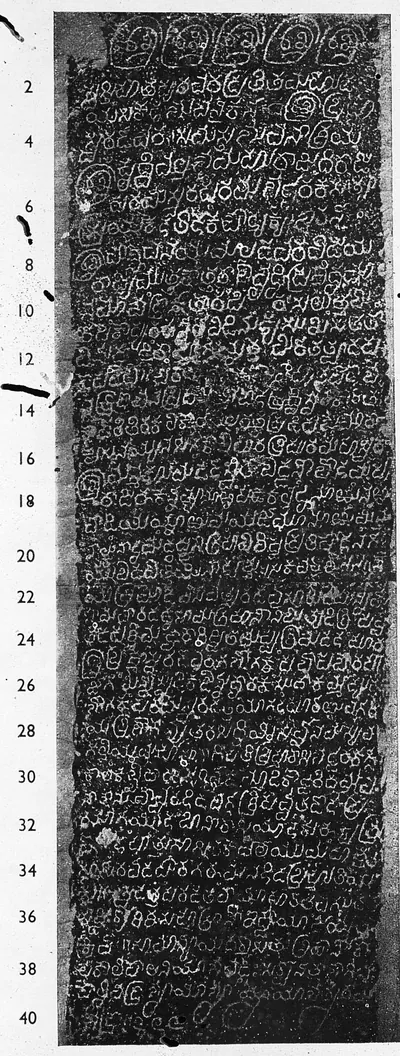
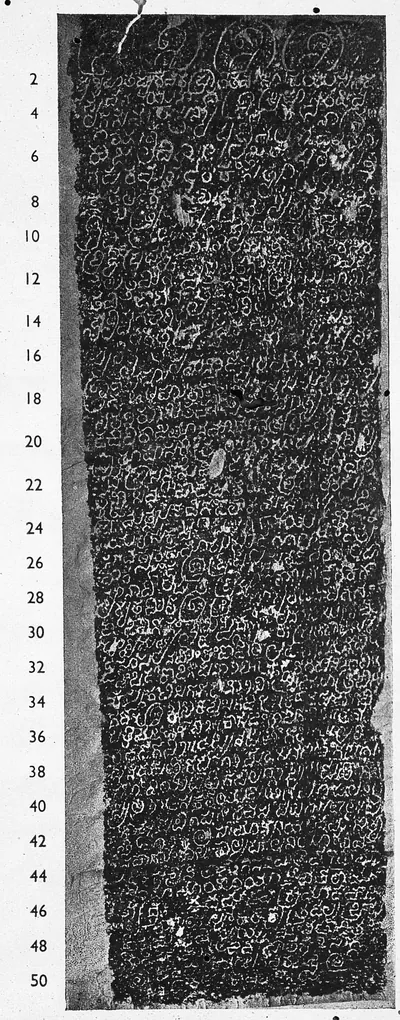
The main collection is P. Sreenivasachar’s Kannada Inscriptions of Andhra Pradesh, published in 1961 with English summaries by P. B. Desai. Besides Korapolu, Kolanupaka and Patancheru, it summarises Western Chalukya records at these places:4643446768693570
- Bodhan (1056)
- Vemulavada (1083 to 1108)
- Alavanipalli, Avancha, Nekkonda and Gangapuram in the Kandur country
- Alladurgam and Dakur in the Medak district
- Nidikonda and Khajipet near Hanamkonda
- Alampur, where about twenty records of Somesvara I, Somesvara II and Vikramaditya VI record gifts to the god Brahmesvara4643446768693570
See the Bodhan inscription, the Gangapuram inscription of 1091 and the Alampur inscription of 1073. The 1956 Corpus of Inscriptions in the Telingana Districts, Part III, printed estampages (ink copies) of the dynasty’s inscriptions as Plates 33 and 34.71 One is from Gangapuram and two are from Alampur.71
The 1961 volume also covers places in the old Hyderabad State that are now in Karnataka, outside the Telugu country.727374 They include Nagai, with an endowment of 1058 for a college of two hundred students of the Vedas.727374 They also include Sedam, Aland and Kalyani itself.727374 Fleet noted that the Chalukya capital at Kalyani shows “no ancient remains”.1
Decline and the Kakatiya independence
Fleet thought that under Taila III “a serious blow to the Western Chalukya power was dealt by the Kakatiya prince Prola”.5 According to Rudradeva’s inscription of 1163, Prola captured “the glorious Tailapadeva, the ornament of the Chalukyas” and let him go.5 The Kalachuri Bijjala, commander of the army, then took the kingdom between 1156 and 1162.5
P. V. Parabrahma Sastry argued instead that the captive was Kumara Tailapa, captured in Jagadekamalla II’s campaign of about 1138–1141.757677 He also argued that the Kakatiyas never revolted against the Chalukyas.757677 He added that no record of Taila III or of Bijjala is found in Telangana.757677
On his reading, Rudradeva took more than a decade, from 1150 to 1162, to establish his authority over the chiefs of Telangana.7879 He argued that Rudradeva proclaimed his sovereignty, with modest titles, only when no rightful claimant to the Chalukya throne came forward.7879 See the Kakatiyas.
By the end of 1189 the Yadava king Bhillama had secured the northern and eastern parts of the old Chalukya kingdom, and the Hoysalas took the south.1920
Evidence and disagreements
- The date of 973. Fleet placed Taila’s success soon after June 973, the last date he knew for Kakka II.7 The Korapolu inscription, if Desai’s equation of its date with 10 April 973 is right, already counts the Medak country as Taila’s.22
- Kalyani as an earlier capital. The Imperial Gazetteer of Hyderabad gives the Chalukyas of Badami a capital at Kalyani.2 Fleet called that idea “a pure mistake”, since Kalyana first appears as a capital in 1053, under Somesvara I.80
- Kollipake and Pottalakere. Fleet could not identify Kollipake and placed Pottalakere in the Ballari district.40 Desai identified them with Kolanupaka and Patancheru.463
- Kudalasangamam. Fleet in 1896 placed the battle at the junction of the Tungabhadra and the Krishna.13 Sewell reports Fleet’s later view, near Khidrapur on the Krishna.51 He also reports a theory placing it at the meeting of the Tunga and the Bhadra.51 And he reports S. Krishnaswami Aiyangar’s view, at the Krishna–Tungabhadra junction in the Kurnool district.51
- Vengi under Vikramaditya VI. The Godavari gazetteer gives 1120–1124.4 Sewell’s records run from December 1118 to 1126.5481
- Who was Jagaddeva? Parabrahma Sastry and the 1961 summaries make the Jagaddeva who governed Kollipake and later attacked Anumakonda a Paramara prince of Malwa.4282 Fleet took the besieger of Anumakonda to be a Santara chief of that name.83
- Prola II’s captive. Fleet and the Hyderabad gazetteer say it was Taila III.584 H. Krishna Sastri (1908) allowed that Prola might have fought Taila “while the latter was yet a prince”.28 Parabrahma Sastry says it was Kumara Tailapa.76
- Taila III in Telangana. Parabrahma Sastry found no Telangana record of Taila III.75 But Desai’s summaries list two Medak-district records of a king Trailokyamalla Taila, one dated 1152.6822
- Numbering. Fleet’s Jayasimha II and III are Sewell’s Jayasimha III and IV.1085
Footnotes
-
Fleet, “Dynasties of the Kanarese Districts” (1896), p. 427 and note 3 (archive.org (opens in a new tab)). ↩ ↩2 ↩3 ↩4 ↩5
-
Imperial Gazetteer of India, Provincial Series: Hyderabad State (1909), p. 10 (archive.org (opens in a new tab)). ↩ ↩2 ↩3 ↩4 ↩5 ↩6 ↩7 ↩8 ↩9 ↩10
-
Desai, Kannada Inscriptions of Andhra Pradesh (1961), p. 17, Nos. 45–46 (archive.org (opens in a new tab)). Paraphrased except for the short phrase quoted. ↩ ↩2 ↩3 ↩4 ↩5 ↩6 ↩7 ↩8 ↩9 ↩10 ↩11
-
Hemingway, Godavari (1907), p. 22 (archive.org (opens in a new tab)). ↩ ↩2 ↩3 ↩4 ↩5 ↩6 ↩7 ↩8
-
Fleet, “Dynasties of the Kanarese Districts” (1896), p. 462 (archive.org (opens in a new tab)). ↩ ↩2 ↩3 ↩4 ↩5 ↩6 ↩7 ↩8 ↩9 ↩10 ↩11 ↩12
-
J. F. Fleet, “Dynasties of the Kanarese Districts”, Gazetteer of the Bombay Presidency I, pt. II (1896), p. 424 (archive.org (opens in a new tab)). ↩
-
Fleet, “Dynasties of the Kanarese Districts” (1896), p. 426 (archive.org (opens in a new tab)). ↩ ↩2
-
Fleet, “Dynasties of the Kanarese Districts” (1896), p. 432 (archive.org (opens in a new tab)). ↩ ↩2 ↩3
-
Fleet, “Dynasties of the Kanarese Districts” (1896), p. 434 (archive.org (opens in a new tab)). ↩
-
Fleet, “Dynasties of the Kanarese Districts” (1896), p. 435 (archive.org (opens in a new tab)). ↩ ↩2
-
Fleet, “Dynasties of the Kanarese Districts” (1896), p. 440 and note 3 (archive.org (opens in a new tab)). ↩ ↩2 ↩3 ↩4 ↩5
-
Fleet, “Dynasties of the Kanarese Districts” (1896), p. 442 (archive.org (opens in a new tab)). ↩ ↩2 ↩3 ↩4 ↩5
-
Fleet, “Dynasties of the Kanarese Districts” (1896), p. 445 and note 1 (archive.org (opens in a new tab)). ↩ ↩2 ↩3 ↩4 ↩5 ↩6
-
Fleet, “Dynasties of the Kanarese Districts” (1896), p. 446 (archive.org (opens in a new tab)). ↩ ↩2 ↩3
-
Fleet, “Dynasties of the Kanarese Districts” (1896), p. 455 (archive.org (opens in a new tab)). ↩
-
Fleet, “Dynasties of the Kanarese Districts” (1896), p. 456 (archive.org (opens in a new tab)). ↩
-
Fleet, “Dynasties of the Kanarese Districts” (1896), p. 459 (archive.org (opens in a new tab)). ↩
-
Fleet, “Dynasties of the Kanarese Districts” (1896), p. 463 (archive.org (opens in a new tab)). ↩ ↩2 ↩3 ↩4 ↩5
-
Fleet, “Dynasties of the Kanarese Districts” (1896), p. 466 (archive.org (opens in a new tab)). ↩ ↩2 ↩3
-
Imperial Gazetteer: Hyderabad State (1909), p. 11 (archive.org (opens in a new tab)). ↩ ↩2 ↩3 ↩4
-
Imperial Gazetteer of India, Provincial Series: Madras, Vol. I (1908), p. 16 (archive.org (opens in a new tab)). ↩
-
Desai, Kannada Inscriptions of Andhra Pradesh (1961), p. 15, Nos. 41–42 (archive.org (opens in a new tab)). Paraphrased. ↩ ↩2 ↩3 ↩4 ↩5
-
P. V. Parabrahma Sastry, The Kakatiyas of Warangal (1978), p. 42. ↩ ↩2 ↩3
-
Parabrahma Sastry, The Kakatiyas of Warangal (1978), p. 51. ↩
-
Parabrahma Sastry, The Kakatiyas of Warangal (1978), p. 45. ↩ ↩2
-
H. Krishna Sastri, “Anmakonda Inscription of Prola; the Chalukya-Vikrama Year Forty-Two”, Epigraphia Indica IX (1908), p. 258 (archive.org (opens in a new tab)). ↩ ↩2
-
Krishna Sastri, “Anmakonda Inscription of Prola” (1908), p. 259 (archive.org (opens in a new tab)). ↩ ↩2
-
Krishna Sastri, “Anmakonda Inscription of Prola” (1908), p. 260 (archive.org (opens in a new tab)). ↩ ↩2 ↩3
-
Parabrahma Sastry, The Kakatiyas of Warangal (1978), p. 58. ↩ ↩2 ↩3 ↩4
-
Parabrahma Sastry, The Kakatiyas of Warangal (1978), p. 63. ↩ ↩2 ↩3 ↩4
-
Parabrahma Sastry, The Kakatiyas of Warangal (1978), p. 64. ↩ ↩2 ↩3
-
Parabrahma Sastry, The Kakatiyas of Warangal (1978), p. 65. ↩ ↩2 ↩3
-
Desai, Kannada Inscriptions of Andhra Pradesh (1961), p. 19, Nos. 49–52 (archive.org (opens in a new tab)). Paraphrased. ↩ ↩2 ↩3 ↩4
-
Parabrahma Sastry, The Kakatiyas of Warangal (1978), p. 56. ↩
-
Desai, Kannada Inscriptions of Andhra Pradesh (1961), p. 25, Nos. 70–72 (archive.org (opens in a new tab)). Paraphrased. ↩ ↩2 ↩3
-
Desai, Kannada Inscriptions of Andhra Pradesh (1961), p. 33, Nos. 83–86 (archive.org (opens in a new tab)). Paraphrased. ↩
-
Desai, Kannada Inscriptions of Andhra Pradesh (1961), p. 34, Nos. 87–88 (archive.org (opens in a new tab)). Paraphrased. ↩ ↩2
-
Desai, Kannada Inscriptions of Andhra Pradesh (1961), p. 35, Nos. 91–94 (archive.org (opens in a new tab)). Paraphrased. ↩
-
Desai, Kannada Inscriptions of Andhra Pradesh (1961), p. 38, No. 109 (archive.org (opens in a new tab)). Paraphrased. ↩
-
Fleet, “Dynasties of the Kanarese Districts” (1896), p. 437 and notes 5–6 (archive.org (opens in a new tab)). ↩ ↩2 ↩3 ↩4
-
Parabrahma Sastry, The Kakatiyas of Warangal (1978), p. 69. ↩ ↩2
-
Desai, Kannada Inscriptions of Andhra Pradesh (1961), p. 18, Nos. 46–48 (archive.org (opens in a new tab)). Paraphrased. ↩ ↩2 ↩3
-
Desai, Kannada Inscriptions of Andhra Pradesh (1961), p. 6, Nos. 12–14 (archive.org (opens in a new tab)). Paraphrased. ↩ ↩2 ↩3 ↩4
-
Desai, Kannada Inscriptions of Andhra Pradesh (1961), p. 7, Nos. 15–17 (archive.org (opens in a new tab)). Paraphrased. ↩ ↩2 ↩3 ↩4
-
Desai, Kannada Inscriptions of Andhra Pradesh (1961), p. 4, No. 9 (archive.org (opens in a new tab)). Paraphrased. ↩ ↩2 ↩3
-
Desai, Kannada Inscriptions of Andhra Pradesh (1961), p. 5, Nos. 9–11 (archive.org (opens in a new tab)). Paraphrased. ↩ ↩2 ↩3 ↩4 ↩5 ↩6
-
Robert Sewell, The Historical Inscriptions of Southern India (1932), p. 58 (archive.org (opens in a new tab)). Paraphrased. ↩ ↩2
-
Sewell, Historical Inscriptions (1932), p. 62 and editor’s note (archive.org (opens in a new tab)). Paraphrased. ↩ ↩2
-
Sewell, Historical Inscriptions (1932), p. 75 (archive.org (opens in a new tab)). Paraphrased. ↩ ↩2
-
Fleet, “Dynasties of the Kanarese Districts” (1896), p. 454 (archive.org (opens in a new tab)). ↩ ↩2
-
Sewell, Historical Inscriptions (1932), p. 79 and note 1 (archive.org (opens in a new tab)). Paraphrased. ↩ ↩2 ↩3 ↩4 ↩5 ↩6
-
Sewell, Historical Inscriptions (1932), p. 81 (archive.org (opens in a new tab)). Paraphrased. ↩ ↩2
-
F. R. Hemingway, Madras District Gazetteers: Godavari, Vol. I (1907), p. 21 (archive.org (opens in a new tab)). ↩
-
Sewell, Historical Inscriptions (1932), p. 96 (archive.org (opens in a new tab)). Paraphrased except for the short phrase quoted. ↩ ↩2 ↩3 ↩4
-
R. Shama Sastry (ed.), South-Indian Inscriptions IX, pt. I (1939), p. 191 (archive.org (opens in a new tab)). Paraphrased except for the short phrase quoted. ↩
-
South-Indian Inscriptions IX, pt. I (1939), p. 214, No. 213 (archive.org (opens in a new tab)). Paraphrased. ↩
-
Sewell, Historical Inscriptions (1932), p. 97 (archive.org (opens in a new tab)). Paraphrased. ↩ ↩2 ↩3
-
Sewell, Historical Inscriptions (1932), p. 98 (archive.org (opens in a new tab)). Paraphrased. ↩ ↩2 ↩3
-
Sewell, Historical Inscriptions (1932), p. 100 (archive.org (opens in a new tab)). Paraphrased. ↩ ↩2
-
Parabrahma Sastry, The Kakatiyas of Warangal (1978), p. 79. ↩ ↩2
-
Fleet, “Dynasties of the Kanarese Districts” (1896), p. 453, note 1 (archive.org (opens in a new tab)). ↩
-
Narahari Gopalakristnamah Chetty, A Manual of the Kurnool District (1886), p. 20 (archive.org (opens in a new tab)). ↩
-
Sewell, Historical Inscriptions (1932), p. 94 (archive.org (opens in a new tab)). Paraphrased. ↩ ↩2
-
Fleet, “Dynasties of the Kanarese Districts” (1896), p. 447 (archive.org (opens in a new tab)). ↩ ↩2 ↩3
-
Parabrahma Sastry, The Kakatiyas of Warangal (1978), p. 82. ↩ ↩2
-
Parabrahma Sastry, The Kakatiyas of Warangal (1978), p. 83. ↩ ↩2
-
Desai, Kannada Inscriptions of Andhra Pradesh (1961), p. 12, No. 32 (archive.org (opens in a new tab)). Paraphrased. ↩ ↩2
-
Desai, Kannada Inscriptions of Andhra Pradesh (1961), pp. 14–15, Nos. 39–40 (archive.org (opens in a new tab)). Paraphrased. ↩ ↩2 ↩3
-
Desai, Kannada Inscriptions of Andhra Pradesh (1961), p. 20, Nos. 53–54 (archive.org (opens in a new tab)). Paraphrased. ↩ ↩2
-
Desai, Kannada Inscriptions of Andhra Pradesh (1961), pp. 32–40, Nos. 80–114 (archive.org (opens in a new tab)). Paraphrased. ↩ ↩2
-
P. Sreenivasachar (ed.), A Corpus of Inscriptions in the Telingana Districts of Andhra Pradesh, Part III (1956), list of plates and Plates 33–34 (archive.org (opens in a new tab)). ↩ ↩2
-
P. B. Desai, introduction to P. Sreenivasachar, Kannada Inscriptions of Andhra Pradesh (Andhra Pradesh Government Archaeological Series 3, 1961), p. 1, No. 2 (archive.org (opens in a new tab)). Paraphrased. ↩ ↩2 ↩3
-
Desai, Kannada Inscriptions of Andhra Pradesh (1961), pp. 29–30, Nos. 73–76 (archive.org (opens in a new tab)). Paraphrased. ↩ ↩2 ↩3
-
Desai, Kannada Inscriptions of Andhra Pradesh (1961), p. 31, No. 79 (archive.org (opens in a new tab)). Paraphrased. ↩ ↩2 ↩3
-
Parabrahma Sastry, The Kakatiyas of Warangal (1978), p. 81. ↩ ↩2 ↩3 ↩4
-
Parabrahma Sastry, The Kakatiyas of Warangal (1978), p. 84. ↩ ↩2 ↩3 ↩4
-
Parabrahma Sastry, The Kakatiyas of Warangal (1978), p. 87. ↩ ↩2 ↩3
-
Parabrahma Sastry, The Kakatiyas of Warangal (1978), p. 96. ↩ ↩2
-
Parabrahma Sastry, The Kakatiyas of Warangal (1978), p. 97. ↩ ↩2
-
Fleet, “Dynasties of the Kanarese Districts” (1896), p. 428 (archive.org (opens in a new tab)). ↩
-
Sewell, Historical Inscriptions (1932), p. 99 (archive.org (opens in a new tab)). Paraphrased. ↩
-
Parabrahma Sastry, The Kakatiyas of Warangal (1978), p. 73. ↩
-
Fleet, “Dynasties of the Kanarese Districts” (1896), p. 458, note 2 (archive.org (opens in a new tab)). ↩
-
Imperial Gazetteer: Hyderabad State (1909), p. 163 (archive.org (opens in a new tab)). ↩
-
Sewell, Historical Inscriptions (1932), p. 61 (archive.org (opens in a new tab)). Paraphrased. ↩
Photos
 "Alampur inscription of Bhuvanaikamalla" (A Corpus of Inscriptions in the Telingana Districts, Part III, Plate 34, left (PDF p. 224))Inscription rubbing · 1956
 "Alampur inscription of Trailokyamalla" (A Corpus of Inscriptions in the Telingana Districts, Part III, Plate 34, right (PDF p. 224))Inscription rubbing · 1956
 "Anmakonda Inscription of Prola; The Chalukya-Vikrama Year Forty-Two", east face (Epigraphia Indica IX, plate between pp. 262 and 263 (PDF p. 326))Inscription rubbing · 1908
 "Anmakonda Inscription of Prola; The Chalukya-Vikrama Year Forty-Two", north face (Epigraphia Indica IX, plate between pp. 262 and 263 (PDF p. 326))Inscription rubbing · 1908
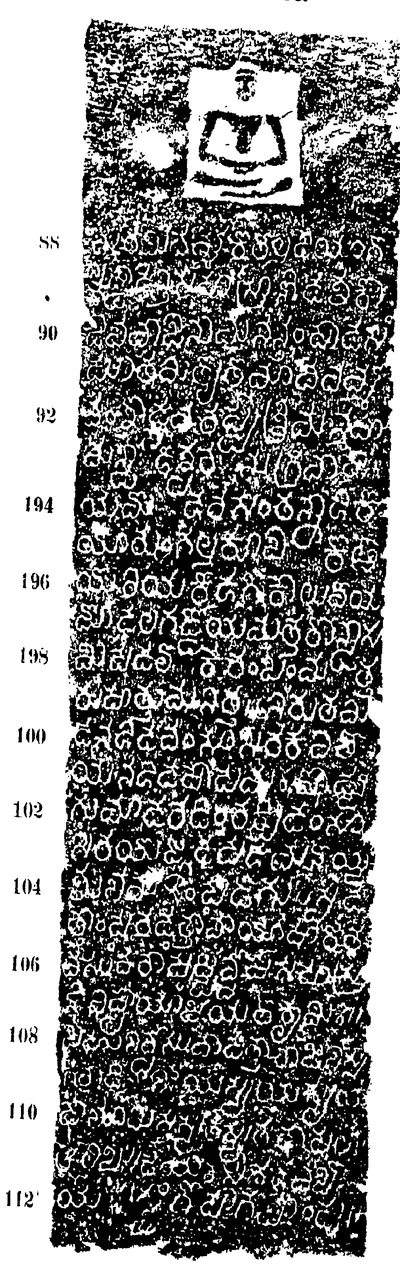 "Anmakonda Inscription of Prola; The Chalukya-Vikrama Year Forty-Two", south face (Epigraphia Indica IX, plate between pp. 262 and 263 (PDF p. 327))Inscription rubbing · 1908
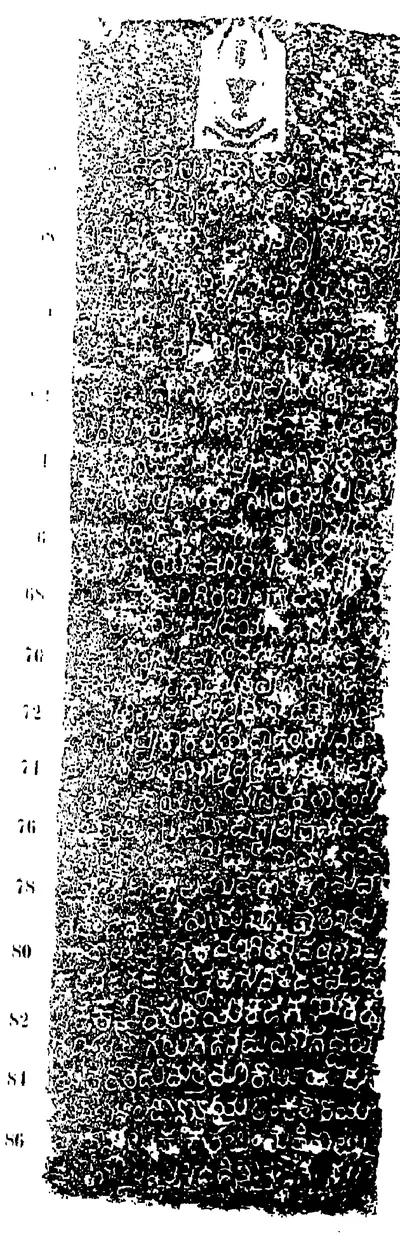 "Anmakonda Inscription of Prola; The Chalukya-Vikrama Year Forty-Two", west face (Epigraphia Indica IX, plate between pp. 262 and 263 (PDF p. 327))Inscription rubbing · 1908
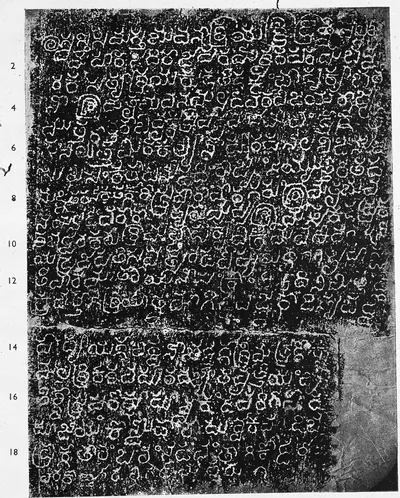 "Gangapuram inscription of Tribhuvanamalla" (A Corpus of Inscriptions in the Telingana Districts, Part III, Plate 33 (PDF p. 223))Inscription rubbing · 1956
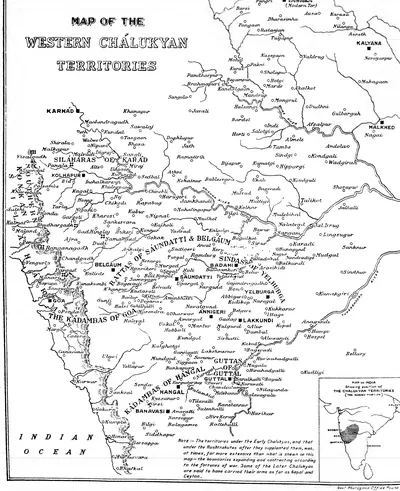 "Map of the Western Chalukyan Territories" (H. Cousens, The Chalukyan Architecture of the Kanarese Districts, 1926, map before the list of plates (PDF p. 5))Map · 1926
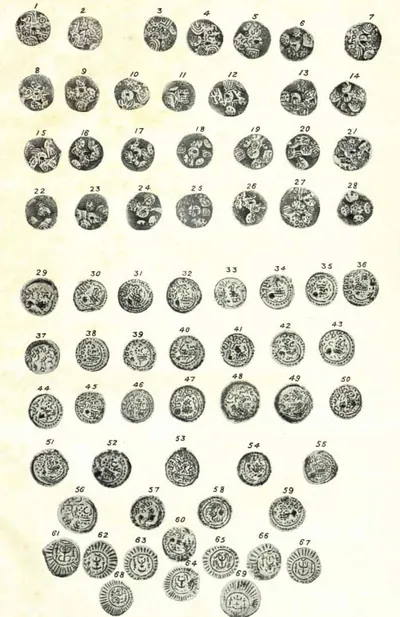 Coins of Western and Eastern Chalukyas (Hyderabad Arch. Report 1925-26, Pl. XVIII); P. V. Parabrahma Sastry (1978, pp. 259–262) assigns the boar-marked coins to Ganapatideva, Rudramadevi and PrataparudraCoin · 1928
References
Notes (0)
Sources (11)
Spotted an error on this page? Tell us
Last updated: