Amaravati Mahachaitya
The great Buddhist stupa of Amaravati on the Krishna, founded perhaps around 200 BCE and rebuilt with carved limestone rails in the 2nd–3rd centuries CE. From 1796 it was dug up for building material, and it is now known mainly from its scattered sculptures.
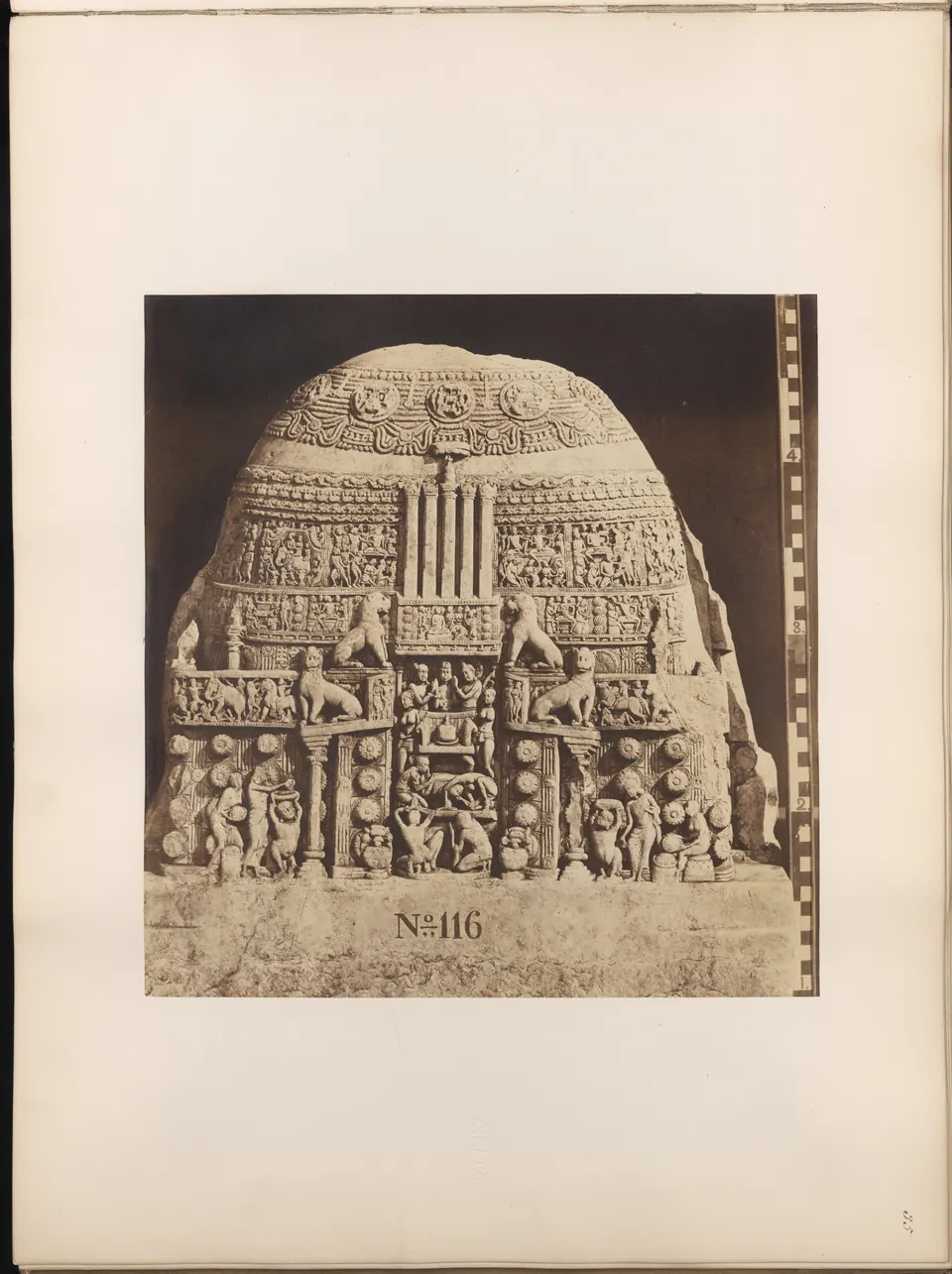
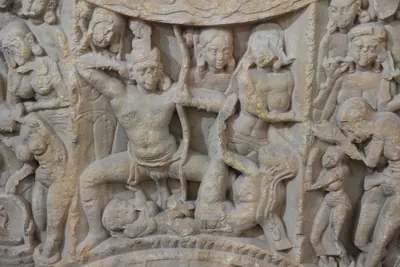
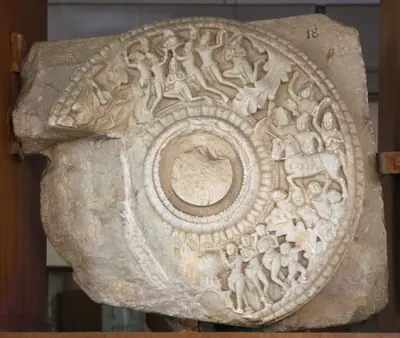
The Mahachaitya (“great chaitya”) at Amaravati stands on the south bank of the Krishna, about twenty miles above Vijayawada (Bezwada). It was one of the largest and most richly sculptured Buddhist monuments of South India. Almost nothing of it stands today. It was quarried for bricks and stone from 1796. What survived was dug out in the 19th century and scattered between museums in Madras, Calcutta and London. It is known mainly from those sculptures, from Colin Mackenzie’s drawings of 1816–17, and from James Burgess’s survey of the site in 1881–82.123
Terms
A stupa is a solid domed mound built over relics of the Buddha or of a revered teacher.45 The Amaravati inscriptions call this one a mahachetiya, Sanskrit mahachaitya, “great chaitya”.45 Burgess explains chaitya as a word that first meant a funeral heap and then any sacred monument.45 He explains stupa as a word used mostly for the larger, unroofed chaityas.45
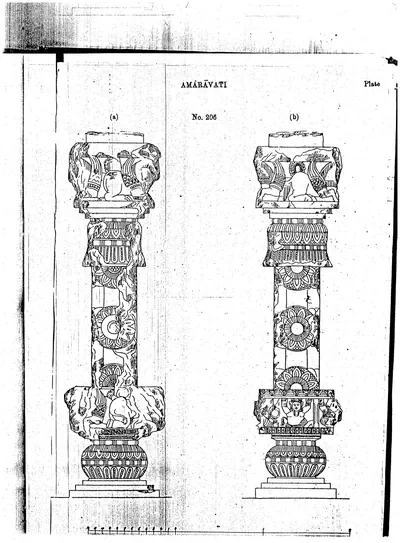
Around the dome ran a paved procession path (pradakshina).67 A stone railing of upright posts, cross-bars and a coping (top course) enclosed it.67 On each of the four sides facing the gateways, a platform carried five tall ayaka pillars (ayaka-khambha).67
The monument
When Mackenzie first saw the site in 1797, the local name for the mound was Dipaldinne, “hill of lights”.8 It was a large, low mound crowned by a smaller one, about thirty yards across and twenty feet high, cased in brick.8
By 1880 the central structure had been completely removed.4 Burgess therefore worked out its size from Mackenzie’s notes and from the surviving foundations.4 In his estimate, the brick drum or basement was about 138 feet across and the dome close on 100 feet.4 The total height was perhaps 80 to 100 feet.4 The inner rail stood on a brick circle 162 feet 7 inches across inside.4 Mackenzie’s plan, as reproduced by Fergusson, gives 195 feet for the inside diameter of the outer circle.9
The rails
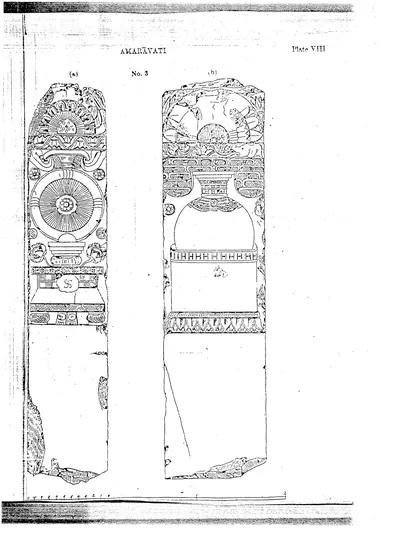
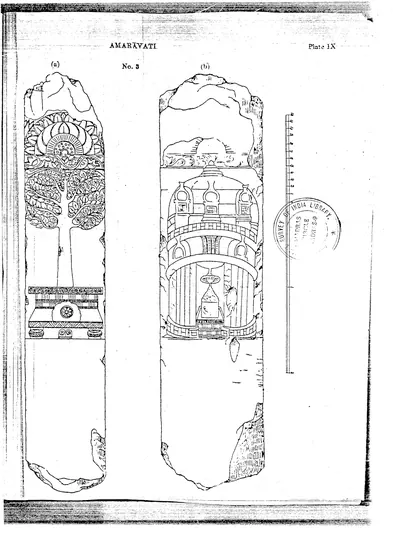
The outer rail was the monument’s most famous feature.5 Its upright slabs stood about ten feet above the paved path inside it.5 Each pair of uprights was joined by three lens-shaped cross-bars set into mortices (sockets).5 A carved coping about 2 feet 9 inches high ran along the top.5
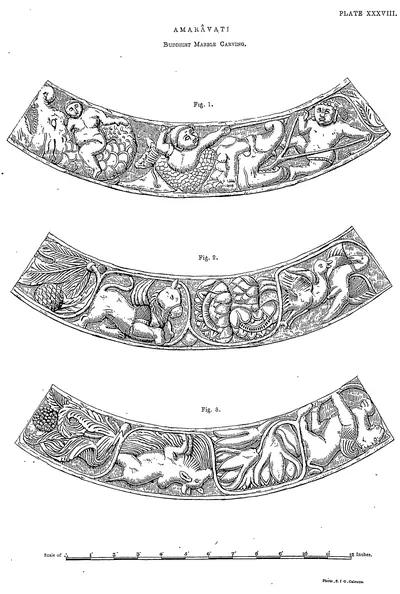
The facing was a greyish-white limestone, which 19th-century writers usually called “marble”.61011 Burgess believed it came from the same quarries on the Krishna bank, south of Jaggayyapeta, that supplied the Jaggayyapeta stupa.610 The 1883 district manual names the cream-coloured limestone of the hills to the west.11 Mackenzie’s draughtsmen recorded that the carvings had originally been painted red.12
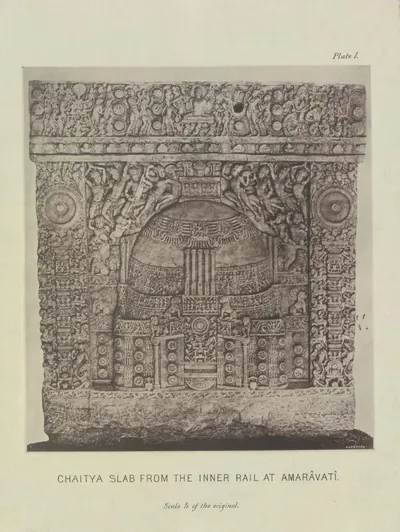
Many of the slabs of the inner rail carry a carved picture of a stupa.6 These “chaitya slabs” show a dome with a five-pillar group on each face.6 Burgess took them as fair pictures of the Mahachaitya itself in its finished form.6 The sculptures show scenes from the life of the Buddha and Buddhist emblems.13 On what Burgess took to be the earliest slabs, the Buddha himself is not shown.14 Worshippers bow instead before an empty seat and a pair of footprints.14
Building phases and dates
The monument was built and rebuilt over several centuries, so it cannot be given one date. Burgess found several kinds of evidence for this:
- Fragments of an inscription in letters of Mauryan type record “a pillar of the General Mudakutala”. Burgess placed the first Great Chaitya at perhaps about 200 BCE.15
- South of the west gate, polished granite rail posts and archaic slabs resemble the early carvings at Jaggayyapeta. Burgess thought they might be remains of an early rail that was later replaced in limestone.16
- An inscription dated in the reign of the Satavahana king Vasishthiputra Sri Pulumavi records a Dharmachakra (wheel of the law) set up at the western gate. Burgess dated Pulumavi to about 135–163 CE and concluded that the outer rail was begun in the 2nd century. He placed the inner rail somewhat later, perhaps not completed much before the end of the 3rd century.1718
- Burgess found part of the paving laid on top of broken sculptured slabs, which showed that the site had been partly restored at a much later date.16
- A later Sanskrit pillar inscription in early Telugu characters lists Pallava kings. It records that Simhavarman II honoured the shrine of the Buddha at “Dhanyaghata”, which Burgess read as a spelling of Dhanyakataka.19
These dates depend on Satavahana chronology, which was unsettled even then.20 Burgess noted that Bühler preferred dates about 130 years earlier for the same kings.20 So the absolute dates should be read as approximate (see Satavahanas).20
Inscriptions and the Chaitika school
More than fifty short donative (gift) inscriptions were recovered.17211913 Most of them are in Prakrit, an everyday language related to Sanskrit, and in Brahmi script.17211913 They name householders, merchants, monks and nuns who gave a rail bar, a pillar or a slab, often “with” their whole family.17211913
Several describe the monument as belonging to the Chaitika school, a branch of the Mahasanghika Buddhists.155 Burgess used this to identify Amaravati with the Purvasaila monastery described by the Chinese pilgrim Xuanzang (Hiuen Tsang).155 Xuanzang came to the kingdom he called Tho-na-kie-tse-kia (Dhanakataka) in about 636.22 He reported convents on hills east and west of the city, Purvasila and Avarasila, most of them deserted.22
A Tibetan life of the philosopher Nagarjuna says that he “surrounded the great shrine of Dhanyakataka with a railing”.23 Burgess gave this tradition some weight, but noted that the accounts of Nagarjuna’s date conflict.23
Destruction and excavation
In 1796–97 Raja Vasireddi Venkatadri Nayudu, the zamindar (landholder) of Chintapalle, moved his capital to Amaravati and dug the local mounds for bricks.242526 His workmen opened Dipaldinne and sank a shaft at its centre in search of treasure.242526 They broke up the slabs.242526 Some went into the steps of a tank and into the Amaresvara temple.242526 Others were burnt for lime, and slabs used in mosques were first rubbed smooth.242526
At the centre the workmen found a stone casket holding a crystal box with a small pearl and gold leaf.169 Walter Elliot later secured these for the Madras Museum.169 Digging stopped after a Pindari raid in March 1816 and the Raja’s death that August.25
Mackenzie and the slabs
Colin Mackenzie first visited in 1797.824 He returned in March 1816 with a team of draughtsmen, who drew the exposed sculptures and made a survey of the site.824 Some slabs went to Machilipatnam (then Masulipatam), and from there seven were sent to Calcutta.26 In 1830 the Collector, Robertson, set up thirty-three slabs in a new market square there.26 Sewell later counted only seven of these as recovered.27
Elliot’s slabs
Walter Elliot dug near the west gate and sent the slabs to Madras.2829 Burgess dates this to 1845.28 The district manual and the Imperial Gazetteer date it to 1840.29
Most of these slabs were later shipped to London.3028 There, the manual says, they lay in the coach-house of Fife House until James Fergusson found them in 1867.3028 Fergusson published them in Tree and Serpent Worship (1868).3028 They were afterwards set up along the grand staircase of the British Museum.3028
The clearing of 1880
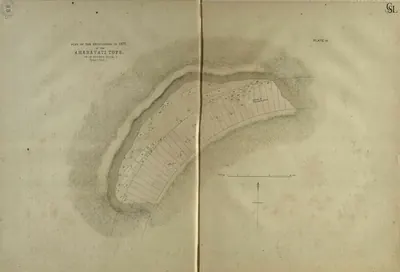
Robert Sewell excavated in 1877.2 In February 1880 the Governor, the Duke of Buckingham, ordered the whole site cleared.2 Burgess complained that this was done without professional supervision.2 In his view it destroyed any remaining trace of the central structure.2
Burgess surveyed the cleared site in December 1881 and January 1882.312 He counted 329 slabs and fragments, to which he added about ninety more.312 He packed over 170 of them for the Madras Museum, although their removal was delayed for nearly two years.312 The marbles became one of that museum’s chief exhibits.332
Older interpretations
Fergusson wrote his account before most of the inscriptions were read.33 He dated the great rail to the 4th century CE.33 He linked it with a temple “at the Diamond Sands” mentioned in Ceylonese chronicles as begun in 322.33 He also argued that serpent (Naga) worship almost replaced Buddhism in its sculpture.33
Burgess used the Pulumavi inscription and revised dates for the western Indian cave inscriptions.3431 With these he moved the rail back to the 2nd century.3431 He also gave a far larger estimate for the dome than Fergusson’s figure of no more than 30 feet.49
Even the identification of Dhanyakataka with Dharanikota beside Amaravati was not settled.35 In 1933 J. Ph. Vogel asked whether Nagarjunakonda might instead be that ancient capital.35
Footnotes
-
James Burgess, The Buddhist Stupas of Amaravati and Jaggayyapeta (1887), p. 2 (archive.org (opens in a new tab)). ↩
-
Burgess, Amaravati and Jaggayyapeta (1887), p. 19 (archive.org (opens in a new tab)). ↩ ↩2 ↩3 ↩4 ↩5 ↩6 ↩7 ↩8
-
Imperial Gazetteer of India: Madras, Vol. I (1908), p. 508 (archive.org (opens in a new tab)); see also p. 303 on pieces in Calcutta (archive.org (opens in a new tab)). ↩ ↩2
-
Burgess, Amaravati and Jaggayyapeta (1887), p. 23 (archive.org (opens in a new tab)). ↩ ↩2 ↩3 ↩4 ↩5 ↩6 ↩7 ↩8 ↩9 ↩10
-
Burgess, Amaravati and Jaggayyapeta (1887), p. 24 (archive.org (opens in a new tab)). ↩ ↩2 ↩3 ↩4 ↩5 ↩6 ↩7 ↩8 ↩9 ↩10
-
Burgess, Amaravati and Jaggayyapeta (1887), p. 21 (archive.org (opens in a new tab)). ↩ ↩2 ↩3 ↩4 ↩5 ↩6 ↩7 ↩8
-
J. Ph. Vogel, “Prakrit Inscriptions from a Buddhist Site at Nagarjunikonda”, Epigraphia Indica XX (1933), p. 2 (archive.org (opens in a new tab)). ↩ ↩2 ↩3
-
Burgess, Amaravati and Jaggayyapeta (1887), p. 13 (archive.org (opens in a new tab)). ↩ ↩2 ↩3 ↩4
-
James Fergusson, Tree and Serpent Worship (1868), p. 164 (archive.org (opens in a new tab)). ↩ ↩2 ↩3 ↩4
-
Burgess, Amaravati and Jaggayyapeta (1887), p. 107 (archive.org (opens in a new tab)). ↩ ↩2
-
Mackenzie, Kistna District Manual (1883), p. 168 (archive.org (opens in a new tab)). ↩ ↩2
-
Burgess, Amaravati and Jaggayyapeta (1887), p. 16, quoting Mackenzie (archive.org (opens in a new tab)). ↩
-
Imperial Gazetteer of India: Madras, Vol. I (1908), p. 333 (archive.org (opens in a new tab)). ↩ ↩2 ↩3 ↩4
-
Burgess, Amaravati and Jaggayyapeta (1887), p. 53 (archive.org (opens in a new tab)). ↩ ↩2
-
Burgess, Amaravati and Jaggayyapeta (1887), p. 101 (archive.org (opens in a new tab)). ↩ ↩2 ↩3
-
Burgess, Amaravati and Jaggayyapeta (1887), p. 22 (archive.org (opens in a new tab)). ↩ ↩2 ↩3 ↩4
-
Burgess, Amaravati and Jaggayyapeta (1887), p. 100 (archive.org (opens in a new tab)). ↩ ↩2 ↩3 ↩4
-
Burgess, Amaravati and Jaggayyapeta (1887), p. 112 (archive.org (opens in a new tab)). ↩
-
Burgess, Amaravati and Jaggayyapeta (1887), p. 106 (archive.org (opens in a new tab)). ↩ ↩2 ↩3 ↩4
-
Burgess, Amaravati and Jaggayyapeta (1887), p. 11, n. 6 (archive.org (opens in a new tab)). ↩ ↩2 ↩3
-
Burgess, Amaravati and Jaggayyapeta (1887), pp. 102–103 (archive.org (opens in a new tab)). ↩ ↩2 ↩3
-
Burgess, Amaravati and Jaggayyapeta (1887), p. 9 (archive.org (opens in a new tab)). ↩ ↩2
-
Burgess, Amaravati and Jaggayyapeta (1887), p. 5 (archive.org (opens in a new tab)). ↩ ↩2
-
Burgess, Amaravati and Jaggayyapeta (1887), p. 14 (archive.org (opens in a new tab)). ↩ ↩2 ↩3 ↩4 ↩5 ↩6 ↩7
-
Burgess, Amaravati and Jaggayyapeta (1887), p. 15 (archive.org (opens in a new tab)). ↩ ↩2 ↩3 ↩4 ↩5 ↩6
-
Burgess, Amaravati and Jaggayyapeta (1887), p. 17 (archive.org (opens in a new tab)). ↩ ↩2 ↩3 ↩4 ↩5 ↩6 ↩7
-
Robert Sewell, Lists of the Antiquarian Remains in the Presidency of Madras, Vol. I (1882), p. 53 (archive.org (opens in a new tab)). ↩
-
Burgess, Amaravati and Jaggayyapeta (1887), p. 18 (archive.org (opens in a new tab)). ↩ ↩2 ↩3 ↩4 ↩5 ↩6
-
Gordon Mackenzie, A Manual of the Kistna District (1883), p. 165 (archive.org (opens in a new tab)); Imperial Gazetteer of India: Madras, Vol. I (1908), p. 332 (archive.org (opens in a new tab)). ↩ ↩2
-
Mackenzie, Kistna District Manual (1883), p. 166 (archive.org (opens in a new tab)). ↩ ↩2 ↩3 ↩4
-
Burgess, Amaravati and Jaggayyapeta (1887), Preface, p. v (archive.org (opens in a new tab)). ↩ ↩2 ↩3 ↩4 ↩5
-
Alexander Rea, South Indian Buddhist Antiquities (1894), p. 47 (archive.org (opens in a new tab)). ↩
-
Fergusson, Tree and Serpent Worship (1868), p. 162 (archive.org (opens in a new tab)). ↩ ↩2 ↩3 ↩4
-
Burgess, Amaravati and Jaggayyapeta (1887), pp. 11–12 (archive.org (opens in a new tab)). ↩ ↩2
-
Vogel, Epigraphia Indica XX (1933), p. 9 (archive.org (opens in a new tab)). ↩ ↩2
Photos
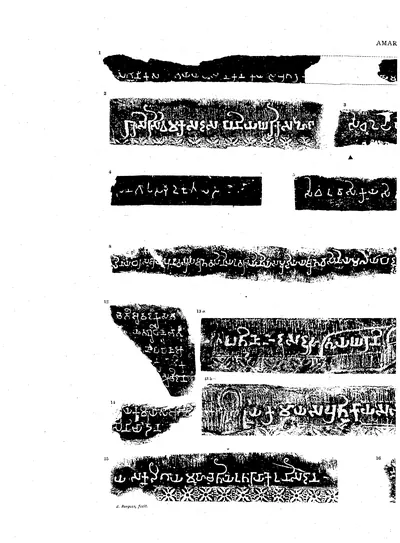 "Amaravati Inscriptions", Nos. 1-16 (left half of the folding plate), including No. 1, dated in the reign of Vasishthiputra Sri Pulumavi, and No. 2, naming "king Sri Sivamaka Sada" (Burgess 1887, Pl. LVI)Inscription rubbing · 1887
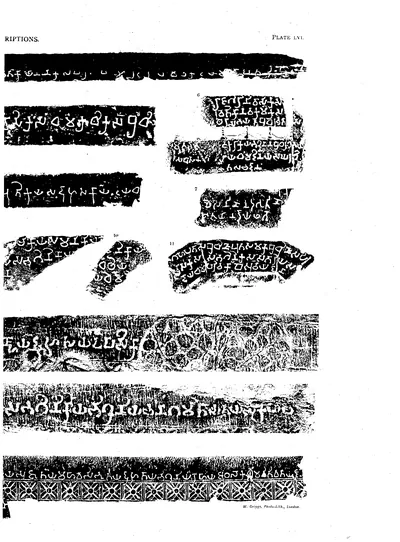 "Amaravati Inscriptions", Nos. 1-16 (right half of the folding plate) (Burgess 1887, Pl. LVI)Inscription rubbing · 1887
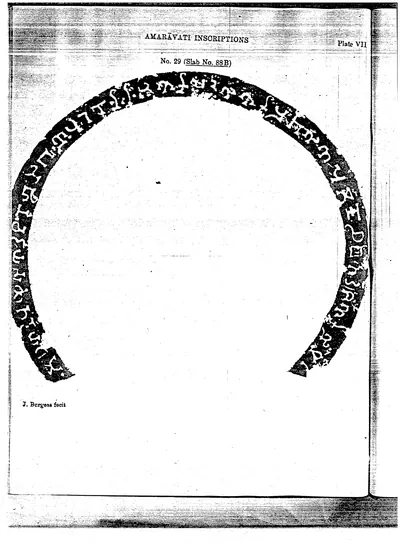 "Amaravati Inscriptions": inscription round the rim of a carved slab (Pl. VII) (Burgess 1882, Pl. VII (PDF p. 57))Inscription rubbing · 1882
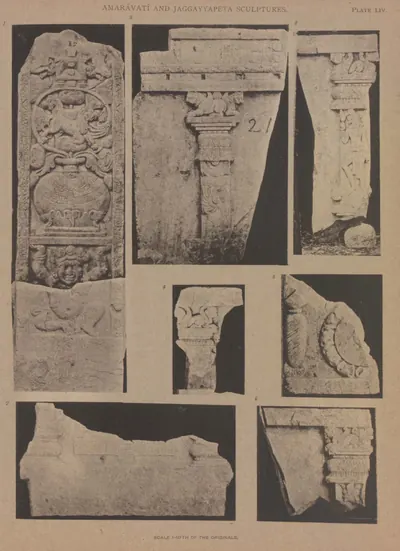 A pillar slab from Amaravati, and six fragments from Jaggayyapeta (Burgess 1887, Pl. LIV)Book plate · 1887
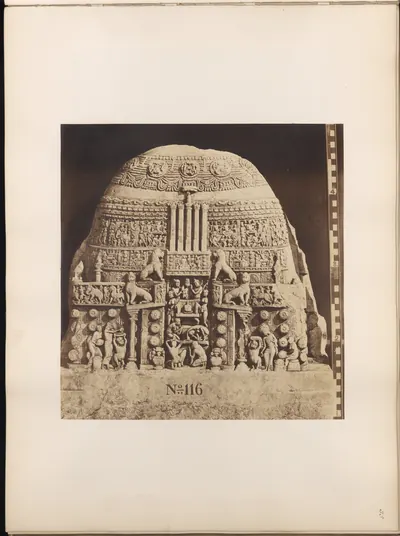 Amaravati drum slab, photographed 1858Historic photograph · 1858
 Amaravati inscription No. 4, "... Senagopasa Mudakutalasa thabho ..." ("a pillar of the General Mudakutala"), in letters of the Mauryan type (Burgess 1887, Pl. LVI, No. 4)Inscription rubbing · 1887
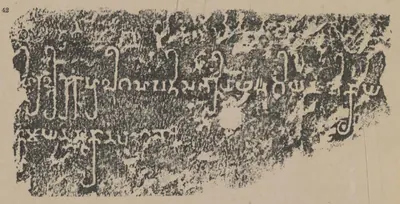 Amaravati inscription No. 42, ink impression (Burgess 1887, Pl. LIX, No. 42)Inscription rubbing · 1887
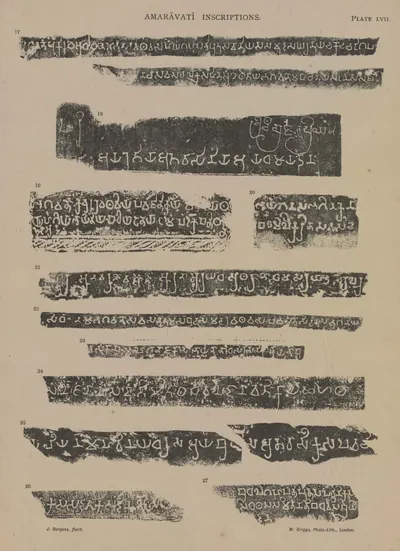 Amaravati inscriptions, Nos. 17-27 (Burgess 1887, Pl. LVII)Inscription rubbing · 1887
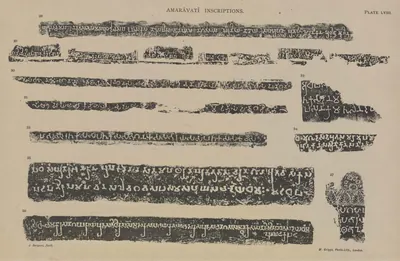 Amaravati inscriptions, Nos. 28-37 (Burgess 1887, Pl. LVIII)Inscription rubbing · 1887
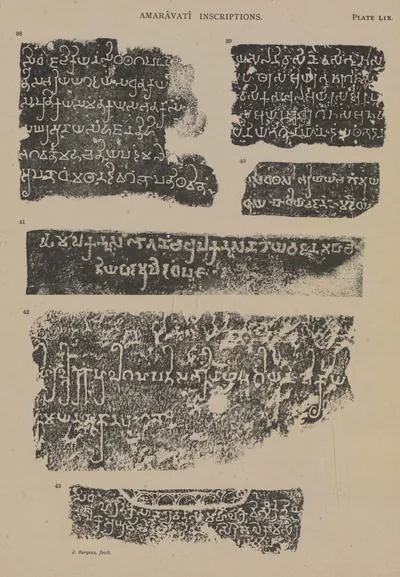 Amaravati inscriptions, Nos. 38-43 (Burgess 1887, Pl. LIX)Inscription rubbing · 1887
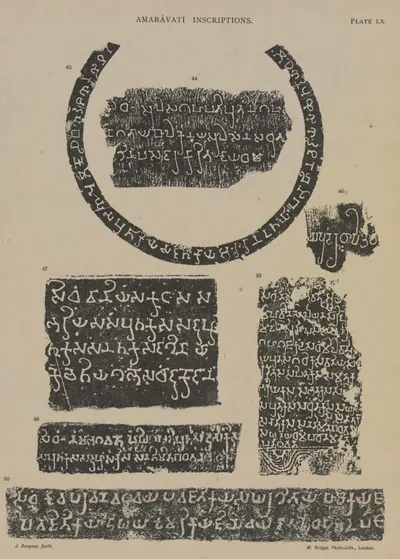 Amaravati inscriptions, Nos. 44-50 (Burgess 1887, Pl. LX)Inscription rubbing · 1887
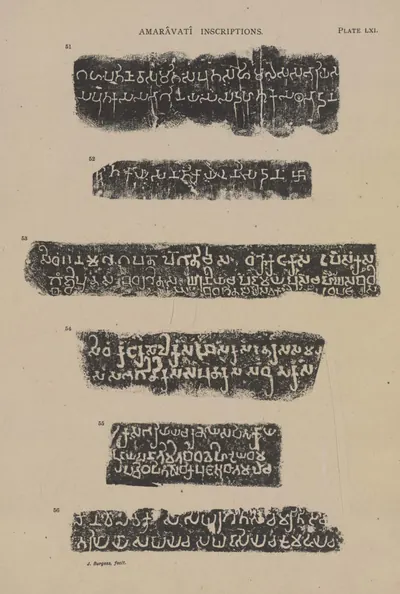 Amaravati inscriptions, Nos. 51-56 (Burgess 1887, Pl. LXI)Inscription rubbing · 1887
Show all (139)
 Amaravati relief, c. 150 CE (Government Museum, Chennai)Photograph · 2017
 Amaravati roundel, c. 150 CE (Government Museum, Chennai)Photograph · 2019
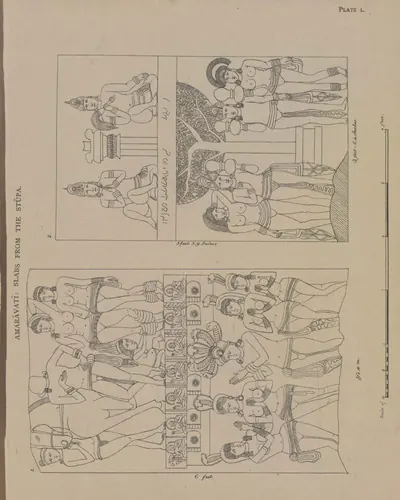
 Amaravati: "Chaitya slab from the inner rail at Amaravati" (Burgess 1887, Pl. I)Book plate · 1887
 Amaravati: "Plan of the excavations in 1877 at the Amaravati Tope, on an enlarged scale" (Pl. III) (Sewell 1880, Pl. III (PDF p. 40))Plan · 1880
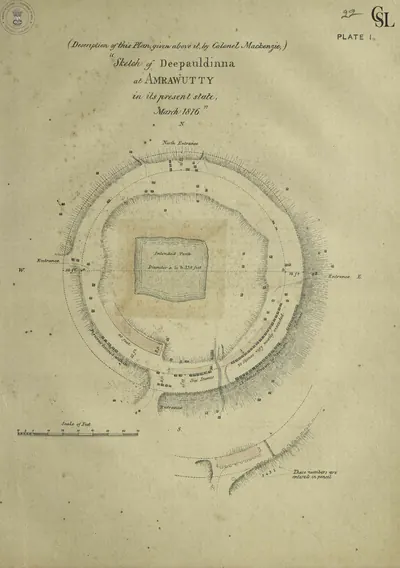 Amaravati: "Sketch of Deepauldinna at Amrawutty in its present state, March 1816", description by Colonel Mackenzie (Pl. I) (Sewell 1880, Pl. I (PDF p. 21))Plan · 1880
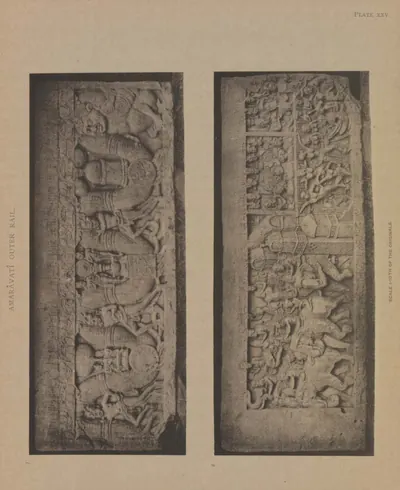 Amaravati: a fifth coping-stone, both sides (Burgess 1887, Pl. XXV)Book plate · 1887
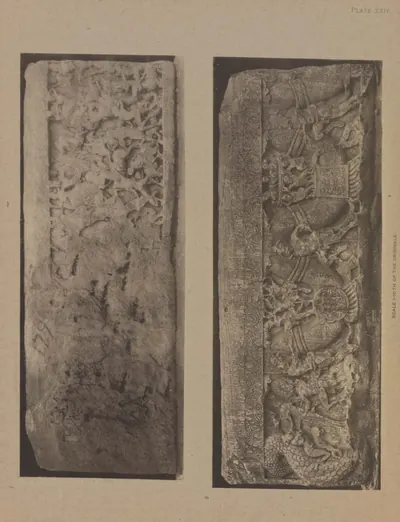 Amaravati: a fourth coping-stone, both sides (Burgess 1887, Pl. XXIV)Book plate · 1887
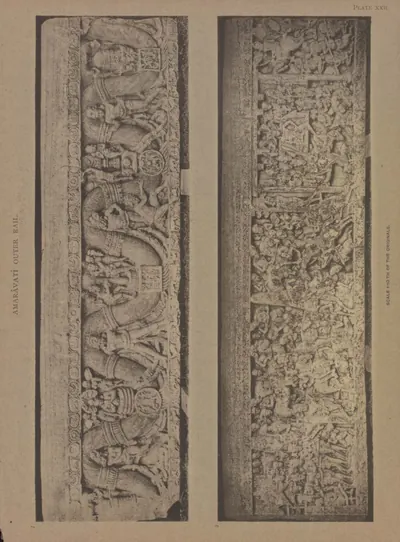 Amaravati: a third large coping-stone, both sides (Burgess 1887, Pl. XXII)Book plate · 1887
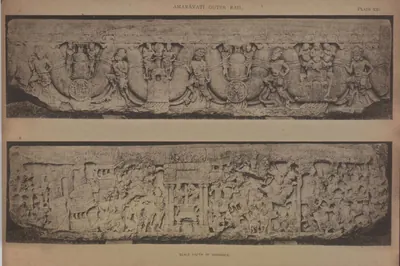 Amaravati: another large coping-stone, both sides (Burgess 1887, Pl. XXI)Book plate · 1887
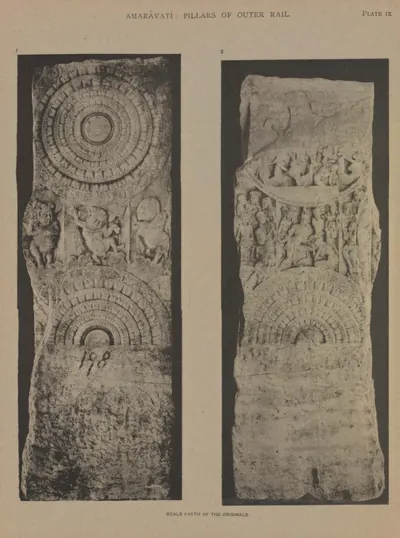 Amaravati: another rail pillar, back and front (Burgess 1887, Pl. IX)Book plate · 1887
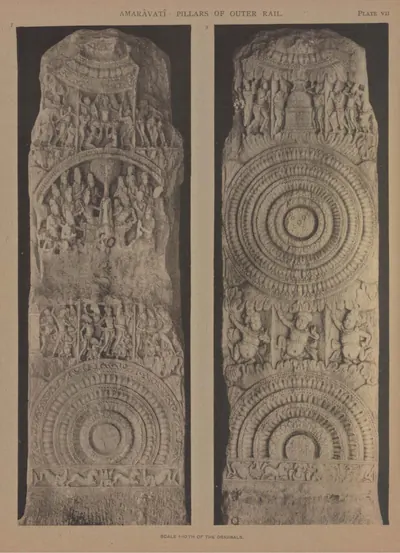 Amaravati: another rail pillar, back and front (Burgess 1887, Pl. VII)Book plate · 1887
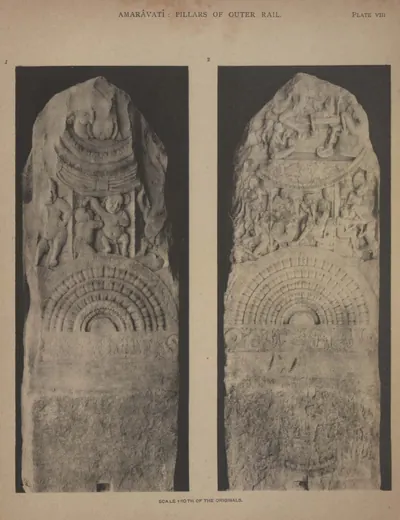 Amaravati: another rail pillar, back and front (Burgess 1887, Pl. VIII)Book plate · 1887
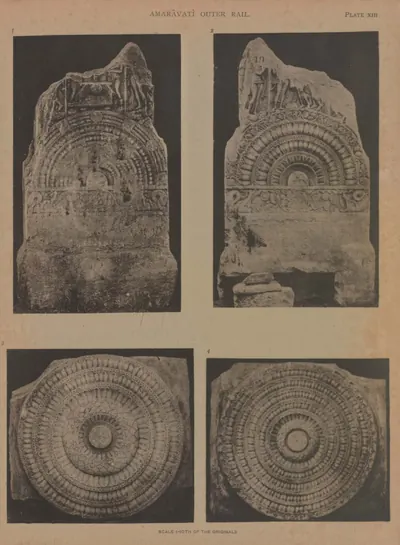 Amaravati: back and front of the base of a rail pillar, and two cross-bars (Burgess 1887, Pl. XIII)Book plate · 1887
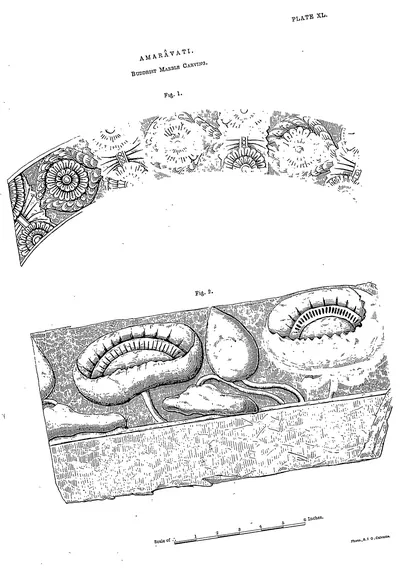 Amaravati: Buddhist marble carving (Rea 1894, Pl. XL)Drawing · 1894
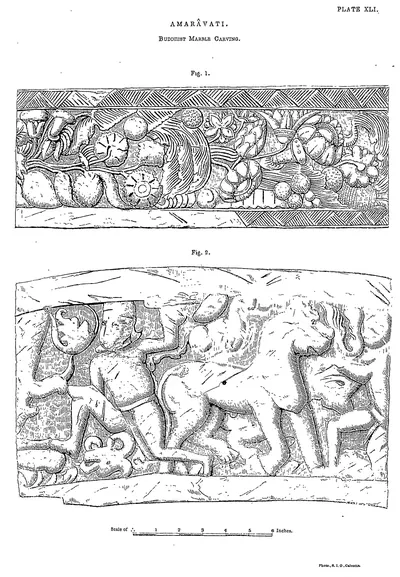 Amaravati: Buddhist marble carving (Rea 1894, Pl. XLI)Drawing · 1894
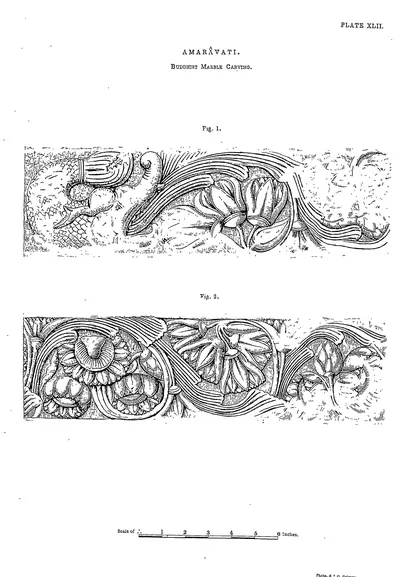 Amaravati: Buddhist marble carving (Rea 1894, Pl. XLII)Drawing · 1894
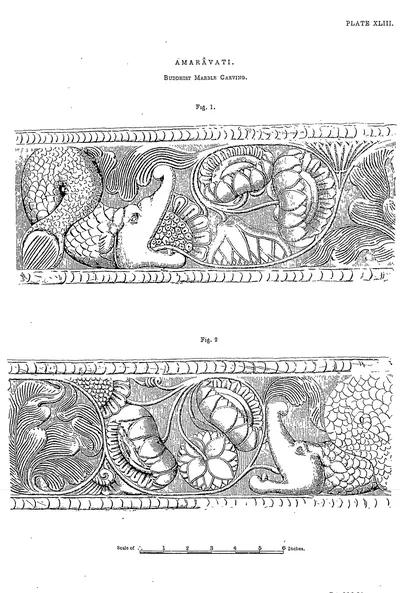 Amaravati: Buddhist marble carving (Rea 1894, Pl. XLIII)Drawing · 1894
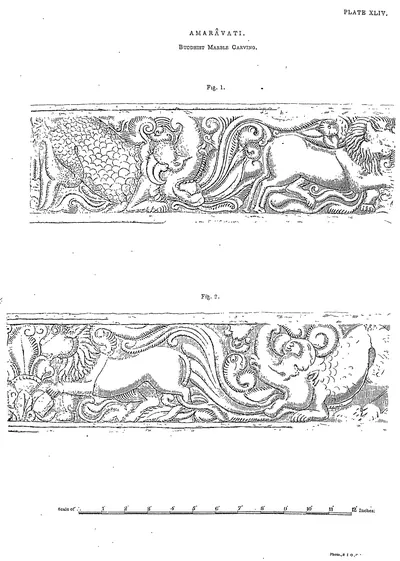 Amaravati: Buddhist marble carving (Rea 1894, Pl. XLIV)Drawing · 1894
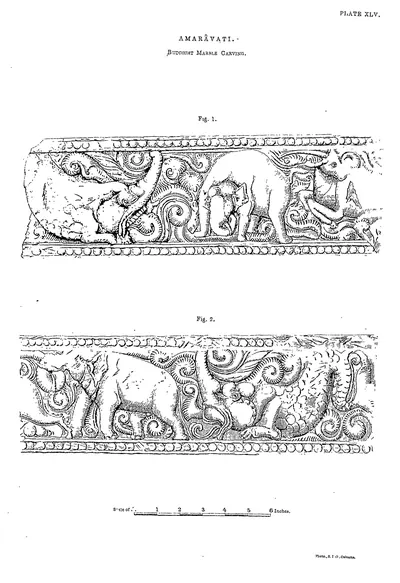 Amaravati: Buddhist marble carving (Rea 1894, Pl. XLV)Drawing · 1894
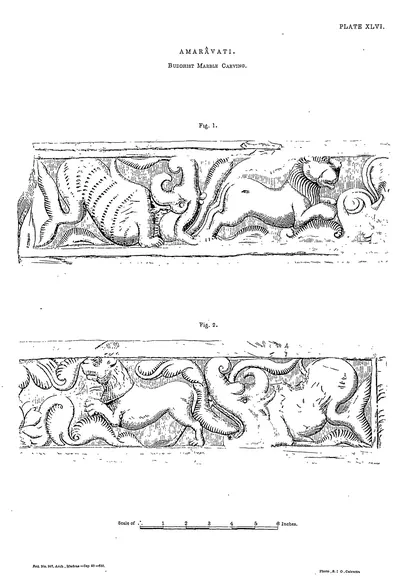 Amaravati: Buddhist marble carving (Rea 1894, Pl. XLVI)Drawing · 1894
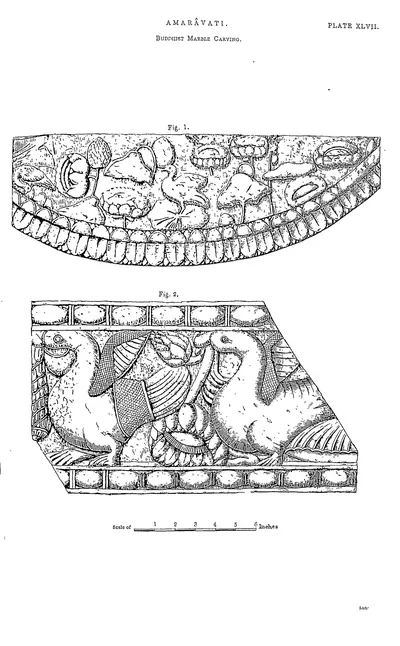 Amaravati: Buddhist marble carving (Rea 1894, Pl. XLVII)Drawing · 1894
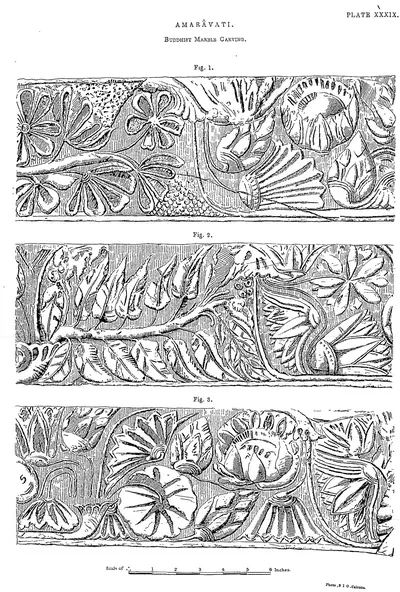 Amaravati: Buddhist marble carving (Rea 1894, Pl. XXXIX)Drawing · 1894
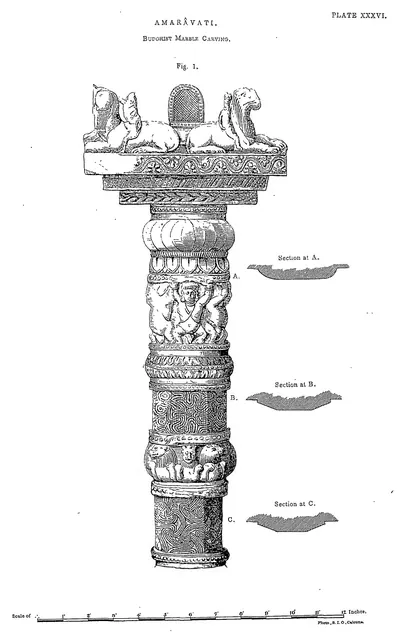 Amaravati: Buddhist marble carving (Rea 1894, Pl. XXXVI)Drawing · 1894
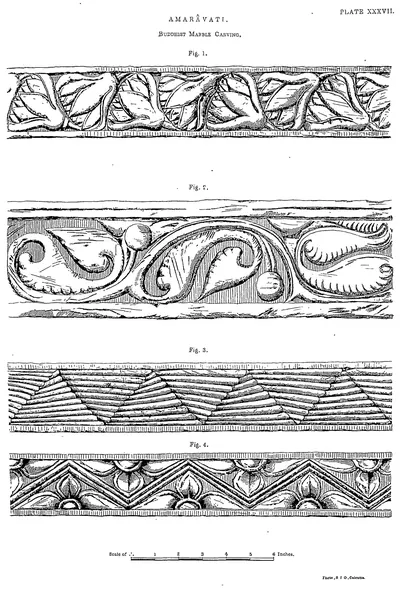 Amaravati: Buddhist marble carving (Rea 1894, Pl. XXXVII)Drawing · 1894
 Amaravati: Buddhist marble carving (Rea 1894, Pl. XXXVIII)Drawing · 1894
 Amaravati: drawings of a carved pillar, two views (Burgess 1882, PDF p. 73)Drawing · 1882
 Amaravati: drawings of the two faces of a carved slab (Pl. VIII) (Burgess 1882, Pl. VIII (PDF p. 67))Drawing · 1882
 Amaravati: drawings of the two faces of a carved slab with a tree and a stupa (Pl. IX) (Burgess 1882, Pl. IX (PDF p. 68))Drawing · 1882
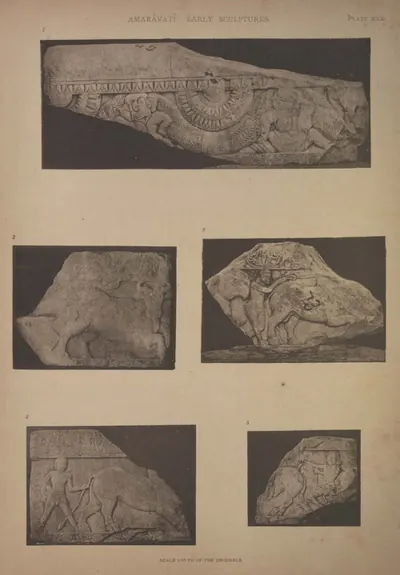 Amaravati: five pieces of early coping (Burgess 1887, Pl. XXX)Book plate · 1887
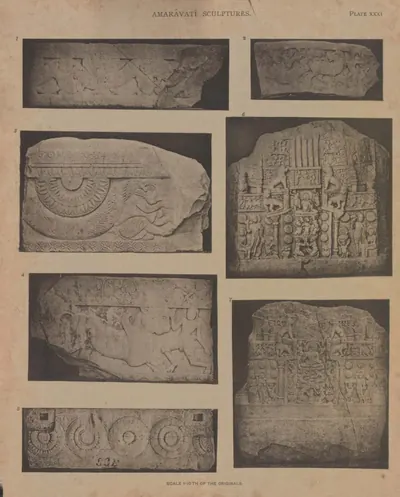 Amaravati: five pieces of early coping, and two chaitya slabs (Burgess 1887, Pl. XXXI)Book plate · 1887
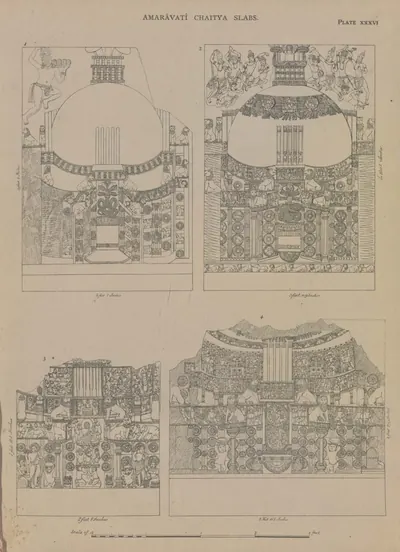 Amaravati: four chaitya slabs (drawn by Colonel Mackenzie's assistants) (Burgess 1887, Pl. XXXVI)Drawing · 1887
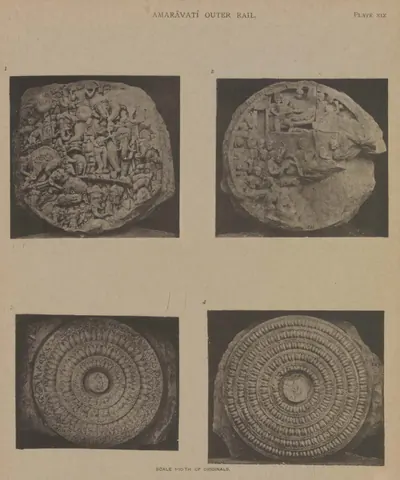 Amaravati: four cross-bars of the outer rail (Burgess 1887, Pl. XIX)Book plate · 1887
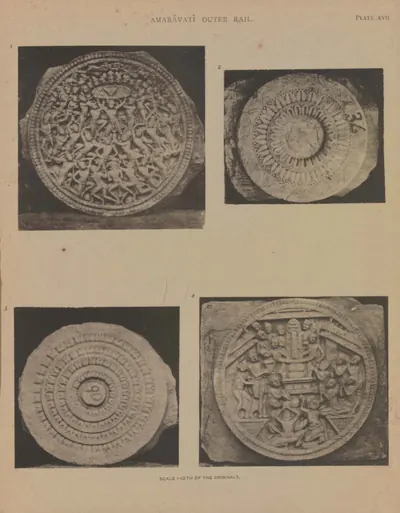 Amaravati: four cross-bars of the outer rail (Burgess 1887, Pl. XVII)Book plate · 1887
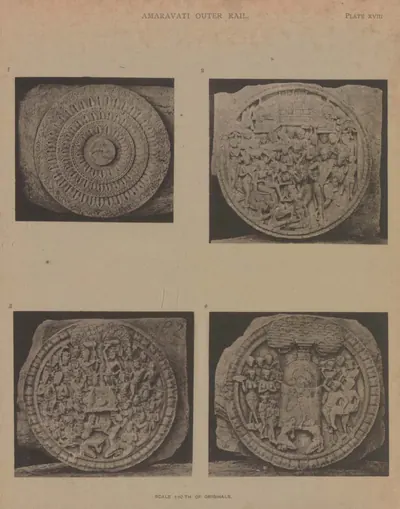 Amaravati: four cross-bars of the outer rail (Burgess 1887, Pl. XVIII)Book plate · 1887
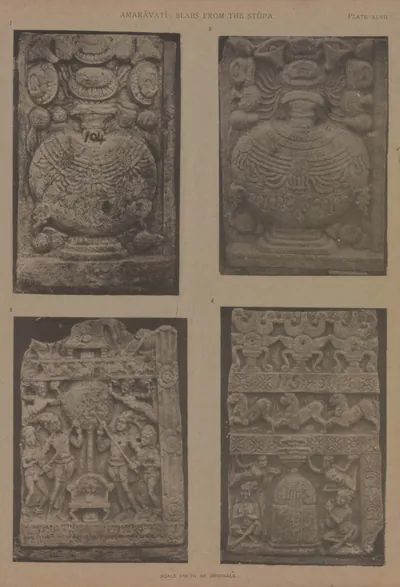 Amaravati: four other slabs from the great chaitya (Burgess 1887, Pl. XLVII)Book plate · 1887
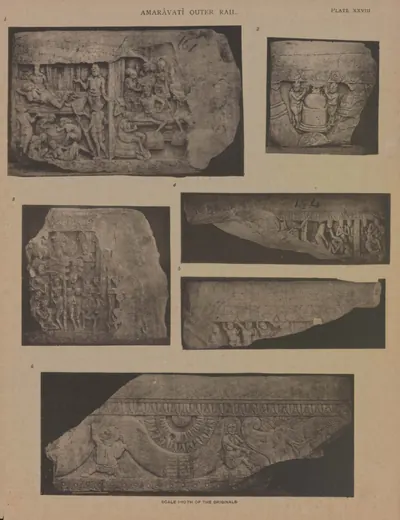 Amaravati: four pieces of coping, and one of an older form (Burgess 1887, Pl. XXVIII)Book plate · 1887
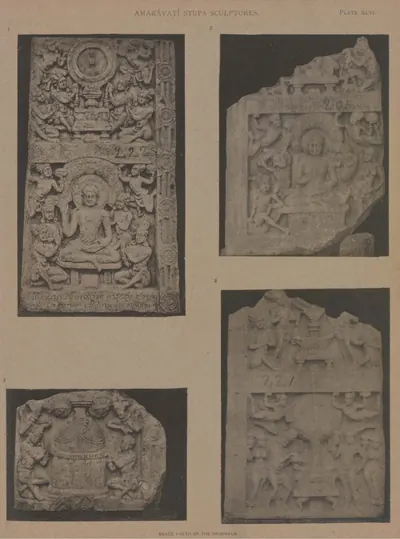 Amaravati: four slabs from the central chaitya (Burgess 1887, Pl. XLVI)Book plate · 1887
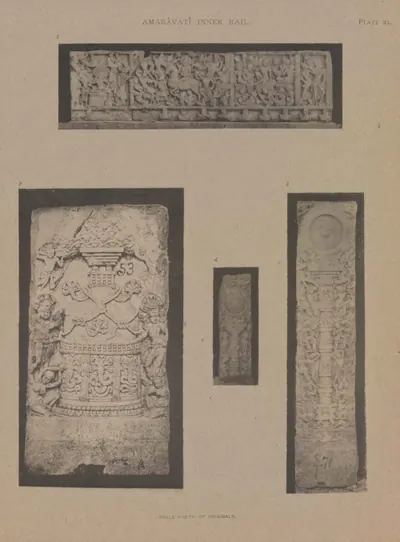 Amaravati: fragments of four chaitya slabs and two pillars from the inner rail (Burgess 1887, Pl. XL)Book plate · 1887
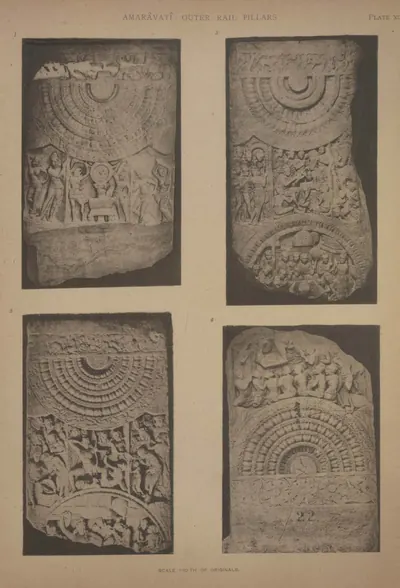 Amaravati: fragments of four rail pillars (Burgess 1887, Pl. XII)Book plate · 1887
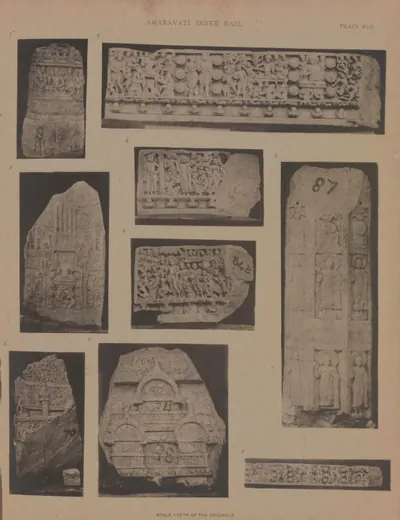 Amaravati: fragments of two chaitya slabs, three pieces of the frieze of the inner rail, &c. (Burgess 1887, Pl. XLII)Book plate · 1887
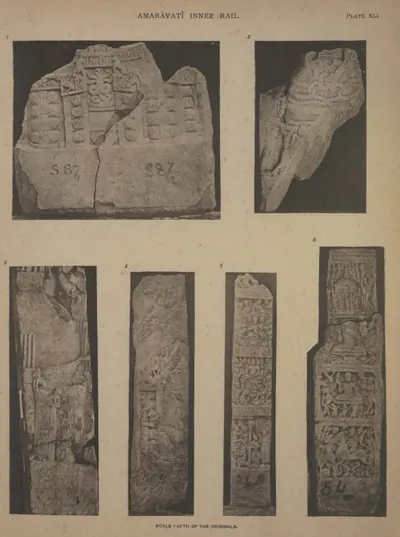 Amaravati: frieze, dagaba slab, chakra pillar, and fragment from the inner rail (Burgess 1887, Pl. XLI)Book plate · 1887
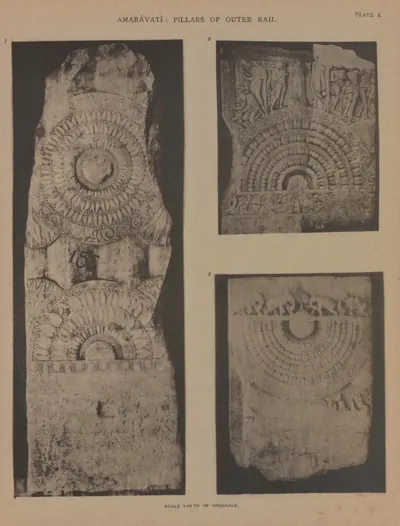 Amaravati: front of a rail pillar, and portions of other two (Burgess 1887, Pl. X)Book plate · 1887
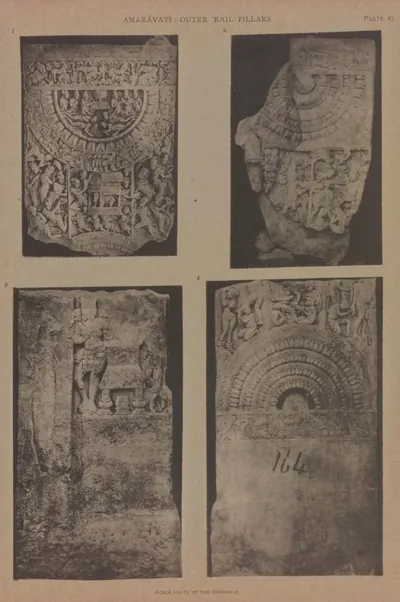 Amaravati: fronts of portions of two, and back and front of a third rail pillar (Burgess 1887, Pl. XI)Book plate · 1887
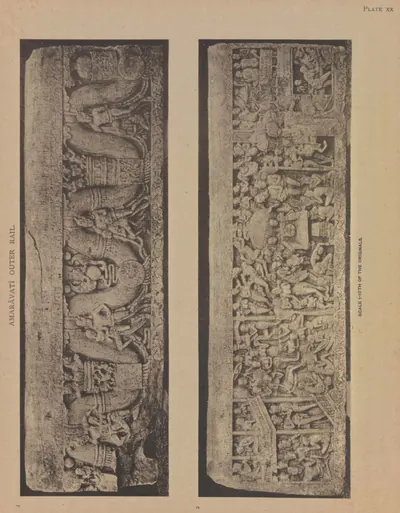 Amaravati: large coping-stone of the outer rail, both sides (Burgess 1887, Pl. XX)Book plate · 1887
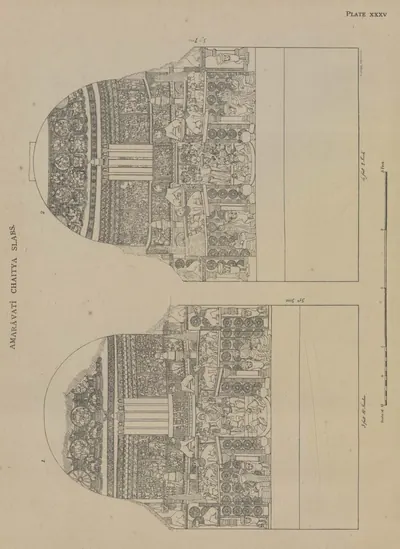 Amaravati: other two chaitya slabs (drawn by Colonel Mackenzie's assistants) (Burgess 1887, Pl. XXXV)Drawing · 1887
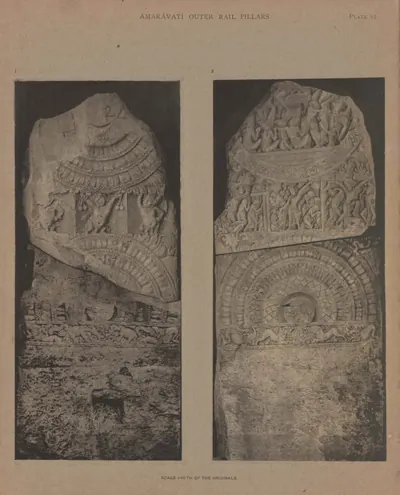 Amaravati: outer rail pillar, back and front (Burgess 1887, Pl. VI)Book plate · 1887
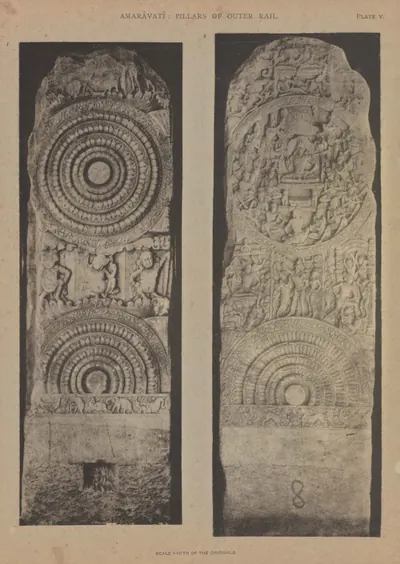 Amaravati: outer rail pillar, front and back (Burgess 1887, Pl. V)Book plate · 1887
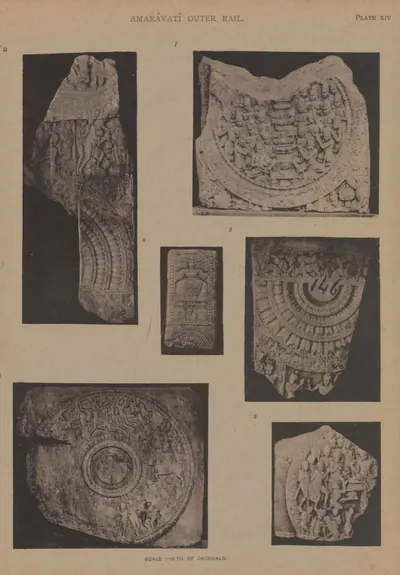 Amaravati: parts of three rail pillars, two cross-bars, and an old sculpture (Burgess 1887, Pl. XIV)Book plate · 1887
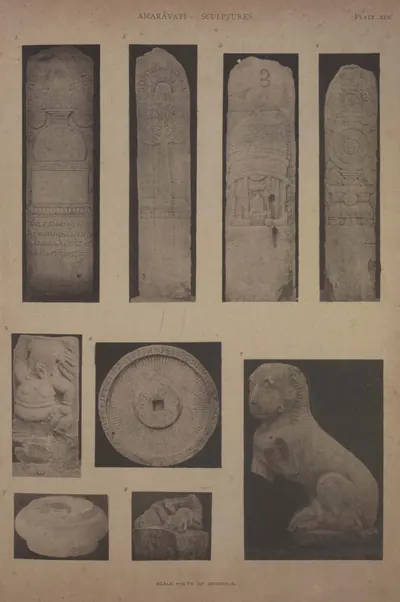 Amaravati: pillar from the East entrance, chhattra, lion, &c. (Burgess 1887, Pl. XLV)Book plate · 1887
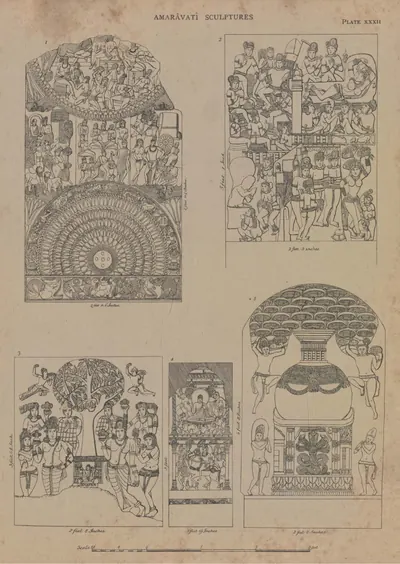 Amaravati: pillar of outer rail and four other slabs (drawn by Colonel Mackenzie's assistants) (Burgess 1887, Pl. XXXII)Drawing · 1887
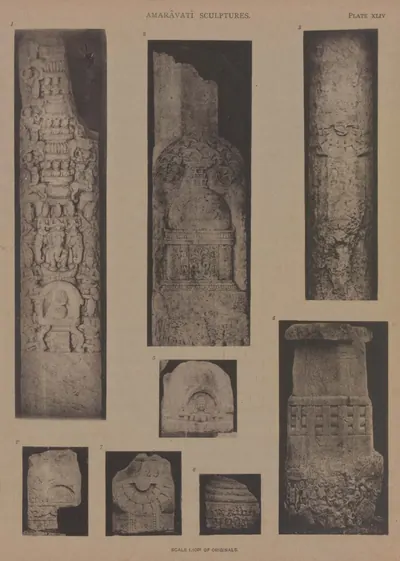 Amaravati: pillars and fragments (Burgess 1887, Pl. XLIV)Book plate · 1887
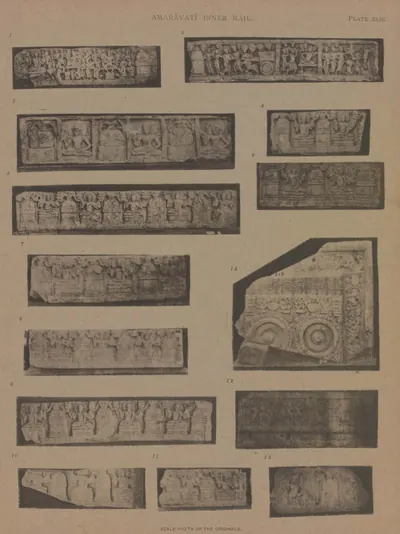 Amaravati: portions of an early frieze and of a Sripada (Burgess 1887, Pl. XLIII)Book plate · 1887
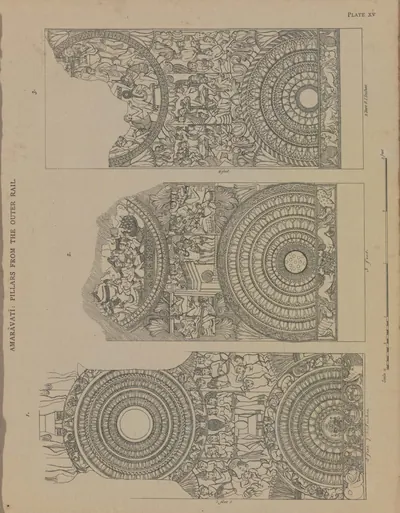 Amaravati: portions of three rail pillars (drawn by Colonel Mackenzie's assistants) (Burgess 1887, Pl. XV)Drawing · 1887
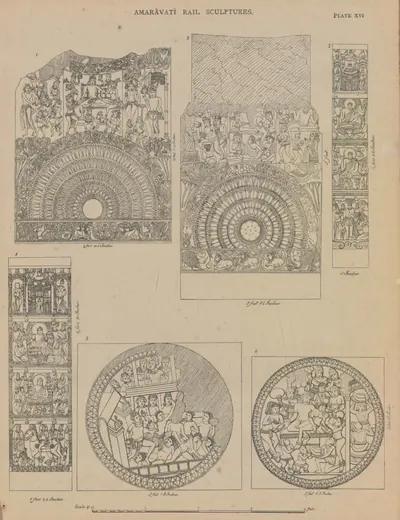 Amaravati: portions of two outer rail pillars, two cross-bars, and two inner rail pillars (drawn by Colonel Mackenzie's assistants) (Burgess 1887, Pl. XVI)Drawing · 1887
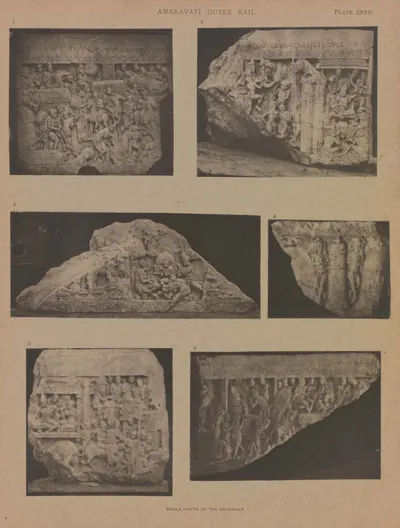 Amaravati: six other pieces of coping-stones (Burgess 1887, Pl. XXVII)Book plate · 1887
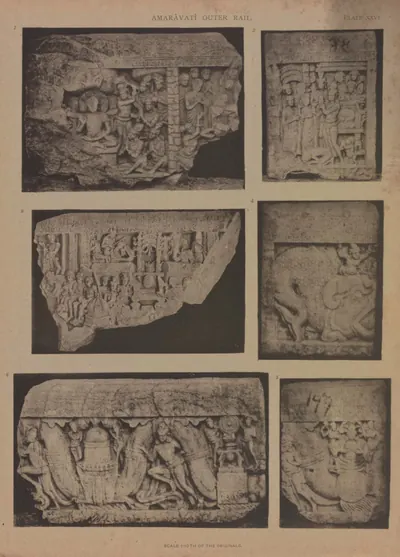 Amaravati: six pieces of coping-stones (Burgess 1887, Pl. XXVI)Book plate · 1887
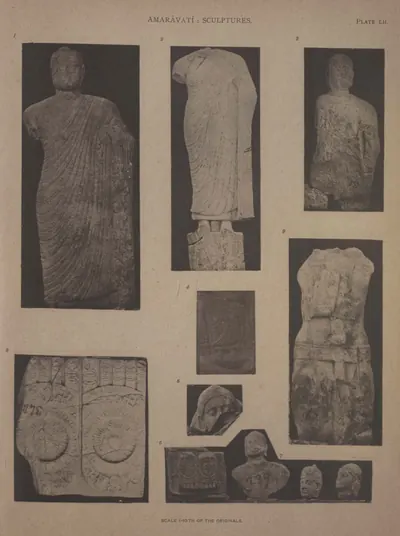 Amaravati: statues and Sripadas (Burgess 1887, Pl. LII)Book plate · 1887
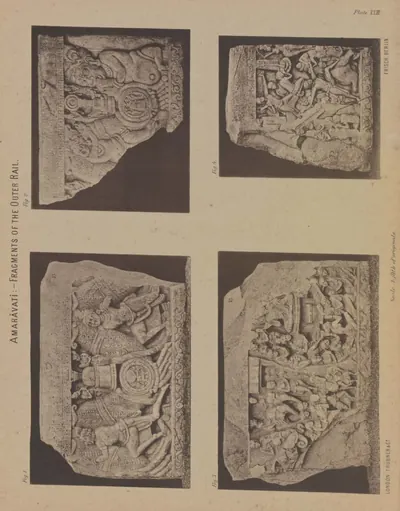 Amaravati: three broken coping-stones (Burgess 1887, Pl. XXIII)Book plate · 1887
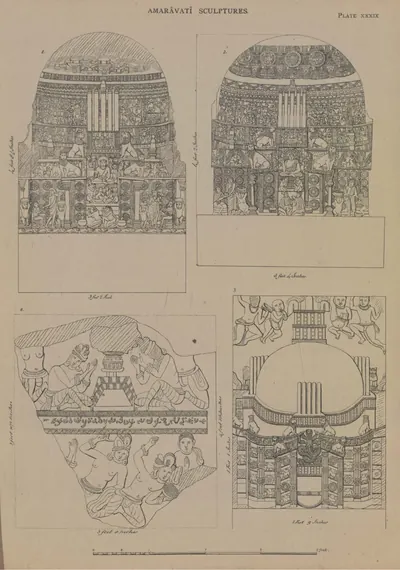 Amaravati: three chaitya slabs, and part of a slab from the stupa (drawn by Colonel Mackenzie's assistants) (Burgess 1887, Pl. XXXIX)Drawing · 1887
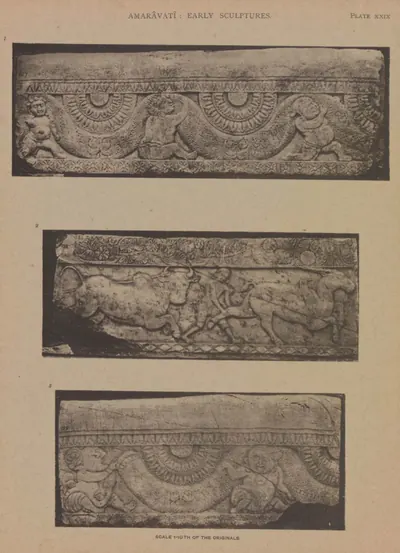 Amaravati: three pieces of earlier coping (Burgess 1887, Pl. XXIX)Book plate · 1887
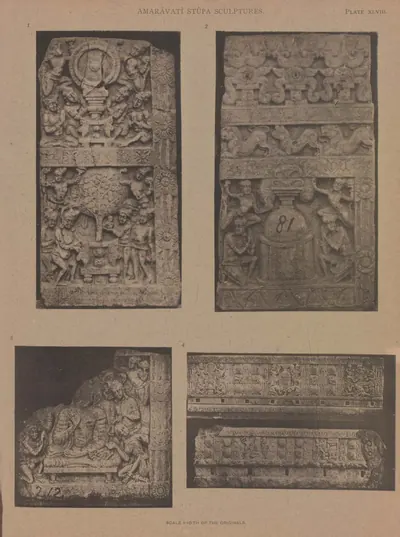 Amaravati: three slabs from the great chaitya, and two pieces of an early frieze (Burgess 1887, Pl. XLVIII)Book plate · 1887
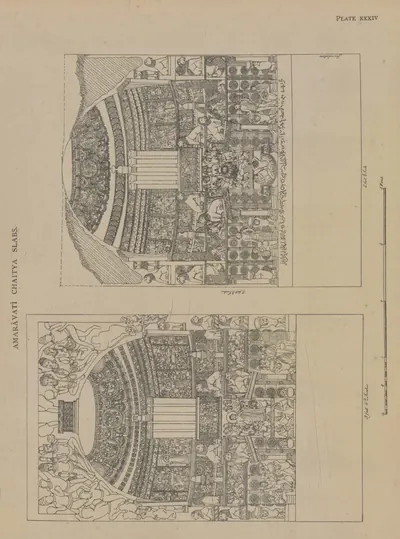 Amaravati: two chaitya slabs (drawn by Colonel Mackenzie's assistants) (Burgess 1887, Pl. XXXIV)Drawing · 1887
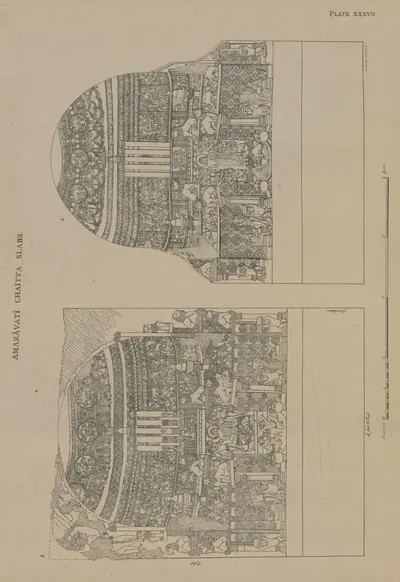 Amaravati: two chaitya slabs (drawn by Colonel Mackenzie's assistants) (Burgess 1887, Pl. XXXVII)Drawing · 1887
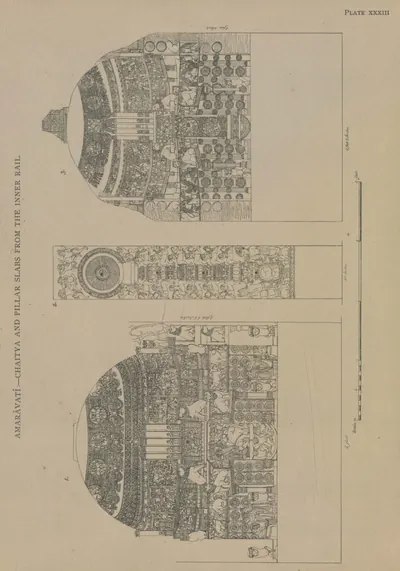 Amaravati: two chaitya slabs and a chakra pillar (drawn by Colonel Mackenzie's assistants) (Burgess 1887, Pl. XXXIII)Drawing · 1887
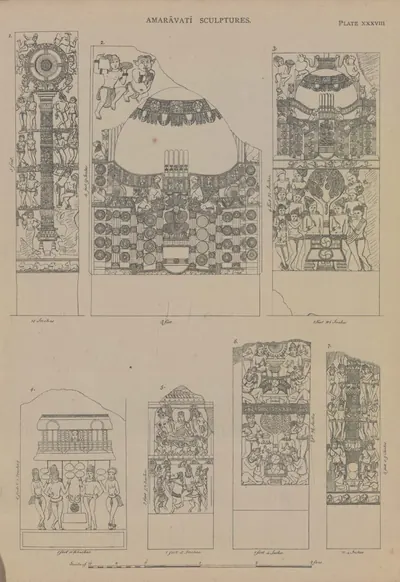 Amaravati: two chakra pillars, a chaitya slab, and four other sculptures (drawn by Colonel Mackenzie's assistants) (Burgess 1887, Pl. XXXVIII)Drawing · 1887
 Amaravati: two early slabs, probably from the chaitya (drawn by Colonel Mackenzie's assistants) (Burgess 1887, Pl. L)Drawing · 1887
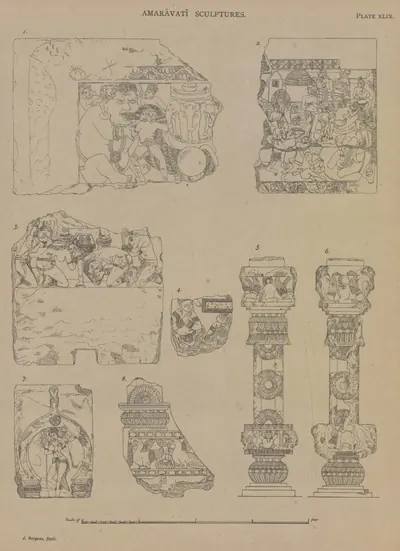 Amaravati: two pieces of coping of the outer rail, and various fragments (drawn by the Survey) (Burgess 1887, Pl. XLIX)Drawing · 1887
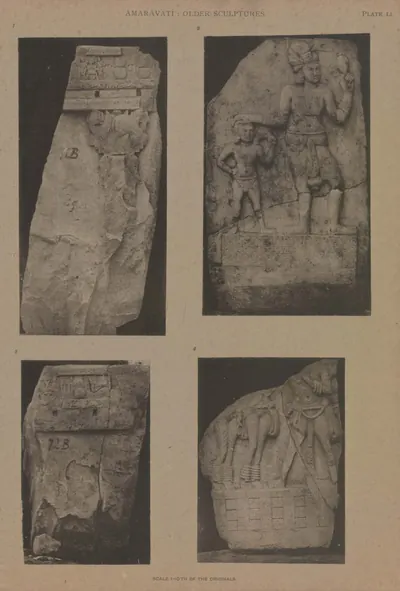 Amaravati: two slabs of an early stupa, and two early sculptures (Burgess 1887, Pl. LI)Book plate · 1887
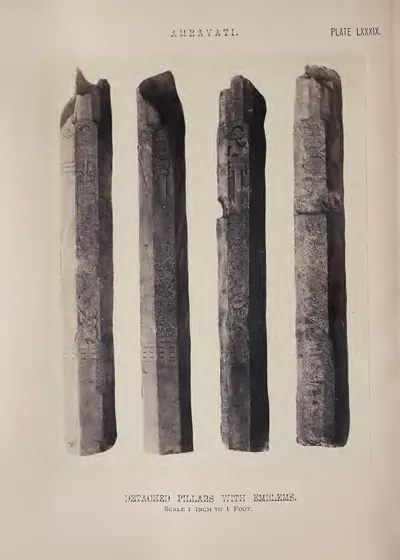 Amravati: detached pillars with emblems (Fergusson 1868, Pl. LXXXIX)Book plate · 1868
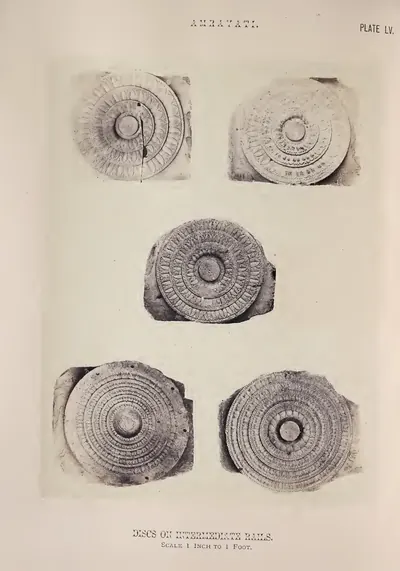 Amravati: discs on intermediate rails (Fergusson 1868, Pl. LV)Book plate · 1868
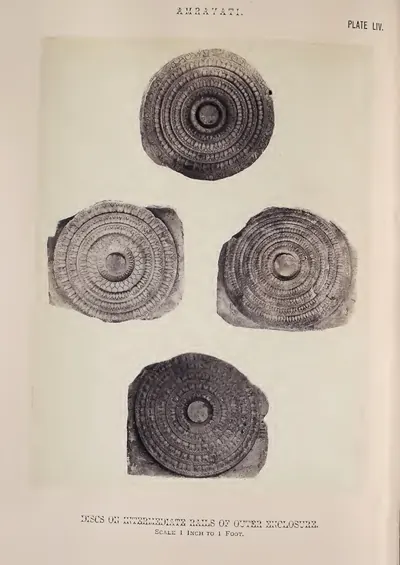 Amravati: discs on intermediate rails of outer enclosure (Fergusson 1868, Pl. LIV)Book plate · 1868
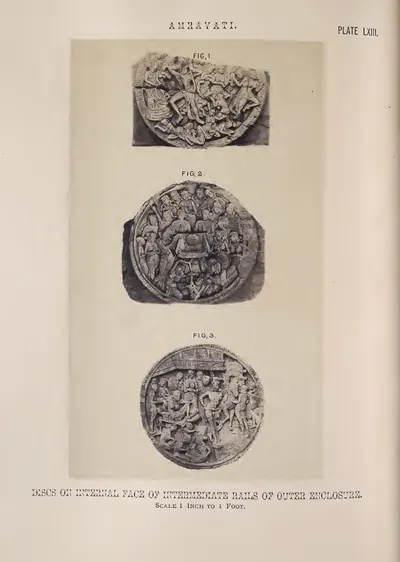 Amravati: discs on internal face of intermediate rails of outer enclosure (Fergusson 1868, Pl. LXIII)Book plate · 1868
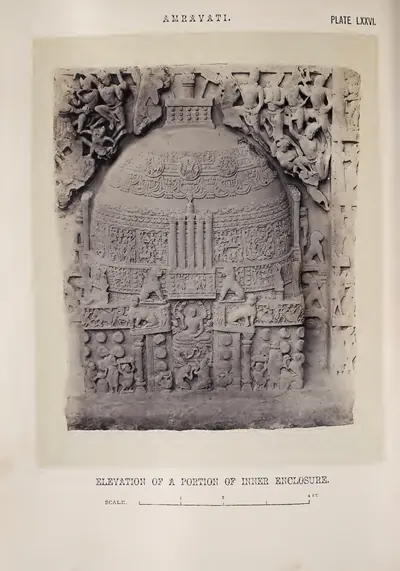 Amravati: elevation of a portion of inner enclosure (Fergusson 1868, Pl. LXXVI)Book plate · 1868
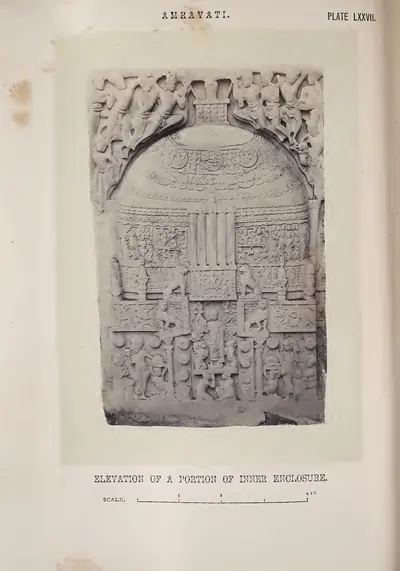 Amravati: elevation of a portion of inner enclosure (Fergusson 1868, Pl. LXXVII)Book plate · 1868
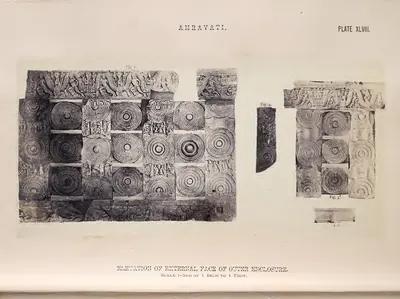 Amravati: elevation of external face of outer enclosure (restored by J. Fergusson) (Fergusson 1868, Pl. XLVIII)Book plate · 1868
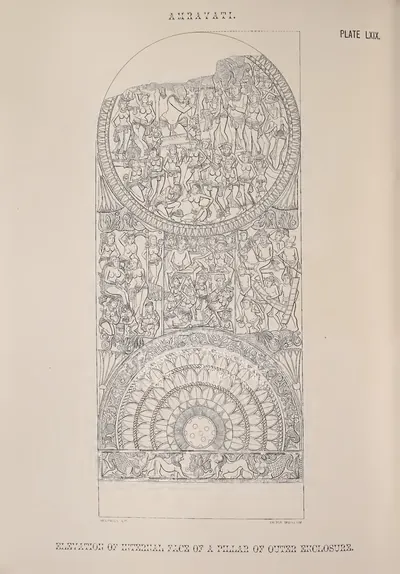 Amravati: elevation of internal face of a pillar of outer enclosure (from a drawing in the Mackenzie Collection) (Fergusson 1868, Pl. LXIX)Drawing · 1868
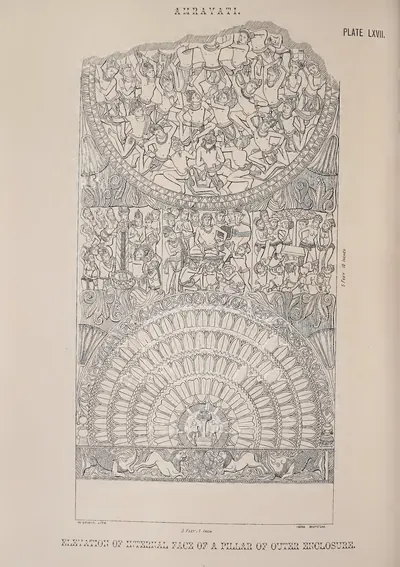 Amravati: elevation of internal face of a pillar of outer enclosure (from a drawing in the Mackenzie Collection) (Fergusson 1868, Pl. LXVII)Drawing · 1868
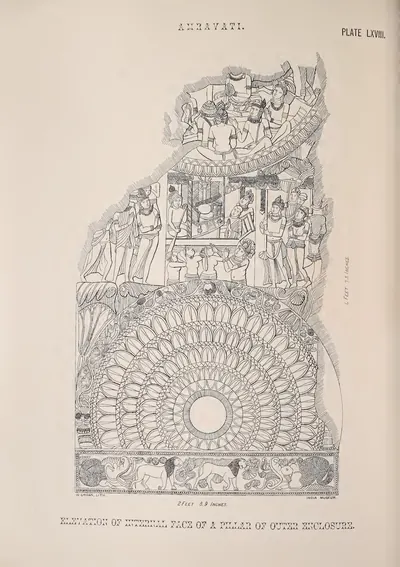 Amravati: elevation of internal face of a pillar of outer enclosure (from a drawing in the Mackenzie Collection) (Fergusson 1868, Pl. LXVIII)Drawing · 1868
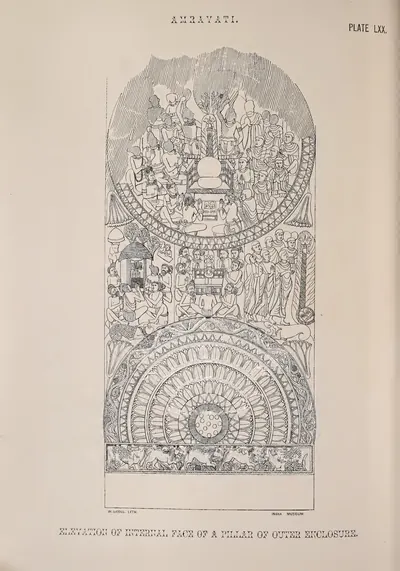 Amravati: elevation of internal face of a pillar of outer enclosure (from a drawing in the Mackenzie Collection) (Fergusson 1868, Pl. LXX)Drawing · 1868
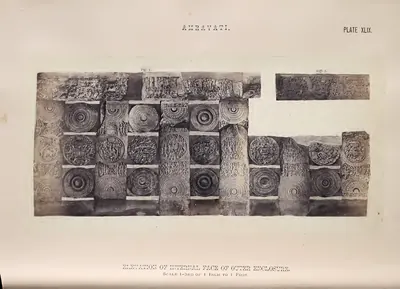 Amravati: elevation of internal face of outer enclosure (restored by J. Fergusson) (Fergusson 1868, Pl. XLIX)Book plate · 1868
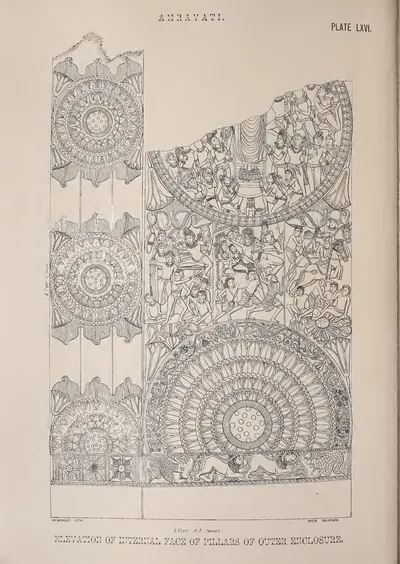 Amravati: elevation of internal face of pillars of outer enclosure (from a drawing in the Mackenzie Collection) (Fergusson 1868, Pl. LXVI)Drawing · 1868
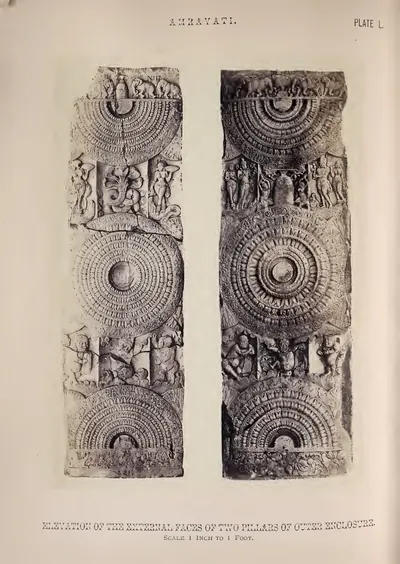 Amravati: elevations of external faces of two pillars of outer enclosure (Fergusson 1868, Pl. L)Book plate · 1868
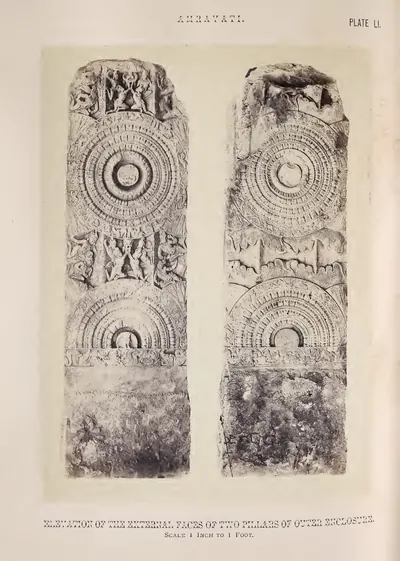 Amravati: elevations of external faces of two pillars of outer enclosure (Fergusson 1868, Pl. LI)Book plate · 1868
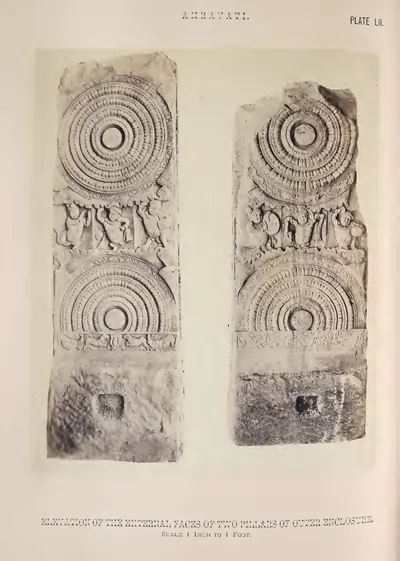 Amravati: elevations of external faces of two pillars of outer enclosure (Fergusson 1868, Pl. LII)Book plate · 1868
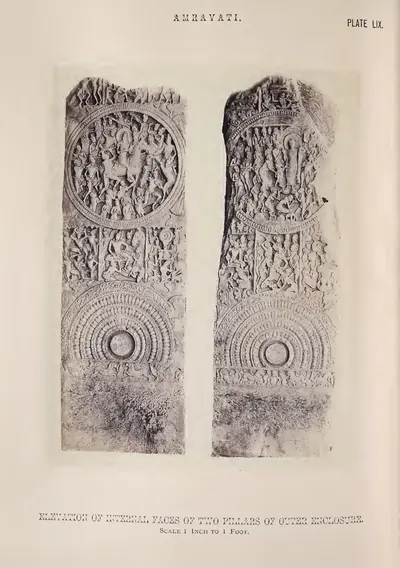 Amravati: elevations of internal faces of two pillars of outer enclosure (Fergusson 1868, Pl. LIX)Book plate · 1868
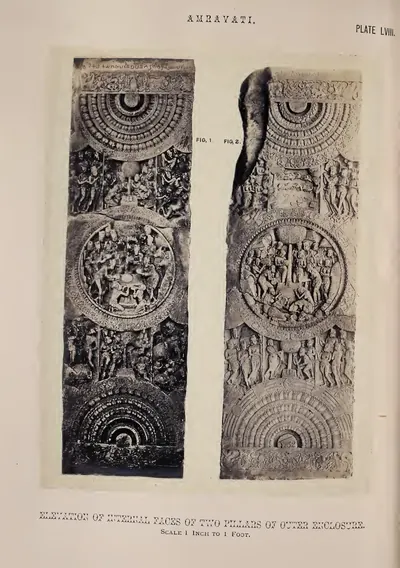 Amravati: elevations of internal faces of two pillars of outer enclosure (Fergusson 1868, Pl. LVIII)Book plate · 1868
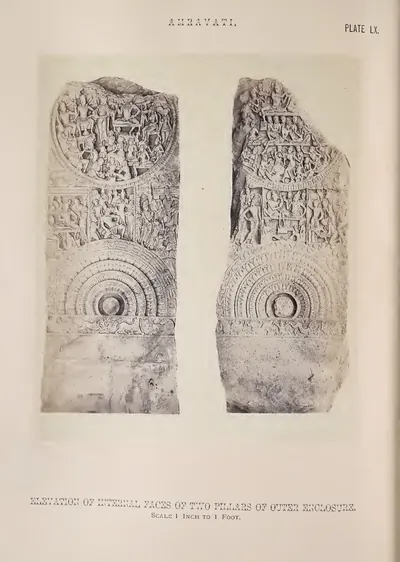 Amravati: elevations of internal faces of two pillars of outer enclosure (Fergusson 1868, Pl. LX)Book plate · 1868
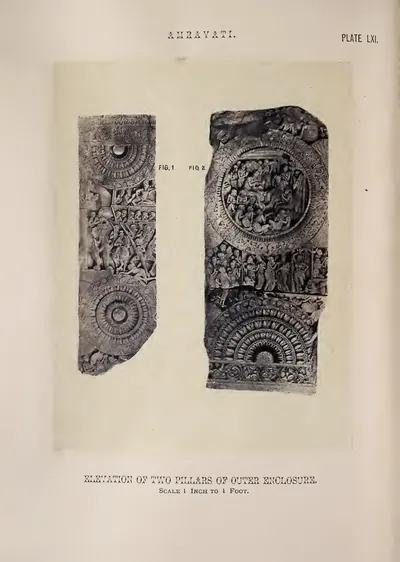 Amravati: elevations of internal faces of two pillars of outer enclosure (Fergusson 1868, Pl. LXI)Book plate · 1868
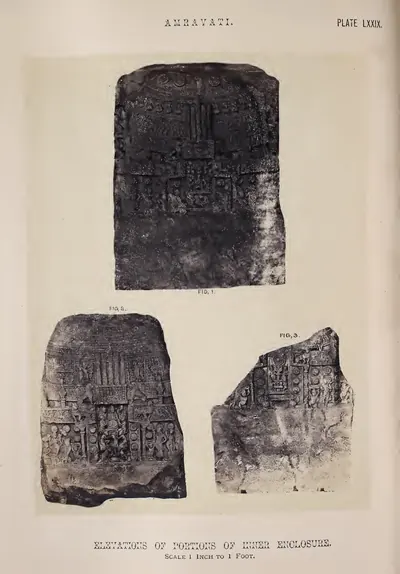 Amravati: elevations of portions of inner enclosure (Fergusson 1868, Pl. LXXIX)Book plate · 1868
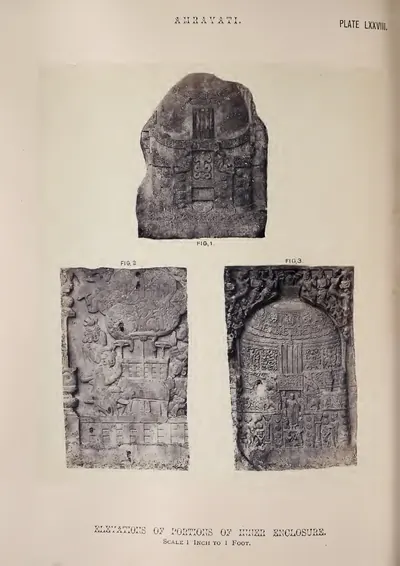 Amravati: elevations of portions of inner enclosure (Fergusson 1868, Pl. LXXVIII)Book plate · 1868
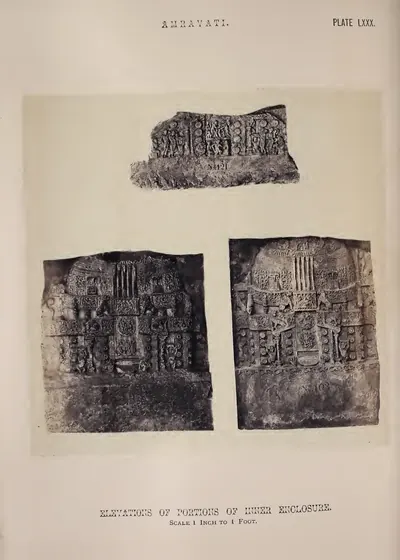 Amravati: elevations of portions of inner enclosure (Fergusson 1868, Pl. LXXX)Book plate · 1868
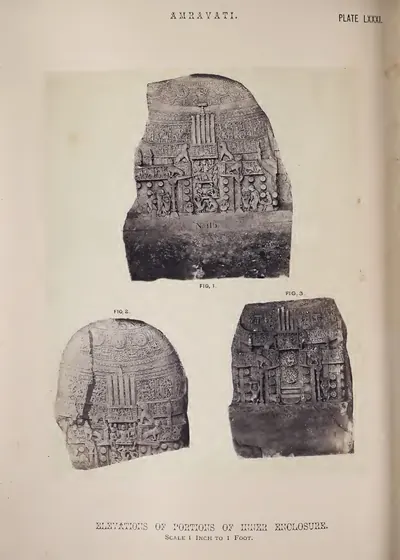 Amravati: elevations of portions of inner enclosure (Fergusson 1868, Pl. LXXXI)Book plate · 1868
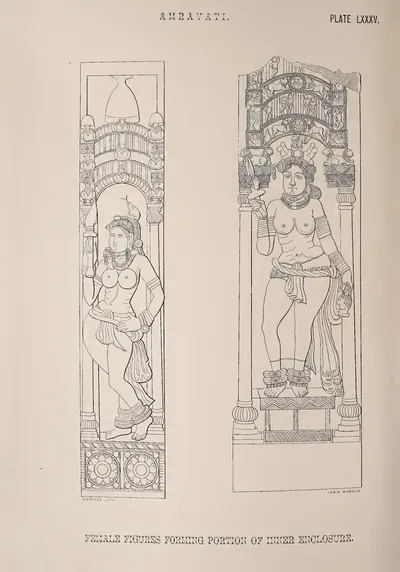 Amravati: female figures forming portion of inner enclosure (from a drawing in the Mackenzie Collection) (Fergusson 1868, Pl. LXXXV)Drawing · 1868
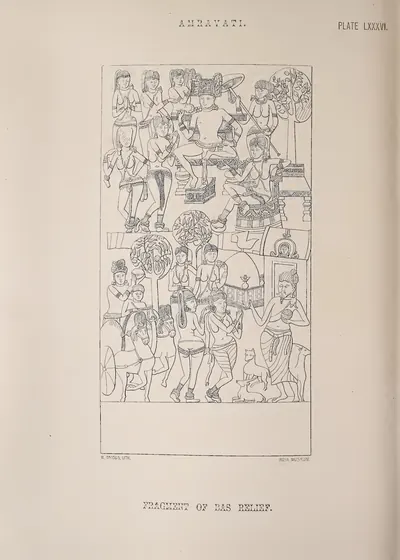 Amravati: fragment of bas-relief (from a drawing in the Mackenzie Collection) (Fergusson 1868, Pl. LXXXVI)Drawing · 1868
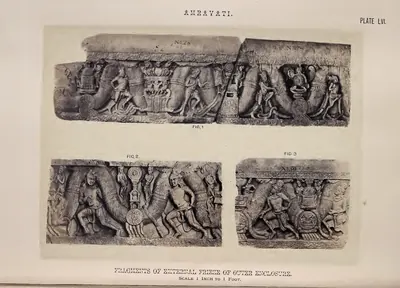 Amravati: fragments of external frieze of outer enclosure (Fergusson 1868, Pl. LVI)Book plate · 1868
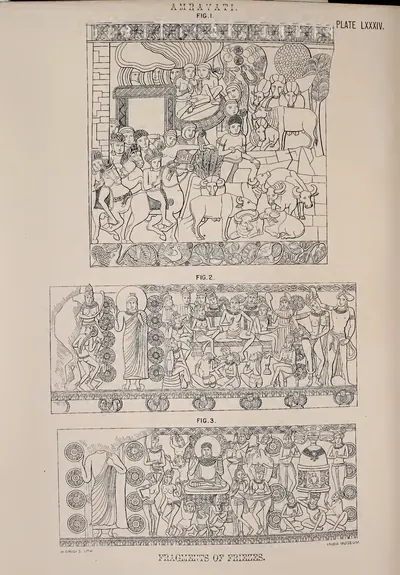 Amravati: fragments of friezes (from a drawing in the Mackenzie Collection) (Fergusson 1868, Pl. LXXXIV)Drawing · 1868
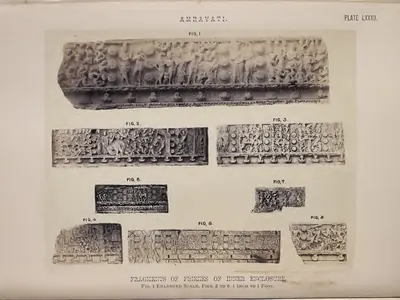 Amravati: fragments of friezes of inner enclosure (Fergusson 1868, Pl. LXXXII)Book plate · 1868
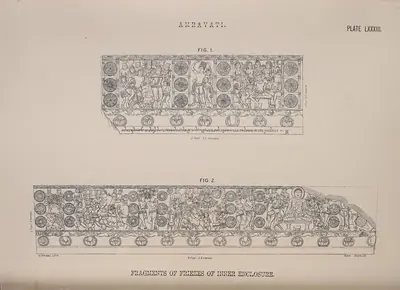 Amravati: fragments of friezes of inner enclosure (Fergusson 1868, Pl. LXXXIII)Drawing · 1868
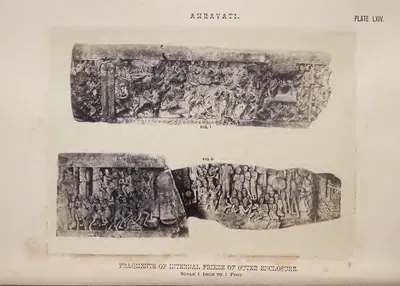 Amravati: fragments of internal frieze of outer enclosure (Fergusson 1868, Pl. LXIV)Book plate · 1868
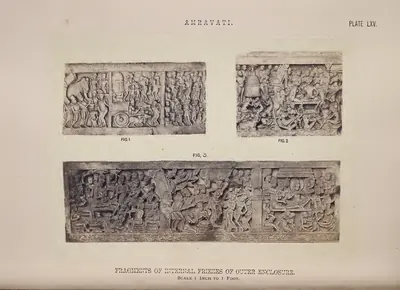 Amravati: fragments of internal friezes of outer enclosure (Fergusson 1868, Pl. LXV)Book plate · 1868
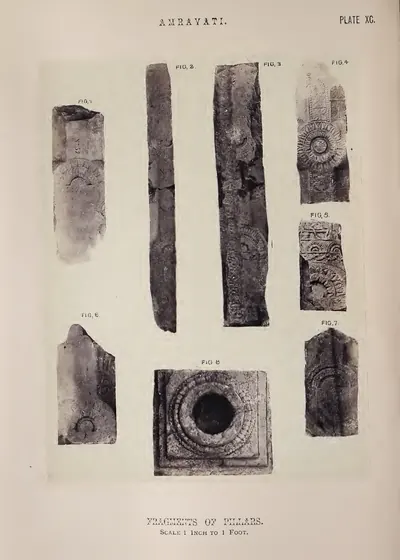 Amravati: fragments of pillars (Fergusson 1868, Pl. XC)Book plate · 1868
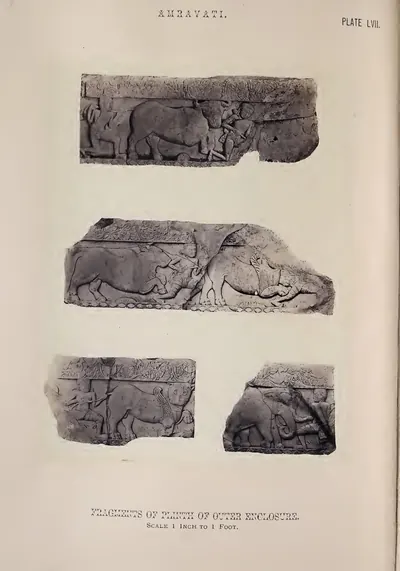 Amravati: fragments of plinth of outer enclosure (Fergusson 1868, Pl. LVII)Book plate · 1868
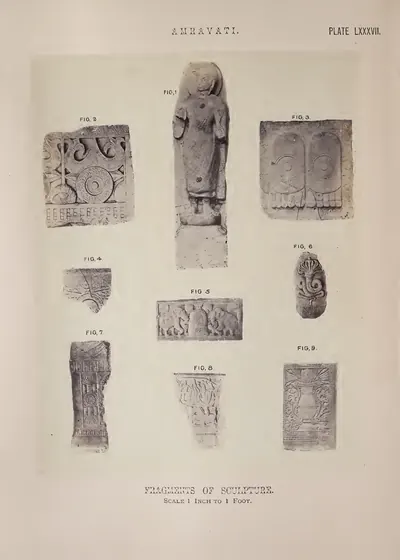 Amravati: fragments of sculpture (Fergusson 1868, Pl. LXXXVII)Book plate · 1868
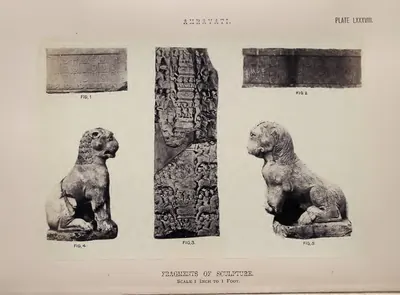 Amravati: fragments of sculpture (Fergusson 1868, Pl. LXXXVIII)Book plate · 1868
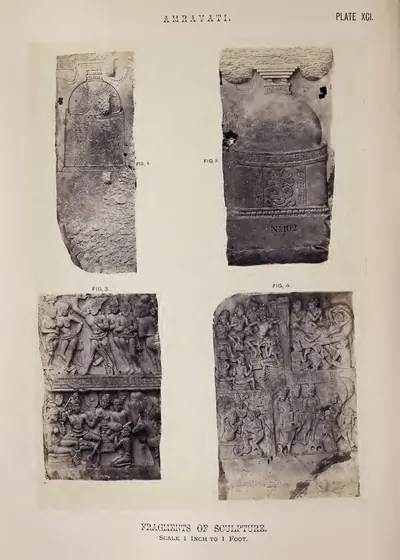 Amravati: fragments of sculpture (Fergusson 1868, Pl. XCI)Book plate · 1868
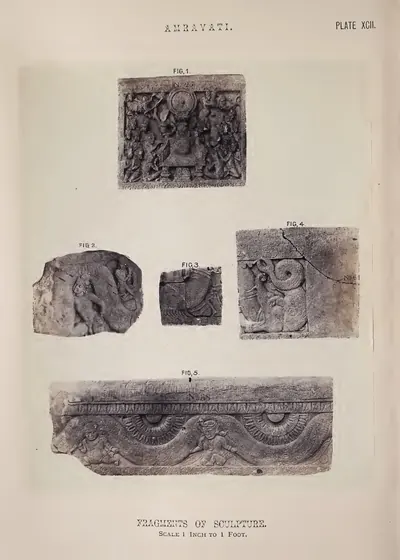 Amravati: fragments of sculpture (Fergusson 1868, Pl. XCII)Book plate · 1868
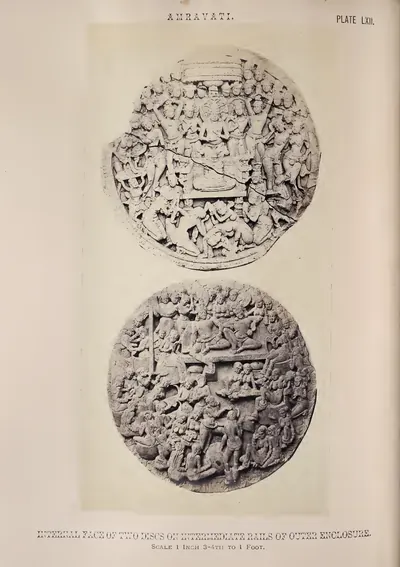 Amravati: internal face of two discs on intermediate rails of outer enclosure (Fergusson 1868, Pl. LXII)Book plate · 1868
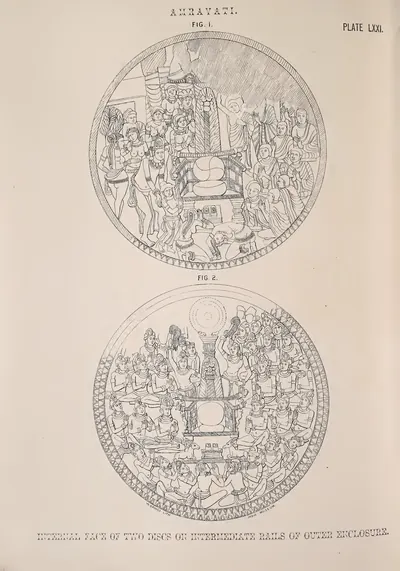 Amravati: internal faces of two discs on intermediate rails of outer enclosure (from a drawing in the Mackenzie Collection) (Fergusson 1868, Pl. LXXI)Drawing · 1868
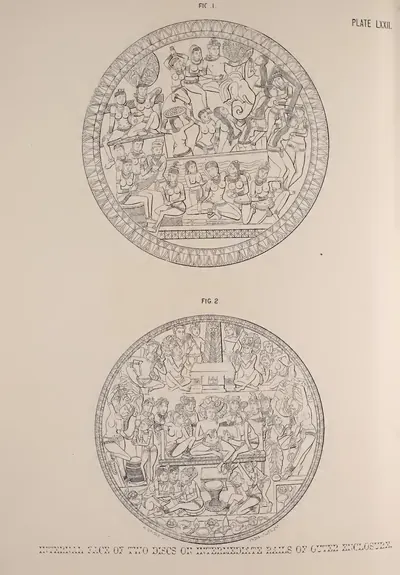 Amravati: internal faces of two discs on intermediate rails of outer enclosure (from a drawing in the Mackenzie Collection) (Fergusson 1868, Pl. LXXII)Drawing · 1868
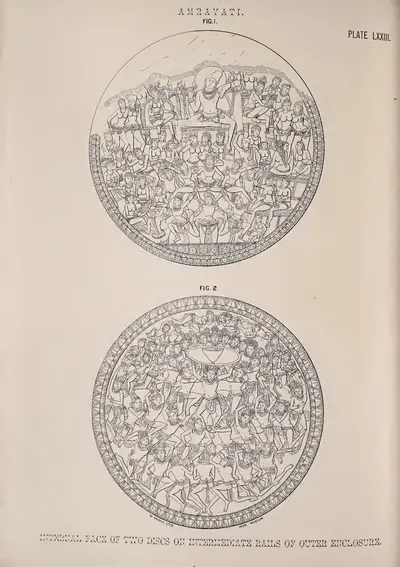 Amravati: internal faces of two discs on intermediate rails of outer enclosure (from a drawing in the Mackenzie Collection) (Fergusson 1868, Pl. LXXIII)Drawing · 1868
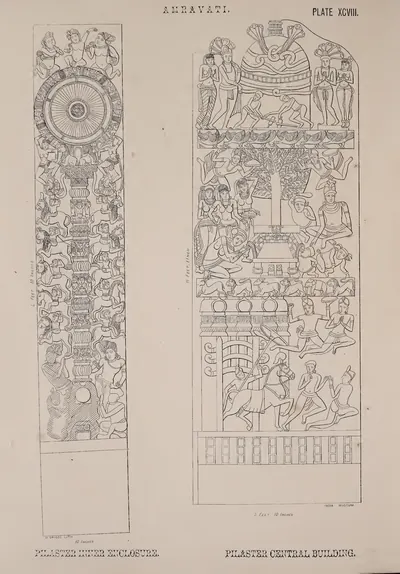 Amravati: pilaster of inner enclosure and of central building (from a drawing in the Mackenzie Collection) (Fergusson 1868, Pl. XCVIII)Drawing · 1868
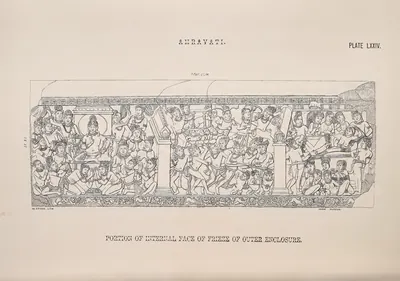 Amravati: portion of internal face of frieze of outer enclosure (from a drawing in the Mackenzie Collection) (Fergusson 1868, Pl. LXXIV)Drawing · 1868
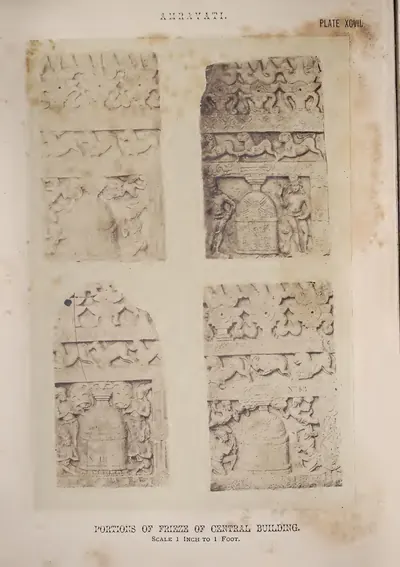 Amravati: portions of frieze of central building (Fergusson 1868, Pl. XCVII)Book plate · 1868
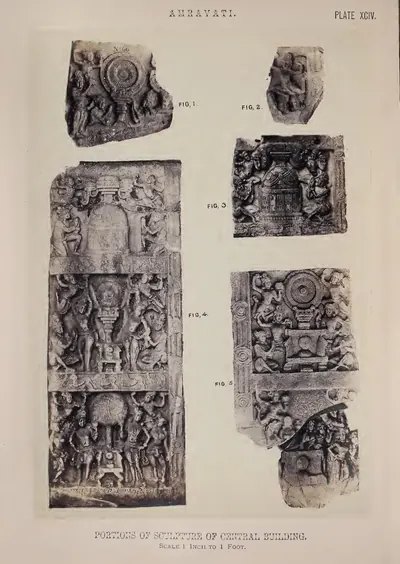 Amravati: portions of sculpture of central building (Fergusson 1868, Pl. XCIV)Book plate · 1868
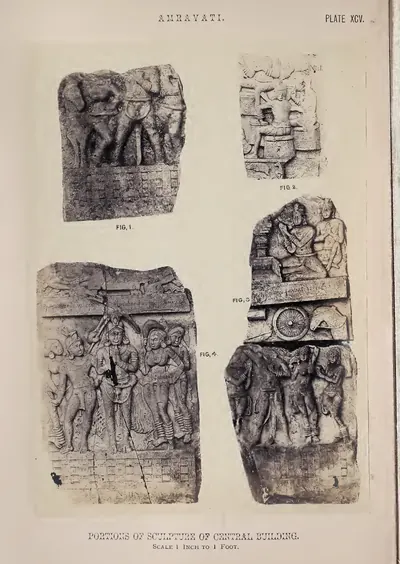 Amravati: portions of sculpture of central building (Fergusson 1868, Pl. XCV)Book plate · 1868
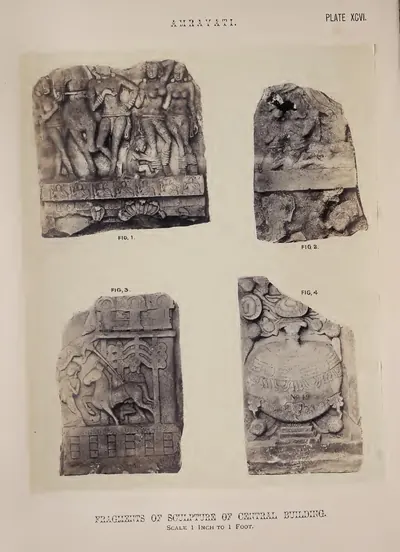 Amravati: portions of sculpture of central building (Fergusson 1868, Pl. XCVI)Book plate · 1868
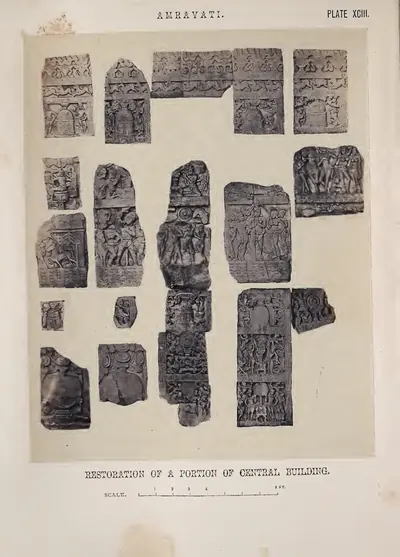 Amravati: restoration of a portion of central building (by J. Fergusson) (Fergusson 1868, Pl. XCIII)Book plate · 1868
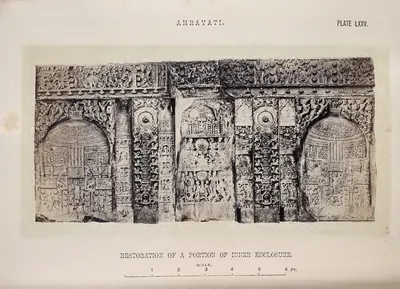 Amravati: restoration of a portion of inner enclosure (Fergusson 1868, Pl. LXXV)Book plate · 1868
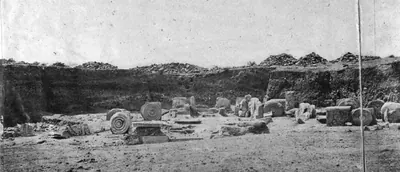 Excavation of the south gate, Amaravati, 1880Historic photograph · 1880
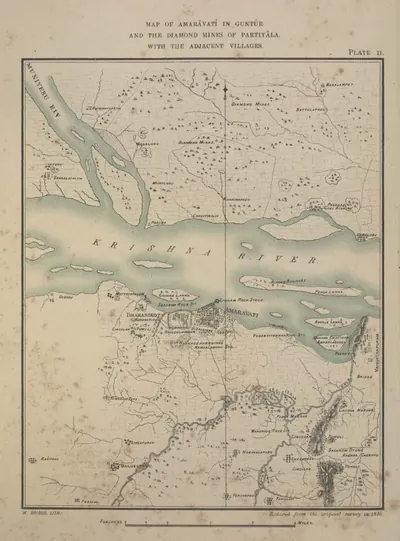 Map of Amaravati in Guntur with the adjacent villages, and the diamond mines of Partiyala (reduced from the survey of 1816) (Burgess 1887, Pl. II)Map · 1887
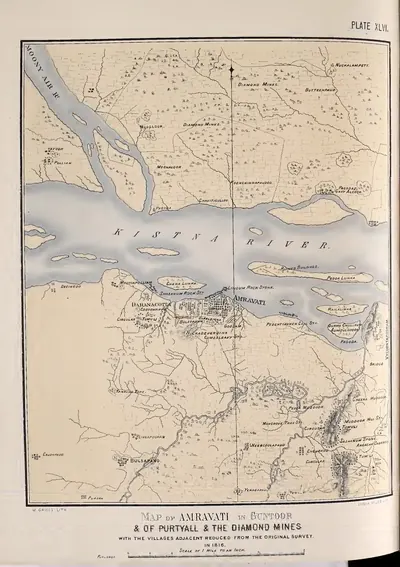 Map of Amravati in Guntoor & of Purtyall & the diamond mines, with the villages adjacent, reduced from the original survey in 1816 (Fergusson 1868, Pl. XLVI)Map · 1868
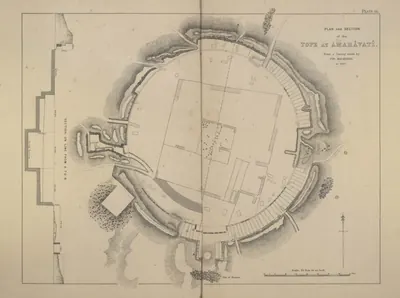 Plan and section of the tope at Amaravati, from a survey made by Colonel Mackenzie in 1817 (Burgess 1887, Pl. III)Plan · 1887
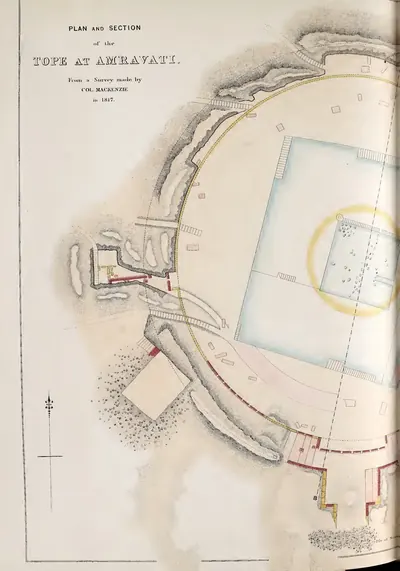 Plan and section of the tope at Amravati, from Colonel Mackenzie's survey in 1817 (left half of folding plate) (Fergusson 1868, Pl. XLVII)Plan · 1868
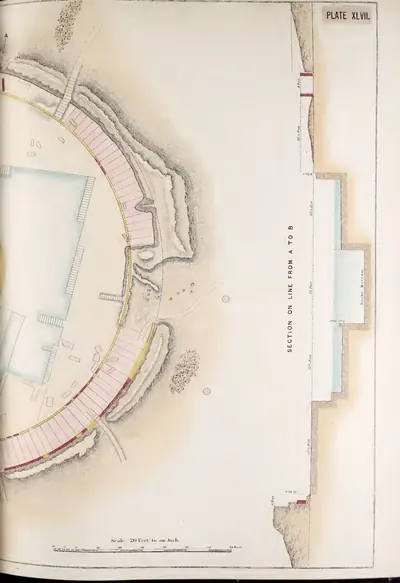 Plan and section of the tope at Amravati, from Colonel Mackenzie's survey in 1817 (right half of folding plate) (Fergusson 1868, Pl. XLVII)Plan · 1868
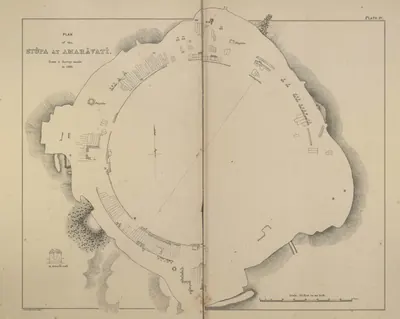 Plan of the stupa at Amaravati, from a survey made in December 1881 (Burgess 1887, Pl. IV)Plan · 1887
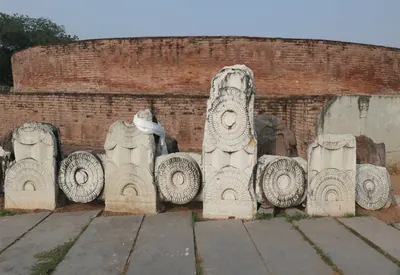 Re-erected railing at the Amaravati stupaPhotograph · 2024
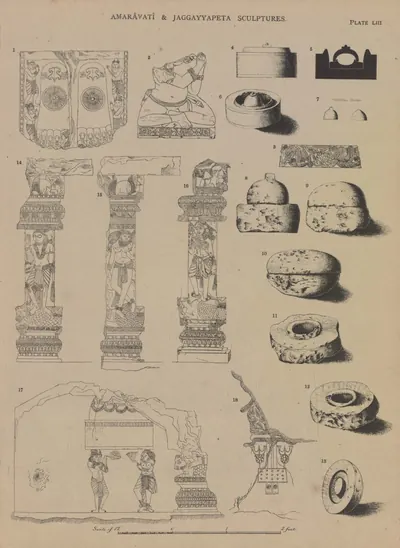 Sripada, salika, casket, &c., from Amaravati; caskets from other places in the Krishna District, three pilasters and two slabs from Jaggayyapeta (Burgess 1887, Pl. LIII)Drawing · 1887
References
Notes (0)
Sources (7)
Spotted an error on this page? Tell us
Last updated: