Bhimesvara temple, Chebrolu
Small two-storeyed Shiva temple on the old mound at Chebrolu, near Guntur, with the linga of Bhimesvara in a closed upper sanctum. M. Rama Rao (1964) gave it to the Eastern Chalukya king Chalukya-Bhima I, after whom he took the god to be named. The older surveys of Chebrolu do not mention it. They found the town's inscriptions at the Nagesvara temple, the former temple of Kumarasvamin, and E. Hultzsch could not identify the 'Chodabhimesvara' named in an inscription of 1213.
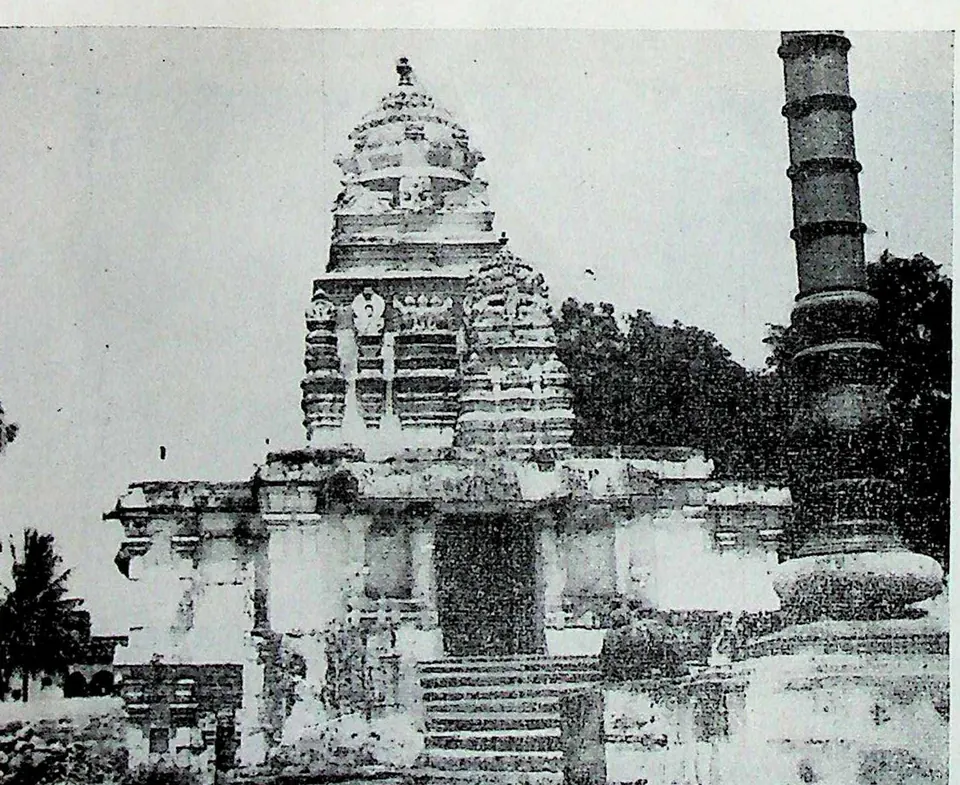
The Bhimesvara temple stands on a large mound at the eastern end of Chebrolu, in the old Bapatla taluk of Guntur district.123 M. Rama Rao surveyed it in 1956–58 and counted it among the temples of the Eastern Chalukyas.123 He described it as a two-storeyed Shiva temple like those at Draksharama, Chalukya-Bhimavaram and Amaravati.123 He thought its unusual features made it important for the study of early temple architecture.123
Who built it?
Rama Rao held that the Bhimesvara temples of Draksharama, Chalukya-Bhimavaram and Chebrolu were all built by Chalukya-Bhima I.41 He held that their god was named after this king.41 In his preface he says the same of the Shiva shrine at Chebrolu, together with those of the five Pancharamas.41 He dated that king’s reign 892–922.56 This site follows J. F. Fleet and Robert Sewell, who put it at 888–918.56
The foreword to Rama Rao’s book, by M. A. Waheed Khan, lists Chebrolu among the surviving remains of temples built by Gunaga Vijayaditya III and Chalukya-Bhima I.5 But it also names the temples that “seem to be” the kings’ original buildings.5 These are Bikkavolu, Draksharama, Palakollu and Chalukya-Bhimavaram, and Chebrolu is not among them.5
Rama Rao’s chapter on the temple itself does not discuss its builder.23 None of the inscriptions he cites is said to be on this temple.23
The older accounts
The older accounts of Chebrolu do not mention a Bhimesvara temple at all. Robert Sewell’s list of 1882 placed the town’s inscriptions at the temple of Nagesvarasvami.7 The Kistna district manual of 1883 likewise named the Nagesvara temple as the place of its inscriptions.8
The manual reported a rumour about Raja Vasireddi Venkatadri Naidu, zamindar (landholder) of Chintapalle.8 According to the rumour, he destroyed many of the old temples of Chebrolu early in the 19th century in a search for hidden treasure.8 The manual added that he rebuilt or restored some of them.8
E. Hultzsch edited the long inscription of the Kakatiya general Jaya in 1899.9 He found that its list of temple property names temples of Chodabhimesvara and Vasudeva at Chebrolu.9 He wrote that these “cannot now be identified at Chebrolu”.9 Rama Rao summarised the same inscription, including the gifts to “Codabhimesvara”.23 He did not connect that name with the temple he described.23
Inscriptions at Chebrolu
Rama Rao counted eighteen inscriptions in the temples of Chebrolu.2 He thought that most of them had belonged to a temple of Kumara (Kumarasvamin, the war-god Skanda).2 In his view this temple no longer existed and must have stood on the eastern part of the mound.2
Hultzsch, by contrast, wrote in 1899 that the temple of Kumarasvamin was “now called Nagesvara”.9 This temple had given Chebrolu its Sanskrit name of “city of Shanmukha”.9
V. Rangacharya’s list of 1919 draws on the Madras epigraphical collection of 1897.10112 It places most of the Chebrolu records at or near the Nagesvara temple.10112 Among them are these two:10112
- a record of Saka 928 (1006; Saka is an Indian way of counting years) of the Western Chalukya king Satyasraya II, recording a gift to Kumarasvamin10112
- a gift of Saka 998 by the Velanadu general Gonka, made in the seventh year of a king called Vishnuvardhana-Maharaja10112
Rangacharya identified that king with Kulottunga I.10112 F. Kielhorn dated the record to 10 February 1077.10112 Rama Rao gives the year as 1076.10112 See Kulottunga I.
Jaya’s inscription of 1213
The longest record stands on a pillar in front of the gopura (gate tower) of the Nagesvara temple.1213 It tells how the Kakatiya king Ganapati, returning from a conquest in the south, gave Chebrolu to Jaya, the commander of his elephant troops, in Saka 1135 (1213–14).1213
According to Hultzsch’s translation, Jaya did these works:1213
- repaired and whitewashed all the temples of the town and set golden pinnacles on them1213
- covered the image of Kumarasvamin with gold1213
- built an enclosure, a mantapa (pillared hall) and a three-storeyed gopura1213
- set up again two lingas (stone emblems of Shiva) destroyed by robbers1213
- surrounded the town with a wall and towers1213
The inscription’s Telugu portion lists the villages and shares belonging to the temples.9143 It also lists the temple’s servants, from priests and an astrologer to three hundred dancing-girls.9143
Rangacharya adds a second record of Jaya, of 1235.11 It says that he built the temple of Chodesvara, named after his father.11 Rama Rao noted two small shrines of Codesvara and Nagesvara near a modern temple of Brahma on the mound.2
The building
The temple faces east inside a walled compound with a gate.3 A flight of steps leads up to a projecting front that carries the main entrance.3 The base of the ground floor is buried, and pilasters divide the outer walls into empty niches.3 In the middle of each side are niches under makara-toranas (arches with sea-monster ends), and a Gajalakshmi is carved on a closed doorway lintel.3
Rama Rao compared it with Draksharama, where the ground floor is open and the foot of the tall linga can be seen.3 At Chebrolu, as at Amaravati, the ground floor is closed.3 The linga of Bhimesvara stands on the upper floor, on a finely carved pedestal.3
The upper floor
On the upper floor a passage for circumambulation (walking round the shrine) runs round the sanctum on three sides.1516 The sanctum has a doorway on each side, and the eastern one has leaning door-guardians, dancing figures on the jambs and Gajalakshmi on the lintel.1516 Inside, a pedestal of carved black granite holds a polished black granite linga.1516
A small shrine of the goddess stands in the north-eastern corner.1516 The hall in front has a black granite Nandi among its pillars.1516 Rama Rao thought the tower had been rebuilt.15 It is of a single storey in the Vesara order, with a round sikhara (tower top) crowned by lotuses and a kalasa (finial pot).15 (See Bhimesvara temple, Draksharama and Bhimesvara temple, Chalukya-Bhimavaram.)
Sculptures that once stood here
Rama Rao recorded that large carvings of Shiva embracing Parvati had stood on the temple steps.2 A carving of Bhairava had stood near the Codesvara shrine.2 Until shortly before his survey, two uprights of the railing of a Buddhist stupa (relic mound) and a slab carved with a full vase lay near the temple’s flagstaff.2
Footnotes
-
M. Rama Rao, Eastern Calukyan Temples of Andhra Desa (1964), preface (unnumbered) (archive.org (opens in a new tab)). ↩ ↩2 ↩3 ↩4 ↩5 ↩6 ↩7
-
Rama Rao, Eastern Calukyan Temples (1964), p. 45 (archive.org (opens in a new tab)). ↩ ↩2 ↩3 ↩4 ↩5 ↩6 ↩7 ↩8 ↩9 ↩10 ↩11 ↩12 ↩13 ↩14 ↩15 ↩16 ↩17 ↩18 ↩19 ↩20 ↩21 ↩22 ↩23
-
Rama Rao, Eastern Calukyan Temples (1964), p. 46 (archive.org (opens in a new tab)). ↩ ↩2 ↩3 ↩4 ↩5 ↩6 ↩7 ↩8 ↩9 ↩10 ↩11 ↩12 ↩13 ↩14 ↩15 ↩16 ↩17
-
Rama Rao, Eastern Calukyan Temples (1964), p. 2 (archive.org (opens in a new tab)). ↩ ↩2 ↩3
-
Mohd. Abdul Waheed Khan, foreword to M. Rama Rao, Eastern Calukyan Temples of Andhra Desa (1964), p. i (archive.org (opens in a new tab)). ↩ ↩2 ↩3 ↩4 ↩5
-
Robert Sewell and S. Krishnaswami Aiyangar, The Historical Inscriptions of Southern India (1932), p. 337, pedigree and notes (archive.org (opens in a new tab)). ↩ ↩2
-
Robert Sewell, Lists of the Antiquarian Remains in the Presidency of Madras, Vol. I (1882), p. 82, s.v. Chebrolu (archive.org (opens in a new tab)). ↩
-
Gordon Mackenzie, A Manual of the Kistna District (1883), p. 203 (archive.org (opens in a new tab)). ↩ ↩2 ↩3 ↩4
-
Hultzsch, “Chebrolu Inscription of Jaya” (1899), p. 143 (archive.org (opens in a new tab)). ↩ ↩2 ↩3 ↩4 ↩5 ↩6 ↩7
-
V. Rangacharya, A Topographical List of the Inscriptions of the Madras Presidency, Vol. II (1919), p. 754, Bapatla taluk, Chebrolu, Nos. 83–87 (archive.org (opens in a new tab)). ↩ ↩2 ↩3 ↩4 ↩5 ↩6 ↩7 ↩8
-
Rangacharya, Topographical List, Vol. II (1919), p. 755, Nos. 88–93 (archive.org (opens in a new tab)). ↩ ↩2 ↩3 ↩4 ↩5 ↩6 ↩7 ↩8 ↩9 ↩10
-
E. Hultzsch, “Chebrolu Inscription of Jaya; after Saka-Samvat 1135”, Epigraphia Indica V (1898–99), p. 142 (archive.org (opens in a new tab)). ↩ ↩2 ↩3 ↩4 ↩5 ↩6 ↩7 ↩8
-
Hultzsch, “Chebrolu Inscription of Jaya” (1899), p. 149, abstract of contents (archive.org (opens in a new tab)). ↩ ↩2 ↩3 ↩4 ↩5 ↩6 ↩7 ↩8
-
Hultzsch, “Chebrolu Inscription of Jaya” (1899), p. 150 (archive.org (opens in a new tab)). ↩ ↩2
-
Rama Rao, Eastern Calukyan Temples (1964), p. 47 (archive.org (opens in a new tab)). ↩ ↩2 ↩3 ↩4 ↩5 ↩6 ↩7
-
Rama Rao, Eastern Calukyan Temples (1964), p. 48 (archive.org (opens in a new tab)). ↩ ↩2 ↩3 ↩4 ↩5
Photos
 "47. Bhīmēśvara Temple - Chēbrōlu - Front view" (M. Rama Rao, Eastern Calukyan Temples of Andhra Desa, 1964, Fig. 47 (PDF p. 123))Historic photograph · 1964
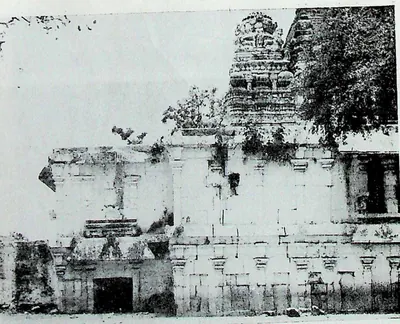 "48. Bhīmēśvara Temple - Chēbrōlu - North Side view" (M. Rama Rao, Eastern Calukyan Temples of Andhra Desa, 1964, Fig. 48 (PDF p. 125))Historic photograph · 1964
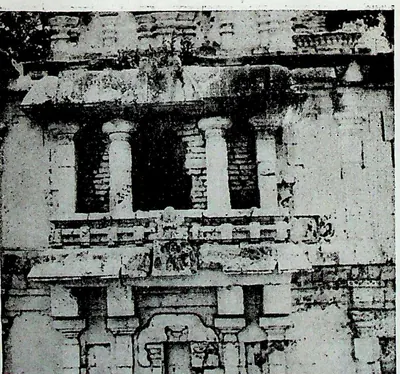 "49. Bhīmēśvara Temple - Chēbrōlu–Central Part of North Wall" (M. Rama Rao, Eastern Calukyan Temples of Andhra Desa, 1964, Fig. 49 (PDF p. 127))Historic photograph · 1964
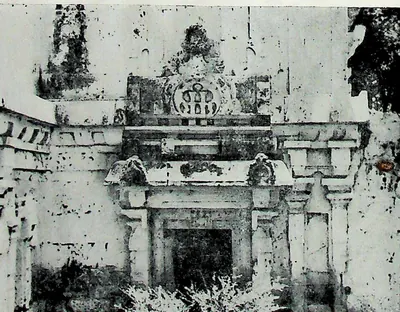 "50. Bhīmēśvara Temple - Chēbrōlu - Projection of South Wall" (M. Rama Rao, Eastern Calukyan Temples of Andhra Desa, 1964, Fig. 50 (PDF p. 129))Historic photograph · 1964
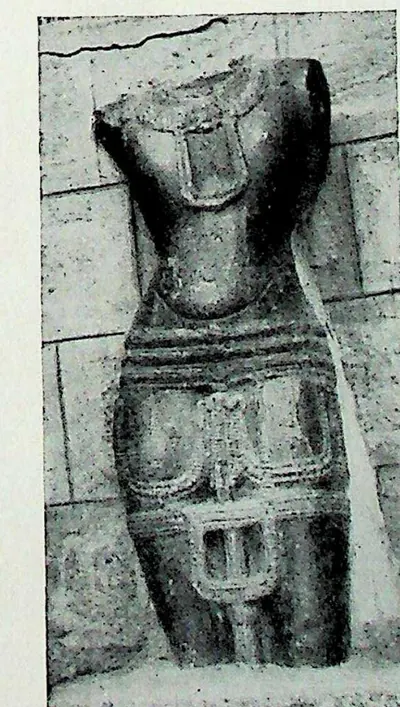 "51. Kumāra - Chēbrōlu" (M. Rama Rao, Eastern Calukyan Temples of Andhra Desa, 1964, Fig. 51 (PDF p. 129))Historic photograph · 1964
References
Notes (0)
Sources (6)
Spotted an error on this page? Tell us
Last updated: