Jayasimha I
Second Eastern Chalukya king of Vengi (about 633–663), the eldest son of Kubja Vishnuvardhana. Four copper-plate grants of his are known, issued from Udayapura and Asanapura and granting villages in the Krishna–Godavari country to Brahmins. Most later records give him a reign of 33 years, one gives 30, and the scholars who fixed the chronology disagreed over which to follow.
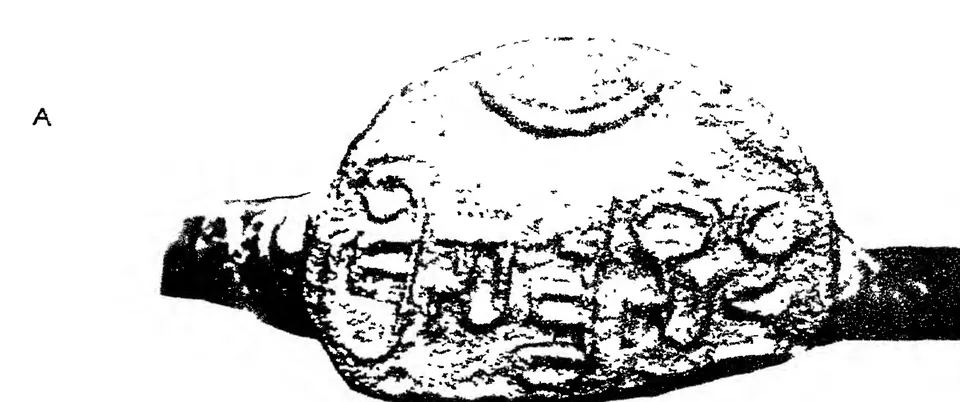
Jayasimha I was the second king of the Eastern Chalukya dynasty of Vengi. Robert Sewell’s chronology, which follows J. F. Fleet, dates his reign 633–663.1 V. Rangacharya, who edited two of his grants, dated him “about 632 to 663”.2
Family
Jayasimha I was the eldest son of Kubja Vishnuvardhana, the founder of the dynasty.3 His own grants call him the son of Vishnuvardhana-Maharaja and grandson of Kirtivarman I of the Chalukya family.42 Indra-Bhattaraka was the younger brother of Jayasimha I.3 His own grant, the Kondanaguru plates, gives his name as Indravarman.5
Names and titles
Most later grants call him Jayasimha, and some add vallabha, “the favourite”. His seals bear the surname Sarvasiddhi, which one grant explains as “he who acquired all (kinds of) success by the strength of his arm”. His title in his own grants is Maharaja.3 The Pulibumra plates call him Prithivi-Jayasingha-vallabha. Their editor pointed out that Prithivivallabha had been a title of his grandfather Kirtivarman I and of his uncle Pulakesin II, and concluded that the Eastern Chalukyas had inherited it from the western line.26
Grants
Four grants of his reign had been published by 1928.
- Pedda-Maddali. Found by a Brahmin digging foundations at Pedda-Maddali in the Krishna district and published by Fleet in 1884. It was issued from the city of Udayapura, grants the village of Penukaparu in the Gudrahara district, and is dated in his 18th year.7 Fleet later doubted its authenticity because of its many errors of language.3 Rangacharya thought the faults were the composer’s and the record genuine.2
- Pulibumra. Brought to notice in 1914. It made the village of Pulibumra in the Guddavadi district into a tax-free agrahara (village granted to Brahmins), called Sarvasiddhi-datti after the king, for a Brahmin of Asanapura learned in two Vedas.68 Rangacharya identified Guddavadi with Gudivada and the village with Polamuru in the Bhimavaram taluk.6 The epigraphist of 1914 suggested that its two executors, Hasti-kosa and Vira-kosa, were the officers in command of the elephants and of the infantry.9
- Niduparu. Issued from Asanapura, it gave the village of Niduparu, two gavyutis east of the royal residence of Ganderu, to a Brahmin named Katisarman. Hultzsch, following H. Krishna Sastri, identified Ganderu with Kanteru and the village with Nidamarru, both in the Guntur taluk.10 The donee’s grandfather had been a member of the ghatika, or college, of Asanapura.11 The epigraphist who examined it in 1917 called it “above suspicion”.12
- Pedda-Vegi. Found two or three feet below the ground during digging near Pedda-Vegi, near Eluru (then Ellore). It gave land to a Brahmin named Somasarman on the full-moon day of Karttika.813 See Vengi.
The places named in these grants lie in the Guntur, Krishna and West Godavari country. Ganderu is called a rajadhani, a royal residence, in the Niduparu grant.10
Thirty or thirty-three years?
The later grants disagree on the length of his reign. Most, including the Pithapuram pillar inscription of 1202, give 33 years.314 Two give 30.3 The 33 years reappear in grants of Gunaga-Vijayaditya III and Chalukya-Bhima I examined in 1912–14.151617
| Scholar | Length adopted | Reasoning |
|---|---|---|
| E. Hultzsch (1890) | 33 years | Followed the majority of the grants.18 |
| J. F. Fleet (1891) | 30 years | Only 30 years fits the dated grants of Vishnuvardhana II. Some records, he thought, mistakenly counted three years as yuvaraja.193 |
| F. Kielhorn | 33 years | Preferred the majority of the records, as reported by Rangacharya.6 |
| V. Rangacharya (1928) | 30 years and a few months | Neither figure is exact. The reign ran from some time after July 632 to about February–March 663.20 |
Succession
After Jayasimha’s death his younger brother Indra-Bhattaraka is said to have reigned for seven days.14 Fleet thought that Indra-Bhattaraka never actually reigned, being prevented by a confederacy of chiefs led by an Adhiraja Indra. He identified this Indra, tentatively, with the Ganga king Indravarman of Kalinganagara.321 The throne passed to Indra-Bhattaraka’s son Vishnuvardhana II, who began to reign between February and March 663.20 Two grants of Vishnuvardhana II call him the son of Jayasimha in one case and of Indra-Bhattaraka in the other. The epigraphist of 1917 concluded that Jayasimha had treated his nephew as an adopted son.12
Footnotes
-
Robert Sewell and S. Krishnaswami Aiyangar, The Historical Inscriptions of Southern India (1932), p. 336, table of the Eastern Chalukya dynasty (archive.org (opens in a new tab)). ↩
-
V. Rangacharya, “The Pulibumra Plates of the Eastern Chalukya King Jayasimha I”, Epigraphia Indica XIX (1927–28), p. 254 (archive.org (opens in a new tab)). ↩ ↩2 ↩3 ↩4
-
Fleet, “Chronology of the Eastern Chalukya Kings” (1891), p. 97 (archive.org (opens in a new tab)). ↩ ↩2 ↩3 ↩4 ↩5 ↩6 ↩7 ↩8
-
E. Hultzsch, “Niduparu Grant of Jayasimha I”, Epigraphia Indica XVIII (1925–26), p. 55 (archive.org (opens in a new tab)). ↩
-
E. Hultzsch, “Kondanaguru Grant of Indravarman”, Epigraphia Indica XVIII (1925–26), p. 2 (archive.org (opens in a new tab)). ↩
-
Rangacharya, “Pulibumra Plates” (1928), p. 255 (archive.org (opens in a new tab)). ↩ ↩2 ↩3 ↩4
-
Fleet, “Sanskrit and Old-Canarese Inscriptions, No. CXLIV”, Indian Antiquary XIII (1884), p. 137 (archive.org (opens in a new tab)). ↩
-
Rangacharya, “Pulibumra Plates” (1928), p. 258, translation; and “The Pedda-Vegi Plates of the Eastern Chalukya King Jayasimha I”, p. 258 (archive.org (opens in a new tab)). ↩ ↩2
-
Annual Report on Epigraphy, for 1913–14 (1914), p. 85, paragraph 7 (archive.org (opens in a new tab)). ↩
-
Hultzsch, “Niduparu Grant of Jayasimha I” (1926), p. 56 (archive.org (opens in a new tab)). ↩ ↩2
-
Hultzsch, “Niduparu Grant of Jayasimha I” (1926), p. 57, abstract of contents (archive.org (opens in a new tab)). ↩
-
Annual Report on Epigraphy, for 1916–17 (G.O. No. 1035, Home (Education), 10 August 1917), p. 115, paragraphs 19–20 (archive.org (opens in a new tab)). ↩ ↩2
-
Rangacharya, “Pedda-Vegi Plates” (1928), p. 259 (archive.org (opens in a new tab)). ↩
-
E. Hultzsch, “Pithapuram Pillar Inscription of Mallapadeva”, Epigraphia Indica IV (1896–97), p. 239 (archive.org (opens in a new tab)). ↩ ↩2
-
Annual Report on Epigraphy, Southern Circle, for 1911–12 (G.O. No. 919, Public, 29 July 1912), p. 84, paragraph 62 (archive.org (opens in a new tab)). ↩
-
Annual Report on Epigraphy, for 1912–13 (G.O. No. 961, Public, 2 August 1913), p. 125, paragraph 64 (archive.org (opens in a new tab)). ↩
-
Annual Report on Epigraphy, for 1913–14 (G.O. No. 920, Public, 4 August 1914), p. 84, paragraph 6 (archive.org (opens in a new tab)). ↩
-
E. Hultzsch, South-Indian Inscriptions, Vol. I (1890), p. 32, pedigree of the Eastern Chalukya dynasty (archive.org (opens in a new tab)). ↩
-
J. F. Fleet, “The Chronology of the Eastern Chalukya Kings”, Indian Antiquary XX (1891), p. 10 (archive.org (opens in a new tab)). ↩
-
Rangacharya, “Pulibumra Plates” (1928), p. 256 (archive.org (opens in a new tab)). ↩ ↩2
-
J. F. Fleet, “Sanskrit and Old-Canarese Inscriptions, No. CXLII”, Indian Antiquary XIII (1884), p. 120 (archive.org (opens in a new tab)). ↩
Photos
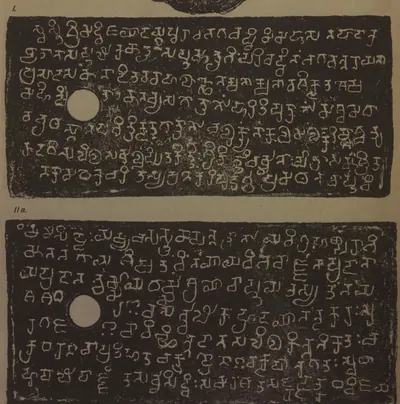 "Eastern Chalukya grant of the 18th year of Jayasimha I.", plates i and ii a (Indian Antiquary XIII, plate at p. 138 (PDF p. 159))Inscription rubbing · 1884
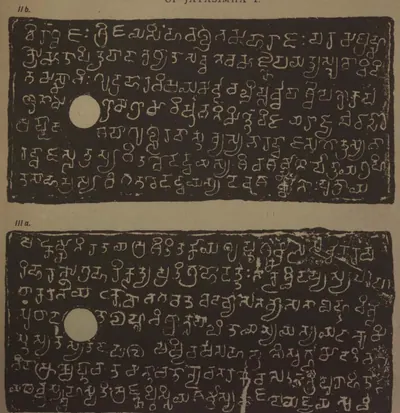 "Eastern Chalukya grant of the 18th year of Jayasimha I.", plates ii b and iii a (Indian Antiquary XIII, plate at p. 139 (PDF p. 160))Inscription rubbing · 1884
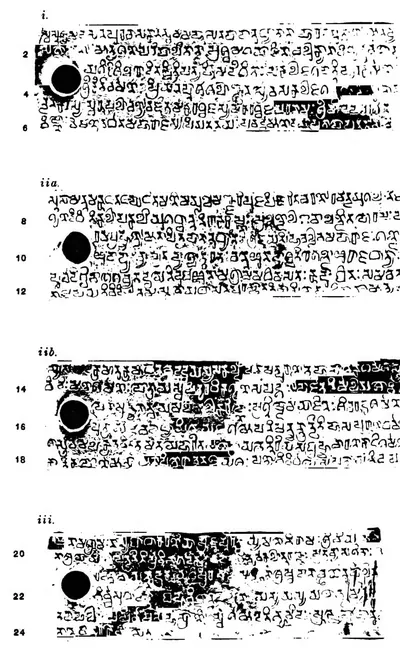 "Niduparu grant of Jayasimha I.", plates i, ii a, ii b and iii (Epigraphia Indica XVIII, plate between pp. 56 and 57 (PDF p. 88))Inscription rubbing · 1926
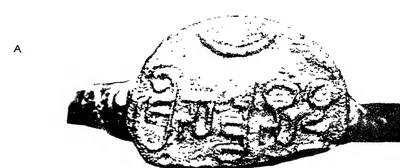 "Seals (A)", seal A, of grant No. 1 (Epigraphia Indica XXXI, Plate II, after p. 137 (PDF p. 221))Historic photograph · 1960
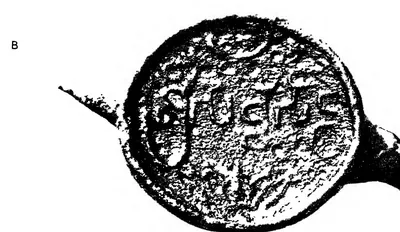 "Seals (B)", seal B, of grant No. 2 (Epigraphia Indica XXXI, Plate II, after p. 137 (PDF p. 221))Historic photograph · 1960
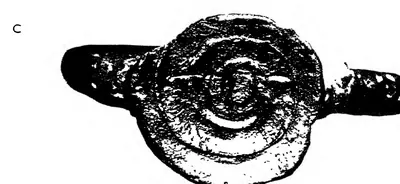 "Seals (C)", seal C, of grant No. 3 (Epigraphia Indica XXXI, Plate II, after p. 137 (PDF p. 221))Historic photograph · 1960
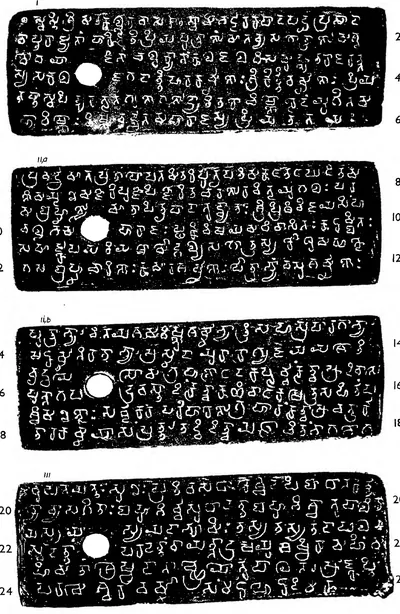 "Three Grants of Chalukya Jayasimha — A.—Grant No. 1, Year 18", plates i, ii a, ii b and iii (Epigraphia Indica XXXI, Plate I, after p. 131 (PDF p. 211))Inscription rubbing · 1960
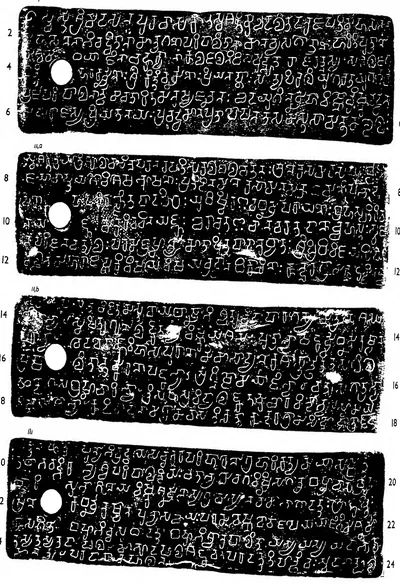 "Three Grants of Chalukya Jayasimha — B.—Grant No. 2", plates i, ii a, ii b and iii (Epigraphia Indica XXXI, Plate I, between pp. 132 and 133 (PDF p. 213))Inscription rubbing · 1960
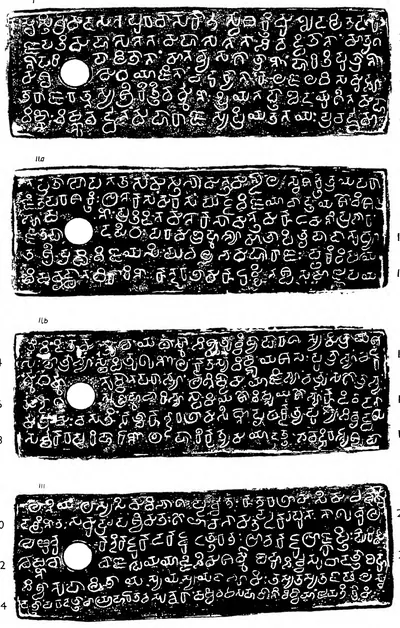 "Three Grants of Chalukya Jayasimha — C.—Grant No. 3", plates i, ii a, ii b and iii (Epigraphia Indica XXXI, Plate II, after p. 137 (PDF p. 220))Inscription rubbing · 1960
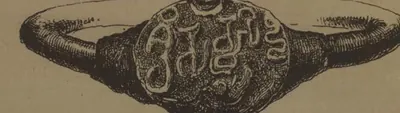 Seal of the "Eastern Chalukya grant of the 18th year of Jayasimha I." (Indian Antiquary XIII, plate at p. 138 (PDF p. 159))Drawing · 1884
Related
Dynasties

References
Notes (0)
Sources (9)
Spotted an error on this page? Tell us
Last updated: