Mir Ali Raza Khan (Mir Sahib)
Brother-in-law of Haidar Ali and governor of Gurramkonda, who died in 1781. His family had held Gurramkonda as a jagir (land grant) under Golconda until the Nawabs of Cuddapah took it from them. As Haidar's commander at Sira, he surrendered the fort to the Marathas in 1767 and received Gurramkonda from them. He came back to Haidar's side in 1768 and held Gurramkonda for him. In 1779 he led the first attack on the Nawab of Cuddapah. Haidar gave him the conquered country, with Gurramkonda, as a military grant, for which he had to keep 3,000 horse. He was buried in a mosque at the foot of Gurramkonda fort.
Mir Ali Raza Khan, called Mir Sahib in the English histories, was the brother-in-law of Haidar Ali.12 For most of Haidar’s reign he was the master of the upland Kadapa (then Cuddapah) country from the fort of Gurramkonda.12 See Mysore under Haidar Ali and Tipu Sultan.
Family
Wilks tells the family story in a note.3 Mir Sahib’s grandfather was an orphan brought up at the Qutb Shahi court of Golconda, which educated Shia orphans in the palace.3 He “was distinguished by court favour, and had the fort and district of Goorumconda assigned to him in jageer”.3 His son, Mir Sahib’s father, “was dispossessed by the Patan Nabob of Kurpa”.3
So Mir Sahib became “a mere soldier of fortune”.3 He gave his sister in marriage to Haidar during the campaign of 1750.3 Charles Philip Brown made notes on the memoir of Ram Chandra Rao of Punganur.4 He names Mir Sahib’s sister as the mother of Tipu Sultan, and “the daughter of Mir Moin ad Din late Commandant of Cuddapah: her brother was Mir Ali Raja”.4 See Tipu Sultan.
Sira and Gurramkonda
Kirmani wrote a Persian history of Haidar, translated by Miles.56 It shows “Meer Ali Ruza Khan” besieging the hill of Nandi while Haidar took Penukonda and Madakasira from Morari Rao.56 The Anantapur gazetteer dates this campaign to 1762.56
In 1767 the Peshwa Madhavrao I reached Sira.13 Mir Sahib held it for Haidar with 4,000 horse and 6,000 foot soldiers, mostly irregular.13 He accepted terms of surrender “by which he betrayed his trust”.13 He “gave up the fort and district of Sera; and received in return, as a Mahratta dependency, the fort and district of Goorumconda”.13
Gribble’s Cuddapah manual says that Haidar’s wife then wrote to her brother.7 She wrote “that Hyder would overlook his capitulation of Sera if he would only atone for it by a second act of treachery in giving up Gurramkonda to Hyder’s forces”.7
Wilks says that Mir Sahib hesitated, and even invited the English to attack Haidar from behind.89 But when Haidar marched on Gurramkonda in 1768 they made peace.89 The terms were “mutually and faithfully observed, during the remainder of their lives”.89 See Madhavrao I.
Haidar trusted him again at once.10 In January 1770, retreating before the Marathas, Haidar left “Meer Saheb and Tippoo in the skirts of Bednore, to hang on their rear”.10 Wilks remarks that Haidar “saw that Meer Saheb disgusted with the Mahratta connexion, had returned with delight to his natural attachments”.10
In 1771 Gurramkonda was held by Mir Sahib’s nephew Sayyid Sahib.1112 Wilks says that his real name was Mir Moin-ud-din Khan.1112 The fort surrendered to the Marathas after a siege of two months.1112
Governor of the Cuddapah uplands
The Cuddapah gazetteer says that under Haidar the old subdivision of Kadapa that included Rayachoti “was administered by Mir Sahib, the Governor of Gurramkonda”.2
The Nawab of Cuddapah had refused to send his troops to Haidar.131415 Late in 1778 Haidar sent Mir Sahib with his own force against him.131415 Mir Sahib raised his cavalry to 5,000.131415 But a band of 2,000 Pathan horse under the Nawab’s nephew kept him from any clear success until Haidar came up in 1779.131415
After the Nawab’s surrender, Haidar added “the territory acquired by the fall of Sidhout to the seat of his fathers at Goorumconda”.16 He gave the whole to Mir Sahib “as a military dependency, on the condition of maintaining for his service, together with the requisite garrisons, three thousand horse of the first order of efficiency”.16
The Kurnool manual calls the holder of this jagir (land grant) Haidar’s father-in-law, Saiyid Ali Raza.17 It says that he went to Cumbum to arrange the civil government of the country.17 He “is said to have repaired Cumbum, Dipad and other tanks”.17 See Kadapa and Siddhavatam.
The Cuddapah gazetteer counts Mir Sahib and his son among the first rulers of the district “who seriously grappled with the problem of the poligars” (local chiefs).18
Gribble says that he died in 1781, “and was buried in a mosque at the foot of the Gurramkonda fort which he had betrayed and defended so well”.1920 The mosque was still standing in 1875.1920 It had been damaged by fire from the fort in a later siege.1920 Rites were still performed at his grave, paid for by a grant of land.1920 His son Qamar-ud-din Khan succeeded to his command.
A different Ali Raza
Wilks names another Ali Raza in Tipu’s service.2122 He read the khutba (Friday sermon naming the ruler) in Tipu’s name at Srirangapatna (then Seringapatam) in 1786.2122 He was “the person afterwards known to the English as one of the guardians of the hostage princes”.2122 It was he who had the Nizam’s officer Hafiz Farid-ud-din killed at Gurramkonda in 1791.2122 He cannot be Mir Sahib, who had died ten years earlier.19
Footnotes
-
Mark Wilks, Historical Sketches of the South of India, Vol. II (1817), p. 10 and note (archive.org (opens in a new tab)). ↩ ↩2 ↩3 ↩4 ↩5 ↩6
-
C. F. Brackenbury, Madras District Gazetteers: Cuddapah, Vol. I (1915), p. 40 (archive.org (opens in a new tab)). ↩ ↩2 ↩3
-
Wilks, Historical Sketches, Vol. II (1817), p. 11 and note (archive.org (opens in a new tab)). ↩ ↩2 ↩3 ↩4 ↩5 ↩6 ↩7 ↩8 ↩9 ↩10
-
Ram Chandra Rao Punganuri, Memoirs of Hyder and Tippoo, tr. C. P. Brown (1849), p. 3, translator’s note 1 (archive.org (opens in a new tab)). ↩ ↩2
-
Mir Husain Ali Khan Kirmani, The History of Hydur Naik, tr. W. Miles (1842), p. 123 (archive.org (opens in a new tab)). ↩ ↩2 ↩3
-
W. Francis, Madras District Gazetteers: Anantapur (1905), p. 183 (archive.org (opens in a new tab)). ↩ ↩2 ↩3
-
J. D. B. Gribble, A Manual of the District of Cuddapah (1875), p. 96 (archive.org (opens in a new tab)). ↩ ↩2
-
Wilks, Historical Sketches, Vol. II (1817), p. 80 (archive.org (opens in a new tab)). ↩ ↩2 ↩3
-
Wilks, Historical Sketches, Vol. II (1817), p. 81 (archive.org (opens in a new tab)). ↩ ↩2 ↩3
-
Wilks, Historical Sketches, Vol. II (1817), p. 132 (archive.org (opens in a new tab)). ↩ ↩2 ↩3
-
Wilks, Historical Sketches, Vol. II (1817), p. 137 and note (archive.org (opens in a new tab)). ↩ ↩2 ↩3
-
Wilks, Historical Sketches, Vol. II (1817), p. 138 (archive.org (opens in a new tab)). ↩ ↩2 ↩3
-
Wilks, Historical Sketches, Vol. II (1817), p. 187 (archive.org (opens in a new tab)). ↩ ↩2 ↩3 ↩4
-
Wilks, Historical Sketches, Vol. II (1817), p. 190 (archive.org (opens in a new tab)). ↩ ↩2 ↩3 ↩4
-
Brackenbury, Cuddapah (1915), p. 44 (archive.org (opens in a new tab)). ↩ ↩2 ↩3 ↩4
-
Wilks, Historical Sketches, Vol. II (1817), p. 198 (archive.org (opens in a new tab)). ↩ ↩2
-
Narahari Gopalakristnamah Chetty, A Manual of the Kurnool District (1886), p. 36 (archive.org (opens in a new tab)). ↩ ↩2 ↩3
-
Brackenbury, Cuddapah (1915), p. 45 (archive.org (opens in a new tab)). ↩
-
Gribble, Cuddapah (1875), p. 98 (archive.org (opens in a new tab)). ↩ ↩2 ↩3 ↩4 ↩5
-
Gribble, Cuddapah (1875), p. 99 (archive.org (opens in a new tab)). ↩ ↩2 ↩3 ↩4
-
Wilks, Historical Sketches, Vol. II (1817), p. 545 (archive.org (opens in a new tab)). ↩ ↩2 ↩3 ↩4
-
Mark Wilks, Historical Sketches of the South of India, Vol. III (1817), p. 207 (archive.org (opens in a new tab)). ↩ ↩2 ↩3 ↩4
Photos
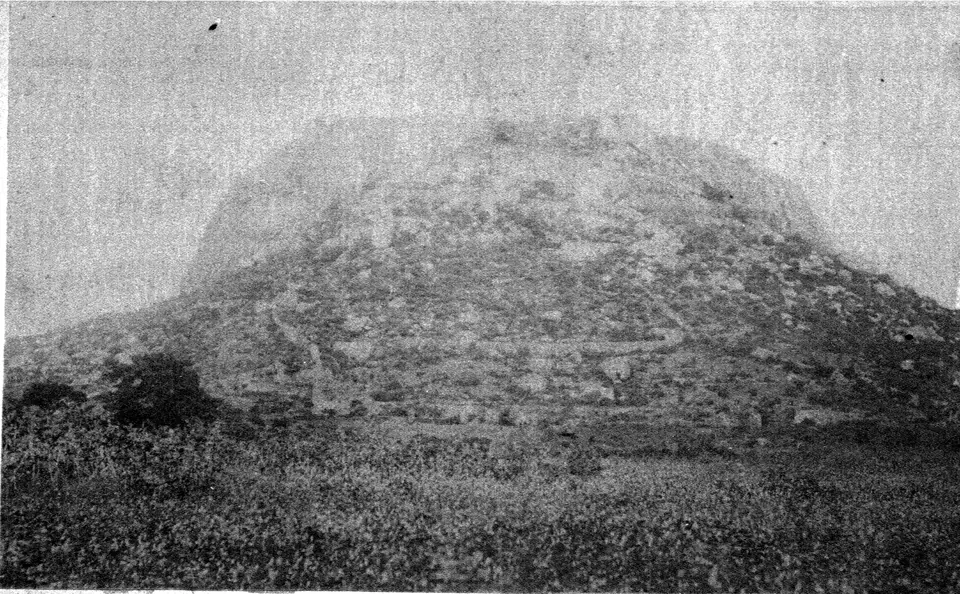
 "Gurramkonda Hill and Fort": photograph in Gribble's Manual of the District of Cuddapah (1875), plate between pp. 90 and 91Historic photograph · 1875
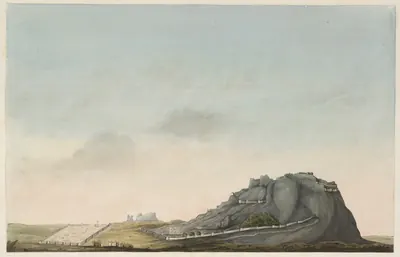 Gurramkonda fort: painting by Thomas Fraser, dated 15 February 1800 (British Library)Drawing · 1800
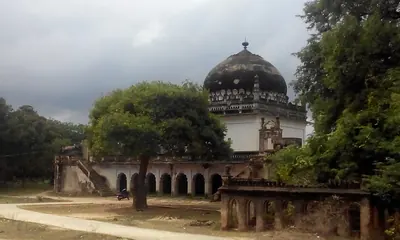 The domed tomb at Gurramkonda named on Commons as the maqbara of Mir Raza Ali (2016); Gribble says Mir Sahib was buried in a mosque at the foot of the fortPhotograph · 2016
Related
Dynasties
References
Notes (0)
Sources (8)
Spotted an error on this page? Tell us
Last updated: